
2-Ethoxyethanol and its acetate (2-Ethoxyethyl acetate) (CAS No. 110-80-5/111-15-9)
IS 4707 Part 2:2025 Annex A lists this ingredient as one that must not form part of a cosmetic product in India.
Regulatory decision and full conditions
- Status
- Prohibited
- Legal role
- Binding rule
- Regulatory summary
- IS 4707 Part 2:2025 Annex A lists this ingredient as one that must not form part of a cosmetic product in India.
- Conditions and restrictions
Must not form part of the composition of cosmetic products. Apply the general trace and safety notes published after Annex A.
Substance identity
- Official source name
- 2-Ethoxyethanol and its acetate (2-Ethoxyethyl acetate) (CAS No. 110-80-5/111-15-9)
- CAS
- 110-80-5; 111-15-9
- EC
- 203-804-1
- Identity mapping
- cas_number
- Linked ingredient
- ETHOXYETHANOL
Linked CosIng identity data
Names and aliases
EU inventory restriction note: II/666
Recorded cosmetic function: SOLVENT, VISCOSITY CONTROLLING
Function pages:SOLVENT, VISCOSITY CONTROLLING
View the complete ingredient profileCross-market snapshot for this identity
Exact linked records currently present in this site. An absent market means no imported exact match, not permission to use the substance.
European Union
1 linked record
Open supporting recordGreat Britain
1 linked record
Open supporting recordCanada
2 linked records
Open supporting recordNew Zealand
2 linked records
Open supporting recordASEAN
2 linked records
Open supporting recordChina
1 linked record · 1 with specific conditions
Open supporting recordSouth Korea
2 linked records
Open supporting recordBrazil
2 linked records · 2 with specific conditions
Open supporting recordIndia
Current record1 linked record · 1 with specific conditions
Open supporting recordSaudi Arabia
1 linked record
Open supporting record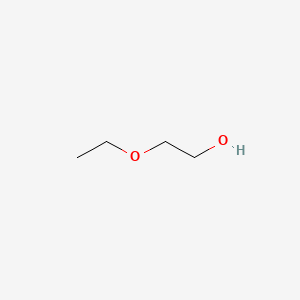
Verified chemistry for CAS 110-80-5
Glycol monoethyl ether
2-ethoxyethanol is a hydroxyether that is the ethyl ether derivative of ethylene glycol. It has a role as a protic solvent and a teratogenic agent. It is a primary alcohol and a glycol ether. It is functionally related to an ethylene glycol. — ChEBI
- IUPAC name
- 2-ethoxyethanol
- Molecular formula
- C4H10O2
- Molecular weight
- 90.12 g/mol
- Exact mass
- 90.068079557 Da
- Monoisotopic mass
- 90.068079557 Da
- XLogP3
- -0.3
- Topological polar surface area
- 29.5 Ų
- Molecular complexity
- 21.0
- Formal charge
- 0
- Hydrogen-bond donors
- 1
- Hydrogen-bond acceptors
- 2
- Rotatable bonds
- 3
- Heavy atoms
- 6
- Covalent units
- 1
Names and synonyms reported to PubChem
16 more reported names
External database identifiers
- ChEBI:CHEBI:46788
- ChEMBL:CHEMBL119596
- EPA DTXSID:DTXSID7024087
- PubMed:29205417
- PubMed:22987591
- PubMed:22580533
- PubMed:22558522
- PubMed:22412451
- PubMed:22065292
- PubMed:22058890
- PubMed:22027498
- PubMed:21887603
- PubMed:21807200
- PubMed:21785763
- PubMed:21582377
Advanced structure statistics
- Defined atom stereocentres
- 0
- Undefined atom stereocentres
- 0
- Defined bond stereocentres
- 0
- Undefined bond stereocentres
- 0
- 3D pharmacophore features
- 3
- 3D rings
- 0
- 3D hydrophobes
- 0
- 3D acceptor features
- 2
- 3D donor features
- 1
- 3D anionic centres
- 0
- 3D cationic centres
- 0
- 3D conformers
- 10
- Effective 3D rotors
- 3.0
Machine-readable structure identifiers
- SMILES
CCOCCO- InChI
InChI=1S/C4H10O2/c1-2-6-4-3-5/h5H,2-4H2,1H3- InChIKey
ZNQVEEAIQZEUHB-UHFFFAOYSA-N
Evidence from additional scientific databases
NIH PubChem PUG-View
Attributed physical-property, hazard, environmental and use annotations.
- Autoignition Temperature: 455 °F (USCG, 1999) Source: CAMEO Chemicals
- Autoignition Temperature: 455 °F (235 °C) Source: Hazardous Substances Data Bank (HSDB)
- Autoignition Temperature: 235 °C Source: ILO-WHO International Chemical Safety Cards (ICSCs)
- Boiling Point: 275 °F at 760 mmHg (NTP, 1992) Source: CAMEO Chemicals
- Boiling Point: 135 °C Source: DrugBank
- Boiling Point: 135.7 °C Source: Hazardous Substances Data Bank (HSDB)
- Boiling Point: 135.00 °C. @ 760.00 mm Hg Source: Human Metabolome Database (HMDB)
- Boiling Point: 135 °C Source: ILO-WHO International Chemical Safety Cards (ICSCs)
- Boiling Point: 275 °F Source: Occupational Safety and Health Administration (OSHA)
- Boiling Point: 135 °C @760 [mm Hg] Source: PAC Chemical Database, U.S. Department of Energy
- Boiling Point: 275 °F Source: The National Institute for Occupational Safety and Health (NIOSH)
- Color/Form: Colorless liquid Source: Hazardous Substances Data Bank (HSDB)
- Density: 0.931 at 68 °F (USCG, 1999) - Less dense than water; will float Source: CAMEO Chemicals
- Density: 0.9253 g/cu cm at 25 °C Source: Hazardous Substances Data Bank (HSDB)
- Density: Bulk density: 7.74 lb at 20 °C; pour point: less than 37.7 °C Source: Hazardous Substances Data Bank (HSDB)
- Density: Relative density (water = 1): 0.93 Source: ILO-WHO International Chemical Safety Cards (ICSCs)
- Density: 0.93 Source: Occupational Safety and Health Administration (OSHA)
- Density: 0.9253 @25 °C Source: PAC Chemical Database, U.S. Department of Energy
- Density: 0.93 Source: The National Institute for Occupational Safety and Health (NIOSH)
- pKa: 14.8 Source: DrugBank
- Dissociation Constants: pKa = 14.8 Source: Hazardous Substances Data Bank (HSDB)
- Flash Point: 105 °F (NTP, 1992) Source: CAMEO Chemicals
- Flash Point: 43 °C Source: Haz-Map, Information on Hazardous Chemicals and Occupational Diseases
- Flash Point: 110 °F (43 °C) (closed cup) Source: Hazardous Substances Data Bank (HSDB)
- Flash Point: 120 °F (49 °C) open cup Source: Hazardous Substances Data Bank (HSDB)
- Flash Point: 202 °F Source: Hazardous Substances Data Bank (HSDB)
- Flash Point: 44 °C c.c. Source: ILO-WHO International Chemical Safety Cards (ICSCs)
- Flash Point: 105 °F Source: Occupational Safety and Health Administration (OSHA)
- Flash Point: 110 °F Source: The National Institute for Occupational Safety and Health (NIOSH)
- LogP: -0.32 Source: DrugBank
- LogP: log Kow = -0.32 Source: Hazardous Substances Data Bank (HSDB)
- LogP: -0.32 Source: Human Metabolome Database (HMDB)
- LogP: -0.540 Source: ILO-WHO International Chemical Safety Cards (ICSCs)
- Melting Point: -94 °F (NTP, 1992) Source: CAMEO Chemicals
- Melting Point: -70 °C Source: DrugBank
- Melting Point: -70 °C Source: Hazardous Substances Data Bank (HSDB)
- Melting Point: -70 °C Source: Human Metabolome Database (HMDB)
- Melting Point: -70 °C Source: ILO-WHO International Chemical Safety Cards (ICSCs)
- Melting Point: -94 °F Source: Occupational Safety and Health Administration (OSHA)
- Melting Point: -70 °C Source: PAC Chemical Database, U.S. Department of Energy
- Melting Point: -130 °F Source: The National Institute for Occupational Safety and Health (NIOSH)
- Odor: Sweet, pleasant, ether-like odor Source: Hazardous Substances Data Bank (HSDB)
- Odor: Mild, agreeable odor Source: Hazardous Substances Data Bank (HSDB)
- Odor: Practically odorless Source: Hazardous Substances Data Bank (HSDB)
- Physical Description: Ethylene glycol monoethyl ether appears as a clear colorless liquid. Flash point of 120 °F. Less dense than water. Its vapors are heavier than air. Source: CAMEO Chemicals
- Physical Description: Liquid Source: EPA Chemical Data Reporting (CDR)
- Physical Description: Colorless liquid with a sweet, pleasant, ether-like odor; [NIOSH] Source: Haz-Map, Information on Hazardous Chemicals and Occupational Diseases
- Physical Description: Liquid Source: Human Metabolome Database (HMDB)
- Physical Description: COLOURLESS OILY LIQUID WITH CHARACTERISTIC ODOUR. Source: ILO-WHO International Chemical Safety Cards (ICSCs)
- Physical Description: Colorless liquid with a sweet, pleasant, ether-like odor. Source: Occupational Safety and Health Administration (OSHA)
- Physical Description: Colorless liquid with a sweet, pleasant, ether-like odor. Source: The National Institute for Occupational Safety and Health (NIOSH)
- Refractive Index: Index of refraction: 1.4054 at 25 °C/D Source: Hazardous Substances Data Bank (HSDB)
- Refractive Index: Index of refraction: 1.406 at 25 °C/D Source: Hazardous Substances Data Bank (HSDB)
- Solubility: greater than or equal to 100 mg/mL at 64 °F (NTP, 1992) Source: CAMEO Chemicals
- Solubility: 1000000 mg/L Source: DrugBank
- Solubility: Miscible with water Source: Hazardous Substances Data Bank (HSDB)
- Solubility: Very soluble in acetone, ethyl ether, ethanol Source: Hazardous Substances Data Bank (HSDB)
- Solubility: Miscible with hydrocarbons Source: Hazardous Substances Data Bank (HSDB)
- Solubility: Miscible in all proportions of acetone, benzene, carbon tetrachloride, ethyl ether, methanol, and water. Source: Hazardous Substances Data Bank (HSDB)
- Solubility: 1000 mg/mL Source: Human Metabolome Database (HMDB)
- Solubility: Solubility in water: miscible Source: ILO-WHO International Chemical Safety Cards (ICSCs)
- Solubility: Miscible Source: The National Institute for Occupational Safety and Health (NIOSH)
- Vapor Pressure: 3.8 mmHg at 68 °F (NTP, 1992) Source: CAMEO Chemicals
- Vapor Pressure: 5.31 [mmHg] Source: Haz-Map, Information on Hazardous Chemicals and Occupational Diseases
- Vapor Pressure: 5.31 mm Hg at 25 °C Source: Hazardous Substances Data Bank (HSDB)
- Vapor Pressure: Vapor pressure, kPa at 20 °C: 1.2 Source: ILO-WHO International Chemical Safety Cards (ICSCs)
- Vapor Pressure: 4 mmHg Source: Occupational Safety and Health Administration (OSHA)
- Vapor Pressure: 7.5 [mm Hg] @30 °C Source: PAC Chemical Database, U.S. Department of Energy
- Vapor Pressure: 4 mmHg Source: The National Institute for Occupational Safety and Health (NIOSH)
- Viscosity: 1.84 centipoise at 25 °C Source: Hazardous Substances Data Bank (HSDB)
- Carcinogen Classification: No indication of carcinogenicity to humans (not listed by IARC). Source: Toxin and Toxin Target Database (T3DB)
- Exposure Routes: The substance can be absorbed into the body by inhalation, through the skin and by ingestion. Source: ILO-WHO International Chemical Safety Cards (ICSCs)
- Exposure Routes: inhalation, skin absorption, ingestion, skin and/or eye contact Source: The National Institute for Occupational Safety and Health (NIOSH)
- First Aid: EYES: First check the victim for contact lenses and remove if present. Flush victim's eyes with water or normal saline solution for 20 to 30 minutes while simultaneously calling a hospital or poison control center. Do not put any ointments, oils, or medication in the victim's eyes without specific instructions from a physician. IMMEDIATELY transport the victim after flushing eyes to a hospital even if no symptoms (such as redness or irritation) develop.; SKIN: IMMEDIATELY flood affected skin with water while removing and isolating all contaminated clothing. Gently wash all affected skin areas thoroughly with soap and water. If symptoms such as redness or irritation develop, IMMEDIATELY call a physician and be prepared to transport the victim to a hospital for treatment.; INHALATION: IMMEDIATELY leave the contaminated area; take deep breaths of fresh air. If symptoms (such as wheezing, coughing, shortness of breath, or burning in the mouth, throat, or chest) develop, call a physician and be prepared to transport the victim to a hospital. Provide proper respiratory protection to rescuers entering an unknown atmosphere. Whenever possible, Self-Contained Breathing Apparatus (SCBA) shou Source: CAMEO Chemicals
- ERG2024, Guide 127 (Ethylene glycol monoethyl ether): General First Aid:; · Call 911 or emergency medical service.; · Ensure that medical personnel are aware of the material(s) involved, take precautions to protect themselves and avoid contamination.; · Move victim to fresh air if it can be done safely.; · Administer oxygen if breathing is difficult.; · If victim is not breathing:; -- DO NOT perform mouth-to-mouth resuscitation; the victim may have ingested or inhaled the substance.; -- If equipped and pulse detected, wash face and mouth, then give artificial respiration using a proper respiratory medical device (bag-valve mask, pocket mask equipped with a one-way valve or other device).; -- If no pulse detected or no respiratory medical device available, provide continuous compressions. Conduct a pulse check every two minutes or monitor for any signs of spontaneous respirations.; · Remove and isolate contaminated clothing and shoes.; · For minor skin contact, avoid spreading material on unaffected skin.; · In case of contact with substance, remove immediately by flushing skin or eyes with running water for at least 20 minutes.; · For severe burns, immediate medical attention is required.; · Effects of exposure (inhalation, ingestion, Source: Emergency Response Guidebook (ERG)
- First Aid: (General first aid procedures); Eye: Irrigate immediately - If this chemical contacts the eyes, immediately wash (irrigate) the eyes with large amounts of water, occasionally lifting the lower and upper lids. Get medical attention immediately.; Skin: Water flush promptly - If this chemical contacts the skin, flush the contaminated skin with water promptly. If this chemical penetrates the clothing, immediately remove the clothing and flush the skin with water promptly. If irritation persists after washing, get medical attention.; Breathing: Respiratory support; Swallow: Medical attention immediately - If this chemical has been swallowed, get medical attention immediately. Source: The National Institute for Occupational Safety and Health (NIOSH)
- Signal: Danger Source: Regulation (EC) No 1272/2008 of the European Parliament and of the Council
- GHS Hazard Statements: H226: Flammable liquid and vapor [Warning Flammable liquids]; H302: Harmful if swallowed [Warning Acute toxicity, oral]; H331: Toxic if inhaled [Danger Acute toxicity, inhalation]; H360FD: May damage fertility; May damage the unborn child [Danger Reproductive toxicity] Source: Regulation (EC) No 1272/2008 of the European Parliament and of the Council
- Precautionary Statement Codes: P203, P210, P233, P240, P241, P242, P243, P261, P264, P270, P271, P280, P301+P317, P303+P361+P353, P304+P340, P316, P318, P321, P330, P370+P378, P403+P233, P403+P235, P405, and P501 (click each P-code to see the statement) Source: Regulation (EC) No 1272/2008 of the European Parliament and of the Council
- Signal: Danger Source: European Chemicals Agency (ECHA)
- GHS Hazard Statements: H226 (100%): Flammable liquid and vapor [Warning Flammable liquids]; H302 (> 99.9%): Harmful if swallowed [Warning Acute toxicity, oral]; H312 (27.3%): Harmful in contact with skin [Warning Acute toxicity, dermal]; H331 (74.1%): Toxic if inhaled [Danger Acute toxicity, inhalation]; H332 (25.8%): Harmful if inhaled [Warning Acute toxicity, inhalation]; H360 (88.4%): May damage fertility or the unborn child [Danger Reproductive toxicity]; H360FD (16.5%): May damage fertility; May damage the unborn child [Danger Reproductive toxicity] Source: European Chemicals Agency (ECHA)
- Precautionary Statement Codes: P203, P210, P233, P240, P241, P242, P243, P261, P264, P270, P271, P280, P301+P317, P302+P352, P303+P361+P353, P304+P340, P316, P317, P318, P321, P330, P362+P364, P370+P378, P403+P233, P403+P235, P405, and P501 (click each P-code to see the statement) Source: European Chemicals Agency (ECHA)
- ECHA C&L Notifications Summary: Aggregated GHS information provided per 1236 reports by companies from 28 notifications to the ECHA C&L Inventory. Each notification may be associated with multiple companies.; Information may vary between notifications depending on impurities, additives, and other factors. The percentage value in parenthesis indicates the notified classification ratio from companies that provide hazard codes. Only hazard codes with percentage values above 10% are shown. For more detailed information, please visit ECHA C&L website. Source: European Chemicals Agency (ECHA)
- Signal: Danger Source: NITE-CMC
- GHS Hazard Statements: H226: Flammable liquid and vapor [Warning Flammable liquids]; H320: Causes eye irritation [Warning Serious eye damage/eye irritation]; H332: Harmful if inhaled [Warning Acute toxicity, inhalation]; H360: May damage fertility or the unborn child [Danger Reproductive toxicity]; H370: Causes damage to organs [Danger Specific target organ toxicity, single exposure]; H372: Causes damage to organs through prolonged or repeated exposure [Danger Specific target organ toxicity, repeated exposure] Source: NITE-CMC
- Precautionary Statement Codes: P203, P210, P233, P240, P241, P242, P243, P260, P261, P264, P264+P265, P270, P271, P280, P303+P361+P353, P304+P340, P305+P351+P338, P308+P316, P317, P318, P319, P321, P337+P317, P370+P378, P403+P235, P405, and P501 (click each P-code to see the statement) Source: NITE-CMC
- GHS Hazard Statements: H226: Flammable liquid and vapor [Warning Flammable liquids]; H303: May be harmful if swallowed [Warning Acute toxicity, oral]; H313: May be harmful in contact with skin [Warning Acute toxicity, dermal]; H316: Causes mild skin irritation [Warning Skin corrosion/irritation]; H320: Causes eye irritation [Warning Serious eye damage/eye irritation]; H332: Harmful if inhaled [Warning Acute toxicity, inhalation]; H360: May damage fertility or the unborn child [Danger Reproductive toxicity]; H370: Causes damage to organs [Danger Specific target organ toxicity, single exposure]; H372: Causes damage to organs through prolonged or repeated exposure [Danger Specific target organ toxicity, repeated exposure] Source: NITE-CMC
- Precautionary Statement Codes: P203, P210, P233, P240, P241, P242, P243, P260, P261, P264, P264+P265, P270, P271, P280, P301+P317, P302+P317, P303+P361+P353, P304+P340, P305+P351+P338, P308+P316, P317, P318, P319, P321, P332+P317, P337+P317, P370+P378, P403+P235, P405, and P501 (click each P-code to see the statement) Source: NITE-CMC
- NFPA Health Rating: 1 - Materials that, under emergency conditions, can cause significant irritation. Source: Hazardous Substances Data Bank (HSDB)
- NFPA Fire Rating: 2 - Materials that must be moderately heated or exposed to relatively high ambient temperatures before ignition can occur. Materials would not under normal conditions form hazardous atmospheres with air, but under high ambient temperatures or under moderate heating could release vapor in sufficient quantities to produce hazardous atmospheres with air. Source: Hazardous Substances Data Bank (HSDB)
- NFPA Instability Rating: 0 - Materials that in themselves are normally stable, even under fire conditions. Source: Hazardous Substances Data Bank (HSDB)
- Target Organs: Hematologic; Reproductive Source: EPA Integrated Risk Information System (IRIS)
- Target Organs: Eyes, respiratory system, blood, kidneys, liver, reproductive system, hematopoietic system Source: The National Institute for Occupational Safety and Health (NIOSH)
- Cosmetic Ingredient Review Conclusion: On the basis of the animal and clinical data included in this report, the CIR Expert Panel concludes that Ethoxyethanol and Ethoxyethanol Acetate are unsafe for use in cosmetic products. Source: Cosmetic Ingredient Review (CIR)
- Cosmetic Ingredient Review Finding(s): The ingredient is unsafe for use in cosmetics Source: Cosmetic Ingredient Review (CIR)
- Toxicity Summary: IDENTIFICATION AND USE: Ethylene Glycol Monoethyl ether (EGEE) is a colorless liquid with mild, agreeable odor. It is used as a solvent for nitrocellulose, lacquers and dopes; in varnish removers, cleansing solutions, dye baths; finishing leather with water pigments and dye solutions; increasing stability of emulsions. HUMAN EXPOSURE AND TOXICITY: Short-term exposure: The substance is mildly irritating to the eyes and respiratory tract, may cause effects on the central nervous system, blood, bone marrow, kidneys and liver. Exposure at high levels could cause unconsciousness. Long-term or repeated exposure: The liquid defats the skin, may have effects on the blood and bone marrow. The major long-term effects of exposure for humans are developmental, testicular, and hematological toxicity. A cross-sectional evaluation of semen quality was carried out in workers exposed to EGEE. A control group of workers from the same plant was included. Workers exposed to EGEE had significantly lower average sperm counts than controls, although both groups had lower sperm counts than those found in other occupational groups. In other study, hemoglobin, hematocrit, red cell indices, total and differe Source: Hazardous Substances Data Bank (HSDB)
- Environmental Bioconcentration: An estimated BCF value of 3 was calculated for ethylene glycol monoethyl ether(SRC), using a log Kow of -0.32(1) and a regression-derived equation(2). According to a classification scheme(3), this BCF value suggests that bioconcentration in aquatic organisms is low(SRC). Source: Hazardous Substances Data Bank (HSDB)
- Environmental Fate: TERRESTRIAL FATE: Based on a classification scheme(1), an estimated Koc value of 2(SRC), determined from a log Kow of -0.32(2) and a regression-derived equation(3), indicates that ethylene glycol monoethyl ether is expected to have very high mobility in soil(SRC). Volatilization of ethylene glycol monoethyl ether from moist soil surfaces is expected to be an important fate process(SRC) given a Henry's Law constant of 4.7X10⁻⁷ atm-cu m/mole(4). Ethylene glycol monoethyl ether is expected to volatilize from dry soil surfaces(SRC) based upon a vapor pressure of 5.31 mm Hg at 25 °C(5). Utilizing the Japanese MITI test, 76% of the Theoretical BOD was reached in 2 weeks(6) indicating that biodegradation is an important environmental fate process in soil(SRC). Source: Hazardous Substances Data Bank (HSDB)
- Environmental Fate: AQUATIC FATE: Based on a classification scheme(1), an estimated Koc value of 2(SRC), determined from a log Kow of -0.32(2) and a regression-derived equation(3), indicates that ethylene glycol monoethyl ether is not expected to adsorb to suspended solids and sediment(SRC). Volatilization from water surfaces is expected(4) based upon a Henry's Law constant of 4.7X10⁻⁷ atm-cu m/mole(5). Using this Henry's Law constant and an estimation method(4), volatilization half-lives for a model river and model lake are 74 and 540 days, respectively(SRC). According to a classification scheme(6), an estimated BCF of 3(SRC), from its log Kow(2) and a regression-derived equation(3), suggests the potential for bioconcentration in aquatic organisms is low(SRC). Utilizing the Japanese MITI test, 76% of the Theoretical BOD was reached in 2 weeks(7) indicating that biodegradation is an important environmental fate process in water(SRC). Source: Hazardous Substances Data Bank (HSDB)
- Environmental Fate: ATMOSPHERIC FATE: According to a model of gas/particle partitioning of semivolatile organic compounds in the atmosphere(1), ethylene glycol monoethyl ether, which has a vapor pressure of 5.31 mm Hg at 25 °C(2), is expected to exist solely as a vapor in the ambient atmosphere. Vapor-phase ethylene glycol monoethyl ether is degraded in the atmosphere by reaction with photochemically-produced hydroxyl radicals(SRC); the half-life for this reaction in air is estimated to be 22 hrs(SRC), calculated from its rate constant of 1.54X10⁻¹¹ cu cm/molecule-sec at 25 °C(3). Ethylene glycol monoethyl ether does not contain chromophores that absorb at wavelengths >290 nm(4) and, therefore, is not expected to be susceptible to direct photolysis by sunlight(SRC). Source: Hazardous Substances Data Bank (HSDB)
- Consumer Uses: Solvent; Not Known or Reasonably Ascertainable; Intermediate; Solids separation (precipitating) agent, not otherwise specified Source: EPA Chemical Data Reporting (CDR)
- Industry Uses: Laboratory chemicals; Intermediate; Solids separation (precipitating) agent, not otherwise specified; Not Known or Reasonably Ascertainable; Solvent Source: EPA Chemical Data Reporting (CDR)
- Cosmetic Ingredient Review Link: CIR ingredient: Ethoxyethanol Source: Cosmetic Ingredient Review (CIR)
- Sources/Uses: Used as an industrial solvent and anti-icing additive to aviation fuels; [ACGIH] Used as a solvent for coatings, inks, adhesives, textile dyes, lacquers, and epoxy resins; [HSDB] Not produced commercially in the EU; [Glycol Ethers Online] Source: Haz-Map, Information on Hazardous Chemicals and Occupational Diseases
- Industrial Processes with risk of exposure: Semiconductor Manufacturing [Category: Industry]; Painting (Solvents) [Category: Paint]; Working with Glues and Adhesives [Category: Other]; Textiles (Printing, Dyeing, or Finishing) [Category: Industry] Source: Haz-Map, Information on Hazardous Chemicals and Occupational Diseases
- Uses: Solvent for nitrocellulose, lacquers and dopes; in varnish removers, cleansing solutions, dye baths; finishing leather with water pigments and dye solutions; increasing stability of emulsions. Source: Hazardous Substances Data Bank (HSDB)
- Uses: ... Natural and synthetic resins; mutual solvent for formulation of soluble oils; lacquers and lacquer thinners, dyeing and printing textiles, varnish removers, ... anti-icing additive for aviation fuels. Source: Hazardous Substances Data Bank (HSDB)
- Uses: Chemical intermediate for 2-ethoxyethyl acetate, a solvent Source: Hazardous Substances Data Bank (HSDB)
- Uses: Solvent for epoxy and other coatings Source: Hazardous Substances Data Bank (HSDB)
- Uses: For more Uses (Complete) data for ETHYLENE GLYCOL MONOETHYL ETHER (6 total), please visit the HSDB record page. Source: Hazardous Substances Data Bank (HSDB)
- Uses: 2-Ethoxyethanol, also known by the trademark Cellosolve or ethyl cellosolve, is a solvent used widely in commercial and industrial applications. This is an ideal property as a multi-purpose cleaner and therefore 2-ethoxyethanol is used in products such as varnish removers and degreasing solutions. Source: Toxin and Toxin Target Database (T3DB)
Mapped by: Existing checksum-valid CAS to unique PubChem CID match. Retrieved: 2026-08-31. Open source record
Scientific classifications and hazard annotations provide context and do not replace the market-specific regulatory decision shown above.
Additional source coverage and match status
| Source | Result | Checked |
|---|---|---|
| NIH PubChem PUG-View | Exact match | 2026-08-31 |
A recorded no-match is useful evidence that the source was checked; it is not a claim that the substance does not exist elsewhere.
Retrieved from NIH PubChem on 2026-08-31 by checksum-valid CAS matching. Chemical properties do not replace the regulatory decision on this page.
Verified chemistry for CAS 111-15-9
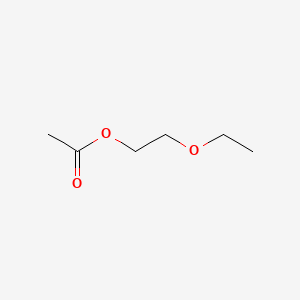
Glycol monoethyl ether acetate
Ethylene Glycol Monoethyl Ether Acetate can cause developmental toxicity and male reproductive toxicity according to The National Institute for Occupational Safety and Health (NIOSH). — California Office of Environmental Health Hazard Assessment (OEHHA)
- IUPAC name
- 2-ethoxyethyl acetate
- Molecular formula
- C6H12O3
- Molecular weight
- 132.16 g/mol
- Exact mass
- 132.078644241 Da
- Monoisotopic mass
- 132.078644241 Da
- XLogP3
- 0.3
- Topological polar surface area
- 35.5 Ų
- Molecular complexity
- 80.0
- Formal charge
- 0
- Hydrogen-bond donors
- 0
- Hydrogen-bond acceptors
- 3
- Rotatable bonds
- 5
- Heavy atoms
- 9
- Covalent units
- 1
Names and synonyms reported to PubChem
16 more reported names
External database identifiers
Advanced structure statistics
- Defined atom stereocentres
- 0
- Undefined atom stereocentres
- 0
- Defined bond stereocentres
- 0
- Undefined bond stereocentres
- 0
- 3D pharmacophore features
- 2
- 3D rings
- 0
- 3D hydrophobes
- 0
- 3D acceptor features
- 2
- 3D donor features
- 0
- 3D anionic centres
- 0
- 3D cationic centres
- 0
- 3D conformers
- 10
- Effective 3D rotors
- 5.0
Machine-readable structure identifiers
- SMILES
CCOCCOC(=O)C- InChI
InChI=1S/C6H12O3/c1-3-8-4-5-9-6(2)7/h3-5H2,1-2H3- InChIKey
SVONRAPFKPVNKG-UHFFFAOYSA-N
Evidence from additional scientific databases
NIH PubChem PUG-View
Attributed physical-property, hazard, environmental and use annotations.
- Autoignition Temperature: 715 °F (USCG, 1999) Source: CAMEO Chemicals
- Autoignition Temperature: 715 °F (379 °C) Source: Hazardous Substances Data Bank (HSDB)
- Autoignition Temperature: 379 °C Source: ILO-WHO International Chemical Safety Cards (ICSCs)
- Boiling Point: 313 °F at 760 mmHg (NTP, 1992) Source: CAMEO Chemicals
- Boiling Point: 156.4 °C Source: Hazardous Substances Data Bank (HSDB)
- Boiling Point: 156 °C Source: ILO-WHO International Chemical Safety Cards (ICSCs)
- Boiling Point: 313 °F Source: Occupational Safety and Health Administration (OSHA)
- Boiling Point: 156.4 °C @760 [mm Hg] Source: PAC Chemical Database, U.S. Department of Energy
- Boiling Point: 313 °F Source: The National Institute for Occupational Safety and Health (NIOSH)
- Color/Form: Colorless liquid Source: Hazardous Substances Data Bank (HSDB)
- Density: 0.974 at 68 °F (USCG, 1999) - Less dense than water; will float Source: CAMEO Chemicals
- Density: Specific gravity: 0.975 at 20 °C/20 °C Source: Hazardous Substances Data Bank (HSDB)
- Density: Relative density (water = 1): 0.97 (20 °C) Source: ILO-WHO International Chemical Safety Cards (ICSCs)
- Density: 0.98 Source: Occupational Safety and Health Administration (OSHA)
- Density: 0.9740 @ 20°C Source: PAC Chemical Database, U.S. Department of Energy
- Density: 0.98 Source: The National Institute for Occupational Safety and Health (NIOSH)
- Flash Point: 135 °F (NTP, 1992) Source: CAMEO Chemicals
- Flash Point: 47 °C Source: Haz-Map, Information on Hazardous Chemicals and Occupational Diseases
- Flash Point: 52 °C (Closed cup) Source: Hazardous Substances Data Bank (HSDB)
- Flash Point: 51.1 °C c.c. Source: ILO-WHO International Chemical Safety Cards (ICSCs)
- Flash Point: 135 °F Source: Occupational Safety and Health Administration (OSHA)
- Flash Point: 124 °F Source: The National Institute for Occupational Safety and Health (NIOSH)
- LogP: log Kow = 0.24 Source: Hazardous Substances Data Bank (HSDB)
- LogP: 0.24 Source: ILO-WHO International Chemical Safety Cards (ICSCs)
- Melting Point: -79.1 °F (NTP, 1992) Source: CAMEO Chemicals
- Melting Point: -61.7 °C Source: Hazardous Substances Data Bank (HSDB)
- Melting Point: -62 °C Source: ILO-WHO International Chemical Safety Cards (ICSCs)
- Melting Point: -79 °F Source: Occupational Safety and Health Administration (OSHA)
- Melting Point: -61.7 °C Source: PAC Chemical Database, U.S. Department of Energy
- Melting Point: -79 °F Source: The National Institute for Occupational Safety and Health (NIOSH)
- Odor: MILD ESTER-LIKE ODOR BECOMES OBJECTIONABLE IN HIGH CONCN ... Source: Hazardous Substances Data Bank (HSDB)
- Odor: Pleasant odor Source: Hazardous Substances Data Bank (HSDB)
- Physical Description: Ethylene glycol monoethyl ether acetate appears as a clear colorless liquid with a pleasant odor. Flash point of 120 °F. Less dense than water. Vapors are heavier than air. Source: CAMEO Chemicals
- Physical Description: Liquid Source: EPA Chemical Data Reporting (CDR)
- Physical Description: Colorless liquid with a mild odor; [NIOSH] Source: Haz-Map, Information on Hazardous Chemicals and Occupational Diseases
- Physical Description: COLOURLESS LIQUID WITH CHARACTERISTIC ODOUR. Source: ILO-WHO International Chemical Safety Cards (ICSCs)
- Physical Description: Colorless liquid with a mild odor. Source: Occupational Safety and Health Administration (OSHA)
- Physical Description: Colorless liquid with a mild odor. Source: The National Institute for Occupational Safety and Health (NIOSH)
- Refractive Index: Index of refraction: 1.4054 at 20 °C Source: Hazardous Substances Data Bank (HSDB)
- Solubility: greater than or equal to 100 mg/mL at 66 °F (NTP, 1992) Source: CAMEO Chemicals
- Solubility: Coefficient of expansion = 0.00112 °C-1 at 20 °C; Dielectric constant = 7.567 at 30 °C; Water azeotrope = 44.4 wt % at 97 °C; Hildebrand solubility parameter(delta) = 17.8 MPa Source: Hazardous Substances Data Bank (HSDB)
- Solubility: Very soluble in ethyl alcohol, ethyl ether Source: Hazardous Substances Data Bank (HSDB)
- Solubility: MISCIBLE WITH OLIVE OIL IN ALL PROP Source: Hazardous Substances Data Bank (HSDB)
- Solubility: Miscible with aromatic hydrocarbons Source: Hazardous Substances Data Bank (HSDB)
- Solubility: In water, 187,000 mg/L at 20 °C Source: Hazardous Substances Data Bank (HSDB)
- Solubility: Solubility in water, g/100ml at 20 °C: 23 Source: ILO-WHO International Chemical Safety Cards (ICSCs)
- Solubility: 23% Source: The National Institute for Occupational Safety and Health (NIOSH)
- Vapor Pressure: 1.2 mmHg at 68 °F ; 3.8 mmHg at 86 °F (NTP, 1992) Source: CAMEO Chemicals
- Vapor Pressure: 2.0 [mmHg] Source: Haz-Map, Information on Hazardous Chemicals and Occupational Diseases
- Vapor Pressure: 2.00 mm Hg at 25 °C Source: Hazardous Substances Data Bank (HSDB)
- Vapor Pressure: Vapor pressure, kPa at 20 °C: 0.27 Source: ILO-WHO International Chemical Safety Cards (ICSCs)
- Vapor Pressure: 2 mmHg Source: Occupational Safety and Health Administration (OSHA)
- Vapor Pressure: 0.75 [mm Hg] @14 °C Source: PAC Chemical Database, U.S. Department of Energy
- Vapor Pressure: 2 mmHg Source: The National Institute for Occupational Safety and Health (NIOSH)
- Viscosity: 1.32 cP at 20 °C Source: Hazardous Substances Data Bank (HSDB)
- Exposure Routes: The substance can be absorbed into the body by inhalation of its vapour, through the skin and by ingestion. Source: ILO-WHO International Chemical Safety Cards (ICSCs)
- Exposure Routes: inhalation, skin absorption, ingestion, skin and/or eye contact Source: The National Institute for Occupational Safety and Health (NIOSH)
- First Aid: EYES: First check the victim for contact lenses and remove if present. Flush victim's eyes with water or normal saline solution for 20 to 30 minutes while simultaneously calling a hospital or poison control center. Do not put any ointments, oils, or medication in the victim's eyes without specific instructions from a physician. IMMEDIATELY transport the victim after flushing eyes to a hospital even if no symptoms (such as redness or irritation) develop.; SKIN: IMMEDIATELY flood affected skin with water while removing and isolating all contaminated clothing. Gently wash all affected skin areas thoroughly with soap and water. If symptoms such as redness or irritation develop, IMMEDIATELY call a physician and be prepared to transport the victim to a hospital for treatment.; INHALATION: IMMEDIATELY leave the contaminated area; take deep breaths of fresh air. If symptoms (such as wheezing, coughing, shortness of breath, or burning in the mouth, throat, or chest) develop, call a physician and be prepared to transport the victim to a hospital. Provide proper respiratory protection to rescuers entering an unknown atmosphere. Whenever possible, Self-Contained Breathing Apparatus (SCBA) shou Source: CAMEO Chemicals
- ERG2024, Guide 129 (Ethylene glycol monoethyl ether acetate): General First Aid:; · Call 911 or emergency medical service.; · Ensure that medical personnel are aware of the material(s) involved, take precautions to protect themselves and avoid contamination.; · Move victim to fresh air if it can be done safely.; · Administer oxygen if breathing is difficult.; · If victim is not breathing:; -- DO NOT perform mouth-to-mouth resuscitation; the victim may have ingested or inhaled the substance.; -- If equipped and pulse detected, wash face and mouth, then give artificial respiration using a proper respiratory medical device (bag-valve mask, pocket mask equipped with a one-way valve or other device).; -- If no pulse detected or no respiratory medical device available, provide continuous compressions. Conduct a pulse check every two minutes or monitor for any signs of spontaneous respirations.; · Remove and isolate contaminated clothing and shoes.; · For minor skin contact, avoid spreading material on unaffected skin.; · In case of contact with substance, remove immediately by flushing skin or eyes with running water for at least 20 minutes.; · For severe burns, immediate medical attention is required.; · Effects of exposure (inhalation, ingestion, Source: Emergency Response Guidebook (ERG)
- First Aid: (General first aid procedures); Eye: Irrigate immediately - If this chemical contacts the eyes, immediately wash (irrigate) the eyes with large amounts of water, occasionally lifting the lower and upper lids. Get medical attention immediately.; Skin: Water flush promptly - If this chemical contacts the skin, flush the contaminated skin with water promptly. If this chemical penetrates the clothing, immediately remove the clothing and flush the skin with water promptly. If irritation persists after washing, get medical attention.; Breathing: Respiratory support; Swallow: Medical attention immediately - If this chemical has been swallowed, get medical attention immediately. Source: The National Institute for Occupational Safety and Health (NIOSH)
- Signal: Danger Source: Regulation (EC) No 1272/2008 of the European Parliament and of the Council
- GHS Hazard Statements: H226: Flammable liquid and vapor [Warning Flammable liquids]; H302: Harmful if swallowed [Warning Acute toxicity, oral]; H312: Harmful in contact with skin [Warning Acute toxicity, dermal]; H332: Harmful if inhaled [Warning Acute toxicity, inhalation]; H360FD: May damage fertility; May damage the unborn child [Danger Reproductive toxicity] Source: Regulation (EC) No 1272/2008 of the European Parliament and of the Council
- Precautionary Statement Codes: P203, P210, P233, P240, P241, P242, P243, P261, P264, P270, P271, P280, P301+P317, P302+P352, P303+P361+P353, P304+P340, P317, P318, P321, P330, P362+P364, P370+P378, P403+P235, P405, and P501 (click each P-code to see the statement) Source: Regulation (EC) No 1272/2008 of the European Parliament and of the Council
- Note: This chemical does not meet GHS hazard criteria for 8.8% (36 of 410) of reports. Source: European Chemicals Agency (ECHA)
- Signal: Danger Source: European Chemicals Agency (ECHA)
- GHS Hazard Statements: H226 (90.5%): Flammable liquid and vapor [Warning Flammable liquids]; H302 (91.2%): Harmful if swallowed [Warning Acute toxicity, oral]; H312 (91.2%): Harmful in contact with skin [Warning Acute toxicity, dermal]; H332 (91.2%): Harmful if inhaled [Warning Acute toxicity, inhalation]; H360 (91%): May damage fertility or the unborn child [Danger Reproductive toxicity] Source: European Chemicals Agency (ECHA)
- Precautionary Statement Codes: P203, P210, P233, P240, P241, P242, P243, P261, P264, P270, P271, P280, P301+P317, P302+P352, P303+P361+P353, P304+P340, P317, P318, P321, P330, P362+P364, P370+P378, P403+P235, P405, and P501 (click each P-code to see the statement) Source: European Chemicals Agency (ECHA)
- ECHA C&L Notifications Summary: Aggregated GHS information provided per 410 reports by companies from 13 notifications to the ECHA C&L Inventory. Each notification may be associated with multiple companies.; Reported as not meeting GHS hazard criteria per 36 of 410 reports by companies.; There are 12 notifications provided by 374 of 410 reports by companies with hazard statement code(s).; Information may vary between notifications depending on impurities, additives, and other factors. The percentage value in parenthesis indicates the notified classification ratio from companies that provide hazard codes. Only hazard codes with percentage values above 10% are shown. For more detailed information, please visit ECHA C&L website. Source: European Chemicals Agency (ECHA)
- Signal: Danger Source: NITE-CMC
- GHS Hazard Statements: H226: Flammable liquid and vapor [Warning Flammable liquids]; H332: Harmful if inhaled [Warning Acute toxicity, inhalation]; H336: May cause drowsiness or dizziness [Warning Specific target organ toxicity, single exposure; Narcotic effects]; H360: May damage fertility or the unborn child [Danger Reproductive toxicity]; H371: May cause damage to organs [Warning Specific target organ toxicity, single exposure]; H372: Causes damage to organs through prolonged or repeated exposure [Danger Specific target organ toxicity, repeated exposure]; H402: Harmful to aquatic life [Hazardous to the aquatic environment, acute hazard] Source: NITE-CMC
- Precautionary Statement Codes: P203, P210, P233, P240, P241, P242, P243, P260, P261, P264, P270, P271, P273, P280, P303+P361+P353, P304+P340, P308+P316, P317, P318, P319, P370+P378, P403+P233, P403+P235, P405, and P501 (click each P-code to see the statement) Source: NITE-CMC
- GHS Hazard Statements: H226: Flammable liquid and vapor [Warning Flammable liquids]; H320: Causes eye irritation [Warning Serious eye damage/eye irritation]; H332: Harmful if inhaled [Warning Acute toxicity, inhalation]; H336: May cause drowsiness or dizziness [Warning Specific target organ toxicity, single exposure; Narcotic effects]; H360: May damage fertility or the unborn child [Danger Reproductive toxicity]; H370: Causes damage to organs [Danger Specific target organ toxicity, single exposure]; H372: Causes damage to organs through prolonged or repeated exposure [Danger Specific target organ toxicity, repeated exposure] Source: NITE-CMC
- NFPA Health Rating: 1 - Materials that, under emergency conditions, can cause significant irritation. Source: Hazardous Substances Data Bank (HSDB)
- NFPA Fire Rating: 2 - Materials that must be moderately heated or exposed to relatively high ambient temperatures before ignition can occur. Materials would not under normal conditions form hazardous atmospheres with air, but under high ambient temperatures or under moderate heating could release vapor in sufficient quantities to produce hazardous atmospheres with air. Source: Hazardous Substances Data Bank (HSDB)
- NFPA Instability Rating: 0 - Materials that in themselves are normally stable, even under fire conditions. Source: Hazardous Substances Data Bank (HSDB)
- Target Organs: Eyes, respiratory system, gastrointestinal tract, reproductive system, hematopoietic system Source: The National Institute for Occupational Safety and Health (NIOSH)
- Cosmetic Ingredient Review Conclusion: On the basis of the animal and clinical data included in this report, the CIR Expert Panel concludes that Ethoxyethanol and Ethoxyethanol Acetate are unsafe for use in cosmetic products. Source: Cosmetic Ingredient Review (CIR)
- Cosmetic Ingredient Review Finding(s): The ingredient is unsafe for use in cosmetics Source: Cosmetic Ingredient Review (CIR)
- Toxicity Summary: ... The methyl and ethyl ethers of ethylene glycol, ie 2- methoxyethanol (2-ME) esters, 2-methoxyethyl acetate (2-MEA) and 2-ethoxyethyl acetate (2- EEA) ... are all stable, and are all miscible with (or in the case of 2-EEA very soluble in) water and miscible with a large number of organic solvents. ... The solubility of these glycol ethers in water and their relatively low vapor pressure could result in their build-up in water in the absence of degradation. However, degradation by microorganisms in soil, sewage sludge, and water appears to prevent this possibility. Atmospheric emissions resulting from the use of glycol ethers as evaporative solvents result in the greatest environmental exposure.... Effects on Organisms in the Environment: The toxicity of 2-ME and 2-EE to microorganisms and aquatic animals appears to be low. ... The glycol ether acetates (2-MEA and 2-EEA) are far more toxic to fish. The LC50 of 2-EEA for fathead minnows is 46 mg/L and that of 2-MEA for tidewater silverfish and bluegills is 45 mg/L. ... Effects on Experimental Animals and In Vitro Test Systems: Systemic toxicity: The toxicity of 2-ME and 2-EE to experimental animals has been much more widely studie Source: Hazardous Substances Data Bank (HSDB)
- Environmental Bioconcentration: An estimated BCF value of 3.0 was calculated for ethylene glycol monoethyl ether acetate(SRC), using a measured log Kow of 0.24(1) and a regression-derived equation(2). According to a classification scheme(3), this BCF value suggests the potential for bioconcentration in aquatic organisms is low(SRC). Source: Hazardous Substances Data Bank (HSDB)
- Environmental Fate: TERRESTRIAL FATE: Based on a classification scheme(1), an estimated Koc value of 32(SRC), determined from a measured Kow of 0.24(2) and a regression-derived equation(3), indicates that ethylene glycol monoethyl ether acetate will have very high mobility in soil(SRC). Volatilization of ethylene glycol monoethyl ether acetate from moist soil surfaces may be an important fate process(SRC) given its Henry's Law constant of 3.2X10⁻⁶ atm-cu m/mole(4). Ethylene glycol monoethyl ether acetate is expected to volatilize from dry soil surfaces(SRC) based on its vapor pressure of 2.00 mm Hg(5). Several screening biodegradation tests have demonstrated that ethylene glycol monoethyl ether acetate is readily biodegradable(6-9); 80% biodegradation was measured for ethylene glycol monoethyl ether acetate in a 20 day screening test(7) suggesting that biodegradation may be an important fate process in soil(SRC). Source: Hazardous Substances Data Bank (HSDB)
- Environmental Fate: AQUATIC FATE: Based on a recommended classification scheme(1), an estimated Koc value of 32(SRC), using a log Kow of 0.24(2) and a regression-derived equation(1), indicates that ethylene glycol monoethyl ether acetate should not adsorb to suspended solids and sediment in water(SRC). Volatilization from water surfaces may occur(1) based on a Henry's Law constant of 3.2X10⁻¹¹ atm-cu m/mole(3). Using this Henry's Law constant and an estimation method(1), volatilization half-lives for a model river and model lake are 13 and 100 days, respectively(SRC). According to a classification scheme(4),an estimated BCF value of 3.0(SRC), determined from its log Kow(2), suggests that bioconcentration in aquatic organisms is low(SRC). Biodegradation of ethylene glycol monoethyl ether acetate in a 28 day river die-away test resulted in classification as easily degraded(5) and 80% biodegradation occurred in a 20 day screening test(6) which suggest biodegradation as an important environmental fate process in water(SRC). This compound is expected to hydrolyze with estimated half-lives of 305 and 30 days at pH values of 7 and 8, respectively(7). Source: Hazardous Substances Data Bank (HSDB)
- Environmental Fate: ATMOSPHERIC FATE: According to a model of gas/particle partitioning of semivolatile organic compounds in the atmosphere(1), ethylene glycol monoethyl ether acetate, which has a measured vapor pressure of 2.00 mm Hg at 25 °C(2), will exist solely as a vapor in the ambient atmosphere. Vapor-phase ethylene glycol monoethyl ether acetate is degraded in the atmosphere by reaction with photochemically-produced hydroxyl radicals(SRC); the half-life for this reaction in air is estimated to be about 0.7 days(SRC), calculated from its measured rate constant of 1.3X10⁻¹¹ cu cm/molecule-sec at 25 °C(3). Ethylene glycol monoethyl ether acetate does not contain chromophores that absorb at wavelengths >290 nm(4) and therefore is not expected to be susceptible to direct photolysis by sunlight(SRC). Source: Hazardous Substances Data Bank (HSDB)
- Industry Uses: Not Known or Reasonably Ascertainable; Solvent Source: EPA Chemical Data Reporting (CDR)
- Cosmetic Ingredient Review Link: CIR ingredient: Ethoxyethanol Acetate Source: Cosmetic Ingredient Review (CIR)
- Sources/Uses: Used as an industrial solvent; [ACGIH] Source: Haz-Map, Information on Hazardous Chemicals and Occupational Diseases
- Restricted Notes: The Semiconductor Industry Association recommends elimination of this solvent because of potential reproductive effects. [CHS, p. 43] Source: Haz-Map, Information on Hazardous Chemicals and Occupational Diseases
- Industrial Processes with risk of exposure: Metal Degreasing [Category: Clean]; Semiconductor Manufacturing [Category: Industry]; Textiles (Fiber & Fabric Manufacturing) [Category: Industry] Source: Haz-Map, Information on Hazardous Chemicals and Occupational Diseases
- Uses: In automobile lacquers to retard evaporation and impart high gloss Source: Hazardous Substances Data Bank (HSDB)
- Uses: Used as a chemical intermediate for the synthesis of 2-ethoxyethyl cyanoacrylate. Source: Hazardous Substances Data Bank (HSDB)
- Uses: Used as a solvent (in paints, printing inks) Source: Hazardous Substances Data Bank (HSDB)
- Uses: Ethoxyethanol Acetate was used in two nail polish and enamel removers (1% to 5%) and in two other nail polish and enamel removers (25% to 50%). Source: Hazardous Substances Data Bank (HSDB)
- Uses: Ethoxyethanol Acetate has been used as a blush retardant in lacquers, as a solvent for nitrocellulose, oils, and resins, in wood stains and varnish removers, and in products for the treatment of textiles and leathers. It is also used as a solvent in the processes of welding nosepads to eyeglass frames and laminating plastic sheets. Source: Hazardous Substances Data Bank (HSDB)
Mapped by: Existing checksum-valid CAS to unique PubChem CID match. Retrieved: 2026-08-31. Open source record
Scientific classifications and hazard annotations provide context and do not replace the market-specific regulatory decision shown above.
Additional source coverage and match status
| Source | Result | Checked |
|---|---|---|
| NIH PubChem PUG-View | Exact match | 2026-08-31 |
A recorded no-match is useful evidence that the source was checked; it is not a claim that the substance does not exist elsewhere.
Retrieved from NIH PubChem on 2026-08-31 by checksum-valid CAS matching. Chemical properties do not replace the regulatory decision on this page.
Official source and provenance
- Registered source
- India BIS IS 4707 cosmetic ingredient standards
- Source reference
- IS 4707 (Part 2):2025 Annex A, entry 656
- Source record ID
annex-a:656- Source version
- IS 4707 (Part 2):2025, fifth revision
- Source language
- English
- Translation status
- Original is English
- Effective date
- 2025-08-09
- Source updated
- 2025-08-09
- Snapshot checked
- 2026-08-31 15:30 UTC
- Validation method
- 206 text layers; Annex A 1-1614 and Annex B 1-313 with seven lettered source rows
- SHA-256
905dd0326361c53da8a354b948331946951ac3ae27d60d8e2474efb051239603
Registered dataset notes
- Dataset coverage
- Complete current Part 2:2025 Annex A prohibited and Annex B restricted rows; Parts 1, 3 and 4 remain linked official checks
- Authority note
- Indian Standards referenced by the cosmetics regulatory framework; use the controlled current editions
How this record fits the market dataset
Status distribution
Condition text is present on 1931 of 1931 current records. An empty condition field is interpreted according to the record type above; it is never converted into an unrestricted-use claim.
India market context
Complete current Part 2 dataset plus official workflow for Parts 1, 3 and 4
Coverage version: Cosmetics Rules 2020 plus current BIS IS 4707 parts (1:2020, 2:2025, 3:2025, 4:2022)
All 1,614 prohibited Annex A rows and 317 numbered/lettered restricted Annex B rows from IS 4707 Part 2:2025; official checks remain for colourants, preservatives and UV filters in Parts 1, 3 and 4.
Verification checklist
- Confirm product class and current Cosmetics Rules/gazette amendments.
- Check all applicable parts of IS 4707 by exact identity.
- Apply Schedule S/other finished-product standards where relevant.
- Verify licence/import registration, labelling and testing requirements.
Official market sources
- India Cosmetics Rules 2020Official CDSCO rules and gazette updates; standards may require separate licensed sources
- India BIS IS 4707 cosmetic ingredient standardsIndian Standards referenced by the cosmetics regulatory framework; use the controlled current editions
Verification workflow and record completeness
Before using this result in a compliance decision
- Confirm that “2-Ethoxyethanol and its acetate (2-Ethoxyethyl acetate) (CAS No. 110-80-5/111-15-9)” and every CAS/EC identifier refer to the material in your supplier specification.
- Confirm product class and current Cosmetics Rules/gazette amendments.
- Check all applicable parts of IS 4707 by exact identity.
- Apply Schedule S/other finished-product standards where relevant.
- Verify licence/import registration, labelling and testing requirements.
- Document the source version and recheck the regulator before manufacture, notification or market placement.
Fields available in this record
- Official substance nameAvailable
- CASAvailable
- ECAvailable
- Separate condition textAvailable
- Effective dateAvailable
- Snapshot hash and methodAvailable
Questions this page answers
Stable citation
2-Ethoxyethanol and its acetate (2-Ethoxyethyl acetate) (CAS No. 110-80-5/111-15-9). IS 4707 (Part 2):2025 Annex A, entry 656. India. Source version IS 4707 (Part 2):2025, fifth revision. CosIng Checker regulatory record: https://cosingchecker.com/regulations/in/records/15250/
Cite the regulator as the legal authority. This page is a structured evidence index and verification aid, not a substitute for the official text or professional legal assessment.
Interpretation and limits for India
This official record identifies the substance as prohibited for cosmetic use in the stated market scope.
Do not rely on a formulation containing this identity until the cited source, effective date and exact substance match have been verified.
How to interpret the legal role
The cited row forms part of a binding rule or legally incorporated list for this market.
Evidence on this page
- Recorded outcome: Prohibited
- Legal role: Binding rule
- Source version: IS 4707 (Part 2):2025, fifth revision
- Effective date: 2025-08-09
What it does not prove
The standards are separate controlled publications; absence from a locally indexed excerpt is not permission.
Further authoritative substance research
None of these sources overrides the market decision above.
Cosmetic Ingredient Review safety assessments
Expert Panel conclusions, assessed ingredient groups, use conditions, dates and report documents
Independent expert review considered by FDA; not a government approval or binding market rule
Research this identity at the sourceFDA Global Substance Registration System
UNII identifiers, preferred names, substance types, codes and public substance relationships
Identity registry only; UNII availability does not imply FDA review or approval
Research this identity at the sourceILO/WHO International Chemical Safety Cards
Hazards, symptoms, first aid, storage, incompatibilities and physical properties for covered chemicals
International occupational chemical-safety reference; not cosmetic-use approval
Research this identity at the sourceJapan NITE-CHRIP
Chemical identity, Japanese and foreign legal lists, GHS hazards and exposure-related information
Chemical-management evidence; cosmetic status remains governed by the applicable MHLW standard and market rules
Research this identity at the sourceNIOSH Pocket Guide to Chemical Hazards
REL, PEL, IDLH, properties, exposure routes, symptoms, target organs, first aid and measurement methods for covered workplace chemicals
US occupational-health guidance and limits; not a cosmetic ingredient decision
Research this identity at the sourceOECD eChemPortal
Gateway to authority-owned physical-property, fate, ecotoxicity, toxicity, exposure and GHS records
Discovery gateway; each linked authority remains responsible for its data
Research this identity at the sourceUS EPA CompTox CTX APIs
API key required for importDTXSID identity, experimental and predicted properties, toxicity, bioactivity, exposure and environmental data
Scientific and computational evidence; predictions must remain labelled and do not determine cosmetic legality
Research this identity at the source