
2-BROMO-2-NITROPROPANE-1,3-DIOL
Bronopol
2-BROMO-2-NITROPROPANE-1,3-DIOL appears in Annex V as a positive-list preservative entry for EU cosmetics. Maximum concentration in this record: 0.1%.
Chemical identity and properties
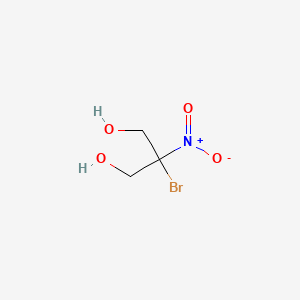
- IUPAC name
- 2-bromo-2-nitropropane-1,3-diol
- Molecular formula
- C3H6BrNO4
- Molecular weight
- 199.99 g/mol
- Exact mass
- 198.94802 Da
- XLogP3
- -0.6
- Topological polar surface area
- 86.3 Ų
- Hydrogen-bond donors
- 2
- Hydrogen-bond acceptors
- 4
- Covalent units
- 1
- Defined stereocentres
- 0
Also known as
16 more reported names
External database identifiers
- ChEBI:CHEBI:31306
- ChEMBL:CHEMBL1408862
- EPA DTXSID:DTXSID8024652
- PubMed:30590494
- PubMed:22928486
- PubMed:22690142
- PubMed:22612984
- PubMed:22577607
- PubMed:22154252
- PubMed:22153260
- PubMed:22078025
- PubMed:22034943
- PubMed:21951136
- PubMed:21851657
- PubMed:21816580
Retrieved from NIH PubChem on 2026-08-31 by checksum-valid CAS matching. Chemical properties do not replace the regulatory decision on this page.
Record details
Maximum concentration
0.1%
Other restrictions
Avoid formation of nitrosamines
INCI glossary name
2-BROMO-2-NITROPROPANE-1,3-DIOL
Chemical name
Bronopol
Chemical / IUPAC name
2-Bromo-2-nitropropane-1,3-diol
Regulatory information
SCCS opinions
- Opinion concerning Restrictions on Materials listed in annex VI of Directive 76/768/EEC on Cosmetic Products
- Opinion on The Determination of certain Formaldehyde Releasers in Cosmetic Products
- SCIENTIFIC ADVICE ON the threshold for the warning ‘contains formaldehyde’ in Annex V, preamble point 2 for formaldehyde-releasing substances
Identified ingredients
Key data
Inventory links for 2-BROMO-2-NITROPROPANE-1,3-DIOL
Related records for 2-BROMO-2-NITROPROPANE-1,3-DIOL
Direct matches are limited for this record, so nearby entries from Annex V are shown as well.
UNDECYLENIC ACID / POTASSIUM UNDECYLENATE / SODIUM UNDECYLENATE / CALCIUM UNDECYLENATE / MEA-UNDECY…
PHENYL MERCURIC ACETATE / PHENYL MERCURIC BENZOATE
CHLOROXYLENOL
Dibromohexamidine isethionate
What Annex V means for 2-BROMO-2-NITROPROPANE-1,3-DIOL
2-BROMO-2-NITROPROPANE-1,3-DIOL is an approved preservative listed in Annex V of EU Cosmetics Regulation 1223/2009. Only substances on this positive list may be used as cosmetic preservatives in the EU.
Each preservative entry specifies maximum permitted concentrations and applicable product scope. Concentrations must not exceed the listed maximum. Some preservatives require warning statements on the product label.
This record is linked to 1 CosIng inventory ingredient for name and identifier cross-reference. The page also surfaces 12 related annex records with overlapping identifiers, annex logic or naming patterns.
Compliance checklist
- Use concentration must not exceed: 0.1%
- Verify the preservative is effective at the permitted concentration for your matrix.
Frequently asked questions
Source note for Annex V record 2-BROMO-2-NITROPROPANE-1,3-DIOL
This page summarizes one Annex V record for 2-BROMO-2-NITROPROPANE-1,3-DIOL from public European Commission cosmetic materials and adds linked inventory or identifier matches when available.
Use this record page to review Annex V conditions for 2-BROMO-2-NITROPROPANE-1,3-DIOL, but confirm any final regulatory decision against the current official annex wording and source files.
Tools & next steps
Check your formula
Paste a full INCI list to detect 2-BROMO-2-NITROPROPANE-1,3-DIOL and other flagged EU annex records in one pass.
INCI CheckerCompare entries
Compare 2-BROMO-2-NITROPROPANE-1,3-DIOL side by side with another annex record to review differences in restrictions, concentrations and annex placement.
CompareBrowse the annex
See all records in Annex V and compare regulatory conditions across substances in this annex.
Open Annex V