
Cobalt sulphate
Cobalt sulphate is listed in Annex II as a prohibited substance for cosmetic products placed on the EU market.
Chemical identity and properties
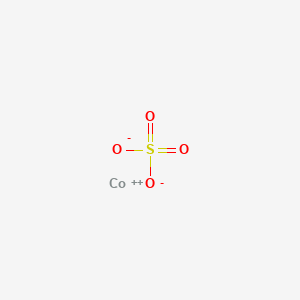
Cobalt Sulfate
Cobalt(2+) sulfate is a compound of cobalt and sulfate in which the ratio of cobalt (+2 oxidation state) to sulfate is 1:1. It contains a cobalt(2+). — ChEBI
- IUPAC name
- cobalt(2+) sulfate
- Molecular formula
- CoO4S
- Molecular weight
- 155.00 g/mol
- Exact mass
- 154.884923 Da
- Topological polar surface area
- 88.6 Ų
- Hydrogen-bond donors
- 0
- Hydrogen-bond acceptors
- 4
- Covalent units
- 2
- Defined stereocentres
- 0
Also known as
16 more reported names
External database identifiers
- ChEBI:CHEBI:53470
- EPA DTXSID:DTXSID1031042
Evidence from additional scientific databases
EMBL-EBI ChEBI
cobalt(2+) sulfate
A compound of cobalt and sulfate in which the ratio of cobalt (+2 oxidation state) to sulfate is 1:1.
- Formula
- Co.O4S
- Average mass
- 154.996 g/mol
- Monoisotopic mass
- 154.88492 Da
- Formal charge
- 0
- metal sulfate — is a (CHEBI:51336)
- cobalt(2+) — has part (CHEBI:48828)
- metal sulfate — is a (CHEBI:51336)
- 2415590 Source: PubMed
Additional curated names
Cross-references from this source
- CAS: 10026-24-1 — KEGG COMPOUND
- CAS: 10124-43-3 — KEGG COMPOUND
- CAS: 10124-43-3 — ChemIDplus
- CAS: 10124-43-3 — NIST Chemistry WebBook
- REGISTRY_NUMBER: 268815 — Gmelin
- REGISTRY_NUMBER: 270126 — Gmelin
- REGISTRY_NUMBER: 270959 — Gmelin
- REGISTRY_NUMBER: 8292 — Gmelin
- MANUAL_X_REF: C17383 — KEGG COMPOUND
- MANUAL_X_REF: C19215 — KEGG COMPOUND
Mapped by: Exact CAS cross-reference in the ChEBI compound record. Source updated: 2016-02-17. Retrieved: 2026-08-31. Open source record
NIH PubChem PUG-View
Attributed physical-property, hazard, environmental and use annotations.
- Color/Form: Red to lavender dimorphic, othorhombic crystals Source: Hazardous Substances Data Bank (HSDB)
- Color/Form: Red orthorhombic crystals Source: Hazardous Substances Data Bank (HSDB)
- Color/Form: Red powder Source: Hazardous Substances Data Bank (HSDB)
- Color/Form: Rose-pink solid Source: Hazardous Substances Data Bank (HSDB)
- Density: 1.948 at 68 °F (USCG, 1999) - Denser than water; will sink Source: CAMEO Chemicals
- Density: 3.71 at 25 °C/4 °C Source: Hazardous Substances Data Bank (HSDB)
- Density: Light red crystalline solid; loses waters of crystallization when heated above 42 °C, producing the monohydrate at 100 °C and anhydrous salt above 250 °C; density: 2.01 kg/L at 25 °C /Cobalt(II) sulfate hexahydrate/ Source: Hazardous Substances Data Bank (HSDB)
- Density: Density: 1.948 g/cu cm; loses heptahydrate at 420 °C /Cobalt(II) sulfate heptahydrate/ Source: Hazardous Substances Data Bank (HSDB)
- Density: 3.71 g/cm³ Source: ILO-WHO International Chemical Safety Cards (ICSCs)
- Density: 3.71 @25 °C Source: PAC Chemical Database, U.S. Department of Energy
- Melting Point: 735 °C Source: Hazardous Substances Data Bank (HSDB)
- Melting Point: 735 °C Source: PAC Chemical Database, U.S. Department of Energy
- Odor: Odorless Source: Hazardous Substances Data Bank (HSDB)
- Physical Description: Cobalt sulfate is an odorless rose-pink solid. Sinks and mixes with water. (USCG, 1999) Source: CAMEO Chemicals
- Physical Description: Dry Powder; Large Crystals; Large Crystals; Liquid; Dry Powder; Large Crystals Source: EPA Chemical Data Reporting (CDR)
- Physical Description: Red to lavender solid; [Merck Index] Blue odorless powder; Soluble in water (362 g/L at 20 deg C); [MSDSonline] Source: Haz-Map, Information on Hazardous Chemicals and Occupational Diseases
- Physical Description: LAVENDER-TO-DARK-BLUE CRYSTALS. Source: ILO-WHO International Chemical Safety Cards (ICSCs)
- Solubility: Odorless; heat of solution: 23 BTU/lb= 13 cal/g= 0.54X10+5 J/kg; solubility: 35.040 lb/100 lb water at 70 °F /Cobaltous sulfate heptahydrate/ Source: Hazardous Substances Data Bank (HSDB)
- Solubility: In water, 330 g/L at 20 °C Source: Hazardous Substances Data Bank (HSDB)
- Solubility: 38.3 g/100 g water at 25 °C Source: Hazardous Substances Data Bank (HSDB)
- Solubility: Dissolves slowly in boiling water Source: Hazardous Substances Data Bank (HSDB)
- Solubility: 84 g/100 mL water at 100 °C Source: Hazardous Substances Data Bank (HSDB)
- Solubility: For more Solubility (Complete) data for Cobaltous sulfate (6 total), please visit the HSDB record page. Source: Hazardous Substances Data Bank (HSDB)
- Solubility: Solubility in water, g/100ml at 20 °C: 36.2 (good) Source: ILO-WHO International Chemical Safety Cards (ICSCs)
- pH: Acidic salts, such as cobalt sulfate ... resulting aqueous solutions contain moderate concentrations of hydrogen ions and have pH's of less than 7.0. They react as acids to neutralize bases. Source: Hazardous Substances Data Bank (HSDB)
- Carcinogen Classification: 2B, possibly carcinogenic to humans. (L135) Source: Toxin and Toxin Target Database (T3DB)
- Exposure Routes: The substance can be absorbed into the body by inhalation and by ingestion. Source: ILO-WHO International Chemical Safety Cards (ICSCs)
- Exposure Routes: Inhalation (L29) ; oral (L29) ; dermal (L29) Source: Toxin and Toxin Target Database (T3DB)
- First Aid: INHALATION: move to fresh air; if breathing has stopped, begin artificial respiration and call a doctor.; INGESTION: give large amount of water; induce vomiting; call a doctor.; EYES: flush with water for at least 15 min.; consult a physician if irritation persists.; SKIN: flush with water. (USCG, 1999) Source: CAMEO Chemicals
- Signal: Danger Source: Regulation (EC) No 1272/2008 of the European Parliament and of the Council
- GHS Hazard Statements: H302: Harmful if swallowed [Warning Acute toxicity, oral]; H317: May cause an allergic skin reaction [Warning Sensitization, Skin]; H334: May cause allergy or asthma symptoms or breathing difficulties if inhaled [Danger Sensitization, respiratory]; H341: Suspected of causing genetic defects [Warning Germ cell mutagenicity]; H350i: May cause cancer by inhalation [Danger Carcinogenicity]; H360F ***: May damage fertility [Danger Reproductive toxicity]; H400: Very toxic to aquatic life [Warning Hazardous to the aquatic environment, acute hazard]; H410: Very toxic to aquatic life with long lasting effects [Warning Hazardous to the aquatic environment, long-term hazard] Source: Regulation (EC) No 1272/2008 of the European Parliament and of the Council
- Precautionary Statement Codes: P203, P233, P260, P261, P264, P270, P271, P272, P273, P280, P284, P301+P317, P302+P352, P304+P340, P318, P321, P330, P333+P317, P342+P316, P362+P364, P391, P403, P405, and P501 (click each P-code to see the statement) Source: Regulation (EC) No 1272/2008 of the European Parliament and of the Council
- Signal: Danger Source: European Chemicals Agency (ECHA)
- GHS Hazard Statements: H302 (99.8%): Harmful if swallowed [Warning Acute toxicity, oral]; H317 (100%): May cause an allergic skin reaction [Warning Sensitization, Skin]; H319 (15.9%): Causes serious eye irritation [Warning Serious eye damage/eye irritation]; H334 (> 99.9%): May cause allergy or asthma symptoms or breathing difficulties if inhaled [Danger Sensitization, respiratory]; H341 (99.8%): Suspected of causing genetic defects [Warning Germ cell mutagenicity]; H350 (85.6%): May cause cancer [Danger Carcinogenicity]; H350i (14.4%): May cause cancer by inhalation [Danger Carcinogenicity]; H360 (84.1%): May damage fertility or the unborn child [Danger Reproductive toxicity]; H360F (10.5%): May damage fertility [Danger Reproductive toxicity]; H400 (99.9%): Very toxic to aquatic life [Warning Hazardous to the aquatic environment, acute hazard]; H410 (97.3%): Very toxic to aquatic life with long lasting effects [Warning Hazardous to the aquatic environment, long-term hazard] Source: European Chemicals Agency (ECHA)
- Precautionary Statement Codes: P203, P233, P260, P261, P264, P264+P265, P270, P271, P272, P273, P280, P284, P301+P317, P302+P352, P304+P340, P305+P351+P338, P318, P321, P330, P333+P317, P337+P317, P342+P316, P362+P364, P391, P403, P405, and P501 (click each P-code to see the statement) Source: European Chemicals Agency (ECHA)
- ECHA C&L Notifications Summary: Aggregated GHS information provided per 2654 reports by companies from 34 notifications to the ECHA C&L Inventory. Each notification may be associated with multiple companies.; Information may vary between notifications depending on impurities, additives, and other factors. The percentage value in parenthesis indicates the notified classification ratio from companies that provide hazard codes. Only hazard codes with percentage values above 10% are shown. For more detailed information, please visit ECHA C&L website. Source: European Chemicals Agency (ECHA)
- Signal: Danger Source: NITE-CMC
- GHS Hazard Statements: H350: May cause cancer [Danger Carcinogenicity] Source: NITE-CMC
- Precautionary Statement Codes: P203, P280, P318, P405, and P501 (click each P-code to see the statement) Source: NITE-CMC
- Signal: Warning Source: NITE-CMC
- GHS Hazard Statements: H341: Suspected of causing genetic defects [Warning Germ cell mutagenicity] Source: NITE-CMC
- Health Effects: Exposure to high amount of cobalt can cause heart, lung, kidney, and liver damage. Skin contact is known to result in contact dermatitis. Cobalt may also have mutagenic and carcinogenic effects. (L29, L30) Source: Toxin and Toxin Target Database (T3DB)
- Toxicity Summary: IDENTIFICATION: Cobalt sulfate is a red powder. It is used in storage batteries; in cobalt-electroplating baths; as drier for lithographic inks, and varnishes; in ceramics, enamels, and glazes to prevent discoloring; in cobalt pigments for decorating porcelain. HUMAN EXPOSURE AND TOXICITY: Cardiomyopathy has been observed in individuals who consume large quantities of beer where cobalt sulfate was added as a foam stabilizer. Repeated or prolonged contact may cause skin sensitization. Repeated or prolonged inhalation exposure may cause asthma. The substance may have effects on the heart, thyroid and bone marrow, resulting in cardiomyopathy, goiter and polycythemia. ANIMAL STUDIES: Rats and mice exposed short term to cobalt sulfate by inhalation exhibited necrosis and inflammation of the respiratory tract epithelium. Rats developed thymus necrosis and testicular atrophy. Rats exposed for 2-3 months to cobalt sulfate in the diet for 24 weeks had significant reductions in heart enzyme activity levels. Rats and mice were exposed to cobalt sulfate heptahydrate by inhalation 6 hr/day, 5 days/week for 13 weeks developed adverse effects throughout the respiratory system. At higher concentra Source: Hazardous Substances Data Bank (HSDB)
- Toxicity Summary: Cobalt is believed to exhibit its toxicity through a oxidant-based and free radical-based processes. It produces oxygen radicals and may be oxidized to ionic cobalt, causing increased lipid peroxidation, DNA damage, and inducing certain enzymes that lead to cell apoptosis. Cobalt has also been shown to block inorganic calcium channels, possibly impairing neurotransmission. Cobalt can also chelate lipoic acids, impairing oxidation of pyruvate or fatty acids. In addition, cobalt may inhibit DNA repair by interacting with zinc finger DNA repair proteins, and has also been shown to inhibit heme synthesis and glucose metabolism. Cobalt may activate specific helper T-lymphocyte cells and interact directly with immunologic proteins, such as antibodies (IgA and IgE) or Fc receptors, resulting in immunosensitization. (L29) Source: Toxin and Toxin Target Database (T3DB)
- Environmental Bioconcentration: Food Chain Concentration Potential of Cobaltous Sulfate (heptahydrate): Bioconcentration of 200-1000 fold only under constant exposure. Not significant in spill conditions(1). Source: Hazardous Substances Data Bank (HSDB)
- Environmental Fate: ATMOSPHERIC FATE: Inorganic cobalt compounds are nonvolatile and released into the atmosphere in particulate form(1). Particulate-phase cobalt compounds are removed from the air by wet and dry deposition(SRC). Cobalt has been detected in atmospheric deposition(2) and in rain-snow precipitation(3). Source: Hazardous Substances Data Bank (HSDB)
- Consumer Uses: Laboratory chemicals; Processing aids not otherwise specified Source: EPA Chemical Data Reporting (CDR)
- Industry Uses: Processing aids not otherwise specified; Plating agent; Intermediate; Pigment; Catalyst; Soil amendments (fertilizers) Source: EPA Chemical Data Reporting (CDR)
- Sources/Uses: Used as a pigment (ceramics, glazes, and enamels), catalyst, paint and ink drier, and soil additive; Also used in electroplating, storage batteries, and veterinary medicine (prevent and treat of cobalt-deficiency in ruminants; [HSDB] Source: Haz-Map, Information on Hazardous Chemicals and Occupational Diseases
- Industrial Processes with risk of exposure: Electroplating [Category: Plate]; Battery Manufacturing [Category: Industry]; Painting (Pigments, Binders, and Biocides) [Category: Paint] Source: Haz-Map, Information on Hazardous Chemicals and Occupational Diseases
- Activities with risk of exposure: Ceramics making [Category: Hobbies]; Enameling [Category: Hobbies] Source: Haz-Map, Information on Hazardous Chemicals and Occupational Diseases
- Uses: Usual source of water-soluble cobalt since it is the most economical and it shows less tendency to deliquesc or dehydrate than the chloride or nitrate. Used in storage batteries; in cobalt-electroplating baths; as drier for lithographic inks, varnishes; in ceramics, enamels, glazes to prevent discoloring; in cobalt pigments for decorating porcelain. Source: Hazardous Substances Data Bank (HSDB)
- Uses: Additive to soils, catalyst. Source: Hazardous Substances Data Bank (HSDB)
- Uses: ... used in feed supplements. Source: Hazardous Substances Data Bank (HSDB)
- Uses: Added to nickel plating baths to improve smoothness, brightness, hardness, and ductility of deposits. Source: Hazardous Substances Data Bank (HSDB)
- Uses: Cobalt(II) sulfate is used in pigments for glass and porcelain, as well as in storage batteries and electroplating baths, sympathetic inks, and as an additive to soils and animal feeds. (L36) Source: Toxin and Toxin Target Database (T3DB)
Mapped by: Existing checksum-valid CAS to unique PubChem CID match. Retrieved: 2026-08-31. Open source record
Scientific classifications and hazard annotations provide context and do not replace the market-specific regulatory decision shown above.
Additional source coverage and match status
| Source | Result | Checked |
|---|---|---|
| EMBL-EBI ChEBI | Exact match | 2026-08-31 |
| NIH PubChem PUG-View | Exact match | 2026-08-31 |
A recorded no-match is useful evidence that the source was checked; it is not a claim that the substance does not exist elsewhere.
Retrieved from NIH PubChem on 2026-09-02 by checksum-valid CAS matching. Chemical properties do not replace the regulatory decision on this page.
Record details
Chemical name
Cobalt sulphate
Regulatory information
Other directives
(EC) 2009/790
SCCS opinions
- Opinion concerning Chemical Ingredients in Cosmetic Products classified as Carcinogenic, Mutagenic or Toxic to Reproduction according to the Chemicals Directive 67/548/EECC
- Opinion concerning Chemical Ingredients in Cosmetic Products classified as Carcinogenic, Mutagenic or Toxic to Reproduction according to the Chemicals Directive 67/548/EEC
CMR
| Category | Carcinogenic | Mutagenic | Reprotoxic |
|---|---|---|---|
| Cat. 1B | ✓ C=>0.01% | — | — |
Key data
Related records for Cobalt sulphate
Direct matches are limited for this record, so nearby entries from Annex II are shown as well.
Nickel monoxide [1]; nickel oxide [2]; bunsenite [3]
6-(2-Chloroethyl)-6-(2-methoxyethoxy)-2,5,7,10-tetraoxa-6-silaundecane
Verbena essential oils (Lippia citriodora Kunth.) and derivatives other than absolute when used as …
3,6,10-Trimethyl-3,5,9-undecatrien-2-one (Pseudo-Isomethyl ionone), when used as a fragrance ingred…
Trinickel disulfide; nickel subsulfied [1]; heazlewoodite [2]
2-Pentylidenecyclohexanone, when used as a fragrance ingredient
5-Methyl-2,3-hexanedione (Acetyl isovaleryl), when used as a fragrance ingredient
Nickel (II) sulfide [1]; nickel sulfide [2]; millerite[3]
What Annex II means for Cobalt sulphate
Cobalt sulphate is listed as a prohibited substance under Annex II of EU Cosmetics Regulation 1223/2009 and must not be intentionally added. Article 17 separately addresses unintended small quantities that are technically unavoidable under good manufacturing practice and compatible with the Article 3 safety requirement.
Formulators must screen their ingredients and raw materials to ensure none contain this substance. Suppliers should provide documentation confirming absence when requested.
The page also surfaces 12 related annex records with overlapping identifiers, annex logic or naming patterns.
Compliance checklist
- Verify this substance is absent from all raw materials and finished formulations.
- Request absence confirmation or CoA from raw material suppliers.
- Document the screening result in the Product Information File (PIF).
- This substance has CMR classification. Review the CMR table above and verify current Annex II/III status before use.
Frequently asked questions
Source note for Annex II record Cobalt sulphate
This page summarizes one Annex II record for Cobalt sulphate from public European Commission cosmetic materials and adds linked inventory or identifier matches when available.
Use this record page to review Annex II conditions for Cobalt sulphate, but confirm any final regulatory decision against the current official annex wording and source files.
Tools & next steps
Check your formula
Paste a full INCI list to detect Cobalt sulphate and other flagged EU annex records in one pass.
INCI CheckerCompare entries
Compare Cobalt sulphate side by side with another annex record to review differences in restrictions, concentrations and annex placement.
CompareBrowse the annex
See all records in Annex II and compare regulatory conditions across substances in this annex.
Open Annex II