
Nickel monoxide [1]; nickel oxide [2]; bunsenite [3]
Nickel monoxide [1]; nickel oxide [2]; bunsenite [3] is listed in Annex II as a prohibited substance for cosmetic products placed on the EU market.
Chemical identity and properties
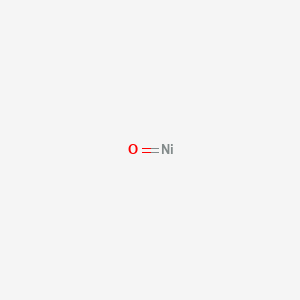
Nickel trioxide
Nickel Oxide can cause cancer according to California Labor Code. — California Office of Environmental Health Hazard Assessment (OEHHA)
- IUPAC name
- oxonickel
- Molecular formula
- NiO
- Molecular weight
- 74.693 g/mol
- Exact mass
- 73.930256 Da
- Topological polar surface area
- 17.1 Ų
- Hydrogen-bond donors
- 0
- Hydrogen-bond acceptors
- 1
- Covalent units
- 1
- Defined stereocentres
- 0
Also known as
16 more reported names
Evidence from additional scientific databases
NIH PubChem PUG-View
Attributed physical-property, hazard, environmental and use annotations.
- Physical Description: Dry Powder Source: EPA Chemical Data Reporting (CDR)
- Physical Description: Black powder; Insoluble in water; [BDH Laboratory Supplies MSDS] Source: Haz-Map, Information on Hazardous Chemicals and Occupational Diseases
- Carcinogen Classification: 1, carcinogenic to humans. (L135) Source: Toxin and Toxin Target Database (T3DB)
- Exposure Routes: Inhalation (L41) ; oral (L41) ; dermal (L41) Source: Toxin and Toxin Target Database (T3DB)
- Exposure Routes: Oral (L41) ; inhalation (L41) ; dermal (L41) Source: Toxin and Toxin Target Database (T3DB)
- Signal: Danger Source: Regulation (EC) No 1272/2008 of the European Parliament and of the Council
- GHS Hazard Statements: H317: May cause an allergic skin reaction [Warning Sensitization, Skin]; H350i: May cause cancer by inhalation [Danger Carcinogenicity]; H372 **: Causes damage to organs through prolonged or repeated exposure [Danger Specific target organ toxicity, repeated exposure]; H413: May cause long lasting harmful effects to aquatic life [Hazardous to the aquatic environment, long-term hazard] Source: Regulation (EC) No 1272/2008 of the European Parliament and of the Council
- Precautionary Statement Codes: P203, P260, P261, P264, P270, P272, P273, P280, P302+P352, P318, P319, P321, P333+P317, P362+P364, P405, and P501 (click each P-code to see the statement) Source: Regulation (EC) No 1272/2008 of the European Parliament and of the Council
- Signal: Danger Source: European Chemicals Agency (ECHA)
- GHS Hazard Statements: H317 (100%): May cause an allergic skin reaction [Warning Sensitization, Skin]; H350 (98.9%): May cause cancer [Danger Carcinogenicity]; H372 (99.4%): Causes damage to organs through prolonged or repeated exposure [Danger Specific target organ toxicity, repeated exposure]; H413 (99.4%): May cause long lasting harmful effects to aquatic life [Hazardous to the aquatic environment, long-term hazard] Source: European Chemicals Agency (ECHA)
- Precautionary Statement Codes: P203, P260, P261, P264, P270, P272, P273, P280, P302+P352, P318, P319, P321, P333+P317, P362+P364, P405, and P501 (click each P-code to see the statement) Source: European Chemicals Agency (ECHA)
- ECHA C&L Notifications Summary: Aggregated GHS information provided per 179 reports by companies from 5 notifications to the ECHA C&L Inventory. Each notification may be associated with multiple companies.; Information may vary between notifications depending on impurities, additives, and other factors. The percentage value in parenthesis indicates the notified classification ratio from companies that provide hazard codes. Only hazard codes with percentage values above 10% are shown. For more detailed information, please visit ECHA C&L website. Source: European Chemicals Agency (ECHA)
- Signal: Danger Source: Hazardous Chemical Information System (HCIS), Safe Work Australia
- GHS Hazard Statements: H317: May cause an allergic skin reaction [Warning Sensitization, Skin]; H350i: May cause cancer by inhalation [Danger Carcinogenicity]; H372: Causes damage to organs through prolonged or repeated exposure [Danger Specific target organ toxicity, repeated exposure] Source: Hazardous Chemical Information System (HCIS), Safe Work Australia
- Precautionary Statement Codes: P203, P260, P261, P264, P270, P272, P280, P302+P352, P318, P319, P321, P333+P317, P362+P364, P405, and P501 (click each P-code to see the statement) Source: Hazardous Chemical Information System (HCIS), Safe Work Australia
- Health Effects: The most common harmful health effect of nickel in humans is an allergic reaction. This usually manifests as a skin rash, although some people experience asthma attacks. Long term inhahation of nickel causes chronic bronchitis and reduced lung function, as well as damage to the naval cavity. Ingestion of excess nickel results in damage to the stomach, blood, liver, kidneys, and immune system, as well as having adverse effects on reproduction and development. (L41) Source: Toxin and Toxin Target Database (T3DB)
- Toxicity Summary: Nickel is known to substitute for other essential elements in certain enzmes, such as calcineurin. It is genotoxic, and some nickel compounds have been shown to promote cell proliferation. Nickel has a high affinity for chromatin proteins, particularly histones and protamines. The complexing of nickel ions with heterochromatin results in a number of alterations including condensation, DNA hypermethylation, gene silencing, and inhibition of histone acetylation, which have been shown to disturb gene expression. Nickel has also been shown to alter several transcription factors, including hypoxia-inducible transcription factor, activating transcription factor, and NF-KB transcription factor. There is also evidence that nickel ions inhibit DNA repair, either by directly inhibiting DNA repair enzymes or competing with zinc ions for binding to zinc-finger DNA binding proteins, resulting in structural changes in DNA that prevent repair enzymes from binding. Nickel ions can also complex with a number of cellular ligands including amino acids, peptides, and proteins resulting in the generation of oxygen radicals, which induce base damage, DNA strand breaks, and DNA protein crosslinks. (L41, Source: Toxin and Toxin Target Database (T3DB)
- Consumer Uses: Other Source: EPA Chemical Data Reporting (CDR)
- Industry Uses: Other Source: EPA Chemical Data Reporting (CDR)
- Uses: Nickel oxide is used in the production of alloys. It is also used in the ceramic industry to make frits, ferrites, and porcelain glazes, and is a component of the nickel-iron battery and fuel cells. (L46) Source: Toxin and Toxin Target Database (T3DB)
Mapped by: Existing checksum-valid CAS to unique PubChem CID match. Retrieved: 2026-08-31. Open source record
Scientific classifications and hazard annotations provide context and do not replace the market-specific regulatory decision shown above.
Additional source coverage and match status
| Source | Result | Checked |
|---|---|---|
| NIH PubChem PUG-View | Exact match | 2026-08-31 |
A recorded no-match is useful evidence that the source was checked; it is not a claim that the substance does not exist elsewhere.
Retrieved from NIH PubChem on 2026-09-02 by checksum-valid CAS matching. Chemical properties do not replace the regulatory decision on this page.
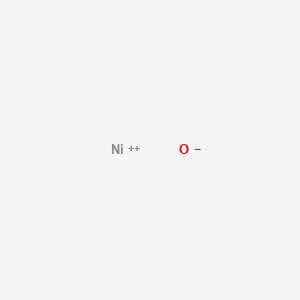
Nickel Monoxide
Nickel Monoxide is a green to black colored, inorganic compound that turns yellow and produces toxic gases upon heating. Nickel monoxide is used in the electronics, ceramics, steel and alloy industries. Exposure to this substance can cause severe dermatitis, skin and asthma-like allergies and damages the lungs, kidneys, gastrointestinal tract and neurological system. Nickel monoxide is a known carcinogen and is associated with an increased risk of developing lung and nasal cancers. (NCI05) — NCI Thesaurus (NCIt)
- IUPAC name
- nickel(2+);oxygen(2-)
- Molecular formula
- NiO
- Molecular weight
- 74.693 g/mol
- Exact mass
- 73.930256 Da
- Topological polar surface area
- 1.0 Ų
- Hydrogen-bond donors
- 0
- Hydrogen-bond acceptors
- 1
- Covalent units
- 2
- Defined stereocentres
- 0
Also known as
4 more reported names
External database identifiers
Evidence from additional scientific databases
NIH PubChem PUG-View
Attributed physical-property, hazard, environmental and use annotations.
- Density: 6.7 g/cm³ Source: ILO-WHO International Chemical Safety Cards (ICSCs)
- Melting Point: 1955 °C Source: ILO-WHO International Chemical Safety Cards (ICSCs)
- Physical Description: Large Crystals; CBI; Dry Powder; Other Solid; Liquid; Other Solid; Dry Powder; Other Solid; Dry Powder; Large Crystals Source: EPA Chemical Data Reporting (CDR)
- Physical Description: Green solid, insoluble in water; [Merck Index] Source: Haz-Map, Information on Hazardous Chemicals and Occupational Diseases
- Physical Description: GREEN-TO-BLACK CRYSTALLINE POWDER. Source: ILO-WHO International Chemical Safety Cards (ICSCs)
- Solubility: Solubility in water, mg/l at 20 °C: 1.1 (practically insoluble) Source: ILO-WHO International Chemical Safety Cards (ICSCs)
- Substance: Nickel (II) Oxide Source: NTP Technical Reports
- NTP Technical Report: TR-451: Toxicology and Carcinogenesis Studies of Nickel Oxide (CASRN 1313-99-1) in F344/N Rats and B6C3F1 Mice (Inhalation Studies) (1996 ) Source: NTP Technical Reports
- Peer Review Date: 11/29/94 Source: NTP Technical Reports
- Conclusion for Male Rat: Some Evidence Source: NTP Technical Reports
- Conclusion for Female Rat: Some Evidence Source: NTP Technical Reports
- Conclusion for Male Mice: No Evidence Source: NTP Technical Reports
- Conclusion for Female Mice: Equivocal Evidence Source: NTP Technical Reports
- Summary: Under the conditions of these 2-year inhalation studies, there was some evidence of carcinogenic activity of nickel oxide in male F344/N rats based on increased incidences of alveolar/bronchiolar adenoma or carcinoma (combined) and increased incidences of benign or malignant pheochromocytoma (combined) of the adrenal medulla. There was some evidence of carcinogenic activity of nickel oxide in female F344/N rats based on increased incidences of alveolar/bronchiolar adenoma or carcinoma (combined) and increased incidences of benign pheochromocytoma of the adrenal medulla. There was no evidence of carcinogenic activity of nickel oxide in male B6C3F1 mice exposed to 1.25, 2.5, or 5 mg/m3. There was equivocal evidence of carcinogenic activity of nickel oxide in female B6C3F1 mice based on marginally increased incidences of alveolar/bronchiolar adenoma in 2.5 mg/m3 females and of alveolar/bronchiolar adenoma or carcinoma (combined) in 1.25 mg/m3 females.; Exposure of rats to nickel oxide by inhalation for 2 years resulted in inflammation and pigmentation in the lung, lymphoid hyperplasia and pigmentation in the bronchial lymph nodes, and hyperplasia of the adrenal medulla (females). Expo Source: NTP Technical Reports
- Exposure Routes: The substance can be absorbed into the body by inhalation of its aerosol and by ingestion. Source: ILO-WHO International Chemical Safety Cards (ICSCs)
- Signal: Danger Source: Regulation (EC) No 1272/2008 of the European Parliament and of the Council
- GHS Hazard Statements: H317: May cause an allergic skin reaction [Warning Sensitization, Skin]; H350i: May cause cancer by inhalation [Danger Carcinogenicity]; H372 **: Causes damage to organs through prolonged or repeated exposure [Danger Specific target organ toxicity, repeated exposure]; H413: May cause long lasting harmful effects to aquatic life [Hazardous to the aquatic environment, long-term hazard] Source: Regulation (EC) No 1272/2008 of the European Parliament and of the Council
- Precautionary Statement Codes: P203, P260, P261, P264, P270, P272, P273, P280, P302+P352, P318, P319, P321, P333+P317, P362+P364, P405, and P501 (click each P-code to see the statement) Source: Regulation (EC) No 1272/2008 of the European Parliament and of the Council
- Signal: Danger Source: European Chemicals Agency (ECHA)
- GHS Hazard Statements: H317 (100%): May cause an allergic skin reaction [Warning Sensitization, Skin]; H332 (13.5%): Harmful if inhaled [Warning Acute toxicity, inhalation]; H334 (17.5%): May cause allergy or asthma symptoms or breathing difficulties if inhaled [Danger Sensitization, respiratory]; H350 (67.8%): May cause cancer [Danger Carcinogenicity]; H350i (32.3%): May cause cancer by inhalation [Danger Carcinogenicity]; H360 (16.9%): May damage fertility or the unborn child [Danger Reproductive toxicity]; H372 (99.7%): Causes damage to organs through prolonged or repeated exposure [Danger Specific target organ toxicity, repeated exposure]; H401 (20.2%): Toxic to aquatic life [Hazardous to the aquatic environment, acute hazard]; H411 (20.2%): Toxic to aquatic life with long lasting effects [Hazardous to the aquatic environment, long-term hazard]; H413 (79.8%): May cause long lasting harmful effects to aquatic life [Hazardous to the aquatic environment, long-term hazard] Source: European Chemicals Agency (ECHA)
- Precautionary Statement Codes: P203, P233, P260, P261, P264, P270, P271, P272, P273, P280, P284, P302+P352, P304+P340, P317, P318, P319, P321, P333+P317, P342+P316, P362+P364, P391, P403, P405, and P501 (click each P-code to see the statement) Source: European Chemicals Agency (ECHA)
- ECHA C&L Notifications Summary: Aggregated GHS information provided per 2079 reports by companies from 51 notifications to the ECHA C&L Inventory. Each notification may be associated with multiple companies.; Information may vary between notifications depending on impurities, additives, and other factors. The percentage value in parenthesis indicates the notified classification ratio from companies that provide hazard codes. Only hazard codes with percentage values above 10% are shown. For more detailed information, please visit ECHA C&L website. Source: European Chemicals Agency (ECHA)
- Signal: Danger Source: NITE-CMC
- GHS Hazard Statements: H317: May cause an allergic skin reaction [Warning Sensitization, Skin]; H334: May cause allergy or asthma symptoms or breathing difficulties if inhaled [Danger Sensitization, respiratory]; H350: May cause cancer [Danger Carcinogenicity]; H372: Causes damage to organs through prolonged or repeated exposure [Danger Specific target organ toxicity, repeated exposure] Source: NITE-CMC
- Precautionary Statement Codes: P203, P233, P260, P261, P264, P270, P271, P272, P280, P284, P302+P352, P304+P340, P318, P319, P321, P333+P317, P342+P316, P362+P364, P403, P405, and P501 (click each P-code to see the statement) Source: NITE-CMC
- Signal: Danger Source: Hazardous Chemical Information System (HCIS), Safe Work Australia
- GHS Hazard Statements: H317: May cause an allergic skin reaction [Warning Sensitization, Skin]; H350i: May cause cancer by inhalation [Danger Carcinogenicity]; H372: Causes damage to organs through prolonged or repeated exposure [Danger Specific target organ toxicity, repeated exposure] Source: Hazardous Chemical Information System (HCIS), Safe Work Australia
- Consumer Uses: Catalyst; Pigment; Adsorbent; Other Source: EPA Chemical Data Reporting (CDR)
- Industry Uses: Catalyst; Not Known or Reasonably Ascertainable; Intermediate; Pigment; Other; Intermediates Source: EPA Chemical Data Reporting (CDR)
- Sources/Uses: Used in painting porcelain, electroplating, and glass coloring; Also used to make fuel cell electrodes, ferrites (e.g. NiOFe2O3), nickel salts, nickel catalysts, varistors, and propellant for automotive air bags; [HSDB] Found in the mineral bunsenite; Used in porcelain paint; [Merck Index] Source: Haz-Map, Information on Hazardous Chemicals and Occupational Diseases
- Industrial Processes with risk of exposure: Electroplating [Category: Plate]; Semiconductor Manufacturing [Category: Industry]; Painting (Pigments, Binders, and Biocides) [Category: Paint]; Mining [Category: Industry]; Glass Manufacturing [Category: Industry] Source: Haz-Map, Information on Hazardous Chemicals and Occupational Diseases
Mapped by: Existing checksum-valid CAS to unique PubChem CID match. Retrieved: 2026-08-31. Open source record
Scientific classifications and hazard annotations provide context and do not replace the market-specific regulatory decision shown above.
Additional source coverage and match status
| Source | Result | Checked |
|---|---|---|
| NIH PubChem PUG-View | Exact match | 2026-08-31 |
A recorded no-match is useful evidence that the source was checked; it is not a claim that the substance does not exist elsewhere.
Retrieved from NIH PubChem on 2026-09-02 by checksum-valid CAS matching. Chemical properties do not replace the regulatory decision on this page.
Record details
Chemical name
Nickel monoxide [1]; nickel oxide [2]; bunsenite [3]
Chemical / IUPAC name
Nickel monoxide [1]; nickel oxide [2]; bunsenite [3]
Regulatory information
Other directives
(EC) 2009/790
SCCS opinions
- Opinion concerning Chemical Ingredients in Cosmetic Products classified as Carcinogenic, Mutagenic or Toxic to Reproduction according to the Chemicals Directive 67/548/EECC
- Opinion concerning Chemical Ingredients in Cosmetic Products classified as Carcinogenic, Mutagenic or Toxic to Reproduction according to the Chemicals Directive 67/548/EEC
CMR
| Category | Carcinogenic | Mutagenic | Reprotoxic |
|---|---|---|---|
| Cat. 1A | ✓ | — | — |
Key data
Related records for Nickel monoxide [1]; nickel oxide [2]; bunsenite [3]
Direct matches are limited for this record, so nearby entries from Annex II are shown as well.
6-(2-Chloroethyl)-6-(2-methoxyethoxy)-2,5,7,10-tetraoxa-6-silaundecane
Trinickel disulfide; nickel subsulfied [1]; heazlewoodite [2]
Verbena essential oils (Lippia citriodora Kunth.) and derivatives other than absolute when used as …
3,6,10-Trimethyl-3,5,9-undecatrien-2-one (Pseudo-Isomethyl ionone), when used as a fragrance ingred…
Nickel (II) sulfide [1]; nickel sulfide [2]; millerite[3]
2-Pentylidenecyclohexanone, when used as a fragrance ingredient
What Annex II means for Nickel monoxide [1]; nickel oxide [2]; bunsenite [3]
Nickel monoxide [1]; nickel oxide [2]; bunsenite [3] is listed as a prohibited substance under Annex II of EU Cosmetics Regulation 1223/2009 and must not be intentionally added. Article 17 separately addresses unintended small quantities that are technically unavoidable under good manufacturing practice and compatible with the Article 3 safety requirement.
Formulators must screen their ingredients and raw materials to ensure none contain this substance. Suppliers should provide documentation confirming absence when requested.
The page also surfaces 12 related annex records with overlapping identifiers, annex logic or naming patterns.
Compliance checklist
- Verify this substance is absent from all raw materials and finished formulations.
- Request absence confirmation or CoA from raw material suppliers.
- Document the screening result in the Product Information File (PIF).
- This substance has CMR classification. Review the CMR table above and verify current Annex II/III status before use.
Frequently asked questions
Source note for Annex II record Nickel monoxide [1]; nickel oxide [2]; bunsenite [3]
This page summarizes one Annex II record for Nickel monoxide [1]; nickel oxide [2]; bunsenite [3] from public European Commission cosmetic materials and adds linked inventory or identifier matches when available.
Use this record page to review Annex II conditions for Nickel monoxide [1]; nickel oxide [2]; bunsenite [3], but confirm any final regulatory decision against the current official annex wording and source files.
Tools & next steps
Check your formula
Paste a full INCI list to detect Nickel monoxide [1]; nickel oxide [2]; bunsenite [3] and other flagged EU annex records in one pass.
INCI CheckerCompare entries
Compare Nickel monoxide [1]; nickel oxide [2]; bunsenite [3] side by side with another annex record to review differences in restrictions, concentrations and annex placement.
CompareBrowse the annex
See all records in Annex II and compare regulatory conditions across substances in this annex.
Open Annex II