
Chromium (III) oxide (Pigment Green 17, Chromia)
New Zealand Cosmetic Products Group Standard Schedule 6, reference 129.
Regulatory decision and full conditions
- Status
- Permitted list with conditions
- Legal role
- Binding rule
- Regulatory summary
- New Zealand Cosmetic Products Group Standard Schedule 6, reference 129.
- Conditions and restrictions
Colour index: 77288 · CAS: 1308-38-9 · Colour: Green · Other limitations: Free from chromate iron
Substance identity
- Official source name
- Chromium (III) oxide (Pigment Green 17, Chromia)
- CAS
- 1308-38-9
- EC
- 215-160-9
- Identity mapping
- cas_number
- Linked ingredient
- CI 77288
Linked CosIng identity data
Names and aliases
CosIng description: Dichromium trioxide; Chromic Oxide; Chromium (III) oxide
EU inventory restriction note: IV/129
Recorded cosmetic function: COLORANT
Function pages:COLORANT
View the complete ingredient profileCross-market snapshot for this identity
Exact linked records currently present in this site. An absent market means no imported exact match, not permission to use the substance.
European Union
1 linked record · 1 with specific conditions
Open supporting recordNew Zealand
Current record1 linked record · 1 with specific conditions
Open supporting record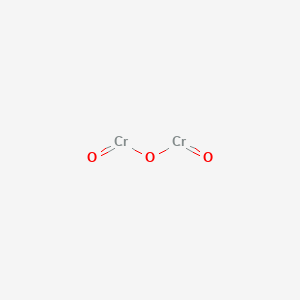
Verified chemistry for CAS 1308-38-9
Chromia
Dichromium trioxide is a chromium oxide. — ChEBI
- IUPAC name
- oxo(oxochromiooxy)chromium
- Molecular formula
- Cr2O3
- Molecular weight
- 151.990 g/mol
- Exact mass
- 151.865753 Da
- Monoisotopic mass
- 151.865753 Da
- Topological polar surface area
- 43.4 Ų
- Molecular complexity
- 34.0
- Formal charge
- 0
- Hydrogen-bond donors
- 0
- Hydrogen-bond acceptors
- 3
- Rotatable bonds
- 0
- Heavy atoms
- 5
- Covalent units
- 1
Names and synonyms reported to PubChem
16 more reported names
External database identifiers
- ChEBI:CHEBI:48242
- EPA DTXSID:DTXSID4043721
- PubMed:26086747
- PubMed:24885771
- PubMed:21384495
- PubMed:15003702
- PubMed:12634122
- PubMed:1423875
Advanced structure statistics
- Defined atom stereocentres
- 0
- Undefined atom stereocentres
- 0
- Defined bond stereocentres
- 0
- Undefined bond stereocentres
- 0
- 3D conformers
- 0
Machine-readable structure identifiers
- SMILES
O=[Cr]O[Cr]=O- InChI
InChI=1S/2Cr.3O- InChIKey
QDOXWKRWXJOMAK-UHFFFAOYSA-N
Evidence from additional scientific databases
NIH PubChem PUG-View
Attributed physical-property, hazard, environmental and use annotations.
- Boiling Point: 4000 °C Source: Hazardous Substances Data Bank (HSDB)
- Boiling Point: 4000 °C Source: ILO-WHO International Chemical Safety Cards (ICSCs)
- Color/Form: Light to dark green, fine, hexagonal crystals Source: Hazardous Substances Data Bank (HSDB)
- Color/Form: Green powder Source: Hazardous Substances Data Bank (HSDB)
- Color/Form: Bright-green, extremely hard crystals Source: Hazardous Substances Data Bank (HSDB)
- Density: 5.22 at 25 °C Source: Hazardous Substances Data Bank (HSDB)
- Density: 5.22 g/cm³ Source: ILO-WHO International Chemical Safety Cards (ICSCs)
- Density: 5.22 @25 °C Source: PAC Chemical Database, U.S. Department of Energy
- Melting Point: 2435 °C Source: Hazardous Substances Data Bank (HSDB)
- Melting Point: 2435 °C Source: ILO-WHO International Chemical Safety Cards (ICSCs)
- Melting Point: 2320 °C Source: PAC Chemical Database, U.S. Department of Energy
- Physical Description: Dry Powder; Large Crystals; Dry Powder; Large Crystals; Liquid; Other Solid; Dry Powder; CBI; Large Crystals Source: EPA Chemical Data Reporting (CDR)
- Physical Description: Green, hygroscopic solid; [CHEMINFO] Insoluble in water; [ACGIH] Source: Haz-Map, Information on Hazardous Chemicals and Occupational Diseases
- Physical Description: LIGHT-TO-DARK-GREEN POWDER. Source: ILO-WHO International Chemical Safety Cards (ICSCs)
- Refractive Index: Index of refraction: 2.551 Source: Hazardous Substances Data Bank (HSDB)
- Solubility: In water, 3.13 ug/L at 20 °C, pH 6; 2.96 ug/L at 20 °C, pH 8 Source: Hazardous Substances Data Bank (HSDB)
- Solubility: Practically insoluble in water Source: Hazardous Substances Data Bank (HSDB)
- Solubility: Practically insoluble in alcohol, acetone; slightly soluble in acids, alkalies Source: Hazardous Substances Data Bank (HSDB)
- Solubility: Insoluble in acids, and alkalies Source: Hazardous Substances Data Bank (HSDB)
- Solubility: Solubility in water: none Source: ILO-WHO International Chemical Safety Cards (ICSCs)
- pH: Trivalent chromium compounds are amphoteric Source: Hazardous Substances Data Bank (HSDB)
- Carcinogen Classification: 3, not classifiable as to its carcinogenicity to humans. (L135) Source: Toxin and Toxin Target Database (T3DB)
- Exposure Routes: Oral (L16) ; inhalation (L16) ; dermal (L16) Source: Toxin and Toxin Target Database (T3DB)
- Note: This chemical does not meet GHS hazard criteria for 57.8% (1112 of 1924) of all reports. Source: European Chemicals Agency (ECHA)
- Signal: Danger Source: European Chemicals Agency (ECHA)
- GHS Hazard Statements: H302 (24%): Harmful if swallowed [Warning Acute toxicity, oral]; H317 (25.7%): May cause an allergic skin reaction [Warning Sensitization, Skin]; H319 (24.3%): Causes serious eye irritation [Warning Serious eye damage/eye irritation]; H360 (14.6%): May damage fertility or the unborn child [Danger Reproductive toxicity] Source: European Chemicals Agency (ECHA)
- Precautionary Statement Codes: P203, P261, P264, P264+P265, P270, P272, P280, P301+P317, P302+P352, P305+P351+P338, P318, P321, P330, P333+P317, P337+P317, P362+P364, P405, and P501 (click each P-code to see the statement) Source: European Chemicals Agency (ECHA)
- ECHA C&L Notifications Summary: Aggregated GHS information provided per 1924 reports by companies from 27 notifications to the ECHA C&L Inventory. Each notification may be associated with multiple companies.; Reported as not meeting GHS hazard criteria per 1112 of 1924 reports by companies.; There are 23 notifications provided by 812 of 1924 reports by companies with hazard statement code(s).; Information may vary between notifications depending on impurities, additives, and other factors. The percentage value in parenthesis indicates the notified classification ratio from companies that provide hazard codes. Only hazard codes with percentage values above 10% are shown. For more detailed information, please visit ECHA C&L website. Source: European Chemicals Agency (ECHA)
- Signal: Danger Source: NITE-CMC
- GHS Hazard Statements: H317: May cause an allergic skin reaction [Warning Sensitization, Skin]; H334: May cause allergy or asthma symptoms or breathing difficulties if inhaled [Danger Sensitization, respiratory]; H372: Causes damage to organs through prolonged or repeated exposure [Danger Specific target organ toxicity, repeated exposure] Source: NITE-CMC
- Precautionary Statement Codes: P233, P260, P261, P264, P270, P271, P272, P280, P284, P302+P352, P304+P340, P319, P321, P333+P317, P342+P316, P362+P364, P403, and P501 (click each P-code to see the statement) Source: NITE-CMC
- GHS Hazard Statements: H317: May cause an allergic skin reaction [Warning Sensitization, Skin]; H334: May cause allergy or asthma symptoms or breathing difficulties if inhaled [Danger Sensitization, respiratory] Source: NITE-CMC
- Precautionary Statement Codes: P233, P260, P261, P271, P272, P280, P284, P302+P352, P304+P340, P321, P333+P317, P342+P316, P362+P364, P403, and P501 (click each P-code to see the statement) Source: NITE-CMC
- Health Effects: Chromium in its trivalent state is not very toxic. It may be oxidized to hexavalent chromium, a known carcinogen. Hexavalent chromium has also been shown to affect reproduction and development. (A12) Source: Toxin and Toxin Target Database (T3DB)
- Toxicity Summary: IDENTIFICATION AND USE: Chromic oxide (Cr(2)O(3)) is a green powder. It is not registered for current use in the U.S., but approved pesticide uses may change periodically and so federal, state and local authorities must be consulted for currently approved uses. It is used in abrasives and electric semiconductors; in alloys; in printing fabrics and banknotes. It is also used in dyeing polymers; colorant for latex paints, in manufacturing of chromium metal and aluminum-chromium master alloys. It's other uses include catalyst in organic synthesis, green granules in asphalt roofing, component of refractory brick. Chromic oxide is a color additive in drug use. HUMAN EXPOSURE AND TOXICITY: Fine chromic oxide particles were insoluble in the culture medium; on the contrary, Cr(2)O(3) nanoparticles released soluble hexavalent chromium into the culture medium. Human lung carcinoma A549 cells and human keratinocyte HaCaT cells showed an increase in intracellular reactive oxygen species (ROS) level and activation of antioxidant defense systems on exposure to Cr(2)O(3) nanoparticles. The cellular influences of Cr(2)O(3) nanoparticles matched those of hexavalent chromium. Human lung epithelial c Source: Hazardous Substances Data Bank (HSDB)
- Toxicity Summary: Trivalent chromium may also form complexes with peptides, proteins, and DNA, resulting in DNA-protein crosslinks, DNA strand breaks, DNA-DNA interstrand crosslinks, chromium-DNA adducts, chromosomal aberrations and alterations in cellular signaling pathways. It has been shown to induce carcinogenesis by overstimulating cellular regulatory pathways and increasing peroxide levels by activating certain mitogen-activated protein kinases. It can also cause transcriptional repression by cross-linking histone deacetylase 1-DNA methyltransferase 1 complexes to CYP1A1 promoter chromatin, inhibiting histone modification. Chromium may increase its own toxicity by modifying metal regulatory transcription factor 1, causing the inhibition of zinc-induced metallothionein transcription. (A12, L16, A34, A35, A36) Source: Toxin and Toxin Target Database (T3DB)
- Consumer Uses: Other; Processing aids not otherwise specified; Catalyst; Not Known or Reasonably Ascertainable; Corrosion inhibitor; Pigment Source: EPA Chemical Data Reporting (CDR)
- Industry Uses: Abrasives; Other; Pigment; Dye; Catalyst; Not Known or Reasonably Ascertainable; Corrosion inhibitor Source: EPA Chemical Data Reporting (CDR)
- Sources/Uses: Used in abrasives, refractory materials, semiconductors, pigments, alloys, textile printing inks, and catalysts; [Merck Index] Used as a pigment in polymers and latex paints; [HSDB] Source: Haz-Map, Information on Hazardous Chemicals and Occupational Diseases
- Industrial Processes with risk of exposure: Semiconductor Manufacturing [Category: Industry]; Painting (Pigments, Binders, and Biocides) [Category: Paint]; Textiles (Printing, Dyeing, or Finishing) [Category: Industry] Source: Haz-Map, Information on Hazardous Chemicals and Occupational Diseases
- Uses: For chromic oxide (USEPA/OPP Pesticide Code: 021103) there are 0 labels match. /SRP: Not registered for current use in the U.S., but approved pesticide uses may change periodically and so federal, state and local authorities must be consulted for currently approved uses./ Source: Hazardous Substances Data Bank (HSDB)
- Uses: In abrasives, refractory materials, electric semiconductors; as pigment, particularly in coloring glass; in alloys; in printing fabrics and banknotes; catalyst for organic and inorganic reactions. Source: Hazardous Substances Data Bank (HSDB)
- Uses: Used in dyeing polymers, ... colorant for latex paints. Source: Hazardous Substances Data Bank (HSDB)
- Uses: In metallurgy in the manufacture of chromium metal and aluminum-chromium master alloys. Source: Hazardous Substances Data Bank (HSDB)
- Uses: For more Uses (Complete) data for Chromium (III) oxide (11 total), please visit the HSDB record page. Source: Hazardous Substances Data Bank (HSDB)
- Uses: Plastics -> Typical concentration range in plastic materials -> 1% Source: NORMAN Suspect List Exchange
- Uses: Chromium(III) oxide is commonly used as pigment, under the name viridian, in paints, inks, and glasses. (L523) Source: Toxin and Toxin Target Database (T3DB)
Mapped by: Existing checksum-valid CAS to unique PubChem CID match. Retrieved: 2026-08-31. Open source record
Scientific classifications and hazard annotations provide context and do not replace the market-specific regulatory decision shown above.
Additional source coverage and match status
| Source | Result | Checked |
|---|---|---|
| NIH PubChem PUG-View | Exact match | 2026-08-31 |
A recorded no-match is useful evidence that the source was checked; it is not a claim that the substance does not exist elsewhere.
Retrieved from NIH PubChem on 2026-09-02 by checksum-valid CAS matching. Chemical properties do not replace the regulatory decision on this page.
Official source and provenance
- Registered source
- New Zealand cosmetic product schedules 4–8
- Source reference
- Schedule 6, reference 129, source row 145
- Source record ID
S6-145- Source version
- effective-2026-01-01
- Source language
- English
- Translation status
- Original is English
- Effective date
- 2026-01-01
- Source updated
- 2024-01-01
- Snapshot checked
- 2026-08-30 04:54 UTC
- Validation method
- openpyxl extraction; reviewed per-schedule counts
- SHA-256
4e62e372fb0aad7ac630af8c41fa50b38b52a793fd51b99697a65f8ecce1ae8a
Registered dataset notes
- Dataset coverage
- Prohibited and restricted substances, permitted colorants, preservatives and UV filters
- Authority note
- Official EPA group standard schedules; current market-specific rule source
How this record fits the market dataset
Status distribution
Condition text is present on 747 of 2913 current records. An empty condition field is interpreted according to the record type above; it is never converted into an unrestricted-use claim.
New Zealand market context
Complete schedules dataset
Coverage version: Cosmetic Products Group Standard schedules effective 1 January 2026
Schedules 4–8: prohibited, restricted, colourant, preservative and UV-filter entries.
Verification checklist
- Search exact identity across Schedules 4–8.
- Apply use, concentration and warning conditions.
- Check hazardous-substance classification and Group Standard scope.
- Confirm the latest legal instrument, not only the spreadsheet.
Official market sources
- New Zealand cosmetic product schedules 4–8Official EPA group standard schedules; current market-specific rule source
Verification workflow and record completeness
Before using this result in a compliance decision
- Confirm that “Chromium (III) oxide (Pigment Green 17, Chromia)” and every CAS/EC identifier refer to the material in your supplier specification.
- Search exact identity across Schedules 4–8.
- Apply use, concentration and warning conditions.
- Check hazardous-substance classification and Group Standard scope.
- Confirm the latest legal instrument, not only the spreadsheet.
- Document the source version and recheck the regulator before manufacture, notification or market placement.
Fields available in this record
- Official substance nameAvailable
- CASAvailable
- ECAvailable
- Separate condition textAvailable
- Effective dateAvailable
- Snapshot hash and methodAvailable
Questions this page answers
Stable citation
Chromium (III) oxide (Pigment Green 17, Chromia). Schedule 6, reference 129, source row 145. New Zealand. Source version effective-2026-01-01. CosIng Checker regulatory record: https://cosingchecker.com/regulations/nz/records/9386/
Cite the regulator as the legal authority. This page is a structured evidence index and verification aid, not a substitute for the official text or professional legal assessment.
Interpretation and limits for New Zealand
This identity appears on a market positive list for the list function represented by the source record.
Confirm that the intended function and product use fall within the list scope and every stated condition.
How to interpret the legal role
The cited row forms part of a binding rule or legally incorporated list for this market.
Evidence on this page
- Recorded outcome: Permitted list with conditions
- Legal role: Binding rule
- Source version: effective-2026-01-01
- Effective date: 2026-01-01
What it does not prove
The searchable spreadsheet is an aid; the legal Group Standard and incorporated notices remain authoritative.
Further authoritative substance research
None of these sources overrides the market decision above.
Cosmetic Ingredient Review safety assessments
Expert Panel conclusions, assessed ingredient groups, use conditions, dates and report documents
Independent expert review considered by FDA; not a government approval or binding market rule
Research this identity at the sourceFDA Global Substance Registration System
UNII identifiers, preferred names, substance types, codes and public substance relationships
Identity registry only; UNII availability does not imply FDA review or approval
Research this identity at the sourceILO/WHO International Chemical Safety Cards
Hazards, symptoms, first aid, storage, incompatibilities and physical properties for covered chemicals
International occupational chemical-safety reference; not cosmetic-use approval
Research this identity at the sourceJapan NITE-CHRIP
Chemical identity, Japanese and foreign legal lists, GHS hazards and exposure-related information
Chemical-management evidence; cosmetic status remains governed by the applicable MHLW standard and market rules
Research this identity at the sourceNIOSH Pocket Guide to Chemical Hazards
REL, PEL, IDLH, properties, exposure routes, symptoms, target organs, first aid and measurement methods for covered workplace chemicals
US occupational-health guidance and limits; not a cosmetic ingredient decision
Research this identity at the sourceOECD eChemPortal
Gateway to authority-owned physical-property, fate, ecotoxicity, toxicity, exposure and GHS records
Discovery gateway; each linked authority remains responsible for its data
Research this identity at the sourceUS EPA CompTox CTX APIs
API key required for importDTXSID identity, experimental and predicted properties, toxicity, bioactivity, exposure and environmental data
Scientific and computational evidence; predictions must remain labelled and do not determine cosmetic legality
Research this identity at the source