
Official EU label nameGlossary entry 8675
DIHYDROCOUMARIN
This record confirms an official common ingredient name for EU cosmetic product labelling. It does not by itself confirm that the substance is permitted, unrestricted or safe.
Global evidence snapshot
The resolved identity has matching regulatory evidence in 9 of 13 indexed market datasets: 9 country records and 0 EU Annex records. Every result and evidence gap is listed below.
Markets checked
13
Markets with evidence
9
Evidence gaps
4
Resolved identifiers
2
Resolved substance identity
CAS:119-84-6
EC:204-354-9
Ingredient index records:
8 matched or reported names
DIHYDROCOUMARIN3,4-Dihydrocoumarin, when used as a fragrance ingredientDihydrocoumarinDihydrocoumarin, when used as a fragrance ingredient.3,4-二氢香豆素 — 3,4-Dihydrocoumarine (CAS No. 119-84-6)디하이드로쿠마린Dihidrocumarina, quando usado como ingrediente de fragrância.3,4-Dihydrocoumarin (CAS No. 119-84-6), when used as a fragrance ingredient.
Regulatory evidence in all 13 markets
Open each matched record for its scope, concentration, conditions, warnings and official source version.
Swipe or scroll horizontally to see dataset coverage and next actions.
| Market | Result | Records | Dataset | Meaning / next action |
|---|---|---|---|---|
| European Union EU | No local match | 0 | Complete annex dataset Regulation (EC) 1223/2009 consolidated to 1 May 2026 | No annex match only means that these five annexes did not return a match; CosIng identity data and other EU obligations still need review. |
| Great Britain GB | Prohibited | 1Open record 1 | Complete consolidated annex dataset GB retained Regulation 1223/2009 schedules, effective 15 August 2026 | Review every linked record and exact conditions. |
| Canada CA | Restricted | 1Open record 1 | Complete Hotlist snapshot Health Canada Cosmetic Ingredient Hotlist, 13 August 2025 | Review every linked record and exact conditions. |
| New Zealand NZ | Prohibited | 1Open record 1 | Complete schedules dataset Cosmetic Products Group Standard schedules effective 1 January 2026 | Review every linked record and exact conditions. |
| ASEAN ASEAN | Prohibited | 1Open record 1 | Complete regional annex dataset ASEAN Cosmetic Directive annexes 2026-1, 22 June 2026 | Review every linked record and exact conditions. |
| China CN | Prohibited | 1Open record 1 | Complete prohibited catalogues plus official-source workflow NMPA 2021 banned catalogues plus dynamic IECIC List I/List II system current since 2025 | Review every linked record and exact conditions. |
| Japan JP | No local match | 0 | Complete Standards appendices dataset MHLW Standards for Cosmetics official English source and Japanese amendments checked for the imported snapshot | The Japanese text and subsequent notices are canonical; no local match is not a product-compliance conclusion. |
| South Korea KR | Prohibited | 1Open record 1 | Complete current appendix dataset MFDS Notice 2026-19, effective 18 March 2026 | Review every linked record and exact conditions. |
| United States US | No local match | 0 | Complete enumerated federal ingredient rules eCFR Title 21 issue date 27 August 2026 | FDA has no general approved-cosmetic-ingredient catalogue; absence from these sections is not approval or proof of safety. |
| Australia AU | No local match | 0 | Complete cosmetic-relevant Poisons Standard subset plus official workflow Therapeutic Goods (Poisons Standard—June 2026) Instrument 2026 | An AICIS Inventory match is not cosmetic approval; no Inventory match can indicate a new, exempted, reported or confidential introduction. |
| Brazil BR | Prohibited | 1Open record 1 | Complete prohibited dataset plus current restricted-list workflow ANVISA RDC 1.029/2026 and RDC 1.030/2026, published 15 June 2026 | Review every linked record and exact conditions. |
| India IN | Prohibited | 1Open record 1 | Complete current Part 2 dataset plus official workflow for Parts 1, 3 and 4 Cosmetics Rules 2020 plus current BIS IS 4707 parts (1:2020, 2:2025, 3:2025, 4:2022) | Review every linked record and exact conditions. |
| Saudi Arabia SA | Prohibited | 1Open record 1 | Complete official list index SFDA live prohibited/restricted lists, snapshot 30 August 2026 | Review every linked record and exact conditions. |
No market rows match this filter.
Matching market records and conditions
Canada
Health Canada Cosmetic Ingredient Hotlist, 13 August 2025New Zealand
Cosmetic Products Group Standard schedules effective 1 January 2026ASEAN
ASEAN Cosmetic Directive annexes 2026-1, 22 June 2026China
NMPA 2021 banned catalogues plus dynamic IECIC List I/List II system current since 2025South Korea
MFDS Notice 2026-19, effective 18 March 2026Brazil
ANVISA RDC 1.029/2026 and RDC 1.030/2026, published 15 June 2026India
Cosmetics Rules 2020 plus current BIS IS 4707 parts (1:2020, 2:2025, 3:2025, 4:2022)Saudi Arabia
SFDA live prohibited/restricted lists, snapshot 30 August 2026Chemical identity and properties
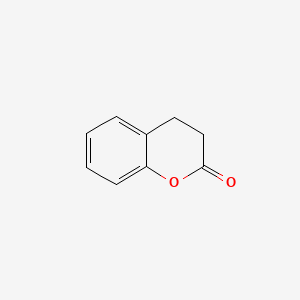
CAS 119-84-6PubChem CID 660
Dihydrocoumarin
3,4-dihydrocoumarin is a chromanone that is the 3,4-dihydro derivative of coumarin. It has a role as a plant metabolite. It is functionally related to a coumarin. — ChEBI
- IUPAC name
- 3,4-dihydrochromen-2-one
- Molecular formula
- C9H8O2
- Molecular weight
- 148.16 g/mol
- Exact mass
- 148.052429494 Da
- XLogP3
- 1.6
- Topological polar surface area
- 26.3 Ų
- Hydrogen-bond donors
- 0
- Hydrogen-bond acceptors
- 2
- Covalent units
- 1
- Defined stereocentres
- 0
Also known as
3,4-dihydrocoumarinhydrocoumarinBenzodihydropyronemelilotin2-chromanone1,2-benzodihydropyronemelilotic lactoneMelilotine
16 more reported names
Oxochroman2H-1-Benzopyran-2-one, 3,4-dihydro-Chroman, 2-oxo-DihydrobenzopyroneUsaf do-12Coumarin, 3,4-dihydro-Meliotine2-Hydroxydihydrocinnamic acid lactoneNCI-C55890o-hydroxydihydrocinnamic acid lactoneFEMA No. 2381Hydrocinnamic acid, o-hydroxy-, delta-lactoneNM5K1Y1BT2CHEBI:16151NSC-10121RefChem:91117
External database identifiers
- ChEBI:CHEBI:16151
- ChEMBL:CHEMBL89306
- EPA DTXSID:DTXSID2020474
- PubMed:40784488
- PubMed:29968805
- PubMed:26795242
- PubMed:25027835
- PubMed:22978790
- PubMed:22789709
- PubMed:22719717
- PubMed:22679830
- PubMed:22654578
- PubMed:22590613
- PubMed:22589881
- PubMed:22577559
Evidence from additional scientific databases
NIH PubChem PUG-View
Exact identifier match660
Attributed physical-property, hazard, environmental and use annotations.
- Boiling Point: 522 °F at 760 mmHg (NTP, 1992) Source: CAMEO Chemicals
- Boiling Point: 272 °C Source: Hazardous Substances Data Bank (HSDB)
- Boiling Point: 271.00 to 272.00 °C. @ 760.00 mm Hg Source: Human Metabolome Database (HMDB)
- Boiling Point: 272 °C Source: Joint FAO/WHO Expert Committee on Food Additives (JECFA)
- Color/Form: Leaflets Source: Hazardous Substances Data Bank (HSDB)
- Color/Form: White to light yellow, oily liquid Source: Hazardous Substances Data Bank (HSDB)
- Color/Form: Colorless crystals Source: Hazardous Substances Data Bank (HSDB)
- Density: 1.169 at 64 °F (NTP, 1992) - Denser than water; will sink Source: CAMEO Chemicals
- Density: 1.169 @ 18 °C Source: Hazardous Substances Data Bank (HSDB)
- Density: 1.186-1.192 Source: Joint FAO/WHO Expert Committee on Food Additives (JECFA)
- Flash Point: 266 °F (NTP, 1992) Source: CAMEO Chemicals
- Flash Point: 130 °C Source: Haz-Map, Information on Hazardous Chemicals and Occupational Diseases
- Flash Point: 130 °C Source: Hazardous Substances Data Bank (HSDB)
- Melting Point: 77 °F (NTP, 1992) Source: CAMEO Chemicals
- Melting Point: 25 °C Source: Hazardous Substances Data Bank (HSDB)
- Melting Point: 25 °C Source: Human Metabolome Database (HMDB)
- Odor: Herbal Source: Hazardous Substances Data Bank (HSDB)
- Odor: Odor similar to coumarin at room temp or reminiscent of nitrobenzene at higher temp. Source: Hazardous Substances Data Bank (HSDB)
- Odor: Coconut odor Source: Hazardous Substances Data Bank (HSDB)
- Odor: Hay-like Source: Hazardous Substances Data Bank (HSDB)
- Physical Description: 3,4-dihydrocoumarin is a white to pale yellow clear oily liquid with a sweet odor. Solidifies around room temperature. (NTP, 1992) Source: CAMEO Chemicals
- Physical Description: White to light yellow liquid; Colorless solid; [HSDB] Low melting solid; mp = 24-26 deg C; [MSDSonline] Source: Haz-Map, Information on Hazardous Chemicals and Occupational Diseases
- Physical Description: Solid Source: Human Metabolome Database (HMDB)
- Physical Description: colourless to pale yellow liquid; coconut-like aroma Source: Joint FAO/WHO Expert Committee on Food Additives (JECFA)
- Refractive Index: Index of refraction: 1.5563 @ 20 °C/D Source: Hazardous Substances Data Bank (HSDB)
- Refractive Index: 1.555-1.559 Source: Joint FAO/WHO Expert Committee on Food Additives (JECFA)
- Solubility: less than 1 mg/mL at 68 °F (NTP, 1992) Source: CAMEO Chemicals
- Solubility: Slightly soluble in ether and carbon tetrachloride Source: Hazardous Substances Data Bank (HSDB)
- Solubility: 1:2.5-3.5 IN 70% ALCOHOL Source: Hazardous Substances Data Bank (HSDB)
- Solubility: Soluble in chloroform. Source: Hazardous Substances Data Bank (HSDB)
- Solubility: Soluble in chlorinated solvents Source: Hazardous Substances Data Bank (HSDB)
- Solubility: In water, 3,000 mg/l at 37 °C Source: Hazardous Substances Data Bank (HSDB)
- Solubility: 3 mg/mL at 37 °C Source: Human Metabolome Database (HMDB)
- Solubility: Slightly soluble in water; soluble in oil Source: Joint FAO/WHO Expert Committee on Food Additives (JECFA)
- Solubility: soluble (in ethanol) Source: Joint FAO/WHO Expert Committee on Food Additives (JECFA)
- Vapor Pressure: 13.4 mmHg at 77 °F ; 19.5 mmHg at 108 °F; 27.4 mmHg at 145 °F (NTP, 1992) Source: CAMEO Chemicals
- Vapor Pressure: 13.4 [mmHg] Source: Haz-Map, Information on Hazardous Chemicals and Occupational Diseases
- Substance: 3,4-Dihydrocoumarin Source: NTP Technical Reports
- NTP Technical Report: TR-423: Toxicology and Carcinogenesis Studies of 3,4-Dihydrocoumarin (CASRN 119-84-6) in F344/N Rats and B6C3F1 Mice (Gavage Studies) (1993 ) Source: NTP Technical Reports
- Peer Review Date: 06/23/92 Source: NTP Technical Reports
- Conclusion for Male Rat: Some Evidence Source: NTP Technical Reports
- Conclusion for Female Rat: No Evidence Source: NTP Technical Reports
- Conclusion for Male Mice: No Evidence Source: NTP Technical Reports
- Conclusion for Female Mice: Some Evidence Source: NTP Technical Reports
- Summary: Under the conditions of these 2-year gavage studies, there was some evidence of carcinogenic activity of 3,4-dihydrocoumarin in male F344/N rats based on increased incidences of renal tubule adenomas and focal hyperplasia. The transitional cell carcinomas in two 600 mg/kg males may also have been chemical related. There was no evidence of carcinogenic activity of 3,4-dihydrocoumarin in female F344/N rats receiving 150, 300, or 600 mg/kg. There was no evidence of carcinogenic activity of 3,4-dihydrocoumarin in male B6C3F1 mice receiving 200, 400, or 800 mg/kg. There was some evidence of carcinogenic activity in female B6C3F1 mice based on increased incidences of hepatocellular adenoma and hepatocellular adenoma or carcinoma (combined).; 3,4-Dihydrocoumarin caused ulcers, hyperplasia, and inflammation of the forestomach, parathyroid gland hyperplasia, and increased severity of nephropathy in male rats. Source: NTP Technical Reports
- First Aid: EYES: First check the victim for contact lenses and remove if present. Flush victim's eyes with water or normal saline solution for 20 to 30 minutes while simultaneously calling a hospital or poison control center. Do not put any ointments, oils, or medication in the victim's eyes without specific instructions from a physician. IMMEDIATELY transport the victim after flushing eyes to a hospital even if no symptoms (such as redness or irritation) develop.; SKIN: IMMEDIATELY flood affected skin with water while removing and isolating all contaminated clothing. Gently wash all affected skin areas thoroughly with soap and water. If symptoms such as redness or irritation develop, IMMEDIATELY call a physician and be prepared to transport the victim to a hospital for treatment.; INHALATION: IMMEDIATELY leave the contaminated area; take deep breaths of fresh air. If symptoms (such as wheezing, coughing, shortness of breath, or burning in the mouth, throat, or chest) develop, call a physician and be prepared to transport the victim to a hospital. Provide proper respiratory protection to rescuers entering an unknown atmosphere. Whenever possible, Self-Contained Breathing Apparatus (SCBA) shou Source: CAMEO Chemicals
- Signal: Warning Source: European Chemicals Agency (ECHA)
- GHS Hazard Statements: H302 (> 99.9%): Harmful if swallowed [Warning Acute toxicity, oral]; H317 (97.4%): May cause an allergic skin reaction [Warning Sensitization, Skin] Source: European Chemicals Agency (ECHA)
- Precautionary Statement Codes: P261, P264, P270, P272, P280, P301+P317, P302+P352, P321, P330, P333+P317, P362+P364, and P501 (click each P-code to see the statement) Source: European Chemicals Agency (ECHA)
- ECHA C&L Notifications Summary: Aggregated GHS information provided per 1702 reports by companies from 11 notifications to the ECHA C&L Inventory. Each notification may be associated with multiple companies.; Information may vary between notifications depending on impurities, additives, and other factors. The percentage value in parenthesis indicates the notified classification ratio from companies that provide hazard codes. Only hazard codes with percentage values above 10% are shown. For more detailed information, please visit ECHA C&L website. Source: European Chemicals Agency (ECHA)
- Signal: Warning Source: Hazardous Chemical Information System (HCIS), Safe Work Australia
- GHS Hazard Statements: H302: Harmful if swallowed [Warning Acute toxicity, oral]; H317: May cause an allergic skin reaction [Warning Sensitization, Skin] Source: Hazardous Chemical Information System (HCIS), Safe Work Australia
- Precautionary Statement Codes: P261, P264, P270, P272, P280, P301+P317, P302+P352, P321, P330, P333+P317, P362+P364, and P501 (click each P-code to see the statement) Source: Hazardous Chemical Information System (HCIS), Safe Work Australia
- Sources/Uses: Used in perfumes and flavors--has GRAS status in US; [HSDB] Source: Haz-Map, Information on Hazardous Chemicals and Occupational Diseases
- Uses: ...Used in perfumery industry for its haylike odor. Source: Hazardous Substances Data Bank (HSDB)
- Uses: It has GRAS status and can be used as a food flavor ingredient with a sweet caramel-like taste. Source: Hazardous Substances Data Bank (HSDB)
- Uses: ... In woodruff-type flavor compositions. Source: Hazardous Substances Data Bank (HSDB)
Mapped by: Existing checksum-valid CAS to unique PubChem CID match. Retrieved: 2026-08-31. Open source record
Scientific classifications and hazard annotations provide context and do not replace the market-specific regulatory decision shown above.
Additional source coverage and match status
| Source | Result | Checked |
|---|---|---|
| NIH PubChem PUG-View | Exact match | 2026-08-31 |
A recorded no-match is useful evidence that the source was checked; it is not a claim that the substance does not exist elsewhere.
Retrieved from NIH PubChem on 2026-08-31 by checksum-valid CAS matching. Chemical properties do not replace the regulatory decision on this page.
Additional authoritative substance research
Each link searches that source for this identity. A link is a research route, not a claim that the source holds an exact record. What each source is, and its legal weight
Take this record further
Official source and scope
Imported from Commission Implementing Decision (EU) 2025/1175 (dataset version EU 2025/1175). The glossary supplies common ingredient names for the ingredient list required by Article 19(1)(g); it is not an approval or safety list.
Open official Decision