
Nickel dinitrate [1]; Nitric acid, nickel salt [2]
Listed by the Saudi Food and Drug Authority as prohibited in cosmetic products.
Regulatory decision and full conditions
- Status
- Prohibited
- Legal role
- Binding rule
- Regulatory summary
- Listed by the Saudi Food and Drug Authority as prohibited in cosmetic products.
- Conditions and restrictions
- A prohibition entry may contain no separate condition text because the regulatory outcome is the prohibition itself. Open the cited source and apply the market-wide requirements below.
Substance identity
- Official source name
- Nickel dinitrate [1]; Nitric acid, nickel salt [2]
- CAS
- 13138-45-9; 14216-75-2
- EC
- Not supplied in this source row
- Identity mapping
- standalone:official_sfda_record
Cross-market snapshot for this identity
Exact linked records currently present in this site. An absent market means no imported exact match, not permission to use the substance.
European Union
1 linked record
Open supporting recordNew Zealand
2 linked records
Open supporting recordIndia
1 linked record · 1 with specific conditions
Open supporting recordSaudi Arabia
Current record1 linked record
Open supporting record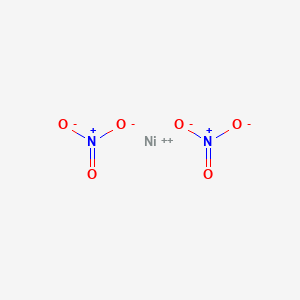
Verified chemistry for CAS 13138-45-9
Nickel nitrate
Nickel nitrate is a green crystalline solid. It is soluble in water. It is noncombustible, but it will accelerate the burning of combustible materials. If large quantities are involved in a fire or the combustible material is finely divided, an explosion may result. Prolonged exposure to fire or heat may result in an explosion. Toxic oxides of nitrogen are produced in fires involving this material. It is used in nickel plating and to make nickel catalysts for use in chemical manufacture. — CAMEO Chemicals
- IUPAC name
- nickel(2+) dinitrate
- Molecular formula
- N2NiO6
- Molecular weight
- 182.70 g/mol
- Exact mass
- 181.910977 Da
- Monoisotopic mass
- 181.910977 Da
- Topological polar surface area
- 126.0 Ų
- Molecular complexity
- 18.0
- Formal charge
- 0
- Hydrogen-bond donors
- 0
- Hydrogen-bond acceptors
- 6
- Rotatable bonds
- 0
- Heavy atoms
- 9
- Covalent units
- 3
Names and synonyms reported to PubChem
16 more reported names
External database identifiers
- EPA DTXSID:DTXSID70872958
Advanced structure statistics
- Defined atom stereocentres
- 0
- Undefined atom stereocentres
- 0
- Defined bond stereocentres
- 0
- Undefined bond stereocentres
- 0
- 3D conformers
- 0
Machine-readable structure identifiers
- SMILES
[N+](=O)([O-])[O-].[N+](=O)([O-])[O-].[Ni+2]- InChI
InChI=1S/2NO3.Ni/c2*2-1(3)4;/q2*-1;+2- InChIKey
KBJMLQFLOWQJNF-UHFFFAOYSA-N
Evidence from additional scientific databases
NIH PubChem PUG-View
Attributed physical-property, hazard, environmental and use annotations.
- Boiling Point: 137 °C @760 [mm Hg] Source: PAC Chemical Database, U.S. Department of Energy
- Color/Form: GREEN CRYSTALS Source: Hazardous Substances Data Bank (HSDB)
- Density: 2.05 at 68 °F (USCG, 1999) - Denser than water; will sink Source: CAMEO Chemicals
- Density: 2.05 no temp Source: PAC Chemical Database, U.S. Department of Energy
- Melting Point: 56.7 °C Source: PAC Chemical Database, U.S. Department of Energy
- Physical Description: Nickel nitrate is a green crystalline solid. It is soluble in water. It is noncombustible, but it will accelerate the burning of combustible materials. If large quantities are involved in a fire or the combustible material is finely divided, an explosion may result. Prolonged exposure to fire or heat may result in an explosion. Toxic oxides of nitrogen are produced in fires involving this material. It is used in nickel plating and to make nickel catalysts for use in chemical manufacture. Source: CAMEO Chemicals
- Physical Description: Liquid; Dry Powder Source: EPA Chemical Data Reporting (CDR)
- Physical Description: Hexahydrate: green, deliquescent crystals with a mp of 56.7 deg C; [Merck Index] Source: Haz-Map, Information on Hazardous Chemicals and Occupational Diseases
- Physical Description: Green odorless solid; [CHRIS] Source: Haz-Map, Information on Hazardous Chemicals and Occupational Diseases
- Solubility: SOL IN 238.5 G/100 CC WATER AT 0 °C /HEXAHYDRATE/ Source: Hazardous Substances Data Bank (HSDB)
- Solubility: SOL IN ALCOHOL; AMMONIUM HYDROXIDE /HEXAHYDRATE/ Source: Hazardous Substances Data Bank (HSDB)
- Solubility: VERY SOL IN HOT WATER /HEXAHYDRATE/ Source: Hazardous Substances Data Bank (HSDB)
- Solubility: 3 G/100 ML HYDRAZINE AT 20 °C Source: Hazardous Substances Data Bank (HSDB)
- Solubility: 7.5 WT% IN ETHYLENE GLYCOL AT 20 °C Source: Hazardous Substances Data Bank (HSDB)
- Solubility: 48.5 WT% IN WATER AT 20 °C Source: Hazardous Substances Data Bank (HSDB)
- Carcinogen Classification: 1, carcinogenic to humans. (L135) Source: Toxin and Toxin Target Database (T3DB)
- Exposure Routes: Inhalation (L41) ; oral (L41) ; dermal (L41) Source: Toxin and Toxin Target Database (T3DB)
- First Aid: INHALATION: move to fresh air; got medical attention if exposure has been severe.; INGESTION: give large amount of water.; EYES: flush with water for at least 15 min.; SKIN: wash with soap and water. (USCG, 1999) Source: CAMEO Chemicals
- ERG2024, Guide 140 (Nickel nitrate): General First Aid:; · Call 911 or emergency medical service.; · Ensure that medical personnel are aware of the material(s) involved, take precautions to protect themselves and avoid contamination.; · Move victim to fresh air if it can be done safely.; · Administer oxygen if breathing is difficult.; · If victim is not breathing:; -- DO NOT perform mouth-to-mouth resuscitation; the victim may have ingested or inhaled the substance.; -- If equipped and pulse detected, wash face and mouth, then give artificial respiration using a proper respiratory medical device (bag-valve mask, pocket mask equipped with a one-way valve or other device).; -- If no pulse detected or no respiratory medical device available, provide continuous compressions. Conduct a pulse check every two minutes or monitor for any signs of spontaneous respirations.; · Remove and isolate contaminated clothing and shoes.; · For minor skin contact, avoid spreading material on unaffected skin.; · In case of contact with substance, remove immediately by flushing skin or eyes with running water for at least 20 minutes.; · For severe burns, immediate medical attention is required.; · Effects of exposure (inhalation, ingestion, Source: Emergency Response Guidebook (ERG)
- Signal: Danger Source: Regulation (EC) No 1272/2008 of the European Parliament and of the Council
- GHS Hazard Statements: H272: May intensify fire; oxidizer [Danger Oxidizing liquids; Oxidizing solids]; H302: Harmful if swallowed [Warning Acute toxicity, oral]; H315: Causes skin irritation [Warning Skin corrosion/irritation]; H317: May cause an allergic skin reaction [Warning Sensitization, Skin]; H318: Causes serious eye damage [Danger Serious eye damage/eye irritation]; H332: Harmful if inhaled [Warning Acute toxicity, inhalation]; H334: May cause allergy or asthma symptoms or breathing difficulties if inhaled [Danger Sensitization, respiratory]; H341: Suspected of causing genetic defects [Warning Germ cell mutagenicity]; H350i: May cause cancer by inhalation [Danger Carcinogenicity]; H360D ***: May damage the unborn child [Danger Reproductive toxicity]; H372 **: Causes damage to organs through prolonged or repeated exposure [Danger Specific target organ toxicity, repeated exposure]; H400: Very toxic to aquatic life [Warning Hazardous to the aquatic environment, acute hazard]; H410: Very toxic to aquatic life with long lasting effects [Warning Hazardous to the aquatic environment, long-term hazard] Source: Regulation (EC) No 1272/2008 of the European Parliament and of the Council
- Precautionary Statement Codes: P203, P210, P220, P233, P260, P261, P264, P264+P265, P270, P271, P272, P273, P280, P284, P301+P317, P302+P352, P304+P340, P305+P354+P338, P317, P318, P319, P321, P330, P332+P317, P333+P317, P342+P316, P362+P364, P370+P378, P391, P403, P405, and P501 (click each P-code to see the statement) Source: Regulation (EC) No 1272/2008 of the European Parliament and of the Council
- Signal: Danger Source: European Chemicals Agency (ECHA)
- GHS Hazard Statements: H272 (94.3%): May intensify fire; oxidizer [Danger Oxidizing liquids; Oxidizing solids]; H302 (100%): Harmful if swallowed [Warning Acute toxicity, oral]; H315 (99.3%): Causes skin irritation [Warning Skin corrosion/irritation]; H317 (100%): May cause an allergic skin reaction [Warning Sensitization, Skin]; H318 (99.3%): Causes serious eye damage [Danger Serious eye damage/eye irritation]; H332 (99.3%): Harmful if inhaled [Warning Acute toxicity, inhalation]; H334 (98.9%): May cause allergy or asthma symptoms or breathing difficulties if inhaled [Danger Sensitization, respiratory]; H341 (99.3%): Suspected of causing genetic defects [Warning Germ cell mutagenicity]; H350 (90.1%): May cause cancer [Danger Carcinogenicity]; H360 (90.1%): May damage fertility or the unborn child [Danger Reproductive toxicity]; H372 (99.3%): Causes damage to organs through prolonged or repeated exposure [Danger Specific target organ toxicity, repeated exposure]; H400 (99.3%): Very toxic to aquatic life [Warning Hazardous to the aquatic environment, acute hazard]; H410 (99.3%): Very toxic to aquatic life with long lasting effects [Warning Hazardous to the aquatic environment, long-term hazard] Source: European Chemicals Agency (ECHA)
- Precautionary Statement Codes: P203, P210, P220, P233, P260, P261, P264, P264+P265, P270, P271, P272, P273, P280, P284, P301+P317, P302+P352, P304+P340, P305+P354+P338, P317, P318, P319, P321, P330, P332+P317, P333+P317, P342+P316, P362+P364, P370+P378, P391, P403, P405, and P501 (click each P-code to see the statement) Source: European Chemicals Agency (ECHA)
- ECHA C&L Notifications Summary: Aggregated GHS information provided per 283 reports by companies from 18 notifications to the ECHA C&L Inventory. Each notification may be associated with multiple companies.; Information may vary between notifications depending on impurities, additives, and other factors. The percentage value in parenthesis indicates the notified classification ratio from companies that provide hazard codes. Only hazard codes with percentage values above 10% are shown. For more detailed information, please visit ECHA C&L website. Source: European Chemicals Agency (ECHA)
- GHS Hazard Statements: H272 (100%): May intensify fire; oxidizer [Danger Oxidizing liquids; Oxidizing solids]; H302 (100%): Harmful if swallowed [Warning Acute toxicity, oral]; H315 (100%): Causes skin irritation [Warning Skin corrosion/irritation]; H317 (100%): May cause an allergic skin reaction [Warning Sensitization, Skin]; H318 (100%): Causes serious eye damage [Danger Serious eye damage/eye irritation]; H332 (100%): Harmful if inhaled [Warning Acute toxicity, inhalation]; H334 (100%): May cause allergy or asthma symptoms or breathing difficulties if inhaled [Danger Sensitization, respiratory]; H341 (100%): Suspected of causing genetic defects [Warning Germ cell mutagenicity]; H350 (100%): May cause cancer [Danger Carcinogenicity]; H360 (100%): May damage fertility or the unborn child [Danger Reproductive toxicity]; H372 (100%): Causes damage to organs through prolonged or repeated exposure [Danger Specific target organ toxicity, repeated exposure]; H400 (100%): Very toxic to aquatic life [Warning Hazardous to the aquatic environment, acute hazard]; H410 (100%): Very toxic to aquatic life with long lasting effects [Warning Hazardous to the aquatic environment, long-term hazard] Source: European Chemicals Agency (ECHA)
- ECHA C&L Notifications Summary: The GHS information provided by 1 company from 1 notification to the ECHA C&L Inventory. Source: European Chemicals Agency (ECHA)
- Signal: Danger Source: NITE-CMC
- GHS Hazard Statements: H272: May intensify fire; oxidizer [Danger Oxidizing liquids; Oxidizing solids]; H317: May cause an allergic skin reaction [Warning Sensitization, Skin]; H334: May cause allergy or asthma symptoms or breathing difficulties if inhaled [Danger Sensitization, respiratory]; H350: May cause cancer [Danger Carcinogenicity] Source: NITE-CMC
- Precautionary Statement Codes: P203, P210, P220, P233, P260, P261, P271, P272, P280, P284, P302+P352, P304+P340, P318, P321, P333+P317, P342+P316, P362+P364, P370+P378, P403, P405, and P501 (click each P-code to see the statement) Source: NITE-CMC
- Health Effects: The most common harmful health effect of nickel in humans is an allergic reaction. This usually manifests as a skin rash, although some people experience asthma attacks. Long term inhahation of nickel causes chronic bronchitis and reduced lung function, as well as damage to the naval cavity. Ingestion of excess nickel results in damage to the stomach, blood, liver, kidneys, and immune system, as well as having adverse effects on reproduction and development. Nitrate and nitrite poisoning causes methemoglobinemia. Nitrites may cause pregnancy complications and developmental effects. They may also be carcinogenic. (L1137, L41) Source: Toxin and Toxin Target Database (T3DB)
- Toxicity Summary: Nickel is known to substitute for other essential elements in certain enzmes, such as calcineurin. It is genotoxic, and some nickel compounds have been shown to promote cell proliferation. Nickel has a high affinity for chromatin proteins, particularly histones and protamines. The complexing of nickel ions with heterochromatin results in a number of alterations including condensation, DNA hypermethylation, gene silencing, and inhibition of histone acetylation, which have been shown to disturb gene expression. Nickel has also been shown to alter several transcription factors, including hypoxia-inducible transcription factor, activating transcription factor, and NF-KB transcription factor. There is also evidence that nickel ions inhibit DNA repair, either by directly inhibiting DNA repair enzymes or competing with zinc ions for binding to zinc-finger DNA binding proteins, resulting in structural changes in DNA that prevent repair enzymes from binding. Nickel ions can also complex with a number of cellular ligands including amino acids, peptides, and proteins resulting in the generation of oxygen radicals, which induce base damage, DNA strand breaks, and DNA protein crosslinks. Nitrat Source: Toxin and Toxin Target Database (T3DB)
- Consumer Uses: Catalyst Source: EPA Chemical Data Reporting (CDR)
- Industry Uses: Catalyst; Adhesion/cohesion promoter; Intermediate; Plating agent Source: EPA Chemical Data Reporting (CDR)
- Sources/Uses: Used in nickel plating and to make brown ceramic pigments; [Merck Index] Used in batteries; [HSDB] Used to make nickel catalysts; [CAMEO] Source: Haz-Map, Information on Hazardous Chemicals and Occupational Diseases
- Industrial Processes with risk of exposure: Electroplating [Category: Plate]; Battery Manufacturing [Category: Industry] Source: Haz-Map, Information on Hazardous Chemicals and Occupational Diseases
- Activities with risk of exposure: Ceramics making [Category: Hobbies] Source: Haz-Map, Information on Hazardous Chemicals and Occupational Diseases
- Sources/Uses: Used in nickel plating and ceramics; [EPA OHM/TADS] Source: Haz-Map, Information on Hazardous Chemicals and Occupational Diseases
- Industrial Processes with risk of exposure: Electroplating [Category: Plate] Source: Haz-Map, Information on Hazardous Chemicals and Occupational Diseases
- Uses: Nickel-plating; mfr of brown ceramic colors Source: Hazardous Substances Data Bank (HSDB)
- Uses: Nickel plating; prepn of nickel catalysts; mfr of brown ceramic colors /Hexahydrate/ Source: Hazardous Substances Data Bank (HSDB)
- Uses: IN BATTERIES Source: Hazardous Substances Data Bank (HSDB)
- Uses: COLORANT FOR GLASS Source: Hazardous Substances Data Bank (HSDB)
- Uses: For more Uses (Complete) data for NICKEL NITRATE (6 total), please visit the HSDB record page. Source: Hazardous Substances Data Bank (HSDB)
Mapped by: Existing checksum-valid CAS to unique PubChem CID match. Retrieved: 2026-08-31. Open source record
Scientific classifications and hazard annotations provide context and do not replace the market-specific regulatory decision shown above.
Additional source coverage and match status
| Source | Result | Checked |
|---|---|---|
| NIH PubChem PUG-View | Exact match | 2026-08-31 |
A recorded no-match is useful evidence that the source was checked; it is not a claim that the substance does not exist elsewhere.
Retrieved from NIH PubChem on 2026-09-02 by checksum-valid CAS matching. Chemical properties do not replace the regulatory decision on this page.
Official source and provenance
- Registered source
- Saudi SFDA prohibited and restricted ingredient lists
- Source reference
- SFDA prohibited list, page 142, row 6
- Source record ID
prohibited-141-6- Source version
- live-snapshot-2026-08-30
- Source language
- English
- Translation status
- Original is English
- Snapshot checked
- 2026-08-30 05:18 UTC
- Validation method
- complete SFDA paginated HTML snapshot; strict page/row counts
- SHA-256
ceb6cc636e6b1f4b3013f88ce0297217b49d6194342c6ece5c03b1e04256d71a
Registered dataset notes
- Dataset coverage
- Prohibited and restricted substances with CAS, EC and conditions
- Authority note
- Official SFDA dated lists; version and hash each release
How this record fits the market dataset
Status distribution
Condition text is present on 0 of 2090 current records. An empty condition field is interpreted according to the record type above; it is never converted into an unrestricted-use claim.
Saudi Arabia market context
Complete official list index
Coverage version: SFDA live prohibited/restricted lists, snapshot 30 August 2026
Every page and entry in the public SFDA prohibited and restricted ingredient indexes; restricted detail pages remain the source for conditions.
Verification checklist
- Search names and CAS across both SFDA lists.
- Open the cited restricted-entry detail and apply every condition.
- Check current SFDA/GSO technical regulations and updates.
- Complete eCosma notification, label and responsible-party requirements.
Official market sources
- Saudi SFDA prohibited and restricted ingredient listsOfficial SFDA dated lists; version and hash each release
Verification workflow and record completeness
Before using this result in a compliance decision
- Confirm that “Nickel dinitrate [1]; Nitric acid, nickel salt [2]” and every CAS/EC identifier refer to the material in your supplier specification.
- Search names and CAS across both SFDA lists.
- Open the cited restricted-entry detail and apply every condition.
- Check current SFDA/GSO technical regulations and updates.
- Complete eCosma notification, label and responsible-party requirements.
- Document the source version and recheck the regulator before manufacture, notification or market placement.
Fields available in this record
- Official substance nameAvailable
- CASAvailable
- ECNot supplied
- Separate condition textNot present in source row
- Effective dateNot supplied
- Snapshot hash and methodAvailable
Questions this page answers
Stable citation
Nickel dinitrate [1]; Nitric acid, nickel salt [2]. SFDA prohibited list, page 142, row 6. Saudi Arabia. Source version live-snapshot-2026-08-30. CosIng Checker regulatory record: https://cosingchecker.com/regulations/sa/records/10995/
Cite the regulator as the legal authority. This page is a structured evidence index and verification aid, not a substitute for the official text or professional legal assessment.
Interpretation and limits for Saudi Arabia
This official record identifies the substance as prohibited for cosmetic use in the stated market scope.
Do not rely on a formulation containing this identity until the cited source, effective date and exact substance match have been verified.
How to interpret the legal role
The cited row forms part of a binding rule or legally incorporated list for this market.
Evidence on this page
- Recorded outcome: Prohibited
- Legal role: Binding rule
- Source version: live-snapshot-2026-08-30
What it does not prove
No list match is not permission; Gulf/SFDA product, claim, notification and technical requirements still apply.
Further authoritative substance research
None of these sources overrides the market decision above.
Cosmetic Ingredient Review safety assessments
Expert Panel conclusions, assessed ingredient groups, use conditions, dates and report documents
Independent expert review considered by FDA; not a government approval or binding market rule
Research this identity at the sourceFDA Global Substance Registration System
UNII identifiers, preferred names, substance types, codes and public substance relationships
Identity registry only; UNII availability does not imply FDA review or approval
Research this identity at the sourceILO/WHO International Chemical Safety Cards
Hazards, symptoms, first aid, storage, incompatibilities and physical properties for covered chemicals
International occupational chemical-safety reference; not cosmetic-use approval
Research this identity at the sourceJapan NITE-CHRIP
Chemical identity, Japanese and foreign legal lists, GHS hazards and exposure-related information
Chemical-management evidence; cosmetic status remains governed by the applicable MHLW standard and market rules
Research this identity at the sourceNIOSH Pocket Guide to Chemical Hazards
REL, PEL, IDLH, properties, exposure routes, symptoms, target organs, first aid and measurement methods for covered workplace chemicals
US occupational-health guidance and limits; not a cosmetic ingredient decision
Research this identity at the sourceOECD eChemPortal
Gateway to authority-owned physical-property, fate, ecotoxicity, toxicity, exposure and GHS records
Discovery gateway; each linked authority remains responsible for its data
Research this identity at the sourceUS EPA CompTox CTX APIs
API key required for importDTXSID identity, experimental and predicted properties, toxicity, bioactivity, exposure and environmental data
Scientific and computational evidence; predictions must remain labelled and do not determine cosmetic legality
Research this identity at the source