
Potassium or sodium hydroxide
New Zealand Cosmetic Products Group Standard Schedule 5, reference 15a.
Regulatory decision and full conditions
- Status
- Restricted
- Legal role
- Binding rule
- Regulatory summary
- New Zealand Cosmetic Products Group Standard Schedule 5, reference 15a.
- Conditions and restrictions
Product scope: (a) Nail cuticle solvent (b) Hair straightener (i) General use (ii) Professional use (c) pH adjuster – depilatories (d) Other uses as pH adjuster · Maximum concentration: (a) 5% by weight* (b)(i) 2% by weight* (b)(ii) 4.5% by weight* · Other limitations: (c) pH value not to exceed pH 12.7 (d) pH value not to exceed pH 11 · Warnings: Contains alkali.
Substance identity
- Official source name
- Potassium or sodium hydroxide
- CAS
- 1310-73-2
- EC
- 215-185-5
- Identity mapping
- cas_number
- Linked ingredient
- SODIUM HYDROXIDE
Linked CosIng identity data
Names and aliases
CosIng description: Sodium hydroxide
EU inventory restriction note: III/15a
Recorded cosmetic function: BUFFERING, DENATURANT
Function pages:BUFFERING, DENATURANT
View the complete ingredient profileCross-market snapshot for this identity
Exact linked records currently present in this site. An absent market means no imported exact match, not permission to use the substance.
European Union
1 linked record · 1 with specific conditions
Open supporting recordGreat Britain
1 linked record · 1 with specific conditions
Open supporting recordNew Zealand
Current record1 linked record · 1 with specific conditions
Open supporting recordASEAN
1 linked record · 1 with specific conditions
Open supporting recordSouth Korea
1 linked record · 1 with specific conditions
Open supporting recordIndia
1 linked record · 1 with specific conditions
Open supporting recordSaudi Arabia
1 linked record
Open supporting record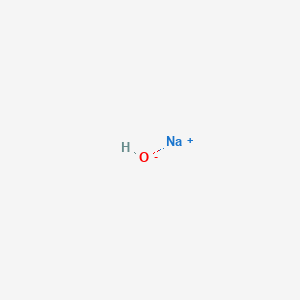
Verified chemistry for CAS 1310-73-2
Sodium Hydroxide
Sodium hydroxide is an alkali metal hydroxide. — ChEBI
- IUPAC name
- sodium hydroxide
- Molecular formula
- HNaO
- Molecular weight
- 39.997 g/mol
- Exact mass
- 39.99250893 Da
- Monoisotopic mass
- 39.99250893 Da
- Topological polar surface area
- 1.0 Ų
- Molecular complexity
- 2.0
- Formal charge
- 0
- Hydrogen-bond donors
- 1
- Hydrogen-bond acceptors
- 1
- Rotatable bonds
- 0
- Heavy atoms
- 2
- Covalent units
- 2
Names and synonyms reported to PubChem
16 more reported names
External database identifiers
- ChEBI:CHEBI:32145
- ChEMBL:CHEMBL2105794
- EPA DTXSID:DTXSID0029634
- PubMed:38202631
- PubMed:33358762
- PubMed:30365877
- PubMed:29953848
- PubMed:29893927
- PubMed:27258892
- PubMed:27206134
- PubMed:22363499
- PubMed:19433192
- PubMed:16756599
- PubMed:15965962
- PubMed:15302423
Advanced structure statistics
- Defined atom stereocentres
- 0
- Undefined atom stereocentres
- 0
- Defined bond stereocentres
- 0
- Undefined bond stereocentres
- 0
- 3D conformers
- 0
Machine-readable structure identifiers
- SMILES
[OH-].[Na+]- InChI
InChI=1S/Na.H2O/h;1H2/q+1;/p-1- InChIKey
HEMHJVSKTPXQMS-UHFFFAOYSA-M
Evidence from additional scientific databases
NIH PubChem PUG-View
Attributed physical-property, hazard, environmental and use annotations.
- Autoignition Temperature: Not flammable (USCG, 1999) Source: CAMEO Chemicals
- Boiling Point: greater than 266 °F at 760 mmHg (USCG, 1999) Source: CAMEO Chemicals
- Boiling Point: Very high (USCG, 1999) Source: CAMEO Chemicals
- Boiling Point: 1388 Source: DrugBank
- Boiling Point: 1388 °C Source: Hazardous Substances Data Bank (HSDB)
- Boiling Point: 1388 °C Source: ILO-WHO International Chemical Safety Cards (ICSCs)
- Boiling Point: 2534 °F Source: Occupational Safety and Health Administration (OSHA)
- Boiling Point: 1388 °C @760 [mm Hg] Source: PAC Chemical Database, U.S. Department of Energy
- Boiling Point: 2534 °F Source: The National Institute for Occupational Safety and Health (NIOSH)
- Color/Form: White, orthogonal crystals Source: Hazardous Substances Data Bank (HSDB)
- Color/Form: Colorless to white ... solid (flakes, beads, granular form). Source: Hazardous Substances Data Bank (HSDB)
- Color/Form: Brittle, white, translucent crystalline solid Source: Hazardous Substances Data Bank (HSDB)
- Density: 1.5 at 68 °F (USCG, 1999) - Denser than water; will sink Source: CAMEO Chemicals
- Density: 2.13 at 68 °F (USCG, 1999) - Denser than water; will sink Source: CAMEO Chemicals
- Density: 2.13 g/cu cm 25 °C Source: Hazardous Substances Data Bank (HSDB)
- Density: 70-73 % solution: MP 62 °C; Density = 2.0 at 15.5 °C Source: Hazardous Substances Data Bank (HSDB)
- Density: 2.1 g/cm³ Source: ILO-WHO International Chemical Safety Cards (ICSCs)
- Density: 2.13 Source: Occupational Safety and Health Administration (OSHA)
- Density: 2.13 @25 °C Source: PAC Chemical Database, U.S. Department of Energy
- Density: 2.13 Source: The National Institute for Occupational Safety and Health (NIOSH)
- Dissociation Constants: SRP4: Completely dissociated Source: Hazardous Substances Data Bank (HSDB)
- Melting Point: 604 °F (USCG, 1999) Source: CAMEO Chemicals
- Melting Point: 323 Source: DrugBank
- Melting Point: 323 °C Source: Hazardous Substances Data Bank (HSDB)
- Melting Point: 318 °C Source: ILO-WHO International Chemical Safety Cards (ICSCs)
- Melting Point: 605 °F Source: Occupational Safety and Health Administration (OSHA)
- Melting Point: 323 °C Source: PAC Chemical Database, U.S. Department of Energy
- Melting Point: 605 °F Source: The National Institute for Occupational Safety and Health (NIOSH)
- Odor: ... Odorless ... Source: Hazardous Substances Data Bank (HSDB)
- Physical Description: Sodium hydroxide solution appears as a colorless liquid. More dense than water. Contact may severely irritate skin, eyes, and mucous membranes. Toxic by ingestion. Corrosive to metals and tissue. Source: CAMEO Chemicals
- Physical Description: Sodium hydroxide, solid appears as a white solid. Corrosive to metals and tissue. Used in chemical manufacturing, petroleum refining, cleaning compounds, drain cleaners. Source: CAMEO Chemicals
- Physical Description: Other Solid; Dry Powder; Liquid; Other Solid; CBI; Large Crystals; Dry Powder; Liquid; Large Crystals; Liquid; Liquid Source: EPA Chemical Data Reporting (CDR)
- Physical Description: White or nearly white pellets, flakes, sticks, fused masses or other forms. Solutions are clear or slightly turbid, colourless or slightly coloured, strongly caustic and hygroscopic and when exposed to the air they absorb carbon dioxide, forming sodium carbonate Source: EU Food Improvement Agents
- Physical Description: Colorless to white, odorless solid (flakes, beads, granular form); [NIOSH] Deliquescent; [CHEMINFO] Source: Haz-Map, Information on Hazardous Chemicals and Occupational Diseases
- Physical Description: WHITE HYGROSCOPIC SOLID IN VARIOUS FORMS. Source: ILO-WHO International Chemical Safety Cards (ICSCs)
- Physical Description: Colorless to white, odorless solid (flakes, beads, granular form). Source: Occupational Safety and Health Administration (OSHA)
- Physical Description: Colorless to white, odorless solid (flakes, beads, granular form). Source: The National Institute for Occupational Safety and Health (NIOSH)
- Refractive Index: Refractive index at 589.4 nm: 1.433 at 320 °C; 1.421 at 420 °C Source: Hazardous Substances Data Bank (HSDB)
- Solubility: 111 % (NIOSH, 2024) Source: CAMEO Chemicals
- Solubility: easily soluble in cold water, hot water Source: DrugBank
- Solubility: Very soluble in water. Freely soluble in ethanol Source: EU Food Improvement Agents
- Solubility: 1 g dissolves in 7.2 mL absolute alcohol, 4.2 mL methanol; also soluble in glycerol Source: Hazardous Substances Data Bank (HSDB)
- Solubility: 1 g dissolves in 0.9 mL water, 0.3 mL boiling water Source: Hazardous Substances Data Bank (HSDB)
- Solubility: Solubility in water, g/100ml at 20 °C: 109 (very good) Source: ILO-WHO International Chemical Safety Cards (ICSCs)
- Solubility: 111% Source: The National Institute for Occupational Safety and Health (NIOSH)
- Vapor Pressure: 0 mmHg (approx) (NIOSH, 2024) Source: CAMEO Chemicals
- Vapor Pressure: VP: 1 Pa at 513 °C; 10 Pa at 605 °C; 100 Pa at 722 °C; 1kPa at 874 °C; 10 kPa at 1080 °C; 100 kPa at 1377 °C Source: Hazardous Substances Data Bank (HSDB)
- Vapor Pressure: 1.82X10⁻²¹ mm Hg at 25 °C /extrapolated/ Source: Hazardous Substances Data Bank (HSDB)
- Vapor Pressure: 0 mmHg (approx) Source: Occupational Safety and Health Administration (OSHA)
- Vapor Pressure: 0 mmHg (approx) Source: The National Institute for Occupational Safety and Health (NIOSH)
- Viscosity: 4.0 cP at 350 °C Source: Hazardous Substances Data Bank (HSDB)
- pH: Strongly alkaline (1 % solution) Source: EU Food Improvement Agents
- pH: pH of a 0.05% wt/wt solution about 12; 0.5% solution about 13; 5% solution about 14 Source: Hazardous Substances Data Bank (HSDB)
- Exposure Routes: Serious local effects by all routes of exposure. Source: ILO-WHO International Chemical Safety Cards (ICSCs)
- Exposure Routes: inhalation, ingestion, skin and/or eye contact Source: The National Institute for Occupational Safety and Health (NIOSH)
- First Aid: (Act quickly); EYES: flush with water at once for at least 15 min.; SKIN: flush with water, then rinse with dilute vinegar (acetic acid).; INGESTION: give water and milk. Do NOT induce vomiting. Call physician at once, even when injury seems to be slight. (USCG, 1999) Source: CAMEO Chemicals
- First Aid: Excerpt from NIOSH Pocket Guide for Sodium hydroxide:; Eye: IRRIGATE IMMEDIATELY - If this chemical contacts the eyes, immediately wash (irrigate) the eyes with large amounts of water, occasionally lifting the lower and upper lids. Get medical attention immediately.; Skin: WATER FLUSH IMMEDIATELY - If this chemical contacts the skin, immediately flush the contaminated skin with water. If this chemical penetrates the clothing, immediately remove the clothing and flush the skin with water. Get medical attention promptly.; Breathing: RESPIRATORY SUPPORT - If a person breathes large amounts of this chemical, move the exposed person to fresh air at once. If breathing has stopped, perform artificial respiration. Keep the affected person warm and at rest. Get medical attention as soon as possible.; Swallow: MEDICAL ATTENTION IMMEDIATELY - If this chemical has been swallowed, get medical attention immediately. (NIOSH, 2024) Source: CAMEO Chemicals
- ERG2024, Guide 154 (Sodium hydroxide, solution; Sodium hydroxide, solid): General First Aid:; · Call 911 or emergency medical service.; · Ensure that medical personnel are aware of the material(s) involved, take precautions to protect themselves and avoid contamination.; · Move victim to fresh air if it can be done safely.; · Administer oxygen if breathing is difficult.; · If victim is not breathing:; -- DO NOT perform mouth-to-mouth resuscitation; the victim may have ingested or inhaled the substance.; -- If equipped and pulse detected, wash face and mouth, then give artificial respiration using a proper respiratory medical device (bag-valve mask, pocket mask equipped with a one-way valve or other device).; -- If no pulse detected or no respiratory medical device available, provide continuous compressions. Conduct a pulse check every two minutes or monitor for any signs of spontaneous respirations.; · Remove and isolate contaminated clothing and shoes.; · For minor skin contact, avoid spreading material on unaffected skin.; · In case of contact with substance, remove immediately by flushing skin or eyes with running water for at least 20 minutes.; · For severe burns, immediate medical attention is required.; · Effects of exposure (inhalation, ingestion, Source: Emergency Response Guidebook (ERG)
- ERG2024, Guide 154 (Caustic soda, solid; Caustic soda, solution): General First Aid:; · Call 911 or emergency medical service.; · Ensure that medical personnel are aware of the material(s) involved, take precautions to protect themselves and avoid contamination.; · Move victim to fresh air if it can be done safely.; · Administer oxygen if breathing is difficult.; · If victim is not breathing:; -- DO NOT perform mouth-to-mouth resuscitation; the victim may have ingested or inhaled the substance.; -- If equipped and pulse detected, wash face and mouth, then give artificial respiration using a proper respiratory medical device (bag-valve mask, pocket mask equipped with a one-way valve or other device).; -- If no pulse detected or no respiratory medical device available, provide continuous compressions. Conduct a pulse check every two minutes or monitor for any signs of spontaneous respirations.; · Remove and isolate contaminated clothing and shoes.; · For minor skin contact, avoid spreading material on unaffected skin.; · In case of contact with substance, remove immediately by flushing skin or eyes with running water for at least 20 minutes.; · For severe burns, immediate medical attention is required.; · Effects of exposure (inhalation, ingestion, Source: Emergency Response Guidebook (ERG)
- First Aid: (General first aid procedures); Eye: Irrigate immediately - If this chemical contacts the eyes, immediately wash (irrigate) the eyes with large amounts of water, occasionally lifting the lower and upper lids. Get medical attention immediately.; Skin: Water flush immediately - If this chemical contacts the skin, immediately flush the contaminated skin with water. If this chemical penetrates the clothing, immediately remove the clothing and flush the skin with water. Get medical attention promptly.; Breathing: Respiratory support; Swallow: Medical attention immediately - If this chemical has been swallowed, get medical attention immediately. Source: The National Institute for Occupational Safety and Health (NIOSH)
- Signal: Danger Source: Regulation (EC) No 1272/2008 of the European Parliament and of the Council
- GHS Hazard Statements: H314: Causes severe skin burns and eye damage [Danger Skin corrosion/irritation] Source: Regulation (EC) No 1272/2008 of the European Parliament and of the Council
- Precautionary Statement Codes: P260, P264, P280, P301+P330+P331, P302+P361+P354, P304+P340, P305+P354+P338, P316, P321, P363, P405, and P501 (click each P-code to see the statement) Source: Regulation (EC) No 1272/2008 of the European Parliament and of the Council
- Note: This chemical does not meet GHS hazard criteria for < 0.1% (4 of 6949) of reports. Source: European Chemicals Agency (ECHA)
- Signal: Danger Source: European Chemicals Agency (ECHA)
- GHS Hazard Statements: H290 (47.5%): May be corrosive to metals [Warning Corrosive to Metals]; H314 (> 99.9%): Causes severe skin burns and eye damage [Danger Skin corrosion/irritation]; H315 (36.5%): Causes skin irritation [Warning Skin corrosion/irritation]; H318 (44.1%): Causes serious eye damage [Danger Serious eye damage/eye irritation]; H319 (36.6%): Causes serious eye irritation [Warning Serious eye damage/eye irritation] Source: European Chemicals Agency (ECHA)
- Precautionary Statement Codes: P234, P260, P264, P264+P265, P280, P301+P330+P331, P302+P352, P302+P361+P354, P304+P340, P305+P351+P338, P305+P354+P338, P316, P317, P321, P332+P317, P337+P317, P362+P364, P363, P390, P405, P406, and P501 (click each P-code to see the statement) Source: European Chemicals Agency (ECHA)
- ECHA C&L Notifications Summary: Aggregated GHS information provided per 6949 reports by companies from 80 notifications to the ECHA C&L Inventory. Each notification may be associated with multiple companies.; Reported as not meeting GHS hazard criteria per 4 of 6949 reports by companies.; There are 79 notifications provided by 6945 of 6949 reports by companies with hazard statement code(s).; Information may vary between notifications depending on impurities, additives, and other factors. The percentage value in parenthesis indicates the notified classification ratio from companies that provide hazard codes. Only hazard codes with percentage values above 10% are shown. For more detailed information, please visit ECHA C&L website. Source: European Chemicals Agency (ECHA)
- GHS Hazard Statements: H290 (100%): May be corrosive to metals [Warning Corrosive to Metals]; H314 (100%): Causes severe skin burns and eye damage [Danger Skin corrosion/irritation]; H318 (100%): Causes serious eye damage [Danger Serious eye damage/eye irritation] Source: European Chemicals Agency (ECHA)
- Precautionary Statement Codes: P234, P260, P264, P264+P265, P280, P301+P330+P331, P302+P361+P354, P304+P340, P305+P354+P338, P316, P317, P321, P363, P390, P405, P406, and P501 (click each P-code to see the statement) Source: European Chemicals Agency (ECHA)
- ECHA C&L Notifications Summary: Aggregated GHS information provided per 2 reports by companies from 1 notifications to the ECHA C&L Inventory. Each notification may be associated with multiple companies.; Information may vary between notifications depending on impurities, additives, and other factors. The percentage value in parenthesis indicates the notified classification ratio from companies that provide hazard codes. Only hazard codes with percentage values above 10% are shown. For more detailed information, please visit ECHA C&L website. Source: European Chemicals Agency (ECHA)
- Signal: Danger Source: NITE-CMC
- NFPA Health Rating: 3 - Materials that, under emergency conditions, can cause serious or permanent injury. Source: Hazardous Substances Data Bank (HSDB)
- NFPA Fire Rating: 0 - Materials that will not burn under typical fire conditions, including intrinsically noncombustible materials such as concrete, stone, and sand. Source: Hazardous Substances Data Bank (HSDB)
- NFPA Instability Rating: 1 - Materials that in themselves are normally stable but that can become unstable at elevated temperatures and pressures. Source: Hazardous Substances Data Bank (HSDB)
- Target Organs: Eyes, skin, respiratory system Source: The National Institute for Occupational Safety and Health (NIOSH)
- Cosmetic Ingredient Review Conclusion: The CIR Expert Panel concluded that ... Sodium Hydroxide is safe in hair straighteners and depilatories under conditions of recommended use; users should minimize skin contact. These ingredients are safe for all other present practices of use and concentration described in this safety assessment when formulated to be nonirritating. Source: Cosmetic Ingredient Review (CIR)
- Cosmetic Ingredient Review Finding(s): Safe for use in cosmetics, with qualifications Source: Cosmetic Ingredient Review (CIR)
- Environmental Fate: AQUATIC FATE: In the case of a solid, anhydrous sodium hydroxide spill on soil, ground water pollution will occur if precipitation occurs prior to clean up. Precipitation will dissolve some of the solid (with much heat given off) and create an aqueous solution of sodium hydroxide, which then would be able to infiltrate the soil. However, prediction of the concentration and properties of the solution produced would be difficult. Source: Hazardous Substances Data Bank (HSDB)
- Consumer Uses: Adhesion/cohesion promoter; Etching agent; Flocculating agent; Intermediate; Processing aids, specific to petroleum production; Oxidizing agent; Laboratory chemicals; Dye; Cleaning agent; Plasticizer; Stabilizing agent; Soil amendments (fertilizers); Catalyst; Ion exchange agent; Not Known or Reasonably Ascertainable; Processing aids not otherwise specified; Surfactant (surface active agent); Chemical reaction regulator; Fuel agents; pH regulating agent; Bleaching agent; Solvent; Dispersing agent; Anti-freeze agent; Anti-adhesive/cohesive; Other; Lubricating agent Source: EPA Chemical Data Reporting (CDR)
- Industry Uses: Soil amendments (fertilizers); Ion exchange agent; Catalyst; Diluent; Not Known or Reasonably Ascertainable; Thickening agent; Corrosion inhibitor; Stabilizing agent; Reducing agent; Cleaning agent; Dye; Softener and conditioner; Adsorbent; Defoamer; Intermediate; Anti-scaling agent; Processing aids, specific to petroleum production; Adhesion/cohesion promoter; Etching agent; Flocculating agent; Chelating agent; Leaching agent; Lubricating agent; Other; Sizing agent; CBI; Swelling agent; Anti-freeze agent; Anti-adhesive/cohesive; Solvent; Fuel agents; pH regulating agent; Antioxidant; Bleaching agent; Chemical reaction regulator; Plating agent; Processing aids, not otherwise listed; Processing aids not otherwise specified Source: EPA Chemical Data Reporting (CDR)
- Cosmetic Ingredient Review Link: CIR ingredient: Sodium Hydroxide Source: Cosmetic Ingredient Review (CIR)
- Sources/Uses: Used to neutralize acids, produce sodium salts, hydrolyze fats to make soaps, and precipitate metals; large amounts are used in petroleum refining, rayon production, and rubber reclaiming; [Merck Index # 8627] Also used in metal cleaning, electroplating, processing cotton fabrics, and bleaching; [ATSDR Medical Management] Used in photography (developing bath); [www.ci.tucson.az.us/arthazards/medium.html] In semiconductor manufacturing, sodium hydroxide is used to develop the pattern in the photoresists and also as a wet echant. [CHS, p. 44-5] Caustic soda is used in hide preparation for leather production; [PMID 21938525] Source: Haz-Map, Information on Hazardous Chemicals and Occupational Diseases
- Industrial Processes with risk of exposure: Acid and Alkali Cleaning of Metals [Category: Clean]; Electroplating [Category: Plate]; Petroleum Production and Refining [Category: Industry]; Semiconductor Manufacturing [Category: Industry]; Smelting Copper or Lead [Category: Industry]; Textiles (Fiber & Fabric Manufacturing) [Category: Industry]; Leather Tanning and Processing [Category: Industry]; Photographic Processing [Category: Other]; Textiles (Printing, Dyeing, or Finishing) [Category: Industry]; Metal Extraction and Refining [Category: Industry] Source: Haz-Map, Information on Hazardous Chemicals and Occupational Diseases
- Activities with risk of exposure: Textile arts [Category: Hobbies]; Applying metallic patinas [Category: Hobbies] Source: Haz-Map, Information on Hazardous Chemicals and Occupational Diseases
- Uses: Both oil base and water base fracturing fluids are being used in the fracturing industry. Water base, which includes alcohol-water mixtures and low strength acids, make up the majority of treating fluids. The common chemicals added to these fluids are polymers for viscosity development, crosslinkers for viscosity enhancement, pH control chemicals, gel breakers for polymer degradation following the treatment, surfactants, clay stabilizers, alcohol, bactericides, fluid loss additives and friction reducer. /Hydraulic fracturing/ Source: Hazardous Substances Data Bank (HSDB)
- Uses: Hydraulic fracturing uses a specially blended liquid which is pumped into a well under extreme pressure causing cracks in rock formations underground. These cracks in the rock then allow oil and natural gas to flow, increasing resource production. ... Chemical Name: Sodium hydroxide; Chemical Purpose: Adjusts the pH of fluid to maintain the effectiveness of other components, such as crosslinkers; Product Function: pH Adjusting agent. Source: Hazardous Substances Data Bank (HSDB)
- Uses: For sodium hydroxide (USEPA/OPP Pesticide Code: 075603) ACTIVE products with label matches. /SRP: Registered for use in the U.S. but approved pesticide uses may change periodically and so federal, state and local authorities must be consulted for currently approved uses./ Source: Hazardous Substances Data Bank (HSDB)
- Uses: In inorganic chemistry, sodium hydroxide is used in the manufacture of sodium salts, for alkaline ore digestion, and for pH regulation. Source: Hazardous Substances Data Bank (HSDB)
- Uses: For more Uses (Complete) data for SODIUM HYDROXIDE (16 total), please visit the HSDB record page. Source: Hazardous Substances Data Bank (HSDB)
Mapped by: Existing checksum-valid CAS to unique PubChem CID match. Retrieved: 2026-08-31. Open source record
Scientific classifications and hazard annotations provide context and do not replace the market-specific regulatory decision shown above.
Additional source coverage and match status
| Source | Result | Checked |
|---|---|---|
| NIH PubChem PUG-View | Exact match | 2026-08-31 |
A recorded no-match is useful evidence that the source was checked; it is not a claim that the substance does not exist elsewhere.
Retrieved from NIH PubChem on 2026-09-02 by checksum-valid CAS matching. Chemical properties do not replace the regulatory decision on this page.
Official source and provenance
- Registered source
- New Zealand cosmetic product schedules 4–8
- Source reference
- Schedule 5, reference 15a, source row 31
- Source record ID
S5-31- Source version
- effective-2026-01-01
- Source language
- English
- Translation status
- Original is English
- Effective date
- 2026-01-01
- Source updated
- 2024-01-01
- Snapshot checked
- 2026-08-30 04:54 UTC
- Validation method
- openpyxl extraction; reviewed per-schedule counts
- SHA-256
4e62e372fb0aad7ac630af8c41fa50b38b52a793fd51b99697a65f8ecce1ae8a
Registered dataset notes
- Dataset coverage
- Prohibited and restricted substances, permitted colorants, preservatives and UV filters
- Authority note
- Official EPA group standard schedules; current market-specific rule source
How this record fits the market dataset
Status distribution
Condition text is present on 747 of 2913 current records. An empty condition field is interpreted according to the record type above; it is never converted into an unrestricted-use claim.
New Zealand market context
Complete schedules dataset
Coverage version: Cosmetic Products Group Standard schedules effective 1 January 2026
Schedules 4–8: prohibited, restricted, colourant, preservative and UV-filter entries.
Verification checklist
- Search exact identity across Schedules 4–8.
- Apply use, concentration and warning conditions.
- Check hazardous-substance classification and Group Standard scope.
- Confirm the latest legal instrument, not only the spreadsheet.
Official market sources
- New Zealand cosmetic product schedules 4–8Official EPA group standard schedules; current market-specific rule source
Verification workflow and record completeness
Before using this result in a compliance decision
- Confirm that “Potassium or sodium hydroxide” and every CAS/EC identifier refer to the material in your supplier specification.
- Search exact identity across Schedules 4–8.
- Apply use, concentration and warning conditions.
- Check hazardous-substance classification and Group Standard scope.
- Confirm the latest legal instrument, not only the spreadsheet.
- Document the source version and recheck the regulator before manufacture, notification or market placement.
Fields available in this record
- Official substance nameAvailable
- CASAvailable
- ECAvailable
- Separate condition textAvailable
- Effective dateAvailable
- Snapshot hash and methodAvailable
Questions this page answers
Stable citation
Potassium or sodium hydroxide. Schedule 5, reference 15a, source row 31. New Zealand. Source version effective-2026-01-01. CosIng Checker regulatory record: https://cosingchecker.com/regulations/nz/records/8877/
Cite the regulator as the legal authority. This page is a structured evidence index and verification aid, not a substitute for the official text or professional legal assessment.
Interpretation and limits for New Zealand
This substance is not unrestricted: cosmetic use is subject to the conditions in the cited official record.
Check product type, body area, concentration, purity and warning requirements before deciding whether a formulation is compliant.
How to interpret the legal role
The cited row forms part of a binding rule or legally incorporated list for this market.
Evidence on this page
- Recorded outcome: Restricted
- Legal role: Binding rule
- Source version: effective-2026-01-01
- Effective date: 2026-01-01
What it does not prove
The searchable spreadsheet is an aid; the legal Group Standard and incorporated notices remain authoritative.
Further authoritative substance research
None of these sources overrides the market decision above.
Cosmetic Ingredient Review safety assessments
Expert Panel conclusions, assessed ingredient groups, use conditions, dates and report documents
Independent expert review considered by FDA; not a government approval or binding market rule
Research this identity at the sourceFDA Global Substance Registration System
UNII identifiers, preferred names, substance types, codes and public substance relationships
Identity registry only; UNII availability does not imply FDA review or approval
Research this identity at the sourceILO/WHO International Chemical Safety Cards
Hazards, symptoms, first aid, storage, incompatibilities and physical properties for covered chemicals
International occupational chemical-safety reference; not cosmetic-use approval
Research this identity at the sourceJapan NITE-CHRIP
Chemical identity, Japanese and foreign legal lists, GHS hazards and exposure-related information
Chemical-management evidence; cosmetic status remains governed by the applicable MHLW standard and market rules
Research this identity at the sourceNIOSH Pocket Guide to Chemical Hazards
REL, PEL, IDLH, properties, exposure routes, symptoms, target organs, first aid and measurement methods for covered workplace chemicals
US occupational-health guidance and limits; not a cosmetic ingredient decision
Research this identity at the sourceOECD eChemPortal
Gateway to authority-owned physical-property, fate, ecotoxicity, toxicity, exposure and GHS records
Discovery gateway; each linked authority remains responsible for its data
Research this identity at the sourceUS EPA CompTox CTX APIs
API key required for importDTXSID identity, experimental and predicted properties, toxicity, bioactivity, exposure and environmental data
Scientific and computational evidence; predictions must remain labelled and do not determine cosmetic legality
Research this identity at the source