
POTASSIUM HYDROXIDE / SODIUM HYDROXIDE
Potassium or sodium hydroxide
POTASSIUM HYDROXIDE / SODIUM HYDROXIDE is listed in Annex III and may only be used under the conditions shown in this record. Maximum concentration in this record: (a) 5% (b) 2% (General use) and 4.5% (Professional use) Entry 15d: 1,5%.
Reading this entry
For the two commonest alkalis in cosmetics, the limit is often a pH rather than a percentage — up to pH 11 as a general pH adjuster, 12.7 in depilatories.
- Nail cuticle solvent 5%. Hair straightener 2% general use, 4.5% professional.
- As a pH adjuster in depilatories, the limit is pH 12.7; for other pH-adjusting uses it is pH 11.
- Callosity softeners are entry 15d at 1.5%.
- The label warnings are unusually direct: 'Contains alkali', 'Avoid contact with eyes', 'Can cause blindness'.
Sodium and potassium hydroxide appear in a great many formulations purely to adjust pH, and for that use the entry does not set a percentage at all. It sets a pH: up to 11 for general pH adjustment, up to 12.7 where the product is a depilatory. The quantity used is whatever reaches that point, and the finished product's pH is what a regulator measures.
Where the alkali is doing work rather than adjusting, percentages return. A nail cuticle solvent may contain 5%. A hair straightener may contain 2% for general use or 4.5% for professional use, and the professional version must say so on the label.
The warning text is worth quoting because it is stronger than most in the annexes and it is mandatory rather than advisory: 'Contains alkali', 'Avoid contact with eyes', 'Can cause blindness', 'Keep out of reach of children'. Which of them apply depends on the category, and a product using the entry without the matching warnings is not compliant even if its concentration is.
Checked against
Chemical identity and properties
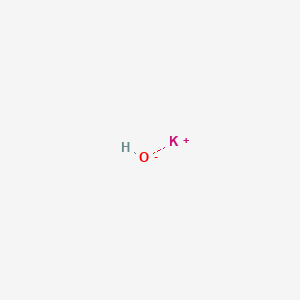
Potassium Hydroxide
Potassium hydroxide is an alkali metal hydroxide. — ChEBI
- IUPAC name
- potassium hydroxide
- Molecular formula
- HKO
- Molecular weight
- 56.106 g/mol
- Exact mass
- 55.96644614 Da
- Topological polar surface area
- 1.0 Ų
- Hydrogen-bond donors
- 1
- Hydrogen-bond acceptors
- 1
- Covalent units
- 2
- Defined stereocentres
- 0
Also known as
16 more reported names
External database identifiers
- ChEBI:CHEBI:32035
- ChEMBL:CHEMBL2103983
- EPA DTXSID:DTXSID5029633
- PubMed:11750165
Evidence from additional scientific databases
NIH PubChem PUG-View
Attributed physical-property, hazard, environmental and use annotations.
- Autoignition Temperature: Not flammable (USCG, 1999) Source: CAMEO Chemicals
- Boiling Point: greater than 266 °F at 760 mmHg (USCG, 1999) Source: CAMEO Chemicals
- Boiling Point: 2408 °F at 760 mmHg (NTP, 1992) Source: CAMEO Chemicals
- Boiling Point: 1,320 Source: DrugBank
- Boiling Point: 1327 °C Source: Hazardous Substances Data Bank (HSDB)
- Boiling Point: 1324 °C Source: ILO-WHO International Chemical Safety Cards (ICSCs)
- Boiling Point: 2408 °F Source: Occupational Safety and Health Administration (OSHA)
- Boiling Point: 1327 °C @760 [mm Hg] Source: PAC Chemical Database, U.S. Department of Energy
- Boiling Point: 2415 °F Source: The National Institute for Occupational Safety and Health (NIOSH)
- Color/Form: White or colorless, orthorhombic, deliquescent pieces, lumps, or sticks having crystalline fracture Source: Hazardous Substances Data Bank (HSDB)
- Color/Form: White or slightly yellow lumps, rods, pellets Source: Hazardous Substances Data Bank (HSDB)
- Color/Form: White rhombic crystals Source: Hazardous Substances Data Bank (HSDB)
- Density: 1.45 to 1.50 at 68 °F (USCG, 1999) Source: CAMEO Chemicals
- Density: 2.04 at 59 °F (USCG, 1999) - Denser than water; will sink Source: CAMEO Chemicals
- Density: 2.044 g/cu cm Source: Hazardous Substances Data Bank (HSDB)
- Density: Colorless, strongly basic, soapy, caustic liquid whose density depends on the concentration (g/cu cm at wt%): 1.092 at 10; 1.188 at 29; a.291 at 30; a.395 at 40; 1.514 at 50 /Aqueous potassium hydroxide/ Source: Hazardous Substances Data Bank (HSDB)
- Density: 2.04 g/cm³ Source: ILO-WHO International Chemical Safety Cards (ICSCs)
- Density: 2.04 Source: Occupational Safety and Health Administration (OSHA)
- Density: 2.044 @25 °C Source: PAC Chemical Database, U.S. Department of Energy
- Density: 2.04 Source: The National Institute for Occupational Safety and Health (NIOSH)
- Melting Point: 680 °F approximately (NTP, 1992) Source: CAMEO Chemicals
- Melting Point: 405 Source: DrugBank
- Melting Point: about 360 °C; about 380 °C when anhydrous Source: Hazardous Substances Data Bank (HSDB)
- Melting Point: Melting point: 406 °C Source: Hazardous Substances Data Bank (HSDB)
- Melting Point: 90-92% KOH; MP: about 250 °C; heat of fusion: about 6.7 kJ/mol /Technical potassium hydroxide/ Source: Hazardous Substances Data Bank (HSDB)
- Melting Point: 380 °C Source: ILO-WHO International Chemical Safety Cards (ICSCs)
- Melting Point: 680 °F Source: Occupational Safety and Health Administration (OSHA)
- Melting Point: 406 °C Source: PAC Chemical Database, U.S. Department of Energy
- Melting Point: 716 °F Source: The National Institute for Occupational Safety and Health (NIOSH)
- Odor: Odorless Source: Hazardous Substances Data Bank (HSDB)
- Physical Description: Potassium hydroxide, solution appears as an clear aqueous solution. Corrosive to metals and tissue. Noncombustible. Used in chemical manufacturing, petroleum refining, cleaning compounds. Source: CAMEO Chemicals
- Physical Description: Potassium hydroxide, [dry solid, flake, bead, or granular] appears as a white solid. Corrosive to metals and tissue. Used in soap manufacture, bleach, as an electrolyte in alkaline batteries, and as a food additive. Source: CAMEO Chemicals
- Physical Description: Liquid; Dry Powder; Liquid; Liquid; Other Solid; Dry Powder; Large Crystals; Large Crystals; CBI; Dry Powder; Other Solid Source: EPA Chemical Data Reporting (CDR)
- Physical Description: White or nearly white pellets, flakes, sticks, fused masses or other forms Source: EU Food Improvement Agents
- Physical Description: Odorless, white or slightly yellow lumps, rods, flakes, sticks, or pellets. [Note: May be used as an aqueous solution.]; [NIOSH] Source: Haz-Map, Information on Hazardous Chemicals and Occupational Diseases
- Physical Description: WHITE HYGROSCOPIC SOLID IN VARIOUS FORMS. Source: ILO-WHO International Chemical Safety Cards (ICSCs)
- Physical Description: White, odorless solid or clear aqueous solution. Source: Occupational Safety and Health Administration (OSHA)
- Physical Description: Odorless, white or slightly yellow lumps, rods, flakes, sticks, or pellets. [Note: May be used as an aqueous solution.] Source: The National Institute for Occupational Safety and Health (NIOSH)
- Solubility: 107 g/100 cc at 59 °F (NTP, 1992) Source: CAMEO Chemicals
- Solubility: Soluble Source: DrugBank
- Solubility: Very soluble in water. Freely soluble in ethanol Source: EU Food Improvement Agents
- Solubility: Solubility in water, 121 g/100 g water at 25 °C Source: Hazardous Substances Data Bank (HSDB)
- Solubility: Solubility in water (g KOH/100 g H2O): 97 at 0 °C; 103 at 10 °C; 112 at 20 °C; 126 at 30 °C; 178 at 100 °C Source: Hazardous Substances Data Bank (HSDB)
- Solubility: Soluble in 0.9 part water, about 0.6 part boiling water Source: Hazardous Substances Data Bank (HSDB)
- Solubility: Soluble in ethanol, methanol Source: Hazardous Substances Data Bank (HSDB)
- Solubility: For more Solubility (Complete) data for POTASSIUM HYDROXIDE (6 total), please visit the HSDB record page. Source: Hazardous Substances Data Bank (HSDB)
- Solubility: Solubility in water, g/100ml at 25 °C: 110 (very good) Source: ILO-WHO International Chemical Safety Cards (ICSCs)
- Solubility: (59 °F): 107% Source: The National Institute for Occupational Safety and Health (NIOSH)
- Vapor Pressure: 1 mmHg at 1326 °F ; 5 mmHg at 1497 °F (NTP, 1992) Source: CAMEO Chemicals
- Vapor Pressure: 1 MM HG @ 714 °C Source: Hazardous Substances Data Bank (HSDB)
- Vapor Pressure: 1 mmHg at 1326 °F; 5 mmHg at 1497 °F Source: Occupational Safety and Health Administration (OSHA)
- Vapor Pressure: (1317 °F): 1 mmHg Source: The National Institute for Occupational Safety and Health (NIOSH)
- pH: Strongly alkaline (1 % solution) Source: EU Food Improvement Agents
- pH: pH = 13.5 (0.1 Molar aq soln) Source: Hazardous Substances Data Bank (HSDB)
- Exposure Routes: Serious local effects by all routes of exposure. Source: ILO-WHO International Chemical Safety Cards (ICSCs)
- Exposure Routes: inhalation, ingestion, skin and/or eye contact Source: The National Institute for Occupational Safety and Health (NIOSH)
- First Aid: (Act quickly]); EYES: flush with water for at least 15 min.; SKIN: flush with water, then rinse with dilute vinegar (acetic acid).; INGESTION: give water and milk. Do NOT induce vomiting. Call physician at once, even when injury seems to be slight. (USCG, 1999) Source: CAMEO Chemicals
- First Aid: EYES: First check the victim for contact lenses and remove if present. Flush victim's eyes with water or normal saline solution for 20 to 30 minutes while simultaneously calling a hospital or poison control center. Do not put any ointments, oils, or medication in the victim's eyes without specific instructions from a physician. IMMEDIATELY transport the victim after flushing eyes to a hospital even if no symptoms (such as redness or irritation) develop.; SKIN: IMMEDIATELY flood affected skin with water while removing and isolating all contaminated clothing. Gently wash all affected skin areas thoroughly with soap and water. IMMEDIATELY call a hospital or poison control center even if no symptoms (such as redness or irritation) develop. IMMEDIATELY transport the victim to a hospital for treatment after washing the affected areas.; INHALATION: IMMEDIATELY leave the contaminated area; take deep breaths of fresh air. If symptoms (such as wheezing, coughing, shortness of breath, or burning in the mouth, throat, or chest) develop, call a physician and be prepared to transport the victim to a hospital. Provide proper respiratory protection to rescuers entering an unknown atmosphere. Whene Source: CAMEO Chemicals
- ERG2024, Guide 154 (Potassium hydroxide, solution; Potassium hydroxide, solid): General First Aid:; · Call 911 or emergency medical service.; · Ensure that medical personnel are aware of the material(s) involved, take precautions to protect themselves and avoid contamination.; · Move victim to fresh air if it can be done safely.; · Administer oxygen if breathing is difficult.; · If victim is not breathing:; -- DO NOT perform mouth-to-mouth resuscitation; the victim may have ingested or inhaled the substance.; -- If equipped and pulse detected, wash face and mouth, then give artificial respiration using a proper respiratory medical device (bag-valve mask, pocket mask equipped with a one-way valve or other device).; -- If no pulse detected or no respiratory medical device available, provide continuous compressions. Conduct a pulse check every two minutes or monitor for any signs of spontaneous respirations.; · Remove and isolate contaminated clothing and shoes.; · For minor skin contact, avoid spreading material on unaffected skin.; · In case of contact with substance, remove immediately by flushing skin or eyes with running water for at least 20 minutes.; · For severe burns, immediate medical attention is required.; · Effects of exposure (inhalation, ingestion, Source: Emergency Response Guidebook (ERG)
- ERG2024, Guide 154 (Potassium hydroxide, solid; Potassium hydroxide, solution): General First Aid:; · Call 911 or emergency medical service.; · Ensure that medical personnel are aware of the material(s) involved, take precautions to protect themselves and avoid contamination.; · Move victim to fresh air if it can be done safely.; · Administer oxygen if breathing is difficult.; · If victim is not breathing:; -- DO NOT perform mouth-to-mouth resuscitation; the victim may have ingested or inhaled the substance.; -- If equipped and pulse detected, wash face and mouth, then give artificial respiration using a proper respiratory medical device (bag-valve mask, pocket mask equipped with a one-way valve or other device).; -- If no pulse detected or no respiratory medical device available, provide continuous compressions. Conduct a pulse check every two minutes or monitor for any signs of spontaneous respirations.; · Remove and isolate contaminated clothing and shoes.; · For minor skin contact, avoid spreading material on unaffected skin.; · In case of contact with substance, remove immediately by flushing skin or eyes with running water for at least 20 minutes.; · For severe burns, immediate medical attention is required.; · Effects of exposure (inhalation, ingestion, Source: Emergency Response Guidebook (ERG)
- ERG2024, Guide 154 (Caustic potash, solution; Caustic potash, solid): General First Aid:; · Call 911 or emergency medical service.; · Ensure that medical personnel are aware of the material(s) involved, take precautions to protect themselves and avoid contamination.; · Move victim to fresh air if it can be done safely.; · Administer oxygen if breathing is difficult.; · If victim is not breathing:; -- DO NOT perform mouth-to-mouth resuscitation; the victim may have ingested or inhaled the substance.; -- If equipped and pulse detected, wash face and mouth, then give artificial respiration using a proper respiratory medical device (bag-valve mask, pocket mask equipped with a one-way valve or other device).; -- If no pulse detected or no respiratory medical device available, provide continuous compressions. Conduct a pulse check every two minutes or monitor for any signs of spontaneous respirations.; · Remove and isolate contaminated clothing and shoes.; · For minor skin contact, avoid spreading material on unaffected skin.; · In case of contact with substance, remove immediately by flushing skin or eyes with running water for at least 20 minutes.; · For severe burns, immediate medical attention is required.; · Effects of exposure (inhalation, ingestion, Source: Emergency Response Guidebook (ERG)
- First Aid: (General first aid procedures); Eye: Irrigate immediately - If this chemical contacts the eyes, immediately wash (irrigate) the eyes with large amounts of water, occasionally lifting the lower and upper lids. Get medical attention immediately.; Skin: Water flush immediately - If this chemical contacts the skin, immediately flush the contaminated skin with water. If this chemical penetrates the clothing, immediately remove the clothing and flush the skin with water. Get medical attention promptly.; Breathing: Respiratory support; Swallow: Medical attention immediately - If this chemical has been swallowed, get medical attention immediately. Source: The National Institute for Occupational Safety and Health (NIOSH)
- Signal: Danger Source: Regulation (EC) No 1272/2008 of the European Parliament and of the Council
- GHS Hazard Statements: H302: Harmful if swallowed [Warning Acute toxicity, oral]; H314: Causes severe skin burns and eye damage [Danger Skin corrosion/irritation] Source: Regulation (EC) No 1272/2008 of the European Parliament and of the Council
- Precautionary Statement Codes: P260, P264, P270, P280, P301+P317, P301+P330+P331, P302+P361+P354, P304+P340, P305+P354+P338, P316, P321, P330, P363, P405, and P501 (click each P-code to see the statement) Source: Regulation (EC) No 1272/2008 of the European Parliament and of the Council
- Note: This chemical does not meet GHS hazard criteria for < 0.1% (3 of 4709) of reports. Source: European Chemicals Agency (ECHA)
- Signal: Danger Source: European Chemicals Agency (ECHA)
- GHS Hazard Statements: H290 (20.9%): May be corrosive to metals [Warning Corrosive to Metals]; H302 (96.1%): Harmful if swallowed [Warning Acute toxicity, oral]; H314 (99.4%): Causes severe skin burns and eye damage [Danger Skin corrosion/irritation]; H318 (24.7%): Causes serious eye damage [Danger Serious eye damage/eye irritation] Source: European Chemicals Agency (ECHA)
- Precautionary Statement Codes: P234, P260, P264, P264+P265, P270, P280, P301+P317, P301+P330+P331, P302+P361+P354, P304+P340, P305+P354+P338, P316, P317, P321, P330, P363, P390, P405, P406, and P501 (click each P-code to see the statement) Source: European Chemicals Agency (ECHA)
- ECHA C&L Notifications Summary: Aggregated GHS information provided per 4709 reports by companies from 79 notifications to the ECHA C&L Inventory. Each notification may be associated with multiple companies.; Reported as not meeting GHS hazard criteria per 3 of 4709 reports by companies.; There are 78 notifications provided by 4706 of 4709 reports by companies with hazard statement code(s).; Information may vary between notifications depending on impurities, additives, and other factors. The percentage value in parenthesis indicates the notified classification ratio from companies that provide hazard codes. Only hazard codes with percentage values above 10% are shown. For more detailed information, please visit ECHA C&L website. Source: European Chemicals Agency (ECHA)
- Signal: Danger Source: NITE-CMC
- GHS Hazard Statements: H301: Toxic if swallowed [Danger Acute toxicity, oral]; H304: May be fatal if swallowed and enters airways [Danger Aspiration hazard]; H314: Causes severe skin burns and eye damage [Danger Skin corrosion/irritation]; H318: Causes serious eye damage [Danger Serious eye damage/eye irritation]; H370: Causes damage to organs [Danger Specific target organ toxicity, single exposure]; H372: Causes damage to organs through prolonged or repeated exposure [Danger Specific target organ toxicity, repeated exposure] Source: NITE-CMC
- Precautionary Statement Codes: P260, P264, P264+P265, P270, P280, P301+P316, P301+P330+P331, P302+P361+P354, P304+P340, P305+P354+P338, P308+P316, P316, P317, P319, P321, P330, P331, P363, P405, and P501 (click each P-code to see the statement) Source: NITE-CMC
- GHS Hazard Statements: H301: Toxic if swallowed [Danger Acute toxicity, oral]; H304: May be fatal if swallowed and enters airways [Danger Aspiration hazard]; H314: Causes severe skin burns and eye damage [Danger Skin corrosion/irritation]; H318: Causes serious eye damage [Danger Serious eye damage/eye irritation]; H370: Causes damage to organs [Danger Specific target organ toxicity, single exposure] Source: NITE-CMC
- Target Organs: Eyes, skin, respiratory system Source: The National Institute for Occupational Safety and Health (NIOSH)
- Cosmetic Ingredient Review Conclusion: The CIR Expert Panel concluded that ... Potassium Hydroxide is safe in hair straighteners and depilatories under conditions of recommended use; users should minimize skin contact. These ingredients are safe for all other present practices of use and concentration described in this safety assessment when formulated to be nonirritating. Source: Cosmetic Ingredient Review (CIR)
- Cosmetic Ingredient Review Finding(s): Safe for use in cosmetics, with qualifications Source: Cosmetic Ingredient Review (CIR)
- Toxicity Summary: IDENTIFICATION AND USE: Potassium hydroxide (KOH) is commercialized as a solid or as solutions with varying concentrations. It is used in soap manufacture; drain and pipeline cleaners; bleaching agents; manufacture of potassium carbonate and tetrapotassium pyrophosphate, an electrolyte in alkaline storage batteries and some fuel cells, absorbent for carbon dioxide and hydrogen sulfide; dyestuffs; liquid fertilizers; food additive; herbicides; electroplating; mercerizing; and paint removers. HUMAN EXPOSURE AND TOXICITY: Potassium hydroxide causes direct local effects on the skin, eyes and gastrointestinal tract after direct exposure. If KOH aerosols/mists occur, they will cause direct local effects on respiratory tract. Solutions with concentrations higher than 2% are corrosive, while concentrations of about 0.5 to about 2.0 % are irritating. The irritant effects are reported as coughing, wheezing, conjunctivitis, tearing, and irritation. Children may be accidentally exposed to commercial cleaning products. In a retrospective clinical study with 168 children after alkaline substance ingestion, 9 children (5.3%) developed gastric outlet obstruction. The fatal complications from an al Source: Hazardous Substances Data Bank (HSDB)
- Consumer Uses: Solvent; Anti-adhesive/cohesive; Anti-freeze agent; Other; Lubricating agent; Processing aids not otherwise specified; Surfactant (surface active agent); Chemical reaction regulator; Fuel agents; pH regulating agent; Cleaning agent; Ion exchange agent; Not Known or Reasonably Ascertainable; Corrosion inhibitor; Soil amendments (fertilizers); Etching agent; Processing aids, specific to petroleum production; Intermediate Source: EPA Chemical Data Reporting (CDR)
- Industry Uses: Ion exchange agent; Catalyst; Corrosion inhibitor; Not Known or Reasonably Ascertainable; Soil amendments (fertilizers); Cleaning agent; Absorbent; Oxidizing agent; Surface modifier; Processing aids, specific to petroleum production; Intermediate; Chelating agent; Etching agent; Adhesion/cohesion promoter; Freeze-thaw additive; Lubricating agent; Other; Flavoring and nutrient; Anti-adhesive/cohesive; Anti-freeze agent; Conductive agent; Fuel agents; pH regulating agent; Plating agent; Abrasives; Chemical reaction regulator; Semiconductor and photovoltaic agent; Surfactant (surface active agent); Processing aids not otherwise specified Source: EPA Chemical Data Reporting (CDR)
- Cosmetic Ingredient Review Link: CIR ingredient: Potassium Hydroxide Source: Cosmetic Ingredient Review (CIR)
- Sources/Uses: Used to make liquid soaps; it is also used in paint, varnish removers, and drain cleaners; it is used in electroplating, photoengraving, and lithography. [ACGIH] Used as a wet etchant in semiconductor manufacturing at standard concentrations of 50% or 10%; [CSH, p. 46] Source: Haz-Map, Information on Hazardous Chemicals and Occupational Diseases
- Industrial Processes with risk of exposure: Acid and Alkali Cleaning of Metals [Category: Clean]; Electroplating [Category: Plate]; Semiconductor Manufacturing [Category: Industry]; Battery Manufacturing [Category: Industry]; Photographic Processing [Category: Other] Source: Haz-Map, Information on Hazardous Chemicals and Occupational Diseases
- Activities with risk of exposure: Lithography printing [Category: Hobbies] Source: Haz-Map, Information on Hazardous Chemicals and Occupational Diseases
- Uses: For potassium hydroxide (USEPA/OPP Pesticide Code: 075602) there are 0 labels match. /SRP: Not registered for current use in the U.S., but approved pesticide uses may change periodically and so federal, state and local authorities must be consulted for currently approved uses./ Source: Hazardous Substances Data Bank (HSDB)
- Uses: The active ingredient is no longer contained in any registered pesticide products ... "cancelled." Source: Hazardous Substances Data Bank (HSDB)
- Uses: Manufacturing liquid soap; mordant for wood; absorbing CO2; mercerizing cotton; print and varnish removers; electroplating, photoengraving and lithography; printing inks; in analytical chemistry for alkalimetric titrations; in organic synthesis. Pharmaceutic aid (alkalizer). Source: Hazardous Substances Data Bank (HSDB)
- Uses: Soap manufacture, bleaching, manufacture of potassium carbonate and tetrapotassium pyrophosphate, electrolyte in alkaline storage batteries and some fuel cells, absorbent for carbon dioxide and hydrogen sulfide, dyestuffs, liquid fertilizers, food additive, herbicides, electroplating, mercerizing, paint removers, reagent. Source: Hazardous Substances Data Bank (HSDB)
- Uses: For more Uses (Complete) data for POTASSIUM HYDROXIDE (10 total), please visit the HSDB record page. Source: Hazardous Substances Data Bank (HSDB)
Mapped by: Existing checksum-valid CAS to unique PubChem CID match. Retrieved: 2026-08-31. Open source record
Scientific classifications and hazard annotations provide context and do not replace the market-specific regulatory decision shown above.
Additional source coverage and match status
| Source | Result | Checked |
|---|---|---|
| NIH PubChem PUG-View | Exact match | 2026-08-31 |
A recorded no-match is useful evidence that the source was checked; it is not a claim that the substance does not exist elsewhere.
Retrieved from NIH PubChem on 2026-08-31 by checksum-valid CAS matching. Chemical properties do not replace the regulatory decision on this page.
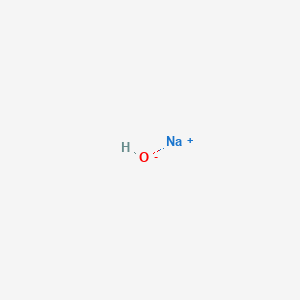
Sodium Hydroxide
Sodium hydroxide is an alkali metal hydroxide. — ChEBI
- IUPAC name
- sodium hydroxide
- Molecular formula
- HNaO
- Molecular weight
- 39.997 g/mol
- Exact mass
- 39.99250893 Da
- Topological polar surface area
- 1.0 Ų
- Hydrogen-bond donors
- 1
- Hydrogen-bond acceptors
- 1
- Covalent units
- 2
- Defined stereocentres
- 0
Also known as
16 more reported names
External database identifiers
- ChEBI:CHEBI:32145
- ChEMBL:CHEMBL2105794
- EPA DTXSID:DTXSID0029634
- PubMed:38202631
- PubMed:33358762
- PubMed:30365877
- PubMed:29953848
- PubMed:29893927
- PubMed:27258892
- PubMed:27206134
- PubMed:22363499
- PubMed:19433192
- PubMed:16756599
- PubMed:15965962
- PubMed:15302423
Evidence from additional scientific databases
NIH PubChem PUG-View
Attributed physical-property, hazard, environmental and use annotations.
- Autoignition Temperature: Not flammable (USCG, 1999) Source: CAMEO Chemicals
- Boiling Point: greater than 266 °F at 760 mmHg (USCG, 1999) Source: CAMEO Chemicals
- Boiling Point: Very high (USCG, 1999) Source: CAMEO Chemicals
- Boiling Point: 1388 Source: DrugBank
- Boiling Point: 1388 °C Source: Hazardous Substances Data Bank (HSDB)
- Boiling Point: 1388 °C Source: ILO-WHO International Chemical Safety Cards (ICSCs)
- Boiling Point: 2534 °F Source: Occupational Safety and Health Administration (OSHA)
- Boiling Point: 1388 °C @760 [mm Hg] Source: PAC Chemical Database, U.S. Department of Energy
- Boiling Point: 2534 °F Source: The National Institute for Occupational Safety and Health (NIOSH)
- Color/Form: White, orthogonal crystals Source: Hazardous Substances Data Bank (HSDB)
- Color/Form: Colorless to white ... solid (flakes, beads, granular form). Source: Hazardous Substances Data Bank (HSDB)
- Color/Form: Brittle, white, translucent crystalline solid Source: Hazardous Substances Data Bank (HSDB)
- Density: 1.5 at 68 °F (USCG, 1999) - Denser than water; will sink Source: CAMEO Chemicals
- Density: 2.13 at 68 °F (USCG, 1999) - Denser than water; will sink Source: CAMEO Chemicals
- Density: 2.13 g/cu cm 25 °C Source: Hazardous Substances Data Bank (HSDB)
- Density: 70-73 % solution: MP 62 °C; Density = 2.0 at 15.5 °C Source: Hazardous Substances Data Bank (HSDB)
- Density: 2.1 g/cm³ Source: ILO-WHO International Chemical Safety Cards (ICSCs)
- Density: 2.13 Source: Occupational Safety and Health Administration (OSHA)
- Density: 2.13 @25 °C Source: PAC Chemical Database, U.S. Department of Energy
- Density: 2.13 Source: The National Institute for Occupational Safety and Health (NIOSH)
- Dissociation Constants: SRP4: Completely dissociated Source: Hazardous Substances Data Bank (HSDB)
- Melting Point: 604 °F (USCG, 1999) Source: CAMEO Chemicals
- Melting Point: 323 Source: DrugBank
- Melting Point: 323 °C Source: Hazardous Substances Data Bank (HSDB)
- Melting Point: 318 °C Source: ILO-WHO International Chemical Safety Cards (ICSCs)
- Melting Point: 605 °F Source: Occupational Safety and Health Administration (OSHA)
- Melting Point: 323 °C Source: PAC Chemical Database, U.S. Department of Energy
- Melting Point: 605 °F Source: The National Institute for Occupational Safety and Health (NIOSH)
- Odor: ... Odorless ... Source: Hazardous Substances Data Bank (HSDB)
- Physical Description: Sodium hydroxide solution appears as a colorless liquid. More dense than water. Contact may severely irritate skin, eyes, and mucous membranes. Toxic by ingestion. Corrosive to metals and tissue. Source: CAMEO Chemicals
- Physical Description: Sodium hydroxide, solid appears as a white solid. Corrosive to metals and tissue. Used in chemical manufacturing, petroleum refining, cleaning compounds, drain cleaners. Source: CAMEO Chemicals
- Physical Description: Other Solid; Dry Powder; Liquid; Other Solid; CBI; Large Crystals; Dry Powder; Liquid; Large Crystals; Liquid; Liquid Source: EPA Chemical Data Reporting (CDR)
- Physical Description: White or nearly white pellets, flakes, sticks, fused masses or other forms. Solutions are clear or slightly turbid, colourless or slightly coloured, strongly caustic and hygroscopic and when exposed to the air they absorb carbon dioxide, forming sodium carbonate Source: EU Food Improvement Agents
- Physical Description: Colorless to white, odorless solid (flakes, beads, granular form); [NIOSH] Deliquescent; [CHEMINFO] Source: Haz-Map, Information on Hazardous Chemicals and Occupational Diseases
- Physical Description: WHITE HYGROSCOPIC SOLID IN VARIOUS FORMS. Source: ILO-WHO International Chemical Safety Cards (ICSCs)
- Physical Description: Colorless to white, odorless solid (flakes, beads, granular form). Source: Occupational Safety and Health Administration (OSHA)
- Physical Description: Colorless to white, odorless solid (flakes, beads, granular form). Source: The National Institute for Occupational Safety and Health (NIOSH)
- Refractive Index: Refractive index at 589.4 nm: 1.433 at 320 °C; 1.421 at 420 °C Source: Hazardous Substances Data Bank (HSDB)
- Solubility: 111 % (NIOSH, 2024) Source: CAMEO Chemicals
- Solubility: easily soluble in cold water, hot water Source: DrugBank
- Solubility: Very soluble in water. Freely soluble in ethanol Source: EU Food Improvement Agents
- Solubility: 1 g dissolves in 7.2 mL absolute alcohol, 4.2 mL methanol; also soluble in glycerol Source: Hazardous Substances Data Bank (HSDB)
- Solubility: 1 g dissolves in 0.9 mL water, 0.3 mL boiling water Source: Hazardous Substances Data Bank (HSDB)
- Solubility: Solubility in water, g/100ml at 20 °C: 109 (very good) Source: ILO-WHO International Chemical Safety Cards (ICSCs)
- Solubility: 111% Source: The National Institute for Occupational Safety and Health (NIOSH)
- Vapor Pressure: 0 mmHg (approx) (NIOSH, 2024) Source: CAMEO Chemicals
- Vapor Pressure: VP: 1 Pa at 513 °C; 10 Pa at 605 °C; 100 Pa at 722 °C; 1kPa at 874 °C; 10 kPa at 1080 °C; 100 kPa at 1377 °C Source: Hazardous Substances Data Bank (HSDB)
- Vapor Pressure: 1.82X10⁻²¹ mm Hg at 25 °C /extrapolated/ Source: Hazardous Substances Data Bank (HSDB)
- Vapor Pressure: 0 mmHg (approx) Source: Occupational Safety and Health Administration (OSHA)
- Vapor Pressure: 0 mmHg (approx) Source: The National Institute for Occupational Safety and Health (NIOSH)
- Viscosity: 4.0 cP at 350 °C Source: Hazardous Substances Data Bank (HSDB)
- pH: Strongly alkaline (1 % solution) Source: EU Food Improvement Agents
- pH: pH of a 0.05% wt/wt solution about 12; 0.5% solution about 13; 5% solution about 14 Source: Hazardous Substances Data Bank (HSDB)
- Exposure Routes: Serious local effects by all routes of exposure. Source: ILO-WHO International Chemical Safety Cards (ICSCs)
- Exposure Routes: inhalation, ingestion, skin and/or eye contact Source: The National Institute for Occupational Safety and Health (NIOSH)
- First Aid: (Act quickly); EYES: flush with water at once for at least 15 min.; SKIN: flush with water, then rinse with dilute vinegar (acetic acid).; INGESTION: give water and milk. Do NOT induce vomiting. Call physician at once, even when injury seems to be slight. (USCG, 1999) Source: CAMEO Chemicals
- First Aid: Excerpt from NIOSH Pocket Guide for Sodium hydroxide:; Eye: IRRIGATE IMMEDIATELY - If this chemical contacts the eyes, immediately wash (irrigate) the eyes with large amounts of water, occasionally lifting the lower and upper lids. Get medical attention immediately.; Skin: WATER FLUSH IMMEDIATELY - If this chemical contacts the skin, immediately flush the contaminated skin with water. If this chemical penetrates the clothing, immediately remove the clothing and flush the skin with water. Get medical attention promptly.; Breathing: RESPIRATORY SUPPORT - If a person breathes large amounts of this chemical, move the exposed person to fresh air at once. If breathing has stopped, perform artificial respiration. Keep the affected person warm and at rest. Get medical attention as soon as possible.; Swallow: MEDICAL ATTENTION IMMEDIATELY - If this chemical has been swallowed, get medical attention immediately. (NIOSH, 2024) Source: CAMEO Chemicals
- ERG2024, Guide 154 (Sodium hydroxide, solution; Sodium hydroxide, solid): General First Aid:; · Call 911 or emergency medical service.; · Ensure that medical personnel are aware of the material(s) involved, take precautions to protect themselves and avoid contamination.; · Move victim to fresh air if it can be done safely.; · Administer oxygen if breathing is difficult.; · If victim is not breathing:; -- DO NOT perform mouth-to-mouth resuscitation; the victim may have ingested or inhaled the substance.; -- If equipped and pulse detected, wash face and mouth, then give artificial respiration using a proper respiratory medical device (bag-valve mask, pocket mask equipped with a one-way valve or other device).; -- If no pulse detected or no respiratory medical device available, provide continuous compressions. Conduct a pulse check every two minutes or monitor for any signs of spontaneous respirations.; · Remove and isolate contaminated clothing and shoes.; · For minor skin contact, avoid spreading material on unaffected skin.; · In case of contact with substance, remove immediately by flushing skin or eyes with running water for at least 20 minutes.; · For severe burns, immediate medical attention is required.; · Effects of exposure (inhalation, ingestion, Source: Emergency Response Guidebook (ERG)
- ERG2024, Guide 154 (Caustic soda, solid; Caustic soda, solution): General First Aid:; · Call 911 or emergency medical service.; · Ensure that medical personnel are aware of the material(s) involved, take precautions to protect themselves and avoid contamination.; · Move victim to fresh air if it can be done safely.; · Administer oxygen if breathing is difficult.; · If victim is not breathing:; -- DO NOT perform mouth-to-mouth resuscitation; the victim may have ingested or inhaled the substance.; -- If equipped and pulse detected, wash face and mouth, then give artificial respiration using a proper respiratory medical device (bag-valve mask, pocket mask equipped with a one-way valve or other device).; -- If no pulse detected or no respiratory medical device available, provide continuous compressions. Conduct a pulse check every two minutes or monitor for any signs of spontaneous respirations.; · Remove and isolate contaminated clothing and shoes.; · For minor skin contact, avoid spreading material on unaffected skin.; · In case of contact with substance, remove immediately by flushing skin or eyes with running water for at least 20 minutes.; · For severe burns, immediate medical attention is required.; · Effects of exposure (inhalation, ingestion, Source: Emergency Response Guidebook (ERG)
- First Aid: (General first aid procedures); Eye: Irrigate immediately - If this chemical contacts the eyes, immediately wash (irrigate) the eyes with large amounts of water, occasionally lifting the lower and upper lids. Get medical attention immediately.; Skin: Water flush immediately - If this chemical contacts the skin, immediately flush the contaminated skin with water. If this chemical penetrates the clothing, immediately remove the clothing and flush the skin with water. Get medical attention promptly.; Breathing: Respiratory support; Swallow: Medical attention immediately - If this chemical has been swallowed, get medical attention immediately. Source: The National Institute for Occupational Safety and Health (NIOSH)
- Signal: Danger Source: Regulation (EC) No 1272/2008 of the European Parliament and of the Council
- GHS Hazard Statements: H314: Causes severe skin burns and eye damage [Danger Skin corrosion/irritation] Source: Regulation (EC) No 1272/2008 of the European Parliament and of the Council
- Precautionary Statement Codes: P260, P264, P280, P301+P330+P331, P302+P361+P354, P304+P340, P305+P354+P338, P316, P321, P363, P405, and P501 (click each P-code to see the statement) Source: Regulation (EC) No 1272/2008 of the European Parliament and of the Council
- Note: This chemical does not meet GHS hazard criteria for < 0.1% (4 of 6949) of reports. Source: European Chemicals Agency (ECHA)
- Signal: Danger Source: European Chemicals Agency (ECHA)
- GHS Hazard Statements: H290 (47.5%): May be corrosive to metals [Warning Corrosive to Metals]; H314 (> 99.9%): Causes severe skin burns and eye damage [Danger Skin corrosion/irritation]; H315 (36.5%): Causes skin irritation [Warning Skin corrosion/irritation]; H318 (44.1%): Causes serious eye damage [Danger Serious eye damage/eye irritation]; H319 (36.6%): Causes serious eye irritation [Warning Serious eye damage/eye irritation] Source: European Chemicals Agency (ECHA)
- Precautionary Statement Codes: P234, P260, P264, P264+P265, P280, P301+P330+P331, P302+P352, P302+P361+P354, P304+P340, P305+P351+P338, P305+P354+P338, P316, P317, P321, P332+P317, P337+P317, P362+P364, P363, P390, P405, P406, and P501 (click each P-code to see the statement) Source: European Chemicals Agency (ECHA)
- ECHA C&L Notifications Summary: Aggregated GHS information provided per 6949 reports by companies from 80 notifications to the ECHA C&L Inventory. Each notification may be associated with multiple companies.; Reported as not meeting GHS hazard criteria per 4 of 6949 reports by companies.; There are 79 notifications provided by 6945 of 6949 reports by companies with hazard statement code(s).; Information may vary between notifications depending on impurities, additives, and other factors. The percentage value in parenthesis indicates the notified classification ratio from companies that provide hazard codes. Only hazard codes with percentage values above 10% are shown. For more detailed information, please visit ECHA C&L website. Source: European Chemicals Agency (ECHA)
- GHS Hazard Statements: H290 (100%): May be corrosive to metals [Warning Corrosive to Metals]; H314 (100%): Causes severe skin burns and eye damage [Danger Skin corrosion/irritation]; H318 (100%): Causes serious eye damage [Danger Serious eye damage/eye irritation] Source: European Chemicals Agency (ECHA)
- Precautionary Statement Codes: P234, P260, P264, P264+P265, P280, P301+P330+P331, P302+P361+P354, P304+P340, P305+P354+P338, P316, P317, P321, P363, P390, P405, P406, and P501 (click each P-code to see the statement) Source: European Chemicals Agency (ECHA)
- ECHA C&L Notifications Summary: Aggregated GHS information provided per 2 reports by companies from 1 notifications to the ECHA C&L Inventory. Each notification may be associated with multiple companies.; Information may vary between notifications depending on impurities, additives, and other factors. The percentage value in parenthesis indicates the notified classification ratio from companies that provide hazard codes. Only hazard codes with percentage values above 10% are shown. For more detailed information, please visit ECHA C&L website. Source: European Chemicals Agency (ECHA)
- Signal: Danger Source: NITE-CMC
- NFPA Health Rating: 3 - Materials that, under emergency conditions, can cause serious or permanent injury. Source: Hazardous Substances Data Bank (HSDB)
- NFPA Fire Rating: 0 - Materials that will not burn under typical fire conditions, including intrinsically noncombustible materials such as concrete, stone, and sand. Source: Hazardous Substances Data Bank (HSDB)
- NFPA Instability Rating: 1 - Materials that in themselves are normally stable but that can become unstable at elevated temperatures and pressures. Source: Hazardous Substances Data Bank (HSDB)
- Target Organs: Eyes, skin, respiratory system Source: The National Institute for Occupational Safety and Health (NIOSH)
- Cosmetic Ingredient Review Conclusion: The CIR Expert Panel concluded that ... Sodium Hydroxide is safe in hair straighteners and depilatories under conditions of recommended use; users should minimize skin contact. These ingredients are safe for all other present practices of use and concentration described in this safety assessment when formulated to be nonirritating. Source: Cosmetic Ingredient Review (CIR)
- Cosmetic Ingredient Review Finding(s): Safe for use in cosmetics, with qualifications Source: Cosmetic Ingredient Review (CIR)
- Environmental Fate: AQUATIC FATE: In the case of a solid, anhydrous sodium hydroxide spill on soil, ground water pollution will occur if precipitation occurs prior to clean up. Precipitation will dissolve some of the solid (with much heat given off) and create an aqueous solution of sodium hydroxide, which then would be able to infiltrate the soil. However, prediction of the concentration and properties of the solution produced would be difficult. Source: Hazardous Substances Data Bank (HSDB)
- Consumer Uses: Adhesion/cohesion promoter; Etching agent; Flocculating agent; Intermediate; Processing aids, specific to petroleum production; Oxidizing agent; Laboratory chemicals; Dye; Cleaning agent; Plasticizer; Stabilizing agent; Soil amendments (fertilizers); Catalyst; Ion exchange agent; Not Known or Reasonably Ascertainable; Processing aids not otherwise specified; Surfactant (surface active agent); Chemical reaction regulator; Fuel agents; pH regulating agent; Bleaching agent; Solvent; Dispersing agent; Anti-freeze agent; Anti-adhesive/cohesive; Other; Lubricating agent Source: EPA Chemical Data Reporting (CDR)
- Industry Uses: Soil amendments (fertilizers); Ion exchange agent; Catalyst; Diluent; Not Known or Reasonably Ascertainable; Thickening agent; Corrosion inhibitor; Stabilizing agent; Reducing agent; Cleaning agent; Dye; Softener and conditioner; Adsorbent; Defoamer; Intermediate; Anti-scaling agent; Processing aids, specific to petroleum production; Adhesion/cohesion promoter; Etching agent; Flocculating agent; Chelating agent; Leaching agent; Lubricating agent; Other; Sizing agent; CBI; Swelling agent; Anti-freeze agent; Anti-adhesive/cohesive; Solvent; Fuel agents; pH regulating agent; Antioxidant; Bleaching agent; Chemical reaction regulator; Plating agent; Processing aids, not otherwise listed; Processing aids not otherwise specified Source: EPA Chemical Data Reporting (CDR)
- Cosmetic Ingredient Review Link: CIR ingredient: Sodium Hydroxide Source: Cosmetic Ingredient Review (CIR)
- Sources/Uses: Used to neutralize acids, produce sodium salts, hydrolyze fats to make soaps, and precipitate metals; large amounts are used in petroleum refining, rayon production, and rubber reclaiming; [Merck Index # 8627] Also used in metal cleaning, electroplating, processing cotton fabrics, and bleaching; [ATSDR Medical Management] Used in photography (developing bath); [www.ci.tucson.az.us/arthazards/medium.html] In semiconductor manufacturing, sodium hydroxide is used to develop the pattern in the photoresists and also as a wet echant. [CHS, p. 44-5] Caustic soda is used in hide preparation for leather production; [PMID 21938525] Source: Haz-Map, Information on Hazardous Chemicals and Occupational Diseases
- Industrial Processes with risk of exposure: Acid and Alkali Cleaning of Metals [Category: Clean]; Electroplating [Category: Plate]; Petroleum Production and Refining [Category: Industry]; Semiconductor Manufacturing [Category: Industry]; Smelting Copper or Lead [Category: Industry]; Textiles (Fiber & Fabric Manufacturing) [Category: Industry]; Leather Tanning and Processing [Category: Industry]; Photographic Processing [Category: Other]; Textiles (Printing, Dyeing, or Finishing) [Category: Industry]; Metal Extraction and Refining [Category: Industry] Source: Haz-Map, Information on Hazardous Chemicals and Occupational Diseases
- Activities with risk of exposure: Textile arts [Category: Hobbies]; Applying metallic patinas [Category: Hobbies] Source: Haz-Map, Information on Hazardous Chemicals and Occupational Diseases
- Uses: Both oil base and water base fracturing fluids are being used in the fracturing industry. Water base, which includes alcohol-water mixtures and low strength acids, make up the majority of treating fluids. The common chemicals added to these fluids are polymers for viscosity development, crosslinkers for viscosity enhancement, pH control chemicals, gel breakers for polymer degradation following the treatment, surfactants, clay stabilizers, alcohol, bactericides, fluid loss additives and friction reducer. /Hydraulic fracturing/ Source: Hazardous Substances Data Bank (HSDB)
- Uses: Hydraulic fracturing uses a specially blended liquid which is pumped into a well under extreme pressure causing cracks in rock formations underground. These cracks in the rock then allow oil and natural gas to flow, increasing resource production. ... Chemical Name: Sodium hydroxide; Chemical Purpose: Adjusts the pH of fluid to maintain the effectiveness of other components, such as crosslinkers; Product Function: pH Adjusting agent. Source: Hazardous Substances Data Bank (HSDB)
- Uses: For sodium hydroxide (USEPA/OPP Pesticide Code: 075603) ACTIVE products with label matches. /SRP: Registered for use in the U.S. but approved pesticide uses may change periodically and so federal, state and local authorities must be consulted for currently approved uses./ Source: Hazardous Substances Data Bank (HSDB)
- Uses: In inorganic chemistry, sodium hydroxide is used in the manufacture of sodium salts, for alkaline ore digestion, and for pH regulation. Source: Hazardous Substances Data Bank (HSDB)
- Uses: For more Uses (Complete) data for SODIUM HYDROXIDE (16 total), please visit the HSDB record page. Source: Hazardous Substances Data Bank (HSDB)
Mapped by: Existing checksum-valid CAS to unique PubChem CID match. Retrieved: 2026-08-31. Open source record
Scientific classifications and hazard annotations provide context and do not replace the market-specific regulatory decision shown above.
Additional source coverage and match status
| Source | Result | Checked |
|---|---|---|
| NIH PubChem PUG-View | Exact match | 2026-08-31 |
A recorded no-match is useful evidence that the source was checked; it is not a claim that the substance does not exist elsewhere.
Retrieved from NIH PubChem on 2026-09-02 by checksum-valid CAS matching. Chemical properties do not replace the regulatory decision on this page.
Record details
Maximum concentration
(a) 5% (b) 2% (General use) and 4.5% (Professional use) Entry 15d: 1,5%
Product type
Other restrictions
(b)
1. General use
2. Professional use
(c) up to pH 12.7
(d) up to pH 11
15 d Contains alcakali, Avoid contact with eyes
Keep out of reach of chindren ans Read directions for use carefully
Warnings
(a) Contains alkali
Avoid contact with eyes
Can cause blindness
Keep out of reach of children
(b) 1. Contains alkali
Avoid contact with eyes
Can cause blindness
Keep out of reach of children
2. For professional use only
Avoid contact with eyes
Can cause blindness
(c) Keep out of reach of children
Avoid contact with eyes
INCI glossary name
POTASSIUM HYDROXIDE / SODIUM HYDROXIDE
Chemical name
Potassium or sodium hydroxide
Regulatory information
Identified ingredients
Key data
Inventory links for POTASSIUM HYDROXIDE / SODIUM HYDROXIDE
Related records for POTASSIUM HYDROXIDE / SODIUM HYDROXIDE
Direct matches are limited for this record, so nearby entries from Annex III are shown as well.
Methylphenylenediamines, their N- substituted derivatives and their salts (1), with the exception o…
What Annex III means for POTASSIUM HYDROXIDE / SODIUM HYDROXIDE
POTASSIUM HYDROXIDE / SODIUM HYDROXIDE is a restricted substance under Annex III of EU Cosmetics Regulation 1223/2009. Its use in cosmetics is only permitted under the specific conditions set out in the entry above, including applicable concentration limits, product type restrictions and required warning statements.
When including this substance in a formulation, all conditions — maximum concentration, product scope and warning labels — must be met simultaneously. Compliance with one condition does not override the others.
This record is linked to 2 CosIng inventory ingredients for name and identifier cross-reference. The page also surfaces 11 related annex records with overlapping identifiers, annex logic or naming patterns.
Compliance checklist
- Ensure formulation concentration does not exceed: (a) 5% (b) 2% (General use) and 4.5% (Professional use) Entry 15d: 1,5%
- Confirm product type compatibility: (a) Nail cuticle solvent (b) Hair straightener (c) pH adjuster for depilatories (d) Other uses as pH adjuster Callosity softener/remover (entry 15d)
- Include required warning statement on product label.
- Document conditions of use in the Product Information File (PIF).
Frequently asked questions
Source note for Annex III record POTASSIUM HYDROXIDE / SODIUM HYDROXIDE
This page summarizes one Annex III record for POTASSIUM HYDROXIDE / SODIUM HYDROXIDE from public European Commission cosmetic materials and adds linked inventory or identifier matches when available.
Use this record page to review Annex III conditions for POTASSIUM HYDROXIDE / SODIUM HYDROXIDE, but confirm any final regulatory decision against the current official annex wording and source files.
Tools & next steps
Check your formula
Paste a full INCI list to detect POTASSIUM HYDROXIDE / SODIUM HYDROXIDE and other flagged EU annex records in one pass.
INCI CheckerCompare entries
Compare POTASSIUM HYDROXIDE / SODIUM HYDROXIDE side by side with another annex record to review differences in restrictions, concentrations and annex placement.
CompareBrowse the annex
See all records in Annex III and compare regulatory conditions across substances in this annex.
Open Annex III