
Maneb (ISO) (manganese ethylenebis(dithiocarbamate) (polymeric))
New Zealand Cosmetic Products Group Standard Schedule 4, reference 1403.
Regulatory decision and full conditions
- Status
- Prohibited
- Legal role
- Binding rule
- Regulatory summary
- New Zealand Cosmetic Products Group Standard Schedule 4, reference 1403.
- Conditions and restrictions
- A prohibition entry may contain no separate condition text because the regulatory outcome is the prohibition itself. Open the cited source and apply the market-wide requirements below.
Substance identity
- Official source name
- Maneb (ISO) (manganese ethylenebis(dithiocarbamate) (polymeric))
- CAS
- 12427-38-2
- EC
- Not supplied in this source row
- Identity mapping
- standalone:official_nz_schedule
Cross-market snapshot for this identity
Exact linked records currently present in this site. An absent market means no imported exact match, not permission to use the substance.
European Union
1 linked record
Open supporting recordGreat Britain
1 linked record
Open supporting recordNew Zealand
Current record1 linked record
Open supporting recordASEAN
1 linked record
Open supporting recordIndia
1 linked record · 1 with specific conditions
Open supporting recordSaudi Arabia
1 linked record
Open supporting record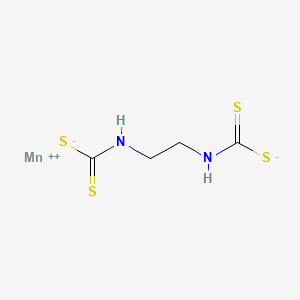
Verified chemistry for CAS 12427-38-2
Maneb
Maneb is a yellow powder or crystalline solid. It is denser than water. Contact may irritate skin, eyes and mucous membranes. It may be toxic by ingestion. Likely to generate heat spontaneously upon exposure to air or water. May be sufficient to ignite the material. Maneb is used as a fungicide. Formulations of Maneb include mixing it with many other chemicals such as sulfur, zinc oxide and others to desensitize it. This is done to make it easer for application. — CAMEO Chemicals
- IUPAC name
- manganese(2+);N-[2-(sulfidocarbothioylamino)ethyl]carbamodithioate
- Molecular formula
- C4H6MnN2S4
- Molecular weight
- 265.3 g/mol
- Exact mass
- 264.879426 Da
- Monoisotopic mass
- 264.879426 Da
- Topological polar surface area
- 90.2 Ų
- Molecular complexity
- 108.0
- Formal charge
- 0
- Hydrogen-bond donors
- 2
- Hydrogen-bond acceptors
- 4
- Rotatable bonds
- 3
- Heavy atoms
- 11
- Covalent units
- 2
Names and synonyms reported to PubChem
16 more reported names
External database identifiers
Advanced structure statistics
- Defined atom stereocentres
- 0
- Undefined atom stereocentres
- 0
- Defined bond stereocentres
- 0
- Undefined bond stereocentres
- 0
- 3D conformers
- 0
Machine-readable structure identifiers
- SMILES
C(CNC(=S)[S-])NC(=S)[S-].[Mn+2]- InChI
InChI=1S/C4H8N2S4.Mn/c7-3(8)5-1-2-6-4(9)10;/h1-2H2,(H2,5,7,8)(H2,6,9,10);/q;+2/p-2- InChIKey
YKSNLCVSTHTHJA-UHFFFAOYSA-L
Evidence from additional scientific databases
NIH PubChem PUG-View
Attributed physical-property, hazard, environmental and use annotations.
- Color/Form: Yellow powder; crystals from alcohol Source: Hazardous Substances Data Bank (HSDB)
- Color/Form: Brown powder Source: Hazardous Substances Data Bank (HSDB)
- Density: 1.92 at 25 °C/4 °C Source: Hazardous Substances Data Bank (HSDB)
- Density: 1.92 g/cm³ Source: ILO-WHO International Chemical Safety Cards (ICSCs)
- Melting Point: 200 °C (decomposes) Source: Hazardous Substances Data Bank (HSDB)
- Melting Point: 392 °F Source: Occupational Safety and Health Administration (OSHA)
- Odor: Practically odorless Source: Hazardous Substances Data Bank (HSDB)
- Physical Description: Maneb is a yellow powder or crystalline solid. It is denser than water. Contact may irritate skin, eyes and mucous membranes. It may be toxic by ingestion. Likely to generate heat spontaneously upon exposure to air or water. May be sufficient to ignite the material. Maneb is used as a fungicide. Formulations of Maneb include mixing it with many other chemicals such as sulfur, zinc oxide and others to desensitize it. This is done to make it easer for application. Source: CAMEO Chemicals
- Physical Description: Yellow or brown powder; crystals from alcohol; [HSDB] Source: Haz-Map, Information on Hazardous Chemicals and Occupational Diseases
- Physical Description: YELLOW POWDER OR CRYSTALS. Source: ILO-WHO International Chemical Safety Cards (ICSCs)
- Physical Description: Yellow powder or crystalline solid. Source: Occupational Safety and Health Administration (OSHA)
- Solubility: For more Solubility (Complete) data for Maneb (6 total), please visit the HSDB record page. Source: Hazardous Substances Data Bank (HSDB)
- Solubility: Soluble in chloroform, pyridine Source: Hazardous Substances Data Bank (HSDB)
- Solubility: Practically insoluble in common organic solvents. Soluble in chelating agents (e.g. sodium salts of ethylenediaminetetraacetic acid) with the formation of complexes. Source: Hazardous Substances Data Bank (HSDB)
- Solubility: In water, 6.0 mg/L at 25 °C Source: Hazardous Substances Data Bank (HSDB)
- Solubility: Solubility in water: very poor Source: ILO-WHO International Chemical Safety Cards (ICSCs)
- Vapor Pressure: 0.00000008 [mmHg] Source: Haz-Map, Information on Hazardous Chemicals and Occupational Diseases
- Vapor Pressure: Vapor pressure: Negligible at 20 °C Source: Hazardous Substances Data Bank (HSDB)
- Vapor Pressure: 7.5X10⁻⁸ mm Hg at 25 °C Source: Hazardous Substances Data Bank (HSDB)
- Vapor Pressure: 7.5x10⁻⁸ mmHg Source: Occupational Safety and Health Administration (OSHA)
- IARC Carcinogenic Agent: Maneb Source: International Agency for Research on Cancer (IARC)
- IARC Carcinogenic Classes: Group 3: Not classifiable as to its carcinogenicity to humans Source: International Agency for Research on Cancer (IARC)
- IARC Monographs: Volume 12: (1976) Some Carbamates, Thiocarbamates and Carbazides; Volume Sup 7: Overall Evaluations of Carcinogenicity: An Updating of IARC Monographs Volumes 1 to 42, 1987; 440 pages; ISBN 92-832-1411-0 (out of print) Source: International Agency for Research on Cancer (IARC)
- Publication Year: 1987 Source: International Agency for Research on Cancer (IARC)
- Evaluation Year: 1987 Source: International Agency for Research on Cancer (IARC)
- Carcinogen Classification: 3, not classifiable as to its carcinogenicity to humans. (L135) Source: Toxin and Toxin Target Database (T3DB)
- Exposure Routes: The substance can be absorbed into the body by inhalation of its aerosol and by ingestion. Source: ILO-WHO International Chemical Safety Cards (ICSCs)
- First Aid: Excerpt from ERG Guide 135 [Substances - Spontaneously Combustible]:; Refer to the "General First Aid" section. (ERG, 2024) Source: CAMEO Chemicals
- ERG2024, Guide 135 (Maneb, stabilized; Maneb): General First Aid:; · Call 911 or emergency medical service.; · Ensure that medical personnel are aware of the material(s) involved, take precautions to protect themselves and avoid contamination.; · Move victim to fresh air if it can be done safely.; · Administer oxygen if breathing is difficult.; · If victim is not breathing:; -- DO NOT perform mouth-to-mouth resuscitation; the victim may have ingested or inhaled the substance.; -- If equipped and pulse detected, wash face and mouth, then give artificial respiration using a proper respiratory medical device (bag-valve mask, pocket mask equipped with a one-way valve or other device).; -- If no pulse detected or no respiratory medical device available, provide continuous compressions. Conduct a pulse check every two minutes or monitor for any signs of spontaneous respirations.; · Remove and isolate contaminated clothing and shoes.; · For minor skin contact, avoid spreading material on unaffected skin.; · In case of contact with substance, remove immediately by flushing skin or eyes with running water for at least 20 minutes.; · For severe burns, immediate medical attention is required.; · Effects of exposure (inhalation, ingestion, Source: Emergency Response Guidebook (ERG)
- ERG2024, Guide 135 (Maneb; Maneb, stabilized): General First Aid:; · Call 911 or emergency medical service.; · Ensure that medical personnel are aware of the material(s) involved, take precautions to protect themselves and avoid contamination.; · Move victim to fresh air if it can be done safely.; · Administer oxygen if breathing is difficult.; · If victim is not breathing:; -- DO NOT perform mouth-to-mouth resuscitation; the victim may have ingested or inhaled the substance.; -- If equipped and pulse detected, wash face and mouth, then give artificial respiration using a proper respiratory medical device (bag-valve mask, pocket mask equipped with a one-way valve or other device).; -- If no pulse detected or no respiratory medical device available, provide continuous compressions. Conduct a pulse check every two minutes or monitor for any signs of spontaneous respirations.; · Remove and isolate contaminated clothing and shoes.; · For minor skin contact, avoid spreading material on unaffected skin.; · In case of contact with substance, remove immediately by flushing skin or eyes with running water for at least 20 minutes.; · For severe burns, immediate medical attention is required.; · Effects of exposure (inhalation, ingestion, Source: Emergency Response Guidebook (ERG)
- Signal: Warning Source: Regulation (EC) No 1272/2008 of the European Parliament and of the Council
- GHS Hazard Statements: H317: May cause an allergic skin reaction [Warning Sensitization, Skin]; H319: Causes serious eye irritation [Warning Serious eye damage/eye irritation]; H332: Harmful if inhaled [Warning Acute toxicity, inhalation]; H361d ***: Suspected of damaging the unborn child [Warning Reproductive toxicity]; H400: Very toxic to aquatic life [Warning Hazardous to the aquatic environment, acute hazard]; H410: Very toxic to aquatic life with long lasting effects [Warning Hazardous to the aquatic environment, long-term hazard] Source: Regulation (EC) No 1272/2008 of the European Parliament and of the Council
- Precautionary Statement Codes: P203, P261, P264+P265, P271, P272, P273, P280, P302+P352, P304+P340, P305+P351+P338, P317, P318, P321, P333+P317, P337+P317, P362+P364, P391, P405, and P501 (click each P-code to see the statement) Source: Regulation (EC) No 1272/2008 of the European Parliament and of the Council
- Signal: Warning Source: European Chemicals Agency (ECHA)
- GHS Hazard Statements: H317 (100%): May cause an allergic skin reaction [Warning Sensitization, Skin]; H319 (96.4%): Causes serious eye irritation [Warning Serious eye damage/eye irritation]; H332 (96.4%): Harmful if inhaled [Warning Acute toxicity, inhalation]; H361 (61.9%): Suspected of damaging fertility or the unborn child [Warning Reproductive toxicity]; H361d (34.5%): Suspected of damaging the unborn child [Warning Reproductive toxicity]; H400 (96.4%): Very toxic to aquatic life [Warning Hazardous to the aquatic environment, acute hazard]; H410 (96.4%): Very toxic to aquatic life with long lasting effects [Warning Hazardous to the aquatic environment, long-term hazard] Source: European Chemicals Agency (ECHA)
- Precautionary Statement Codes: P203, P261, P264+P265, P271, P272, P273, P280, P302+P352, P304+P340, P305+P351+P338, P317, P318, P321, P333+P317, P337+P317, P362+P364, P391, P405, and P501 (click each P-code to see the statement) Source: European Chemicals Agency (ECHA)
- ECHA C&L Notifications Summary: Aggregated GHS information provided per 84 reports by companies from 5 notifications to the ECHA C&L Inventory. Each notification may be associated with multiple companies.; Information may vary between notifications depending on impurities, additives, and other factors. The percentage value in parenthesis indicates the notified classification ratio from companies that provide hazard codes. Only hazard codes with percentage values above 10% are shown. For more detailed information, please visit ECHA C&L website. Source: European Chemicals Agency (ECHA)
- Signal: Danger Source: NITE-CMC
- GHS Hazard Statements: H252: Self-heating in large quantities; may catch fire [Warning Self-heating substances and mixtures]; H261: In contact with water releases flammable gas [Danger Substances and mixtures which in contact with water, emit flammable gases]; H317: May cause an allergic skin reaction [Warning Sensitization, Skin]; H319: Causes serious eye irritation [Warning Serious eye damage/eye irritation]; H351: Suspected of causing cancer [Warning Carcinogenicity]; H360: May damage fertility or the unborn child [Danger Reproductive toxicity]; H372: Causes damage to organs through prolonged or repeated exposure [Danger Specific target organ toxicity, repeated exposure]; H373: May causes damage to organs through prolonged or repeated exposure [Warning Specific target organ toxicity, repeated exposure]; H400: Very toxic to aquatic life [Warning Hazardous to the aquatic environment, acute hazard]; H410: Very toxic to aquatic life with long lasting effects [Warning Hazardous to the aquatic environment, long-term hazard] Source: NITE-CMC
- Precautionary Statement Codes: P203, P231+P232, P235, P260, P261, P264, P264+P265, P270, P272, P273, P280, P302+P352, P305+P351+P338, P318, P319, P321, P333+P317, P337+P317, P362+P364, P370+P378, P391, P402+P404, P405, P407, P410, P413, P420, and P501 (click each P-code to see the statement) Source: NITE-CMC
- GHS Hazard Statements: H252: Self-heating in large quantities; may catch fire [Warning Self-heating substances and mixtures]; H261: In contact with water releases flammable gas [Danger Substances and mixtures which in contact with water, emit flammable gases]; H316: Causes mild skin irritation [Warning Skin corrosion/irritation]; H317: May cause an allergic skin reaction [Warning Sensitization, Skin]; H319: Causes serious eye irritation [Warning Serious eye damage/eye irritation]; H333: May be harmful if inhaled [Warning Acute toxicity, inhalation]; H373: May causes damage to organs through prolonged or repeated exposure [Warning Specific target organ toxicity, repeated exposure] Source: NITE-CMC
- Precautionary Statement Codes: P231+P232, P235, P260, P261, P264+P265, P272, P280, P302+P352, P304+P317, P305+P351+P338, P319, P321, P332+P317, P333+P317, P337+P317, P362+P364, P370+P378, P402+P404, P407, P410, P413, P420, and P501 (click each P-code to see the statement) Source: NITE-CMC
- Target Organs: Endocrine Source: EPA Integrated Risk Information System (IRIS)
- Environmental Bioconcentration: In a 3-day static system study, a BCF for maneb of <10 was measured in golden ide (Leuciscus idus melanotus) fish(1). According to a classification scheme(2), this BCF suggests bioconcentration in aquatic organisms is low. Source: Hazardous Substances Data Bank (HSDB)
- Environmental Fate: TERRESTRIAL FATE: Based on a classification scheme(1), a Koc value of 240(2) indicates that maneb is expected to have moderate mobility in soil(SRC). Volatilization from moist soil surfaces is not expected to be an important fate process based upon rapid degradation of maneb in the environment by hydrolysis, oxidation, and photolysis, although microbial degradation may also contribute to soil transformation(3). Maneb is not expected to volatilize from dry soil surfaces(SRC) based upon a vapor pressure of 7.5X10⁻⁸ mm Hg(2). Aqueous solutions of maneb absorb UV light in the spectrum between 290 and 360 nm(4) which indicates a potential for direct photolysis from moist soil and plant surfaces(SRC). In a 5-day CO2 evolution study using an activated sludge inoculum, 0.6% of applied maneb was detected as 14C-labeled CO2(4), suggesting biodegradation may occur in soil(SRC). Source: Hazardous Substances Data Bank (HSDB)
- Environmental Fate: AQUATIC FATE: Based on a classification scheme(1), a Koc value of 240(2) indicates that maneb is expected to adsorb to suspended solids and sediment(SRC). Volatilization from water surfaces is not expected based upon rapid degradation of maneb in the environment by hydrolysis, oxidation, and photolysis, although microbial degradation may also contribute to soil transformation(3). According to a classification scheme(4), a BCF of <10, measured in golden ide (Leuciscus idus melanotus) fish(5), suggests bioconcentration in aquatic organisms is low(SRC). Hydrolytic decomposition depends upon the aeration of the water and the pH with faster decomposition in aerated water and with increasing acidity(6). Aqueous solutions of maneb absorb UV light in the spectrum between 290 and 360 nm(5) which indicates a potential for direct photolysis in sunlit water(SRC). 14C-maneb was degraded 9.73-16.18% after 67 days in July and 11.18-27.37% in Sept in sediment at 5 sites from a Nicaraguan estuary incubated under anaerobic conditions(7). Source: Hazardous Substances Data Bank (HSDB)
- Environmental Fate: ATMOSPHERIC FATE: According to a model of gas/particle partitioning of semivolatile organic compounds in the atmosphere(1), maneb, which has a vapor pressure of 7.5X10⁻⁸ mm Hg at 20 °C(2), is expected to exist solely in the particulate phase in the ambient atmosphere. Particulate-phase maneb may be removed from the air by wet or dry deposition(SRC). Aqueous solutions of maneb absorb UV light in the spectrum between 290 and 360 nm(3) and this indicates a potential for direct photolysis in the environment(SRC). Source: Hazardous Substances Data Bank (HSDB)
- Sources/Uses: Used to control potato and tomato blights; [EXTOXNET] Source: Haz-Map, Information on Hazardous Chemicals and Occupational Diseases
- Industrial Processes with risk of exposure: Farming (Pesticides) [Category: Industry] Source: Haz-Map, Information on Hazardous Chemicals and Occupational Diseases
- Uses: For maneb (USEPA/OPP Pesticide Code: 014505) ACTIVE products with label matches. /SRP: Registered for use in the U.S. but approved pesticide uses may change periodically and so federal, state and local authorities must be consulted for currently approved uses./ Source: Hazardous Substances Data Bank (HSDB)
- Uses: Fungicide for vegetables, for seed treatment of vegetables and field crops, for deciduous fruits and nuts. Source: Hazardous Substances Data Bank (HSDB)
- Uses: Maneb is used on a wide variety of food/feed crops, including fruit and nut crops, vegetable crops, field and forage crops, grapes, field crop seeds, and others; ornamental plants in nurseries and greenhouses; and sod farms. There are no residential uses, and no agricultural uses that could result in exposure to maneb in residential settings. Source: Hazardous Substances Data Bank (HSDB)
- Uses: Controls many fungal diseases ... in field crops, fruits, nuts, vegetables, ornaments, turf, etc. Particularly used to control early and late blight of potatoes and tomatoes... Source: Hazardous Substances Data Bank (HSDB)
- Uses: For more Uses (Complete) data for Maneb (7 total), please visit the HSDB record page. Source: Hazardous Substances Data Bank (HSDB)
- Uses: This is a man-made compound that is used as a pesticide. Source: Toxin and Toxin Target Database (T3DB)
Mapped by: Existing checksum-valid CAS to unique PubChem CID match. Retrieved: 2026-08-31. Open source record
Scientific classifications and hazard annotations provide context and do not replace the market-specific regulatory decision shown above.
Additional source coverage and match status
| Source | Result | Checked |
|---|---|---|
| NIH PubChem PUG-View | Exact match | 2026-08-31 |
A recorded no-match is useful evidence that the source was checked; it is not a claim that the substance does not exist elsewhere.
Retrieved from NIH PubChem on 2026-09-02 by checksum-valid CAS matching. Chemical properties do not replace the regulatory decision on this page.
Official source and provenance
- Registered source
- New Zealand cosmetic product schedules 4–8
- Source reference
- Schedule 4, reference 1403, source row 1510
- Source record ID
S4-1510- Source version
- effective-2026-01-01
- Source language
- English
- Translation status
- Original is English
- Effective date
- 2026-01-01
- Source updated
- 2024-01-01
- Snapshot checked
- 2026-08-30 04:54 UTC
- Validation method
- openpyxl extraction; reviewed per-schedule counts
- SHA-256
4e62e372fb0aad7ac630af8c41fa50b38b52a793fd51b99697a65f8ecce1ae8a
Registered dataset notes
- Dataset coverage
- Prohibited and restricted substances, permitted colorants, preservatives and UV filters
- Authority note
- Official EPA group standard schedules; current market-specific rule source
How this record fits the market dataset
Status distribution
Condition text is present on 747 of 2913 current records. An empty condition field is interpreted according to the record type above; it is never converted into an unrestricted-use claim.
New Zealand market context
Complete schedules dataset
Coverage version: Cosmetic Products Group Standard schedules effective 1 January 2026
Schedules 4–8: prohibited, restricted, colourant, preservative and UV-filter entries.
Verification checklist
- Search exact identity across Schedules 4–8.
- Apply use, concentration and warning conditions.
- Check hazardous-substance classification and Group Standard scope.
- Confirm the latest legal instrument, not only the spreadsheet.
Official market sources
- New Zealand cosmetic product schedules 4–8Official EPA group standard schedules; current market-specific rule source
Verification workflow and record completeness
Before using this result in a compliance decision
- Confirm that “Maneb (ISO) (manganese ethylenebis(dithiocarbamate) (polymeric))” and every CAS/EC identifier refer to the material in your supplier specification.
- Search exact identity across Schedules 4–8.
- Apply use, concentration and warning conditions.
- Check hazardous-substance classification and Group Standard scope.
- Confirm the latest legal instrument, not only the spreadsheet.
- Document the source version and recheck the regulator before manufacture, notification or market placement.
Fields available in this record
- Official substance nameAvailable
- CASAvailable
- ECNot supplied
- Separate condition textNot present in source row
- Effective dateAvailable
- Snapshot hash and methodAvailable
Questions this page answers
Stable citation
Maneb (ISO) (manganese ethylenebis(dithiocarbamate) (polymeric)). Schedule 4, reference 1403, source row 1510. New Zealand. Source version effective-2026-01-01. CosIng Checker regulatory record: https://cosingchecker.com/regulations/nz/records/8171/
Cite the regulator as the legal authority. This page is a structured evidence index and verification aid, not a substitute for the official text or professional legal assessment.
Interpretation and limits for New Zealand
This official record identifies the substance as prohibited for cosmetic use in the stated market scope.
Do not rely on a formulation containing this identity until the cited source, effective date and exact substance match have been verified.
How to interpret the legal role
The cited row forms part of a binding rule or legally incorporated list for this market.
Evidence on this page
- Recorded outcome: Prohibited
- Legal role: Binding rule
- Source version: effective-2026-01-01
- Effective date: 2026-01-01
What it does not prove
The searchable spreadsheet is an aid; the legal Group Standard and incorporated notices remain authoritative.
Further authoritative substance research
None of these sources overrides the market decision above.
Cosmetic Ingredient Review safety assessments
Expert Panel conclusions, assessed ingredient groups, use conditions, dates and report documents
Independent expert review considered by FDA; not a government approval or binding market rule
Research this identity at the sourceFDA Global Substance Registration System
UNII identifiers, preferred names, substance types, codes and public substance relationships
Identity registry only; UNII availability does not imply FDA review or approval
Research this identity at the sourceILO/WHO International Chemical Safety Cards
Hazards, symptoms, first aid, storage, incompatibilities and physical properties for covered chemicals
International occupational chemical-safety reference; not cosmetic-use approval
Research this identity at the sourceJapan NITE-CHRIP
Chemical identity, Japanese and foreign legal lists, GHS hazards and exposure-related information
Chemical-management evidence; cosmetic status remains governed by the applicable MHLW standard and market rules
Research this identity at the sourceNIOSH Pocket Guide to Chemical Hazards
REL, PEL, IDLH, properties, exposure routes, symptoms, target organs, first aid and measurement methods for covered workplace chemicals
US occupational-health guidance and limits; not a cosmetic ingredient decision
Research this identity at the sourceOECD eChemPortal
Gateway to authority-owned physical-property, fate, ecotoxicity, toxicity, exposure and GHS records
Discovery gateway; each linked authority remains responsible for its data
Research this identity at the sourceUS EPA CompTox CTX APIs
API key required for importDTXSID identity, experimental and predicted properties, toxicity, bioactivity, exposure and environmental data
Scientific and computational evidence; predictions must remain labelled and do not determine cosmetic legality
Research this identity at the source