
Asbestos (CAS No. 12001-28-4)
IS 4707 Part 2:2025 Annex A lists this ingredient as one that must not form part of a cosmetic product in India.
Regulatory decision and full conditions
- Status
- Prohibited
- Legal role
- Binding rule
- Regulatory summary
- IS 4707 Part 2:2025 Annex A lists this ingredient as one that must not form part of a cosmetic product in India.
- Conditions and restrictions
Must not form part of the composition of cosmetic products. Apply the general trace and safety notes published after Annex A.
Substance identity
- Official source name
- Asbestos (CAS No. 12001-28-4)
- CAS
- 12001-28-4
- EC
- Not supplied in this source row
- Identity mapping
- standalone:official_bis_record
Cross-market snapshot for this identity
Exact linked records currently present in this site. An absent market means no imported exact match, not permission to use the substance.
European Union
1 linked record
Open supporting recordGreat Britain
1 linked record
Open supporting recordNew Zealand
1 linked record
Open supporting recordASEAN
1 linked record
Open supporting recordChina
1 linked record · 1 with specific conditions
Open supporting recordBrazil
1 linked record · 1 with specific conditions
Open supporting recordIndia
Current record1 linked record · 1 with specific conditions
Open supporting recordSaudi Arabia
1 linked record
Open supporting record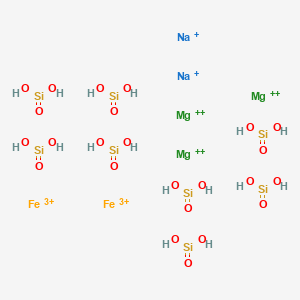
Verified chemistry for CAS 12001-28-4
Crocidolite Asbestos
Asbestos is a slender, fine, flaxy fiber. Long term occupational exposure to the dust can result in lung cancer. Asbestos is resistant to fire and most solvents. The primary hazard is the threat to the environment. Immediate steps should be taken to limit its spread to the environment. It is used as a heat resistant material, in cement, furnace bricks, and brake linings. — CAMEO Chemicals
- IUPAC name
- trimagnesium;disodium;octakis(dihydroxy(oxo)silane);bis(iron(3+))
- Molecular formula
- Fe2H16Mg3Na2O24Si8+14
- Formula without charge
- Fe2H16Mg3Na2O24Si8
- Molecular weight
- 855.38 g/mol
- Exact mass
- 853.623098 Da
- Monoisotopic mass
- 853.623098 Da
- Topological polar surface area
- 460.0 Ų
- Molecular complexity
- 26.0
- Formal charge
- 14
- Hydrogen-bond donors
- 16
- Hydrogen-bond acceptors
- 24
- Rotatable bonds
- 0
- Heavy atoms
- 39
- Covalent units
- 15
Names and synonyms reported to PubChem
16 more reported names
Advanced structure statistics
- Defined atom stereocentres
- 0
- Undefined atom stereocentres
- 0
- Defined bond stereocentres
- 0
- Undefined bond stereocentres
- 0
- 3D conformers
- 0
Machine-readable structure identifiers
- SMILES
O[Si](=O)O.O[Si](=O)O.O[Si](=O)O.O[Si](=O)O.O[Si](=O)O.O[Si](=O)O.O[Si](=O)O.O[Si](=O)O.[Na+].[Na+].[Mg+2].[Mg+2].[Mg+2].[Fe+3].[Fe+3]- InChI
InChI=1S/2Fe.3Mg.2Na.8H2O3Si/c;;;;;;;8*1-4(2)3/h;;;;;;;8*1-2H/q2*+3;3*+2;2*+1;;;;;;;;- InChIKey
ULEFFCDROVNTRO-UHFFFAOYSA-N
Evidence from additional scientific databases
NIH PubChem PUG-View
Attributed physical-property, hazard, environmental and use annotations.
- Boiling Point: Decomposes (NIOSH, 2024) Source: CAMEO Chemicals
- Boiling Point: decomposes Source: Occupational Safety and Health Administration (OSHA)
- Density: Relative density (water = 1): 3.3-3.4 Source: ILO-WHO International Chemical Safety Cards (ICSCs)
- Melting Point: 1112 °F (Decomposes) (NIOSH, 2024) Source: CAMEO Chemicals
- Melting Point: 1112 °F (decomposes) Source: Occupational Safety and Health Administration (OSHA)
- Physical Description: Asbestos is a slender, fine, flaxy fiber. Long term occupational exposure to the dust can result in lung cancer. Asbestos is resistant to fire and most solvents. The primary hazard is the threat to the environment. Immediate steps should be taken to limit its spread to the environment. It is used as a heat resistant material, in cement, furnace bricks, and brake linings. Source: CAMEO Chemicals
- Physical Description: LAVENDER, BLUE OR GREENISH FIBROUS SOLID. Source: ILO-WHO International Chemical Safety Cards (ICSCs)
- Physical Description: Blue fibrous, odorless solid. Source: Occupational Safety and Health Administration (OSHA)
- Solubility: Insoluble (NIOSH, 2024) Source: CAMEO Chemicals
- Solubility: Solubility in water: none Source: ILO-WHO International Chemical Safety Cards (ICSCs)
- Vapor Pressure: 0 mmHg (approx) (NIOSH, 2024) Source: CAMEO Chemicals
- Vapor Pressure: 0 mmHg (approx) Source: Occupational Safety and Health Administration (OSHA)
- Substance: Asbestos, crocidolite Source: NTP Technical Reports
- NTP Technical Report: TR-280: Toxicology and Carcinogenesis Studies of Crocidolite Asbestos (CASRN 12001-28-4) In F344/N Rats (Feed Studies) (1988 ) Source: NTP Technical Reports
- Peer Review Date: 02/28/83 Source: NTP Technical Reports
- Conclusion for Male Rat: No Evidence Source: NTP Technical Reports
- Conclusion for Female Rat: No Evidence Source: NTP Technical Reports
- Conclusion for Male Mice: Chemical Not Tested in Species/Sex Source: NTP Technical Reports
- Conclusion for Female Mice: Chemical Not Tested in Species/Sex Source: NTP Technical Reports
- Summary: Under the conditions of these feed studies, crocidolite asbestos was not overtly toxic and did not cause a carcinogenic response when ingested at a concentration of 1% in the diet by male and female F344/N rats for their lifetime. Source: NTP Technical Reports
- Carcinogen Classification: 1, carcinogenic to humans. (L224) Source: Toxin and Toxin Target Database (T3DB)
- Exposure Routes: Exposure mainly occurs via inhalation. Source: ILO-WHO International Chemical Safety Cards (ICSCs)
- Exposure Routes: Inhalation (L222) ; injection (L222) Source: Toxin and Toxin Target Database (T3DB)
- First Aid: Excerpt from NIOSH Pocket Guide for Asbestos:; Eye: IRRIGATE IMMEDIATELY - If this chemical contacts the eyes, immediately wash (irrigate) the eyes with large amounts of water, occasionally lifting the lower and upper lids. Get medical attention immediately.; Breathing: FRESH AIR - If a person breathes large amounts of this chemical, move the exposed person to fresh air at once. Other measures are usually unnecessary. (NIOSH, 2024) Source: CAMEO Chemicals
- Signal: Danger Source: Regulation (EC) No 1272/2008 of the European Parliament and of the Council
- GHS Hazard Statements: H350: May cause cancer [Danger Carcinogenicity]; H372 **: Causes damage to organs through prolonged or repeated exposure [Danger Specific target organ toxicity, repeated exposure] Source: Regulation (EC) No 1272/2008 of the European Parliament and of the Council
- Precautionary Statement Codes: P203, P260, P264, P270, P280, P318, P319, P405, and P501 (click each P-code to see the statement) Source: Regulation (EC) No 1272/2008 of the European Parliament and of the Council
- Signal: Danger Source: NITE-CMC
- GHS Hazard Statements: H341: Suspected of causing genetic defects [Warning Germ cell mutagenicity]; H350: May cause cancer [Danger Carcinogenicity]; H370: Causes damage to organs [Danger Specific target organ toxicity, single exposure]; H372: Causes damage to organs through prolonged or repeated exposure [Danger Specific target organ toxicity, repeated exposure] Source: NITE-CMC
- Precautionary Statement Codes: P203, P260, P264, P270, P280, P308+P316, P318, P319, P321, P405, and P501 (click each P-code to see the statement) Source: NITE-CMC
- GHS Hazard Statements: H335: May cause respiratory irritation [Warning Specific target organ toxicity, single exposure; Respiratory tract irritation]; H341: Suspected of causing genetic defects [Warning Germ cell mutagenicity]; H350: May cause cancer [Danger Carcinogenicity]; H372: Causes damage to organs through prolonged or repeated exposure [Danger Specific target organ toxicity, repeated exposure] Source: NITE-CMC
- Precautionary Statement Codes: P203, P260, P261, P264, P270, P271, P280, P304+P340, P318, P319, P403+P233, P405, and P501 (click each P-code to see the statement) Source: NITE-CMC
- Signal: Danger Source: Hazardous Chemical Information System (HCIS), Safe Work Australia
- GHS Hazard Statements: H350: May cause cancer [Danger Carcinogenicity]; H372: Causes damage to organs through prolonged or repeated exposure [Danger Specific target organ toxicity, repeated exposure] Source: Hazardous Chemical Information System (HCIS), Safe Work Australia
- Precautionary Statement Codes: P203, P260, P264, P270, P280, P318, P319, P405, and P501 (click each P-code to see the statement) Source: Hazardous Chemical Information System (HCIS), Safe Work Australia
- Health Effects: Infected people develop a slow buildup of scar-like tissue in the lungs and in the membrane that surrounds the lungs, so breathing becomes difficult. Blood flow to the lung may also be decreased, and this causes the heart to enlarge. This disease is called asbestosis. Infected people have increased chances of getting two principal types of cancer: cancer of the lung tissue itself and mesothelioma, a cancer of the thin membrane that surrounds the lung and other internal organs. The cellular immune system of the patient can be depressed. Also, deletions of chromosome segments have been noted in human mesothelioma cells or cell lines. (L222) Source: Toxin and Toxin Target Database (T3DB)
- Toxicity Summary: When asbestos fibers are inhaled, many are deposited on the epithelial surface of the respiratory tree. Fibers that are retained in the lung or mesothelium for long periods of time are capable of producing chronic inflammation and fibrotic and tumorigenic effects. These effects may be mediated by direct interactions between the fiber and key cellular macromolecules, or they may be mediated by the production of reactive oxygen species and other cellular factors originating from alveolar macrophages. In addition, the physical-chemical nature of the fiber appears to be an important determinant of toxicity. It is generally agreed that exposure to amphibole fibers can produce mesothelioma, and that the potency of amphibole fibers to produce mesothelioma is greater than that of chrysotile. Asbestos fibers can adsorb to a variety of cellular macromolecules (e.g., proteins,membrane lipids, RNA, DNA). The coulombic forces between the asbestos fiber and some of these macromolecules may induce conformational changes, and these changes could affect protein function and chromosomal fidelity. Fibers found to be translocated near the nucleus can interact with the cytoskeleton and interfere with c Source: Toxin and Toxin Target Database (T3DB)
- Uses: Asbestos are used in building materials (roofing shingles, ceiling and floor tiles, paper products, and asbestos cement products), friction products (automobile clutch, brake, and transmission parts), heat-resistant fabrics, packaging, gaskets, and coatings. Some vermiculite or talc products may contain asbestos. Exposure most likely by breathing air containing asbestos fibers or by drinking asbestos fibers that are present in water. (L222) Source: Toxin and Toxin Target Database (T3DB)
Mapped by: Existing checksum-valid CAS to unique PubChem CID match. Retrieved: 2026-08-31. Open source record
Scientific classifications and hazard annotations provide context and do not replace the market-specific regulatory decision shown above.
Additional source coverage and match status
| Source | Result | Checked |
|---|---|---|
| NIH PubChem PUG-View | Exact match | 2026-08-31 |
A recorded no-match is useful evidence that the source was checked; it is not a claim that the substance does not exist elsewhere.
Retrieved from NIH PubChem on 2026-09-02 by checksum-valid CAS matching. Chemical properties do not replace the regulatory decision on this page.
Official source and provenance
- Registered source
- India BIS IS 4707 cosmetic ingredient standards
- Source reference
- IS 4707 (Part 2):2025 Annex A, entry 744
- Source record ID
annex-a:744- Source version
- IS 4707 (Part 2):2025, fifth revision
- Source language
- English
- Translation status
- Original is English
- Effective date
- 2025-08-09
- Source updated
- 2025-08-09
- Snapshot checked
- 2026-08-31 15:30 UTC
- Validation method
- 206 text layers; Annex A 1-1614 and Annex B 1-313 with seven lettered source rows
- SHA-256
905dd0326361c53da8a354b948331946951ac3ae27d60d8e2474efb051239603
Registered dataset notes
- Dataset coverage
- Complete current Part 2:2025 Annex A prohibited and Annex B restricted rows; Parts 1, 3 and 4 remain linked official checks
- Authority note
- Indian Standards referenced by the cosmetics regulatory framework; use the controlled current editions
How this record fits the market dataset
Status distribution
Condition text is present on 1931 of 1931 current records. An empty condition field is interpreted according to the record type above; it is never converted into an unrestricted-use claim.
India market context
Complete current Part 2 dataset plus official workflow for Parts 1, 3 and 4
Coverage version: Cosmetics Rules 2020 plus current BIS IS 4707 parts (1:2020, 2:2025, 3:2025, 4:2022)
All 1,614 prohibited Annex A rows and 317 numbered/lettered restricted Annex B rows from IS 4707 Part 2:2025; official checks remain for colourants, preservatives and UV filters in Parts 1, 3 and 4.
Verification checklist
- Confirm product class and current Cosmetics Rules/gazette amendments.
- Check all applicable parts of IS 4707 by exact identity.
- Apply Schedule S/other finished-product standards where relevant.
- Verify licence/import registration, labelling and testing requirements.
Official market sources
- India Cosmetics Rules 2020Official CDSCO rules and gazette updates; standards may require separate licensed sources
- India BIS IS 4707 cosmetic ingredient standardsIndian Standards referenced by the cosmetics regulatory framework; use the controlled current editions
Verification workflow and record completeness
Before using this result in a compliance decision
- Confirm that “Asbestos (CAS No. 12001-28-4)” and every CAS/EC identifier refer to the material in your supplier specification.
- Confirm product class and current Cosmetics Rules/gazette amendments.
- Check all applicable parts of IS 4707 by exact identity.
- Apply Schedule S/other finished-product standards where relevant.
- Verify licence/import registration, labelling and testing requirements.
- Document the source version and recheck the regulator before manufacture, notification or market placement.
Fields available in this record
- Official substance nameAvailable
- CASAvailable
- ECNot supplied
- Separate condition textAvailable
- Effective dateAvailable
- Snapshot hash and methodAvailable
Questions this page answers
Stable citation
Asbestos (CAS No. 12001-28-4). IS 4707 (Part 2):2025 Annex A, entry 744. India. Source version IS 4707 (Part 2):2025, fifth revision. CosIng Checker regulatory record: https://cosingchecker.com/regulations/in/records/15338/
Cite the regulator as the legal authority. This page is a structured evidence index and verification aid, not a substitute for the official text or professional legal assessment.
Interpretation and limits for India
This official record identifies the substance as prohibited for cosmetic use in the stated market scope.
Do not rely on a formulation containing this identity until the cited source, effective date and exact substance match have been verified.
How to interpret the legal role
The cited row forms part of a binding rule or legally incorporated list for this market.
Evidence on this page
- Recorded outcome: Prohibited
- Legal role: Binding rule
- Source version: IS 4707 (Part 2):2025, fifth revision
- Effective date: 2025-08-09
What it does not prove
The standards are separate controlled publications; absence from a locally indexed excerpt is not permission.
Further authoritative substance research
None of these sources overrides the market decision above.
Cosmetic Ingredient Review safety assessments
Expert Panel conclusions, assessed ingredient groups, use conditions, dates and report documents
Independent expert review considered by FDA; not a government approval or binding market rule
Research this identity at the sourceFDA Global Substance Registration System
UNII identifiers, preferred names, substance types, codes and public substance relationships
Identity registry only; UNII availability does not imply FDA review or approval
Research this identity at the sourceILO/WHO International Chemical Safety Cards
Hazards, symptoms, first aid, storage, incompatibilities and physical properties for covered chemicals
International occupational chemical-safety reference; not cosmetic-use approval
Research this identity at the sourceJapan NITE-CHRIP
Chemical identity, Japanese and foreign legal lists, GHS hazards and exposure-related information
Chemical-management evidence; cosmetic status remains governed by the applicable MHLW standard and market rules
Research this identity at the sourceNIOSH Pocket Guide to Chemical Hazards
REL, PEL, IDLH, properties, exposure routes, symptoms, target organs, first aid and measurement methods for covered workplace chemicals
US occupational-health guidance and limits; not a cosmetic ingredient decision
Research this identity at the sourceOECD eChemPortal
Gateway to authority-owned physical-property, fate, ecotoxicity, toxicity, exposure and GHS records
Discovery gateway; each linked authority remains responsible for its data
Research this identity at the sourceUS EPA CompTox CTX APIs
API key required for importDTXSID identity, experimental and predicted properties, toxicity, bioactivity, exposure and environmental data
Scientific and computational evidence; predictions must remain labelled and do not determine cosmetic legality
Research this identity at the source