
POTASSIUM HYDROXIDE
Potassium hydroxide
POTASSIUM HYDROXIDE is linked to 1 EU annex record on this page. Inventory note: III/15a, 15d.
Regulatory evidence by market
This matrix separates verified ingredient rules from sources that are mapped but not yet imported. No imported rule does not mean the ingredient is permitted.
Swipe or scroll horizontally to see every column.
| Market | Evidence status | Records | Source language |
|---|---|---|---|
| European Union | Evidence linked Restricted entry found Open this evidence | 1 | English and EU languages |
| Great Britain | Evidence linked Restricted Open this evidence | 2 | English |
| Canada | Source mapped Official source mapped; ingredient rule not imported | 0 | English and French |
| New Zealand | Evidence linked Restricted Open this evidence | 2 | English |
| ASEAN | Evidence linked Restricted Open this evidence | 2 | English and national languages |
| China | Source mapped Official source mapped; ingredient rule not imported | 0 | Chinese with selected English material |
| Japan | Source mapped Official source mapped; ingredient rule not imported | 0 | Japanese; official English translation available |
| South Korea | Evidence linked Restricted Open this evidence | 1 | Korean with some English names |
| United States | Source mapped Official source mapped; ingredient rule not imported | 0 | English |
| Australia | Source mapped Official source mapped; ingredient rule not imported | 0 | English |
| Brazil | Source mapped Official source mapped; ingredient rule not imported | 0 | Portuguese with INCI crosswalks |
| India | Evidence linked Restricted Open this evidence | 2 | English and Hindi |
| Saudi Arabia | Evidence linked Restricted Open this evidence | 2 | Arabic and English |
Chemical identity and properties
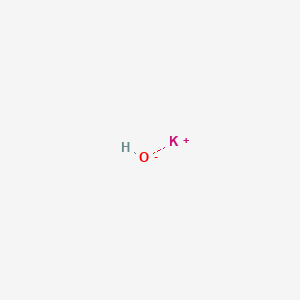
Potassium Hydroxide
Potassium hydroxide is an alkali metal hydroxide. — ChEBI
- IUPAC name
- potassium hydroxide
- Molecular formula
- HKO
- Molecular weight
- 56.106 g/mol
- Exact mass
- 55.96644614 Da
- Topological polar surface area
- 1.0 Ų
- Hydrogen-bond donors
- 1
- Hydrogen-bond acceptors
- 1
- Covalent units
- 2
- Defined stereocentres
- 0
Also known as
16 more reported names
External database identifiers
- ChEBI:CHEBI:32035
- ChEMBL:CHEMBL2103983
- EPA DTXSID:DTXSID5029633
- PubMed:11750165
Evidence from additional scientific databases
NIH PubChem PUG-View
Attributed physical-property, hazard, environmental and use annotations.
- Autoignition Temperature: Not flammable (USCG, 1999) Source: CAMEO Chemicals
- Boiling Point: greater than 266 °F at 760 mmHg (USCG, 1999) Source: CAMEO Chemicals
- Boiling Point: 2408 °F at 760 mmHg (NTP, 1992) Source: CAMEO Chemicals
- Boiling Point: 1,320 Source: DrugBank
- Boiling Point: 1327 °C Source: Hazardous Substances Data Bank (HSDB)
- Boiling Point: 1324 °C Source: ILO-WHO International Chemical Safety Cards (ICSCs)
- Boiling Point: 2408 °F Source: Occupational Safety and Health Administration (OSHA)
- Boiling Point: 1327 °C @760 [mm Hg] Source: PAC Chemical Database, U.S. Department of Energy
- Boiling Point: 2415 °F Source: The National Institute for Occupational Safety and Health (NIOSH)
- Color/Form: White or colorless, orthorhombic, deliquescent pieces, lumps, or sticks having crystalline fracture Source: Hazardous Substances Data Bank (HSDB)
- Color/Form: White or slightly yellow lumps, rods, pellets Source: Hazardous Substances Data Bank (HSDB)
- Color/Form: White rhombic crystals Source: Hazardous Substances Data Bank (HSDB)
- Density: 1.45 to 1.50 at 68 °F (USCG, 1999) Source: CAMEO Chemicals
- Density: 2.04 at 59 °F (USCG, 1999) - Denser than water; will sink Source: CAMEO Chemicals
- Density: 2.044 g/cu cm Source: Hazardous Substances Data Bank (HSDB)
- Density: Colorless, strongly basic, soapy, caustic liquid whose density depends on the concentration (g/cu cm at wt%): 1.092 at 10; 1.188 at 29; a.291 at 30; a.395 at 40; 1.514 at 50 /Aqueous potassium hydroxide/ Source: Hazardous Substances Data Bank (HSDB)
- Density: 2.04 g/cm³ Source: ILO-WHO International Chemical Safety Cards (ICSCs)
- Density: 2.04 Source: Occupational Safety and Health Administration (OSHA)
- Density: 2.044 @25 °C Source: PAC Chemical Database, U.S. Department of Energy
- Density: 2.04 Source: The National Institute for Occupational Safety and Health (NIOSH)
- Melting Point: 680 °F approximately (NTP, 1992) Source: CAMEO Chemicals
- Melting Point: 405 Source: DrugBank
- Melting Point: about 360 °C; about 380 °C when anhydrous Source: Hazardous Substances Data Bank (HSDB)
- Melting Point: Melting point: 406 °C Source: Hazardous Substances Data Bank (HSDB)
- Melting Point: 90-92% KOH; MP: about 250 °C; heat of fusion: about 6.7 kJ/mol /Technical potassium hydroxide/ Source: Hazardous Substances Data Bank (HSDB)
- Melting Point: 380 °C Source: ILO-WHO International Chemical Safety Cards (ICSCs)
- Melting Point: 680 °F Source: Occupational Safety and Health Administration (OSHA)
- Melting Point: 406 °C Source: PAC Chemical Database, U.S. Department of Energy
- Melting Point: 716 °F Source: The National Institute for Occupational Safety and Health (NIOSH)
- Odor: Odorless Source: Hazardous Substances Data Bank (HSDB)
- Physical Description: Potassium hydroxide, solution appears as an clear aqueous solution. Corrosive to metals and tissue. Noncombustible. Used in chemical manufacturing, petroleum refining, cleaning compounds. Source: CAMEO Chemicals
- Physical Description: Potassium hydroxide, [dry solid, flake, bead, or granular] appears as a white solid. Corrosive to metals and tissue. Used in soap manufacture, bleach, as an electrolyte in alkaline batteries, and as a food additive. Source: CAMEO Chemicals
- Physical Description: Liquid; Dry Powder; Liquid; Liquid; Other Solid; Dry Powder; Large Crystals; Large Crystals; CBI; Dry Powder; Other Solid Source: EPA Chemical Data Reporting (CDR)
- Physical Description: White or nearly white pellets, flakes, sticks, fused masses or other forms Source: EU Food Improvement Agents
- Physical Description: Odorless, white or slightly yellow lumps, rods, flakes, sticks, or pellets. [Note: May be used as an aqueous solution.]; [NIOSH] Source: Haz-Map, Information on Hazardous Chemicals and Occupational Diseases
- Physical Description: WHITE HYGROSCOPIC SOLID IN VARIOUS FORMS. Source: ILO-WHO International Chemical Safety Cards (ICSCs)
- Physical Description: White, odorless solid or clear aqueous solution. Source: Occupational Safety and Health Administration (OSHA)
- Physical Description: Odorless, white or slightly yellow lumps, rods, flakes, sticks, or pellets. [Note: May be used as an aqueous solution.] Source: The National Institute for Occupational Safety and Health (NIOSH)
- Solubility: 107 g/100 cc at 59 °F (NTP, 1992) Source: CAMEO Chemicals
- Solubility: Soluble Source: DrugBank
- Solubility: Very soluble in water. Freely soluble in ethanol Source: EU Food Improvement Agents
- Solubility: Solubility in water, 121 g/100 g water at 25 °C Source: Hazardous Substances Data Bank (HSDB)
- Solubility: Solubility in water (g KOH/100 g H2O): 97 at 0 °C; 103 at 10 °C; 112 at 20 °C; 126 at 30 °C; 178 at 100 °C Source: Hazardous Substances Data Bank (HSDB)
- Solubility: Soluble in 0.9 part water, about 0.6 part boiling water Source: Hazardous Substances Data Bank (HSDB)
- Solubility: Soluble in ethanol, methanol Source: Hazardous Substances Data Bank (HSDB)
- Solubility: For more Solubility (Complete) data for POTASSIUM HYDROXIDE (6 total), please visit the HSDB record page. Source: Hazardous Substances Data Bank (HSDB)
- Solubility: Solubility in water, g/100ml at 25 °C: 110 (very good) Source: ILO-WHO International Chemical Safety Cards (ICSCs)
- Solubility: (59 °F): 107% Source: The National Institute for Occupational Safety and Health (NIOSH)
- Vapor Pressure: 1 mmHg at 1326 °F ; 5 mmHg at 1497 °F (NTP, 1992) Source: CAMEO Chemicals
- Vapor Pressure: 1 MM HG @ 714 °C Source: Hazardous Substances Data Bank (HSDB)
- Vapor Pressure: 1 mmHg at 1326 °F; 5 mmHg at 1497 °F Source: Occupational Safety and Health Administration (OSHA)
- Vapor Pressure: (1317 °F): 1 mmHg Source: The National Institute for Occupational Safety and Health (NIOSH)
- pH: Strongly alkaline (1 % solution) Source: EU Food Improvement Agents
- pH: pH = 13.5 (0.1 Molar aq soln) Source: Hazardous Substances Data Bank (HSDB)
- Exposure Routes: Serious local effects by all routes of exposure. Source: ILO-WHO International Chemical Safety Cards (ICSCs)
- Exposure Routes: inhalation, ingestion, skin and/or eye contact Source: The National Institute for Occupational Safety and Health (NIOSH)
- First Aid: (Act quickly]); EYES: flush with water for at least 15 min.; SKIN: flush with water, then rinse with dilute vinegar (acetic acid).; INGESTION: give water and milk. Do NOT induce vomiting. Call physician at once, even when injury seems to be slight. (USCG, 1999) Source: CAMEO Chemicals
- First Aid: EYES: First check the victim for contact lenses and remove if present. Flush victim's eyes with water or normal saline solution for 20 to 30 minutes while simultaneously calling a hospital or poison control center. Do not put any ointments, oils, or medication in the victim's eyes without specific instructions from a physician. IMMEDIATELY transport the victim after flushing eyes to a hospital even if no symptoms (such as redness or irritation) develop.; SKIN: IMMEDIATELY flood affected skin with water while removing and isolating all contaminated clothing. Gently wash all affected skin areas thoroughly with soap and water. IMMEDIATELY call a hospital or poison control center even if no symptoms (such as redness or irritation) develop. IMMEDIATELY transport the victim to a hospital for treatment after washing the affected areas.; INHALATION: IMMEDIATELY leave the contaminated area; take deep breaths of fresh air. If symptoms (such as wheezing, coughing, shortness of breath, or burning in the mouth, throat, or chest) develop, call a physician and be prepared to transport the victim to a hospital. Provide proper respiratory protection to rescuers entering an unknown atmosphere. Whene Source: CAMEO Chemicals
- ERG2024, Guide 154 (Potassium hydroxide, solution; Potassium hydroxide, solid): General First Aid:; · Call 911 or emergency medical service.; · Ensure that medical personnel are aware of the material(s) involved, take precautions to protect themselves and avoid contamination.; · Move victim to fresh air if it can be done safely.; · Administer oxygen if breathing is difficult.; · If victim is not breathing:; -- DO NOT perform mouth-to-mouth resuscitation; the victim may have ingested or inhaled the substance.; -- If equipped and pulse detected, wash face and mouth, then give artificial respiration using a proper respiratory medical device (bag-valve mask, pocket mask equipped with a one-way valve or other device).; -- If no pulse detected or no respiratory medical device available, provide continuous compressions. Conduct a pulse check every two minutes or monitor for any signs of spontaneous respirations.; · Remove and isolate contaminated clothing and shoes.; · For minor skin contact, avoid spreading material on unaffected skin.; · In case of contact with substance, remove immediately by flushing skin or eyes with running water for at least 20 minutes.; · For severe burns, immediate medical attention is required.; · Effects of exposure (inhalation, ingestion, Source: Emergency Response Guidebook (ERG)
- ERG2024, Guide 154 (Potassium hydroxide, solid; Potassium hydroxide, solution): General First Aid:; · Call 911 or emergency medical service.; · Ensure that medical personnel are aware of the material(s) involved, take precautions to protect themselves and avoid contamination.; · Move victim to fresh air if it can be done safely.; · Administer oxygen if breathing is difficult.; · If victim is not breathing:; -- DO NOT perform mouth-to-mouth resuscitation; the victim may have ingested or inhaled the substance.; -- If equipped and pulse detected, wash face and mouth, then give artificial respiration using a proper respiratory medical device (bag-valve mask, pocket mask equipped with a one-way valve or other device).; -- If no pulse detected or no respiratory medical device available, provide continuous compressions. Conduct a pulse check every two minutes or monitor for any signs of spontaneous respirations.; · Remove and isolate contaminated clothing and shoes.; · For minor skin contact, avoid spreading material on unaffected skin.; · In case of contact with substance, remove immediately by flushing skin or eyes with running water for at least 20 minutes.; · For severe burns, immediate medical attention is required.; · Effects of exposure (inhalation, ingestion, Source: Emergency Response Guidebook (ERG)
- ERG2024, Guide 154 (Caustic potash, solution; Caustic potash, solid): General First Aid:; · Call 911 or emergency medical service.; · Ensure that medical personnel are aware of the material(s) involved, take precautions to protect themselves and avoid contamination.; · Move victim to fresh air if it can be done safely.; · Administer oxygen if breathing is difficult.; · If victim is not breathing:; -- DO NOT perform mouth-to-mouth resuscitation; the victim may have ingested or inhaled the substance.; -- If equipped and pulse detected, wash face and mouth, then give artificial respiration using a proper respiratory medical device (bag-valve mask, pocket mask equipped with a one-way valve or other device).; -- If no pulse detected or no respiratory medical device available, provide continuous compressions. Conduct a pulse check every two minutes or monitor for any signs of spontaneous respirations.; · Remove and isolate contaminated clothing and shoes.; · For minor skin contact, avoid spreading material on unaffected skin.; · In case of contact with substance, remove immediately by flushing skin or eyes with running water for at least 20 minutes.; · For severe burns, immediate medical attention is required.; · Effects of exposure (inhalation, ingestion, Source: Emergency Response Guidebook (ERG)
- First Aid: (General first aid procedures); Eye: Irrigate immediately - If this chemical contacts the eyes, immediately wash (irrigate) the eyes with large amounts of water, occasionally lifting the lower and upper lids. Get medical attention immediately.; Skin: Water flush immediately - If this chemical contacts the skin, immediately flush the contaminated skin with water. If this chemical penetrates the clothing, immediately remove the clothing and flush the skin with water. Get medical attention promptly.; Breathing: Respiratory support; Swallow: Medical attention immediately - If this chemical has been swallowed, get medical attention immediately. Source: The National Institute for Occupational Safety and Health (NIOSH)
- Signal: Danger Source: Regulation (EC) No 1272/2008 of the European Parliament and of the Council
- GHS Hazard Statements: H302: Harmful if swallowed [Warning Acute toxicity, oral]; H314: Causes severe skin burns and eye damage [Danger Skin corrosion/irritation] Source: Regulation (EC) No 1272/2008 of the European Parliament and of the Council
- Precautionary Statement Codes: P260, P264, P270, P280, P301+P317, P301+P330+P331, P302+P361+P354, P304+P340, P305+P354+P338, P316, P321, P330, P363, P405, and P501 (click each P-code to see the statement) Source: Regulation (EC) No 1272/2008 of the European Parliament and of the Council
- Note: This chemical does not meet GHS hazard criteria for < 0.1% (3 of 4709) of reports. Source: European Chemicals Agency (ECHA)
- Signal: Danger Source: European Chemicals Agency (ECHA)
- GHS Hazard Statements: H290 (20.9%): May be corrosive to metals [Warning Corrosive to Metals]; H302 (96.1%): Harmful if swallowed [Warning Acute toxicity, oral]; H314 (99.4%): Causes severe skin burns and eye damage [Danger Skin corrosion/irritation]; H318 (24.7%): Causes serious eye damage [Danger Serious eye damage/eye irritation] Source: European Chemicals Agency (ECHA)
- Precautionary Statement Codes: P234, P260, P264, P264+P265, P270, P280, P301+P317, P301+P330+P331, P302+P361+P354, P304+P340, P305+P354+P338, P316, P317, P321, P330, P363, P390, P405, P406, and P501 (click each P-code to see the statement) Source: European Chemicals Agency (ECHA)
- ECHA C&L Notifications Summary: Aggregated GHS information provided per 4709 reports by companies from 79 notifications to the ECHA C&L Inventory. Each notification may be associated with multiple companies.; Reported as not meeting GHS hazard criteria per 3 of 4709 reports by companies.; There are 78 notifications provided by 4706 of 4709 reports by companies with hazard statement code(s).; Information may vary between notifications depending on impurities, additives, and other factors. The percentage value in parenthesis indicates the notified classification ratio from companies that provide hazard codes. Only hazard codes with percentage values above 10% are shown. For more detailed information, please visit ECHA C&L website. Source: European Chemicals Agency (ECHA)
- Signal: Danger Source: NITE-CMC
- GHS Hazard Statements: H301: Toxic if swallowed [Danger Acute toxicity, oral]; H304: May be fatal if swallowed and enters airways [Danger Aspiration hazard]; H314: Causes severe skin burns and eye damage [Danger Skin corrosion/irritation]; H318: Causes serious eye damage [Danger Serious eye damage/eye irritation]; H370: Causes damage to organs [Danger Specific target organ toxicity, single exposure]; H372: Causes damage to organs through prolonged or repeated exposure [Danger Specific target organ toxicity, repeated exposure] Source: NITE-CMC
- Precautionary Statement Codes: P260, P264, P264+P265, P270, P280, P301+P316, P301+P330+P331, P302+P361+P354, P304+P340, P305+P354+P338, P308+P316, P316, P317, P319, P321, P330, P331, P363, P405, and P501 (click each P-code to see the statement) Source: NITE-CMC
- GHS Hazard Statements: H301: Toxic if swallowed [Danger Acute toxicity, oral]; H304: May be fatal if swallowed and enters airways [Danger Aspiration hazard]; H314: Causes severe skin burns and eye damage [Danger Skin corrosion/irritation]; H318: Causes serious eye damage [Danger Serious eye damage/eye irritation]; H370: Causes damage to organs [Danger Specific target organ toxicity, single exposure] Source: NITE-CMC
- Target Organs: Eyes, skin, respiratory system Source: The National Institute for Occupational Safety and Health (NIOSH)
- Cosmetic Ingredient Review Conclusion: The CIR Expert Panel concluded that ... Potassium Hydroxide is safe in hair straighteners and depilatories under conditions of recommended use; users should minimize skin contact. These ingredients are safe for all other present practices of use and concentration described in this safety assessment when formulated to be nonirritating. Source: Cosmetic Ingredient Review (CIR)
- Cosmetic Ingredient Review Finding(s): Safe for use in cosmetics, with qualifications Source: Cosmetic Ingredient Review (CIR)
- Toxicity Summary: IDENTIFICATION AND USE: Potassium hydroxide (KOH) is commercialized as a solid or as solutions with varying concentrations. It is used in soap manufacture; drain and pipeline cleaners; bleaching agents; manufacture of potassium carbonate and tetrapotassium pyrophosphate, an electrolyte in alkaline storage batteries and some fuel cells, absorbent for carbon dioxide and hydrogen sulfide; dyestuffs; liquid fertilizers; food additive; herbicides; electroplating; mercerizing; and paint removers. HUMAN EXPOSURE AND TOXICITY: Potassium hydroxide causes direct local effects on the skin, eyes and gastrointestinal tract after direct exposure. If KOH aerosols/mists occur, they will cause direct local effects on respiratory tract. Solutions with concentrations higher than 2% are corrosive, while concentrations of about 0.5 to about 2.0 % are irritating. The irritant effects are reported as coughing, wheezing, conjunctivitis, tearing, and irritation. Children may be accidentally exposed to commercial cleaning products. In a retrospective clinical study with 168 children after alkaline substance ingestion, 9 children (5.3%) developed gastric outlet obstruction. The fatal complications from an al Source: Hazardous Substances Data Bank (HSDB)
- Consumer Uses: Solvent; Anti-adhesive/cohesive; Anti-freeze agent; Other; Lubricating agent; Processing aids not otherwise specified; Surfactant (surface active agent); Chemical reaction regulator; Fuel agents; pH regulating agent; Cleaning agent; Ion exchange agent; Not Known or Reasonably Ascertainable; Corrosion inhibitor; Soil amendments (fertilizers); Etching agent; Processing aids, specific to petroleum production; Intermediate Source: EPA Chemical Data Reporting (CDR)
- Industry Uses: Ion exchange agent; Catalyst; Corrosion inhibitor; Not Known or Reasonably Ascertainable; Soil amendments (fertilizers); Cleaning agent; Absorbent; Oxidizing agent; Surface modifier; Processing aids, specific to petroleum production; Intermediate; Chelating agent; Etching agent; Adhesion/cohesion promoter; Freeze-thaw additive; Lubricating agent; Other; Flavoring and nutrient; Anti-adhesive/cohesive; Anti-freeze agent; Conductive agent; Fuel agents; pH regulating agent; Plating agent; Abrasives; Chemical reaction regulator; Semiconductor and photovoltaic agent; Surfactant (surface active agent); Processing aids not otherwise specified Source: EPA Chemical Data Reporting (CDR)
- Cosmetic Ingredient Review Link: CIR ingredient: Potassium Hydroxide Source: Cosmetic Ingredient Review (CIR)
- Sources/Uses: Used to make liquid soaps; it is also used in paint, varnish removers, and drain cleaners; it is used in electroplating, photoengraving, and lithography. [ACGIH] Used as a wet etchant in semiconductor manufacturing at standard concentrations of 50% or 10%; [CSH, p. 46] Source: Haz-Map, Information on Hazardous Chemicals and Occupational Diseases
- Industrial Processes with risk of exposure: Acid and Alkali Cleaning of Metals [Category: Clean]; Electroplating [Category: Plate]; Semiconductor Manufacturing [Category: Industry]; Battery Manufacturing [Category: Industry]; Photographic Processing [Category: Other] Source: Haz-Map, Information on Hazardous Chemicals and Occupational Diseases
- Activities with risk of exposure: Lithography printing [Category: Hobbies] Source: Haz-Map, Information on Hazardous Chemicals and Occupational Diseases
- Uses: For potassium hydroxide (USEPA/OPP Pesticide Code: 075602) there are 0 labels match. /SRP: Not registered for current use in the U.S., but approved pesticide uses may change periodically and so federal, state and local authorities must be consulted for currently approved uses./ Source: Hazardous Substances Data Bank (HSDB)
- Uses: The active ingredient is no longer contained in any registered pesticide products ... "cancelled." Source: Hazardous Substances Data Bank (HSDB)
- Uses: Manufacturing liquid soap; mordant for wood; absorbing CO2; mercerizing cotton; print and varnish removers; electroplating, photoengraving and lithography; printing inks; in analytical chemistry for alkalimetric titrations; in organic synthesis. Pharmaceutic aid (alkalizer). Source: Hazardous Substances Data Bank (HSDB)
- Uses: Soap manufacture, bleaching, manufacture of potassium carbonate and tetrapotassium pyrophosphate, electrolyte in alkaline storage batteries and some fuel cells, absorbent for carbon dioxide and hydrogen sulfide, dyestuffs, liquid fertilizers, food additive, herbicides, electroplating, mercerizing, paint removers, reagent. Source: Hazardous Substances Data Bank (HSDB)
- Uses: For more Uses (Complete) data for POTASSIUM HYDROXIDE (10 total), please visit the HSDB record page. Source: Hazardous Substances Data Bank (HSDB)
Mapped by: Existing checksum-valid CAS to unique PubChem CID match. Retrieved: 2026-08-31. Open source record
Scientific classifications and hazard annotations provide context and do not replace the market-specific regulatory decision shown above.
Additional source coverage and match status
| Source | Result | Checked |
|---|---|---|
| NIH PubChem PUG-View | Exact match | 2026-08-31 |
A recorded no-match is useful evidence that the source was checked; it is not a claim that the substance does not exist elsewhere.
Retrieved from NIH PubChem on 2026-08-31 by checksum-valid CAS matching. Chemical properties do not replace the regulatory decision on this page.
Inventory details for POTASSIUM HYDROXIDE
INCI name
POTASSIUM HYDROXIDE
INN name
potassium hydroxide
Ph. Eur. name
kalii hydroxidum
Description
Potassium hydroxide
Record provenance
- Inventory reference
- 36981
- Imported identity
- POTASSIUM HYDROXIDE
- Source update
- 27/06/2016
Annex records for POTASSIUM HYDROXIDE
POTASSIUM HYDROXIDE / SODIUM HYDROXIDE
Key data
Official EU ingredient-name evidence
The ingredient name exactly matches the official 2025 EU glossary of common ingredient names.
Related inventory evidence
Ingredients with overlapping formulation functions
Additional official and scientific sources
11 external databases to check this identity in
Each link searches that source for this identity. What each source is, and its legal weight
How POTASSIUM HYDROXIDE appears in the CosIng inventory
The CosIng inventory lists POTASSIUM HYDROXIDE as a cosmetic ingredient and this page links it to 1 annex record. The inventory entry captures names and identifiers, while the annex record shows where the substance is prohibited, restricted or positively listed in EU cosmetics law.
POTASSIUM HYDROXIDE is also tagged with 1 cosmetic function in the official data. Function labels describe intended use, but they do not replace regulatory review of linked annex records before formulation or labelling work.
Frequently asked questions
Source note for POTASSIUM HYDROXIDE
This page combines the CosIng inventory entry for POTASSIUM HYDROXIDE with 1 linked Annex II–VI record from the local dataset built from public European Commission cosmetic ingredient materials.
Use this inventory page to research POTASSIUM HYDROXIDE and compare linked records, but verify restrictions and legal status against the current official source text and law before making regulatory decisions.
Tools & next steps
Check your formula
Scan a full INCI list to detect POTASSIUM HYDROXIDE and any linked EU annex restrictions or allergen flags.
INCI CheckerSearch similar ingredients
Find other inventory ingredients and annex entries related to POTASSIUM HYDROXIDE, its identifiers or nearby name variants.
Search