
BORIC ACID
Boric acid
BORIC ACID is linked to 1 EU annex record on this page.
Regulatory evidence by market
This matrix separates verified ingredient rules from sources that are mapped but not yet imported. No imported rule does not mean the ingredient is permitted.
Swipe or scroll horizontally to see every column.
| Market | Evidence status | Records | Source language |
|---|---|---|---|
| European Union | Evidence linked Prohibited entry found Open this evidence | 1 | English and EU languages |
| Great Britain | Source mapped Official source mapped; ingredient rule not imported | 0 | English |
| Canada | Evidence linked Restricted Open this evidence | 1 | English and French |
| New Zealand | Evidence linked Prohibited Open this evidence | 2 | English |
| ASEAN | Evidence linked Restricted Open this evidence | 1 | English and national languages |
| China | Evidence linked Prohibited Open this evidence | 1 | Chinese with selected English material |
| Japan | Evidence linked Prohibited Open this evidence | 1 | Japanese; official English translation available |
| South Korea | Evidence linked Prohibited Open this evidence | 1 | Korean with some English names |
| United States | Source mapped Official source mapped; ingredient rule not imported | 0 | English |
| Australia | Evidence linked Restricted Open this evidence | 1 | English |
| Brazil | Evidence linked Prohibited Open this evidence | 1 | Portuguese with INCI crosswalks |
| India | Evidence linked Prohibited Open this evidence | 1 | English and Hindi |
| Saudi Arabia | Evidence linked Prohibited Open this evidence | 1 | Arabic and English |
Chemical identity and properties
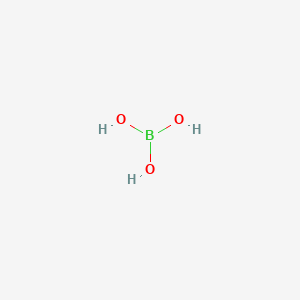
Boric Acid
Boric acid is a member of boric acids. It has a role as an astringent. It is a conjugate acid of a dihydrogenborate. — ChEBI
- IUPAC name
- boric acid
- Molecular formula
- BH3O3
- Molecular weight
- 61.84 g/mol
- Exact mass
- 62.0175241 Da
- Topological polar surface area
- 60.7 Ų
- Hydrogen-bond donors
- 3
- Hydrogen-bond acceptors
- 3
- Covalent units
- 1
- Defined stereocentres
- 0
Also known as
16 more reported names
External database identifiers
- ChEBI:CHEBI:33118
- ChEMBL:CHEMBL42403
- EPA DTXSID:DTXSID1020194
- PubMed:40682482
- PubMed:38108610
- PubMed:37572183
- PubMed:37045926
- PubMed:35020164
- PubMed:34175401
- PubMed:33137424
- PubMed:32553615
- PubMed:32179172
- PubMed:31823256
- PubMed:31368021
- PubMed:30997025
Evidence from additional scientific databases
EMBL-EBI ChEBI
boric acid
- Formula
- H3BO3
- Average mass
- 61.833 g/mol
- Monoisotopic mass
- 62.01752 Da
- Formal charge
- 0
- boric acids — is a (CHEBI:59765)
- astringent — has role (CHEBI:74783)
- plastic heat stabilizer — has role (CHEBI:747338)
- astringent — has role (CHEBI:74783)
- plastic heat stabilizer — has role (CHEBI:747338)
- boric acids — is a (CHEBI:59765)
- dihydrogenborate — is conjugate acid of (CHEBI:29254)
Additional curated names
Cross-references from this source
- CAS: 10043-35-3 — KEGG COMPOUND
- CAS: 10043-35-3 — NIST Chemistry WebBook
- CAS: 10043-35-3 — ChemIDplus
- CAS: 11113-50-1 — ChemIDplus
- REGISTRY_NUMBER: 1585 — Gmelin
- MANUAL_X_REF: 1644 — MolBase
- MANUAL_X_REF: 2136 — PPDB
- MANUAL_X_REF: 2136 — BPDB
- MANUAL_X_REF: 3035 — DrugCentral
- MANUAL_X_REF: BO3 — PDBeChem
- MANUAL_X_REF: C12486 — KEGG COMPOUND
- MANUAL_X_REF: D01089 — KEGG DRUG
Mapped by: Exact CAS cross-reference in the ChEBI compound record. Source updated: 2025-09-18. Retrieved: 2026-08-31. Open source record
NIH PubChem PUG-View
Attributed physical-property, hazard, environmental and use annotations.
- Boiling Point: 572 °F at 760 mmHg (decomposes) (NTP, 1992) Source: CAMEO Chemicals
- Boiling Point: 300 Source: DrugBank
- Boiling Point: 572 °F Source: Occupational Safety and Health Administration (OSHA)
- Color/Form: Colorless, transparent crystals or white granules or powder Source: Hazardous Substances Data Bank (HSDB)
- Color/Form: Colorless triclinic crystals Source: Hazardous Substances Data Bank (HSDB)
- Color/Form: White waxy triclinic solid plates Source: Hazardous Substances Data Bank (HSDB)
- Density: 1.435 at 68 °F (USCG, 1999) - Denser than water; will sink Source: CAMEO Chemicals
- Density: 1.5 g/cu cm Source: Hazardous Substances Data Bank (HSDB)
- Density: Relative density (water = 1): 1.5 Source: ILO-WHO International Chemical Safety Cards (ICSCs)
- Density: 1.435 Source: Occupational Safety and Health Administration (OSHA)
- Density: 1.435 @25 °C Source: PAC Chemical Database, U.S. Department of Energy
- Dissociation Constants: Ka = 5.80X10⁻¹⁰ at 25 °C (pKa = 9.24) Source: Hazardous Substances Data Bank (HSDB)
- LogP: log Kow = 0.175 Source: Hazardous Substances Data Bank (HSDB)
- LogP: 0.18 Source: Human Metabolome Database (HMDB)
- LogP: -1.09 Source: ILO-WHO International Chemical Safety Cards (ICSCs)
- Melting Point: 340 °F (NTP, 1992) Source: CAMEO Chemicals
- Melting Point: 169 Source: DrugBank
- Melting Point: 171 °C Source: Haz-Map, Information on Hazardous Chemicals and Occupational Diseases
- Melting Point: 170.9 °C Source: Hazardous Substances Data Bank (HSDB)
- Melting Point: 171 °C Source: Human Metabolome Database (HMDB)
- Melting Point: 340 °F Source: Occupational Safety and Health Administration (OSHA)
- Melting Point: 170.9 °C Source: PAC Chemical Database, U.S. Department of Energy
- Odor: Odorless Source: Hazardous Substances Data Bank (HSDB)
- Physical Description: Boric acid is an odorless white solid. Melting point 171 °C. Sinks and mixes with water. (USCG, 1999) Source: CAMEO Chemicals
- Physical Description: Dry Powder; Other Solid; Large Crystals; Dry Powder; Large Crystals; Liquid; Other Solid Source: EPA Chemical Data Reporting (CDR)
- Physical Description: Colourless, odourless, transparent crystals or white granules or powder; slightly unctuous to the touch; occurs in nature as the mineral sassolite Source: EU Food Improvement Agents
- Physical Description: Colorless crystals or white powder or granules; odorless; [Merck Index] White odorless powder; [Alfa Aesar MSDS] Source: Haz-Map, Information on Hazardous Chemicals and Occupational Diseases
- Physical Description: Solid Source: Human Metabolome Database (HMDB)
- Physical Description: ODOURLESS COLOURLESS CRYSTALS OR WHITE POWDER. Source: ILO-WHO International Chemical Safety Cards (ICSCs)
- Physical Description: Odorless white solid. Source: Occupational Safety and Health Administration (OSHA)
- Refractive Index: Index of refraction: 1.337, 1.461, 1.462 Source: Hazardous Substances Data Bank (HSDB)
- Solubility: 10 to 50 mg/mL at 66 °F (NTP, 1992) Source: CAMEO Chemicals
- Solubility: Soluble in hot water, partially soluble in cold water Source: DrugBank
- Solubility: Slightly unctuous to touch; volatile with steam; solubility in water increased by hydrochloric, citric or tartaric acids Source: Hazardous Substances Data Bank (HSDB)
- Solubility: Solubility: in glycerol 17.5% at 25 °C; ethylene glycol 18.5% at 25 °C; in methanol 173.9 g/L at 25 °C; in ethanol 94.4 g/L at 25 °C; in acetone 0.6% at 25 °C; ethyl acetate 1.5% at 25 °C Source: Hazardous Substances Data Bank (HSDB)
- Solubility: Water solubility: 2.52% at 0 °C; 3.49% at 10 °C; 4.72% at 20 °C; 6.23% at 30 °C; 8.08% at 40 °C; 10.27% at 50 °C; 12.97% at 60 °C; 15.75% at 70 °C; 19.10% at 80 °C; 23.27% at 90 °C; 27.53% at 100 °C Source: Hazardous Substances Data Bank (HSDB)
- Solubility: Solubility in water is increased by hydrochloric acid Source: Hazardous Substances Data Bank (HSDB)
- Solubility: In water, 5.0X10+4 mg/L at 25 °C Source: Hazardous Substances Data Bank (HSDB)
- Solubility: 50 mg/mL at 25 °C Source: Human Metabolome Database (HMDB)
- Solubility: Solubility in water, g/100ml at 20 °C: 5.6 Source: ILO-WHO International Chemical Safety Cards (ICSCs)
- Vapor Pressure: 1.6X10⁻⁶ mm Hg at 25 °C (2.136X10⁻⁴ Pa); log P (in Pa) = 26.83 - 9094/T where T is deg K Source: Hazardous Substances Data Bank (HSDB)
- Vapor Pressure: Vapor pressure at 20 °C: negligible Source: ILO-WHO International Chemical Safety Cards (ICSCs)
- pH: 3,8-4,8 (3,3 % aqueous solution) Source: EU Food Improvement Agents
- pH: pH = 5.1 (0.1 Molar) Source: Hazardous Substances Data Bank (HSDB)
- Substance: Boric Acid Source: NTP Technical Reports
- NTP Technical Report: TR-324: Toxicology and Carcinogenesis Studies of Boric Acid (CASRN 10043-35-3) in B6C3F1 Mice (Feed Studies) (1987 ) Source: NTP Technical Reports
- Peer Review Date: 03/26/86 Source: NTP Technical Reports
- Conclusion for Male Rat: Chemical Not Tested in Species/Sex Source: NTP Technical Reports
- Conclusion for Female Rat: Chemical Not Tested in Species/Sex Source: NTP Technical Reports
- Conclusion for Male Mice: No Evidence Source: NTP Technical Reports
- Conclusion for Female Mice: No Evidence Source: NTP Technical Reports
- Summary: Under the conditions of these 2--year feed studies, there was no evidence of carcinogenicity of boric acid at doses of 2,500 or 5,000 ppm for male or female B6C3F1 mice. Testicular atrophy and interstitial cell hyperplasia were observed in high dose male mice. The decrease in survival of dosed male mice may have reduced the sensitivity of this study. Source: NTP Technical Reports
- Carcinogen Classification: No indication of carcinogenicity to humans (not listed by IARC). Source: Toxin and Toxin Target Database (T3DB)
- Exposure Routes: The substance can be absorbed into the body by inhalation of dust and by ingestion. Source: ILO-WHO International Chemical Safety Cards (ICSCs)
- First Aid: EYES: First check the victim for contact lenses and remove if present. Flush victim's eyes with water or normal saline solution for 20 to 30 minutes while simultaneously calling a hospital or poison control center. Do not put any ointments, oils, or medication in the victim's eyes without specific instructions from a physician. IMMEDIATELY transport the victim after flushing eyes to a hospital even if no symptoms (such as redness or irritation) develop.; SKIN: IMMEDIATELY flood affected skin with water while removing and isolating all contaminated clothing. Gently wash all affected skin areas thoroughly with soap and water. If symptoms such as redness or irritation develop, IMMEDIATELY call a physician and be prepared to transport the victim to a hospital for treatment.; INHALATION: IMMEDIATELY leave the contaminated area; take deep breaths of fresh air. If symptoms (such as wheezing, coughing, shortness of breath, or burning in the mouth, throat, or chest) develop, call a physician and be prepared to transport the victim to a hospital. Provide proper respiratory protection to rescuers entering an unknown atmosphere. Whenever possible, Self-Contained Breathing Apparatus (SCBA) shou Source: CAMEO Chemicals
- Signal: Danger Source: Regulation (EC) No 1272/2008 of the European Parliament and of the Council
- GHS Hazard Statements: H360FD: May damage fertility; May damage the unborn child [Danger Reproductive toxicity] Source: Regulation (EC) No 1272/2008 of the European Parliament and of the Council
- Precautionary Statement Codes: P203, P280, P318, P405, and P501 (click each P-code to see the statement) Source: Regulation (EC) No 1272/2008 of the European Parliament and of the Council
- Note: This chemical does not meet GHS hazard criteria for < 0.1% (1 of 2123) of reports. Source: European Chemicals Agency (ECHA)
- Signal: Danger Source: European Chemicals Agency (ECHA)
- GHS Hazard Statements: H360 (88.7%): May damage fertility or the unborn child [Danger Reproductive toxicity]; H360FD (11.2%): May damage fertility; May damage the unborn child [Danger Reproductive toxicity] Source: European Chemicals Agency (ECHA)
- Precautionary Statement Codes: P203, P280, P318, P405, and P501 (click each P-code to see the statement) Source: European Chemicals Agency (ECHA)
- ECHA C&L Notifications Summary: Aggregated GHS information provided per 2123 reports by companies from 49 notifications to the ECHA C&L Inventory. Each notification may be associated with multiple companies.; Reported as not meeting GHS hazard criteria per 1 of 2123 reports by companies.; There are 48 notifications provided by 2122 of 2123 reports by companies with hazard statement code(s).; Information may vary between notifications depending on impurities, additives, and other factors. The percentage value in parenthesis indicates the notified classification ratio from companies that provide hazard codes. Only hazard codes with percentage values above 10% are shown. For more detailed information, please visit ECHA C&L website. Source: European Chemicals Agency (ECHA)
- GHS Hazard Statements: H360 (100%): May damage fertility or the unborn child [Danger Reproductive toxicity] Source: European Chemicals Agency (ECHA)
- ECHA C&L Notifications Summary: Aggregated GHS information provided per 241 reports by companies from 5 notifications to the ECHA C&L Inventory.; Information may vary between notifications depending on impurities, additives, and other factors. The percentage value in parenthesis indicates the notified classification ratio from companies that provide hazard codes. Only hazard codes with percentage values above 10% are shown. For more detailed information, please visit ECHA C&L website. Source: European Chemicals Agency (ECHA)
- Signal: Danger Source: NITE-CMC
- GHS Hazard Statements: H315: Causes skin irritation [Warning Skin corrosion/irritation]; H319: Causes serious eye irritation [Warning Serious eye damage/eye irritation]; H335: May cause respiratory irritation [Warning Specific target organ toxicity, single exposure; Respiratory tract irritation]; H360: May damage fertility or the unborn child [Danger Reproductive toxicity]; H370: Causes damage to organs [Danger Specific target organ toxicity, single exposure]; H402: Harmful to aquatic life [Hazardous to the aquatic environment, acute hazard] Source: NITE-CMC
- Cosmetic Ingredient Review Conclusion: The Expert Panel concludes that Sodium Borate and Boric Acid, in concentrations less than or equal to 5 percent, are safe as cosmetic ingredients when used as currently recommended; however, cosmetic formulations containing free Sodium Borate or Boric Acid at this concentration should not be used on infant skin or injured skin. Note: In 2003, the CIR Expert Panel considered available new data on these ingredients and reaffirmed the above conclusion. Source: Cosmetic Ingredient Review (CIR)
- Cosmetic Ingredient Review Finding(s): Safe for use in cosmetics, with qualifications Source: Cosmetic Ingredient Review (CIR)
- Environmental Bioconcentration: Highly water soluble materials are unlikely to bioaccumulate to any significant degree, and borate species are all present essentially as undissociated boric acid at neutral pH(1). The octanol/water partition coefficient for boric acid has been measured as 0.175(1), indicating low bioaccumulation potential(1). Boron did not bioaccumulate in 47-day and 21-day exposure tests using oysters and sockeye salmon respectively(1). Source: Hazardous Substances Data Bank (HSDB)
- Environmental Fate: TERRESTRIAL FATE: The pKa of boric acid is 9.24 at 25 °C(1), indicating that this compound will exist primarily in the undissociated form at an environmental pH range between pH 5 and pH 9, although the anion form will partially exist in alkaline soils(SRC). Adsorption of boron in soils depends on pH, organic content and types of clay and minerals in the soil(1). At acidic pH, boron exists in solutions in the form of undissociated boric acid; at alkaline pH, presence of borate ion occurs, which reaches maximum adsorption at pH 8.5-9(2). Field studies have observed boron to leach readily in soil(1); undissociated boric acid is transported in soil with little adsorption(2). Volatilization of boric acid from moist soil surfaces is not expected to be an important fate process(SRC) given an estimated Henry's Law constant of 2.6X10⁻¹² atm-cu m/mole(SRC), based upon its vapor pressure, 1.6X10⁻⁶ mm Hg(3), and water solubility, 5X10+4 mg/L(4). Boric acid is not expected to volatilize from dry soil surfaces(SRC) based upon its vapor pressure. No biotransformation processes have been reported for boron compounds, including boric acid(2). Source: Hazardous Substances Data Bank (HSDB)
- Environmental Fate: AQUATIC FATE: The pKa of boric acid is 9.24 at 25 °C(1), indicating that this compound will exist primarily in the undissociated form at an environmental pH range between 5 and 9, although the anion form will partially exist in alkaline waters(SRC). Boric acid leaches readily in soils(2) which indicates adsorption to suspended solids and sediment in water will not be an important fate process(SRC). Volatilization from water surfaces is not expected(3) based upon an estimated Henry's Law constant of 2.6X10⁻¹² atm-cu m/mole(SRC), derived from its vapor pressure, 1.6X10⁻⁶ mm Hg(4), and water solubility, 5X10+4 mg/L(5). However, evaporation of seawater itself is reported to be the biggest environmental contribution of boric acid to air(2). No biotransformation processes have been reported for boron compounds, including boric acid(2). Source: Hazardous Substances Data Bank (HSDB)
- Environmental Fate: ATMOSPHERIC FATE: According to a model of gas/particle partitioning of semivolatile organic compounds in the atmosphere(1), boric acid, which has a vapor pressure of 1.6X10⁻⁶ mm Hg at 25 °C(2), will exist in both the vapor and particulate phases in the ambient atmosphere. One monitoring study found that approximately 90% of boric acid in the atmosphere is in gaseous form and 10% in particulate form(3). Vapor-phase boric acid is degraded in the atmosphere by reaction with photochemically-produced hydroxyl radicals(SRC); the half-life for this reaction in air is estimated to be about 38 days(SRC), calculated from its rate constant of 4.2X10⁻¹³ cu cm/molecule-sec at 25 °C(SRC) that was derived using a structure estimation method(4). Particulate-phase boric acid may be removed from the air by wet or dry deposition(SRC). Source: Hazardous Substances Data Bank (HSDB)
- Consumer Uses: Chemical reaction regulator; pH regulating agent; Bleaching agent; Tanning agents not otherwise specified; Other; Lubricating agent; Anti-adhesive/cohesive; Adhesion/cohesion promoter; Anti-scaling agent; Viscosity modifiers; Soil amendments (fertilizers); Corrosion inhibitor; Not Known or Reasonably Ascertainable Source: EPA Chemical Data Reporting (CDR)
- Industry Uses: Processing aids not otherwise specified; Plating agent; Chemical reaction regulator; Bleaching agent; Fuel agents; pH regulating agent; Binder; Other; Lubricating agent; Anti-static agent; Chelating agent; Etching agent; Adhesion/cohesion promoter; Surface modifier; Dye; Flux agent; Flame retardant; Cleaning agent; Stabilizing agent; Not Known or Reasonably Ascertainable; Soil amendments (fertilizers) Source: EPA Chemical Data Reporting (CDR)
- Cosmetic Ingredient Review Link: CIR ingredient: Boric Acid Source: Cosmetic Ingredient Review (CIR)
- Sources/Uses: Used as an insecticide to kill ants and roaches, as a soldering flux, a flame retardant and weatherproofing agent; also used as an additive to dyes, nickeling baths, film developers, glass, enamels, soaps, paints, paper, adhesives, and steel; [HSDB] Used as a flux, an additive for heat-resistant borosilcate glass and glass fibers, a flame retardant for textile and insulation products, a fungicide for citrus fruits, an eye medicine, and a solute for nickel electroplating baths; Boric acid is formed by crystallizing a solution of hydrochloric acid or sulfuric acid and borax. [Hawley] Used for weatherproofing wood, as a preservative, in cosmetics, printing and dyeing, electric condensers, photography, and painting, for impregnating wicks and hardening steel, and to make cements, crockery, porcelain, borates, leather, carpets, hats, and artificial gems; Used therapeutically as an astringent and antiseptic and as a veterinary antibacterial and antifungal; [Merck Index] Registered US pesticide uses include insecticides (stomach poisons for ants, cockroaches, silverfish, and termites), fungicides (wood preservatives), and herbicides (desiccants, photosynthesis interrupters, and algae cont Source: Haz-Map, Information on Hazardous Chemicals and Occupational Diseases
- Industrial Processes with risk of exposure: Steel Producing [Category: Industry]; Welding [Category: Weld]; Brazing [Category: Heat or Machine]; Electroplating [Category: Plate]; Textiles (Fiber & Fabric Manufacturing) [Category: Industry]; Painting (Pigments, Binders, and Biocides) [Category: Paint]; Applying Wood Preservatives [Category: Other]; Using Disinfectants or Biocides [Category: Clean]; Farming (Pesticides) [Category: Industry]; Sewer and Wastewater Treatment [Category: Industry]; Leather Tanning and Processing [Category: Industry]; Photographic Processing [Category: Other]; Cement Producing [Category: Industry]; Textiles (Printing, Dyeing, or Finishing) [Category: Industry]; Glass Manufacturing [Category: Industry] Source: Haz-Map, Information on Hazardous Chemicals and Occupational Diseases
- Uses: Both oil base and water base fracturing fluids are being used in the fracturing industry. Water base, which includes alcohol-water mixtures and low strength acids, make up the majority of treating fluids. The common chemicals added to these fluids are polymers for viscosity development, crosslinkers for viscosity enhancement, pH control chemicals, gel breakers for polymer degradation following the treatment, surfactants, clay stabilizers, alcohol, bactericides, fluid loss additives and friction reducer. /Hydraulic fracturing/ Source: Hazardous Substances Data Bank (HSDB)
- Uses: Hydraulic fracturing uses a specially blended liquid which is pumped into a well under extreme pressure causing cracks in rock formations underground. These cracks in the rock then allow oil and natural gas to flow, increasing resource production. ... Chemical Name: Boric acid; Chemical Purpose: Maintains fluid viscosity as temperature increases; Product Function: Crosslinker. Source: Hazardous Substances Data Bank (HSDB)
- Uses: For boric acid (USEPA/OPP Pesticide Code: 011001) ACTIVE products with label matches. /SRP: Registered for use in the U.S. but approved pesticide uses may change periodically and so federal, state and local authorities must be consulted for currently approved uses./ Source: Hazardous Substances Data Bank (HSDB)
- Uses: For weatherproofing wood and fireproofing fabrics; as a preservative; manufacture of cements, crockery, porcelain, enamels, glass, borates, leather, carpets, hats, soaps, artificial gems; in nickeling baths; cosmetics; printing and dyeing, painting; photography; for impregnating wicks; electric condensers; hardening steel. Also used as insecticide for cockroaches and black carpet beetles. Source: Hazardous Substances Data Bank (HSDB)
- Uses: For more Uses (Complete) data for BORIC ACID (20 total), please visit the HSDB record page. Source: Hazardous Substances Data Bank (HSDB)
Mapped by: Existing checksum-valid CAS to unique PubChem CID match. Retrieved: 2026-08-31. Open source record
Scientific classifications and hazard annotations provide context and do not replace the market-specific regulatory decision shown above.
Additional source coverage and match status
| Source | Result | Checked |
|---|---|---|
| EMBL-EBI ChEBI | Exact match | 2026-08-31 |
| NIH PubChem PUG-View | Exact match | 2026-08-31 |
A recorded no-match is useful evidence that the source was checked; it is not a claim that the substance does not exist elsewhere.
Retrieved from NIH PubChem on 2026-08-31 by checksum-valid CAS matching. Chemical properties do not replace the regulatory decision on this page.
Inventory details for BORIC ACID
INCI name
BORIC ACID
INN name
boric acid
Ph. Eur. name
acidum boricum
Description
Boric acid
Record provenance
- Inventory reference
- 32208
- Imported identity
- BORIC ACID
- Source update
- 04/12/2019
Annex records for BORIC ACID
Boric acid [1]; Boric acid [2]
Key data
- ANTIMICROBIAL
- Preventing and/or slowing down microbial growth.
- BUFFERING
- Stabilising the pH of an aqueous medium in a narrow range even if an acid or base is added. Altering and/or maintaining a cosmetic product's pH at the desired level.
- DENATURANT
- Rendering cosmetics unpalatable. Mostly added to cosmetics containing ethyl alcohol to make it unsuitable for ingestion.
Official EU ingredient-name evidence
The ingredient name exactly matches the official 2025 EU glossary of common ingredient names.
The markets do not agree about this substance: it is prohibited in some and permitted under conditions in others, across the 11 markets that hold a rule for it.
Related inventory evidence
Ingredients with overlapping formulation functions
Additional official and scientific sources
11 external databases to check this identity in
Each link searches that source for this identity. What each source is, and its legal weight
How BORIC ACID appears in the CosIng inventory
The CosIng inventory lists BORIC ACID as a cosmetic ingredient and this page links it to 1 annex record. The inventory entry captures names and identifiers, while the annex record shows where the substance is prohibited, restricted or positively listed in EU cosmetics law.
BORIC ACID is also tagged with 3 cosmetic functions in the official data. Function labels describe intended use, but they do not replace regulatory review of linked annex records before formulation or labelling work.
Frequently asked questions
Source note for BORIC ACID
This page combines the CosIng inventory entry for BORIC ACID with 1 linked Annex II–VI record from the local dataset built from public European Commission cosmetic ingredient materials.
Use this inventory page to research BORIC ACID and compare linked records, but verify restrictions and legal status against the current official source text and law before making regulatory decisions.
Tools & next steps
Check your formula
Scan a full INCI list to detect BORIC ACID and any linked EU annex restrictions or allergen flags.
INCI CheckerSearch similar ingredients
Find other inventory ingredients and annex entries related to BORIC ACID, its identifiers or nearby name variants.
Search