
Official EU label nameGlossary entry 12107
HOMOSALATE
This record confirms an official common ingredient name for EU cosmetic product labelling. It does not by itself confirm that the substance is permitted, unrestricted or safe.
Global evidence snapshot
The resolved identity has matching regulatory evidence in 5 of 13 indexed market datasets: 4 country records and 1 EU Annex records. Every result and evidence gap is listed below.
Markets checked
13
Markets with evidence
5
Evidence gaps
8
Resolved identifiers
2
Resolved substance identity
CAS:118-56-9
EC:204-260-8
Ingredient index records:
HOMOSALATE
Cosmetic functions: FRAGRANCE, UV ABSORBER, UV FILTER
Benzoic acid, 2-hydroxy-, 3,3,5-trimethylcyclohexyl ester
Inventory restriction note: VI/3
7 matched or reported names
HOMOSALATEhomosalateBenzoic acid, 2-hydroxy-, 3,3,5-trimethylcyclohexyl ester / HomosalateHomosalateBenzoic acid, 2-hydroxy-, 3,3,5-trimethylcyclohexyl ester (homosalate)Homosalate (INN) CAS No.118-56-9호모살레이트
Regulatory evidence in all 13 markets
Open each matched record for its scope, concentration, conditions, warnings and official source version.
Swipe or scroll horizontally to see dataset coverage and next actions.
| Market | Result | Records | Dataset | Meaning / next action |
|---|---|---|---|---|
| European Union EU | Conditional positive-list match | 1Open record 1 | Complete annex dataset Regulation (EC) 1223/2009 consolidated to 1 May 2026 | Review every linked record and exact conditions. |
| Great Britain GB | Permitted list with conditions | 1Open record 1 | Complete consolidated annex dataset GB retained Regulation 1223/2009 schedules, effective 15 August 2026 | Review every linked record and exact conditions. |
| Canada CA | No local match | 0 | Complete Hotlist snapshot Health Canada Cosmetic Ingredient Hotlist, 13 August 2025 | The Hotlist is an administrative compliance tool, not an exhaustive safety approval list. |
| New Zealand NZ | Permitted list with conditions | 1Open record 1 | Complete schedules dataset Cosmetic Products Group Standard schedules effective 1 January 2026 | Review every linked record and exact conditions. |
| ASEAN ASEAN | Permitted list with conditions | 1Open record 1 | Complete regional annex dataset ASEAN Cosmetic Directive annexes 2026-1, 22 June 2026 | Review every linked record and exact conditions. |
| China CN | No local match | 0 | Complete prohibited catalogues plus official-source workflow NMPA 2021 banned catalogues plus dynamic IECIC List I/List II system current since 2025 | IECIC listing is not blanket approval; absence may require the new cosmetic ingredient route, and restrictions are checked separately. |
| Japan JP | No local match | 0 | Complete Standards appendices dataset MHLW Standards for Cosmetics official English source and Japanese amendments checked for the imported snapshot | The Japanese text and subsequent notices are canonical; no local match is not a product-compliance conclusion. |
| South Korea KR | Restricted | 1Open record 1 | Complete current appendix dataset MFDS Notice 2026-19, effective 18 March 2026 | Review every linked record and exact conditions. |
| United States US | No local match | 0 | Complete enumerated federal ingredient rules eCFR Title 21 issue date 27 August 2026 | FDA has no general approved-cosmetic-ingredient catalogue; absence from these sections is not approval or proof of safety. |
| Australia AU | No local match | 0 | Complete cosmetic-relevant Poisons Standard subset plus official workflow Therapeutic Goods (Poisons Standard—June 2026) Instrument 2026 | An AICIS Inventory match is not cosmetic approval; no Inventory match can indicate a new, exempted, reported or confidential introduction. |
| Brazil BR | No local match | 0 | Complete prohibited dataset plus current restricted-list workflow ANVISA RDC 1.029/2026 and RDC 1.030/2026, published 15 June 2026 | RDC 1.030/2026 amends rather than replaces the prohibited baseline, and the second restricted-list revision was still under consultation in July 2026. |
| India IN | No local match | 0 | Complete current Part 2 dataset plus official workflow for Parts 1, 3 and 4 Cosmetics Rules 2020 plus current BIS IS 4707 parts (1:2020, 2:2025, 3:2025, 4:2022) | The standards are separate controlled publications; absence from a locally indexed excerpt is not permission. |
| Saudi Arabia SA | No local match | 0 | Complete official list index SFDA live prohibited/restricted lists, snapshot 30 August 2026 | No list match is not permission; Gulf/SFDA product, claim, notification and technical requirements still apply. |
No market rows match this filter.
Matching market records and conditions
Great Britain
GB retained Regulation 1223/2009 schedules, effective 15 August 2026New Zealand
Cosmetic Products Group Standard schedules effective 1 January 2026ASEAN
ASEAN Cosmetic Directive annexes 2026-1, 22 June 2026South Korea
MFDS Notice 2026-19, effective 18 March 2026Exact Annex II–VI evidence
Annex VIentry 3
Open full regulatory recordHOMOSALATE
Product scope: Face products with the exception of propellent spray products
Maximum concentration: 7,34 %
Restrictions: From 1 January 2025 cosmetic products containing that substance and not complying with the conditions shall not be placed on the Union market. From 1 July 2025 cosmetic products containing that substance and not complying with the conditions shall not be made available on the Union market.
Chemical identity and properties
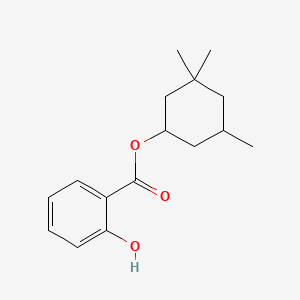
CAS 118-56-9PubChem CID 8362
Homosalate
2-hydroxybenzoic acid (3,3,5-trimethylcyclohexyl) ester is a member of phenols and a benzoate ester. It is functionally related to a salicylic acid. — ChEBI
- IUPAC name
- (3,3,5-trimethylcyclohexyl) 2-hydroxybenzoate
- Molecular formula
- C16H22O3
- Molecular weight
- 262.34 g/mol
- Exact mass
- 262.15689456 Da
- XLogP3
- 5.0
- Topological polar surface area
- 46.5 Ų
- Hydrogen-bond donors
- 1
- Hydrogen-bond acceptors
- 3
- Covalent units
- 1
- Defined stereocentres
- 0
Also known as
Homomenthyl salicylateHeliophan3,3,5-Trimethylcyclohexyl 2-hydroxybenzoateHomosalatoHomosalatumBenzoic acid, 2-hydroxy-, 3,3,5-trimethylcyclohexyl esterSalicylic Acid 3,3,5-Trimethylcyclohexyl EsterNSC-164918
16 more reported names
V06SV4M95SSunscreen SKINCAREBULUBIU ADVANCEDRefChem:55307dAlba Vegan Fresh Sun StickdAlba Vegan Essence SunscreenIlluminating Daily MoisturizerdAlba Vegan Tone-Up SunscreenSun Protection Facial SPF 50Facial Primer Protector SPF 50Bulubiu Face Sunscreen SKINCAREBULUBIU WEIGHTLESS MOISTURIZERILLUMINATING DAILY MOISTURIZER SPF 30Eight Hour Cream Targeted Sun Defense SPF 50Clean Fresh Sunblock Sunscreen SPF 30 ContinuousHomosalate, Ethylhexyl Methoxycinnamate,Titanium Dioxide
External database identifiers
- ChEBI:CHEBI:91642
- ChEMBL:CHEMBL1377575
- EPA DTXSID:DTXSID1026241
- PubMed:39159849
- PubMed:38381479
- PubMed:28551711
- PubMed:24004914
- PubMed:23769903
- PubMed:23062433
- PubMed:22884209
- PubMed:22749456
- PubMed:22669305
- PubMed:22612478
- PubMed:22214440
- PubMed:21872075
Evidence from additional scientific databases
NIH PubChem PUG-View
Exact identifier match8362
Attributed physical-property, hazard, environmental and use annotations.
- Boiling Point: 322 to 329 °F at 760 mmHg (NTP, 1992) Source: CAMEO Chemicals
- Density: 1.045 at 77 °F (NTP, 1992) - Denser than water; will sink Source: CAMEO Chemicals
- Flash Point: greater than 200 °F (NTP, 1992) Source: CAMEO Chemicals
- Physical Description: 3,3,5-trimethylcyclohexylsalicylate appears as viscous or light yellow to slightly tan liquid or oil. (NTP, 1992) Source: CAMEO Chemicals
- Solubility: Insoluble (<1 mg/ml at 79 °F) (NTP, 1992) Source: CAMEO Chemicals
- First Aid: EYES: First check the victim for contact lenses and remove if present. Flush victim's eyes with water or normal saline solution for 20 to 30 minutes while simultaneously calling a hospital or poison control center. Do not put any ointments, oils, or medication in the victim's eyes without specific instructions from a physician. IMMEDIATELY transport the victim after flushing eyes to a hospital even if no symptoms (such as redness or irritation) develop.; SKIN: IMMEDIATELY flood affected skin with water while removing and isolating all contaminated clothing. Gently wash all affected skin areas thoroughly with soap and water. If symptoms such as redness or irritation develop, IMMEDIATELY call a physician and be prepared to transport the victim to a hospital for treatment.; INHALATION: IMMEDIATELY leave the contaminated area; take deep breaths of fresh air. If symptoms (such as wheezing, coughing, shortness of breath, or burning in the mouth, throat, or chest) develop, call a physician and be prepared to transport the victim to a hospital. Provide proper respiratory protection to rescuers entering an unknown atmosphere. Whenever possible, Self-Contained Breathing Apparatus (SCBA) shou Source: CAMEO Chemicals
- Note: This chemical does not meet GHS hazard criteria for 67% (152 of 227) of all reports. Source: European Chemicals Agency (ECHA)
- Signal: Warning Source: European Chemicals Agency (ECHA)
- GHS Hazard Statements: H315 (16.7%): Causes skin irritation [Warning Skin corrosion/irritation]; H319 (16.7%): Causes serious eye irritation [Warning Serious eye damage/eye irritation]; H335 (16.7%): May cause respiratory irritation [Warning Specific target organ toxicity, single exposure; Respiratory tract irritation]; H361d (11.5%): Suspected of damaging the unborn child [Warning Reproductive toxicity]; H410 (11.5%): Very toxic to aquatic life with long lasting effects [Warning Hazardous to the aquatic environment, long-term hazard] Source: European Chemicals Agency (ECHA)
- Precautionary Statement Codes: P203, P261, P264, P264+P265, P271, P273, P280, P302+P352, P304+P340, P305+P351+P338, P318, P319, P321, P332+P317, P337+P317, P362+P364, P391, P403+P233, P405, and P501 (click each P-code to see the statement) Source: European Chemicals Agency (ECHA)
- ECHA C&L Notifications Summary: Aggregated GHS information provided per 227 reports by companies from 4 notifications to the ECHA C&L Inventory. Each notification may be associated with multiple companies.; Reported as not meeting GHS hazard criteria per 152 of 227 reports by companies.; There are 3 notifications provided by 75 of 227 reports by companies with hazard statement code(s).; Information may vary between notifications depending on impurities, additives, and other factors. The percentage value in parenthesis indicates the notified classification ratio from companies that provide hazard codes. Only hazard codes with percentage values above 10% are shown. For more detailed information, please visit ECHA C&L website. Source: European Chemicals Agency (ECHA)
- Industry Uses: Not Known or Reasonably Ascertainable Source: EPA Chemical Data Reporting (CDR)
Mapped by: Existing checksum-valid CAS to unique PubChem CID match. Retrieved: 2026-08-31. Open source record
Scientific classifications and hazard annotations provide context and do not replace the market-specific regulatory decision shown above.
Additional source coverage and match status
| Source | Result | Checked |
|---|---|---|
| NIH PubChem PUG-View | Exact match | 2026-08-31 |
A recorded no-match is useful evidence that the source was checked; it is not a claim that the substance does not exist elsewhere.
Retrieved from NIH PubChem on 2026-09-02 by checksum-valid CAS matching. Chemical properties do not replace the regulatory decision on this page.
Additional authoritative substance research
Each link searches that source for this identity. A link is a research route, not a claim that the source holds an exact record. What each source is, and its legal weight
Take this record further
Official source and scope
Imported from Commission Implementing Decision (EU) 2025/1175 (dataset version EU 2025/1175). The glossary supplies common ingredient names for the ingredient list required by Article 19(1)(g); it is not an approval or safety list.
Open official Decision