
Anthracene oil
Anthracene oil is listed in Annex II as a prohibited substance for cosmetic products placed on the EU market.
Chemical identity and properties
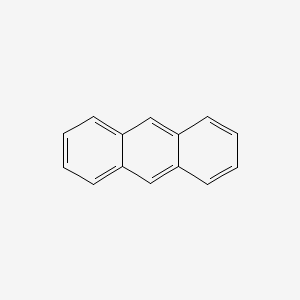
Anthracene
Acene is a polycyclic aromatic hydrocarbon consisting of fused benzene rings in a rectilinear arrangement. It is an ortho-fused polycyclic arene and a member of acenes. — ChEBI
- IUPAC name
- anthracene
- Molecular formula
- C14H10
- Molecular weight
- 178.23 g/mol
- Exact mass
- 178.078250319 Da
- XLogP3
- 4.4
- Topological polar surface area
- 0.0 Ų
- Hydrogen-bond donors
- 0
- Hydrogen-bond acceptors
- 0
- Covalent units
- 1
- Defined stereocentres
- 0
Also known as
16 more reported names
External database identifiers
- ChEBI:CHEBI:35297
- ChEBI:CHEBI:35298
- ChEMBL:CHEMBL333179
- EPA DTXSID:DTXSID0023878
- PubMed:32278787
- PubMed:30980910
- PubMed:28927721
- PubMed:28803881
- PubMed:28710019
- PubMed:28377212
- PubMed:23125935
- PubMed:23125677
- PubMed:23125624
- PubMed:23115964
- PubMed:23103890
- PubMed:23092118
Evidence from additional scientific databases
NIH PubChem PUG-View
Attributed physical-property, hazard, environmental and use annotations.
- Autoignition Temperature: 1004 °F (USCG, 1999) Source: CAMEO Chemicals
- Autoignition Temperature: 540 °C (1004 °F) Source: Hazardous Substances Data Bank (HSDB)
- Autoignition Temperature: 538 °C Source: ILO-WHO International Chemical Safety Cards (ICSCs)
- Boiling Point: 644 °F at 760 mmHg (corrected); 439.7 °F at 53 mmHg, sublimes (NTP, 1992) Source: CAMEO Chemicals
- Boiling Point: 341.3 °C Source: Hazardous Substances Data Bank (HSDB)
- Boiling Point: 342 °C Source: ILO-WHO International Chemical Safety Cards (ICSCs)
- Boiling Point: 644 °F Source: Occupational Safety and Health Administration (OSHA)
- Boiling Point: 339.9 °C @760 [mm Hg] Source: PAC Chemical Database, U.S. Department of Energy
- Color/Form: Monoclinic plates from alcohol recrystallization; when pure, colorless with violet fluorescence Source: Hazardous Substances Data Bank (HSDB)
- Color/Form: Tablets or monoclinic prisms from alcohol Source: Hazardous Substances Data Bank (HSDB)
- Color/Form: Yellow crystals with blue fluorescence Source: Hazardous Substances Data Bank (HSDB)
- Color/Form: Pale yellow leaves Source: Hazardous Substances Data Bank (HSDB)
- Density: 1.24 at 68 °F (USCG, 1999) - Denser than water; will sink Source: CAMEO Chemicals
- Density: 1.25 at 27 °C/4 °C Source: Hazardous Substances Data Bank (HSDB)
- Density: 1.25-1.28 g/cm³ Source: ILO-WHO International Chemical Safety Cards (ICSCs)
- Density: 1.24 Source: Occupational Safety and Health Administration (OSHA)
- Density: 1.28 @25 °C Source: PAC Chemical Database, U.S. Department of Energy
- Flash Point: 250 °F (NTP, 1992) Source: CAMEO Chemicals
- Flash Point: 121 °C Source: Haz-Map, Information on Hazardous Chemicals and Occupational Diseases
- Flash Point: 121.0 °C (249.8 °F) - closed cup Source: Hazardous Substances Data Bank (HSDB)
- Flash Point: 250 °F (121 °C) (Closed cup) Source: Hazardous Substances Data Bank (HSDB)
- Flash Point: 121 °C Source: ILO-WHO International Chemical Safety Cards (ICSCs)
- Flash Point: 250 °F Source: Occupational Safety and Health Administration (OSHA)
- LogP: log Kow = 4.45 Source: Hazardous Substances Data Bank (HSDB)
- LogP: 4.5 (calculated) Source: ILO-WHO International Chemical Safety Cards (ICSCs)
- Melting Point: 421 to 424 °F (NTP, 1992) Source: CAMEO Chemicals
- Melting Point: 216 °C Source: Hazardous Substances Data Bank (HSDB)
- Melting Point: 218 °C Source: ILO-WHO International Chemical Safety Cards (ICSCs)
- Melting Point: 421-424 °F Source: Occupational Safety and Health Administration (OSHA)
- Melting Point: 215.76 °C Source: PAC Chemical Database, U.S. Department of Energy
- Odor: Weak aromatic odor Source: Hazardous Substances Data Bank (HSDB)
- Physical Description: Anthracene is a white to yellow solid with a weak aromatic odor. Sinks in water. (USCG, 1999) Source: CAMEO Chemicals
- Physical Description: Other Solid Source: EPA Chemical Data Reporting (CDR)
- Physical Description: Colorless or yellow solid with weak aromatic odor; [HSDB] Pure form is colorless with violet fluorescence; If impure, is yellow with green fluorescence; [Merck Index] Colorless or yellow crystalline solid; [MSDSonline] Source: Haz-Map, Information on Hazardous Chemicals and Occupational Diseases
- Physical Description: WHITE CRYSTALS OR FLAKES. Source: ILO-WHO International Chemical Safety Cards (ICSCs)
- Physical Description: White to yellow solid with a weak aromatic odor. Source: Occupational Safety and Health Administration (OSHA)
- Solubility: less than 1 mg/mL at 68 °F (NTP, 1992) Source: CAMEO Chemicals
- Solubility: In water, 4.34X10⁻² mg/L at 24 °C Source: Hazardous Substances Data Bank (HSDB)
- Solubility: Insoluble in water Source: Hazardous Substances Data Bank (HSDB)
- Solubility: 1.29 mg/L at 25 °C in distilled water Source: Hazardous Substances Data Bank (HSDB)
- Solubility: 0.6 mg/L at 25 °C in salt water Source: Hazardous Substances Data Bank (HSDB)
- Solubility: For more Solubility (Complete) data for Anthracene (7 total), please visit the HSDB record page. Source: Hazardous Substances Data Bank (HSDB)
- Solubility: Solubility in water, g/100ml at 20 °C: 0.00013 Source: ILO-WHO International Chemical Safety Cards (ICSCs)
- Vapor Pressure: 1 mmHg at 293 °F (sublimes) (NTP, 1992) Source: CAMEO Chemicals
- Vapor Pressure: 0.00000267 [mmHg] Source: Haz-Map, Information on Hazardous Chemicals and Occupational Diseases
- Vapor Pressure: VP: 1 mm Hg at 145 °C (sublimes) Source: Hazardous Substances Data Bank (HSDB)
- Vapor Pressure: 6.56X10⁻⁶ mm Hg at 25 °C (exptrapolated) Source: Hazardous Substances Data Bank (HSDB)
- Vapor Pressure: Vapor pressure, Pa at 25 °C: 0.08 Source: ILO-WHO International Chemical Safety Cards (ICSCs)
- Vapor Pressure: 1 mmHg at 293 °F (sublimes) Source: Occupational Safety and Health Administration (OSHA)
- IARC Carcinogenic Agent: Anthracene Source: International Agency for Research on Cancer (IARC)
- IARC Carcinogenic Classes: Group 2B: Possibly carcinogenic to humans Source: International Agency for Research on Cancer (IARC)
- IARC Monographs: Volume 92: (2010) Some Non-heterocyclic Polycyclic Aromatic Hydrocarbons and Some Related Exposures; Volume Sup 7: Overall Evaluations of Carcinogenicity: An Updating of IARC Monographs Volumes 1 to 42, 1987; 440 pages; ISBN 92-832-1411-0 (out of print); Volume 133: (2024) Anthracene, 2-Bromopropane, Butyl Methacrylate, and Dimethyl Hydrogen Phosphite Source: International Agency for Research on Cancer (IARC)
- Publication Year: 2024 online Source: International Agency for Research on Cancer (IARC)
- Evaluation Year: 2023 Source: International Agency for Research on Cancer (IARC)
- Carcinogen Classification: 3, not classifiable as to its carcinogenicity to humans. (L135) Source: Toxin and Toxin Target Database (T3DB)
- Exposure Routes: The substance can be absorbed into the body by inhalation. Source: ILO-WHO International Chemical Safety Cards (ICSCs)
- Exposure Routes: Oral (L10) ; inhalation (L10) Source: Toxin and Toxin Target Database (T3DB)
- First Aid: EYES: First check the victim for contact lenses and remove if present. Flush victim's eyes with water or normal saline solution for 20 to 30 minutes while simultaneously calling a hospital or poison control center. Do not put any ointments, oils, or medication in the victim's eyes without specific instructions from a physician. IMMEDIATELY transport the victim after flushing eyes to a hospital even if no symptoms (such as redness or irritation) develop.; SKIN: IMMEDIATELY flood affected skin with water while removing and isolating all contaminated clothing. Gently wash all affected skin areas thoroughly with soap and water. If symptoms such as redness or irritation develop, IMMEDIATELY call a physician and be prepared to transport the victim to a hospital for treatment.; INHALATION: IMMEDIATELY leave the contaminated area; take deep breaths of fresh air. If symptoms (such as wheezing, coughing, shortness of breath, or burning in the mouth, throat, or chest) develop, call a physician and be prepared to transport the victim to a hospital. Provide proper respiratory protection to rescuers entering an unknown atmosphere. Whenever possible, Self-Contained Breathing Apparatus (SCBA) shou Source: CAMEO Chemicals
- Note: This chemical does not meet GHS hazard criteria for 0.5% (3 of 573) of reports. Source: European Chemicals Agency (ECHA)
- Signal: Danger Source: European Chemicals Agency (ECHA)
- GHS Hazard Statements: H315 (21.1%): Causes skin irritation [Warning Skin corrosion/irritation]; H319 (97.7%): Causes serious eye irritation [Warning Serious eye damage/eye irritation]; H350 (18.5%): May cause cancer [Danger Carcinogenicity]; H400 (21.1%): Very toxic to aquatic life [Warning Hazardous to the aquatic environment, acute hazard]; H410 (22.2%): Very toxic to aquatic life with long lasting effects [Warning Hazardous to the aquatic environment, long-term hazard] Source: European Chemicals Agency (ECHA)
- Precautionary Statement Codes: P203, P264, P264+P265, P273, P280, P302+P352, P305+P351+P338, P318, P321, P332+P317, P337+P317, P362+P364, P391, P405, and P501 (click each P-code to see the statement) Source: European Chemicals Agency (ECHA)
- ECHA C&L Notifications Summary: Aggregated GHS information provided per 573 reports by companies from 18 notifications to the ECHA C&L Inventory. Each notification may be associated with multiple companies.; Reported as not meeting GHS hazard criteria per 3 of 573 reports by companies.; There are 17 notifications provided by 570 of 573 reports by companies with hazard statement code(s).; Information may vary between notifications depending on impurities, additives, and other factors. The percentage value in parenthesis indicates the notified classification ratio from companies that provide hazard codes. Only hazard codes with percentage values above 10% are shown. For more detailed information, please visit ECHA C&L website. Source: European Chemicals Agency (ECHA)
- Signal: Danger Source: NITE-CMC
- GHS Hazard Statements: H317: May cause an allergic skin reaction [Warning Sensitization, Skin]; H335: May cause respiratory irritation [Warning Specific target organ toxicity, single exposure; Respiratory tract irritation]; H350: May cause cancer [Danger Carcinogenicity]; H373: May causes damage to organs through prolonged or repeated exposure [Warning Specific target organ toxicity, repeated exposure] Source: NITE-CMC
- Precautionary Statement Codes: P203, P260, P261, P271, P272, P280, P302+P352, P304+P340, P318, P319, P321, P333+P317, P362+P364, P403+P233, P405, and P501 (click each P-code to see the statement) Source: NITE-CMC
- GHS Hazard Statements: H350: May cause cancer [Danger Carcinogenicity] Source: NITE-CMC
- Precautionary Statement Codes: P203, P280, P318, P405, and P501 (click each P-code to see the statement) Source: NITE-CMC
- Signal: Warning Source: NITE-CMC
- GHS Hazard Statements: H317: May cause an allergic skin reaction [Warning Sensitization, Skin]; H319: Causes serious eye irritation [Warning Serious eye damage/eye irritation]; H335: May cause respiratory irritation [Warning Specific target organ toxicity, single exposure; Respiratory tract irritation]; H351: Suspected of causing cancer [Warning Carcinogenicity] Source: NITE-CMC
- Health Effects: PAHs are carcinogens and have been associated with the increased risk of skin, respiratory tract, bladder, stomach, and kidney cancers. They may also cause reproductive effects and depress the immune system. (L10) Source: Toxin and Toxin Target Database (T3DB)
- NFPA Health Rating: 1 - Materials that, under emergency conditions, can cause significant irritation. Source: Hazardous Substances Data Bank (HSDB)
- NFPA Fire Rating: 1 - Materials that must be preheated before ignition can occur. Materials require considerable preheating, under all ambient temperature conditions, before ignition and combustion can occur. Source: Hazardous Substances Data Bank (HSDB)
- NFPA Instability Rating: 0 - Materials that in themselves are normally stable, even under fire conditions. Source: Hazardous Substances Data Bank (HSDB)
- Toxicity Summary: IDENTIFICATION AND USE: Anthracene (ANT) is a solid. It is used as an intermediate for dyes, alizarin, phenanthrene, carbazole, anthraquinone, calico printing, a component of smoke screens, scintillation counting crystals, and in organic semiconductor research. HUMAN EXPOSURE AND TOXICITY: Melanosis coli is associated with an increased risk of colorectal tumors but is not agreed to be a precancerous lesion. The condition has been associated with the ingestion of ANT laxatives and is believed to be caused by increased epithelial apoptosis. In a longitudinal analysis from 1946 to 2002, a total of 618 employees with exposure to soot, raw paraffin, tar, anthracene, pitch or similar substances were examined. Squamous cell carcinomas, basal cell carcinomas, keratoacanthomas and melanomas were diagnosed. ANT failed in a large number of studies to induce unscheduled DNA synthesis in human HeLa cells with metabolic activation, while it gave a marginally positive, nondose-related response in primary human skin epithelial cells. It yielded negative results in tests for forward mutation in human lymphoblastoid cells (36 ug/mL). UV radiation (295 nm) induced covalent binding of ANT to DNA which Source: Hazardous Substances Data Bank (HSDB)
- Toxicity Summary: The ability of PAH's to bind to blood proteins such as albumin allows them to be transported throughout the body. Many PAH's induce the expression of cytochrome P450 enzymes, especially CYP1A1, CYP1A2, and CYP1B1, by binding to the aryl hydrocarbon receptor or glycine N-methyltransferase protein. These enzymes metabolize PAH's into their toxic intermediates. The reactive metabolites of PAHs (epoxide intermediates, dihydrodiols, phenols, quinones, and their various combinations) covalently bind to DNA and other cellular macromolecules, initiating mutagenesis and carcinogenesis. (L10, L23, A27, A32) Source: Toxin and Toxin Target Database (T3DB)
- Environmental Bioconcentration: BCFs were measured in the following aquatic species: Goldfish, 162(1); Gambusia (fish), 1029(2); Rainbow trout, 4400 to 9200(3); Daphnia pulex, 759 to 912(4,5); Chlorella fusca variety vacuolata (green algae), 7760(6); Golden orfe, 912(7); Pontoporeia hoyi (scud), 17,000(8); and midge (Chironomousiparius), 46.7(9). A BCF of 7300 was measured in guppies (Poecilia reticulata) in static bioconcentration experiments(10). BCF values of 1660 to 2820 and 903 to 2710 were determined in carp (Cyprinus carpio) using flow-through conditions and anthracene concentrations of 15 and 1.5 ug/L, respectively(11). According to a classification scheme(12), these BCFs suggest that bioconcentration in aquatic organisms ranges from moderate to very high(SRC). The BCF in Daphnia magna was found to decrease with increasing concentration of Aldrich humic acids: BCF (dissolved organic carbon, mg/L), 607 (0.2) and 319 (2.0); however, this difference was not considered significant due to the large sample variance(13). Aldrich humic acids in water did not significantly alter Daphnia magna accumulation of anthracene: BCF (dissolved organic carbon, mg/L), 389 (0.3), 362 (1.5), and 340 (5.7)(13). Depuration half- Source: Hazardous Substances Data Bank (HSDB)
- Environmental Bioconcentration: Uptake, depuration, and biotransformation rates of (14)carbon-labeled anthracene were determined for Pontoporeia hoyi, the dominant benthic invertebrate in the Great Lakes, at 4, 7, 10, and 15 °C(1). The uptake rate constants increased from 136/hr to 215/hr over the temp range studied and were seasonally dependent(1). The depuration rate constant at the apparent optimum temp of 7 °C was 0.015/hr for anthracene(1). The biotransformation ability of Pontoporeia hoyi is low, and degradation of anthracene was undetectable even after exposures of 48 hr(1). The bioconcentration factor can be predicted from the uptake and depuration kinetics to be approx 16,800 at 4 °C(1). The effects of temperature and anthracene concentration on uptake and depuration rate constants and bioconcentration factors were determined for larvae of the midge, Chironomus riparius(2). At 25 °C, the uptake rate constant estimated from 10 hr and 30 hr exposure and by the initial rate methods increased with concentration between 1.7 and 30.5 ug/L(2). At a constant concentration (22 ug/L), the uptake rate constant was max at 25 °C and less at 16 and 30 °C(2). Bluegills (Lepomis macrochirus) were exposed to (14)C-labele Source: Hazardous Substances Data Bank (HSDB)
- Environmental Fate: TERRESTRIAL FATE: Based on a classification scheme(1), measured Koc values ranging from 2600(2) to 8600(3) indicate that anthracene is expected to have slight to no mobility in soil(SRC). Volatilization of anthracene from moist soil surfaces is expected to be an important fate process(SRC) given a Henry's Law constant of 4.88X10⁻⁵ atm-cu m/mole(4). However, adsorption to soil is expected to attenuate volatilization(SRC). Anthracene is not expected to volatilize from dry soil surfaces(SRC) based upon a vapor pressure of 6.56X10⁻⁶ mm Hg at 25 °C(5). Biodegradation half-lives of 134 days in unacclimated Kidman sandy loam soils(6) and 19 days in soil at an old oil reclamation facility(7) indicate that the extent of biodegradation will be affected by the nature of the soil, and whether resident microbial populations have been acclimated(SRC). Source: Hazardous Substances Data Bank (HSDB)
- Environmental Fate: AQUATIC FATE: Based on a classification scheme(1), measured Koc values ranging from 2600(2) to 8600(3) indicate that anthracene is expected to adsorb to suspended solids and sediment(SRC). Volatilization from water surfaces is expected(4) based upon a Henry's Law constant of 4.88X10⁻⁵ atm-cu m/mole(5). Using this Henry's Law constant and an estimation method(4), volatilization half-lives for a model river and model lake are 24 hrs and 12 days, respectively(SRC). However, volatilization from water surfaces is expected to be attenuated by adsorption to suspended solids and sediment in the water column. The estimated volatilization half-life from a model pond is 89 months if adsorption is considered(6). According to a classification scheme(7), BCFs ranging from 162 in goldfish(8) to 9200 in rainbow trout(9) suggest that bioconcentration in aquatic organisms is moderate to very high(SRC). Aqueous soil humic acid solution Koc values ranging from 7.1X10+4 to 1.3X10+5(10) indicate that humic substances in water may reduce the bioavailability of anthracene to aquatic organisms(11). Anthracene is also susceptible to direct photolysis in sunlit surface waters(12,13). Utilizing the Japanese M Source: Hazardous Substances Data Bank (HSDB)
- Environmental Fate: ATMOSPHERIC FATE: According to a model of gas/particle partitioning of semivolatile organic compounds in the atmosphere(1), anthracene, which has an extrapolated vapor pressure of 6.56X10⁻⁶ mm Hg at 25 °C(2), will exist in both the vapor and particulate phases in the ambient atmosphere. Vapor-phase anthracene is degraded in the atmosphere by reaction with photochemically-produced hydroxyl radicals(SRC); the half-life for this reaction in air is estimated to be 3.2 hrs(SRC), calculated from its rate constant of 1.79X10⁻¹⁰ cu cm/molecule-sec at 25 °C(3). Particulate-phase anthracene may be removed from the air by wet and dry deposition(SRC). Rapid photolysis of anthracene in aqueous solutions has been reported(4,5); therefore, anthracene may be susceptible to direct photolysis by sunlight(SRC). Source: Hazardous Substances Data Bank (HSDB)
- Industry Uses: Preservative Source: EPA Chemical Data Reporting (CDR)
- Sources/Uses: Used to make dyestuffs (anthraquinone and alizarin dyes); Also used to make synthetic fibers and plastics and in semiconductor research; [HSDB] May be present in wood preservatives and pesticides; Occurs in coal tar volatiles, tobacco smoke, exhaust emissions, charcoal broiled meat smoke, edible oils, surface waters, waste waters, and lake sediments; [CHEMINFO] Source: Haz-Map, Information on Hazardous Chemicals and Occupational Diseases
- Industrial Processes with risk of exposure: Applying Wood Preservatives [Category: Other] Source: Haz-Map, Information on Hazardous Chemicals and Occupational Diseases
- Uses: Important source of dyestuffs (manufacturing anthraquinone, alizarin dyes). Source: Hazardous Substances Data Bank (HSDB)
- Uses: Dyes, alizarin, phenanthrene, carbazole, anthraquinone, calico printing, a component of smoke screens, scintillation counting crystals, organic semiconductor research. Source: Hazardous Substances Data Bank (HSDB)
- Uses: Intermediate for the synthesis of anthraquinone Source: Hazardous Substances Data Bank (HSDB)
- Uses: The use of anthracene as a plasticizer for thermosetting resins and as a light stabilizer for polymers has been proposed. The use of anthracene derivatives as building blocks for engineering plastics was also suggested. Source: Hazardous Substances Data Bank (HSDB)
- Uses: For more Uses (Complete) data for Anthracene (6 total), please visit the HSDB record page. Source: Hazardous Substances Data Bank (HSDB)
- Uses: PAHs are released into the environment via the combustion of fossil fuels, coke oven emissions and vehicle exhausts, as well as naturally from forest fires and vocanic eruptions. PAHs from these sources may contaminate nearly water systems. They are also found in coal tar and charbroiled food. (L10) Source: Toxin and Toxin Target Database (T3DB)
Mapped by: Existing checksum-valid CAS to unique PubChem CID match. Retrieved: 2026-08-31. Open source record
Scientific classifications and hazard annotations provide context and do not replace the market-specific regulatory decision shown above.
Additional source coverage and match status
| Source | Result | Checked |
|---|---|---|
| NIH PubChem PUG-View | Exact match | 2026-08-31 |
A recorded no-match is useful evidence that the source was checked; it is not a claim that the substance does not exist elsewhere.
Retrieved from NIH PubChem on 2026-08-31 by checksum-valid CAS matching. Chemical properties do not replace the regulatory decision on this page.
Record details
Chemical name
Anthracene oil
Regulatory information
CMR
| Category | Carcinogenic | Mutagenic | Reprotoxic |
|---|---|---|---|
| Cat. 1B | ✓ | — | — |
Key data
Related records for Anthracene oil
Direct matches are limited for this record, so nearby entries from Annex II are shown as well.
Distillates (coal tar), pitch, pyrene fraction
Distillates (coal tar), pitch
Ammi majus L. and its galenical preparations
Imperatorin (9-(3-methylbut-2-enyloxy)furo[3,2-g]chromen-7-one)
Xylidines, their isomers, salts and halogenated and sulphonated derivatives
Apocynum cannabium L. and its preparations
Toluidines, their isomers, salts and halogenated and sulphonated derivatives
Apomorphine ((R)-5,6,6a,7-tetrahydro-6-methyl-4H-dibenzo[de,g]quinoline-10,11-diol)) and its salts
What Annex II means for Anthracene oil
Anthracene oil is listed as a prohibited substance under Annex II of EU Cosmetics Regulation 1223/2009 and must not be intentionally added. Article 17 separately addresses unintended small quantities that are technically unavoidable under good manufacturing practice and compatible with the Article 3 safety requirement.
Formulators must screen their ingredients and raw materials to ensure none contain this substance. Suppliers should provide documentation confirming absence when requested.
The page also surfaces 12 related annex records with overlapping identifiers, annex logic or naming patterns.
Compliance checklist
- Verify this substance is absent from all raw materials and finished formulations.
- Request absence confirmation or CoA from raw material suppliers.
- Document the screening result in the Product Information File (PIF).
- This substance has CMR classification. Review the CMR table above and verify current Annex II/III status before use.
Frequently asked questions
Source note for Annex II record Anthracene oil
This page summarizes one Annex II record for Anthracene oil from public European Commission cosmetic materials and adds linked inventory or identifier matches when available.
Use this record page to review Annex II conditions for Anthracene oil, but confirm any final regulatory decision against the current official annex wording and source files.
Tools & next steps
Check your formula
Paste a full INCI list to detect Anthracene oil and other flagged EU annex records in one pass.
INCI CheckerCompare entries
Compare Anthracene oil side by side with another annex record to review differences in restrictions, concentrations and annex placement.
CompareBrowse the annex
See all records in Annex II and compare regulatory conditions across substances in this annex.
Open Annex II