
Calcium hydroxide
Listed by the Saudi Food and Drug Authority as restricted in cosmetic products; open the cited detail for the current conditions.
Regulatory decision and full conditions
- Status
- Restricted
- Legal role
- Binding rule
- Regulatory summary
- Listed by the Saudi Food and Drug Authority as restricted in cosmetic products; open the cited detail for the current conditions.
- Conditions and restrictions
- If this row does not reproduce conditions, open the cited official detail because omission does not mean unrestricted use. Open the cited source and apply the market-wide requirements below.
Substance identity
- Official source name
- Calcium hydroxide
- CAS
- 1305-62-0
- EC
- 215-137-3
- Identity mapping
- cas_number
- Linked ingredient
- CALCIUM HYDROXIDE
Linked CosIng identity data
Names and aliases
CosIng description: Calcium dihydroxide
EU inventory restriction note: III/15c
Recorded cosmetic function: BUFFERING
Function pages:BUFFERING
View the complete ingredient profileCross-market snapshot for this identity
Exact linked records currently present in this site. An absent market means no imported exact match, not permission to use the substance.
European Union
1 linked record · 1 with specific conditions
Open supporting recordGreat Britain
1 linked record · 1 with specific conditions
Open supporting recordNew Zealand
1 linked record · 1 with specific conditions
Open supporting recordASEAN
1 linked record · 1 with specific conditions
Open supporting recordSouth Korea
1 linked record · 1 with specific conditions
Open supporting recordIndia
1 linked record · 1 with specific conditions
Open supporting recordSaudi Arabia
Current record1 linked record
Open supporting record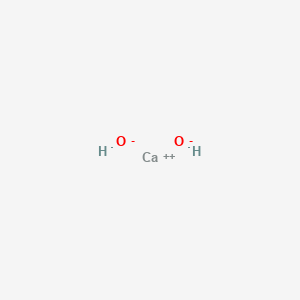
Verified chemistry for CAS 1305-62-0
Calcium Hydroxide
Calcium dihydroxide is a calcium hydroxide. It has a role as an astringent. — ChEBI
- IUPAC name
- calcium dihydroxide
- Molecular formula
- CaH2O2
- Molecular weight
- 74.09 g/mol
- Exact mass
- 73.9680702 Da
- Monoisotopic mass
- 73.9680702 Da
- Topological polar surface area
- 2.0 Ų
- Molecular complexity
- 0.0
- Formal charge
- 0
- Hydrogen-bond donors
- 2
- Hydrogen-bond acceptors
- 2
- Rotatable bonds
- 0
- Heavy atoms
- 3
- Covalent units
- 3
Names and synonyms reported to PubChem
16 more reported names
External database identifiers
- ChEBI:CHEBI:31341
- ChEMBL:CHEMBL2106388
- PubMed:30615914
- PubMed:22083529
Advanced structure statistics
- Defined atom stereocentres
- 0
- Undefined atom stereocentres
- 0
- Defined bond stereocentres
- 0
- Undefined bond stereocentres
- 0
- 3D conformers
- 0
Machine-readable structure identifiers
- SMILES
[OH-].[OH-].[Ca+2]- InChI
InChI=1S/Ca.2H2O/h;2*1H2/q+2;;/p-2- InChIKey
AXCZMVOFGPJBDE-UHFFFAOYSA-L
Evidence from additional scientific databases
NIH PubChem PUG-View
Attributed physical-property, hazard, environmental and use annotations.
- Autoignition Temperature: Not flammable (USCG, 1999) Source: CAMEO Chemicals
- Boiling Point: Decomposes (NIOSH, 2024) Source: CAMEO Chemicals
- Boiling Point: Decomposes Source: Hazardous Substances Data Bank (HSDB)
- Boiling Point: decomposes Source: Occupational Safety and Health Administration (OSHA)
- Boiling Point: Decomposes Source: The National Institute for Occupational Safety and Health (NIOSH)
- Color/Form: Crystals or soft granules or powder Source: Hazardous Substances Data Bank (HSDB)
- Color/Form: Soft, hexagonal crystals Source: Hazardous Substances Data Bank (HSDB)
- Color/Form: Rhombic, trigonal, colorless crystals Source: Hazardous Substances Data Bank (HSDB)
- Color/Form: Soft, white crystalline powder Source: Hazardous Substances Data Bank (HSDB)
- Color/Form: White powder [Note: Readily absorbs CO2 from the air to form calcium carbonate] Source: Hazardous Substances Data Bank (HSDB)
- Density: 2.24 at 68 °F (USCG, 1999) - Denser than water; will sink Source: CAMEO Chemicals
- Density: Approximately 2.2 g/cu cm Source: Hazardous Substances Data Bank (HSDB)
- Density: Bulk density: 450 to 640 kg/cu m. In the as-poured state, it can be as low as 350 kg/cu m, owing to air entrapment Source: Hazardous Substances Data Bank (HSDB)
- Density: Relative density (water = 1): 2.2 Source: ILO-WHO International Chemical Safety Cards (ICSCs)
- Density: 2.24 Source: Occupational Safety and Health Administration (OSHA)
- Density: 2.343 @25 °C Source: PAC Chemical Database, U.S. Department of Energy
- Density: 2.24 Source: The National Institute for Occupational Safety and Health (NIOSH)
- Flash Point: /Calcium Hydroxide is/ non flammable Source: Hazardous Substances Data Bank (HSDB)
- Melting Point: 1076 °F (Decomposes) (Loses H2O) (NIOSH, 2024) Source: CAMEO Chemicals
- Melting Point: 1076 °F (decomposes) (loses water) Source: Hazardous Substances Data Bank (HSDB)
- Melting Point: 1076 °F (decomposes) (loses H₂O) Source: Occupational Safety and Health Administration (OSHA)
- Melting Point: 1076 °F (Decomposes) (Loses H2O) Source: The National Institute for Occupational Safety and Health (NIOSH)
- Odor: Odorless Source: Hazardous Substances Data Bank (HSDB)
- Physical Description: Calcium hydroxide is an odorless white granules. Sinks in water. (USCG, 1999) Source: CAMEO Chemicals
- Physical Description: Dry Powder; Other Solid; Liquid; Other Solid; Liquid; Liquid; Wet Solid; CBI; Dry Powder; Wet Solid; Large Crystals; Wet Solid; Other Solid; Dry Powder; Gas Vapor Source: EPA Chemical Data Reporting (CDR)
- Physical Description: White powder Source: EU Food Improvement Agents
- Physical Description: White, odorless powder; Note: Readily absorbs CO2 from the air to form calcium carbonate; [NIOSH] Source: Haz-Map, Information on Hazardous Chemicals and Occupational Diseases
- Physical Description: COLOURLESS CRYSTALS OR WHITE POWDER. Source: ILO-WHO International Chemical Safety Cards (ICSCs)
- Physical Description: White, odorless powder. Source: Occupational Safety and Health Administration (OSHA)
- Physical Description: White, odorless powder. [Note: Readily absorbs CO2 from the air to form calcium carbonate.] Source: The National Institute for Occupational Safety and Health (NIOSH)
- Refractive Index: Index of refraction: 1.574 (alpha), 1.545 (beta) Source: Hazardous Substances Data Bank (HSDB)
- Solubility: 0.2 % at 32 °F (NIOSH, 2024) Source: CAMEO Chemicals
- Solubility: Slightly soluble in water. Insoluble in ethanol. Soluble in glycerol Source: EU Food Improvement Agents
- Solubility: Solubility in water is decreased by the presence of fixed alkali hydroxides. Source: Hazardous Substances Data Bank (HSDB)
- Solubility: In water, 1730 mg/L at 20 °C Source: Hazardous Substances Data Bank (HSDB)
- Solubility: In water, 0.160 g/100 g water at 20 °C Source: Hazardous Substances Data Bank (HSDB)
- Solubility: Very slightly soluble in boiling water. Insoluble in alcohol. Source: Hazardous Substances Data Bank (HSDB)
- Solubility: Soluble in acid Source: Hazardous Substances Data Bank (HSDB)
- Solubility: Soluble in glycerol, sugar or ammonium chloride solution; soluble in acids with evolution of much heat Source: Hazardous Substances Data Bank (HSDB)
- Solubility: Solubility in water: none Source: ILO-WHO International Chemical Safety Cards (ICSCs)
- Solubility: (32 °F): 0.2% Source: The National Institute for Occupational Safety and Health (NIOSH)
- Vapor Pressure: 0 mmHg (approx) (NIOSH, 2024) Source: CAMEO Chemicals
- Vapor Pressure: 0 mmHg (approx) Source: Occupational Safety and Health Administration (OSHA)
- Vapor Pressure: 0 mmHg (approx) Source: The National Institute for Occupational Safety and Health (NIOSH)
- pH: pH = 12.4 (aqueous solution saturated at 25 °C) Source: Hazardous Substances Data Bank (HSDB)
- Exposure Routes: The substance can be absorbed into the body by inhalation of its aerosol and by ingestion. Source: ILO-WHO International Chemical Safety Cards (ICSCs)
- Exposure Routes: inhalation, ingestion, skin and/or eye contact Source: The National Institute for Occupational Safety and Health (NIOSH)
- First Aid: Excerpt from NIOSH Pocket Guide for Calcium hydroxide:; Eye: IRRIGATE IMMEDIATELY - If this chemical contacts the eyes, immediately wash (irrigate) the eyes with large amounts of water, occasionally lifting the lower and upper lids. Get medical attention immediately.; Skin: SOAP FLUSH IMMEDIATELY - If this chemical contacts the skin, immediately flush the contaminated skin with soap and water. If this chemical penetrates the clothing, immediately remove the clothing and flush the skin with water. If irritation persists after washing, get medical attention.; Breathing: RESPIRATORY SUPPORT - If a person breathes large amounts of this chemical, move the exposed person to fresh air at once. If breathing has stopped, perform artificial respiration. Keep the affected person warm and at rest. Get medical attention as soon as possible.; Swallow: MEDICAL ATTENTION IMMEDIATELY - If this chemical has been swallowed, get medical attention immediately. (NIOSH, 2024) Source: CAMEO Chemicals
- First Aid: (General first aid procedures); Eye: Irrigate immediately - If this chemical contacts the eyes, immediately wash (irrigate) the eyes with large amounts of water, occasionally lifting the lower and upper lids. Get medical attention immediately.; Skin: Soap flush immediately - If this chemical contacts the skin, immediately flush the contaminated skin with soap and water. If this chemical penetrates the clothing, immediately remove the clothing and flush the skin with water. If irritation persists after washing, get medical attention.; Breathing: Respiratory support; Swallow: Medical attention immediately - If this chemical has been swallowed, get medical attention immediately. Source: The National Institute for Occupational Safety and Health (NIOSH)
- Note: This chemical does not meet GHS hazard criteria for 0.4% (28 of 6644) of reports. Source: European Chemicals Agency (ECHA)
- Signal: Danger Source: European Chemicals Agency (ECHA)
- GHS Hazard Statements: H314 (22.4%): Causes severe skin burns and eye damage [Danger Skin corrosion/irritation]; H315 (45.3%): Causes skin irritation [Warning Skin corrosion/irritation]; H318 (76.9%): Causes serious eye damage [Danger Serious eye damage/eye irritation]; H335 (38.9%): May cause respiratory irritation [Warning Specific target organ toxicity, single exposure; Respiratory tract irritation] Source: European Chemicals Agency (ECHA)
- Precautionary Statement Codes: P260, P261, P264, P264+P265, P271, P280, P301+P330+P331, P302+P352, P302+P361+P354, P304+P340, P305+P354+P338, P316, P317, P319, P321, P332+P317, P362+P364, P363, P403+P233, P405, and P501 (click each P-code to see the statement) Source: European Chemicals Agency (ECHA)
- ECHA C&L Notifications Summary: Aggregated GHS information provided per 6644 reports by companies from 59 notifications to the ECHA C&L Inventory. Each notification may be associated with multiple companies.; Reported as not meeting GHS hazard criteria per 28 of 6644 reports by companies.; There are 56 notifications provided by 6616 of 6644 reports by companies with hazard statement code(s).; Information may vary between notifications depending on impurities, additives, and other factors. The percentage value in parenthesis indicates the notified classification ratio from companies that provide hazard codes. Only hazard codes with percentage values above 10% are shown. For more detailed information, please visit ECHA C&L website. Source: European Chemicals Agency (ECHA)
- GHS Hazard Statements: Not Classified; Reported as not meeting GHS hazard criteria by 1 of 1 companies. For more detailed information, please visit ECHA C&L website. Source: European Chemicals Agency (ECHA)
- Signal: Danger Source: NITE-CMC
- GHS Hazard Statements: H315: Causes skin irritation [Warning Skin corrosion/irritation]; H318: Causes serious eye damage [Danger Serious eye damage/eye irritation]; H370: Causes damage to organs [Danger Specific target organ toxicity, single exposure] Source: NITE-CMC
- Precautionary Statement Codes: P260, P264, P264+P265, P270, P280, P302+P352, P305+P354+P338, P308+P316, P317, P321, P332+P317, P362+P364, P405, and P501 (click each P-code to see the statement) Source: NITE-CMC
- GHS Hazard Statements: H315: Causes skin irritation [Warning Skin corrosion/irritation]; H318: Causes serious eye damage [Danger Serious eye damage/eye irritation]; H370: Causes damage to organs [Danger Specific target organ toxicity, single exposure]; H373: May causes damage to organs through prolonged or repeated exposure [Warning Specific target organ toxicity, repeated exposure] Source: NITE-CMC
- Precautionary Statement Codes: P260, P264, P264+P265, P270, P280, P302+P352, P305+P354+P338, P308+P316, P317, P319, P321, P332+P317, P362+P364, P405, and P501 (click each P-code to see the statement) Source: NITE-CMC
- Signal: Danger Source: Hazardous Chemical Information System (HCIS), Safe Work Australia
- Target Organs: Eyes, skin, respiratory system Source: The National Institute for Occupational Safety and Health (NIOSH)
- Cosmetic Ingredient Review Conclusion: The CIR Expert Panel concluded that ... Calcium Hydroxide is safe in hair straighteners and depilatories under conditions of recommended use; users should minimize skin contact. These ingredients are safe for all other present practices of use and concentration described in this safety assessment when formulated to be nonirritating. Source: Cosmetic Ingredient Review (CIR)
- Cosmetic Ingredient Review Finding(s): Safe for use in cosmetics, with qualifications Source: Cosmetic Ingredient Review (CIR)
- Environmental Bioconcentration: This compound shows no bioaccumulation or food chain concentration toxicity potential. Source: Hazardous Substances Data Bank (HSDB)
- Environmental Fate: Aquatic Fate: Aquatic toxicity is the function of an alkalinity effect. Addition of lime to soft water lakes has increased biological activity, possibly by providing a carbon dioxide reservoir. Source: Hazardous Substances Data Bank (HSDB)
- Environmental Fate: Calcium hydroxide does not degrade by photooxidation; it is neutralized by absorption of atmospheric carbon dioxide. Source: Hazardous Substances Data Bank (HSDB)
- Consumer Uses: Chemical reaction regulator; pH regulating agent; Other; Lubricating agent; Adhesion/cohesion promoter; Flocculating agent; Heat stabilizer; Intermediate; Reducing agent; Soil amendments (fertilizers); Filler; Not Known or Reasonably Ascertainable; Absorbent Source: EPA Chemical Data Reporting (CDR)
- Industry Uses: Other; Binder; Lubricating agent; Processing aids not otherwise specified; Chemical reaction regulator; Fuel agents; pH regulating agent; Fuel; Antioxidant; Flux agent; Absorbent; Dehydrating agent (desiccant); Sealant (barrier); Reducing agent; Stabilizing agent; Flow promoter; Catalyst; Filler; Diluent; Not Known or Reasonably Ascertainable; Corrosion inhibitor; Soil amendments (fertilizers); Solids separation (precipitating) agent, not otherwise specified; Hardener; Flocculating agent; Adhesion/cohesion promoter; Processing aids, specific to petroleum production; Intermediate; Softener and conditioner; Oxidizing agent; Adsorbent Source: EPA Chemical Data Reporting (CDR)
- Cosmetic Ingredient Review Link: CIR ingredient: Calcium Hydroxide Source: Cosmetic Ingredient Review (CIR)
- Sources/Uses: Used in mortar, plaster, cement, lubricants, drilling fluids, paper pulp, and water treatment; also used to dehair hides; [ACGIH] Used in pesticides, fireproofing coatings, water-based paints, SBR rubber vulcanization, binding and paving materials, soil treatments, brewing manufacture, dental cements, petrochemicals, as chemical intermediate, buffering agent for metals, pearls, and celluloid, disinfectant, food additive, for ammonia recovery in gas manufacture, purification of sugar juices, to preserve eggs and apples during storage, in cattle feeds, and veterinary medicine; [HSDB] Used as both an inert and active ingredient (microbiocide/microbiostat) in pesticide products; [EPA REDs] Used as a nutritional supplement, pH control agent, firming agent, and processing aid for foods; [FDA] Source: Haz-Map, Information on Hazardous Chemicals and Occupational Diseases
- Industrial Processes with risk of exposure: Petroleum Production and Refining [Category: Industry]; Pulp and Paper Processing [Category: Industry]; Painting (Pigments, Binders, and Biocides) [Category: Paint]; Using Disinfectants or Biocides [Category: Clean]; Farming (Pesticides) [Category: Industry]; Sewer and Wastewater Treatment [Category: Industry]; Leather Tanning and Processing [Category: Industry]; Cement Producing [Category: Industry]; Farming (Feed Additives) [Category: Industry] Source: Haz-Map, Information on Hazardous Chemicals and Occupational Diseases
- Uses: For calcium hydroxide (USEPA/OPP Pesticide Code: 075601) ACTIVE products with label matches. /SRP: Registered for use in the USA but approved pesticide uses may change periodically and so federal, state and local authorities must be consulted for currently approved uses./ Source: Hazardous Substances Data Bank (HSDB)
- Uses: In mortar, plaster, cement and other binding and paving materials; in lubricants, drilling fluid, pesticides, fireproofing coatings, water paint; as egg preservative; manufacture of paper pulp; in SBR rubber vulcanization; in water treatment; as absorbant for carbon dioxide; dehairing hides. Source: Hazardous Substances Data Bank (HSDB)
- Uses: Chem int in chlorohydrin process for propylene oxide /former use/; chem int for calcium hypochlorite, bleaching powder, and the fungicide, lime-sulfur spray; flux in iron and steel mfr; soil treatment for acidic soils; water softening agent; stabilization of soils for road base; component of sand-lime bricks and blocks; component of masonary mortar; water correcting agent in brewing mfr; component of dental cement; buffering agent for metals, pearls and celluloid. Source: Hazardous Substances Data Bank (HSDB)
- Uses: Calcium salts, causticizing soda, depilatory, whitewash, soil conditioner, ammonia recovery in gas manufacturing, disinfectant, water softening, purification of sugar juices, petrochemicals, food additive as buffer and neutralizing agent, shell-forming agent (poultry) Source: Hazardous Substances Data Bank (HSDB)
- Uses: For more Uses (Complete) data for CALCIUM HYDROXIDE (13 total), please visit the HSDB record page. Source: Hazardous Substances Data Bank (HSDB)
Mapped by: Existing checksum-valid CAS to unique PubChem CID match. Retrieved: 2026-08-31. Open source record
Scientific classifications and hazard annotations provide context and do not replace the market-specific regulatory decision shown above.
Additional source coverage and match status
| Source | Result | Checked |
|---|---|---|
| NIH PubChem PUG-View | Exact match | 2026-08-31 |
A recorded no-match is useful evidence that the source was checked; it is not a claim that the substance does not exist elsewhere.
Retrieved from NIH PubChem on 2026-08-31 by checksum-valid CAS matching. Chemical properties do not replace the regulatory decision on this page.
Official source and provenance
- Registered source
- Saudi SFDA prohibited and restricted ingredient lists
- Source reference
- SFDA restricted list, page 3, row 7
- Source record ID
restricted-2-7- Source version
- live-snapshot-2026-08-30
- Source language
- English
- Translation status
- Original is English
- Snapshot checked
- 2026-08-30 05:18 UTC
- Validation method
- complete SFDA paginated HTML snapshot; strict page/row counts
- SHA-256
ceb6cc636e6b1f4b3013f88ce0297217b49d6194342c6ece5c03b1e04256d71a
Registered dataset notes
- Dataset coverage
- Prohibited and restricted substances with CAS, EC and conditions
- Authority note
- Official SFDA dated lists; version and hash each release
How this record fits the market dataset
Status distribution
Condition text is present on 0 of 2090 current records. An empty condition field is interpreted according to the record type above; it is never converted into an unrestricted-use claim.
Saudi Arabia market context
Complete official list index
Coverage version: SFDA live prohibited/restricted lists, snapshot 30 August 2026
Every page and entry in the public SFDA prohibited and restricted ingredient indexes; restricted detail pages remain the source for conditions.
Verification checklist
- Search names and CAS across both SFDA lists.
- Open the cited restricted-entry detail and apply every condition.
- Check current SFDA/GSO technical regulations and updates.
- Complete eCosma notification, label and responsible-party requirements.
Official market sources
- Saudi SFDA prohibited and restricted ingredient listsOfficial SFDA dated lists; version and hash each release
Verification workflow and record completeness
Before using this result in a compliance decision
- Confirm that “Calcium hydroxide” and every CAS/EC identifier refer to the material in your supplier specification.
- Search names and CAS across both SFDA lists.
- Open the cited restricted-entry detail and apply every condition.
- Check current SFDA/GSO technical regulations and updates.
- Complete eCosma notification, label and responsible-party requirements.
- Document the source version and recheck the regulator before manufacture, notification or market placement.
Fields available in this record
- Official substance nameAvailable
- CASAvailable
- ECAvailable
- Separate condition textNot present in source row
- Effective dateNot supplied
- Snapshot hash and methodAvailable
Questions this page answers
Stable citation
Calcium hydroxide. SFDA restricted list, page 3, row 7. Saudi Arabia. Source version live-snapshot-2026-08-30. CosIng Checker regulatory record: https://cosingchecker.com/regulations/sa/records/11352/
Cite the regulator as the legal authority. This page is a structured evidence index and verification aid, not a substitute for the official text or professional legal assessment.
Interpretation and limits for Saudi Arabia
This substance is not unrestricted: cosmetic use is subject to the conditions in the cited official record.
Check product type, body area, concentration, purity and warning requirements before deciding whether a formulation is compliant.
How to interpret the legal role
The cited row forms part of a binding rule or legally incorporated list for this market.
Evidence on this page
- Recorded outcome: Restricted
- Legal role: Binding rule
- Source version: live-snapshot-2026-08-30
What it does not prove
No list match is not permission; Gulf/SFDA product, claim, notification and technical requirements still apply.
Further authoritative substance research
None of these sources overrides the market decision above.
Cosmetic Ingredient Review safety assessments
Expert Panel conclusions, assessed ingredient groups, use conditions, dates and report documents
Independent expert review considered by FDA; not a government approval or binding market rule
Research this identity at the sourceFDA Global Substance Registration System
UNII identifiers, preferred names, substance types, codes and public substance relationships
Identity registry only; UNII availability does not imply FDA review or approval
Research this identity at the sourceILO/WHO International Chemical Safety Cards
Hazards, symptoms, first aid, storage, incompatibilities and physical properties for covered chemicals
International occupational chemical-safety reference; not cosmetic-use approval
Research this identity at the sourceJapan NITE-CHRIP
Chemical identity, Japanese and foreign legal lists, GHS hazards and exposure-related information
Chemical-management evidence; cosmetic status remains governed by the applicable MHLW standard and market rules
Research this identity at the sourceNIOSH Pocket Guide to Chemical Hazards
REL, PEL, IDLH, properties, exposure routes, symptoms, target organs, first aid and measurement methods for covered workplace chemicals
US occupational-health guidance and limits; not a cosmetic ingredient decision
Research this identity at the sourceOECD eChemPortal
Gateway to authority-owned physical-property, fate, ecotoxicity, toxicity, exposure and GHS records
Discovery gateway; each linked authority remains responsible for its data
Research this identity at the sourceUS EPA CompTox CTX APIs
API key required for importDTXSID identity, experimental and predicted properties, toxicity, bioactivity, exposure and environmental data
Scientific and computational evidence; predictions must remain labelled and do not determine cosmetic legality
Research this identity at the source