
Iron oxide red (Pigment Red 101)
New Zealand Cosmetic Products Group Standard Schedule 6, reference 135.
Regulatory decision and full conditions
- Status
- Permitted list with conditions
- Legal role
- Binding rule
- Regulatory summary
- New Zealand Cosmetic Products Group Standard Schedule 6, reference 135.
- Conditions and restrictions
Colour index: 77491 · CAS: 1309-37-1 · Colour: Red · Other limitations: E 172
Substance identity
- Official source name
- Iron oxide red (Pigment Red 101)
- CAS
- 1309-37-1
- EC
- Not supplied in this source row
- Identity mapping
- standalone:official_nz_schedule
Cross-market snapshot for this identity
Exact linked records currently present in this site. An absent market means no imported exact match, not permission to use the substance.
European Union
3 linked records · 2 with specific conditions
Open supporting recordNew Zealand
Current record1 linked record · 1 with specific conditions
Open supporting record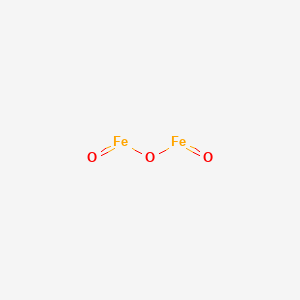
Verified chemistry for CAS 1309-37-1
Iron oxide (Fe2O3)
Ferric oxide is an iron oxide. — ChEBI
- IUPAC name
- oxo(oxoferriooxy)iron
- Molecular formula
- Fe2O3
- Molecular weight
- 159.69 g/mol
- Exact mass
- 159.854615 Da
- Monoisotopic mass
- 159.854615 Da
- Topological polar surface area
- 43.4 Ų
- Molecular complexity
- 34.0
- Formal charge
- 0
- Hydrogen-bond donors
- 0
- Hydrogen-bond acceptors
- 3
- Rotatable bonds
- 0
- Heavy atoms
- 5
- Covalent units
- 1
Names and synonyms reported to PubChem
16 more reported names
External database identifiers
- ChEBI:CHEBI:50819
Advanced structure statistics
- Defined atom stereocentres
- 0
- Undefined atom stereocentres
- 0
- Defined bond stereocentres
- 0
- Undefined bond stereocentres
- 0
- 3D conformers
- 0
Machine-readable structure identifiers
- SMILES
O=[Fe]O[Fe]=O- InChI
InChI=1S/2Fe.3O- InChIKey
JEIPFZHSYJVQDO-UHFFFAOYSA-N
Evidence from additional scientific databases
NIH PubChem PUG-View
Attributed physical-property, hazard, environmental and use annotations.
- Color/Form: Reddish-brown hexagonal crystals Source: Hazardous Substances Data Bank (HSDB)
- Color/Form: Reddish or blueish-black powder Source: Hazardous Substances Data Bank (HSDB)
- Color/Form: Steel gray to red hexagonal Source: Hazardous Substances Data Bank (HSDB)
- Color/Form: Red-brown solid. /Iron oxide dust and fume, as Fe/ Source: Hazardous Substances Data Bank (HSDB)
- Color/Form: A fine, red powder of ferric oxide. /Rouge/ Source: Hazardous Substances Data Bank (HSDB)
- Density: 5.25 g/cu cm Source: Hazardous Substances Data Bank (HSDB)
- Density: 5.24 g/cm³ Source: ILO-WHO International Chemical Safety Cards (ICSCs)
- Density: 5.24 Source: Occupational Safety and Health Administration (OSHA)
- Density: 5.24 Source: The National Institute for Occupational Safety and Health (NIOSH)
- Melting Point: Iron 2664 °F Source: Haz-Map, Information on Hazardous Chemicals and Occupational Diseases
- Melting Point: 1539 °C Source: Hazardous Substances Data Bank (HSDB)
- Melting Point: 1565 °C Source: ILO-WHO International Chemical Safety Cards (ICSCs)
- Melting Point: 2664 °F Source: Occupational Safety and Health Administration (OSHA)
- Melting Point: 2664 °F Source: The National Institute for Occupational Safety and Health (NIOSH)
- Melting Point: 2849 °F Source: The National Institute for Occupational Safety and Health (NIOSH)
- Physical Description: Dry Powder; Other Solid; Dry Powder; Large Crystals; Liquid; Liquid; Dry Powder; Large Crystals; Liquid; Wet Solid; Other Solid; CBI; Large Crystals; Wet Solid; Other Solid; Dry Powder Source: EPA Chemical Data Reporting (CDR)
- Physical Description: Reddish-brown solid; Note: Exposure to fume may occur during the arc-welding of iron; [NIOSH] Insoluble in water; [CHEMINFO] Source: Haz-Map, Information on Hazardous Chemicals and Occupational Diseases
- Physical Description: REDDISH BROWN-TO-BLACK CRYSTALS OR POWDER. Source: ILO-WHO International Chemical Safety Cards (ICSCs)
- Physical Description: Reddish-brown solid. Source: Occupational Safety and Health Administration (OSHA)
- Physical Description: Reddish-brown solid. [Note: Exposure to fume may occur during the arc-welding of iron.] Source: The National Institute for Occupational Safety and Health (NIOSH)
- Physical Description: A fine, red powder of ferric oxide. [Note: Usually used in cake form or impregnated in paper or cloth.] Source: The National Institute for Occupational Safety and Health (NIOSH)
- Refractive Index: Index of refraction: 3.01, 2.94 (LI) Source: Hazardous Substances Data Bank (HSDB)
- Solubility: Soluble in acids; insoluble in water, alcohol, ether Source: Hazardous Substances Data Bank (HSDB)
- Solubility: Solubility in water: none Source: ILO-WHO International Chemical Safety Cards (ICSCs)
- Solubility: Insoluble Source: The National Institute for Occupational Safety and Health (NIOSH)
- Vapor Pressure: 0 mm Hg (approximate) Source: Hazardous Substances Data Bank (HSDB)
- Vapor Pressure: 0 mmHg (approx) Source: Occupational Safety and Health Administration (OSHA)
- Vapor Pressure: 0 mmHg (approx) Source: The National Institute for Occupational Safety and Health (NIOSH)
- IARC Carcinogenic Agent: Ferric oxide Source: International Agency for Research on Cancer (IARC)
- IARC Carcinogenic Classes: Group 3: Not classifiable as to its carcinogenicity to humans Source: International Agency for Research on Cancer (IARC)
- IARC Monographs: Volume 1: (1972) Some Inorganic Substances, Chlorinated Hydrocarbons, Aromatic Amines, N-Nitroso Compounds, and Natural Products; Volume Sup 7: Overall Evaluations of Carcinogenicity: An Updating of IARC Monographs Volumes 1 to 42, 1987; 440 pages; ISBN 92-832-1411-0 (out of print) Source: International Agency for Research on Cancer (IARC)
- Publication Year: 1987 Source: International Agency for Research on Cancer (IARC)
- Evaluation Year: 1987 Source: International Agency for Research on Cancer (IARC)
- Exposure Routes: inhalation Source: The National Institute for Occupational Safety and Health (NIOSH)
- Exposure Routes: inhalation, skin and/or eye contact Source: The National Institute for Occupational Safety and Health (NIOSH)
- First Aid: (General first aid procedures); Breathing: Respiratory support Source: The National Institute for Occupational Safety and Health (NIOSH)
- First Aid: (General first aid procedures); Eye: Irrigate immediately - If this chemical contacts the eyes, immediately wash (irrigate) the eyes with large amounts of water, occasionally lifting the lower and upper lids. Get medical attention immediately.; Breathing: Fresh air Source: The National Institute for Occupational Safety and Health (NIOSH)
- Note: This chemical does not meet GHS hazard criteria for 66.9% (2296 of 3433) of all reports. Source: European Chemicals Agency (ECHA)
- Signal: Warning Source: European Chemicals Agency (ECHA)
- GHS Hazard Statements: H319 (18.5%): Causes serious eye irritation [Warning Serious eye damage/eye irritation]; H411 (12%): Toxic to aquatic life with long lasting effects [Hazardous to the aquatic environment, long-term hazard] Source: European Chemicals Agency (ECHA)
- Precautionary Statement Codes: P264+P265, P273, P280, P305+P351+P338, P337+P317, P391, and P501 (click each P-code to see the statement) Source: European Chemicals Agency (ECHA)
- ECHA C&L Notifications Summary: Aggregated GHS information provided per 3433 reports by companies from 44 notifications to the ECHA C&L Inventory. Each notification may be associated with multiple companies.; Reported as not meeting GHS hazard criteria per 2296 of 3433 reports by companies.; There are 40 notifications provided by 1137 of 3433 reports by companies with hazard statement code(s).; Information may vary between notifications depending on impurities, additives, and other factors. The percentage value in parenthesis indicates the notified classification ratio from companies that provide hazard codes. Only hazard codes with percentage values above 10% are shown. For more detailed information, please visit ECHA C&L website. Source: European Chemicals Agency (ECHA)
- Signal: Danger Source: NITE-CMC
- GHS Hazard Statements: H370: Causes damage to organs [Danger Specific target organ toxicity, single exposure]; H372: Causes damage to organs through prolonged or repeated exposure [Danger Specific target organ toxicity, repeated exposure] Source: NITE-CMC
- Precautionary Statement Codes: P260, P264, P270, P308+P316, P319, P321, P405, and P501 (click each P-code to see the statement) Source: NITE-CMC
- GHS Hazard Statements: H315: Causes skin irritation [Warning Skin corrosion/irritation]; H318: Causes serious eye damage [Danger Serious eye damage/eye irritation]; H335: May cause respiratory irritation [Warning Specific target organ toxicity, single exposure; Respiratory tract irritation]; H372: Causes damage to organs through prolonged or repeated exposure [Danger Specific target organ toxicity, repeated exposure] Source: NITE-CMC
- Precautionary Statement Codes: P260, P261, P264, P264+P265, P270, P271, P280, P302+P352, P304+P340, P305+P354+P338, P317, P319, P321, P332+P317, P362+P364, P403+P233, P405, and P501 (click each P-code to see the statement) Source: NITE-CMC
- Target Organs: respiratory system Source: The National Institute for Occupational Safety and Health (NIOSH)
- Target Organs: Eyes, skin, respiratory system Source: The National Institute for Occupational Safety and Health (NIOSH)
- Consumer Uses: Other; Soil amendments (fertilizers); Catalyst; Filler; Not Known or Reasonably Ascertainable; Pigment; Intermediate; Dye Source: EPA Chemical Data Reporting (CDR)
- Industry Uses: Reducing agent; Soil amendments (fertilizers); Catalyst; Not Known or Reasonably Ascertainable; Filler; Oxidizing agent; Adsorbent; Laboratory chemicals; Dye; Pigment; Solids separation (precipitating) agent, not otherwise specified; Intermediate; Heat stabilizer; Processing aids, specific to petroleum production; Other; Alloys; Abrasives Source: EPA Chemical Data Reporting (CDR)
- Sources/Uses: Iron oxide is used in pigments, abrasives (jeweler's rouge), and magnetic tapes. Exposure can occur in mining, smelting, grinding steel, polishing, and welding; [ACGIH] Source: Haz-Map, Information on Hazardous Chemicals and Occupational Diseases
- Industrial Processes with risk of exposure: Steel Producing [Category: Industry]; Abrasive Blasting [Category: Clean]; Metal Preparation and Pouring [Category: Foundry]; Welding [Category: Weld]; Painting (Pigments, Binders, and Biocides) [Category: Paint]; Mining [Category: Industry]; Cement Producing [Category: Industry]; Metal Extraction and Refining [Category: Industry] Source: Haz-Map, Information on Hazardous Chemicals and Occupational Diseases
- Uses: Polishing agent for glass, precious metals, diamonds; in magnets, magnetic tapes; as catalyst; pigment for paper, linoleum, ceramics, glass; paint for ironwork, ship hulls; in electrical resistors and semiconductors; as colloidal solutions as stain for polysaccharides. Source: Hazardous Substances Data Bank (HSDB)
- Uses: As a pigment, mfr of ferrites for electronic uses. Source: Hazardous Substances Data Bank (HSDB)
- Uses: Metallurgy, gas purification, paint and rubber pigment, component of thermite, polishing compounds, mordant, lab reagent, catalyst (p-hydrogen), feed additive, electronic pigments for TV, permanent magnets, memory cores for computers, magnetic tapes. Source: Hazardous Substances Data Bank (HSDB)
- Uses: Used almost exclusively to color decorative concrete; in paints and coatings Source: Hazardous Substances Data Bank (HSDB)
- Uses: For more Uses (Complete) data for FERRIC OXIDE (8 total), please visit the HSDB record page. Source: Hazardous Substances Data Bank (HSDB)
Mapped by: Existing checksum-valid CAS to unique PubChem CID match. Retrieved: 2026-08-31. Open source record
Scientific classifications and hazard annotations provide context and do not replace the market-specific regulatory decision shown above.
Additional source coverage and match status
| Source | Result | Checked |
|---|---|---|
| NIH PubChem PUG-View | Exact match | 2026-08-31 |
A recorded no-match is useful evidence that the source was checked; it is not a claim that the substance does not exist elsewhere.
Retrieved from NIH PubChem on 2026-09-02 by checksum-valid CAS matching. Chemical properties do not replace the regulatory decision on this page.
Official source and provenance
- Registered source
- New Zealand cosmetic product schedules 4–8
- Source reference
- Schedule 6, reference 135, source row 151
- Source record ID
S6-151- Source version
- effective-2026-01-01
- Source language
- English
- Translation status
- Original is English
- Effective date
- 2026-01-01
- Source updated
- 2024-01-01
- Snapshot checked
- 2026-08-30 04:54 UTC
- Validation method
- openpyxl extraction; reviewed per-schedule counts
- SHA-256
4e62e372fb0aad7ac630af8c41fa50b38b52a793fd51b99697a65f8ecce1ae8a
Registered dataset notes
- Dataset coverage
- Prohibited and restricted substances, permitted colorants, preservatives and UV filters
- Authority note
- Official EPA group standard schedules; current market-specific rule source
How this record fits the market dataset
Status distribution
Condition text is present on 747 of 2913 current records. An empty condition field is interpreted according to the record type above; it is never converted into an unrestricted-use claim.
New Zealand market context
Complete schedules dataset
Coverage version: Cosmetic Products Group Standard schedules effective 1 January 2026
Schedules 4–8: prohibited, restricted, colourant, preservative and UV-filter entries.
Verification checklist
- Search exact identity across Schedules 4–8.
- Apply use, concentration and warning conditions.
- Check hazardous-substance classification and Group Standard scope.
- Confirm the latest legal instrument, not only the spreadsheet.
Official market sources
- New Zealand cosmetic product schedules 4–8Official EPA group standard schedules; current market-specific rule source
Verification workflow and record completeness
Before using this result in a compliance decision
- Confirm that “Iron oxide red (Pigment Red 101)” and every CAS/EC identifier refer to the material in your supplier specification.
- Search exact identity across Schedules 4–8.
- Apply use, concentration and warning conditions.
- Check hazardous-substance classification and Group Standard scope.
- Confirm the latest legal instrument, not only the spreadsheet.
- Document the source version and recheck the regulator before manufacture, notification or market placement.
Fields available in this record
- Official substance nameAvailable
- CASAvailable
- ECNot supplied
- Separate condition textAvailable
- Effective dateAvailable
- Snapshot hash and methodAvailable
Questions this page answers
Stable citation
Iron oxide red (Pigment Red 101). Schedule 6, reference 135, source row 151. New Zealand. Source version effective-2026-01-01. CosIng Checker regulatory record: https://cosingchecker.com/regulations/nz/records/9392/
Cite the regulator as the legal authority. This page is a structured evidence index and verification aid, not a substitute for the official text or professional legal assessment.
Interpretation and limits for New Zealand
This identity appears on a market positive list for the list function represented by the source record.
Confirm that the intended function and product use fall within the list scope and every stated condition.
How to interpret the legal role
The cited row forms part of a binding rule or legally incorporated list for this market.
Evidence on this page
- Recorded outcome: Permitted list with conditions
- Legal role: Binding rule
- Source version: effective-2026-01-01
- Effective date: 2026-01-01
What it does not prove
The searchable spreadsheet is an aid; the legal Group Standard and incorporated notices remain authoritative.
Further authoritative substance research
None of these sources overrides the market decision above.
Cosmetic Ingredient Review safety assessments
Expert Panel conclusions, assessed ingredient groups, use conditions, dates and report documents
Independent expert review considered by FDA; not a government approval or binding market rule
Research this identity at the sourceFDA Global Substance Registration System
UNII identifiers, preferred names, substance types, codes and public substance relationships
Identity registry only; UNII availability does not imply FDA review or approval
Research this identity at the sourceILO/WHO International Chemical Safety Cards
Hazards, symptoms, first aid, storage, incompatibilities and physical properties for covered chemicals
International occupational chemical-safety reference; not cosmetic-use approval
Research this identity at the sourceJapan NITE-CHRIP
Chemical identity, Japanese and foreign legal lists, GHS hazards and exposure-related information
Chemical-management evidence; cosmetic status remains governed by the applicable MHLW standard and market rules
Research this identity at the sourceNIOSH Pocket Guide to Chemical Hazards
REL, PEL, IDLH, properties, exposure routes, symptoms, target organs, first aid and measurement methods for covered workplace chemicals
US occupational-health guidance and limits; not a cosmetic ingredient decision
Research this identity at the sourceOECD eChemPortal
Gateway to authority-owned physical-property, fate, ecotoxicity, toxicity, exposure and GHS records
Discovery gateway; each linked authority remains responsible for its data
Research this identity at the sourceUS EPA CompTox CTX APIs
API key required for importDTXSID identity, experimental and predicted properties, toxicity, bioactivity, exposure and environmental data
Scientific and computational evidence; predictions must remain labelled and do not determine cosmetic legality
Research this identity at the source