
1,3-부타디엔
Listed by the Korean MFDS as a substance that may not be used in cosmetics.
Regulatory decision and full conditions
- Status
- Prohibited
- Legal role
- Binding rule
- Regulatory summary
- Listed by the Korean MFDS as a substance that may not be used in cosmetics.
- Conditions and restrictions
- A prohibition entry may contain no separate condition text because the regulatory outcome is the prohibition itself. Open the cited source and apply the market-wide requirements below.
Substance identity
- Official source name
- 1,3-부타디엔
- CAS
- 106-99-0
- EC
- Not supplied in this source row
- Identity mapping
- Exact CAS: 106-99-0
- Linked ingredient
- BUTADIENE
Linked CosIng identity data
Names and aliases
CosIng description: 1,3-Butadiene
EU inventory restriction note: CMR Muta. 1B Carc. 1A
Recorded cosmetic function: NOT REPORTED
Function pages:NOT REPORTED
View the complete ingredient profileCross-market snapshot for this identity
Exact linked records currently present in this site. An absent market means no imported exact match, not permission to use the substance.
European Union
1 linked record
Open supporting recordGreat Britain
1 linked record
Open supporting recordCanada
1 linked record
Open supporting recordNew Zealand
1 linked record
Open supporting recordASEAN
1 linked record
Open supporting recordChina
1 linked record · 1 with specific conditions
Open supporting recordSouth Korea
Current record1 linked record
Open supporting recordBrazil
1 linked record · 1 with specific conditions
Open supporting recordIndia
1 linked record · 1 with specific conditions
Open supporting recordSaudi Arabia
1 linked record
Open supporting record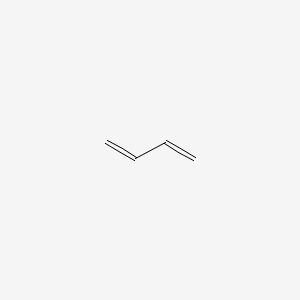
Verified chemistry for CAS 106-99-0
1,3-Butadiene
Buta-1,3-diene is a butadiene with unsaturation at positions 1 and 3. It has a role as a mutagen and a carcinogenic agent. — ChEBI
- IUPAC name
- buta-1,3-diene
- Molecular formula
- C4H6
- Molecular weight
- 54.09 g/mol
- Exact mass
- 54.0469501914 Da
- Monoisotopic mass
- 54.0469501914 Da
- XLogP3
- 2.0
- Topological polar surface area
- 0.0 Ų
- Molecular complexity
- 21.0
- Formal charge
- 0
- Hydrogen-bond donors
- 0
- Hydrogen-bond acceptors
- 0
- Rotatable bonds
- 1
- Heavy atoms
- 4
- Covalent units
- 1
Names and synonyms reported to PubChem
16 more reported names
External database identifiers
- ChEBI:CHEBI:39478
- ChEMBL:CHEMBL537970
- EPA DTXSID:DTXSID3020203
- PubMed:34324853
- PubMed:32529823
- PubMed:30990016
- PubMed:30552462
- PubMed:29038090
- PubMed:26505805
- PubMed:26343807
- PubMed:26339595
- PubMed:26070419
- PubMed:26002693
- PubMed:25237060
- PubMed:25051312
Advanced structure statistics
- Defined atom stereocentres
- 0
- Undefined atom stereocentres
- 0
- Defined bond stereocentres
- 0
- Undefined bond stereocentres
- 0
- 3D pharmacophore features
- 2
- 3D rings
- 0
- 3D hydrophobes
- 2
- 3D acceptor features
- 0
- 3D donor features
- 0
- 3D anionic centres
- 0
- 3D cationic centres
- 0
- 3D conformers
- 2
- Effective 3D rotors
- 1.0
Machine-readable structure identifiers
- SMILES
C=CC=C- InChI
InChI=1S/C4H6/c1-3-4-2/h3-4H,1-2H2- InChIKey
KAKZBPTYRLMSJV-UHFFFAOYSA-N
Evidence from additional scientific databases
EMBL-EBI ChEBI
buta-1,3-diene
A butadiene with unsaturation at positions 1 and 3.
- Formula
- C4H6
- Average mass
- 54.092 g/mol
- Monoisotopic mass
- 54.04695 Da
- Formal charge
- 0
- butadiene — is a (CHEBI:39479)
- carcinogenic agent — has role (CHEBI:50903)
- mutagen — has role (CHEBI:25435)
- carcinogenic agent — has role (CHEBI:50903)
- mutagen — has role (CHEBI:25435)
- butadiene — is a (CHEBI:39479)
Additional curated names
Cross-references from this source
- CAS: 106-99-0 — NIST Chemistry WebBook
- CAS: 106-99-0 — ChemIDplus
- CAS: 106-99-0 — KEGG COMPOUND
- MANUAL_X_REF: 1,3-Butadiene — Wikipedia
- MANUAL_X_REF: 1636 — PPDB
- MANUAL_X_REF: C16450 — KEGG COMPOUND
- MANUAL_X_REF: HMDB0041792 — HMDB
- REGISTRY_NUMBER: 25198 — Gmelin
- REGISTRY_NUMBER: 605258 — Reaxys
Mapped by: Exact CAS cross-reference in the ChEBI compound record. Source updated: 2014-07-28. Retrieved: 2026-08-31. Open source record
NIH PubChem PUG-View
Attributed physical-property, hazard, environmental and use annotations.
- Autoignition Temperature: 788 °F (USCG, 1999) Source: CAMEO Chemicals
- Autoignition Temperature: 788 °F (420 °C) Source: Hazardous Substances Data Bank (HSDB)
- Autoignition Temperature: 414 °C Source: ILO-WHO International Chemical Safety Cards (ICSCs)
- Boiling Point: 24.1 °F at 760 mmHg (NTP, 1992) Source: CAMEO Chemicals
- Boiling Point: -4.5 °C Source: Hazardous Substances Data Bank (HSDB)
- Boiling Point: -4 °C Source: ILO-WHO International Chemical Safety Cards (ICSCs)
- Boiling Point: 24 °F Source: Occupational Safety and Health Administration (OSHA)
- Boiling Point: -4.41 °C @760 [mm Hg] Source: PAC Chemical Database, U.S. Department of Energy
- Boiling Point: 24 °F Source: The National Institute for Occupational Safety and Health (NIOSH)
- Color/Form: Colorless gas ... [Note: A liquid below 24 degrees F. Shipped as a liquefied compressed gas] Source: Hazardous Substances Data Bank (HSDB)
- Density: 0.621 at 68 °F (USCG, 1999) - Less dense than water; will float Source: CAMEO Chemicals
- Density: 0.6149 g/cu cm at 25 °C Source: Hazardous Substances Data Bank (HSDB)
- Density: Absolute density, gas at 101.325 kPa at 0 °C: 2.428 kg/cu m; Relative density, gas at 101.325 kPa at 0 °C (air = 1): 1.878; Density, liquid at saturation pressure at 20 °C: 0.621 kg/l; Critical density: 0.245 kg/cu m Source: Hazardous Substances Data Bank (HSDB)
- Density: Relative density (water = 1): 0.6 Source: ILO-WHO International Chemical Safety Cards (ICSCs)
- Density: 0.621 at 68 °F Source: Occupational Safety and Health Administration (OSHA)
- Density: 0.6149 @25 °C Source: PAC Chemical Database, U.S. Department of Energy
- Density: 0.65 (Liquid at 24 °F) Source: The National Institute for Occupational Safety and Health (NIOSH)
- Density: 1.88(relative gas density) Source: The National Institute for Occupational Safety and Health (NIOSH)
- Flash Point: -105 °F (NTP, 1992) Source: CAMEO Chemicals
- Flash Point: -105 °F Source: Haz-Map, Information on Hazardous Chemicals and Occupational Diseases
- Flash Point: Gas Source: Hazardous Substances Data Bank (HSDB)
- Flash Point: -76 °C c.c. Source: ILO-WHO International Chemical Safety Cards (ICSCs)
- Flash Point: -105 °F (liquid) Source: Occupational Safety and Health Administration (OSHA)
- Flash Point: NA (Gas) -105 °F (Liquid) Source: The National Institute for Occupational Safety and Health (NIOSH)
- LogP: log Kow = 1.99 Source: Hazardous Substances Data Bank (HSDB)
- LogP: 1.99 Source: Human Metabolome Database (HMDB)
- LogP: 1.99 Source: ILO-WHO International Chemical Safety Cards (ICSCs)
- Melting Point: -164 °F (NTP, 1992) Source: CAMEO Chemicals
- Melting Point: -108.966 °C Source: Hazardous Substances Data Bank (HSDB)
- Melting Point: -108.9 °C Source: Human Metabolome Database (HMDB)
- Melting Point: -109 °C Source: ILO-WHO International Chemical Safety Cards (ICSCs)
- Melting Point: -164 °F Source: Occupational Safety and Health Administration (OSHA)
- Melting Point: -108.91 °C Source: PAC Chemical Database, U.S. Department of Energy
- Melting Point: -164 °F Source: The National Institute for Occupational Safety and Health (NIOSH)
- Odor: MIldly aromatic odor Source: Hazardous Substances Data Bank (HSDB)
- Odor: Mild aromatic or gasoline-like odor Source: Hazardous Substances Data Bank (HSDB)
- Physical Description: Butadiene is a colorless gas with an aromatic odor. It is shipped as a liquefied gas under its vapor pressure. Contact with the liquid can cause frostbite. It is easily ignited. Its vapors are heavier than air and a flame can flash back to the source of leak very easily. It can asphyxiate by the displacement of air. It must be shipped inhibited as butadiene is liable to polymerization. If polymerization occurs in the container, it may violently rupture. Under prolonged exposure to fire or intense heat the containers may rupture violently and rocket. It is used to make synthetic rubber and plastics, and to make other chemicals. Source: CAMEO Chemicals
- Physical Description: Gas Vapor; Large Crystals; Liquid Source: EPA Chemical Data Reporting (CDR)
- Physical Description: Colorless gas with a mild aromatic or gasoline-like odor. [Note: A liquid below 24 degrees F. Shipped as a liquefied compressed gas.] Vapor density = 1.87 (heavier than air); [HSDB] Source: Haz-Map, Information on Hazardous Chemicals and Occupational Diseases
- Physical Description: Liquid Source: Human Metabolome Database (HMDB)
- Physical Description: COLOURLESS COMPRESSED LIQUEFIED GAS WITH CHARACTERISTIC ODOUR. Source: ILO-WHO International Chemical Safety Cards (ICSCs)
- Physical Description: Colorless gas with a mild aromatic or gasoline-like odor. Source: Occupational Safety and Health Administration (OSHA)
- Physical Description: Colorless gas with a mild aromatic or gasoline-like odor. [Note: A liquid below 24 °F. Shipped as a liquefied compressed gas.] Source: The National Institute for Occupational Safety and Health (NIOSH)
- Refractive Index: Index of refraction: 1.4292 at 25 °C Source: Hazardous Substances Data Bank (HSDB)
- Solubility: Insoluble (NTP, 1992) Source: CAMEO Chemicals
- Solubility: In water, 735 mg/L at 20 °C Source: Hazardous Substances Data Bank (HSDB)
- Solubility: Slightly soluble in methanol, ethanol; soluble in organic solvents such as carbon tetrachloride; alcohol dissolves about 40 vols at room temp. Source: Hazardous Substances Data Bank (HSDB)
- Solubility: Soluble in ethanol, ether, benzene; very soluble in acetone Source: Hazardous Substances Data Bank (HSDB)
- Solubility: 0.735 mg/mL at 25 °C Source: Human Metabolome Database (HMDB)
- Solubility: Solubility in water, g/100ml: 0.1 (none) Source: ILO-WHO International Chemical Safety Cards (ICSCs)
- Solubility: Insoluble Source: The National Institute for Occupational Safety and Health (NIOSH)
- Vapor Pressure: 1840 mmHg at 70 °F ; 760 mmHg at 23.9 °F (NTP, 1992) Source: CAMEO Chemicals
- Vapor Pressure: 273.6 kPa (2,052 mm Hg) at 25 °C Source: Hazardous Substances Data Bank (HSDB)
- Vapor Pressure: Vapor pressure, kPa at 20 °C: 245 Source: ILO-WHO International Chemical Safety Cards (ICSCs)
- Vapor Pressure: 2.4 atm Source: Occupational Safety and Health Administration (OSHA)
- Vapor Pressure: 750 [mm Hg] @-4.7 °C Source: PAC Chemical Database, U.S. Department of Energy
- Vapor Pressure: 2.4 atm Source: The National Institute for Occupational Safety and Health (NIOSH)
- Viscosity: Gas at 101.325 kPa at 20 °C: 0.00754 cP; Liquid at -40 °C: 0.33 cP Source: Hazardous Substances Data Bank (HSDB)
- IARC Carcinogenic Agent: 1,3-Butadiene Source: International Agency for Research on Cancer (IARC)
- IARC Carcinogenic Classes: Group 1: Carcinogenic to humans Source: International Agency for Research on Cancer (IARC)
- IARC Monographs: Volume Sup 7: Overall Evaluations of Carcinogenicity: An Updating of IARC Monographs Volumes 1 to 42, 1987; 440 pages; ISBN 92-832-1411-0 (out of print); Volume 54: (1992) Occupational Exposures to Mists and Vapours from Strong Inorganic Acids; and Other Industrial Chemicals; Volume 71: (1999) Re-evaluation of Some Organic Chemicals, Hydrazine and Hydrogen Peroxide (Part 1, Part 2, Part 3); Volume 97: (2008) 1,3-Butadiene, Ethylene Oxide and Vinyl Halides (Vinyl Fluoride, Vinyl Chloride and Vinyl Bromide); Volume 100F: (2012) Chemical Agents and Related Occupations Source: International Agency for Research on Cancer (IARC)
- Publication Year: 2012 Source: International Agency for Research on Cancer (IARC)
- Evaluation Year: 2009 Source: International Agency for Research on Cancer (IARC)
- Substance: 1,3-Butadiene Source: NTP Technical Reports
- NTP Technical Report: TR-434: Toxicology and Carcinogenesis Studies of 1,3-Butadiene (CASRN 106-99-0) in B6C3F1 Mice (Inhalation Studies) (1993 ) Source: NTP Technical Reports
- Peer Review Date: 11/21/91 Source: NTP Technical Reports
- Conclusion for Male Rat: Chemical Not Tested in Species/Sex Source: NTP Technical Reports
- Conclusion for Female Rat: Chemical Not Tested in Species/Sex Source: NTP Technical Reports
- Conclusion for Male Mice: Clear Evidence Source: NTP Technical Reports
- Conclusion for Female Mice: Clear Evidence Source: NTP Technical Reports
- Exposure Routes: The substance can be absorbed into the body by inhalation. Source: ILO-WHO International Chemical Safety Cards (ICSCs)
- Exposure Routes: inhalation, skin and/or eye contact (liquid) Source: The National Institute for Occupational Safety and Health (NIOSH)
- Exposure Routes: Inhalation (L990) Source: Toxin and Toxin Target Database (T3DB)
- First Aid: EYES: First check the victim for contact lenses and remove if present. Flush victim's eyes with water or normal saline solution for 20 to 30 minutes while simultaneously calling a hospital or poison control center. Do not put any ointments, oils, or medication in the victim's eyes without specific instructions from a physician. IMMEDIATELY transport the victim after flushing eyes to a hospital even if no symptoms (such as redness or irritation) develop.; SKIN: CAUTION: Exposure of skin to compressed gases may result in freezing of the skin. Treatment for frostbite may be necessary. Remove the victim from the source of contamination. IMMEDIATELY wash affected areas gently with COLD water (and soap, if necessary) while removing and isolating all contaminated clothing. Dry carefully with clean, soft towels. Call a hospital or poison control center IMMEDIATELY even if no symptoms (such as inflammation or irritation) develop. Be prepared to transport the victim to a hospital for treatment after washing the affected area if advised to do so by a physician.; INHALATION: IMMEDIATELY leave the contaminated area; take deep breaths of fresh air. IMMEDIATELY call a physician and be prepared to Source: CAMEO Chemicals
- First Aid: (General first aid procedures); Eye: Frostbite - If eye tissue is frozen, seek medical attention immediately; if tissue is not frozen, immediately and thoroughly flush the eyes with large amounts of water for at least 15 minutes, occasionally lifting the lower and upper eyelids. If irritation, pain, swelling, lacrimation, or photophobia persist, get medical attention as soon as possible.; Skin: Frostbite - Compressed gases may create low temperatures when they expand rapidly. Leaks and uses that allow rapid expansion may cause a frostbite hazard. Wear appropriate personal protective clothing to prevent the skin from becoming frozen.; Breathing: Respiratory support Source: The National Institute for Occupational Safety and Health (NIOSH)
- Signal: Danger Source: Regulation (EC) No 1272/2008 of the European Parliament and of the Council
- GHS Hazard Statements: H220: Extremely flammable gas [Danger Flammable gases]; H340: May cause genetic defects [Danger Germ cell mutagenicity]; H350: May cause cancer [Danger Carcinogenicity] Source: Regulation (EC) No 1272/2008 of the European Parliament and of the Council
- Precautionary Statement Codes: P203, P210, P222, P280, P318, P377, P381, P403, P405, and P501 (click each P-code to see the statement) Source: Regulation (EC) No 1272/2008 of the European Parliament and of the Council
- Note: This chemical does not meet GHS hazard criteria for 0.1% (2 of 1783) of reports. Source: European Chemicals Agency (ECHA)
- Signal: Danger Source: European Chemicals Agency (ECHA)
- GHS Hazard Statements: H220 (99.8%): Extremely flammable gas [Danger Flammable gases]; H280 (33.3%): Contains gas under pressure; may explode if heated [Warning Gases under pressure]; H340 (99.9%): May cause genetic defects [Danger Germ cell mutagenicity]; H350 (99.9%): May cause cancer [Danger Carcinogenicity]; H361 (24.7%): Suspected of damaging fertility or the unborn child [Warning Reproductive toxicity]; H412 (24.7%): Harmful to aquatic life with long lasting effects [Hazardous to the aquatic environment, long-term hazard] Source: European Chemicals Agency (ECHA)
- Precautionary Statement Codes: P203, P210, P222, P273, P280, P318, P377, P381, P403, P405, P410+P403, and P501 (click each P-code to see the statement) Source: European Chemicals Agency (ECHA)
- ECHA C&L Notifications Summary: Aggregated GHS information provided per 1783 reports by companies from 27 notifications to the ECHA C&L Inventory. Each notification may be associated with multiple companies.; Reported as not meeting GHS hazard criteria per 2 of 1783 reports by companies.; There are 26 notifications provided by 1781 of 1783 reports by companies with hazard statement code(s).; Information may vary between notifications depending on impurities, additives, and other factors. The percentage value in parenthesis indicates the notified classification ratio from companies that provide hazard codes. Only hazard codes with percentage values above 10% are shown. For more detailed information, please visit ECHA C&L website. Source: European Chemicals Agency (ECHA)
- Signal: Danger Source: NITE-CMC
- GHS Hazard Statements: H220: Extremely flammable gas [Danger Flammable gases]; H280: Contains gas under pressure; may explode if heated [Warning Gases under pressure]; H319: Causes serious eye irritation [Warning Serious eye damage/eye irritation]; H335: May cause respiratory irritation [Warning Specific target organ toxicity, single exposure; Respiratory tract irritation]; H336: May cause drowsiness or dizziness [Warning Specific target organ toxicity, single exposure; Narcotic effects]; H340: May cause genetic defects [Danger Germ cell mutagenicity]; H350: May cause cancer [Danger Carcinogenicity]; H360: May damage fertility or the unborn child [Danger Reproductive toxicity]; H372: Causes damage to organs through prolonged or repeated exposure [Danger Specific target organ toxicity, repeated exposure]; H373: May causes damage to organs through prolonged or repeated exposure [Warning Specific target organ toxicity, repeated exposure] Source: NITE-CMC
- Precautionary Statement Codes: P203, P210, P222, P260, P261, P264, P264+P265, P270, P271, P280, P304+P340, P305+P351+P338, P318, P319, P337+P317, P377, P381, P403, P403+P233, P405, P410+P403, and P501 (click each P-code to see the statement) Source: NITE-CMC
- GHS Hazard Statements: H220: Extremely flammable gas [Danger Flammable gases]; H280: Contains gas under pressure; may explode if heated [Warning Gases under pressure]; H335: May cause respiratory irritation [Warning Specific target organ toxicity, single exposure; Respiratory tract irritation]; H336: May cause drowsiness or dizziness [Warning Specific target organ toxicity, single exposure; Narcotic effects]; H340: May cause genetic defects [Danger Germ cell mutagenicity]; H350: May cause cancer [Danger Carcinogenicity]; H372: Causes damage to organs through prolonged or repeated exposure [Danger Specific target organ toxicity, repeated exposure]; H373: May causes damage to organs through prolonged or repeated exposure [Warning Specific target organ toxicity, repeated exposure] Source: NITE-CMC
- Health Effects: Breathing high levels of 1,3-butadiene causes central nervous system damage. Chronic exposure may also cause lung damage and kidney, liver, and cardiovascular disease. In addition, 1,3-butadiene is a known human carcinogen. (L990) Source: Toxin and Toxin Target Database (T3DB)
- NFPA Health Rating: 2 - Materials that, under emergency conditions, can cause temporary incapacitation or residual injury. Source: Hazardous Substances Data Bank (HSDB)
- NFPA Fire Rating: 4 - Materials that rapidly or completely vaporize at atmospheric pressure and normal ambient temperature or that are readily dispersed in air and burn readily. Source: Hazardous Substances Data Bank (HSDB)
- NFPA Instability Rating: 2 - Materials that readily undergo violent chemical changes at elevated temperatures and pressures. Source: Hazardous Substances Data Bank (HSDB)
- NFPA Specific Notice: W - No water: Materials that react violently or explosively with water. Source: Hazardous Substances Data Bank (HSDB)
- Target Organs: Cancer, Developmental (effects while organs are developing), Gastrointestinal (Stomach and Intestines, part of the digestive system), Gastrointestinal (Stomach and Intestines, part of the digestive system), Hematological (Blood Forming), Neurological (Nervous System), Reproductive (Producing Children) Source: Agency for Toxic Substances and Disease Registry (ATSDR)
- Target Organs: Reproductive Source: EPA Integrated Risk Information System (IRIS)
- Target Organs: Eyes, respiratory system, central nervous system, reproductive system Source: The National Institute for Occupational Safety and Health (NIOSH)
- Toxicity Summary: IDENTIFICATION AND USE: 1,3-Butadiene is a product of incomplete combustion resulting from natural processes and human activity. It is also an industrial chemical used in the production of polymers, polybutadiene, styrene-butadiene rubbers and lattices and nitrile-butadiene rubbers. HUMAN EXPOSURE AND TOXICITY: 1,3-Butadiene can asphyxiate by the displacement of air. An association between exposure to this chemical in the occupational environment and leukemia has been well established. In the largest and most comprehensive study conducted to this date, involving a cohort of workers in multiple plants, mortality due to leukemia increased with estimated cumulative exposure to 1,3-butadiene in styrene-butadiene industry; this association remained after controlling for exposure to styrene and benzene and was strongest in those subgroups with highest potential exposure. An association between 1,3-butadiene and leukemia was observed in an independently conducted case-control study of largely the same population of workers. However, there was no increase in mortality due to leukemia in butadiene monomer production workers who were not concomitantly exposed to some of the other substances Source: Hazardous Substances Data Bank (HSDB)
- Toxicity Summary: Certain metabolites of 1,3-butadiene have been shown to bind to DNA and nucleoproteins, forming protein-DNA and DNA-DNA crosslinks. Specifically, 1,2-epoxybutene-3 and diepoxybutane react with guanine to cause crosslinking. (L990, A293) Source: Toxin and Toxin Target Database (T3DB)
- Environmental Bioconcentration: An estimated BCF of 7 was calculated in fish for 1,3-butadiene(SRC), using a log Kow of 1.99(1) and a regression-derived equation(2). According to a classification scheme(3), this BCF suggests the potential for bioconcentration in aquatic organisms is low(SRC). 1,3-Butadiene is reported to have low bioconcentration based on tests using carp (Cyprinus carpio)(4), however, actual BCF values were not reported(SRC). Source: Hazardous Substances Data Bank (HSDB)
- Environmental Fate: TERRESTRIAL FATE: Based on a classification scheme(1), an estimated Koc value of 40(SRC), determined from a structure estimation method(2), indicates that 1,3-butadiene is expected to have very high mobility in soil(SRC). Volatilization of 1,3-butadiene from moist soil surfaces is expected to be an important fate process(SRC) given an estimated Henry's Law constant of 0.0736 atm-cu m/mole(SRC),calculated from its vapor pressure of 2,052 mm Hg(3) and water solubility of 735 mg/L(4). 1,3-Butadiene is expected to volatilize from dry soil surfaces(SRC) based upon its vapor pressure(3). Laboratory studies employing pure bacterial cultures isolated from lake and soil samples were shown to degrade 1,3-butadiene to 1,2-epoxybutene(5,6), however it is not clear what the rate of degradation is under environmental conditions(SRC). Source: Hazardous Substances Data Bank (HSDB)
- Environmental Fate: AQUATIC FATE: Based on a classification scheme(1), an estimated Koc value of 40(SRC), determined from a structure estimation method(2), indicates that 1,3-butadiene is not expected to adsorb to suspended solids and sediment(SRC). Volatilization from water surfaces is expected(3) based upon an estimated Henry's Law constant of 0.0736 atm-cu m/mole(SRC), calculated from its vapor pressure of 2,052 mm Hg(4) and water solubility of 735 mg/L(5). Using this Henry's Law constant and an estimation method(3), volatilization half-lives for a model river and model lake are 2.2 hours and 2.9 days, respectively(SRC). According to a classification scheme(6), an estimated BCF of 10(SRC), from its log Kow of 1.99(7) and a regression-derived equation(2), suggests the potential for bioconcentration in aquatic organisms is low(SRC). The biodegradation half-life in aerobic waters has been reported as 7 days and the half-life in anaerobic waters was reported as 28 days(8). 1,3-Butadiene is not expected to undergo hydrolysis in the environment due to a lack of hydrolyzable functional groups(3,8). 1,3-Butadiene is an olefin and olefins can degrade in natural waters via photooxidation (with hydroxyl, pero Source: Hazardous Substances Data Bank (HSDB)
- Environmental Fate: ATMOSPHERIC FATE: According to a model of gas/particle partitioning of semivolatile organic compounds in the atmosphere(1), 1,3-butadiene, which has a vapor pressure of 2,052 mm Hg at 25 °C(2), is expected to exist solely as a gas in the ambient atmosphere. Gas-phase 1,3-butadiene is degraded in the atmosphere by reaction with photochemically-produced hydroxyl radicals(SRC); the half-life for this reaction in air is estimated to be 6 hours(SRC), calculated from its rate constant of 6.93X10⁻¹¹ cu cm/molecule-sec at 25 °C(3). Gas-phase 1,3-butadiene is also degraded in the atmosphere by reaction with ozone(SRC); the half-life for this reaction in air is estimated to be 44 hours(SRC), calculated from its rate constant of 6.24X10⁻¹⁸ cu cm/molecule-sec at 25 °C(3). Atmospheric reaction with nitrate radicals is an important night time sink for 1,3-butadiene(4,5); the half-life for this reaction in air is estimated to be 8 hours(SRC), calculated from its rate constant of 1.0X10⁻¹³ cu cm/molecule-sec at 25 °C(3). 1,3-Butadiene absorbs at wavelengths >290 nm(3) and, therefore, may be susceptible to direct photolysis by sunlight(SRC). Source: Hazardous Substances Data Bank (HSDB)
- Consumer Uses: Monomers; Fuel; Other; Intermediate; Hardener; Not Known or Reasonably Ascertainable Source: EPA Chemical Data Reporting (CDR)
- Industry Uses: Plasticizer; Not Known or Reasonably Ascertainable; Intermediate; Hardener; Other; Monomers; Fuel Source: EPA Chemical Data Reporting (CDR)
- Uses: 1,3-Butadiene is used in the production of rubber and plastics. It is also used in copolymers including acrylics. Source: EPA Hazardous Air Pollutants
- Sources/Uses: Used in the production of synthetic rubber for motor vehicle tires; also used in styrene-butadiene polymers, acrylonitrile-butadiene-styrene resins, and other compounds; [ACGIH] In a study of Swedish refinery workers, The exposure to 1,3-butadiene among all exposure groups was low (95% of all samples were below 10 ug/m3) in relation to the Swedish OEL, of 1000 ug/m3. [PMID 28578463] Source: Haz-Map, Information on Hazardous Chemicals and Occupational Diseases
- Restricted Notes: See Occupational Safety & Health Standard--29CFR1910.1051 Source: Haz-Map, Information on Hazardous Chemicals and Occupational Diseases
- Industrial Processes with risk of exposure: Plastic Composites Manufacturing [Category: Industry] Source: Haz-Map, Information on Hazardous Chemicals and Occupational Diseases
- Activities with risk of exposure: Smoking cigarettes [Category: Food & Drugs] Source: Haz-Map, Information on Hazardous Chemicals and Occupational Diseases
- Uses: The majority of the butadiene produced worldwide is used as a monomer or co-monomer in the manufacture of synthetic rubber, above all for styrene - butadiene rubber and latex (SBR), polybutadiene rubber (BR), acrylonitrile - butadiene rubber and latex (NBR), and for chloroprene rubber (CR). Important plastics containing butadiene as a monomer component are impact-resistant polystyrene, a two-phase system consisting of polystyrene and polybutadiene; ABS polymers, consisting of acrylonitrile, butadiene, and styrene; and a copolymer of methyl methacrylate, butadiene, and styrene (MBS), which is used as a modifier for poly(vinyl chloride). In addition, butadiene is an intermediate in the synthesis of several important chemicals. Source: Hazardous Substances Data Bank (HSDB)
- Uses: ... In the manufacture of adiponitrile. Source: Hazardous Substances Data Bank (HSDB)
- Uses: CHEM INT FOR ADIPONITRILE, POLYCHLOROPRENE VIA CHLOROPRENE, 1,5,9-CYCLODODECATRIENE & 1,4-HEXADIENE, CAPTAN & CAPTOFOL FUNGICIDES, ETHYLIDENE NORBORNENE & SULFOLANE, BORON ALKYLS, HEXACHLOROBUTADIENE, BUTANEDIOL (NON-US USE), & FOR 1,5-CYCLOOCTADIENE (FORMER USE). Source: Hazardous Substances Data Bank (HSDB)
- Uses: Synthetic elastomers (styrene-butadiene, polybutadiene, neoprene, nitriles), acrylonitrile-butadiene-styrene (ABS) resins, chemical intermediate. Source: Hazardous Substances Data Bank (HSDB)
- Uses: For more Uses (Complete) data for 1,3-BUTADIENE (6 total), please visit the HSDB record page. Source: Hazardous Substances Data Bank (HSDB)
- Uses: 1,3-Butadiene is made from the processing of petroleum. It is used mainly to make synthetic rubber for tires. It is also used to make plastics such as acrylics, and small amounts can be found in gasoline. (L990) Source: Toxin and Toxin Target Database (T3DB)
Mapped by: Existing checksum-valid CAS to unique PubChem CID match. Retrieved: 2026-08-31. Open source record
Scientific classifications and hazard annotations provide context and do not replace the market-specific regulatory decision shown above.
Additional source coverage and match status
| Source | Result | Checked |
|---|---|---|
| EMBL-EBI ChEBI | Exact match | 2026-08-31 |
| NIH PubChem PUG-View | Exact match | 2026-08-31 |
A recorded no-match is useful evidence that the source was checked; it is not a claim that the substance does not exist elsewhere.
Retrieved from NIH PubChem on 2026-08-31 by checksum-valid CAS matching. Chemical properties do not replace the regulatory decision on this page.
Official source and provenance
- Registered source
- South Korea MFDS cosmetic ingredient data
- Source reference
- 화장품 안전기준 등에 관한 규정, 별표 1, record 1-440
- Source record ID
1-440- Source version
- 2026-19
- Source language
- Korean
- Translation status
- No English translation
- Effective date
- 2026-03-18
- Source updated
- 2026-03-18
- Snapshot checked
- 2026-08-30 04:33 UTC
- Validation method
- MFDS JSON appendices 1–2 parse; 1077 prohibited, 243 restricted
- SHA-256
056de35b843a5e31f709073f9e79d5e6e18f7c9164eb537bb099b185a37ef7d8
Registered dataset notes
- Dataset coverage
- Ingredient identity and separate restriction/regulation data endpoints
- Authority note
- Korean source is canonical; English materials alone are not complete enough for certification
How this record fits the market dataset
Status distribution
Condition text is present on 638 of 1320 current records. An empty condition field is interpreted according to the record type above; it is never converted into an unrestricted-use claim.
South Korea market context
Complete current appendix dataset
Coverage version: MFDS Notice 2026-19, effective 18 March 2026
All rows in official Appendix 1 (prohibited) and Appendix 2 (restricted) of the Safety Standards for Cosmetics.
Verification checklist
- Match the Korean canonical substance name and identifiers.
- Review all Appendix 1 and 2 matches and conditions.
- Check functional-cosmetic and positive-list requirements where applicable.
- Confirm current MFDS notice, responsible seller and label obligations.
Official market sources
- South Korea MFDS cosmetic ingredient dataKorean source is canonical; English materials alone are not complete enough for certification
Verification workflow and record completeness
Before using this result in a compliance decision
- Confirm that “1,3-부타디엔” and every CAS/EC identifier refer to the material in your supplier specification.
- Match the Korean canonical substance name and identifiers.
- Review all Appendix 1 and 2 matches and conditions.
- Check functional-cosmetic and positive-list requirements where applicable.
- Confirm current MFDS notice, responsible seller and label obligations.
- Document the source version and recheck the regulator before manufacture, notification or market placement.
Fields available in this record
- Official substance nameAvailable
- CASAvailable
- ECNot supplied
- Separate condition textNot present in source row
- Effective dateAvailable
- Snapshot hash and methodAvailable
Questions this page answers
Stable citation
1,3-부타디엔. 화장품 안전기준 등에 관한 규정, 별표 1, record 1-440. South Korea. Source version 2026-19. CosIng Checker regulatory record: https://cosingchecker.com/regulations/kr/records/1184/
Cite the regulator as the legal authority. This page is a structured evidence index and verification aid, not a substitute for the official text or professional legal assessment.
Interpretation and limits for South Korea
This official record identifies the substance as prohibited for cosmetic use in the stated market scope.
Do not rely on a formulation containing this identity until the cited source, effective date and exact substance match have been verified.
How to interpret the legal role
The cited row forms part of a binding rule or legally incorporated list for this market.
Evidence on this page
- Recorded outcome: Prohibited
- Legal role: Binding rule
- Source version: 2026-19
- Effective date: 2026-03-18
What it does not prove
Korean source wording is canonical and other positive lists/notices may still apply to the formulation.
Further authoritative substance research
None of these sources overrides the market decision above.
Cosmetic Ingredient Review safety assessments
Expert Panel conclusions, assessed ingredient groups, use conditions, dates and report documents
Independent expert review considered by FDA; not a government approval or binding market rule
Research this identity at the sourceFDA Global Substance Registration System
UNII identifiers, preferred names, substance types, codes and public substance relationships
Identity registry only; UNII availability does not imply FDA review or approval
Research this identity at the sourceILO/WHO International Chemical Safety Cards
Hazards, symptoms, first aid, storage, incompatibilities and physical properties for covered chemicals
International occupational chemical-safety reference; not cosmetic-use approval
Research this identity at the sourceJapan NITE-CHRIP
Chemical identity, Japanese and foreign legal lists, GHS hazards and exposure-related information
Chemical-management evidence; cosmetic status remains governed by the applicable MHLW standard and market rules
Research this identity at the sourceNIOSH Pocket Guide to Chemical Hazards
REL, PEL, IDLH, properties, exposure routes, symptoms, target organs, first aid and measurement methods for covered workplace chemicals
US occupational-health guidance and limits; not a cosmetic ingredient decision
Research this identity at the sourceOECD eChemPortal
Gateway to authority-owned physical-property, fate, ecotoxicity, toxicity, exposure and GHS records
Discovery gateway; each linked authority remains responsible for its data
Research this identity at the sourceUS EPA CompTox CTX APIs
API key required for importDTXSID identity, experimental and predicted properties, toxicity, bioactivity, exposure and environmental data
Scientific and computational evidence; predictions must remain labelled and do not determine cosmetic legality
Research this identity at the source