
Styrene
ASEAN Annex II lists this record among substances prohibited in cosmetic products. Member-state transition rules and deviations still require local verification.
Regulatory decision and full conditions
- Status
- Prohibited
- Legal role
- Binding rule
- Regulatory summary
- ASEAN Annex II lists this record among substances prohibited in cosmetic products. Member-state transition rules and deviations still require local verification.
- Conditions and restrictions
- A prohibition entry may contain no separate condition text because the regulatory outcome is the prohibition itself. Open the cited source and apply the market-wide requirements below.
Substance identity
- Official source name
- Styrene
- CAS
- 100-42-5
- EC
- 202-851-5
- Identity mapping
- cas_number
- Linked ingredient
- STYRENE
Linked CosIng identity data
Names and aliases
CosIng description: Ethenyl-benzene; Vinylbenzene; Phenylethylene; Styrol; Styrolene; Cinnamene
EU inventory restriction note: II/1575
Recorded cosmetic function: SOLVENT
Function pages:SOLVENT
View the complete ingredient profileCross-market snapshot for this identity
Exact linked records currently present in this site. An absent market means no imported exact match, not permission to use the substance.
European Union
1 linked record
Open supporting recordGreat Britain
1 linked record
Open supporting recordNew Zealand
1 linked record
Open supporting recordASEAN
Current record1 linked record
Open supporting recordIndia
1 linked record · 1 with specific conditions
Open supporting recordSaudi Arabia
1 linked record
Open supporting record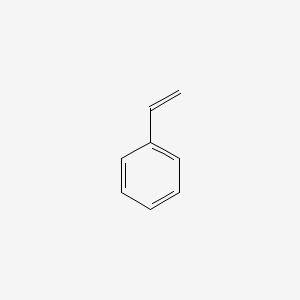
Verified chemistry for CAS 100-42-5
Styrene
Styrene is a vinylarene that is benzene carrying a vinyl group. It has been isolated from the benzoin resin produced by Styrax species. It has a role as a mutagen, a mouse metabolite and a plant metabolite. It is a volatile organic compound, a member of styrenes and a vinylarene. — ChEBI
- IUPAC name
- styrene
- Molecular formula
- C8H8
- Molecular weight
- 104.15 g/mol
- Exact mass
- 104.062600255 Da
- Monoisotopic mass
- 104.062600255 Da
- XLogP3
- 2.9
- Topological polar surface area
- 0.0 Ų
- Molecular complexity
- 68.0
- Formal charge
- 0
- Hydrogen-bond donors
- 0
- Hydrogen-bond acceptors
- 0
- Rotatable bonds
- 1
- Heavy atoms
- 8
- Covalent units
- 1
Names and synonyms reported to PubChem
16 more reported names
External database identifiers
- ChEBI:CHEBI:27452
- ChEMBL:CHEMBL285235
- EPA DTXSID:DTXSID2021284
- PubMed:38070821
- PubMed:36912746
- PubMed:36416909
- PubMed:34668566
- PubMed:34324853
- PubMed:33064461
- PubMed:28962520
- PubMed:28951217
- PubMed:28678435
- PubMed:26505805
- PubMed:26463279
- PubMed:26343807
Advanced structure statistics
- Defined atom stereocentres
- 0
- Undefined atom stereocentres
- 0
- Defined bond stereocentres
- 0
- Undefined bond stereocentres
- 0
- 3D pharmacophore features
- 2
- 3D rings
- 1
- 3D hydrophobes
- 1
- 3D acceptor features
- 0
- 3D donor features
- 0
- 3D anionic centres
- 0
- 3D cationic centres
- 0
- 3D conformers
- 1
- Effective 3D rotors
- 1.0
Machine-readable structure identifiers
- SMILES
C=CC1=CC=CC=C1- InChI
InChI=1S/C8H8/c1-2-8-6-4-3-5-7-8/h2-7H,1H2- InChIKey
PPBRXRYQALVLMV-UHFFFAOYSA-N
Evidence from additional scientific databases
EMBL-EBI ChEBI
styrene
A vinylarene that is benzene carrying a vinyl group. It has been isolated from the benzoin resin produced by Styrax species.
- Formula
- C8H8
- Average mass
- 104.152 g/mol
- Monoisotopic mass
- 104.06260 Da
- Formal charge
- 0
- styrenes — is a (CHEBI:26799)
- vinylarene — is a (CHEBI:51324)
- volatile organic compound — is a (CHEBI:134179)
- mutagen — has role (CHEBI:25435)
- plant metabolite — has role (CHEBI:76924)
- mouse metabolite — has role (CHEBI:75771)
- mutagen — has role (CHEBI:25435)
- plant metabolite — has role (CHEBI:76924)
- mouse metabolite — has role (CHEBI:75771)
- styrenes — is a (CHEBI:26799)
- vinylarene — is a (CHEBI:51324)
- volatile organic compound — is a (CHEBI:134179)
Additional curated names
Cross-references from this source
- CAS: 100-42-5 — NIST Chemistry WebBook
- CAS: 100-42-5 — KEGG COMPOUND
- CAS: 100-42-5 — ChemIDplus
- REGISTRY_NUMBER: 1071236 — Reaxys
- REGISTRY_NUMBER: 2991 — Gmelin
- MANUAL_X_REF: c0115 — UM-BBD
- MANUAL_X_REF: C07083 — KEGG COMPOUND
- MANUAL_X_REF: C07083 — KEGG COMPOUND
- MANUAL_X_REF: CPD-1092 — MetaCyc
- MANUAL_X_REF: HMDB0034240 — HMDB
- MANUAL_X_REF: Styrene — Wikipedia
Mapped by: Exact CAS cross-reference in the ChEBI compound record. Source updated: 2021-03-05. Retrieved: 2026-08-31. Open source record
NIH PubChem PUG-View
Attributed physical-property, hazard, environmental and use annotations.
- Autoignition Temperature: 914 °F (USCG, 1999) Source: CAMEO Chemicals
- Autoignition Temperature: 914 °F (490 °C) Source: Hazardous Substances Data Bank (HSDB)
- Autoignition Temperature: 490 °C Source: ILO-WHO International Chemical Safety Cards (ICSCs)
- Boiling Point: 293 to 295 °F at 760 mmHg (NTP, 1992) Source: CAMEO Chemicals
- Boiling Point: 145.3 °C Source: Hazardous Substances Data Bank (HSDB)
- Boiling Point: 145.00 to 146.00 °C. @ 760.00 mm Hg Source: Human Metabolome Database (HMDB)
- Boiling Point: 145 °C Source: ILO-WHO International Chemical Safety Cards (ICSCs)
- Boiling Point: 293 °F Source: Occupational Safety and Health Administration (OSHA)
- Boiling Point: 145 °C @760 [mm Hg] Source: PAC Chemical Database, U.S. Department of Energy
- Boiling Point: 293 °F Source: The National Institute for Occupational Safety and Health (NIOSH)
- Color/Form: Colorless to yellowish, oily liquid Source: Hazardous Substances Data Bank (HSDB)
- Color/Form: Viscous liquid Source: Hazardous Substances Data Bank (HSDB)
- Density: 0.906 at 68 °F (USCG, 1999) - Less dense than water; will float Source: CAMEO Chemicals
- Density: 0.9016 g/cu cm at 25 °C Source: Hazardous Substances Data Bank (HSDB)
- Density: Percent in saturated air at 760 mm Hg & 15 °C: 0.57; density of saturated vapor-air mixture at 760 mm Hg & 15 °C: 1.02 (Air = 1) Source: Hazardous Substances Data Bank (HSDB)
- Density: Relative density (water = 1): 0.91 Source: ILO-WHO International Chemical Safety Cards (ICSCs)
- Density: 0.91 Source: Occupational Safety and Health Administration (OSHA)
- Density: 0.9016 @25 °C Source: PAC Chemical Database, U.S. Department of Energy
- Density: 0.91 Source: The National Institute for Occupational Safety and Health (NIOSH)
- Flash Point: 88 °F (NTP, 1992) Source: CAMEO Chemicals
- Flash Point: The Guide from the Emergency Response Guidebook is for "Styrene monomer, stabilized." 34 °C Source: Haz-Map, Information on Hazardous Chemicals and Occupational Diseases
- Flash Point: 32.0 °C (89.6 °F) - closed cup Source: Hazardous Substances Data Bank (HSDB)
- Flash Point: 88 °F (31 °C) - closed cup Source: Hazardous Substances Data Bank (HSDB)
- Flash Point: 34.4 °C (Tag closed cup); 36.7 °C (Tag open cup). Source: Hazardous Substances Data Bank (HSDB)
- Flash Point: 31 °C c.c. Source: ILO-WHO International Chemical Safety Cards (ICSCs)
- Flash Point: 88 °F Source: Occupational Safety and Health Administration (OSHA)
- Flash Point: 88 °F Source: The National Institute for Occupational Safety and Health (NIOSH)
- LogP: log Kow = 2.95 Source: Hazardous Substances Data Bank (HSDB)
- LogP: 2.95 Source: Human Metabolome Database (HMDB)
- LogP: 3.0 Source: ILO-WHO International Chemical Safety Cards (ICSCs)
- Melting Point: -24 to -23 °F (NTP, 1992) Source: CAMEO Chemicals
- Melting Point: -30.65 °C Source: Hazardous Substances Data Bank (HSDB)
- Melting Point: Latent heat of fusion: 10.95 kJ/mole (at melting point); Latent heat of sublimation: 43.9 kJ/mole (25 °C); Heat of formation: 103.8 kJ/mole (25 °C); Ionization potential: 8.42 eV Source: Hazardous Substances Data Bank (HSDB)
- Melting Point: -33 °C Source: Human Metabolome Database (HMDB)
- Melting Point: -30.6 °C Source: ILO-WHO International Chemical Safety Cards (ICSCs)
- Melting Point: -23 °F Source: Occupational Safety and Health Administration (OSHA)
- Melting Point: -30.65 °C Source: PAC Chemical Database, U.S. Department of Energy
- Melting Point: -23 °F Source: The National Institute for Occupational Safety and Health (NIOSH)
- Odor: Characteristic, sweet, balsamic, almost floral odor that is extremely penetrating Source: Hazardous Substances Data Bank (HSDB)
- Odor: Aromatic odor Source: Hazardous Substances Data Bank (HSDB)
- Odor: Sweet, floral odor Source: Hazardous Substances Data Bank (HSDB)
- Odor: If pure, sweet and pleasant, but usually contains aldehydes that have a typical penetrating smell, sharp, sweet, and unpleasant. Source: Hazardous Substances Data Bank (HSDB)
- Physical Description: Styrene monomer, stabilized appears as a clear colorless to dark liquid with an aromatic odor. Vapors heavier than air and irritating to the eyes and mucous membranes. Subject to polymerization. If the polymerization takes place inside a closed container, the container may rupture violently. Less dense than water and insoluble in water. Used to make plastics, paints, and synthetic rubber. Source: CAMEO Chemicals
- Physical Description: Liquid; Large Crystals; Liquid; Wet Solid; Gas Vapor; Wet Solid Source: EPA Chemical Data Reporting (CDR)
- Physical Description: Colorless to yellow, oily liquid with a sweet, floral odor; [NIOSH] Source: Haz-Map, Information on Hazardous Chemicals and Occupational Diseases
- Physical Description: Liquid Source: Human Metabolome Database (HMDB)
- Physical Description: COLOURLESS-TO-YELLOW OILY LIQUID. Source: ILO-WHO International Chemical Safety Cards (ICSCs)
- Physical Description: Colorless to yellow, oily liquid with a sweet, floral odor. Source: Occupational Safety and Health Administration (OSHA)
- Physical Description: Colorless to yellow, oily liquid with a sweet, floral odor. Source: The National Institute for Occupational Safety and Health (NIOSH)
- Refractive Index: Index of refraction: 1.5440 at 25 °C Source: Hazardous Substances Data Bank (HSDB)
- Solubility: less than 1 mg/mL at 66 °F (NTP, 1992) Source: CAMEO Chemicals
- Solubility: In water, 300 mg/L at 25 °C Source: Hazardous Substances Data Bank (HSDB)
- Solubility: Insoluble in water Source: Hazardous Substances Data Bank (HSDB)
- Solubility: Soluble in ethanol, ether, and acetone; miscible with benzene; slightly soluble in carbon tetrachloride Source: Hazardous Substances Data Bank (HSDB)
- Solubility: Soluble in carbon disulfide, alcohol, ether, methanol, acetone Source: Hazardous Substances Data Bank (HSDB)
- Solubility: For more Solubility (Complete) data for Styrene (6 total), please visit the HSDB record page. Source: Hazardous Substances Data Bank (HSDB)
- Solubility: 0.31 mg/mL at 25 °C Source: Human Metabolome Database (HMDB)
- Solubility: Solubility in water, g/100ml at 20 °C: 0.03 Source: ILO-WHO International Chemical Safety Cards (ICSCs)
- Solubility: 0.03% Source: The National Institute for Occupational Safety and Health (NIOSH)
- Vapor Pressure: 4.3 mmHg at 59 °F ; 9.5 mmHg at 86 °F; 10 mmHg at 95 °F (NTP, 1992) Source: CAMEO Chemicals
- Vapor Pressure: 6.4 [mmHg] Source: Haz-Map, Information on Hazardous Chemicals and Occupational Diseases
- Vapor Pressure: 6.40 mm Hg at 25 °C Source: Hazardous Substances Data Bank (HSDB)
- Vapor Pressure: Vapor pressure, kPa at 20 °C: 0.67 Source: ILO-WHO International Chemical Safety Cards (ICSCs)
- Vapor Pressure: 5 mmHg Source: Occupational Safety and Health Administration (OSHA)
- Vapor Pressure: 7.5 [mm Hg] @28.6 °C Source: PAC Chemical Database, U.S. Department of Energy
- Vapor Pressure: 5 mmHg Source: The National Institute for Occupational Safety and Health (NIOSH)
- Viscosity: 0.696 cP at 25 °C Source: Hazardous Substances Data Bank (HSDB)
- IARC Carcinogenic Agent: Styrene Source: International Agency for Research on Cancer (IARC)
- IARC Carcinogenic Classes: Group 2A: Probably carcinogenic to humans Source: International Agency for Research on Cancer (IARC)
- IARC Monographs: Volume 60: (1994) Some Industrial Chemicals; Volume 82: (2002) Some Traditional Herbal Medicines, Some Mycotoxins, Naphthalene and Styrene; Volume 121: (2019) Styrene, Styrene-7,8-oxide, and Quinoline Source: International Agency for Research on Cancer (IARC)
- Publication Year: 2019 Source: International Agency for Research on Cancer (IARC)
- Evaluation Year: 2018 Source: International Agency for Research on Cancer (IARC)
- Substance: Styrene Source: NTP Technical Reports
- NTP Technical Report: TR-185: Bioassay of Styrene for Possible Carcinogenicity (CASRN 100-42-5) (1979 ) Source: NTP Technical Reports
- Peer Review Date: 10/25/78 Source: NTP Technical Reports
- Conclusion for Male Rat: No Evidence Source: NTP Technical Reports
- Conclusion for Female Rat: No Evidence Source: NTP Technical Reports
- Conclusion for Male Mice: Equivocal Evidence Source: NTP Technical Reports
- Conclusion for Female Mice: No Evidence Source: NTP Technical Reports
- Exposure Routes: The substance can be absorbed into the body by inhalation of its vapour. Source: ILO-WHO International Chemical Safety Cards (ICSCs)
- Exposure Routes: inhalation, skin absorption, ingestion, skin and/or eye contact Source: The National Institute for Occupational Safety and Health (NIOSH)
- Exposure Routes: Oral (L1832) ; Inhalation (L1832) ; Dermal (L1832) Source: Toxin and Toxin Target Database (T3DB)
- First Aid: EYES: First check the victim for contact lenses and remove if present. Flush victim's eyes with water or normal saline solution for 20 to 30 minutes while simultaneously calling a hospital or poison control center. Do not put any ointments, oils, or medication in the victim's eyes without specific instructions from a physician. IMMEDIATELY transport the victim after flushing eyes to a hospital even if no symptoms (such as redness or irritation) develop.; SKIN: IMMEDIATELY flood affected skin with water while removing and isolating all contaminated clothing. Gently wash all affected skin areas thoroughly with soap and water. IMMEDIATELY call a hospital or poison control center even if no symptoms (such as redness or irritation) develop. IMMEDIATELY transport the victim to a hospital for treatment after washing the affected areas.; INHALATION: IMMEDIATELY leave the contaminated area; take deep breaths of fresh air. IMMEDIATELY call a physician and be prepared to transport the victim to a hospital even if no symptoms (such as wheezing, coughing, shortness of breath, or burning in the mouth, throat, or chest) develop. Provide proper respiratory protection to rescuers entering an unknow Source: CAMEO Chemicals
- ERG2024, Guide 128P (Styrene monomer, stabilized): General First Aid:; · Call 911 or emergency medical service.; · Ensure that medical personnel are aware of the material(s) involved, take precautions to protect themselves and avoid contamination.; · Move victim to fresh air if it can be done safely.; · Administer oxygen if breathing is difficult.; · If victim is not breathing:; -- DO NOT perform mouth-to-mouth resuscitation; the victim may have ingested or inhaled the substance.; -- If equipped and pulse detected, wash face and mouth, then give artificial respiration using a proper respiratory medical device (bag-valve mask, pocket mask equipped with a one-way valve or other device).; -- If no pulse detected or no respiratory medical device available, provide continuous compressions. Conduct a pulse check every two minutes or monitor for any signs of spontaneous respirations.; · Remove and isolate contaminated clothing and shoes.; · For minor skin contact, avoid spreading material on unaffected skin.; · In case of contact with substance, remove immediately by flushing skin or eyes with running water for at least 20 minutes.; · For severe burns, immediate medical attention is required.; · Effects of exposure (inhalation, ingestion, Source: Emergency Response Guidebook (ERG)
- First Aid: (General first aid procedures); Eye: Irrigate immediately - If this chemical contacts the eyes, immediately wash (irrigate) the eyes with large amounts of water, occasionally lifting the lower and upper lids. Get medical attention immediately.; Skin: Water flush - If this chemical contacts the skin, flush the contaminated skin with water. Where there is evidence of skin irritation, get medical attention.; Breathing: Respiratory support; Swallow: Medical attention immediately - If this chemical has been swallowed, get medical attention immediately. Source: The National Institute for Occupational Safety and Health (NIOSH)
- Signal: Danger Source: Regulation (EC) No 1272/2008 of the European Parliament and of the Council
- GHS Hazard Statements: H226: Flammable liquid and vapor [Warning Flammable liquids]; H315: Causes skin irritation [Warning Skin corrosion/irritation]; H319: Causes serious eye irritation [Warning Serious eye damage/eye irritation]; H332: Harmful if inhaled [Warning Acute toxicity, inhalation]; H361d: Suspected of damaging the unborn child [Warning Reproductive toxicity]; H372: Causes damage to organs through prolonged or repeated exposure [Danger Specific target organ toxicity, repeated exposure] Source: Regulation (EC) No 1272/2008 of the European Parliament and of the Council
- Precautionary Statement Codes: P203, P210, P233, P240, P241, P242, P243, P260, P261, P264, P264+P265, P270, P271, P280, P302+P352, P303+P361+P353, P304+P340, P305+P351+P338, P317, P318, P319, P321, P332+P317, P337+P317, P362+P364, P370+P378, P403+P235, P405, and P501 (click each P-code to see the statement) Source: Regulation (EC) No 1272/2008 of the European Parliament and of the Council
- Note: This chemical does not meet GHS hazard criteria for < 0.1% (3 of 6114) of reports. Source: European Chemicals Agency (ECHA)
- Signal: Danger Source: European Chemicals Agency (ECHA)
- GHS Hazard Statements: H226 (> 99.9%): Flammable liquid and vapor [Warning Flammable liquids]; H304 (50.6%): May be fatal if swallowed and enters airways [Danger Aspiration hazard]; H315 (> 99.9%): Causes skin irritation [Warning Skin corrosion/irritation]; H319 (99.9%): Causes serious eye irritation [Warning Serious eye damage/eye irritation]; H332 (98%): Harmful if inhaled [Warning Acute toxicity, inhalation]; H335 (52%): May cause respiratory irritation [Warning Specific target organ toxicity, single exposure; Respiratory tract irritation]; H361 (35.1%): Suspected of damaging fertility or the unborn child [Warning Reproductive toxicity]; H372 (73.8%): Causes damage to organs through prolonged or repeated exposure [Danger Specific target organ toxicity, repeated exposure]; H412 (49%): Harmful to aquatic life with long lasting effects [Hazardous to the aquatic environment, long-term hazard] Source: European Chemicals Agency (ECHA)
- Precautionary Statement Codes: P203, P210, P233, P240, P241, P242, P243, P260, P261, P264, P264+P265, P270, P271, P273, P280, P301+P316, P302+P352, P303+P361+P353, P304+P340, P305+P351+P338, P317, P318, P319, P321, P331, P332+P317, P337+P317, P362+P364, P370+P378, P403+P233, P403+P235, P405, and P501 (click each P-code to see the statement) Source: European Chemicals Agency (ECHA)
- ECHA C&L Notifications Summary: Aggregated GHS information provided per 6114 reports by companies from 92 notifications to the ECHA C&L Inventory. Each notification may be associated with multiple companies.; Reported as not meeting GHS hazard criteria per 3 of 6114 reports by companies.; There are 91 notifications provided by 6111 of 6114 reports by companies with hazard statement code(s).; Information may vary between notifications depending on impurities, additives, and other factors. The percentage value in parenthesis indicates the notified classification ratio from companies that provide hazard codes. Only hazard codes with percentage values above 10% are shown. For more detailed information, please visit ECHA C&L website. Source: European Chemicals Agency (ECHA)
- Signal: Warning Source: European Chemicals Agency (ECHA)
- GHS Hazard Statements: H226 (100%): Flammable liquid and vapor [Warning Flammable liquids]; H315 (100%): Causes skin irritation [Warning Skin corrosion/irritation]; H319 (100%): Causes serious eye irritation [Warning Serious eye damage/eye irritation]; H332 (100%): Harmful if inhaled [Warning Acute toxicity, inhalation] Source: European Chemicals Agency (ECHA)
- Precautionary Statement Codes: P210, P233, P240, P241, P242, P243, P261, P264, P264+P265, P271, P280, P302+P352, P303+P361+P353, P304+P340, P305+P351+P338, P317, P321, P332+P317, P337+P317, P362+P364, P370+P378, P403+P235, and P501 (click each P-code to see the statement) Source: European Chemicals Agency (ECHA)
- ECHA C&L Notifications Summary: Aggregated GHS information provided per 39 reports by companies from 2 notifications to the ECHA C&L Inventory. Each notification may be associated with multiple companies.; Information may vary between notifications depending on impurities, additives, and other factors. The percentage value in parenthesis indicates the notified classification ratio from companies that provide hazard codes. Only hazard codes with percentage values above 10% are shown. For more detailed information, please visit ECHA C&L website. Source: European Chemicals Agency (ECHA)
- Health Effects: Styrene causes nervous system depression and may be carcinogenic. Animals studies have also shown that hearing loss and liver damage may occur. (L1831, L1832) Source: Toxin and Toxin Target Database (T3DB)
- NFPA Health Rating: 2 - Materials that, under emergency conditions, can cause temporary incapacitation or residual injury. Source: Hazardous Substances Data Bank (HSDB)
- NFPA Fire Rating: 3 - Liquids and solids that can be ignited under almost all ambient temperature conditions. Materials produce hazardous atmospheres with air under almost all ambient temperatures or, though unaffected by ambient temperatures, are readily ignited under almost all conditions. Source: Hazardous Substances Data Bank (HSDB)
- NFPA Instability Rating: 2 - Materials that readily undergo violent chemical changes at elevated temperatures and pressures. Source: Hazardous Substances Data Bank (HSDB)
- NFPA Specific Notice: W - No water: Materials that react violently or explosively with water. Source: Hazardous Substances Data Bank (HSDB)
- Target Organs: Cancer, Neurological (Nervous System) Source: Agency for Toxic Substances and Disease Registry (ATSDR)
- Target Organs: Hematologic; Hepatic; Nervous Source: EPA Integrated Risk Information System (IRIS)
- Target Organs: Eyes, skin, respiratory system, central nervous system, liver, reproductive system Source: The National Institute for Occupational Safety and Health (NIOSH)
- Toxicity Summary: IDENTIFICATION AND USE: Styrene is a colorless to yellowish, oily liquid. It is used in the manufacture of plastics, synthetic rubber, and resins, and as an insulator. It is also used as a flavoring agent for ice cream and candy. HUMAN STUDIES: Humans acutely exposed to styrene by inhalation to 800 ppm (3.4 mg/L) for 3 hr experience immediate eye and throat irritation, increased nasal mucous secretion, metallic taste, drowsiness, and vertigo. After test termination, slight muscular weakness, accompanied by inertia and depression were noted. Long-term contact with styrene results in blistering of the skin and development of dermatitis, which is thought to result from defatting of the skin. Effects on the liver (e.g., increased serum bile acid and enhanced activity of plasma enzymes) and reproductive system (e.g., decreased frequency of births and increased frequency of spontaneous abortions in female workers) have been reported. Epidemiologic studies found styrene workers had increased mortality or incidences of lymphohematopoietic cancers (leukaemia or lymphoma or all), with suggestive evidence for pancreatic and esophageal tumors. No adequate human studies are available for styren Source: Hazardous Substances Data Bank (HSDB)
- Toxicity Summary: Styrene 7,8-oxide, a metabolite of styrene, can form DNA adducts by binding to deoxyguanosine. It is also mutagenic and causes increased frequency of sister chromatid exchange, chromosomal aberrations, micronucleated cells, and DNA strand breaks. (L1831) Source: Toxin and Toxin Target Database (T3DB)
- Environmental Bioconcentration: BCF ranges of 15-140 and 12-113 were measured in fish for styrene using carp (Cyprinus carpio) which were exposed over an 8-week period to 0.3 and 0.03 mg/L, respectively(1). A BCF of 13.5 was measured in goldfish for styrene(2). According to a classification scheme(3), these measured BCF values suggest the potential for bioconcentration in aquatic organisms is low to high(SRC). Calculated biomagnification factors (BMF) for styrene in water respiring organisms (zooplankton, forage and predatory fish) and air breathing organisms (reptile, amphibian, sea bird, marine mammal, terrestrial herbivore and carnivore, human) were all less than 1(4). [ Source: Hazardous Substances Data Bank (HSDB)
- Environmental Fate: TERRESTRIAL FATE: Based on a classification scheme(1), an experimental Koc value of 912(2), indicates that styrene is expected to have low mobility in soil(SRC). Volatilization of styrene from moist soil surfaces may be an important fate process(SRC) given a Henry's Law constant of 2.75X10⁻³ atm-cu m/mole(3). Styrene is expected to volatilize from dry soil surfaces(SRC) based upon a vapor pressure of 6.4 mm Hg at 25 °C(4). In an experimental study using loamy soil, 26% of applied styrene (2 mg/kg) volatilized after 31 days(5); volatilization of styrene from soil surfaces is expected to be slower than in water(6). A 100% of theoretical BOD after 2 weeks using activated sludge in the Japanese MITI test(7) suggests that biodegradation is an important environmental fate process in soil(SRC). Source: Hazardous Substances Data Bank (HSDB)
- Environmental Fate: AQUATIC FATE: Based on a classification scheme(1), an experimental Koc value of 912(2), indicates that styrene is expected to adsorb to suspended solids and sediment(SRC). Volatilization from water surfaces is expected(3) based upon a Henry's Law constant of 2.75X10⁻³ atm-cu m/mole(4). Using this Henry's Law constant and an estimation method(3), volatilization half-lives for a model river and model lake are 3 hours and 4 days, respectively(SRC). According to a classification scheme(5), measured BCF ranges from 12-140 in carp(6), suggests the potential for bioconcentration in aquatic organisms is high to low(SRC). A 100% of theoretical BOD after 2 weeks using activated sludge in the Japanese MITI test(7) suggests that biodegradation is an important environmental fate process in water(SRC). Source: Hazardous Substances Data Bank (HSDB)
- Environmental Fate: ATMOSPHERIC FATE: According to a model of gas/particle partitioning of semivolatile organic compounds in the atmosphere(1), styrene, which has a vapor pressure of 6.4 mm Hg at 25 °C(2), is expected to exist solely as a vapor in the ambient atmosphere. Vapor-phase styrene is degraded in the atmosphere by reaction with photochemically-produced hydroxyl radicals(SRC); the half-life for this reaction in air is estimated to be 6.6 hours(SRC), calculated from its rate constant of 5.8X10⁻¹¹ cu cm/molecule-sec at 25 °C(3). Vapor-phase styrene is also degraded in the atmosphere by reaction with ozone and nitrate radicals; the half-lives for these reactions in air are 24 and 3.7 hours, respectively(4). Styrene does not strongly absorb light at wavelengths above 270 nm(5) and, therefore, is not expected to be susceptible to direct photolysis by sunlight since sunlight consists of wavelengths above 290 nm(SRC). Source: Hazardous Substances Data Bank (HSDB)
- Consumer Uses: Antioxidant; Fuel agents; Monomers; Binder; Solvent; Adhesion/cohesion promoter; Intermediate; Filler; Not Known or Reasonably Ascertainable; Viscosity modifiers Source: EPA Chemical Data Reporting (CDR)
- Industry Uses: Plasticizer; Filler; Not Known or Reasonably Ascertainable; Intermediate; Etching agent; Solvent; Other; Monomers; Antioxidant; Fuel agents Source: EPA Chemical Data Reporting (CDR)
- Uses: Styrene is used predominately in the production of polystyrene plastics and resins. Styrene is also used as an intermediate in the synthesis of materials used for ion exchange resins and to produce copolymers. Source: EPA Hazardous Air Pollutants
- Sources/Uses: Styrene is used extensively in the manufacture of plastics, rubber, and resins. About 90,000 workers, including those who make boats, tubs and showers, are potentially exposed to styrene. [http://www.osha-slc.gov/SLTC/styrene/] Used to make polystyrene for packaging, insulation for buildings and refrigeration equipment, and disposable cups and containers; Also used in styrene-butadiene rubber, other polymers, and resins to make boats, shower stalls, tires, automotive parts, etc.; [ACGIH] Source: Haz-Map, Information on Hazardous Chemicals and Occupational Diseases
- Industrial Processes with risk of exposure: Plastic Composites Manufacturing [Category: Industry]; Burning Synthetic Polymers [Category: Burn] Source: Haz-Map, Information on Hazardous Chemicals and Occupational Diseases
- Activities with risk of exposure: Sculpturing plastics [Category: Hobbies]; Smoking cigarettes [Category: Food & Drugs] Source: Haz-Map, Information on Hazardous Chemicals and Occupational Diseases
- Uses: Manufacture of plastics; synthetic rubber; resins; insulator. Source: Hazardous Substances Data Bank (HSDB)
- Uses: Polystyrene; SBR /styrene-butadiene-rubber/, ABS /acrylonitrile-butadiene-styrene/ and SAN /styrene-acrylonitrile/ resins; protective coatings (styrene-butadiene latex; alkyds); styrenated polyesters; rubber-modified polystyrene; copolymer resins; intermediate. Source: Hazardous Substances Data Bank (HSDB)
- Uses: Reported uses (ppm):; Table: Reported uses (ppm): (Flavor and Extract Manufacturers' Association) [Table#625] Source: Hazardous Substances Data Bank (HSDB)
- Uses: The major uses for styrene are in plastics, latex paints and coatings, synthetic rubbers, polyesters and styrene-alkyd coatings. The broad spectrum of uses of these products includes construction, packaging, automotive and household goods. Packaging is the single largest application for styrenecontaining resins, particularly foams, used as fillers and cushioning. Construction applications include pipes, fittings, tanks, lighting fixtures and corrosion-resistant products. Household goods include synthetic marble, flooring, disposable tableware and moulded furnishings. Transport applications range from tyres to reinforced plastics and automobile body putty. Source: Hazardous Substances Data Bank (HSDB)
- Uses: For more Uses (Complete) data for Styrene (6 total), please visit the HSDB record page. Source: Hazardous Substances Data Bank (HSDB)
- Uses: Styrene is used to make plastics and rubber. It is a precursor to polystyrene and may be found in insulation, fiberglass, plastic pipes, automobile parts, shoes, drinking cups and other food containers, and carpet backing. Low levels of styrene also occur naturally in a variety of foods such as fruits, vegetables, nuts, beverages, and meats. Small amounts of styrene can be transferred to food from styrene-based packaging material. (L1831) Source: Toxin and Toxin Target Database (T3DB)
Mapped by: Existing checksum-valid CAS to unique PubChem CID match. Retrieved: 2026-08-31. Open source record
Scientific classifications and hazard annotations provide context and do not replace the market-specific regulatory decision shown above.
Additional source coverage and match status
| Source | Result | Checked |
|---|---|---|
| EMBL-EBI ChEBI | Exact match | 2026-08-31 |
| NIH PubChem PUG-View | Exact match | 2026-08-31 |
A recorded no-match is useful evidence that the source was checked; it is not a claim that the substance does not exist elsewhere.
Retrieved from NIH PubChem on 2026-08-31 by checksum-valid CAS matching. Chemical properties do not replace the regulatory decision on this page.
Official source and provenance
- Registered source
- ASEAN Cosmetic Directive annexes
- Source reference
- ASEAN Annex II, reference 1575
- Source record ID
II-1575- Source version
- 2026-1
- Source language
- English
- Translation status
- Original is English
- Source updated
- 2026-06-22
- Snapshot checked
- 2026-08-30 04:44 UTC
- Validation method
- pdfplumber ruled-table extraction with per-annex reviewed counts
- SHA-256
ffad59f6c01a92c82042c54203ee14969425c2a82bd04c2f4012ff82513e69f1
Registered dataset notes
- Dataset coverage
- Banned, restricted and positive-list substances under the harmonised ASEAN framework
- Authority note
- Regional directive; member-state transitions and deviations still require local verification
How this record fits the market dataset
Status distribution
Condition text is present on 462 of 2224 current records. An empty condition field is interpreted according to the record type above; it is never converted into an unrestricted-use claim.
ASEAN market context
Complete regional annex dataset
Coverage version: ASEAN Cosmetic Directive annexes 2026-1, 22 June 2026
Annexes II, III, IV, VI and VII covering prohibited, restricted and positive-list substances.
Verification checklist
- Search all ACD annexes by name and identifiers.
- Apply product type, maximum level and warning conditions.
- Confirm the target member state's adoption and transition date.
- Complete the local notification and responsible-company requirements.
Official market sources
- ASEAN Cosmetic Directive annexesRegional directive; member-state transitions and deviations still require local verification
Verification workflow and record completeness
Before using this result in a compliance decision
- Confirm that “Styrene” and every CAS/EC identifier refer to the material in your supplier specification.
- Search all ACD annexes by name and identifiers.
- Apply product type, maximum level and warning conditions.
- Confirm the target member state's adoption and transition date.
- Complete the local notification and responsible-company requirements.
- Document the source version and recheck the regulator before manufacture, notification or market placement.
Fields available in this record
- Official substance nameAvailable
- CASAvailable
- ECAvailable
- Separate condition textNot present in source row
- Effective dateNot supplied
- Snapshot hash and methodAvailable
Questions this page answers
Stable citation
Styrene. ASEAN Annex II, reference 1575. ASEAN. Source version 2026-1. CosIng Checker regulatory record: https://cosingchecker.com/regulations/asean/records/3711/
Cite the regulator as the legal authority. This page is a structured evidence index and verification aid, not a substitute for the official text or professional legal assessment.
Interpretation and limits for ASEAN
This official record identifies the substance as prohibited for cosmetic use in the stated market scope.
Do not rely on a formulation containing this identity until the cited source, effective date and exact substance match have been verified.
How to interpret the legal role
The cited row forms part of a binding rule or legally incorporated list for this market.
Evidence on this page
- Recorded outcome: Prohibited
- Legal role: Binding rule
- Source version: 2026-1
What it does not prove
Regional annex coverage does not replace member-state implementation dates, notifications or national deviations.
Further authoritative substance research
None of these sources overrides the market decision above.
Cosmetic Ingredient Review safety assessments
Expert Panel conclusions, assessed ingredient groups, use conditions, dates and report documents
Independent expert review considered by FDA; not a government approval or binding market rule
Research this identity at the sourceFDA Global Substance Registration System
UNII identifiers, preferred names, substance types, codes and public substance relationships
Identity registry only; UNII availability does not imply FDA review or approval
Research this identity at the sourceILO/WHO International Chemical Safety Cards
Hazards, symptoms, first aid, storage, incompatibilities and physical properties for covered chemicals
International occupational chemical-safety reference; not cosmetic-use approval
Research this identity at the sourceJapan NITE-CHRIP
Chemical identity, Japanese and foreign legal lists, GHS hazards and exposure-related information
Chemical-management evidence; cosmetic status remains governed by the applicable MHLW standard and market rules
Research this identity at the sourceNIOSH Pocket Guide to Chemical Hazards
REL, PEL, IDLH, properties, exposure routes, symptoms, target organs, first aid and measurement methods for covered workplace chemicals
US occupational-health guidance and limits; not a cosmetic ingredient decision
Research this identity at the sourceOECD eChemPortal
Gateway to authority-owned physical-property, fate, ecotoxicity, toxicity, exposure and GHS records
Discovery gateway; each linked authority remains responsible for its data
Research this identity at the sourceUS EPA CompTox CTX APIs
API key required for importDTXSID identity, experimental and predicted properties, toxicity, bioactivity, exposure and environmental data
Scientific and computational evidence; predictions must remain labelled and do not determine cosmetic legality
Research this identity at the source