
TRIETHYLENE GLYCOL
2,2'-(Ethylenedioxy)diethanol
TRIETHYLENE GLYCOL is listed in the EU CosIng inventory, but no direct annex records are linked on this page yet.
Regulatory evidence by market
No rule for this ingredient has been imported for any of the 13 markets tracked here.
That describes this inventory, not the law. No imported rule is not evidence that an ingredient is permitted: a rule may exist under another name or identifier, or in a dataset not yet imported here.
Chemical identity and properties
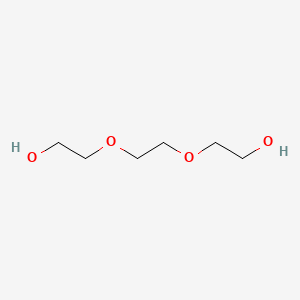
Triethylene Glycol
Triethylene glycol is a poly(ethylene glycol) that is octane-1,8-diol in which the carbon atoms at positions 3 and 6 have been replaced by oxygen atoms. It has a role as a plasticiser. It is a primary alcohol, a diol and a poly(ethylene glycol). — ChEBI
- IUPAC name
- 2-[2-(2-hydroxyethoxy)ethoxy]ethanol
- Molecular formula
- C6H14O4
- Molecular weight
- 150.17 g/mol
- Exact mass
- 150.08920892 Da
- XLogP3
- -1.6
- Topological polar surface area
- 58.9 Ų
- Hydrogen-bond donors
- 2
- Hydrogen-bond acceptors
- 4
- Covalent units
- 1
- Defined stereocentres
- 0
Also known as
16 more reported names
External database identifiers
- ChEBI:CHEBI:44926
- ChEMBL:CHEMBL1235259
- EPA DTXSID:DTXSID4021393
- PubMed:22488581
- PubMed:21552619
- PubMed:21536113
- PubMed:21524091
- PubMed:21503230
- PubMed:21499473
- PubMed:21457991
- PubMed:21409281
- PubMed:21404344
- PubMed:21381732
- PubMed:21349752
- PubMed:21249221
Evidence from additional scientific databases
NIH PubChem PUG-View
Attributed physical-property, hazard, environmental and use annotations.
- Autoignition Temperature: 700 °F (USCG, 1999) Source: CAMEO Chemicals
- Autoignition Temperature: 700 °F (371 °C). Source: Hazardous Substances Data Bank (HSDB)
- Autoignition Temperature: 371 °C Source: ILO-WHO International Chemical Safety Cards (ICSCs)
- Boiling Point: 545 °F at 760 mmHg (NTP, 1992) Source: CAMEO Chemicals
- Boiling Point: 285 °C; 165 °C at 14 mm Hg Source: Hazardous Substances Data Bank (HSDB)
- Boiling Point: 285 °C Source: ILO-WHO International Chemical Safety Cards (ICSCs)
- Boiling Point: 285 °C @760 [mm Hg] Source: PAC Chemical Database, U.S. Department of Energy
- Color/Form: Colorless liquid Source: Hazardous Substances Data Bank (HSDB)
- Density: 1.125 at 68 °F (USCG, 1999) - Denser than water; will sink Source: CAMEO Chemicals
- Density: 1.1274 at 15 °C/4 °C Source: Hazardous Substances Data Bank (HSDB)
- Density: Bulk density: 9.4 lb/gal at 20 °C Source: Hazardous Substances Data Bank (HSDB)
- Density: Relative density (water = 1): 1.1 Source: ILO-WHO International Chemical Safety Cards (ICSCs)
- Density: 1.122 @25 °C Source: PAC Chemical Database, U.S. Department of Energy
- Flash Point: 330 °F (NTP, 1992) Source: CAMEO Chemicals
- Flash Point: 165 °C Source: Haz-Map, Information on Hazardous Chemicals and Occupational Diseases
- Flash Point: 350 °F (177 °C) (Open cup) Source: Hazardous Substances Data Bank (HSDB)
- Flash Point: 165 °C Source: ILO-WHO International Chemical Safety Cards (ICSCs)
- LogP: log Kow = -1.98 Source: Hazardous Substances Data Bank (HSDB)
- LogP: -1.24/-1.9 (calculated) Source: ILO-WHO International Chemical Safety Cards (ICSCs)
- Melting Point: 24.3 °F (NTP, 1992) Source: CAMEO Chemicals
- Melting Point: -7 °C Source: Hazardous Substances Data Bank (HSDB)
- Melting Point: -5 - -7 °C Source: ILO-WHO International Chemical Safety Cards (ICSCs)
- Melting Point: -4.3 °C Source: PAC Chemical Database, U.S. Department of Energy
- Odor: Practically odorless Source: Hazardous Substances Data Bank (HSDB)
- Physical Description: Triethylene glycol is a colorless liquid with a mild odor. Dense than water. (USCG, 1999) Source: CAMEO Chemicals
- Physical Description: CBI; Liquid Source: EPA Chemical Data Reporting (CDR)
- Physical Description: Colorless, hygroscopic liquid that is nearly odorless; [Merck Index] Colorless clear viscous liquid with no odor; [MSDSonline] Source: Haz-Map, Information on Hazardous Chemicals and Occupational Diseases
- Physical Description: COLOURLESS HYGROSCOPIC LIQUID. Source: ILO-WHO International Chemical Safety Cards (ICSCs)
- Refractive Index: Index of refraction: 1.4531 at 15 °C/D Source: Hazardous Substances Data Bank (HSDB)
- Solubility: greater than or equal to 100 mg/mL at 68 °F (NTP, 1992) Source: CAMEO Chemicals
- Solubility: Miscible with alcohol, benzene, toluene; sparingly sol in ether; practically insol in petroleum ether Source: Hazardous Substances Data Bank (HSDB)
- Solubility: Soluble in oxygenated solvents. Source: Hazardous Substances Data Bank (HSDB)
- Solubility: Slightly soluble in ethyl ether, chloroform; insoluble in petroleum ether Source: Hazardous Substances Data Bank (HSDB)
- Solubility: In water, miscible Source: Hazardous Substances Data Bank (HSDB)
- Solubility: Solubility in water: very good Source: ILO-WHO International Chemical Safety Cards (ICSCs)
- Vapor Pressure: less than 0.001 mmHg at 68 °F ; 1 mmHg at 237 °F (NTP, 1992) Source: CAMEO Chemicals
- Vapor Pressure: 0.00132 [mmHg] Source: Haz-Map, Information on Hazardous Chemicals and Occupational Diseases
- Vapor Pressure: Vapor pressure, Pa at 20 °C: 0.02 Source: ILO-WHO International Chemical Safety Cards (ICSCs)
- Vapor Pressure: 1 [mm Hg] @114 °C Source: PAC Chemical Database, U.S. Department of Energy
- Viscosity: 47.8 cP at 20 °C Source: Hazardous Substances Data Bank (HSDB)
- Exposure Routes: The substance can be absorbed into the body by inhalation of its vapour. Source: ILO-WHO International Chemical Safety Cards (ICSCs)
- First Aid: EYES: First check the victim for contact lenses and remove if present. Flush victim's eyes with water or normal saline solution for 20 to 30 minutes while simultaneously calling a hospital or poison control center. Do not put any ointments, oils, or medication in the victim's eyes without specific instructions from a physician. IMMEDIATELY transport the victim after flushing eyes to a hospital even if no symptoms (such as redness or irritation) develop.; SKIN: IMMEDIATELY flood affected skin with water while removing and isolating all contaminated clothing. Gently wash all affected skin areas thoroughly with soap and water. If symptoms such as redness or irritation develop, IMMEDIATELY call a physician and be prepared to transport the victim to a hospital for treatment.; INHALATION: IMMEDIATELY leave the contaminated area; take deep breaths of fresh air. If symptoms (such as wheezing, coughing, shortness of breath, or burning in the mouth, throat, or chest) develop, call a physician and be prepared to transport the victim to a hospital. Provide proper respiratory protection to rescuers entering an unknown atmosphere. Whenever possible, Self-Contained Breathing Apparatus (SCBA) shou Source: CAMEO Chemicals
- Note: This chemical does not meet GHS hazard criteria for 97.2% (2397 of 2467) of all reports. Source: European Chemicals Agency (ECHA)
- GHS Hazard Statements: Not Classified; Reported as not meeting GHS hazard criteria by 2397 of 2467 companies (only 2.8% companies provided GHS information). For more detailed information, please visit ECHA C&L website. Source: European Chemicals Agency (ECHA)
- ECHA C&L Notifications Summary: Aggregated GHS information provided per 2467 reports by companies from 14 notifications to the ECHA C&L Inventory.; Reported as not meeting GHS hazard criteria per 2397 of 2467 reports by companies.; There are 10 notifications provided by 70 of 2467 reports by companies with hazard statement code(s).; Information may vary between notifications depending on impurities, additives, and other factors. The percentage value in parenthesis indicates the notified classification ratio from companies that provide hazard codes. Only hazard codes with percentage values above 10% are shown. For more detailed information, please visit ECHA C&L website. Source: European Chemicals Agency (ECHA)
- Signal: Warning Source: NITE-CMC
- GHS Hazard Statements: H335: May cause respiratory irritation [Warning Specific target organ toxicity, single exposure; Respiratory tract irritation] Source: NITE-CMC
- Precautionary Statement Codes: P261, P271, P304+P340, P319, P403+P233, P405, and P501 (click each P-code to see the statement) Source: NITE-CMC
- NFPA Health Rating: 1 - Materials that, under emergency conditions, can cause significant irritation. Source: Hazardous Substances Data Bank (HSDB)
- NFPA Fire Rating: 1 - Materials that must be preheated before ignition can occur. Materials require considerable preheating, under all ambient temperature conditions, before ignition and combustion can occur. Source: Hazardous Substances Data Bank (HSDB)
- NFPA Instability Rating: 0 - Materials that in themselves are normally stable, even under fire conditions. Source: Hazardous Substances Data Bank (HSDB)
- Cosmetic Ingredient Review Finding(s): Safe in the present practices of use and concentration. Ingredient, concentration, and use information are available in documents discoverable at https://cir-reports.cir-safety.org Source: Cosmetic Ingredient Review (CIR)
- Toxicity Summary: Triethylene glycol (TEG) is a liquid higher glycol of very low vapor pressure with uses that are primarily industrial. It has a very low order of acute toxicity by iv, ip, peroral, percutaneous and inhalation (vapor and aerosol) routes of exposure. It does not produce primary skin iritation. Acute eye contact with the liquid causes mild local transient irritation (conjunctival hyperemia and slight chemosis) but does not induce corneal injury. Animal maximization and human volunteer repeated insult patch tests studies have shown that TEG does not cause skin sensitization. A study with Swiss-Webster mice demonstrated that TEG aerosol has properties of a peripheral chemosensory irritant material and caused a depression of breathing rate with an RD(50) of 5140 mg/ cu m. Continuous subchronic peroral dosing of TEG in the diet of rats did not produce any systemic cumulative or long-term toxicity. The effects seen were dose-related increased relative kidney weight, increased urine volume and decreased urine pH, probably a result of the renal excretion of TEG and metabolites following the absorption of large doses of TEG. There was also decreased hemoglobin concentration, decreased hematoc Source: Hazardous Substances Data Bank (HSDB)
- Environmental Bioconcentration: An estimated BCF of 3 was calculated in fish for triethylene glycol(SRC), using an estimated log Kow of -1.75(1) and a regression-derived equation(2). According to a classification scheme(3), this BCF suggests the potential for bioconcentration in aquatic organisms is low(SRC). Source: Hazardous Substances Data Bank (HSDB)
- Environmental Fate: TERRESTRIAL FATE: Based on a classification scheme(1), an estimated Koc value of 10(SRC), determined from a structure estimation method(2), indicates that triethylene glycol is expected to have very high mobility in soil(SRC). Volatilization of triethylene glycol from moist soil surfaces is not expected to be an important fate process(SRC) given an estimated Henry's Law constant of 3.2X10⁻¹¹ atm-cu m/mole(SRC), using a fragment constant estimation method(3). Triethylene glycol is not expected to volatilize from dry soil surfaces(SRC) based upon a vapor pressure of 1.32X10⁻³ mm Hg(4). A series of aerobic river die-away tests which utilized several different sources of freshwater, suggest that rapid biodegradation is likely to be the most important removal mechanism of triethylene glycol from aerobic soil(SRC); degradation was complete within 7-11 days(5). Source: Hazardous Substances Data Bank (HSDB)
- Environmental Fate: AQUATIC FATE: Based on a classification scheme(1), an estimated Koc value of 10(SRC), determined from a structure estimation method(2), indicates that triethylene glycol is not expected to adsorb to suspended solids and sediment(SRC). Volatilization from water surfaces is not expected(3) based upon an estimated Henry's Law constant of 3.2X10⁻¹¹ atm-cu m/mole(SRC), developed using a fragment constant estimation method(4). According to a classification scheme(5), an estimated BCF of 3(SRC), from an estimated log Kow of -1.75(6) and a regression-derived equation(7), suggests the potential for bioconcentration in aquatic organisms is low(SRC). A series of aerobic river die-away tests, which utilized several differing sources of freshwater, suggest that rapid aerobic biodegradation is likely to be the most important removal mechanism of triethylene glycol from aquatic systems(SRC); degradation was complete within 7-11 days(8). Source: Hazardous Substances Data Bank (HSDB)
- Environmental Fate: ATMOSPHERIC FATE: According to a model of gas/particle partitioning of semivolatile organic compounds in the atmosphere(1), triethylene glycol, which has a vapor pressure of 1.32X10⁻³ mm Hg at 25 °C(2), is expected to exist solely as a vapor in the ambient atmosphere. Vapor-phase triethylene glycol is degraded in the atmosphere by reaction with photochemically-produced hydroxyl radicals(SRC); the half-life for this reaction in air is estimated to be 11 hours(SRC), calculated from its rate constant of 3.6X10⁻¹¹ cu cm/molecule-sec at 25 °C(SRC) that was derived using a structure estimation method(3). Alcohols and ethers do not absorb light at wavelengths >290 nm and therefore triethylene glycol is not expected to be susceptible to direct photolysis by sunlight(4). Source: Hazardous Substances Data Bank (HSDB)
- Consumer Uses: Humectant; Pigment; Intermediate; Not Known or Reasonably Ascertainable; Diluent; Hydraulic fluids; Plasticizer; Heat transferring agent; Processing aids not otherwise specified; Other; Lubricating agent; Solvent; Insulators Source: EPA Chemical Data Reporting (CDR)
- Industry Uses: Humectant; Intermediate; Processing aids, specific to petroleum production; Pigment; Drier; Viscosity modifiers; Diluent; Waterproofing agent; Corrosion inhibitor; Not Known or Reasonably Ascertainable; Cleaning agent; Plasticizer; Dehydrating agent (desiccant); Absorbent; Hydraulic fluids; Heat transferring agent; pH regulating agent; Monomers; Processing aids not otherwise specified; Lubricating agent; Wetting agent (non-aqueous); Other; Solvent Source: EPA Chemical Data Reporting (CDR)
- Cosmetic Ingredient Review Link: CIR ingredient: Triethylene Glycol Source: Cosmetic Ingredient Review (CIR)
- Sources/Uses: Used as a fragrance (cosmetics), solvent (resins, pesticides, textile dyeing), humectant (printing inks and tobacco), plasticizer, and disinfectant; [HSDB] Source: Haz-Map, Information on Hazardous Chemicals and Occupational Diseases
- Industrial Processes with risk of exposure: Using Disinfectants or Biocides [Category: Clean]; Textiles (Printing, Dyeing, or Finishing) [Category: Industry] Source: Haz-Map, Information on Hazardous Chemicals and Occupational Diseases
- Uses: For triethylene glycol (USEPA/OPP Pesticide Code: 083501) ACTIVE products with label matches. /SRP: Registered for use in the U.S. but approved pesticide uses may change periodically and so federal, state and local authorities must be consulted for currently approved uses./ Source: Hazardous Substances Data Bank (HSDB)
- Uses: Bacteriostat (against odor-causing bacteria) for air sanitization and deodorization. In combination with other active ingredients, ... a fungicide, virucide and miticide for disinfection of hard, non-porous surfaces and as an insecticide (against lice) by direct application to caged birds and to the cage. .... As an inert ingredient, triethylene glycol facilitates delivery of formulated pesticide chemical products that are used as herbicides, fungicides, insecticides, growth regulators and attractants on a wide variety of agricultural commodities. Source: Hazardous Substances Data Bank (HSDB)
- Uses: EPA Pesticide Inert Group 3 (Inerts of unknown toxicity) Source: Hazardous Substances Data Bank (HSDB)
- Uses: Triethylene glycol is approved by the Food and Drug Administration (FDA) as a preservative for food packaging adhesives ... . Currently, however, there are no EPA registered products for this use. Triethylene glycol /is also approved as/ an indirect food additive for its use as a plasticizer in cellophane. Source: Hazardous Substances Data Bank (HSDB)
- Uses: For more Uses (Complete) data for TRIETHYLENE GLYCOL (12 total), please visit the HSDB record page. Source: Hazardous Substances Data Bank (HSDB)
Mapped by: Existing checksum-valid CAS to unique PubChem CID match. Retrieved: 2026-08-31. Open source record
Scientific classifications and hazard annotations provide context and do not replace the market-specific regulatory decision shown above.
Additional source coverage and match status
| Source | Result | Checked |
|---|---|---|
| NIH PubChem PUG-View | Exact match | 2026-08-31 |
A recorded no-match is useful evidence that the source was checked; it is not a claim that the substance does not exist elsewhere.
Retrieved from NIH PubChem on 2026-08-31 by checksum-valid CAS matching. Chemical properties do not replace the regulatory decision on this page.
Inventory details for TRIETHYLENE GLYCOL
INCI name
TRIETHYLENE GLYCOL
Description
2,2'-(Ethylenedioxy)diethanol
Record provenance
- Inventory reference
- 80352
- Imported identity
- TRIETHYLENE GLYCOL
- Source update
- 21/11/2016
Annex records for TRIETHYLENE GLYCOL
Key data
- FRAGRANCE
- Imparting an odour or taste. Creating a perceivable pleasant smell and/or masking a bad smell.
- PERFUMING
- Used for perfume and aromatic raw materials.
- VISCOSITY CONTROLLING
- Increasing or decreasing the viscosity (thickness) of cosmetics.
Official EU ingredient-name evidence
The ingredient name exactly matches the official 2025 EU glossary of common ingredient names.
Related inventory evidence
Ingredients with overlapping formulation functions
Additional official and scientific sources
11 external databases to check this identity in
Each link searches that source for this identity. What each source is, and its legal weight
How TRIETHYLENE GLYCOL appears in the CosIng inventory
The CosIng inventory lists TRIETHYLENE GLYCOL as a cosmetic ingredient and this page links it to 0 annex records. The inventory entry captures names and identifiers, while the annex records show where the substance is prohibited, restricted or positively listed in EU cosmetics law.
TRIETHYLENE GLYCOL is also tagged with 3 cosmetic functions in the official data. Function labels describe intended use, but they do not replace regulatory review of linked annex records before formulation or labelling work.
Frequently asked questions
Source note for TRIETHYLENE GLYCOL
This page reproduces the CosIng inventory entry for TRIETHYLENE GLYCOL from public European Commission cosmetic ingredient materials and shows linked identifiers even when no direct annex match is currently attached.
Use this inventory page to research TRIETHYLENE GLYCOL and compare linked records, but verify restrictions and legal status against the current official source text and law before making regulatory decisions.
Tools & next steps
Check your formula
Scan a full INCI list to detect TRIETHYLENE GLYCOL and any linked EU annex restrictions or allergen flags.
INCI CheckerSearch similar ingredients
Find other inventory ingredients and annex entries related to TRIETHYLENE GLYCOL, its identifiers or nearby name variants.
Search