
DODECANE
Dodecane
DODECANE is listed in the EU CosIng inventory, but no direct annex records are linked on this page yet.
Regulatory evidence by market
No rule for this ingredient has been imported for any of the 13 markets tracked here.
That describes this inventory, not the law. No imported rule is not evidence that an ingredient is permitted: a rule may exist under another name or identifier, or in a dataset not yet imported here.
Chemical identity and properties
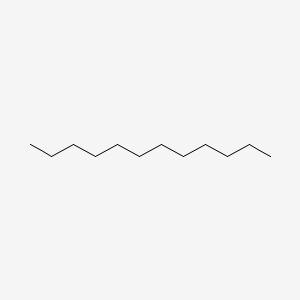
Dodecane
dodecane has been reported in Camellia sinensis, Aristolochia triangularis, and other organisms with data available. — LOTUS - the natural products occurrence database
- IUPAC name
- dodecane
- Molecular formula
- C12H26
- Molecular weight
- 170.33 g/mol
- Exact mass
- 170.203450829 Da
- XLogP3
- 6.1
- Topological polar surface area
- 0.0 Ų
- Hydrogen-bond donors
- 0
- Hydrogen-bond acceptors
- 0
- Covalent units
- 1
- Defined stereocentres
- 0
Also known as
16 more reported names
External database identifiers
- ChEBI:CHEBI:28817
- ChEMBL:CHEMBL30959
- EPA DTXSID:DTXSID0026913
- PubMed:23095096
- PubMed:23061521
- PubMed:23019171
- PubMed:22998760
- PubMed:22996259
- PubMed:22994386
- PubMed:22967834
- PubMed:22967642
- PubMed:22967447
- PubMed:22967067
- PubMed:22947018
- PubMed:22900581
Evidence from additional scientific databases
NIH PubChem PUG-View
Attributed physical-property, hazard, environmental and use annotations.
- Autoignition Temperature: 400 °F (NTP, 1992) Source: CAMEO Chemicals
- Autoignition Temperature: 397 °F (203 °C) Source: Hazardous Substances Data Bank (HSDB)
- Boiling Point: 421.3 °F at 760 mmHg (NTP, 1992) Source: CAMEO Chemicals
- Boiling Point: 216.3 °C Source: Hazardous Substances Data Bank (HSDB)
- Boiling Point: 215.00 to 217.00 °C. @ 760.00 mm Hg Source: Human Metabolome Database (HMDB)
- Boiling Point: 216.3 °C @760 [mm Hg] Source: PAC Chemical Database, U.S. Department of Energy
- Color/Form: Colorless liquid Source: Hazardous Substances Data Bank (HSDB)
- Density: 0.7487 at 68 °F (NTP, 1992) - Less dense than water; will float Source: CAMEO Chemicals
- Density: 0.7495 g/cu cm at 20 °C Source: Hazardous Substances Data Bank (HSDB)
- Density: 0.749 @ 20°C Source: PAC Chemical Database, U.S. Department of Energy
- Flash Point: 165 °F (NTP, 1992) Source: CAMEO Chemicals
- Flash Point: 83 °C (181 °F) - closed cup Source: Hazardous Substances Data Bank (HSDB)
- Flash Point: 165 °F (74 °C) (Closed Cup) Source: Hazardous Substances Data Bank (HSDB)
- Flash Point: 71 °C (From table) Source: Hazardous Substances Data Bank (HSDB)
- LogP: log Kow = 6.10 Source: Hazardous Substances Data Bank (HSDB)
- LogP: 6.10 Source: Human Metabolome Database (HMDB)
- Melting Point: 14.7 °F (NTP, 1992) Source: CAMEO Chemicals
- Melting Point: -9.55 °C Source: Hazardous Substances Data Bank (HSDB)
- Melting Point: Heat of fusion: 36.8 kJ/mol at melting point Source: Hazardous Substances Data Bank (HSDB)
- Melting Point: -9.6 °C Source: Human Metabolome Database (HMDB)
- Melting Point: -9.6 °C Source: PAC Chemical Database, U.S. Department of Energy
- Physical Description: N-dodecane is a clear colorless liquid. (NTP, 1992) Source: CAMEO Chemicals
- Physical Description: Liquid Source: EPA Chemical Data Reporting (CDR)
- Physical Description: Colorless liquid; [CAMEO] Source: Haz-Map, Information on Hazardous Chemicals and Occupational Diseases
- Physical Description: Liquid Source: Human Metabolome Database (HMDB)
- Refractive Index: Index of refraction: 1.4216 at 20 °C Source: Hazardous Substances Data Bank (HSDB)
- Solubility: less than 1 mg/mL at 77 °F (NTP, 1992) Source: CAMEO Chemicals
- Solubility: In water, 3.7X10⁻³ mg/L at 25 °C Source: Hazardous Substances Data Bank (HSDB)
- Solubility: Very soluble in ethyl alcohol, ethyl ether, acetone, chloroform, carbon tetrachloride Source: Hazardous Substances Data Bank (HSDB)
- Solubility: In salt water, 0.005 mg/L at 20 °C; in sea water, 0.0029 mg/L; in distilled water at 25 °C, 0.0037 mg/L Source: Hazardous Substances Data Bank (HSDB)
- Solubility: 3.7e-06 mg/mL at 25 °C Source: Human Metabolome Database (HMDB)
- Vapor Pressure: 1 mmHg at 118 °F ; 0.3 mmHg at 68 °F (NTP, 1992) Source: CAMEO Chemicals
- Vapor Pressure: 0.13 [mmHg] Source: Haz-Map, Information on Hazardous Chemicals and Occupational Diseases
- Vapor Pressure: 0.135 mm Hg at 25 °C Source: Hazardous Substances Data Bank (HSDB)
- Vapor Pressure: 0.135 [mm Hg] @25 °C Source: PAC Chemical Database, U.S. Department of Energy
- Viscosity: Less than 32 SUS (Saybolt Universal Seconds) Source: Hazardous Substances Data Bank (HSDB)
- First Aid: EYES: First check the victim for contact lenses and remove if present. Flush victim's eyes with water or normal saline solution for 20 to 30 minutes while simultaneously calling a hospital or poison control center. Do not put any ointments, oils, or medication in the victim's eyes without specific instructions from a physician. IMMEDIATELY transport the victim after flushing eyes to a hospital even if no symptoms (such as redness or irritation) develop.; SKIN: IMMEDIATELY flood affected skin with water while removing and isolating all contaminated clothing. Gently wash all affected skin areas thoroughly with soap and water. If symptoms such as redness or irritation develop, IMMEDIATELY call a physician and be prepared to transport the victim to a hospital for treatment.; INHALATION: If any of your personnel should inhale this substance you should remove them immediately to open air. If symptoms develop, seek medical attention.; INGESTION: DO NOT INDUCE VOMITING. If the victim is conscious and not convulsing, give 1 or 2 glasses of water to dilute the chemical and IMMEDIATELY call a hospital or poison control center. Be prepared to transport the victim to a hospital if advised by a Source: CAMEO Chemicals
- Note: This chemical does not meet GHS hazard criteria for 0.4% (4 of 1042) of reports. Source: European Chemicals Agency (ECHA)
- Signal: Danger Source: European Chemicals Agency (ECHA)
- GHS Hazard Statements: H304 (57.2%): May be fatal if swallowed and enters airways [Danger Aspiration hazard]; H319 (43.2%): Causes serious eye irritation [Warning Serious eye damage/eye irritation] Source: European Chemicals Agency (ECHA)
- Precautionary Statement Codes: P264+P265, P280, P301+P316, P305+P351+P338, P331, P337+P317, P405, and P501 (click each P-code to see the statement) Source: European Chemicals Agency (ECHA)
- ECHA C&L Notifications Summary: Aggregated GHS information provided per 1042 reports by companies from 11 notifications to the ECHA C&L Inventory. Each notification may be associated with multiple companies.; Reported as not meeting GHS hazard criteria per 4 of 1042 reports by companies.; There are 10 notifications provided by 1038 of 1042 reports by companies with hazard statement code(s).; Information may vary between notifications depending on impurities, additives, and other factors. The percentage value in parenthesis indicates the notified classification ratio from companies that provide hazard codes. Only hazard codes with percentage values above 10% are shown. For more detailed information, please visit ECHA C&L website. Source: European Chemicals Agency (ECHA)
- Note: This chemical does not meet GHS hazard criteria for 4.2% (36 of 853) of reports. Source: European Chemicals Agency (ECHA)
- GHS Hazard Statements: H226 (95.7%): Flammable liquid and vapor [Warning Flammable liquids]; H304 (95.8%): May be fatal if swallowed and enters airways [Danger Aspiration hazard]; H410 (12.2%): Very toxic to aquatic life with long lasting effects [Warning Hazardous to the aquatic environment, long-term hazard]; H413 (19%): May cause long lasting harmful effects to aquatic life [Hazardous to the aquatic environment, long-term hazard] Source: European Chemicals Agency (ECHA)
- Precautionary Statement Codes: P210, P233, P240, P241, P242, P243, P273, P280, P301+P316, P303+P361+P353, P331, P370+P378, P391, P403+P235, P405, and P501 (click each P-code to see the statement) Source: European Chemicals Agency (ECHA)
- ECHA C&L Notifications Summary: Aggregated GHS information provided per 853 reports by companies from 9 notifications to the ECHA C&L Inventory. Each notification may be associated with multiple companies.; Reported as not meeting GHS hazard criteria per 36 of 853 reports by companies.; There are 8 notifications provided by 817 of 853 reports by companies with hazard statement code(s).; Information may vary between notifications depending on impurities, additives, and other factors. The percentage value in parenthesis indicates the notified classification ratio from companies that provide hazard codes. Only hazard codes with percentage values above 10% are shown. For more detailed information, please visit ECHA C&L website. Source: European Chemicals Agency (ECHA)
- Signal: Danger Source: NITE-CMC
- GHS Hazard Statements: H227: Combustible liquid [Warning Flammable liquids]; H304: May be fatal if swallowed and enters airways [Danger Aspiration hazard] Source: NITE-CMC
- Precautionary Statement Codes: P210, P280, P301+P316, P331, P370+P378, P403, P405, and P501 (click each P-code to see the statement) Source: NITE-CMC
- NFPA Health Rating: 1 - Materials that, under emergency conditions, can cause significant irritation. Source: Hazardous Substances Data Bank (HSDB)
- NFPA Fire Rating: 2 - Materials that must be moderately heated or exposed to relatively high ambient temperatures before ignition can occur. Materials would not under normal conditions form hazardous atmospheres with air, but under high ambient temperatures or under moderate heating could release vapor in sufficient quantities to produce hazardous atmospheres with air. Source: Hazardous Substances Data Bank (HSDB)
- NFPA Instability Rating: 0 - Materials that in themselves are normally stable, even under fire conditions. Source: Hazardous Substances Data Bank (HSDB)
- Toxicity Summary: IDENTIFICATION AND USE: Dodecane is a colorless liquid. Dodecane is a component of gasoline and is used as solvent, in organic synthesis, in jet fuel research, as a distillation chaser, and in the rubber and paper processing industries. HUMAN EXPOSURE AND TOXICITY: Dodecane may be harmful if inhaled, swallowed, or absorbed through the skin. It can be irritating to mucous membranes. ANIMAL STUDIES: Dodecane, can produce slight to severe dermal irritation and respiratory in animals. However, it produced only minimal to negligible ocular irritation. Rats exposed to inhalation to 0.2 mL dodecane died within 24 hours of progressive edema and hemorrhaging. Dodecane did not show any effects, including no central nervous system depression, when rats were exposed at the saturated vapor concentrations. Dodecane, applied topically to progeny of rats treated with benzo(a)pyrene, chrysene, or benzo(b)triphenylene on gestation day 1, produced tumors in offspring. Dodecane has been shown to be a promoter of skin carcinogenesis for ultraviolet radiation. Dodecane, did not produce an increase in mutations when tested in the Ames Salmonella typhimurium assay with and without of metabolic activation. Source: Hazardous Substances Data Bank (HSDB)
- Environmental Bioconcentration: A log BCF of 1.72 (BCF = 53) for golden orfes and a BCF of 50 for golden ide fish (Leuciscus idus melanotus) was determined for n-dodecane after 3 days exposure(1,2). An estimated BCF upper limit of <240 L/kg was calculated for dodecane in fathead minnows in water at concentrations less than its maximum aqueous solubility(3). According to a classification scheme(4), these BCF values suggest that bioconcentration in aquatic organisms is moderate to high(SRC). The bioaccumulation factor of n-dodecane in algae (Chlorella fusca) was determined to be 6,250 after 1 day(1); a log BCF of 3.80 for green algae after 24 hours exposure was also determined(1). Only traces of n-dodecane were taken up by a marine diatom from crude oil(5). The bioaccumulation factor of n-dodecane in activated sludge was determined to be 1,300 after 5 days(6). Source: Hazardous Substances Data Bank (HSDB)
- Environmental Fate: TERRESTRIAL FATE: Based on a classification scheme(1), an estimated Koc value of 4800(SRC), determined from a structure estimation method(2), indicates that dodecane is expected to have slight mobility in soil(SRC). Volatilization of dodecane from moist soil surfaces is expected to be an important fate process(SRC) given an estimated Henry's Law constant of 8.2 atm-cu m/mole(3) derived from its vapor pressure, 0.135 mm Hg(4), and water solubility, 3.7X10⁻³ mg/L(5). Dodecane is not expected to volatilize from dry soil surfaces(SRC) based upon its vapor pressure(4). However, adsorption to soil is expected to attenuate volatilization. According to the Japanese MITI test, dodecane is considered readily biodegradable based on results of analogous chemicals(6) indicating that biodegradation is an important environmental fate process in soil(SRC). Source: Hazardous Substances Data Bank (HSDB)
- Environmental Fate: AQUATIC FATE: Based on a classification scheme(1), an estimated Koc value of 4800(SRC), determined from a structure estimation method(2), indicates that dodecane is expected to adsorb to suspended solids and sediment(SRC). Volatilization from water surfaces is expected(3) based upon an estimated Henry's Law constant of 8.2 atm-cu m/mole(SRC), derived from its vapor pressure, 0.135 mm Hg(4), and water solubility, 3.7X10⁻³ mg/L(5). Using this Henry's Law constant and an estimation method(3), volatilization half-lives for a model river and model lake are 4 hrs and 5 days, respectively(SRC). However, volatilization from water surfaces is expected to be attenuated by adsorption to suspended solids and sediment in the water column. The estimated volatilization half-life from a model pond is 32 days if adsorption is considered(6). According to a classification scheme(7), BCF values of 53(8) to <240(9) suggest bioconcentration in aquatic organisms is moderate to high(SRC). According to the Japanese MITI test, dodecane is considered readily biodegradable based on results of analogous chemicals(10) indicating that biodegradation is an important environmental fate process in water(SRC). Source: Hazardous Substances Data Bank (HSDB)
- Environmental Fate: ATMOSPHERIC FATE: According to a model of gas/particle partitioning of semivolatile organic compounds in the atmosphere(1), dodecane, which has a vapor pressure of 0.135 mm Hg at 25 °C(2), is expected to exist solely as a vapor in the ambient atmosphere. Vapor-phase dodecane is degraded in the atmosphere by reaction with photochemically-produced hydroxyl radicals(SRC); the half-life for this reaction in air is estimated to be 0.8 days(SRC), calculated from its rate constant of 1.4X10⁻¹¹ cu cm/molecule-sec at 25 °C(3). Dodecane does not contain chromophores that absorb at wavelengths >290 nm(4) and, therefore, is not expected to be susceptible to direct photolysis by sunlight(SRC). Source: Hazardous Substances Data Bank (HSDB)
- Consumer Uses: Heat stabilizer; Cleaning agent; Not Known or Reasonably Ascertainable; Fuel; Lubricating agent; Other Source: EPA Chemical Data Reporting (CDR)
- Industry Uses: Fuel; Processing aids not otherwise specified; Lubricating agent; Other; Solvent; Intermediate; Heat stabilizer; Not Known or Reasonably Ascertainable; Cleaning agent Source: EPA Chemical Data Reporting (CDR)
- Sources/Uses: Used as a solvent (inks and degreasing) and in chemical research and production; Used in paper processing; [HSDB] Source: Haz-Map, Information on Hazardous Chemicals and Occupational Diseases
- Industrial Processes with risk of exposure: Metal Degreasing [Category: Clean]; Pulp and Paper Processing [Category: Industry]; Textiles (Printing, Dyeing, or Finishing) [Category: Industry] Source: Haz-Map, Information on Hazardous Chemicals and Occupational Diseases
- Uses: Solvent, organic synthesis, distillation chaser, jet fuel research Source: Hazardous Substances Data Bank (HSDB)
- Uses: Manufacturing paraffin products ... Lubricant oil additive. Source: Hazardous Substances Data Bank (HSDB)
- Uses: Dodecane is a component of gasoline and is used as solvent, in organic synthesis, in jet fuel research, as a distillation chaser, and in the rubber and paper processing industries. Source: Hazardous Substances Data Bank (HSDB)
- Uses: We have recommended surrogate blends for Fischer-Tropsch (F-T) blends that consist of mixtures of n-dodecane, n-decane, and iso-octane. In addition, we have described a systematic approach to generating a specific blend to match a specific fuel. Compositions for specific surrogates of two different F-T fuels have been proposed that provide a best match to cetane number, H/C ratio, lower heating value, T50 boiling point, and chemical-analysis data. Tests of these blends against experimental data for flame-propagation and flame-extinction strain rate show good agreement. Source: Hazardous Substances Data Bank (HSDB)
- Uses: For more Uses (Complete) data for n-Dodecane (11 total), please visit the HSDB record page. Source: Hazardous Substances Data Bank (HSDB)
Mapped by: Existing checksum-valid CAS to unique PubChem CID match. Retrieved: 2026-08-31. Open source record
Scientific classifications and hazard annotations provide context and do not replace the market-specific regulatory decision shown above.
Additional source coverage and match status
| Source | Result | Checked |
|---|---|---|
| NIH PubChem PUG-View | Exact match | 2026-08-31 |
A recorded no-match is useful evidence that the source was checked; it is not a claim that the substance does not exist elsewhere.
Retrieved from NIH PubChem on 2026-08-31 by checksum-valid CAS matching. Chemical properties do not replace the regulatory decision on this page.
Inventory details for DODECANE
INCI name
DODECANE
Description
Dodecane
Record provenance
- Inventory reference
- 39797
- Imported identity
- DODECANE
- Source update
- 02/03/2011
Annex records for DODECANE
Key data
Official EU ingredient-name evidence
The ingredient name exactly matches the official 2025 EU glossary of common ingredient names.
Related inventory evidence
Ingredients with overlapping formulation functions
Additional official and scientific sources
11 external databases to check this identity in
Each link searches that source for this identity. What each source is, and its legal weight
How DODECANE appears in the CosIng inventory
The CosIng inventory lists DODECANE as a cosmetic ingredient and this page links it to 0 annex records. The inventory entry captures names and identifiers, while the annex records show where the substance is prohibited, restricted or positively listed in EU cosmetics law.
DODECANE is also tagged with 1 cosmetic function in the official data. Function labels describe intended use, but they do not replace regulatory review of linked annex records before formulation or labelling work.
Frequently asked questions
Source note for DODECANE
This page reproduces the CosIng inventory entry for DODECANE from public European Commission cosmetic ingredient materials and shows linked identifiers even when no direct annex match is currently attached.
Use this inventory page to research DODECANE and compare linked records, but verify restrictions and legal status against the current official source text and law before making regulatory decisions.
Tools & next steps
Check your formula
Scan a full INCI list to detect DODECANE and any linked EU annex restrictions or allergen flags.
INCI CheckerSearch similar ingredients
Find other inventory ingredients and annex entries related to DODECANE, its identifiers or nearby name variants.
Search