
PANTHENOL
Butanamide, 2,4-dihydroxy-N-(3-hydroxypropyl)-3,3-dimethyl-, (2R)-; dl-Panthenol
PANTHENOL is listed in the EU CosIng inventory, but no direct annex records are linked on this page yet.
Regulatory evidence by market
No rule for this ingredient has been imported for any of the 13 markets tracked here.
That describes this inventory, not the law. No imported rule is not evidence that an ingredient is permitted: a rule may exist under another name or identifier, or in a dataset not yet imported here.
Chemical identity and properties
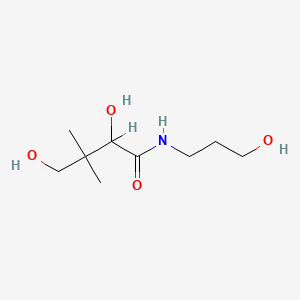
DL-panthenol
Panthenol is an alcohol derivative of pantothenic acid, a component of the B complex vitamins and an essential component of a normally functioning epithelium. Panthenol exists as a racemic mixture containing both the dextrorotatory form (dexpanthenol) and the levorotatory form (levopanthenol). While pantothenic acid is optically active, only the dextrorotatory form ([DB09357]) is biologically active. Dexpanthenol, the active form of panthenol, is enzymatically cleaved to form pantothenic acid (Vitamin B5), which is an essential component of Coenzyme A that acts as a cofactor in many enzymatic reactions that are important for protein metabolism in the epithelium. Due to its good penetration and high local concentrations, dexpanthanol is used in many topical products, such as ointments and lotions for treatment of dermatological conditions to relieve itching or promote healing. Dermatological effects of the topical use of dexpanthenol include increased fibroblast proliferation and accelerated re-epithelialization in wound healing. Furthermore, it acts as a topical protectant, moisturizer, and has demonstrated anti-inflammatory properties. — DrugBank
- IUPAC name
- 2,4-dihydroxy-N-(3-hydroxypropyl)-3,3-dimethylbutanamide
- Molecular formula
- C9H19NO4
- Molecular weight
- 205.25 g/mol
- Exact mass
- 205.13140809 Da
- XLogP3
- -0.9
- Topological polar surface area
- 89.8 Ų
- Hydrogen-bond donors
- 4
- Hydrogen-bond acceptors
- 4
- Covalent units
- 1
- Defined stereocentres
- 0
Also known as
16 more reported names
External database identifiers
Retrieved from NIH PubChem on 2026-08-31 by checksum-valid CAS matching. Chemical properties do not replace the regulatory decision on this page.
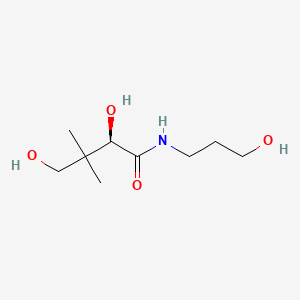
Dexpanthenol
Pantothenol is a monocarboxylic acid amide that is 3,3-dimethylbutanamide substituted by hydroxy groups at positions 2 and 4 and a 3-hydroxypropyl group at the carbomyl nitrogen. It has a role as a cholinergic drug and a provitamin. It is an amino alcohol and a monocarboxylic acid amide. — ChEBI
- IUPAC name
- (2R)-2,4-dihydroxy-N-(3-hydroxypropyl)-3,3-dimethylbutanamide
- Molecular formula
- C9H19NO4
- Molecular weight
- 205.25 g/mol
- Exact mass
- 205.13140809 Da
- XLogP3
- -0.9
- Topological polar surface area
- 89.8 Ų
- Hydrogen-bond donors
- 4
- Hydrogen-bond acceptors
- 4
- Covalent units
- 1
- Defined stereocentres
- 1
Also known as
16 more reported names
External database identifiers
- ChEBI:CHEBI:27373
- ChEMBL:CHEMBL1200979
- EPA DTXSID:DTXSID3022906
- PubMed:29968805
- PubMed:28503966
- PubMed:23120592
- PubMed:22759998
- PubMed:22546378
- PubMed:22529516
- PubMed:22427802
- PubMed:22395588
- PubMed:22379743
- PubMed:22360030
- PubMed:22347577
- PubMed:22320671
Retrieved from NIH PubChem on 2026-08-31 by checksum-valid CAS matching. Chemical properties do not replace the regulatory decision on this page.
Inventory details for PANTHENOL
INCI name
PANTHENOL
INN name
dexpanthenol
Ph. Eur. name
dexpanthenolum
Description
Butanamide, 2,4-dihydroxy-N-(3-hydroxypropyl)-3,3-dimethyl-, (2R)-; dl-Panthenol
Record provenance
- Inventory reference
- 35839
- Imported identity
- PANTHENOL
- Source update
- 15/10/2010
Annex records for PANTHENOL
Key data
- ANTISTATIC
- Preventing and/or reducing static electricity by neutralising electrical charge on surfaces.
- HAIR CONDITIONING
- Enhancing the appearance and feel of hair. Leaving the hair easy to comb, supple, soft and shiny and/or imparting volume, lightness, gloss, texture, etc.
- SKIN CONDITIONING
- Maintaining the skin in good condition.
Official EU ingredient-name evidence
The ingredient name exactly matches the official 2025 EU glossary of common ingredient names.
Related inventory evidence
Ingredients with overlapping formulation functions
Additional official and scientific sources
11 external databases to check this identity in
Each link searches that source for this identity. What each source is, and its legal weight
How PANTHENOL appears in the CosIng inventory
The CosIng inventory lists PANTHENOL as a cosmetic ingredient and this page links it to 0 annex records. The inventory entry captures names and identifiers, while the annex records show where the substance is prohibited, restricted or positively listed in EU cosmetics law.
PANTHENOL is also tagged with 3 cosmetic functions in the official data. Function labels describe intended use, but they do not replace regulatory review of linked annex records before formulation or labelling work.
Frequently asked questions
Source note for PANTHENOL
This page reproduces the CosIng inventory entry for PANTHENOL from public European Commission cosmetic ingredient materials and shows linked identifiers even when no direct annex match is currently attached.
Use this inventory page to research PANTHENOL and compare linked records, but verify restrictions and legal status against the current official source text and law before making regulatory decisions.
Tools & next steps
Check your formula
Scan a full INCI list to detect PANTHENOL and any linked EU annex restrictions or allergen flags.
INCI CheckerSearch similar ingredients
Find other inventory ingredients and annex entries related to PANTHENOL, its identifiers or nearby name variants.
Search