
MICA
Mica is a series of silicate minerals of varying chemical composition but with similar physical properties. Mica may have well-defined cleavage and split into very thin sheets.
MICA is linked to 1 EU annex record on this page.
Regulatory evidence by market
This matrix separates verified ingredient rules from sources that are mapped but not yet imported. No imported rule does not mean the ingredient is permitted.
Swipe or scroll horizontally to see every column.
| Market | Evidence status | Records | Source language |
|---|---|---|---|
| European Union | Evidence linked Positive-list entry with conditions Open this evidence | 1 | English and EU languages |
| Great Britain | Source mapped Official source mapped; ingredient rule not imported | 0 | English |
| Canada | Source mapped Official source mapped; ingredient rule not imported | 0 | English and French |
| New Zealand | Evidence linked Permitted list with conditions Open this evidence | 1 | English |
| ASEAN | Source mapped Official source mapped; ingredient rule not imported | 0 | English and national languages |
| China | Source mapped Official source mapped; ingredient rule not imported | 0 | Chinese with selected English material |
| Japan | Source mapped Official source mapped; ingredient rule not imported | 0 | Japanese; official English translation available |
| South Korea | Source mapped Official source mapped; ingredient rule not imported | 0 | Korean with some English names |
| United States | Evidence linked Permitted list with conditions Open this evidence | 1 | English |
| Australia | Source mapped Official source mapped; ingredient rule not imported | 0 | English |
| Brazil | Source mapped Official source mapped; ingredient rule not imported | 0 | Portuguese with INCI crosswalks |
| India | Source mapped Official source mapped; ingredient rule not imported | 0 | English and Hindi |
| Saudi Arabia | Source mapped Official source mapped; ingredient rule not imported | 0 | Arabic and English |
Chemical identity and properties
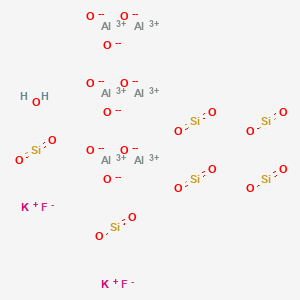
Mica-group minerals
MICA, a generic term, refers to any of a group of approximately 30 silicate minerals occurring as non-fibrous plates. Muscovite (hydrated aluminium potassium silicate[KAl2(AlSi3O10)(F, OH)2 ])and phlogopite (potassium magnesium aluminum silicate hydroxide) are the two major micas of commerce. Micas are commonly found in ordinary rocks. Inhalation of mica dust presents an occupational hazard. — CAMEO Chemicals
- IUPAC name
- hexaaluminum;dipotassium;hexakis(dioxosilane);nonakis(oxygen(2-));difluoride;hydrate
- Molecular formula
- Al6F2H2K2O22Si6
- Molecular weight
- 800.60 g/mol
- Exact mass
- 799.578781 Da
- Topological polar surface area
- 215.0 Ų
- Hydrogen-bond donors
- 1
- Hydrogen-bond acceptors
- 24
- Covalent units
- 26
- Defined stereocentres
- 0
Also known as
16 more reported names
External database identifiers
- PubMed:24946801
Evidence from additional scientific databases
NIH PubChem PUG-View
Attributed physical-property, hazard, environmental and use annotations.
- Color/Form: Light gray to dark flakes or particles Source: Hazardous Substances Data Bank (HSDB)
- Color/Form: Soft, translucent solid; colorless to slight red (ruby), brown to greenish yellow (amber)... thin sheets that are flexible and elastic Source: Hazardous Substances Data Bank (HSDB)
- Color/Form: Colorless flakes or sheets of hydrous silicates Source: Hazardous Substances Data Bank (HSDB)
- Density: 2.6 to 3.2 (NIOSH, 2024) Source: CAMEO Chemicals
- Density: 2.6-3.2 Source: Hazardous Substances Data Bank (HSDB)
- Density: 2.6-3.2 Source: Occupational Safety and Health Administration (OSHA)
- Density: 2.6-3.2 @25 °C Source: PAC Chemical Database, U.S. Department of Energy
- Density: 2.6-3.2 Source: The National Institute for Occupational Safety and Health (NIOSH)
- Melting Point: 1500 °C Source: Hazardous Substances Data Bank (HSDB)
- Melting Point: Melting point = 1387 °C /Synthetic fluorophlogopite/ Source: Hazardous Substances Data Bank (HSDB)
- Melting Point: 1387 °C Source: PAC Chemical Database, U.S. Department of Energy
- Odor: Odorless Source: Hazardous Substances Data Bank (HSDB)
- Physical Description: MICA, a generic term, refers to any of a group of approximately 30 silicate minerals occurring as non-fibrous plates. Muscovite (hydrated aluminium potassium silicate[KAl2(AlSi3O10)(F, OH)2 ])and phlogopite (potassium magnesium aluminum silicate hydroxide) are the two major micas of commerce. Micas are commonly found in ordinary rocks. Inhalation of mica dust presents an occupational hazard. Source: CAMEO Chemicals
- Physical Description: Dry Powder; Large Crystals; CBI Source: EPA Chemical Data Reporting (CDR)
- Physical Description: Colorless, odorless flakes or sheets of hydrous silicates; [NIOSH] Crystalline silica not bound to other minerals is "free" silica. Silicates are minerals in which silicon and oxygen are combined with other elements. [Rom, p. 364] Source: Haz-Map, Information on Hazardous Chemicals and Occupational Diseases
- Physical Description: Colorless, odorless flakes or sheets of hydrous silicates. Source: Occupational Safety and Health Administration (OSHA)
- Physical Description: Colorless, odorless flakes or sheets of hydrous silicates. Source: The National Institute for Occupational Safety and Health (NIOSH)
- Refractive Index: Refractive index: 1.56-1.60 Source: Hazardous Substances Data Bank (HSDB)
- Solubility: Insoluble (NIOSH, 2024) Source: CAMEO Chemicals
- Solubility: Insoluble in water Source: Hazardous Substances Data Bank (HSDB)
- Solubility: Insoluble Source: The National Institute for Occupational Safety and Health (NIOSH)
- Vapor Pressure: 0 mmHg (approx) (NIOSH, 2024) Source: CAMEO Chemicals
- Vapor Pressure: 0 mm Hg (approximate) Source: Hazardous Substances Data Bank (HSDB)
- Vapor Pressure: 0 mmHg (approx) Source: Occupational Safety and Health Administration (OSHA)
- Vapor Pressure: 0 mmHg (approx) Source: The National Institute for Occupational Safety and Health (NIOSH)
- Exposure Routes: inhalation, skin and/or eye contact Source: The National Institute for Occupational Safety and Health (NIOSH)
- First Aid: Excerpt from NIOSH Pocket Guide for Mica (containing less than 1% quartz):; Eye: IRRIGATE IMMEDIATELY - If this chemical contacts the eyes, immediately wash (irrigate) the eyes with large amounts of water, occasionally lifting the lower and upper lids. Get medical attention immediately.; Breathing: FRESH AIR - If a person breathes large amounts of this chemical, move the exposed person to fresh air at once. Other measures are usually unnecessary. (NIOSH, 2024) Source: CAMEO Chemicals
- First Aid: (General first aid procedures); Eye: Irrigate immediately - If this chemical contacts the eyes, immediately wash (irrigate) the eyes with large amounts of water, occasionally lifting the lower and upper lids. Get medical attention immediately.; Breathing: Fresh air Source: The National Institute for Occupational Safety and Health (NIOSH)
- Note: This chemical does not meet GHS hazard criteria for 71.3% (600 of 841) of all reports. Source: European Chemicals Agency (ECHA)
- Signal: Danger Source: European Chemicals Agency (ECHA)
- GHS Hazard Statements: H319 (17.5%): Causes serious eye irritation [Warning Serious eye damage/eye irritation]; H335 (17.5%): May cause respiratory irritation [Warning Specific target organ toxicity, single exposure; Respiratory tract irritation]; H372 (11.5%): Causes damage to organs through prolonged or repeated exposure [Danger Specific target organ toxicity, repeated exposure]; H373 (12.5%): May causes damage to organs through prolonged or repeated exposure [Warning Specific target organ toxicity, repeated exposure] Source: European Chemicals Agency (ECHA)
- Precautionary Statement Codes: P260, P261, P264, P264+P265, P270, P271, P280, P304+P340, P305+P351+P338, P319, P337+P317, P403+P233, P405, and P501 (click each P-code to see the statement) Source: European Chemicals Agency (ECHA)
- ECHA C&L Notifications Summary: Aggregated GHS information provided per 841 reports by companies from 22 notifications to the ECHA C&L Inventory. Each notification may be associated with multiple companies.; Reported as not meeting GHS hazard criteria per 600 of 841 reports by companies.; There are 20 notifications provided by 241 of 841 reports by companies with hazard statement code(s).; Information may vary between notifications depending on impurities, additives, and other factors. The percentage value in parenthesis indicates the notified classification ratio from companies that provide hazard codes. Only hazard codes with percentage values above 10% are shown. For more detailed information, please visit ECHA C&L website. Source: European Chemicals Agency (ECHA)
- Signal: Danger Source: NITE-CMC
- GHS Hazard Statements: H372: Causes damage to organs through prolonged or repeated exposure [Danger Specific target organ toxicity, repeated exposure] Source: NITE-CMC
- Precautionary Statement Codes: P260, P264, P270, P319, and P501 (click each P-code to see the statement) Source: NITE-CMC
- Target Organs: respiratory system Source: The National Institute for Occupational Safety and Health (NIOSH)
- Consumer Uses: Filler; Not Known or Reasonably Ascertainable; Pigment; Lubricating agent Source: EPA Chemical Data Reporting (CDR)
- Industry Uses: Other; Lubricating agent; Filler; Not Known or Reasonably Ascertainable; Pigment Source: EPA Chemical Data Reporting (CDR)
- Sources/Uses: Mica, mainly muscovite and phlogopite, contains less than 1% quartz. Other species of mica are biotite, lepidolite, zimmwaldite, and roscoelite. Used as a filler for paint, cement, asphalt, and insulation material for electrical cables; Also used in drilling muds, cosmetics, and vacuum tubes/condensers; [ACGIH] Sericite is a variety of white mica; it is similar to muscovite and is used as a filler, carrier, and lubricant; [Reference #1] Source: Haz-Map, Information on Hazardous Chemicals and Occupational Diseases
- Industrial Processes with risk of exposure: Petroleum Production and Refining [Category: Industry]; Mining [Category: Industry] Source: Haz-Map, Information on Hazardous Chemicals and Occupational Diseases
- Uses: In aircraft construction Source: Hazardous Substances Data Bank (HSDB)
- Uses: PAPER & PAINT MANUFACTURE, & IN ELECTRIC INDUSTRY Source: Hazardous Substances Data Bank (HSDB)
- Uses: Electrical equipment, vacuum tubes, incandescent lamps, dusting agent, lubricant, windows in high-temperature equipment, filler in exterior paints, cosmetics, glass and ceramic flux, roofing, rubber, mold-release- agent, specialty paper for insulation and filtration, wallpaper and wallboard joint cement, oil-well drilling muds. Source: Hazardous Substances Data Bank (HSDB)
- Uses: Large transparent sheets used to serve as window panes...still used for slow combustion stoves, lanterns or peep-hole furnances...mica powder is used in the mfg of electric cables, pneumatic tyres, welding electrodes, bitmunized cardboard, paints and plastics, dielectric dressings, and flameproof insulators; it is often compacted with alkyd resins; vermiculite is widely used as an insulating material in the building industry; lepidolite is used in the glass and ceramic industries Source: Hazardous Substances Data Bank (HSDB)
- Uses: For more Uses (Complete) data for MICA (6 total), please visit the HSDB record page. Source: Hazardous Substances Data Bank (HSDB)
Mapped by: Existing checksum-valid CAS to unique PubChem CID match. Retrieved: 2026-08-31. Open source record
Scientific classifications and hazard annotations provide context and do not replace the market-specific regulatory decision shown above.
Additional source coverage and match status
| Source | Result | Checked |
|---|---|---|
| NIH PubChem PUG-View | Exact match | 2026-08-31 |
A recorded no-match is useful evidence that the source was checked; it is not a claim that the substance does not exist elsewhere.
Retrieved from NIH PubChem on 2026-09-02 by checksum-valid CAS matching. Chemical properties do not replace the regulatory decision on this page.
Inventory details for MICA
INCI name
MICA
Description
Mica is a series of silicate minerals of varying chemical composition but with similar physical properties. Mica may have well-defined cleavage and split into very thin sheets.
Record provenance
- Inventory reference
- 35360
- Imported identity
- MICA
- Source update
- 08/11/2018
Annex records for MICA
Key data
- ANTICAKING
- Preventing agglomeration of particulate solids into lumps or hard masses (cohesive cake), thus allowing free flow of particles.
- BULKING
- Non-reactive (chemically inert), solid ingredients that dilute other solids and/or increase the volume of cosmetic products.
- COLORANT
- Exclusively or mainly intended to colour the cosmetic product, the body as a whole or certain parts thereof, by absorption or reflection of visible light. All authorised colorants are substances in the positive list of Annex IV to the Cosmetics Regulation 1223/2009.
- OPACIFYING
- Reducing transparency or translucency of cosmetics.
Official EU ingredient-name evidence
The ingredient name exactly matches the official 2025 EU glossary of common ingredient names.
Related inventory evidence
Ingredients with overlapping formulation functions
Additional official and scientific sources
11 external databases to check this identity in
Each link searches that source for this identity. What each source is, and its legal weight
How MICA appears in the CosIng inventory
The CosIng inventory lists MICA as a cosmetic ingredient and this page links it to 1 annex record. The inventory entry captures names and identifiers, while the annex record shows where the substance is prohibited, restricted or positively listed in EU cosmetics law.
MICA is also tagged with 4 cosmetic functions in the official data. Function labels describe intended use, but they do not replace regulatory review of linked annex records before formulation or labelling work.
Frequently asked questions
Source note for MICA
This page combines the CosIng inventory entry for MICA with 1 linked Annex II–VI record from the local dataset built from public European Commission cosmetic ingredient materials.
Use this inventory page to research MICA and compare linked records, but verify restrictions and legal status against the current official source text and law before making regulatory decisions.
Tools & next steps
Check your formula
Scan a full INCI list to detect MICA and any linked EU annex restrictions or allergen flags.
INCI CheckerSearch similar ingredients
Find other inventory ingredients and annex entries related to MICA, its identifiers or nearby name variants.
Search