
Official EU label nameGlossary entry 6611
CITRIC ACID
This record confirms an official common ingredient name for EU cosmetic product labelling. It does not by itself confirm that the substance is permitted, unrestricted or safe.
Global evidence snapshot
The resolved identity has matching regulatory evidence in 2 of 13 indexed market datasets: 3 country records and 0 EU Annex records. Every result and evidence gap is listed below.
Markets checked
13
Markets with evidence
2
Evidence gaps
11
Resolved identifiers
12
Resolved substance identity
CAS:77-92-95949-29-179-14-150-21-5133-37-96915-15-779-33-4617-73-290-64-235249-89-9
EC:201-069-1460-890-5
Ingredient index records:
CITRIC ACID
Ph. Eur. name: acidum citricum
Cosmetic functions: BUFFERING, CHELATING, FRAGRANCE
2-Hydroxy-1,2,3-propanetricarboxylic acid
Inventory restriction note: V/59
6 matched or reported names
CITRIC ACIDcitric acidacidum citricumCitric acid (and) Silver citrateAlpha-hydroxy acids, including polyhydroxy acids and bionic acids with alpha hydroxyl groups, and their saltsCitric acid
Regulatory evidence in all 13 markets
Open each matched record for its scope, concentration, conditions, warnings and official source version.
Swipe or scroll horizontally to see dataset coverage and next actions.
| Market | Result | Records | Dataset | Meaning / next action |
|---|---|---|---|---|
| European Union EU | No local match | 0 | Complete annex dataset Regulation (EC) 1223/2009 consolidated to 1 May 2026 | No annex match only means that these five annexes did not return a match; CosIng identity data and other EU obligations still need review. |
| Great Britain GB | Permitted list with conditions | 1Open record 1 | Complete consolidated annex dataset GB retained Regulation 1223/2009 schedules, effective 15 August 2026 | Review every linked record and exact conditions. |
| Canada CA | Restricted | 2Open record 1Open record 2 | Complete Hotlist snapshot Health Canada Cosmetic Ingredient Hotlist, 13 August 2025 | Review every linked record and exact conditions. |
| New Zealand NZ | No local match | 0 | Complete schedules dataset Cosmetic Products Group Standard schedules effective 1 January 2026 | The searchable spreadsheet is an aid; the legal Group Standard and incorporated notices remain authoritative. |
| ASEAN ASEAN | No local match | 0 | Complete regional annex dataset ASEAN Cosmetic Directive annexes 2026-1, 22 June 2026 | Regional annex coverage does not replace member-state implementation dates, notifications or national deviations. |
| China CN | No local match | 0 | Complete prohibited catalogues plus official-source workflow NMPA 2021 banned catalogues plus dynamic IECIC List I/List II system current since 2025 | IECIC listing is not blanket approval; absence may require the new cosmetic ingredient route, and restrictions are checked separately. |
| Japan JP | No local match | 0 | Complete Standards appendices dataset MHLW Standards for Cosmetics official English source and Japanese amendments checked for the imported snapshot | The Japanese text and subsequent notices are canonical; no local match is not a product-compliance conclusion. |
| South Korea KR | No local match | 0 | Complete current appendix dataset MFDS Notice 2026-19, effective 18 March 2026 | Korean source wording is canonical and other positive lists/notices may still apply to the formulation. |
| United States US | No local match | 0 | Complete enumerated federal ingredient rules eCFR Title 21 issue date 27 August 2026 | FDA has no general approved-cosmetic-ingredient catalogue; absence from these sections is not approval or proof of safety. |
| Australia AU | No local match | 0 | Complete cosmetic-relevant Poisons Standard subset plus official workflow Therapeutic Goods (Poisons Standard—June 2026) Instrument 2026 | An AICIS Inventory match is not cosmetic approval; no Inventory match can indicate a new, exempted, reported or confidential introduction. |
| Brazil BR | No local match | 0 | Complete prohibited dataset plus current restricted-list workflow ANVISA RDC 1.029/2026 and RDC 1.030/2026, published 15 June 2026 | RDC 1.030/2026 amends rather than replaces the prohibited baseline, and the second restricted-list revision was still under consultation in July 2026. |
| India IN | No local match | 0 | Complete current Part 2 dataset plus official workflow for Parts 1, 3 and 4 Cosmetics Rules 2020 plus current BIS IS 4707 parts (1:2020, 2:2025, 3:2025, 4:2022) | The standards are separate controlled publications; absence from a locally indexed excerpt is not permission. |
| Saudi Arabia SA | No local match | 0 | Complete official list index SFDA live prohibited/restricted lists, snapshot 30 August 2026 | No list match is not permission; Gulf/SFDA product, claim, notification and technical requirements still apply. |
No market rows match this filter.
Matching market records and conditions
Canada
Health Canada Cosmetic Ingredient Hotlist, 13 August 2025Alpha-hydroxy acids, including polyhydroxy acids and bionic acids with alpha hydroxyl groups, and their saltsRestricted
Synonyms or related compounds: Citric acid; Glycolic acid; Lactic acid; Malic acid; Mandelic acid; Tartaric acid; Ammonium glycolate; Sodium citrate; Hydroxycaprylic acid; Mixed fruit acids; Gluconolactone; Ammonium gluconate; Lactobionic acid; Calcium lactobionate | a) Products…
Hotlist restricted entry 8 · Health Canada Hotlist 2025-08-13
Citric acidRestricted
See " Alpha-hydroxy acids ".
Hotlist restricted entry 28 · Health Canada Hotlist 2025-08-13
Chemical identity and properties
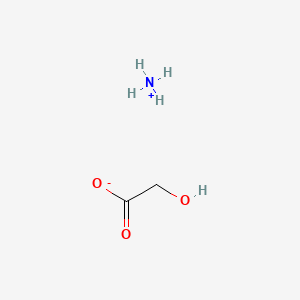
CAS 35249-89-9PubChem CID 169677
Ammonium Glycolate
Based on the available information included in this report, the CIR Expert Panel concludes that Glycolic and Lactic Acid, their common salts and their simple esters, are safe for use in cosmetic products at concentrations less than or equal to 10%, at final formulation pH greater than or equal to 3.5, when formulated to avoid increasing sun sensitivity or when directions for use include the daily use of sun protection. These ingredients are safe for use in salon products at concentrations less than or equal to 30%, at final formulation pH greater than or equal to 3.0, in products designed for brief, discontinuous use followed by thorough rinsing from the skin, when applied by trained professionals, and when application is accompanied by directions for the daily use of sun protection...Ammonium Glycolate... — Cosmetic Ingredient Review (CIR)
- IUPAC name
- azanium 2-hydroxyacetate
- Molecular formula
- C2H7NO3
- Molecular weight
- 93.08 g/mol
- Exact mass
- 93.042593085 Da
- Topological polar surface area
- 61.4 Ų
- Hydrogen-bond donors
- 2
- Hydrogen-bond acceptors
- 3
- Covalent units
- 2
- Defined stereocentres
- 0
Also known as
ammonium hydroxyacetateAcetic acid, hydroxy-, monoammonium saltHydroxyacetic acid, ammoniuum salt8G1X5P7GILGLICONOL LAcetic acid, 2-hydroxy-, ammonium salt (1:1)EC 609-106-7HYDROXYACETIC ACID AMMONIUM SALT
11 more reported names
DuPont Glyclean OSRefChem:557727AMMONIUM GLYCOLATE [INCI]AMMONIUM HYDROXYACETIC ACIDAcetic acid, hydroxy, monoammonium saltAcetic acid, 2hydroxy, ammonium salt (1:1)609-106-7azanium;2-hydroxyacetateAmmonium 2-hydroxyacetateUNII-8G1X5P7GILHydroxy acetic acid ammonium salt
External database identifiers
- EPA DTXSID:DTXSID6049642
Retrieved from NIH PubChem on 2026-09-02 by checksum-valid CAS matching. Chemical properties do not replace the regulatory decision on this page.
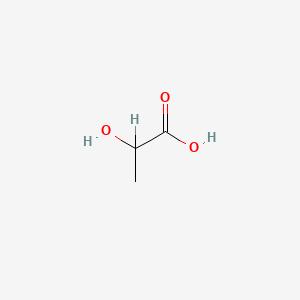
CAS 50-21-5PubChem CID 612
Lactic Acid
2-hydroxypropanoic acid is a 2-hydroxy monocarboxylic acid that is propanoic acid in which one of the alpha-hydrogens is replaced by a hydroxy group. It has a role as a Daphnia magna metabolite and an algal metabolite. It is functionally related to a propionic acid. It is a conjugate acid of a lactate. — ChEBI
- IUPAC name
- 2-hydroxypropanoic acid
- Molecular formula
- C3H6O3
- Molecular weight
- 90.08 g/mol
- Exact mass
- 90.031694049 Da
- XLogP3
- -0.7
- Topological polar surface area
- 57.5 Ų
- Hydrogen-bond donors
- 2
- Hydrogen-bond acceptors
- 3
- Covalent units
- 1
- Defined stereocentres
- 0
Also known as
DL-Lactic acid2-hydroxypropionic acidMilk acidTonsillosanRacemic lactic acidOrdinary lactic acidAcidum lacticumEthylidenelactic acid
16 more reported names
LactovaganMilchsaeureLactic acid, dl-Kyselina mlecnaLacticum acidumPropanoic acid, 2-hydroxy-598-82-3alpha-Hydroxypropionic acidLactic acid USPAethylidenmilchsaeure(RS)-2-HydroxypropionsaeureFEMA No. 2611MilchsaureLurexPropionic acid, 2-hydroxy-SY-83
External database identifiers
- ChEBI:CHEBI:78320
- ChEMBL:CHEMBL1200559
- EPA DTXSID:DTXSID7023192
- PubMed:29968805
- PubMed:23122305
- PubMed:23122298
- PubMed:23118539
- PubMed:23117381
- PubMed:23115614
- PubMed:23115449
- PubMed:23113277
- PubMed:23112422
- PubMed:23111834
- PubMed:23110573
- PubMed:23110571
Retrieved from NIH PubChem on 2026-08-31 by checksum-valid CAS matching. Chemical properties do not replace the regulatory decision on this page.
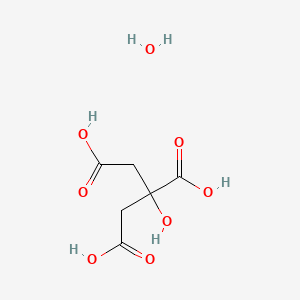
CAS 5949-29-1PubChem CID 22230
2-Hydroxy-1,2,3-propanetricarboxylic acid hydrate (1:1)
Citric acid monohydrate is an organic molecular entity. — ChEBI
- IUPAC name
- 2-hydroxypropane-1,2,3-tricarboxylic acid;hydrate
- Molecular formula
- C6H10O8
- Molecular weight
- 210.14 g/mol
- Exact mass
- 210.03756727 Da
- Topological polar surface area
- 133.0 Ų
- Hydrogen-bond donors
- 5
- Hydrogen-bond acceptors
- 8
- Covalent units
- 2
- Defined stereocentres
- 0
Also known as
Citric acid monohydrateCitric acid hydrateCITRIC ACID, MONOHYDRATE1,2,3-Propanetricarboxylic acid, 2-hydroxy-, monohydratecitric acid;hydrate2968PHW8QP1,2,3-Propanetricarboxylic acid, 2-hydroxy-, hydrate (1:1)Acidum citricum monohydrate
16 more reported names
Citiric acidSoothe ChewableSurface WipesStop HairAlphacide ActivatorPURILABGREEN FRESHNATURE CLEANRefChem:6528AQUACETIC-30CITRACID-50W.SKIN TREEMON CLEANSING WATERCleaning Solution for Hemodialysis MachinesDesinfectant Solution for Hemodialysis Machine2-hydroxypropane-1,2,3-tricarboxylic acid monohydrateKID-CLEAN Epiguard (Herbage Basis germ Growth InhibitsSolution)
External database identifiers
- ChEBI:CHEBI:31404
- ChEMBL:CHEMBL2107737
- EPA DTXSID:DTXSID7074668
Retrieved from NIH PubChem on 2026-09-02 by checksum-valid CAS matching. Chemical properties do not replace the regulatory decision on this page.
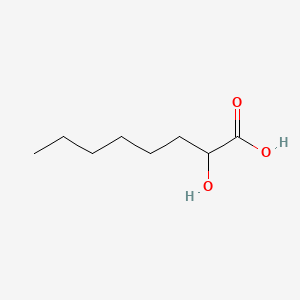
CAS 617-73-2PubChem CID 94180
Hydroxycaprylic Acid
2-hydroxyoctanoic acid is a hydroxy fatty acid that is caprylic (octanoic) acid substituted by a hydroxy group at position 2. It is functionally related to an octanoic acid. It is a conjugate acid of a 2-hydroxyoctanoate. — ChEBI
- IUPAC name
- 2-hydroxyoctanoic acid
- Molecular formula
- C8H16O3
- Molecular weight
- 160.21 g/mol
- Exact mass
- 160.109944368 Da
- XLogP3
- 2.0
- Topological polar surface area
- 57.5 Ų
- Hydrogen-bond donors
- 2
- Hydrogen-bond acceptors
- 3
- Covalent units
- 1
- Defined stereocentres
- 0
Also known as
2-Hydroxycaprylic acidOctanoic acid, 2-hydroxy-alpha-Hydroxycaprylic acidalpha-Hydroxyoctanoic acidDL-2-Hydroxyoctanoic acidDL-2-Hydroxycaprylic acid.alpha.-Hydroxycaprylic acid0R6X0G0S8A
16 more reported names
.alpha.-Hydroxy-n-caprylic acidEINECS 210-524-3NSC 189703NSC-189703alpha-Hydroxy-n-caprylic acidCHEBI:86543alpha-HCA acidRefChem:789453HYDROXYCAPRYLIC ACID [INCI](+-)-2-HYDROXYOCTANOIC ACID(+-)-ALPHA-HYDROXYCAPRYLIC ACID(+-)-.ALPHA.-HYDROXYCAPRYLIC ACID210-524-32-Hydroxy-n-octanoic Acid2-hydroxy caprylic acid2-hydroxy-octanoic acid
External database identifiers
- ChEBI:CHEBI:86543
- ChEMBL:CHEMBL4447980
- EPA DTXSID:DTXSID80862300
- PubMed:22654812
- PubMed:21820511
- PubMed:21255122
- PubMed:20496346
- PubMed:19561068
- PubMed:19493341
- PubMed:19465768
- PubMed:18215067
- PubMed:16958050
- PubMed:15260495
- PubMed:14584912
- PubMed:12053206
Retrieved from NIH PubChem on 2026-09-02 by checksum-valid CAS matching. Chemical properties do not replace the regulatory decision on this page.
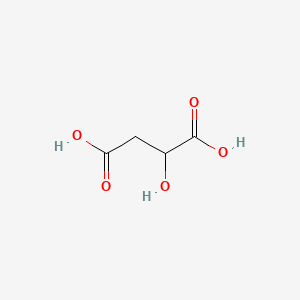
CAS 6915-15-7PubChem CID 525
Malic Acid
Malic acid is a 2-hydroxydicarboxylic acid that is succinic acid in which one of the hydrogens attached to a carbon is replaced by a hydroxy group. It has a role as a food acidity regulator and a fundamental metabolite. It is a 2-hydroxydicarboxylic acid and a C4-dicarboxylic acid. It is functionally related to a succinic acid. It is a conjugate acid of a malate(2-) and a malate. — ChEBI
- IUPAC name
- 2-hydroxybutanedioic acid
- Molecular formula
- C4H6O5
- Molecular weight
- 134.09 g/mol
- Exact mass
- 134.02152329 Da
- XLogP3
- -1.3
- Topological polar surface area
- 94.8 Ų
- Hydrogen-bond donors
- 3
- Hydrogen-bond acceptors
- 5
- Covalent units
- 1
- Defined stereocentres
- 0
Also known as
hydroxysuccinic acidButanedioic acid, hydroxy-Malic acid, DL-Kyselina jablecnahydroxybutanedioic acidPomalus acidalpha-Hydroxysuccinic acidDeoxytetraric acid
16 more reported names
HydroxybutandisaeureMonohydroxybernsteinsaeureSuccinic acid, hydroxy-(+-)-Malic acidMalicum acidumPomalous acidd,l-malic acidFEMA No. 26552-Hydroxyethane-1,2-dicarboxylic acidKyselina hydroxybutandiova(+-)-Hydroxysuccinic acidNSC-25941817L1N4CKPINS NO.296E296INS NO. 296
External database identifiers
- ChEBI:CHEBI:6650
- ChEMBL:CHEMBL1455497
- EPA DTXSID:DTXSID0027640
- PubMed:29968805
- PubMed:23105635
- PubMed:23105563
- PubMed:23105452
- PubMed:23079895
- PubMed:23077897
- PubMed:23075791
- PubMed:23073879
- PubMed:23049770
- PubMed:23029512
- PubMed:23028951
- PubMed:23028566
Retrieved from NIH PubChem on 2026-08-31 by checksum-valid CAS matching. Chemical properties do not replace the regulatory decision on this page.
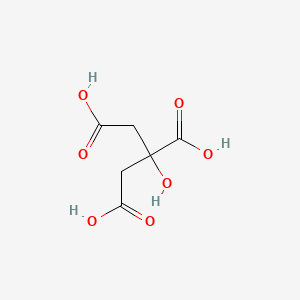
CAS 77-92-9PubChem CID 311
Citric Acid
Citric acid is a tricarboxylic acid that is propane-1,2,3-tricarboxylic acid bearing a hydroxy substituent at position 2. It is an important metabolite in the pathway of all aerobic organisms. It has a role as a calcium chelator, an antimicrobial agent, a chelator, a food acidity regulator and a fundamental metabolite. It is a conjugate acid of a citrate anion and a citrate(1-). — ChEBI
- IUPAC name
- 2-hydroxypropane-1,2,3-tricarboxylic acid
- Molecular formula
- C6H8O7
- Molecular weight
- 192.12 g/mol
- Exact mass
- 192.02700259 Da
- XLogP3
- -1.7
- Topological polar surface area
- 132.0 Ų
- Hydrogen-bond donors
- 4
- Hydrogen-bond acceptors
- 7
- Covalent units
- 1
- Defined stereocentres
- 0
Also known as
Citric acid, anhydrousAcilettenAnhydrous citric acidCitroCitrettenCitric acid anhydrousChemfillHydrocerol A
16 more reported names
1,2,3-Propanetricarboxylic acid, 2-hydroxy-2-hydroxy-1,2,3-propanetricarboxylic acidKyselina citronova2-Hydroxytricarballylic acidbeta-Hydroxytricarballylic acid3-Carboxy-3-hydroxypentane-1,5-dioic acidFEMA No. 2306FEMA Number 2306Citric acid,anhydrousCitricum acidumCitric acid monoglycerideAcidum citricumCitric acid bpXF417D3PSLNSC-30279Citric acid,hydrous
External database identifiers
- ChEBI:CHEBI:30769
- ChEMBL:CHEMBL1261
- EPA DTXSID:DTXSID3020332
- PubMed:23125618
- PubMed:23122087
- PubMed:23121941
- PubMed:23113265
- PubMed:23112535
- PubMed:23105641
- PubMed:23105594
- PubMed:23105414
- PubMed:23105371
- PubMed:23100728
- PubMed:23095407
- PubMed:23091953
Retrieved from NIH PubChem on 2026-08-31 by checksum-valid CAS matching. Chemical properties do not replace the regulatory decision on this page.
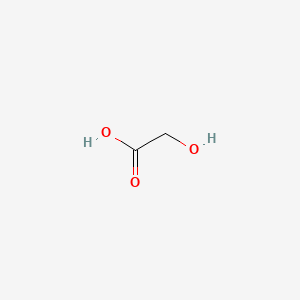
CAS 79-14-1PubChem CID 757
Glycolic Acid
Glycolic acid is a 2-hydroxy monocarboxylic acid that is acetic acid where the methyl group has been hydroxylated. It has a role as a metabolite and a keratolytic drug. It is a primary alcohol and a 2-hydroxy monocarboxylic acid. It is functionally related to an acetic acid. It is a conjugate acid of a glycolate. — ChEBI
- IUPAC name
- 2-hydroxyacetic acid
- Molecular formula
- C2H4O3
- Molecular weight
- 76.05 g/mol
- Exact mass
- 76.016043985 Da
- XLogP3
- -1.1
- Topological polar surface area
- 57.5 Ų
- Hydrogen-bond donors
- 2
- Hydrogen-bond acceptors
- 3
- Covalent units
- 1
- Defined stereocentres
- 0
Also known as
hydroxyacetic acidHydroxyethanoic acidGlycollic acidglycolatealpha-Hydroxyacetic acid2-Hydroxyethanoic acidKyselina glykolovaKyselina hydroxyoctova
16 more reported names
GLYCOLLATENSC-1660WT12SX38SCHEBI:174974-03-00-00571 (Beilstein Handbook Reference)2-oxonioacetateCHEBI:29805OceanBlu BarrierOceanBlu Pre-PostRefChem:5867Jungshea Glycolic Acid PadsInstaMix Glycolic Concentratepari 30% Glycolic Acid Peelpari 70% Glycolic Acid PeelGlycolic Acid 7% Toning SolutionGLYCOLIC Acid 35 Skin Chemical Peel
External database identifiers
- ChEBI:CHEBI:17375
- ChEBI:CHEBI:17497
- ChEBI:CHEBI:231641
- ChEMBL:CHEMBL252557
- EPA DTXSID:DTXSID0025363
- PubMed:23125844
- PubMed:23123720
- PubMed:23112534
- PubMed:23098537
- PubMed:23084901
- PubMed:23077918
- PubMed:23071940
- PubMed:23066220
- PubMed:23044998
- PubMed:22985246
- PubMed:22975400
- PubMed:22946345
Retrieved from NIH PubChem on 2026-09-02 by checksum-valid CAS matching. Chemical properties do not replace the regulatory decision on this page.
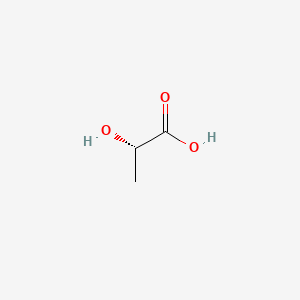
CAS 79-33-4PubChem CID 107689
L-Lactic Acid
(S)-lactic acid is an optically active form of lactic acid having (S)-configuration. It has a role as an Escherichia coli metabolite and a human metabolite. It is a (2S)-2-hydroxy monocarboxylic acid and a 2-hydroxypropanoic acid. It is a conjugate acid of a (S)-lactate. It is an enantiomer of a (R)-lactic acid. — ChEBI
- IUPAC name
- (2S)-2-hydroxypropanoic acid
- Molecular formula
- C3H6O3
- Molecular weight
- 90.08 g/mol
- Exact mass
- 90.031694049 Da
- XLogP3
- -0.7
- Topological polar surface area
- 57.5 Ų
- Hydrogen-bond donors
- 2
- Hydrogen-bond acceptors
- 3
- Covalent units
- 1
- Defined stereocentres
- 1
Also known as
L-(+)-Lactic acid(S)-Lactic acid(S)-2-Hydroxypropanoic acidSarcolactic acid(S)-2-Hydroxypropionic acid(+)-Lactic acidParalactic acid(S)-(+)-Lactic acid
16 more reported names
Lactic acid, L-TisulacPropanoic acid, 2-hydroxy-, (2S)-Sarcolacticum acidumL-(+)-alpha-Hydroxypropionic acidF9S9FFU82NCHEBI:422Lactisan WinterKey DermolacPleo SanuvisL Lactic AcidClO2-C ActivatorRefChem:55440Chlorine Dioxide Teat DipJabon antiseptico a base de acido lactico201-196-2
External database identifiers
Retrieved from NIH PubChem on 2026-08-31 by checksum-valid CAS matching. Chemical properties do not replace the regulatory decision on this page.
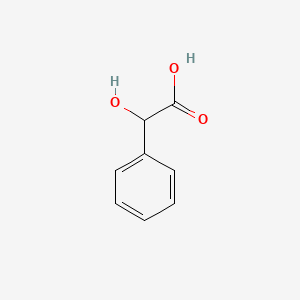
CAS 90-64-2PubChem CID 1292
Mandelic Acid
Mandelic acid is a 2-hydroxy monocarboxylic acid that is acetic acid in which two of the methyl hydrogens are substituted by phenyl and hydroxyl groups. It has a role as an antibacterial agent and a human xenobiotic metabolite. It is a member of benzenes and a 2-hydroxy monocarboxylic acid. It is functionally related to an acetic acid. It is a conjugate acid of a mandelate. — ChEBI
- IUPAC name
- 2-hydroxy-2-phenylacetic acid
- Molecular formula
- C8H8O3
- Molecular weight
- 152.15 g/mol
- Exact mass
- 152.047344113 Da
- XLogP3
- 0.6
- Topological polar surface area
- 57.5 Ų
- Hydrogen-bond donors
- 2
- Hydrogen-bond acceptors
- 3
- Covalent units
- 1
- Defined stereocentres
- 0
Also known as
dl-Mandelic acidPhenylglycolic acidParamandelic acidAmygdalic acidUromalineRacemic mandelic acidPhenylhydroxyacetic acid(RS)-Mandelic acid
16 more reported names
alpha-Hydroxyphenylacetic acidAcido mandelicoKyselina mandlovaBenzeneacetic acid, alpha-hydroxy-alpha-Hydroxybenzeneacetic acidNSC-7925NH496X0UJXCHEBI:35825RefChem:5982202-007-6611-72-3Almond acid2-Phenylglycolic acidp-Mandelic acidHydroxy(phenyl)acetic acid(+/-)-alpha-Hydroxyphenylacetic acid
External database identifiers
- ChEBI:CHEBI:35825
- ChEMBL:CHEMBL1609
- EPA DTXSID:DTXSID6023234
- PubMed:23035445
- PubMed:22996609
- PubMed:22953206
- PubMed:22807393
- PubMed:22788361
- PubMed:22750350
- PubMed:22731931
- PubMed:22615547
- PubMed:22595994
- PubMed:22591993
- PubMed:22586240
- PubMed:22554263
Retrieved from NIH PubChem on 2026-09-02 by checksum-valid CAS matching. Chemical properties do not replace the regulatory decision on this page.
Additional authoritative substance research
Each link searches that source for this identity. A link is a research route, not a claim that the source holds an exact record. What each source is, and its legal weight
Take this record further
Official source and scope
Imported from Commission Implementing Decision (EU) 2025/1175 (dataset version EU 2025/1175). The glossary supplies common ingredient names for the ingredient list required by Article 19(1)(g); it is not an approval or safety list.
Open official Decision