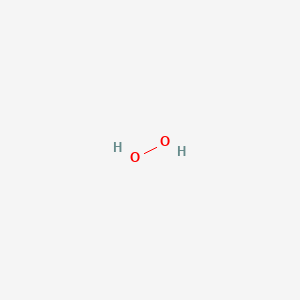
UREA PEROXIDE
This record confirms an official common ingredient name for EU cosmetic product labelling. It does not by itself confirm that the substance is permitted, unrestricted or safe.
Global evidence snapshot
The resolved identity has matching regulatory evidence in 1 of 13 indexed market datasets: 2 country records and 0 EU Annex records. Every result and evidence gap is listed below.
A missing local match is not permission, approval or proof of safety. It means no strong identity match was resolved in that indexed dataset.
Resolved substance identity
4 matched or reported names
Regulatory evidence in all 13 markets
Open each matched record for its scope, concentration, conditions, warnings and official source version.
Swipe or scroll horizontally to see dataset coverage and next actions.
| Market | Result | Records | Dataset | Meaning / next action |
|---|---|---|---|---|
| European Union EU | No local match | 0 | Complete annex dataset Regulation (EC) 1223/2009 consolidated to 1 May 2026 | No annex match only means that these five annexes did not return a match; CosIng identity data and other EU obligations still need review. |
| Great Britain GB | No local match | 0 | Complete consolidated annex dataset GB retained Regulation 1223/2009 schedules, effective 15 August 2026 | No annex match is not approval and does not cover Northern Ireland, which follows the applicable EU framework. |
| Canada CA | Restricted | 2Open record 1Open record 2 | Complete Hotlist snapshot Health Canada Cosmetic Ingredient Hotlist, 13 August 2025 | Review every linked record and exact conditions. |
| New Zealand NZ | No local match | 0 | Complete schedules dataset Cosmetic Products Group Standard schedules effective 1 January 2026 | The searchable spreadsheet is an aid; the legal Group Standard and incorporated notices remain authoritative. |
| ASEAN ASEAN | No local match | 0 | Complete regional annex dataset ASEAN Cosmetic Directive annexes 2026-1, 22 June 2026 | Regional annex coverage does not replace member-state implementation dates, notifications or national deviations. |
| China CN | No local match | 0 | Complete prohibited catalogues plus official-source workflow NMPA 2021 banned catalogues plus dynamic IECIC List I/List II system current since 2025 | IECIC listing is not blanket approval; absence may require the new cosmetic ingredient route, and restrictions are checked separately. |
| Japan JP | No local match | 0 | Complete Standards appendices dataset MHLW Standards for Cosmetics official English source and Japanese amendments checked for the imported snapshot | The Japanese text and subsequent notices are canonical; no local match is not a product-compliance conclusion. |
| South Korea KR | No local match | 0 | Complete current appendix dataset MFDS Notice 2026-19, effective 18 March 2026 | Korean source wording is canonical and other positive lists/notices may still apply to the formulation. |
| United States US | No local match | 0 | Complete enumerated federal ingredient rules eCFR Title 21 issue date 27 August 2026 | FDA has no general approved-cosmetic-ingredient catalogue; absence from these sections is not approval or proof of safety. |
| Australia AU | No local match | 0 | Complete cosmetic-relevant Poisons Standard subset plus official workflow Therapeutic Goods (Poisons Standard—June 2026) Instrument 2026 | An AICIS Inventory match is not cosmetic approval; no Inventory match can indicate a new, exempted, reported or confidential introduction. |
| Brazil BR | No local match | 0 | Complete prohibited dataset plus current restricted-list workflow ANVISA RDC 1.029/2026 and RDC 1.030/2026, published 15 June 2026 | RDC 1.030/2026 amends rather than replaces the prohibited baseline, and the second restricted-list revision was still under consultation in July 2026. |
| India IN | No local match | 0 | Complete current Part 2 dataset plus official workflow for Parts 1, 3 and 4 Cosmetics Rules 2020 plus current BIS IS 4707 parts (1:2020, 2:2025, 3:2025, 4:2022) | The standards are separate controlled publications; absence from a locally indexed excerpt is not permission. |
| Saudi Arabia SA | No local match | 0 | Complete official list index SFDA live prohibited/restricted lists, snapshot 30 August 2026 | No list match is not permission; Gulf/SFDA product, claim, notification and technical requirements still apply. |
Matching market records and conditions
Chemical identity and properties
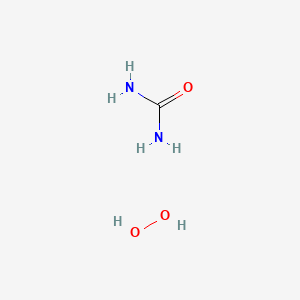
Carbamide Peroxide
Urea hydrogen peroxide is a mixture obtained by combining equimolar amounts of hydrogen peroxide and urea. It has a role as a reagent, a disinfectant and an oxidising agent. It contains a urea and a hydrogen peroxide. — ChEBI
- IUPAC name
- hydrogen peroxide;urea
- Molecular formula
- CH6N2O3
- Molecular weight
- 94.07 g/mol
- Exact mass
- 94.03784206 Da
- Topological polar surface area
- 110.0 Ų
- Hydrogen-bond donors
- 4
- Hydrogen-bond acceptors
- 3
- Covalent units
- 2
- Defined stereocentres
- 0
Also known as
16 more reported names
External database identifiers
- ChEBI:CHEBI:75178
- ChEMBL:CHEMBL3184026
- EPA DTXSID:DTXSID9024726
- PubMed:25254197
- PubMed:22666835
- PubMed:22031060
- PubMed:15527615
Evidence from additional scientific databases
NIH PubChem PUG-View
Attributed physical-property, hazard, environmental and use annotations.
- Autoignition Temperature: greater than 680 °F (USCG, 1999) Source: CAMEO Chemicals
- Density: 0.8 at 68 °F (USCG, 1999) - Less dense than water; will float Source: CAMEO Chemicals
- Density: 0.8 @ 20°C Source: PAC Chemical Database, U.S. Department of Energy
- Melting Point: 167 to 185 °F (decomposes) (NTP, 1992) Source: CAMEO Chemicals
- Melting Point: 75-85 Source: DrugBank
- Physical Description: Urea hydrogen peroxide appears as a solid or paste-like semisolid. Used to make plastics. Source: CAMEO Chemicals
- Physical Description: White solid; [Merck Index] Solid or paste-like semisolid; [CAMEO] Odorless; [CHRIS] White tablet; [Sigma-Aldrich MSDS] Source: Haz-Map, Information on Hazardous Chemicals and Occupational Diseases
- Solubility: greater than or equal to 100 mg/mL at 68 °F (NTP, 1992) Source: CAMEO Chemicals
- Solubility: 500 g/L at °C Source: DrugBank
- First Aid: EYES: First check the victim for contact lenses and remove if present. Flush victim's eyes with water or normal saline solution for 20 to 30 minutes while simultaneously calling a hospital or poison control center. Do not put any ointments, oils, or medication in the victim's eyes without specific instructions from a physician. IMMEDIATELY transport the victim after flushing eyes to a hospital even if no symptoms (such as redness or irritation) develop.; SKIN: IMMEDIATELY flood affected skin with water while removing and isolating all contaminated clothing. Gently wash all affected skin areas thoroughly with soap and water. If symptoms such as redness or irritation develop, IMMEDIATELY call a physician and be prepared to transport the victim to a hospital for treatment.; INHALATION: IMMEDIATELY leave the contaminated area; take deep breaths of fresh air. If symptoms (such as wheezing, coughing, shortness of breath, or burning in the mouth, throat, or chest) develop, call a physician and be prepared to transport the victim to a hospital. Provide proper respiratory protection to rescuers entering an unknown atmosphere. Whenever possible, Self-Contained Breathing Apparatus (SCBA) shou Source: CAMEO Chemicals
- ERG2024, Guide 140 (Urea hydrogen peroxide): General First Aid:; · Call 911 or emergency medical service.; · Ensure that medical personnel are aware of the material(s) involved, take precautions to protect themselves and avoid contamination.; · Move victim to fresh air if it can be done safely.; · Administer oxygen if breathing is difficult.; · If victim is not breathing:; -- DO NOT perform mouth-to-mouth resuscitation; the victim may have ingested or inhaled the substance.; -- If equipped and pulse detected, wash face and mouth, then give artificial respiration using a proper respiratory medical device (bag-valve mask, pocket mask equipped with a one-way valve or other device).; -- If no pulse detected or no respiratory medical device available, provide continuous compressions. Conduct a pulse check every two minutes or monitor for any signs of spontaneous respirations.; · Remove and isolate contaminated clothing and shoes.; · For minor skin contact, avoid spreading material on unaffected skin.; · In case of contact with substance, remove immediately by flushing skin or eyes with running water for at least 20 minutes.; · For severe burns, immediate medical attention is required.; · Effects of exposure (inhalation, ingestion, Source: Emergency Response Guidebook (ERG)
- Signal: Danger Source: European Chemicals Agency (ECHA)
- GHS Hazard Statements: H272 (94.9%): May intensify fire; oxidizer [Danger Oxidizing liquids; Oxidizing solids]; H314 (83.1%): Causes severe skin burns and eye damage [Danger Skin corrosion/irritation]; H315 (16.9%): Causes skin irritation [Warning Skin corrosion/irritation]; H318 (18.6%): Causes serious eye damage [Danger Serious eye damage/eye irritation] Source: European Chemicals Agency (ECHA)
- Precautionary Statement Codes: P210, P220, P260, P264, P264+P265, P280, P301+P330+P331, P302+P352, P302+P361+P354, P304+P340, P305+P354+P338, P316, P317, P321, P332+P317, P362+P364, P363, P370+P378, P405, and P501 (click each P-code to see the statement) Source: European Chemicals Agency (ECHA)
- ECHA C&L Notifications Summary: Aggregated GHS information provided per 59 reports by companies from 12 notifications to the ECHA C&L Inventory. Each notification may be associated with multiple companies.; Information may vary between notifications depending on impurities, additives, and other factors. The percentage value in parenthesis indicates the notified classification ratio from companies that provide hazard codes. Only hazard codes with percentage values above 10% are shown. For more detailed information, please visit ECHA C&L website. Source: European Chemicals Agency (ECHA)
- Signal: Danger Source: NITE-CMC
- GHS Hazard Statements: H272: May intensify fire; oxidizer [Danger Oxidizing liquids; Oxidizing solids]; H315: Causes skin irritation [Warning Skin corrosion/irritation]; H318: Causes serious eye damage [Danger Serious eye damage/eye irritation] Source: NITE-CMC
- Precautionary Statement Codes: P210, P220, P264, P264+P265, P280, P302+P352, P305+P354+P338, P317, P321, P332+P317, P362+P364, P370+P378, and P501 (click each P-code to see the statement) Source: NITE-CMC
- GHS Hazard Statements: H272: May intensify fire; oxidizer [Danger Oxidizing liquids; Oxidizing solids]; H314: Causes severe skin burns and eye damage [Danger Skin corrosion/irritation]; H318: Causes serious eye damage [Danger Serious eye damage/eye irritation]; H335: May cause respiratory irritation [Warning Specific target organ toxicity, single exposure; Respiratory tract irritation] Source: NITE-CMC
- Precautionary Statement Codes: P210, P220, P260, P261, P264, P264+P265, P271, P280, P301+P330+P331, P302+P361+P354, P304+P340, P305+P354+P338, P316, P317, P319, P321, P363, P370+P378, P403+P233, P405, and P501 (click each P-code to see the statement) Source: NITE-CMC
- Signal: Danger Source: Hazardous Chemical Information System (HCIS), Safe Work Australia
- GHS Hazard Statements: H302: Harmful if swallowed [Warning Acute toxicity, oral]; H315: Causes skin irritation [Warning Skin corrosion/irritation]; H318: Causes serious eye damage [Danger Serious eye damage/eye irritation]; H335: May cause respiratory irritation [Warning Specific target organ toxicity, single exposure; Respiratory tract irritation] Source: Hazardous Chemical Information System (HCIS), Safe Work Australia
- Precautionary Statement Codes: P261, P264, P264+P265, P270, P271, P280, P301+P317, P302+P352, P304+P340, P305+P354+P338, P317, P319, P321, P330, P332+P317, P362+P364, P403+P233, P405, and P501 (click each P-code to see the statement) Source: Hazardous Chemical Information System (HCIS), Safe Work Australia
- Sources/Uses: Used as an antiseptic, cerumenolytic, and dental bleach; [Merck Index] Used to make plastics; [CAMEO] Used for hair bleaching, oxidation of permanent waves, and hair relaxing; [ExPub: EC: SCCP] Used to develop blueprints and for the modification of starches; [NTP] Source: Haz-Map, Information on Hazardous Chemicals and Occupational Diseases
- Industrial Processes with risk of exposure: Using Disinfectants or Biocides [Category: Clean]; Dressing Hair [Category: Other] Source: Haz-Map, Information on Hazardous Chemicals and Occupational Diseases
Mapped by: Existing checksum-valid CAS to unique PubChem CID match. Retrieved: 2026-08-31. Open source record
Scientific classifications and hazard annotations provide context and do not replace the market-specific regulatory decision shown above.
Additional source coverage and match status
| Source | Result | Checked |
|---|---|---|
| NIH PubChem PUG-View | Exact match | 2026-08-31 |
A recorded no-match is useful evidence that the source was checked; it is not a claim that the substance does not exist elsewhere.
Retrieved from NIH PubChem on 2026-08-31 by checksum-valid CAS matching. Chemical properties do not replace the regulatory decision on this page.
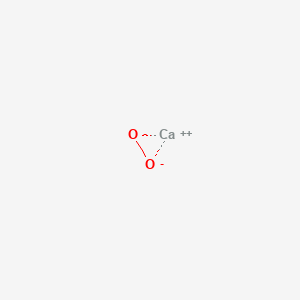
Calcium peroxide
Calcium peroxide is a member of calcium oxides. — ChEBI
- IUPAC name
- calcium peroxide
- Molecular formula
- CaO2
- Molecular weight
- 72.08 g/mol
- Exact mass
- 71.9524201 Da
- Topological polar surface area
- 46.1 Ų
- Hydrogen-bond donors
- 0
- Hydrogen-bond acceptors
- 2
- Covalent units
- 2
- Defined stereocentres
- 0
Also known as
13 more reported names
External database identifiers
- ChEBI:CHEBI:48233
- EPA DTXSID:DTXSID4050489
- PubMed:31515881
- PubMed:26053405
Evidence from additional scientific databases
NIH PubChem PUG-View
Attributed physical-property, hazard, environmental and use annotations.
- Color/Form: White or yellowish powder Source: Hazardous Substances Data Bank (HSDB)
- Color/Form: White tetragonal crystals Source: Hazardous Substances Data Bank (HSDB)
- Density: 2.92 at 77 °F (USCG, 1999) - Denser than water; will sink Source: CAMEO Chemicals
- Density: 2.9 g/cu cm Source: Hazardous Substances Data Bank (HSDB)
- Melting Point: Decomp at 200 °C Source: Hazardous Substances Data Bank (HSDB)
- Odor: Odorless Source: Hazardous Substances Data Bank (HSDB)
- Physical Description: Calcium peroxide appears as a grayish white granular material. Used in baking, in medicine, in bleaching oils. Source: CAMEO Chemicals
- Physical Description: White or yellowish odorless solid; Slightly soluble in water; Decomposes in moist air; [Merck Index] Yellowish odorless powder; Insoluble in water; [MSDSonline] Source: Haz-Map, Information on Hazardous Chemicals and Occupational Diseases
- Refractive Index: INDEX OF REFRACTION: 1.895 Source: Hazardous Substances Data Bank (HSDB)
- Solubility: Slightly soluble in water Source: Hazardous Substances Data Bank (HSDB)
- Solubility: Soluble in acids with formation of hydrogen peroxide Source: Hazardous Substances Data Bank (HSDB)
- First Aid: INHALATION: remove to fresh air.; EYES: flush with water for 15 min. and consult physician.; SKIN: flush with water.; INGESTION: give large amounts of water. (USCG, 1999) Source: CAMEO Chemicals
- ERG2024, Guide 140 (Calcium peroxide): General First Aid:; · Call 911 or emergency medical service.; · Ensure that medical personnel are aware of the material(s) involved, take precautions to protect themselves and avoid contamination.; · Move victim to fresh air if it can be done safely.; · Administer oxygen if breathing is difficult.; · If victim is not breathing:; -- DO NOT perform mouth-to-mouth resuscitation; the victim may have ingested or inhaled the substance.; -- If equipped and pulse detected, wash face and mouth, then give artificial respiration using a proper respiratory medical device (bag-valve mask, pocket mask equipped with a one-way valve or other device).; -- If no pulse detected or no respiratory medical device available, provide continuous compressions. Conduct a pulse check every two minutes or monitor for any signs of spontaneous respirations.; · Remove and isolate contaminated clothing and shoes.; · For minor skin contact, avoid spreading material on unaffected skin.; · In case of contact with substance, remove immediately by flushing skin or eyes with running water for at least 20 minutes.; · For severe burns, immediate medical attention is required.; · Effects of exposure (inhalation, ingestion, Source: Emergency Response Guidebook (ERG)
- Signal: Danger Source: European Chemicals Agency (ECHA)
- GHS Hazard Statements: H272 (97.1%): May intensify fire; oxidizer [Danger Oxidizing liquids; Oxidizing solids]; H315 (94.3%): Causes skin irritation [Warning Skin corrosion/irritation]; H319 (94.3%): Causes serious eye irritation [Warning Serious eye damage/eye irritation]; H335 (94.3%): May cause respiratory irritation [Warning Specific target organ toxicity, single exposure; Respiratory tract irritation] Source: European Chemicals Agency (ECHA)
- Precautionary Statement Codes: P210, P220, P261, P264, P264+P265, P271, P280, P302+P352, P304+P340, P305+P351+P338, P319, P321, P332+P317, P337+P317, P362+P364, P370+P378, P403+P233, P405, and P501 (click each P-code to see the statement) Source: European Chemicals Agency (ECHA)
- ECHA C&L Notifications Summary: Aggregated GHS information provided per 140 reports by companies from 7 notifications to the ECHA C&L Inventory. Each notification may be associated with multiple companies.; Information may vary between notifications depending on impurities, additives, and other factors. The percentage value in parenthesis indicates the notified classification ratio from companies that provide hazard codes. Only hazard codes with percentage values above 10% are shown. For more detailed information, please visit ECHA C&L website. Source: European Chemicals Agency (ECHA)
- GHS Hazard Statements: H272 (100%): May intensify fire; oxidizer [Danger Oxidizing liquids; Oxidizing solids]; H315 (100%): Causes skin irritation [Warning Skin corrosion/irritation]; H319 (100%): Causes serious eye irritation [Warning Serious eye damage/eye irritation]; H335 (100%): May cause respiratory irritation [Warning Specific target organ toxicity, single exposure; Respiratory tract irritation] Source: European Chemicals Agency (ECHA)
- ECHA C&L Notifications Summary: Aggregated GHS information provided per 38 reports by companies from 1 notifications to the ECHA C&L Inventory. Each notification may be associated with multiple companies.; Information may vary between notifications depending on impurities, additives, and other factors. The percentage value in parenthesis indicates the notified classification ratio from companies that provide hazard codes. Only hazard codes with percentage values above 10% are shown. For more detailed information, please visit ECHA C&L website. Source: European Chemicals Agency (ECHA)
- Signal: Danger Source: NITE-CMC
- GHS Hazard Statements: H272: May intensify fire; oxidizer [Danger Oxidizing liquids; Oxidizing solids]; H318: Causes serious eye damage [Danger Serious eye damage/eye irritation] Source: NITE-CMC
- Precautionary Statement Codes: P210, P220, P264+P265, P280, P305+P354+P338, P317, P370+P378, and P501 (click each P-code to see the statement) Source: NITE-CMC
- Signal: Danger Source: Hazardous Chemical Information System (HCIS), Safe Work Australia
- GHS Hazard Statements: H302: Harmful if swallowed [Warning Acute toxicity, oral]; H314: Causes severe skin burns and eye damage [Danger Skin corrosion/irritation]; H335: May cause respiratory irritation [Warning Specific target organ toxicity, single exposure; Respiratory tract irritation] Source: Hazardous Chemical Information System (HCIS), Safe Work Australia
- Precautionary Statement Codes: P260, P261, P264, P270, P271, P280, P301+P317, P301+P330+P331, P302+P361+P354, P304+P340, P305+P354+P338, P316, P319, P321, P330, P363, P403+P233, P405, and P501 (click each P-code to see the statement) Source: Hazardous Chemical Information System (HCIS), Safe Work Australia
- Toxicity Summary: IDENTIFICATION AND USE: Calcium peroxide is white or yellowish powder. It is used as a stabilizer for rubber. Other uses including seed disinfectant, dentifrices, dough conditioners, antiseptic, bleaching of oils, modification of starches, high temperature oxidation. An important application of calcium peroxide is for curing the polysulfide sealants used in double glazing window units. Calcium peroxide is also used at several gold mines in Australia to increase recovery of gold and reduce the consumption of cyanide. Calcium peroxide has been identified as being used in hydraulic fracturing as a breaker. HUMAN EXPOSURE AND TOXICITY: Contact with calcium peroxide can severely irritate and may burn the skin and eyes. Exposure can irritate the eyes, nose, and throat. Prolonged exposure can damage the skin. Higher levels of calcium peroxide can irritate the lungs causing coughing and/or shortness of breath. Still higher exposures may cause a buildup of fluid in the lungs (pulmonary edema). This can cause death. ANIMAL STUDIES: Experiments with calcium peroxide revealed that the compound is not toxic to dogs treated orally. ECOTOXICITY STUDIES: New method was proposed for increasing the Source: Hazardous Substances Data Bank (HSDB)
- Consumer Uses: Oxidizing agent Source: EPA Chemical Data Reporting (CDR)
- Industry Uses: Oxidizing agent Source: EPA Chemical Data Reporting (CDR)
- Sources/Uses: Used as a rubber stabilizer, antiseptic, seed disinfectant, starch modifier, sewage deodorizer, and wastewater dechlorinator; Also used for dentifrices; in dough conditioners; for bleaching of oils; in high temperature oxidations; for curing the polysulfide sealants used in double glazing window units; to increase recovery of gold and reduce the consumption of cyanide (at gold mines); to improve the bioremediation of soils contaminated with creosote or kerosene; for removing metal ions from acidic waste streams such as coal ash leachate and acid mine drainage; in the cultivation of tomatoes, cucumbers, tobacco, and prawns (Japan); [HSDB] Used as a flour treatment agent; [JECFA] Source: Haz-Map, Information on Hazardous Chemicals and Occupational Diseases
- Industrial Processes with risk of exposure: Using Disinfectants or Biocides [Category: Clean]; Farming (Pesticides) [Category: Industry]; Sewer and Wastewater Treatment [Category: Industry]; Metal Extraction and Refining [Category: Industry] Source: Haz-Map, Information on Hazardous Chemicals and Occupational Diseases
- Uses: Stabilizer for rubber. Source: Hazardous Substances Data Bank (HSDB)
- Uses: Seed disinfectant, dentifrices, dough conditioners, antiseptic, bleaching of oils, modification of starches, high temperature oxidation. Source: Hazardous Substances Data Bank (HSDB)
- Uses: Calcium peroxide is used as oxygen source in the leaching of gold and silver ores with cyanide to improve precious metal recovery and leaching kinetics. A relatively new application for CaO2 is as a peroxide source in toothpaste and dental chewing gum products. Calcium peroxide is also used in limited quantities as a hardening accelerator for sulfide rubber, as dough conditioner in the baking industry, and as a nontoxic disinfectant for seed and grain. Source: Hazardous Substances Data Bank (HSDB)
- Uses: An important application of calcium peroxide is for curing the polysulfide sealants used in double glazing window units. Calcium peroxide is also used at several gold mines in Australia to increase recovery of gold and reduce the consumption of cyanide. Calcium peroxide (PermeOx) is also used to improve the bioremediation of soils contaminated with creosote or kerosene, to deodorize sewage sludges and wastewater, and to dechlorinate wastewater and effluents. A special formulation of calcium peroxide ... is used for removing metal ions from acidic waste streams such as coal ash leachate and acid mine drainage. Source: Hazardous Substances Data Bank (HSDB)
- Uses: For more Uses (Complete) data for CALCIUM PEROXIDE (7 total), please visit the HSDB record page. Source: Hazardous Substances Data Bank (HSDB)
Mapped by: Existing checksum-valid CAS to unique PubChem CID match. Retrieved: 2026-08-31. Open source record
Scientific classifications and hazard annotations provide context and do not replace the market-specific regulatory decision shown above.
Additional source coverage and match status
| Source | Result | Checked |
|---|---|---|
| NIH PubChem PUG-View | Exact match | 2026-08-31 |
A recorded no-match is useful evidence that the source was checked; it is not a claim that the substance does not exist elsewhere.
Retrieved from NIH PubChem on 2026-08-31 by checksum-valid CAS matching. Chemical properties do not replace the regulatory decision on this page.
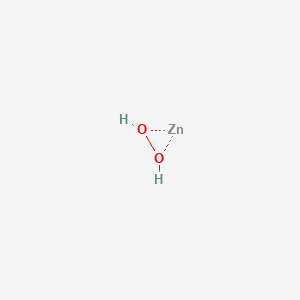
Zinc Peroxide
- IUPAC name
- hydrogen peroxide;zinc
- Molecular formula
- H2O2Zn
- Molecular weight
- 99.4 g/mol
- Exact mass
- 97.934621 Da
- Topological polar surface area
- 40.5 Ų
- Hydrogen-bond donors
- 2
- Hydrogen-bond acceptors
- 2
- Covalent units
- 2
- Defined stereocentres
- 0
Also known as
16 more reported names
External database identifiers
- EPA DTXSID:DTXSID5051658
Retrieved from NIH PubChem on 2026-08-31 by checksum-valid CAS matching. Chemical properties do not replace the regulatory decision on this page.
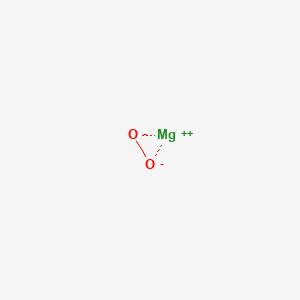
Magnesium peroxide (Mg(O2))
- IUPAC name
- magnesium peroxide
- Molecular formula
- MgO2
- Molecular weight
- 56.304 g/mol
- Exact mass
- 55.9748709 Da
- Topological polar surface area
- 46.1 Ų
- Hydrogen-bond donors
- 0
- Hydrogen-bond acceptors
- 2
- Covalent units
- 2
- Defined stereocentres
- 0
Also known as
11 more reported names
External database identifiers
- EPA DTXSID:DTXSID9049667
Retrieved from NIH PubChem on 2026-08-31 by checksum-valid CAS matching. Chemical properties do not replace the regulatory decision on this page.
Hydrogen Peroxide
Peroxides is compounds of structure ROOR'. It has a role as an oxidising agent. It contains a peroxy group. — ChEBI
- IUPAC name
- hydrogen peroxide
- Molecular formula
- H2O2
- Molecular weight
- 34.015 g/mol
- Exact mass
- 34.005479302 Da
- XLogP3
- -0.9
- Topological polar surface area
- 40.5 Ų
- Hydrogen-bond donors
- 2
- Hydrogen-bond acceptors
- 2
- Covalent units
- 1
- Defined stereocentres
- 0
Also known as
16 more reported names
External database identifiers
- ChEBI:CHEBI:16240
- ChEBI:CHEBI:25940
- ChEMBL:CHEMBL71595
- EPA DTXSID:DTXSID2020715
- PubMed:40965455
- PubMed:40706909
- PubMed:40522286
- PubMed:40436237
- PubMed:40384022
- PubMed:40378909
- PubMed:40139512
- PubMed:40086586
- PubMed:39866090
- PubMed:39743035
- PubMed:39709020
- PubMed:39667565
Retrieved from NIH PubChem on 2026-08-31 by checksum-valid CAS matching. Chemical properties do not replace the regulatory decision on this page.
Additional authoritative substance research
These source-specific lookups can add hazard, toxicology, identity and assessment context. A link is a research route, not a claim that the source contains an exact record.
Cosmetic Ingredient Review safety assessments
Expert Panel conclusions, assessed ingredient groups, use conditions, dates and report documents
Independent expert review considered by FDA; not a government approval or binding market rule
Research this identityFDA Global Substance Registration System
UNII identifiers, preferred names, substance types, codes and public substance relationships
Identity registry only; UNII availability does not imply FDA review or approval
Research this identityILO/WHO International Chemical Safety Cards
Hazards, symptoms, first aid, storage, incompatibilities and physical properties for covered chemicals
International occupational chemical-safety reference; not cosmetic-use approval
Research this identityJapan NITE-CHRIP
Chemical identity, Japanese and foreign legal lists, GHS hazards and exposure-related information
Chemical-management evidence; cosmetic status remains governed by the applicable MHLW standard and market rules
Research this identityNIOSH Pocket Guide to Chemical Hazards
REL, PEL, IDLH, properties, exposure routes, symptoms, target organs, first aid and measurement methods for covered workplace chemicals
US occupational-health guidance and limits; not a cosmetic ingredient decision
Research this identityOECD eChemPortal
Gateway to authority-owned physical-property, fate, ecotoxicity, toxicity, exposure and GHS records
Discovery gateway; each linked authority remains responsible for its data
Research this identityUS EPA CompTox CTX APIs
DTXSID identity, experimental and predicted properties, toxicity, bioactivity, exposure and environmental data
Scientific and computational evidence; predictions must remain labelled and do not determine cosmetic legality
Research this identityContinue the compliance check
1. Confirm identity
Match the supplier specification, CAS/EC identifiers and composition to this official label name. Similar wording is not proof of chemical equivalence.
2. Review restrictions
Check every exact Annex record shown above, plus CMR, nanomaterial, SCCS and later-amendment requirements that may apply.
3. Verify the formula
Evaluate concentration, product type, purity, warnings, claims and each target market before making a compliance decision.
Official source and scope
Imported from Commission Implementing Decision (EU) 2025/1175 (dataset version EU 2025/1175). The glossary supplies common ingredient names for the ingredient list required by Article 19(1)(g); it is not an approval or safety list.
Open official Decision