
Official EU label nameGlossary entry 15518
LITHIUM SULFIDE
This record confirms an official common ingredient name for EU cosmetic product labelling. It does not by itself confirm that the substance is permitted, unrestricted or safe.
Global evidence snapshot
The resolved identity has matching regulatory evidence in 1 of 13 indexed market datasets: 1 country records and 0 EU Annex records. Every result and evidence gap is listed below.
Markets checked
13
Markets with evidence
1
Evidence gaps
12
Resolved identifiers
4
Resolved substance identity
CAS:12136-58-21312-73-81313-82-2
EC:235-228-1
Ingredient index records:
LITHIUM SULFIDE
Cosmetic functions: DEPILATORY
Lithium sulphide, anhydrous
Inventory restriction note: III/23
2 matched or reported names
LITHIUM SULFIDEAlkali sulfides
Regulatory evidence in all 13 markets
Open each matched record for its scope, concentration, conditions, warnings and official source version.
Swipe or scroll horizontally to see dataset coverage and next actions.
| Market | Result | Records | Dataset | Meaning / next action |
|---|---|---|---|---|
| European Union EU | No local match | 0 | Complete annex dataset Regulation (EC) 1223/2009 consolidated to 1 May 2026 | No annex match only means that these five annexes did not return a match; CosIng identity data and other EU obligations still need review. |
| Great Britain GB | No local match | 0 | Complete consolidated annex dataset GB retained Regulation 1223/2009 schedules, effective 15 August 2026 | No annex match is not approval and does not cover Northern Ireland, which follows the applicable EU framework. |
| Canada CA | Restricted | 1Open record 1 | Complete Hotlist snapshot Health Canada Cosmetic Ingredient Hotlist, 13 August 2025 | Review every linked record and exact conditions. |
| New Zealand NZ | No local match | 0 | Complete schedules dataset Cosmetic Products Group Standard schedules effective 1 January 2026 | The searchable spreadsheet is an aid; the legal Group Standard and incorporated notices remain authoritative. |
| ASEAN ASEAN | No local match | 0 | Complete regional annex dataset ASEAN Cosmetic Directive annexes 2026-1, 22 June 2026 | Regional annex coverage does not replace member-state implementation dates, notifications or national deviations. |
| China CN | No local match | 0 | Complete prohibited catalogues plus official-source workflow NMPA 2021 banned catalogues plus dynamic IECIC List I/List II system current since 2025 | IECIC listing is not blanket approval; absence may require the new cosmetic ingredient route, and restrictions are checked separately. |
| Japan JP | No local match | 0 | Complete Standards appendices dataset MHLW Standards for Cosmetics official English source and Japanese amendments checked for the imported snapshot | The Japanese text and subsequent notices are canonical; no local match is not a product-compliance conclusion. |
| South Korea KR | No local match | 0 | Complete current appendix dataset MFDS Notice 2026-19, effective 18 March 2026 | Korean source wording is canonical and other positive lists/notices may still apply to the formulation. |
| United States US | No local match | 0 | Complete enumerated federal ingredient rules eCFR Title 21 issue date 27 August 2026 | FDA has no general approved-cosmetic-ingredient catalogue; absence from these sections is not approval or proof of safety. |
| Australia AU | No local match | 0 | Complete cosmetic-relevant Poisons Standard subset plus official workflow Therapeutic Goods (Poisons Standard—June 2026) Instrument 2026 | An AICIS Inventory match is not cosmetic approval; no Inventory match can indicate a new, exempted, reported or confidential introduction. |
| Brazil BR | No local match | 0 | Complete prohibited dataset plus current restricted-list workflow ANVISA RDC 1.029/2026 and RDC 1.030/2026, published 15 June 2026 | RDC 1.030/2026 amends rather than replaces the prohibited baseline, and the second restricted-list revision was still under consultation in July 2026. |
| India IN | No local match | 0 | Complete current Part 2 dataset plus official workflow for Parts 1, 3 and 4 Cosmetics Rules 2020 plus current BIS IS 4707 parts (1:2020, 2:2025, 3:2025, 4:2022) | The standards are separate controlled publications; absence from a locally indexed excerpt is not permission. |
| Saudi Arabia SA | No local match | 0 | Complete official list index SFDA live prohibited/restricted lists, snapshot 30 August 2026 | No list match is not permission; Gulf/SFDA product, claim, notification and technical requirements still apply. |
No market rows match this filter.
Matching market records and conditions
Chemical identity and properties
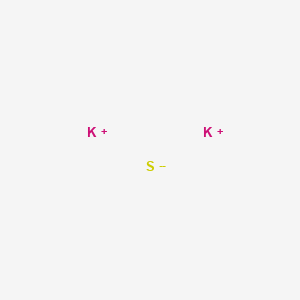
CAS 1312-73-8PubChem CID 162263
Potassium Sulfide
Potassium sulfide, hydrated, with not less than 30% water of crystallization appears as a red crystalline solid. Denser than water. Contact may severely irritate skin, eyes and mucous membranes. May be toxic by ingestion. — CAMEO Chemicals
- IUPAC name
- dipotassium;sulfide
- Molecular formula
- K2S
- Molecular weight
- 110.26 g/mol
- Exact mass
- 109.89948414 Da
- Topological polar surface area
- 1.0 Ų
- Hydrogen-bond donors
- 0
- Hydrogen-bond acceptors
- 1
- Covalent units
- 3
- Defined stereocentres
- 0
Also known as
potassium sulphideDipotassium monosulfidePotassium sulfide (2:1)POTASSIUM MONOSULPHIDEDIPOTASSIUM MONOSULPHIDE31R0R7HD0NPOTASSIUM SULPHIDE (2:1)HEPAR SULFURIS
16 more reported names
RefChem:57958POTASSIUM SULFURETKali Sulf. Bath EssencePOTASSIUM SULFIDE (K2S4)POTASSIUM SULPHIDE, ANHYDROUSPOTASSIUM POLYSULFIDE (K2S4)POTASSIUM SULFIDE, WITH LESS THAN 30% WATER OF CRYSTALLIZATIONPOTASSIUM SULPHIDE, WITH LESS THAN 30% WATER OF CRYSTALLIZATION215-197-0AI3-25350Dipotassium monosulfide (K2S)Dipotassium tetrasulfideEINECS 215-197-0HSDB 1204Potassium monosulfidePotassium sulfide (K2(S4))
External database identifiers
- EPA DTXSID:DTXSID70909738
Evidence from additional scientific databases
NIH PubChem PUG-View
Exact identifier match162263
Attributed physical-property, hazard, environmental and use annotations.
- Color/Form: WHITE CUBIC CRYSTALS OR FUSED PLATES Source: Hazardous Substances Data Bank (HSDB)
- Color/Form: RED OR YELLOW-RED CRYSTALLINE MASS OR FUSED SOLID Source: Hazardous Substances Data Bank (HSDB)
- Density: Density = 1.74 g/cu cm Source: Hazardous Substances Data Bank (HSDB)
- Density: Relative density (water = 1): 1.8 Source: ILO-WHO International Chemical Safety Cards (ICSCs)
- Melting Point: 912 °C Source: Hazardous Substances Data Bank (HSDB)
- Melting Point: 840 °C Source: ILO-WHO International Chemical Safety Cards (ICSCs)
- Physical Description: Potassium sulfide, anhydrous appears as a yellow-red to red crystalline mass or fused solid with an odor of rotten eggs. Source: CAMEO Chemicals
- Physical Description: Potassium sulfide, hydrated, with not less than 30% water of crystallization appears as a red crystalline solid. Denser than water. Contact may severely irritate skin, eyes and mucous membranes. May be toxic by ingestion. Source: CAMEO Chemicals
- Physical Description: White very hygroscopic solid; Discolored by air; [Merck Index] Red or yellow-red deliquescent solid; [Hawley] White to yellow powder with an odor of rotten eggs; [Strem MSDS] Source: Haz-Map, Information on Hazardous Chemicals and Occupational Diseases
- Physical Description: HYGROSCOPIC WHITE CRYSTALS WITH CHARACTERISTIC ODOUR. TURNS RED OR BROWN ON EXPOSURE TO AIR. Source: ILO-WHO International Chemical Safety Cards (ICSCs)
- Solubility: FREELY SOL IN WATER Source: Hazardous Substances Data Bank (HSDB)
- Solubility: SOL IN ALCOHOL, GLYCERINE; INSOL IN ETHER Source: Hazardous Substances Data Bank (HSDB)
- Solubility: Soluble in ethanol, insoluble in ether. Source: Hazardous Substances Data Bank (HSDB)
- Solubility: Solubility in water: very good Source: ILO-WHO International Chemical Safety Cards (ICSCs)
- pH: AQ SOL ARE STRONGLY ALKALINE Source: Hazardous Substances Data Bank (HSDB)
- Exposure Routes: The substance can be absorbed into the body by inhalation and by ingestion. Source: ILO-WHO International Chemical Safety Cards (ICSCs)
- First Aid: Excerpt from ERG Guide 135 [Substances - Spontaneously Combustible]:; Refer to the "General First Aid" section. (ERG, 2024) Source: CAMEO Chemicals
- First Aid: Excerpt from ERG Guide 153 [Substances - Toxic and/or Corrosive (Combustible)]:; Refer to the "General First Aid" section. Specific First Aid: For corrosives, in case of contact, immediately flush skin or eyes with running water for at least 30 minutes. Additional flushing may be required. Removal of solidified molten material from skin requires medical assistance. (ERG, 2024) Source: CAMEO Chemicals
- ERG2024, Guide 153 (Potassium sulfide, hydrated, with not less than 30% water of crystallization): General First Aid:; · Call 911 or emergency medical service.; · Ensure that medical personnel are aware of the material(s) involved, take precautions to protect themselves and avoid contamination.; · Move victim to fresh air if it can be done safely.; · Administer oxygen if breathing is difficult.; · If victim is not breathing:; -- DO NOT perform mouth-to-mouth resuscitation; the victim may have ingested or inhaled the substance.; -- If equipped and pulse detected, wash face and mouth, then give artificial respiration using a proper respiratory medical device (bag-valve mask, pocket mask equipped with a one-way valve or other device).; -- If no pulse detected or no respiratory medical device available, provide continuous compressions. Conduct a pulse check every two minutes or monitor for any signs of spontaneous respirations.; · Remove and isolate contaminated clothing and shoes.; · For minor skin contact, avoid spreading material on unaffected skin.; · In case of contact with substance, remove immediately by flushing skin or eyes with running water for at least 20 minutes.; · For severe burns, immediate medical attention is required.; · Effects of exposure (inhalation, ingestion, Source: Emergency Response Guidebook (ERG)
- ERG2024, Guide 135 (Potassium sulfide, anhydrous; Potassium sulfide, with less than 30% water of crystallization): General First Aid:; · Call 911 or emergency medical service.; · Ensure that medical personnel are aware of the material(s) involved, take precautions to protect themselves and avoid contamination.; · Move victim to fresh air if it can be done safely.; · Administer oxygen if breathing is difficult.; · If victim is not breathing:; -- DO NOT perform mouth-to-mouth resuscitation; the victim may have ingested or inhaled the substance.; -- If equipped and pulse detected, wash face and mouth, then give artificial respiration using a proper respiratory medical device (bag-valve mask, pocket mask equipped with a one-way valve or other device).; -- If no pulse detected or no respiratory medical device available, provide continuous compressions. Conduct a pulse check every two minutes or monitor for any signs of spontaneous respirations.; · Remove and isolate contaminated clothing and shoes.; · For minor skin contact, avoid spreading material on unaffected skin.; · In case of contact with substance, remove immediately by flushing skin or eyes with running water for at least 20 minutes.; · For severe burns, immediate medical attention is required.; · Effects of exposure (inhalation, ingestion, Source: Emergency Response Guidebook (ERG)
- Signal: Danger Source: Regulation (EC) No 1272/2008 of the European Parliament and of the Council
- GHS Hazard Statements: H314: Causes severe skin burns and eye damage [Danger Skin corrosion/irritation]; H400: Very toxic to aquatic life [Warning Hazardous to the aquatic environment, acute hazard] Source: Regulation (EC) No 1272/2008 of the European Parliament and of the Council
- Precautionary Statement Codes: P260, P264, P273, P280, P301+P330+P331, P302+P361+P354, P304+P340, P305+P354+P338, P316, P321, P363, P391, P405, and P501 (click each P-code to see the statement) Source: Regulation (EC) No 1272/2008 of the European Parliament and of the Council
- Signal: Danger Source: European Chemicals Agency (ECHA)
- GHS Hazard Statements: H251 (44.3%): Self-heating; may catch fire [Danger Self-heating substances and mixtures]; H314 (100%): Causes severe skin burns and eye damage [Danger Skin corrosion/irritation]; H400 (100%): Very toxic to aquatic life [Warning Hazardous to the aquatic environment, acute hazard] Source: European Chemicals Agency (ECHA)
- Precautionary Statement Codes: P235, P260, P264, P273, P280, P301+P330+P331, P302+P361+P354, P304+P340, P305+P354+P338, P316, P321, P363, P391, P405, P407, P410, P413, P420, and P501 (click each P-code to see the statement) Source: European Chemicals Agency (ECHA)
- ECHA C&L Notifications Summary: Aggregated GHS information provided per 88 reports by companies from 3 notifications to the ECHA C&L Inventory. Each notification may be associated with multiple companies.; Information may vary between notifications depending on impurities, additives, and other factors. The percentage value in parenthesis indicates the notified classification ratio from companies that provide hazard codes. Only hazard codes with percentage values above 10% are shown. For more detailed information, please visit ECHA C&L website. Source: European Chemicals Agency (ECHA)
- Signal: Danger Source: NITE-CMC
- GHS Hazard Statements: H251: Self-heating; may catch fire [Danger Self-heating substances and mixtures]; H300: Fatal if swallowed [Danger Acute toxicity, oral]; H314: Causes severe skin burns and eye damage [Danger Skin corrosion/irritation]; H318: Causes serious eye damage [Danger Serious eye damage/eye irritation]; H371: May cause damage to organs [Warning Specific target organ toxicity, single exposure] Source: NITE-CMC
- Precautionary Statement Codes: P235, P260, P264, P264+P265, P270, P280, P301+P316, P301+P330+P331, P302+P361+P354, P304+P340, P305+P354+P338, P308+P316, P316, P317, P321, P330, P363, P405, P407, P410, P413, P420, and P501 (click each P-code to see the statement) Source: NITE-CMC
- Signal: Danger Source: Hazardous Chemical Information System (HCIS), Safe Work Australia
- GHS Hazard Statements: H301: Toxic if swallowed [Danger Acute toxicity, oral]; H312: Harmful in contact with skin [Warning Acute toxicity, dermal]; H314: Causes severe skin burns and eye damage [Danger Skin corrosion/irritation]; H400: Very toxic to aquatic life [Warning Hazardous to the aquatic environment, acute hazard] Source: Hazardous Chemical Information System (HCIS), Safe Work Australia
- NFPA Health Rating: 3 - Materials that, under emergency conditions, can cause serious or permanent injury. Source: Hazardous Substances Data Bank (HSDB)
- NFPA Fire Rating: 1 - Materials that must be preheated before ignition can occur. Materials require considerable preheating, under all ambient temperature conditions, before ignition and combustion can occur. Source: Hazardous Substances Data Bank (HSDB)
- NFPA Instability Rating: 0 - Materials that in themselves are normally stable, even under fire conditions. Source: Hazardous Substances Data Bank (HSDB)
- Sources/Uses: Used in photography (toner); [www.ci.tucson.az.us/arthazards/medium.html] Used as an analytical reagent, depilatory, and medicine; [Hawley] Source: Haz-Map, Information on Hazardous Chemicals and Occupational Diseases
- Industrial Processes with risk of exposure: Photographic Processing [Category: Other] Source: Haz-Map, Information on Hazardous Chemicals and Occupational Diseases
- Activities with risk of exposure: Applying metallic patinas [Category: Hobbies] Source: Haz-Map, Information on Hazardous Chemicals and Occupational Diseases
- Uses: Reagent in analytical chemistry, depilatory, medicine. Source: Hazardous Substances Data Bank (HSDB)
Mapped by: Existing checksum-valid CAS to unique PubChem CID match. Retrieved: 2026-08-31. Open source record
Scientific classifications and hazard annotations provide context and do not replace the market-specific regulatory decision shown above.
Additional source coverage and match status
| Source | Result | Checked |
|---|---|---|
| NIH PubChem PUG-View | Exact match | 2026-08-31 |
A recorded no-match is useful evidence that the source was checked; it is not a claim that the substance does not exist elsewhere.
Retrieved from NIH PubChem on 2026-09-02 by checksum-valid CAS matching. Chemical properties do not replace the regulatory decision on this page.
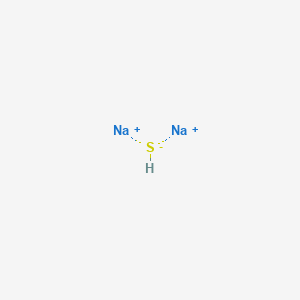
CAS 1313-82-2PubChem CID 237873
Sodium sulfide, hydrated, with not less than 30% water
Sodium sulfide, hydrated, with not less than 30% water appears as yellow-pink or white deliquescent crystals, flakes or lumps. Contains at least 30% water. Alkaline. Burns skin, eyes and mucous membranes. Mildly corrosive to most metals. May be toxic by skin absorption. Releases toxic hydrogen sulfide gas when mixed with an acid. — CAMEO Chemicals
- IUPAC name
- disodium;sulfanide
- Molecular formula
- HNa2S+
- Molecular weight
- 79.06 g/mol
- Exact mass
- 78.95943477 Da
- Topological polar surface area
- 1.0 Ų
- Hydrogen-bond donors
- 1
- Hydrogen-bond acceptors
- 1
- Covalent units
- 3
- Defined stereocentres
- 0
Also known as
Disodium sulphideDisodium sulfide (Na2S)SODIUM SULFIDE, (HYDRATED, WITH >= 30% WATER)SODIUM SULFIDE, [HYDRATED, WITH >= 30% WATER]RefChem:887903SODIUM SULPHIDE, HYDRATED, WITH NOT LESS THAN 30% WATERsodium sulfideSodium sulfide (Na2S)
14 more reported names
Sodium sulfide (VAN)Sodium Sulfide Hydrate (Technical Grade)Disodium Sulfide Hydrate; Monosulfide HydrateSodum sulfuretNa2-SSodium sulfide, 95%, anhydrousUN1385UN1849Sodium sulfide (Na2S) (8CI,9CI)Sodium sulfide hydrate, >=60%, scalesSodium sulfide, hydrated with at least 30% waterSodium sulfide, hydrated with at least 30% water [UN1849] [Corrosive]Sodium sulfide, anhydrous or sodium sulfide with <30% water of crystallizationSodium sulfide, anhydrous or sodium sulfide with <30% water of crystallization [UN1385] [Spontaneously combustible]
External database identifiers
- PubMed:15790858
Evidence from additional scientific databases
NIH PubChem PUG-View
Exact identifier match237873
Attributed physical-property, hazard, environmental and use annotations.
- Physical Description: Sodium sulfide, hydrated, with not less than 30% water appears as yellow-pink or white deliquescent crystals, flakes or lumps. Contains at least 30% water. Alkaline. Burns skin, eyes and mucous membranes. Mildly corrosive to most metals. May be toxic by skin absorption. Releases toxic hydrogen sulfide gas when mixed with an acid. Source: CAMEO Chemicals
- Physical Description: Wet Solid; Other Solid; Dry Powder; CBI; Large Crystals; Liquid Source: EPA Chemical Data Reporting (CDR)
- First Aid: Excerpt from ERG Guide 153 [Substances - Toxic and/or Corrosive (Combustible)]:; Refer to the "General First Aid" section. Specific First Aid: For corrosives, in case of contact, immediately flush skin or eyes with running water for at least 30 minutes. Additional flushing may be required. Removal of solidified molten material from skin requires medical assistance. (ERG, 2024) Source: CAMEO Chemicals
- Signal: Danger Source: European Chemicals Agency (ECHA)
- GHS Hazard Statements: H290 (14.7%): May be corrosive to metals [Warning Corrosive to Metals]; H301+H311 (15.7%): Toxic if swallowed or in contact with skin [Danger Acute toxicity, oral; acute toxicity, dermal]; H301 (65.3%): Toxic if swallowed [Danger Acute toxicity, oral]; H302 (34.8%): Harmful if swallowed [Warning Acute toxicity, oral]; H311 (96.2%): Toxic in contact with skin [Danger Acute toxicity, dermal]; H314 (100%): Causes severe skin burns and eye damage [Danger Skin corrosion/irritation]; H318 (62.9%): Causes serious eye damage [Danger Serious eye damage/eye irritation]; H400 (100%): Very toxic to aquatic life [Warning Hazardous to the aquatic environment, acute hazard] Source: European Chemicals Agency (ECHA)
- Precautionary Statement Codes: P234, P260, P262, P264, P264+P265, P270, P273, P280, P301+P316, P301+P317, P301+P330+P331, P302+P352, P302+P361+P354, P304+P340, P305+P354+P338, P316, P317, P321, P330, P361+P364, P363, P390, P391, P405, P406, and P501 (click each P-code to see the statement) Source: European Chemicals Agency (ECHA)
- ECHA C&L Notifications Summary: Aggregated GHS information provided per 1100 reports by companies from 24 notifications to the ECHA C&L Inventory. Each notification may be associated with multiple companies.; Information may vary between notifications depending on impurities, additives, and other factors. The percentage value in parenthesis indicates the notified classification ratio from companies that provide hazard codes. Only hazard codes with percentage values above 10% are shown. For more detailed information, please visit ECHA C&L website. Source: European Chemicals Agency (ECHA)
- Signal: Danger Source: NITE-CMC
- GHS Hazard Statements: H251: Self-heating; may catch fire [Danger Self-heating substances and mixtures]; H301: Toxic if swallowed [Danger Acute toxicity, oral]; H314: Causes severe skin burns and eye damage [Danger Skin corrosion/irritation]; H318: Causes serious eye damage [Danger Serious eye damage/eye irritation]; H335: May cause respiratory irritation [Warning Specific target organ toxicity, single exposure; Respiratory tract irritation]; H400: Very toxic to aquatic life [Warning Hazardous to the aquatic environment, acute hazard] Source: NITE-CMC
- Precautionary Statement Codes: P235, P260, P261, P264, P264+P265, P270, P271, P273, P280, P301+P316, P301+P330+P331, P302+P361+P354, P304+P340, P305+P354+P338, P316, P317, P319, P321, P330, P363, P391, P403+P233, P405, P407, P410, P413, P420, and P501 (click each P-code to see the statement) Source: NITE-CMC
- GHS Hazard Statements: H251: Self-heating; may catch fire [Danger Self-heating substances and mixtures]; H301: Toxic if swallowed [Danger Acute toxicity, oral]; H314: Causes severe skin burns and eye damage [Danger Skin corrosion/irritation]; H318: Causes serious eye damage [Danger Serious eye damage/eye irritation]; H371: May cause damage to organs [Warning Specific target organ toxicity, single exposure] Source: NITE-CMC
- Precautionary Statement Codes: P235, P260, P264, P264+P265, P270, P280, P301+P316, P301+P330+P331, P302+P361+P354, P304+P340, P305+P354+P338, P308+P316, P316, P317, P321, P330, P363, P405, P407, P410, P413, P420, and P501 (click each P-code to see the statement) Source: NITE-CMC
- Signal: Danger Source: Hazardous Chemical Information System (HCIS), Safe Work Australia
- GHS Hazard Statements: H301: Toxic if swallowed [Danger Acute toxicity, oral]; H312: Harmful in contact with skin [Warning Acute toxicity, dermal]; H314: Causes severe skin burns and eye damage [Danger Skin corrosion/irritation]; H400: Very toxic to aquatic life [Warning Hazardous to the aquatic environment, acute hazard] Source: Hazardous Chemical Information System (HCIS), Safe Work Australia
- Precautionary Statement Codes: P260, P264, P270, P273, P280, P301+P316, P301+P330+P331, P302+P352, P302+P361+P354, P304+P340, P305+P354+P338, P316, P317, P321, P330, P362+P364, P363, P391, P405, and P501 (click each P-code to see the statement) Source: Hazardous Chemical Information System (HCIS), Safe Work Australia
- Consumer Uses: Not Known or Reasonably Ascertainable Source: EPA Chemical Data Reporting (CDR)
- Industry Uses: Intermediate; Processing aids, specific to petroleum production; Solids separation (precipitating) agent, not otherwise specified; Not Known or Reasonably Ascertainable; pH regulating agent; Tanning agents not otherwise specified; Processing aids not otherwise specified; Lubricating agent; Other Source: EPA Chemical Data Reporting (CDR)
Mapped by: Existing checksum-valid CAS to unique PubChem CID match. Retrieved: 2026-08-31. Open source record
Scientific classifications and hazard annotations provide context and do not replace the market-specific regulatory decision shown above.
Additional source coverage and match status
| Source | Result | Checked |
|---|---|---|
| NIH PubChem PUG-View | Exact match | 2026-08-31 |
A recorded no-match is useful evidence that the source was checked; it is not a claim that the substance does not exist elsewhere.
Retrieved from NIH PubChem on 2026-09-02 by checksum-valid CAS matching. Chemical properties do not replace the regulatory decision on this page.
Additional authoritative substance research
Each link searches that source for this identity. A link is a research route, not a claim that the source holds an exact record. What each source is, and its legal weight
Take this record further
Official source and scope
Imported from Commission Implementing Decision (EU) 2025/1175 (dataset version EU 2025/1175). The glossary supplies common ingredient names for the ingredient list required by Article 19(1)(g); it is not an approval or safety list.
Open official Decision