
CAS 75-00-3PubChem CID 6337
Chloroethane
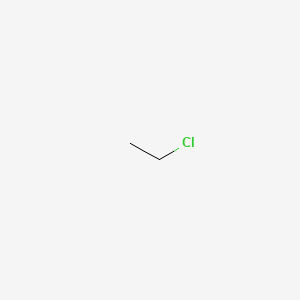
Chloroethane is the simplest and least toxic member of the class of chloroethanes, that is ethane in which a single hydrogen is substituted by a chlorine. A colourless gas at room temperature and pressure (boiling point 12C), it is used as a mild topical anaesthetic to numb the skin prior to ear piercing, skin biopsies, etc., and is also used in the treatment of sports injuries. It was formerly used in the production of tetraethyllead. It has a role as a local anaesthetic, an inhalation anaesthetic and an antipruritic drug. — ChEBI
- IUPAC name
- chloroethane
- Molecular formula
- C2H5Cl
- Molecular weight
- 64.51 g/mol
- Exact mass
- 64.0079779 Da
- XLogP3
- 1.2
- Topological polar surface area
- 0.0 Ų
- Hydrogen-bond donors
- 0
- Hydrogen-bond acceptors
- 0
- Covalent units
- 1
- Defined stereocentres
- 0
Also known as
ETHYL CHLORIDEEthane, chloro-ChelenMonochloroethaneAnodynonChloreneEther muriaticMuriatic ether
16 more reported names
Aethylis chloridumChlorethylChloryl anestheticCloretiloDublofixEther hydrochloricHydrochloric etherNarcotileKeleneEther chloratusMonochlorethaneAethylisAethylchloridChloorethaanChloroaethanCloroetano
External database identifiers
- ChEBI:CHEBI:47554
- ChEMBL:CHEMBL46058
- EPA DTXSID:DTXSID1020302
- PubMed:22736563
- PubMed:22685458
- PubMed:22629058
- PubMed:22621791
- PubMed:22511113
- PubMed:22460216
- PubMed:22458856
- PubMed:22454736
- PubMed:22336372
- PubMed:22319325
- PubMed:22293908
- PubMed:22286857
Retrieved from NIH PubChem on 2026-08-31 by checksum-valid CAS matching. Chemical properties do not replace the regulatory decision on this page.