
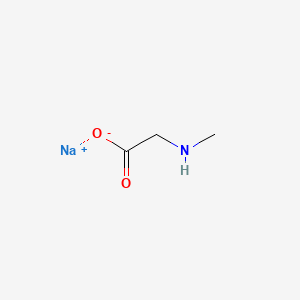
CAS 4316-73-8PubChem CID 23667259
Sodium Sarcosinate
The CIR Expert Panel concluded that the following ingredients are safe as used in cosmetics when formulated to be non-irritating. The Expert Panel cautions that these ingredients should not be used in cosmetic products in which N-nitroso compounds can be found...Sodium Cocoyl Sarcosinate... — Cosmetic Ingredient Review (CIR)
- IUPAC name
- sodium 2-(methylamino)acetate
- Molecular formula
- C3H6NNaO2
- Molecular weight
- 111.08 g/mol
- Exact mass
- 111.02962272 Da
- Topological polar surface area
- 52.2 Ų
- Hydrogen-bond donors
- 1
- Hydrogen-bond acceptors
- 3
- Covalent units
- 2
- Defined stereocentres
- 0
Also known as
Sarcosine sodium saltGlycine, N-methyl-, monosodium salt6EHN3PQL8ZNSC-10480SARCOSINATE, SODIUMRefChem:931932224-338-5Sodium (methylamino)acetate
16 more reported names
Sodium N-methylglycinateHamposyl sodium saltSodiumCocoylSarcosinateSarcosine monosodium saltSarcosine, monosodium saltSodium N-methylaminoacetateN-Methylglycine, sodium saltsodium;2-(methylamino)acetateSodium cocoyl sarcosinateGlycine, N-methyl-, sodium saltEINECS 224-338-5UNII-6EHN3PQL8ZNSC 10480UNII-1R9DUY89CZSodium N-cocoyl sarcosinateCCRIS 8260
External database identifiers
- EPA DTXSID:DTXSID5027568
Retrieved from NIH PubChem on 2026-08-31 by checksum-valid CAS matching. Chemical properties do not replace the regulatory decision on this page.