
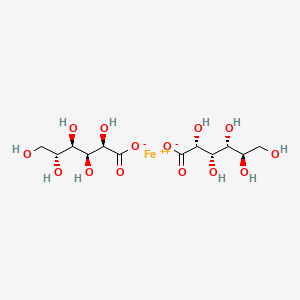
CAS 299-29-6PubChem CID 23616740
Ferrous Gluconate
Ferrous Gluconate is a form of mineral iron for oral administration, Ferrous Gluconate is absorbed in the stomach and small intestine and combines with apoferritin to form ferritin, which is stored in the liver, spleen, red bone marrow, and intestinal mucosa. Important in transport of oxygen by hemoglobin to the tissues, iron is also found in myoglobin, transferrin, and ferritin, and is as a component of many enzymes such as catalase, peroxidase, and cytochromes. (NCI04) — NCI Thesaurus (NCIt)
- IUPAC name
- iron(2+);bis((2R,3S,4R,5R)-2,3,4,5,6-pentahydroxyhexanoate)
- Molecular formula
- C12H22FeO14
- Molecular weight
- 446.14 g/mol
- Exact mass
- 446.035891 Da
- Topological polar surface area
- 283.0 Ų
- Hydrogen-bond donors
- 10
- Hydrogen-bond acceptors
- 14
- Covalent units
- 3
- Defined stereocentres
- 8
Also known as
FerroglyconicumGlucoferronIron(II) GluconateBiofergateCerevonFeravolFerluconFerronicum
16 more reported names
FerroseGlucomaxGluferateNionateEntronFentonFeroxIroxFerro-agephaFerrum polonGluco-ferrumRay-glucironFergon preparationsIron-II gluconateFergonFerrin 55
Retrieved from NIH PubChem on 2026-08-31 by checksum-valid CAS matching. Chemical properties do not replace the regulatory decision on this page.