
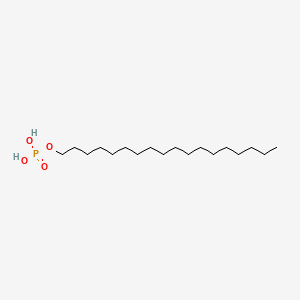
CAS 2958-09-0PubChem CID 76290
Monostearyl phosphate
Stearyl acid phosphate appears as a white waxy solid. Insoluble in water. Vapor or liquid may irritate of severely burn skin or eyes. Inhalation may irritate and seriously burn respiratory tract. Ingestion may irritate and burn mucous membranes of the gastrointestinal tract. — CAMEO Chemicals
- IUPAC name
- octadecyl dihydrogen phosphate
- Molecular formula
- C18H39O4P
- Molecular weight
- 350.5 g/mol
- Exact mass
- 350.25859672 Da
- XLogP3
- 7.3
- Topological polar surface area
- 66.8 Ų
- Hydrogen-bond donors
- 2
- Hydrogen-bond acceptors
- 4
- Covalent units
- 1
- Defined stereocentres
- 0
Also known as
Monooctadecyl orthophosphateStearyl acid phosphateUNII-NDC1GQT17KNDC1GQT17KEINECS 220-983-1NSC 41920NSC-41920RefChem:159624
14 more reported names
STEARYL DIHYDROGEN PHOSPHATEOCTADECYL PHOSPHATE ((C18H37O)(OH)2PO)Octadecyl phosphateMonooctadecyl phosphateMonostearyl dihydrogen phosphateDihydrogen monooctadecyl phosphateMonostearyl acid phosphatePhosphoric acid, monooctadecyl esterArlatone MAP 180octadecylphosphoric acidmonostearylphosphoric acidphosphoric acid monostearyl esterDIHYDROGEN STEARYLPHOSPHATEMONO-N-OCTADECYL PHOSPHATE
External database identifiers
Retrieved from NIH PubChem on 2026-08-31 by checksum-valid CAS matching. Chemical properties do not replace the regulatory decision on this page.