
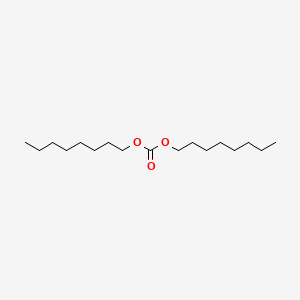
CAS 1680-31-5PubChem CID 9904000
Dicaprylyl Carbonate
The CIR Expert Panel concluded that the following 6 dialkyl carbonates are safe in the present practices of use and concentration, as described in this safety assessment, when formulated to be non-irritating...Dicaprylyl Carbonate... — Cosmetic Ingredient Review (CIR)
- IUPAC name
- dioctyl carbonate
- Molecular formula
- C17H34O3
- Molecular weight
- 286.4 g/mol
- Exact mass
- 286.25079494 Da
- XLogP3
- 7.4
- Topological polar surface area
- 35.5 Ų
- Hydrogen-bond donors
- 0
- Hydrogen-bond acceptors
- 3
- Covalent units
- 1
- Defined stereocentres
- 0
Also known as
Carbonic acid, dioctyl esterUNII-609A3V1SUA609A3V1SUADICAPRYLYL CARBONATE [WHO-DD]RefChem:132985DICAPRYLYL CARBONATE [INCI]605-498-9dioctylcarbonate
14 more reported names
dioctylcarbonatdicaprylyl carbonatDi-n-octyl-carbonatedi-1-octyl carbonateDicaprylyl Carbonate 99%Dicaprylyl Ester of Carbonic AcidCARBONIC ACID, DICAPRYLYL ESTEREBC-617699BS-51968Cetiol CC; Cetiol DD; Dicaprylyl carbonateHY-135737CS-0113899Liquid Form Dicaprylyl Carbonate CAS 1680-31-5Cosmetic Grade Liquid Form Dicaprylyl Carbonate CAS?1680-31-5
External database identifiers
- EPA DTXSID:DTXSID9075115
Retrieved from NIH PubChem on 2026-08-31 by checksum-valid CAS matching. Chemical properties do not replace the regulatory decision on this page.