
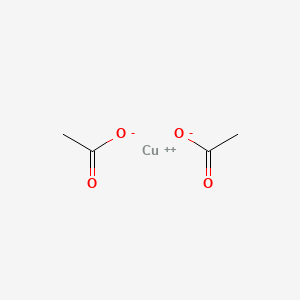
CAS 142-71-2PubChem CID 8895
Cupric acetate
Cupric acetate appears as a blue-green crystalline solid. The primary hazard is the threat to the environment. Immediate steps should be taken to limit its spread to the environment. It is used as an insecticide, in the preparation of other chemicals, as a fungicide, and mildew preventive. — CAMEO Chemicals
- IUPAC name
- copper diacetate
- Molecular formula
- C4H6CuO4
- Molecular weight
- 181.63 g/mol
- Exact mass
- 180.956206 Da
- Topological polar surface area
- 80.3 Ų
- Hydrogen-bond donors
- 0
- Hydrogen-bond acceptors
- 4
- Covalent units
- 3
- Defined stereocentres
- 0
Also known as
Copper(II) acetateCopper(2+) diacetateVenus copperCopper(2+) acetateCrystals of venusCrystallized verdigriscopper (II) acetateCupric diacetate
16 more reported names
Octan mednatyNeutral verdigrisAcetate de cuivreAcetic acid, copper(2+) saltAcetic acid, cupric saltCopper acetate (Cu(C2H3O2)2)Copper acetate (Cu(OAc)2)Acetic acid copper(2+) saltCu(II) acetateAcetic acid, copper(II) salt (2:1)CUPRUM ACETICUM39M11XPH03Acetic acid, copper(2+) salt (2:1)NSC-75796Cuprum Aceticum 3RefChem:58256
External database identifiers
- EPA DTXSID:DTXSID2059720
Retrieved from NIH PubChem on 2026-08-31 by checksum-valid CAS matching. Chemical properties do not replace the regulatory decision on this page.