
Humectants, Emollients and Occlusives in Cosmetics
See how humectants, emollients and occlusives can overlap. Compare a gel and a cream without drawing conclusions from one ingredient or its position.
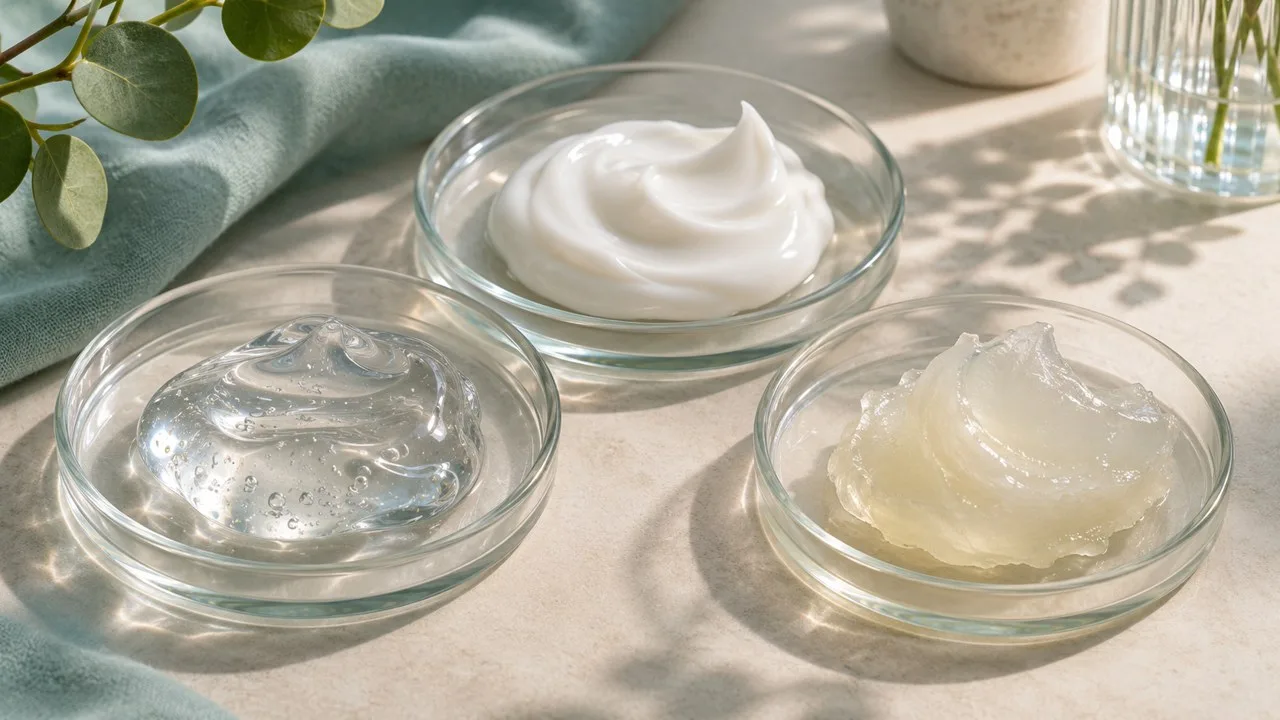
A humectant helps retain moisture. An emollient helps create a soft or smooth feel on the surface. An occlusive helps slow water loss through evaporation from the surface. Some formulations use materials with several functions. A role in an inventory helps you interpret the ingredient record and decide what to look up next.
An example using a moisturizer label
Suppose the package lists Glycerin, a plant oil and Petrolatum. Start by copying the exact label names. Look up Glycerin and note its recorded humectant function. For the oil, copy the botanical name and preparation before checking the entry. Search Petrolatum separately. Record each function as listed and include the full name so a reader can repeat the lookup.
Compare products using their actual instructions
A thick cream and a thin lotion may share several ingredients and still feel different. Note the product format, application instructions, and any specific performance measure provided by the manufacturer. A list of possible ingredient roles gives you a useful vocabulary for comparing the labels. The product’s measured performance requires evidence for that particular formula.
Record an evidence trail for a review or class
Make three columns for label name, recorded functions, and source. If multiple inventory entries match, compare the identifiers before deciding which one fits. Keep ambiguous matches open and identify any unanswered question about the product in your conclusion.
Reference material
European Commission cosmetic ingredient database: https://single-market-economy.ec.europa.eu/sectors/cosmetics/cosmetic-ingredient-database_en . Compare the recorded function definitions in the CosIng Checker directory: https://cosingchecker.com/functions/
An ingredient-role worksheet for comparing moisturizers
Create one row for each declared name. Add the possible roles you found, the source and which product declared it. Glycerin and Petrolatum are useful examples to look up separately. For a finished cream, record the product-specific claims or observations in another column and keep their use conditions attached.
A worked example with a gel, a lotion and a balm
Take one full ingredient list for each format. Copy Glycerin if listed and open its record for possible functions. Look up other materials separately, keeping full modifiers and chemical forms. Notice how a formula can contain ingredients with overlapping roles. Compare the product directions and any manufacturer evidence before making claims about how the products work.
If you are teaching the difference between the three roles, make one row per ingredient and a column for each recorded function. Let a material occupy more than one column if the source supports it. Add one final column for what the label leaves open, such as amount or product-level efficacy. This makes it easy to explain why two products sharing a name can give different experiences.
Related records and guides: Glycerin · Petrolatum · Humectant function.
Compare a glycerin gel and a glycerin cream
Imagine two leave-on moisturizers. The first is a light gel, and the second is a rich cream. Both list glycerin. Record glycerin once as an ingredient the formulas share, then examine the other names and check the directions for each product. A shared humectant gives you a point of comparison. The labels leave open how the complete products spread or feel, and an ingredient can have several recorded functions. If you compare the products, try them under similar conditions and note initial slip, any noticeable film and the feel after the product settles. Keep those observations with the exact product version. They describe the formulas you used. Glycerin in Cosmetics: What the Name on Your Label Means · Sodium Hyaluronate vs Hyaluronic Acid on Cosmetic Labels.
Label exercise: compare three formats, not three scores
Imagine a watery serum with Glycerin, a lotion listing Dimethicone and an ointment-style product listing Petrolatum. Use the names to identify possible roles, then ask how each product is intended to be applied and what claim is actually made. The three examples illustrate ingredients, not a recommended routine. A single material does not put an entire product into one category, and a thicker format does not give a measured barrier or hydration result. Score the evidence instead of the names: label declaration, brand’s stated outcome, and finished-product data if supplied. Keep those three pieces of information separate.
About this article
This article is part of the CosIng Checker blog, where we publish guides, notes and practical explainers about EU cosmetic ingredients, Annex II–VI restrictions, warnings, preservatives, UV filters, colorants and related compliance topics.