
How to Find a Cosmetic Batch or Lot Number
Find a cosmetic lot code on the bottle or carton. Record it accurately and share enough detail for a manufacturer or retailer to identify the product.
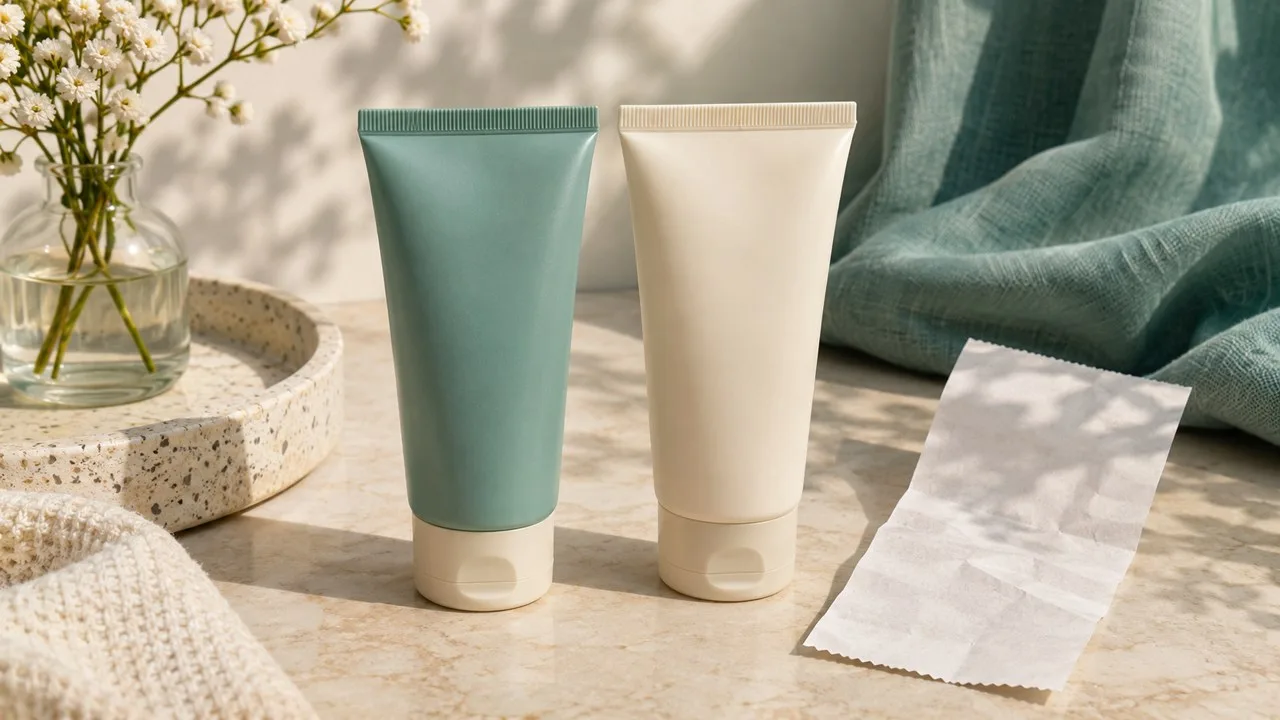
A batch number or reference is a traceability marker. On EU cosmetics, Article 19 requires a manufacturing batch number or a reference that identifies the product. If the container is too small for practical reasons, that particular information may be printed on the packaging alone. Keep the carton when you expect to need the code.
Where to look on common packaging
Try the crimp of a tube, the underside of a bottle, the base of a jar, and the end flap of the carton. Batch codes may be printed in ink, stamped, or embossed. A phone photo taken in angled light may make a faint impression easier to read. Capture the whole label before cropping so the brand and variant remain identifiable.
Example: three markings on one tube
Imagine a tube shows 50 mL, an open jar marked 6M, and a stamped code X7B2. The volume describes the pack size and 6M indicates a period after opening. X7B2 is the candidate batch code in this example. Send the characters as printed, together with an image, so the company can distinguish similar-looking letters and digits.
Create a traceable support request
Include the exact name, variant, size, purchase country, retailer, receipt date and code. For a recall notice, compare the variant and every lot detail against the official notice. A lot code can help the manufacturer identify a production run. Ask the manufacturer to interpret it if you need a manufacture date, since the printed pattern alone does not establish one.
Official sources
EU Cosmetics Regulation, Article 19(1)(e): https://eur-lex.europa.eu/legal-content/en/TXT/PDF/?uri=CELEX%3A32009R1223 . FDA recall policy and the role of production lot codes: https://www.fda.gov/cosmetics/cosmetics-compliance-enforcement/fda-recall-policy-cosmetics
Make a simple lot-code record
Keep one note with the code as printed, a photo of its location, the product variant, size, country and receipt date. If the brand asks for a barcode too, take a separate photo so it cannot be confused with the lot. For an alert, compare those details with the exact announcement and its scope.
Worked example: identify a batch code in a photograph
Take separate pictures of the full package and the area with the faint mark. If one character could be a zero or the letter O, record both possibilities and include the image. A barcode identifies a product listing or package type, whereas the batch information helps trace a production run. Keep the barcode and lot mark in separate fields when asking for confirmation.
For an alert lookup, record the exact variant, purchase country and notice identifier. Compare every available detail before deciding that a unit is covered. If the code is printed only on the box, save a photo before throwing it away. Do not derive an opening date or manufacture date from a pattern unless the company explains how it uses that code.
Related records and guides: Learn what an open jar symbol means · Cosmetic ingredient lookup.
Two short codes on the same bottle
If the bottom of a bottle carries two short printed strings, photograph both in daylight and keep the uncropped image. Note where each appears, such as “ink on bottle base” or “embossed on outer carton.” Copy letters and digits exactly. Compare similar characters such as zero and the letter O before sending the number. A barcode and a lot marking can both help a seller identify the item, so include both if you are unsure which is needed. Confirm any decoding with the manufacturer for that exact product and market. If the carton has been discarded or part of the code is illegible, state that when you ask for help. What Does 12M Mean on Cosmetics? The Open Jar Symbol · How to Check a Beauty Product’s Ingredients Before Buying Online.
When a batch code and a barcode appear on the same pack
Record each mark exactly and note where you found it. For an alert that gives both a barcode and affected lots, check both fields as the notice describes them. If a barcode matches and the lot is unreadable, keep the lot marked as unknown. Do not substitute a code from a photograph of another bottle. Send the full product name, size, market and both photographs to the organization identified in the notice or to the manufacturer. Make a separate record for each item if you bought multipacks or replacements. For an EU alert, use the European Commission Safety Gate portal as a source for the scope.
About this article
This article is part of the CosIng Checker blog, where we publish guides, notes and practical explainers about EU cosmetic ingredients, Annex II–VI restrictions, warnings, preservatives, UV filters, colorants and related compliance topics.