
2-Methoxyethanol [1] and its acetate (2-Methoxyethyl acetate) [2]
2-Methoxyethanol [1] and its acetate (2-Methoxyethyl acetate) [2] is listed in Annex II as a prohibited substance for cosmetic products placed on the EU market.
Chemical identity and properties
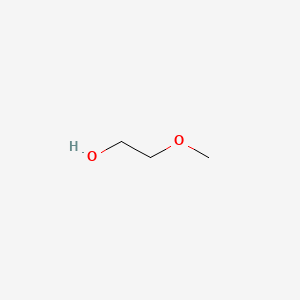
2-Methoxyethanol
2-methoxyethanol is a hydroxyether that is ethanol substituted by a methoxy group at position 2. It has a role as a solvent and a protic solvent. — ChEBI
- IUPAC name
- 2-methoxyethanol
- Molecular formula
- C3H8O2
- Molecular weight
- 76.09 g/mol
- Exact mass
- 76.052429494 Da
- XLogP3
- -0.8
- Topological polar surface area
- 29.5 Ų
- Hydrogen-bond donors
- 1
- Hydrogen-bond acceptors
- 2
- Covalent units
- 1
- Defined stereocentres
- 0
Also known as
16 more reported names
External database identifiers
- ChEBI:CHEBI:46790
- ChEBI:CHEBI:53449
- ChEMBL:CHEMBL444144
- EPA DTXSID:DTXSID5024182
- PubMed:32979392
- PubMed:32418910
- PubMed:29205417
- PubMed:23039368
- PubMed:22953186
- PubMed:22939339
- PubMed:22897679
- PubMed:22887830
- PubMed:22580533
- PubMed:22565476
- PubMed:22472325
- PubMed:22457661
Evidence from additional scientific databases
NIH PubChem PUG-View
Attributed physical-property, hazard, environmental and use annotations.
- Autoignition Temperature: 551 °F (USCG, 1999) Source: CAMEO Chemicals
- Autoignition Temperature: 285 °C Source: Hazardous Substances Data Bank (HSDB)
- Autoignition Temperature: 285 °C Source: ILO-WHO International Chemical Safety Cards (ICSCs)
- Boiling Point: 257 °F at 768 mmHg (NTP, 1992) Source: CAMEO Chemicals
- Boiling Point: 124.1 °C Source: DrugBank
- Boiling Point: 124.1 °C Source: Hazardous Substances Data Bank (HSDB)
- Boiling Point: 125 °C Source: ILO-WHO International Chemical Safety Cards (ICSCs)
- Boiling Point: 256 °F Source: Occupational Safety and Health Administration (OSHA)
- Boiling Point: 124.5 °C @760 [mm Hg] Source: PAC Chemical Database, U.S. Department of Energy
- Boiling Point: 256 °F Source: The National Institute for Occupational Safety and Health (NIOSH)
- Color/Form: Colorless liquid Source: Hazardous Substances Data Bank (HSDB)
- Density: 0.966 at 68 °F (USCG, 1999) - Less dense than water; will float Source: CAMEO Chemicals
- Density: 0.9647 g/cu cm at 20 °C Source: Hazardous Substances Data Bank (HSDB)
- Density: Bulk density: 8.0 lb/gal Source: Hazardous Substances Data Bank (HSDB)
- Density: Relative density (water = 1): 0.96 Source: ILO-WHO International Chemical Safety Cards (ICSCs)
- Density: 0.96 Source: Occupational Safety and Health Administration (OSHA)
- Density: 1.4 @ 20°C Source: PAC Chemical Database, U.S. Department of Energy
- Density: 0.96 Source: The National Institute for Occupational Safety and Health (NIOSH)
- pKa: 14.8 (at 25 °C) Source: DrugBank
- Dissociation Constants: pKa = 14.8 at 25 °C Source: Hazardous Substances Data Bank (HSDB)
- Flash Point: 107 °F (NTP, 1992) Source: CAMEO Chemicals
- Flash Point: 41.7 °C Source: Haz-Map, Information on Hazardous Chemicals and Occupational Diseases
- Flash Point: 42 °C closed cup Source: Hazardous Substances Data Bank (HSDB)
- Flash Point: 120 °C open cup Source: Hazardous Substances Data Bank (HSDB)
- Flash Point: Flash point 40 °C (104 °F) - closed cup Source: Hazardous Substances Data Bank (HSDB)
- Flash Point: 39 °C c.c. Source: ILO-WHO International Chemical Safety Cards (ICSCs)
- Flash Point: 102 °F Source: Occupational Safety and Health Administration (OSHA)
- Flash Point: 102 °F Source: The National Institute for Occupational Safety and Health (NIOSH)
- LogP: -0.77 Source: DrugBank
- LogP: log Kow = -0.77 Source: Hazardous Substances Data Bank (HSDB)
- LogP: -0.503 Source: ILO-WHO International Chemical Safety Cards (ICSCs)
- Melting Point: -121.2 °F (NTP, 1992) Source: CAMEO Chemicals
- Melting Point: -85.1 °C Source: DrugBank
- Melting Point: -85.1 °C Source: Hazardous Substances Data Bank (HSDB)
- Melting Point: -85 °C Source: ILO-WHO International Chemical Safety Cards (ICSCs)
- Melting Point: -121 °F Source: Occupational Safety and Health Administration (OSHA)
- Melting Point: -86.5 °C Source: PAC Chemical Database, U.S. Department of Energy
- Melting Point: -121 °F Source: The National Institute for Occupational Safety and Health (NIOSH)
- Odor: Mild agreeable odor Source: Hazardous Substances Data Bank (HSDB)
- Odor: Ether-like odor Source: Hazardous Substances Data Bank (HSDB)
- Physical Description: Ethylene glycol monomethyl ether appears as a clear colorless liquid. Flash point of 110 °F. Less dense than water. Vapors are heavier than air. Source: CAMEO Chemicals
- Physical Description: Wet Solid; Liquid Source: EPA Chemical Data Reporting (CDR)
- Physical Description: Colorless liquid with a mild, ether-like odor; [NIOSH] Source: Haz-Map, Information on Hazardous Chemicals and Occupational Diseases
- Physical Description: COLOURLESS LIQUID WITH CHARACTERISTIC ODOUR. Source: ILO-WHO International Chemical Safety Cards (ICSCs)
- Physical Description: Colorless liquid with a mild, ether-like odor. Source: Occupational Safety and Health Administration (OSHA)
- Physical Description: Colorless liquid with a mild, ether-like odor. Source: The National Institute for Occupational Safety and Health (NIOSH)
- Refractive Index: Index of refraction: 1.4024 at 20 °C/D Source: Hazardous Substances Data Bank (HSDB)
- Solubility: greater than or equal to 100 mg/mL at 70 °F (NTP, 1992) Source: CAMEO Chemicals
- Solubility: 1000000 mg/L (at 25 °C) Source: DrugBank
- Solubility: Miscible with water Source: Hazardous Substances Data Bank (HSDB)
- Solubility: Miscible with alcohol, ether, acetone, dimethylformamide Source: Hazardous Substances Data Bank (HSDB)
- Solubility: Miscible with hydrocarbons, alcohols, ketones, glycols Source: Hazardous Substances Data Bank (HSDB)
- Solubility: Solubility in water: miscible Source: ILO-WHO International Chemical Safety Cards (ICSCs)
- Solubility: Miscible Source: The National Institute for Occupational Safety and Health (NIOSH)
- Vapor Pressure: 6.2 mmHg at 68 °F ; 10 mmHg at 71.6 °F (NTP, 1992) Source: CAMEO Chemicals
- Vapor Pressure: 9.5 [mmHg] Source: Haz-Map, Information on Hazardous Chemicals and Occupational Diseases
- Vapor Pressure: 9.5 mm Hg at 25 °C Source: Hazardous Substances Data Bank (HSDB)
- Vapor Pressure: Vapor pressure, kPa at 20 °C: 0.83 Source: ILO-WHO International Chemical Safety Cards (ICSCs)
- Vapor Pressure: 6 mmHg Source: Occupational Safety and Health Administration (OSHA)
- Vapor Pressure: 9.5 [mm Hg] @25 °C Source: PAC Chemical Database, U.S. Department of Energy
- Vapor Pressure: 6 mmHg Source: The National Institute for Occupational Safety and Health (NIOSH)
- Carcinogen Classification: No indication of carcinogenicity to humans (not listed by IARC). Source: Toxin and Toxin Target Database (T3DB)
- Exposure Routes: The substance can be absorbed into the body by inhalation, through the skin and by ingestion. Source: ILO-WHO International Chemical Safety Cards (ICSCs)
- Exposure Routes: inhalation, skin absorption, ingestion, skin and/or eye contact Source: The National Institute for Occupational Safety and Health (NIOSH)
- First Aid: EYES: First check the victim for contact lenses and remove if present. Flush victim's eyes with water or normal saline solution for 20 to 30 minutes while simultaneously calling a hospital or poison control center. Do not put any ointments, oils, or medication in the victim's eyes without specific instructions from a physician. IMMEDIATELY transport the victim after flushing eyes to a hospital even if no symptoms (such as redness or irritation) develop.; SKIN: IMMEDIATELY flood affected skin with water while removing and isolating all contaminated clothing. Gently wash all affected skin areas thoroughly with soap and water. If symptoms such as redness or irritation develop, IMMEDIATELY call a physician and be prepared to transport the victim to a hospital for treatment.; INHALATION: IMMEDIATELY leave the contaminated area; take deep breaths of fresh air. If symptoms (such as wheezing, coughing, shortness of breath, or burning in the mouth, throat, or chest) develop, call a physician and be prepared to transport the victim to a hospital. Provide proper respiratory protection to rescuers entering an unknown atmosphere. Whenever possible, Self-Contained Breathing Apparatus (SCBA) shou Source: CAMEO Chemicals
- ERG2024, Guide 127 (Ethylene glycol monomethyl ether): General First Aid:; · Call 911 or emergency medical service.; · Ensure that medical personnel are aware of the material(s) involved, take precautions to protect themselves and avoid contamination.; · Move victim to fresh air if it can be done safely.; · Administer oxygen if breathing is difficult.; · If victim is not breathing:; -- DO NOT perform mouth-to-mouth resuscitation; the victim may have ingested or inhaled the substance.; -- If equipped and pulse detected, wash face and mouth, then give artificial respiration using a proper respiratory medical device (bag-valve mask, pocket mask equipped with a one-way valve or other device).; -- If no pulse detected or no respiratory medical device available, provide continuous compressions. Conduct a pulse check every two minutes or monitor for any signs of spontaneous respirations.; · Remove and isolate contaminated clothing and shoes.; · For minor skin contact, avoid spreading material on unaffected skin.; · In case of contact with substance, remove immediately by flushing skin or eyes with running water for at least 20 minutes.; · For severe burns, immediate medical attention is required.; · Effects of exposure (inhalation, ingestion, Source: Emergency Response Guidebook (ERG)
- First Aid: (General first aid procedures); Eye: Irrigate immediately - If this chemical contacts the eyes, immediately wash (irrigate) the eyes with large amounts of water, occasionally lifting the lower and upper lids. Get medical attention immediately.; Skin: Water flush promptly - If this chemical contacts the skin, flush the contaminated skin with water promptly. If this chemical penetrates the clothing, immediately remove the clothing and flush the skin with water promptly. If irritation persists after washing, get medical attention.; Breathing: Respiratory support; Swallow: Medical attention immediately - If this chemical has been swallowed, get medical attention immediately. Source: The National Institute for Occupational Safety and Health (NIOSH)
- Signal: Danger Source: Regulation (EC) No 1272/2008 of the European Parliament and of the Council
- GHS Hazard Statements: H226: Flammable liquid and vapor [Warning Flammable liquids]; H302: Harmful if swallowed [Warning Acute toxicity, oral]; H312: Harmful in contact with skin [Warning Acute toxicity, dermal]; H332: Harmful if inhaled [Warning Acute toxicity, inhalation]; H360FD: May damage fertility; May damage the unborn child [Danger Reproductive toxicity] Source: Regulation (EC) No 1272/2008 of the European Parliament and of the Council
- Precautionary Statement Codes: P203, P210, P233, P240, P241, P242, P243, P261, P264, P270, P271, P280, P301+P317, P302+P352, P303+P361+P353, P304+P340, P317, P318, P321, P330, P362+P364, P370+P378, P403+P235, P405, and P501 (click each P-code to see the statement) Source: Regulation (EC) No 1272/2008 of the European Parliament and of the Council
- Signal: Danger Source: European Chemicals Agency (ECHA)
- GHS Hazard Statements: H226 (97%): Flammable liquid and vapor [Warning Flammable liquids]; H302+H312+H332 (41.2%): Harmful if swallowed, in contact with skin or if inhaled [Warning Acute toxicity, oral; acute toxicity, dermal; acute toxicity, inhalation]; H302 (96.9%): Harmful if swallowed [Warning Acute toxicity, oral]; H312 (97%): Harmful in contact with skin [Warning Acute toxicity, dermal]; H332 (94.5%): Harmful if inhaled [Warning Acute toxicity, inhalation]; H360 (93.8%): May damage fertility or the unborn child [Danger Reproductive toxicity]; H370 (10.6%): Causes damage to organs [Danger Specific target organ toxicity, single exposure]; H373 (14.1%): May causes damage to organs through prolonged or repeated exposure [Warning Specific target organ toxicity, repeated exposure] Source: European Chemicals Agency (ECHA)
- Precautionary Statement Codes: P203, P210, P233, P240, P241, P242, P243, P260, P261, P264, P270, P271, P280, P301+P317, P302+P352, P303+P361+P353, P304+P340, P308+P316, P317, P318, P319, P321, P330, P362+P364, P370+P378, P403+P235, P405, and P501 (click each P-code to see the statement) Source: European Chemicals Agency (ECHA)
- ECHA C&L Notifications Summary: Aggregated GHS information provided per 1202 reports by companies from 34 notifications to the ECHA C&L Inventory. Each notification may be associated with multiple companies.; Information may vary between notifications depending on impurities, additives, and other factors. The percentage value in parenthesis indicates the notified classification ratio from companies that provide hazard codes. Only hazard codes with percentage values above 10% are shown. For more detailed information, please visit ECHA C&L website. Source: European Chemicals Agency (ECHA)
- Signal: Danger Source: NITE-CMC
- GHS Hazard Statements: H226: Flammable liquid and vapor [Warning Flammable liquids]; H312: Harmful in contact with skin [Warning Acute toxicity, dermal]; H332: Harmful if inhaled [Warning Acute toxicity, inhalation]; H335: May cause respiratory irritation [Warning Specific target organ toxicity, single exposure; Respiratory tract irritation]; H336: May cause drowsiness or dizziness [Warning Specific target organ toxicity, single exposure; Narcotic effects]; H360: May damage fertility or the unborn child [Danger Reproductive toxicity]; H370: Causes damage to organs [Danger Specific target organ toxicity, single exposure]; H372: Causes damage to organs through prolonged or repeated exposure [Danger Specific target organ toxicity, repeated exposure] Source: NITE-CMC
- Precautionary Statement Codes: P203, P210, P233, P240, P241, P242, P243, P260, P261, P264, P270, P271, P280, P302+P352, P303+P361+P353, P304+P340, P308+P316, P317, P318, P319, P321, P362+P364, P370+P378, P403+P233, P403+P235, P405, and P501 (click each P-code to see the statement) Source: NITE-CMC
- GHS Hazard Statements: H226: Flammable liquid and vapor [Warning Flammable liquids]; H312: Harmful in contact with skin [Warning Acute toxicity, dermal]; H331: Toxic if inhaled [Danger Acute toxicity, inhalation]; H360: May damage fertility or the unborn child [Danger Reproductive toxicity]; H370: Causes damage to organs [Danger Specific target organ toxicity, single exposure]; H372: Causes damage to organs through prolonged or repeated exposure [Danger Specific target organ toxicity, repeated exposure] Source: NITE-CMC
- Precautionary Statement Codes: P203, P210, P233, P240, P241, P242, P243, P260, P261, P264, P270, P271, P280, P302+P352, P303+P361+P353, P304+P340, P308+P316, P316, P317, P318, P319, P321, P362+P364, P370+P378, P403+P233, P403+P235, P405, and P501 (click each P-code to see the statement) Source: NITE-CMC
- Target Organs: Reproductive Source: EPA Integrated Risk Information System (IRIS)
- Target Organs: Eyes, respiratory system, central nervous system, blood, kidneys, reproductive system, hematopoietic system Source: The National Institute for Occupational Safety and Health (NIOSH)
- Toxicity Summary: IDENTIFICATION AND USE: 2-Methoxyethanol (2-ME) is a colorless liquid with ether-like odor. It is used as a solvent for cellulose acetate, natural and synthetic resins, some alcohol-soluble dyes; in nail polishes, quick-drying varnishes and enamels, and wood stains. It is also used as a as a jet fuel de-icer. HUMAN EXPOSURE AND TOXICITY: The substance is mildly irritating to the eyes and respiratory tract and may cause effects on the central nervous system, blood, bone marrow, kidneys and liver. Exposure at high levels could cause unconsciousness. The liquid defats the skin. Two non-fatal cases of poisoning by consuming 100 mL 2-ME in men aged 41 and 23 were reported. In addition to agitation and confusion, the predominant clinical features were nausea, cyanosis, hyperventilation, slight tachycardia, and metabolic acidosis. In one patient there were suggestions of moderate kidney failure. No evidence of liver damage was found and both patients recovered within 4 weeks. Chronic poisonings from vapors lead to toxic encephalopathy and evidence of bone marrow depression without hemolysis. Lung, kidney and liver changes have been observed. It was found that individuals exposed in utero Source: Hazardous Substances Data Bank (HSDB)
- Environmental Bioconcentration: An estimated BCF of 3 was calculated in fish for 2-methyoxyethanol(SRC), using a log Kow of -0.77(1) and a regression-derived equation(2). According to a classification scheme(3), this BCF suggests the potential for bioconcentration in aquatic organisms is low(SRC). Source: Hazardous Substances Data Bank (HSDB)
- Environmental Fate: TERRESTRIAL FATE: Based on a classification scheme(1), an estimated Koc value of 1(SRC), determined from a log Kow of -0.77(2) and a regression-derived equation(3), indicates that 2-methoxyethanol is expected to have very high mobility in soil(SRC). Volatilization of 2-methoxyethanol from moist soil surfaces is expected to be an environmental fate process(SRC) given a Henry's Law constant of 3.3X10⁻⁷ atm-cu m/mole(4). The potential for volatilization of 2-methoxyethanol from dry soil surfaces may exist(SRC) based upon a vapor pressure of 9.5 mm Hg(5). Utilizing the Japanese MITI test, 83% of the Theoretical BOD was reached in 2 weeks(6) indicating that biodegradation is an important environmental fate process in soil(SRC). Source: Hazardous Substances Data Bank (HSDB)
- Environmental Fate: AQUATIC FATE: Based on a classification scheme(1), an estimated Koc value of 1(SRC), determined from a log Kow of -0.77(2) and a regression-derived equation(3), indicates that 2-methoxyethanol is not expected to adsorb to suspended solids and sediment(SRC). Volatilization from water surfaces may occur(4) based upon a Henry's Law constant of 3.3X10⁻⁷ atm-cu m/mole(5). Using this Henry's Law constant and an estimation method(3), volatilization half-lives for a model river and model lake are 97 days and 700 days, respectively(SRC). According to a classification scheme(6), an estimated BCF of 3(SRC), from its log Kow(2) and a regression-derived equation(3), suggests the potential for bioconcentration in aquatic organisms is low(SRC). Utilizing the Japanese MITI test, 83% of the Theoretical BOD was reached in 2 weeks(7) indicating that biodegradation is an important environmental fate process in water(SRC). Source: Hazardous Substances Data Bank (HSDB)
- Environmental Fate: ATMOSPHERIC FATE: According to a model of gas/particle partitioning of semivolatile organic compounds in the atmosphere(1), 2-methoxyethanol, which has a vapor pressure of 9.5 mm Hg at 25 °C(2), is expected to exist solely as a vapor in the ambient atmosphere. Vapor-phase 2-methoxyethanol is degraded in the atmosphere by reaction with photochemically-produced hydroxyl radicals(SRC); the half-life for this reaction in air is estimated to be 31 hours(SRC), calculated from its rate constant of 1.25X10⁻¹¹ cu cm/molecule-sec at 25 °C(3). 2-Methoxyethanol does not contain chromophores that absorb at wavelengths >290 nm(4) and, therefore, is not expected to be susceptible to direct photolysis by sunlight(SRC). Source: Hazardous Substances Data Bank (HSDB)
- Consumer Uses: Not Known or Reasonably Ascertainable; Solvent; Fuel agents Source: EPA Chemical Data Reporting (CDR)
- Industry Uses: Solvent; Absorbent; Humectant; Fuel agents; Processing aids not otherwise specified; Adhesion/cohesion promoter; Intermediate Source: EPA Chemical Data Reporting (CDR)
- Cosmetic Ingredient Review Link: CIR ingredient: 2-Methoxyethanol Source: Cosmetic Ingredient Review (CIR)
- Sources/Uses: Used as a solvent for many different purposes, (e.g., varnishes, dyes, and resins) and as a jet deicing additive; [ACGIH] Used in the Asian microelectronics industry in photoresist formulations and in manufacturing copper-laminate circuit boards; [JOEM 2004;46:707-713] Source: Haz-Map, Information on Hazardous Chemicals and Occupational Diseases
- Industrial Processes with risk of exposure: Semiconductor Manufacturing [Category: Industry]; Painting (Solvents) [Category: Paint]; Textiles (Printing, Dyeing, or Finishing) [Category: Industry] Source: Haz-Map, Information on Hazardous Chemicals and Occupational Diseases
- Uses: For 2-methoxyethanol (USEPA/OPP Pesticide Code: 042202) there are 0 labels match. /SRP: Not registered for current use in the U.S., but approved pesticide uses may change periodically and so federal, state and local authorities must be consulted for currently approved uses./ Source: Hazardous Substances Data Bank (HSDB)
- Uses: The active ingredient is no longer contained in any registered products ... "cancelled." Source: Hazardous Substances Data Bank (HSDB)
- Uses: Solvent for nitrocellulose, ... solvent mixtures, lacquers, ... perfume fixative, ... jet fuel deicing additive. Source: Hazardous Substances Data Bank (HSDB)
- Uses: Solvent for low viscosity cellulose acetate, natural resins, some synthetic resins and some alc-sol dyes; in dyeing leather; sealing moisture-proof cellophane; in nail polishes, quick drying varnishes and enamels, wood stains. In modified Karl Fischer reagent. Source: Hazardous Substances Data Bank (HSDB)
- Uses: For more Uses (Complete) data for 2-METHOXYETHANOL (8 total), please visit the HSDB record page. Source: Hazardous Substances Data Bank (HSDB)
- Uses: Methyl cellosolve, is a clear and colorless liquid at room temperature mainly used as a solvent. It is used for many purposes including varnishes, dyes, resins, printing, finishing textile, and semiconductor manufacturing. Source: Toxin and Toxin Target Database (T3DB)
Mapped by: Existing checksum-valid CAS to unique PubChem CID match. Retrieved: 2026-08-31. Open source record
Scientific classifications and hazard annotations provide context and do not replace the market-specific regulatory decision shown above.
Additional source coverage and match status
| Source | Result | Checked |
|---|---|---|
| NIH PubChem PUG-View | Exact match | 2026-08-31 |
A recorded no-match is useful evidence that the source was checked; it is not a claim that the substance does not exist elsewhere.
Retrieved from NIH PubChem on 2026-08-31 by checksum-valid CAS matching. Chemical properties do not replace the regulatory decision on this page.
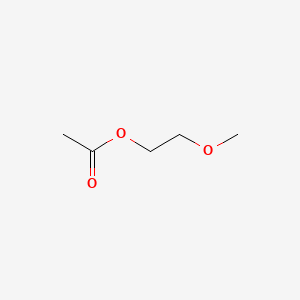
Ethylene glycol monomethyl ether acetate
Ethylene Glycol Monomethyl Ether Acetate can cause developmental toxicity and male reproductive toxicity according to The National Institute for Occupational Safety and Health (NIOSH). — California Office of Environmental Health Hazard Assessment (OEHHA)
- IUPAC name
- 2-methoxyethyl acetate
- Molecular formula
- C5H10O3
- Molecular weight
- 118.13 g/mol
- Exact mass
- 118.062994177 Da
- XLogP3
- 0.0
- Topological polar surface area
- 35.5 Ų
- Hydrogen-bond donors
- 0
- Hydrogen-bond acceptors
- 3
- Covalent units
- 1
- Defined stereocentres
- 0
Also known as
16 more reported names
External database identifiers
Evidence from additional scientific databases
NIH PubChem PUG-View
Attributed physical-property, hazard, environmental and use annotations.
- Autoignition Temperature: 740 °F (USCG, 1999) Source: CAMEO Chemicals
- Autoignition Temperature: 394 °C, 740 °F Source: Hazardous Substances Data Bank (HSDB)
- Autoignition Temperature: 380 °C Source: ILO-WHO International Chemical Safety Cards (ICSCs)
- Boiling Point: 293 °F at 760 mmHg (NTP, 1992) Source: CAMEO Chemicals
- Boiling Point: 145 °C Source: Hazardous Substances Data Bank (HSDB)
- Boiling Point: 145 °C Source: ILO-WHO International Chemical Safety Cards (ICSCs)
- Boiling Point: 293 °F Source: Occupational Safety and Health Administration (OSHA)
- Boiling Point: 143 °C @760 [mm Hg] Source: PAC Chemical Database, U.S. Department of Energy
- Boiling Point: 293 °F Source: The National Institute for Occupational Safety and Health (NIOSH)
- Color/Form: Colorless liquid Source: Hazardous Substances Data Bank (HSDB)
- Density: 1.006 at 68 °F (USCG, 1999) - Denser than water; will sink Source: CAMEO Chemicals
- Density: 1.0074 g/cu cm at 19 °C Source: Hazardous Substances Data Bank (HSDB)
- Density: Bulk density: 8.4 lb/gal at 20 °C Source: Hazardous Substances Data Bank (HSDB)
- Density: Relative density (water = 1): 1.01 Source: ILO-WHO International Chemical Safety Cards (ICSCs)
- Density: 1.006 Source: Occupational Safety and Health Administration (OSHA)
- Density: 1.005 @ 20°C Source: PAC Chemical Database, U.S. Department of Energy
- Density: 1.01 Source: The National Institute for Occupational Safety and Health (NIOSH)
- Flash Point: 111 °F (NTP, 1992) Source: CAMEO Chemicals
- Flash Point: 111 °F Source: Haz-Map, Information on Hazardous Chemicals and Occupational Diseases
- Flash Point: 45 °C (120 °F) (CLOSED CUP) Source: Hazardous Substances Data Bank (HSDB)
- Flash Point: 55.6 °C (Open cup) Source: Hazardous Substances Data Bank (HSDB)
- Flash Point: 45 °C c.c. Source: ILO-WHO International Chemical Safety Cards (ICSCs)
- Flash Point: 120 °F Source: Occupational Safety and Health Administration (OSHA)
- Flash Point: 120 °F Source: The National Institute for Occupational Safety and Health (NIOSH)
- LogP: 0.121 Source: ILO-WHO International Chemical Safety Cards (ICSCs)
- Melting Point: -85 °F (NTP, 1992) Source: CAMEO Chemicals
- Melting Point: -65.1 °C Source: Hazardous Substances Data Bank (HSDB)
- Melting Point: -65 °C Source: ILO-WHO International Chemical Safety Cards (ICSCs)
- Melting Point: -85 °F Source: Occupational Safety and Health Administration (OSHA)
- Melting Point: -70 °C Source: PAC Chemical Database, U.S. Department of Energy
- Melting Point: -85 °F Source: The National Institute for Occupational Safety and Health (NIOSH)
- Odor: Pleasant odor Source: Hazardous Substances Data Bank (HSDB)
- Odor: Ester-like odor Source: Hazardous Substances Data Bank (HSDB)
- Physical Description: Ethylene glycol monomethyl ether acetate appears as a clear colorless liquid with a pleasant odor. Flash point of 135 °F. Denser than water and soluble in water. Vapors are heavier than air. Source: CAMEO Chemicals
- Physical Description: Colorless liquid with a pleasant odor; [CAMEO] Source: Haz-Map, Information on Hazardous Chemicals and Occupational Diseases
- Physical Description: COLOURLESS LIQUID WITH CHARACTERISTIC ODOUR. Source: ILO-WHO International Chemical Safety Cards (ICSCs)
- Physical Description: Colorless liquid with a mild, ether-like odor. Source: Occupational Safety and Health Administration (OSHA)
- Physical Description: Colorless liquid with a mild, ether-like odor. Source: The National Institute for Occupational Safety and Health (NIOSH)
- Refractive Index: Index of refraction: 1.4019 at 20 °C/D Source: Hazardous Substances Data Bank (HSDB)
- Solubility: greater than or equal to 100 mg/mL at 68 °F (NTP, 1992) Source: CAMEO Chemicals
- Solubility: Hildebrand solubility parameter(delta) = 18.8 MPa; Coefficient of expansion = 0.00110 °C-1 at 20 °C Source: Hazardous Substances Data Bank (HSDB)
- Solubility: Miscible with most organic solvents, oils Source: Hazardous Substances Data Bank (HSDB)
- Solubility: Very soluble in water, ethyl ether, and ethanol; soluble in carbon tetrachloride. Source: Hazardous Substances Data Bank (HSDB)
- Solubility: Infinitely soluble in water at 25 °C; water infinitely soluble in methyl cellosolve acetate at 25 °C Source: Hazardous Substances Data Bank (HSDB)
- Solubility: Solubility in water: miscible Source: ILO-WHO International Chemical Safety Cards (ICSCs)
- Solubility: Miscible Source: The National Institute for Occupational Safety and Health (NIOSH)
- Vapor Pressure: 2 mmHg at 68 °F (NTP, 1992) Source: CAMEO Chemicals
- Vapor Pressure: 7.0 [mmHg] Source: Haz-Map, Information on Hazardous Chemicals and Occupational Diseases
- Vapor Pressure: Vapor pressure = 2 torr at 20 °C Source: Hazardous Substances Data Bank (HSDB)
- Vapor Pressure: 7.0 mm Hg at 20 °C Source: Hazardous Substances Data Bank (HSDB)
- Vapor Pressure: Vapor pressure, kPa at 20 °C: 0.27 Source: ILO-WHO International Chemical Safety Cards (ICSCs)
- Vapor Pressure: 5 mmHg Source: Occupational Safety and Health Administration (OSHA)
- Vapor Pressure: 2 [mm Hg] @20 °C Source: PAC Chemical Database, U.S. Department of Energy
- Vapor Pressure: 2 mmHg Source: The National Institute for Occupational Safety and Health (NIOSH)
- Viscosity: 1.1 cP at 25 °C Source: Hazardous Substances Data Bank (HSDB)
- Exposure Routes: The substance can be absorbed into the body by inhalation of its vapour, through the skin and by ingestion. Source: ILO-WHO International Chemical Safety Cards (ICSCs)
- Exposure Routes: inhalation, skin absorption, ingestion, skin and/or eye contact Source: The National Institute for Occupational Safety and Health (NIOSH)
- First Aid: EYES: First check the victim for contact lenses and remove if present. Flush victim's eyes with water or normal saline solution for 20 to 30 minutes while simultaneously calling a hospital or poison control center. Do not put any ointments, oils, or medication in the victim's eyes without specific instructions from a physician. IMMEDIATELY transport the victim after flushing eyes to a hospital even if no symptoms (such as redness or irritation) develop.; SKIN: IMMEDIATELY flood affected skin with water while removing and isolating all contaminated clothing. Gently wash all affected skin areas thoroughly with soap and water. If symptoms such as redness or irritation develop, IMMEDIATELY call a physician and be prepared to transport the victim to a hospital for treatment.; INHALATION: IMMEDIATELY leave the contaminated area; take deep breaths of fresh air. If symptoms (such as wheezing, coughing, shortness of breath, or burning in the mouth, throat, or chest) develop, call a physician and be prepared to transport the victim to a hospital. Provide proper respiratory protection to rescuers entering an unknown atmosphere. Whenever possible, Self-Contained Breathing Apparatus (SCBA) shou Source: CAMEO Chemicals
- ERG2024, Guide 129 (Ethylene glycol monomethyl ether acetate): General First Aid:; · Call 911 or emergency medical service.; · Ensure that medical personnel are aware of the material(s) involved, take precautions to protect themselves and avoid contamination.; · Move victim to fresh air if it can be done safely.; · Administer oxygen if breathing is difficult.; · If victim is not breathing:; -- DO NOT perform mouth-to-mouth resuscitation; the victim may have ingested or inhaled the substance.; -- If equipped and pulse detected, wash face and mouth, then give artificial respiration using a proper respiratory medical device (bag-valve mask, pocket mask equipped with a one-way valve or other device).; -- If no pulse detected or no respiratory medical device available, provide continuous compressions. Conduct a pulse check every two minutes or monitor for any signs of spontaneous respirations.; · Remove and isolate contaminated clothing and shoes.; · For minor skin contact, avoid spreading material on unaffected skin.; · In case of contact with substance, remove immediately by flushing skin or eyes with running water for at least 20 minutes.; · For severe burns, immediate medical attention is required.; · Effects of exposure (inhalation, ingestion, Source: Emergency Response Guidebook (ERG)
- First Aid: (General first aid procedures); Eye: Irrigate immediately - If this chemical contacts the eyes, immediately wash (irrigate) the eyes with large amounts of water, occasionally lifting the lower and upper lids. Get medical attention immediately.; Skin: Water flush promptly - If this chemical contacts the skin, flush the contaminated skin with water promptly. If this chemical penetrates the clothing, immediately remove the clothing and flush the skin with water promptly. If irritation persists after washing, get medical attention.; Breathing: Respiratory support; Swallow: Medical attention immediately - If this chemical has been swallowed, get medical attention immediately. Source: The National Institute for Occupational Safety and Health (NIOSH)
- Signal: Danger Source: Regulation (EC) No 1272/2008 of the European Parliament and of the Council
- GHS Hazard Statements: H302: Harmful if swallowed [Warning Acute toxicity, oral]; H312: Harmful in contact with skin [Warning Acute toxicity, dermal]; H332: Harmful if inhaled [Warning Acute toxicity, inhalation]; H360FD: May damage fertility; May damage the unborn child [Danger Reproductive toxicity] Source: Regulation (EC) No 1272/2008 of the European Parliament and of the Council
- Precautionary Statement Codes: P203, P261, P264, P270, P271, P280, P301+P317, P302+P352, P304+P340, P317, P318, P321, P330, P362+P364, P405, and P501 (click each P-code to see the statement) Source: Regulation (EC) No 1272/2008 of the European Parliament and of the Council
- Signal: Danger Source: European Chemicals Agency (ECHA)
- GHS Hazard Statements: H226 (39.6%): Flammable liquid and vapor [Warning Flammable liquids]; H302+H312+H332 (38.6%): Harmful if swallowed, in contact with skin or if inhaled [Warning Acute toxicity, oral; acute toxicity, dermal; acute toxicity, inhalation]; H302 (100%): Harmful if swallowed [Warning Acute toxicity, oral]; H312 (100%): Harmful in contact with skin [Warning Acute toxicity, dermal]; H332 (100%): Harmful if inhaled [Warning Acute toxicity, inhalation]; H360 (99%): May damage fertility or the unborn child [Danger Reproductive toxicity] Source: European Chemicals Agency (ECHA)
- Precautionary Statement Codes: P203, P210, P233, P240, P241, P242, P243, P261, P264, P270, P271, P280, P301+P317, P302+P352, P303+P361+P353, P304+P340, P317, P318, P321, P330, P362+P364, P370+P378, P403+P235, P405, and P501 (click each P-code to see the statement) Source: European Chemicals Agency (ECHA)
- ECHA C&L Notifications Summary: Aggregated GHS information provided per 101 reports by companies from 8 notifications to the ECHA C&L Inventory. Each notification may be associated with multiple companies.; Information may vary between notifications depending on impurities, additives, and other factors. The percentage value in parenthesis indicates the notified classification ratio from companies that provide hazard codes. Only hazard codes with percentage values above 10% are shown. For more detailed information, please visit ECHA C&L website. Source: European Chemicals Agency (ECHA)
- Signal: Danger Source: NITE-CMC
- GHS Hazard Statements: H226: Flammable liquid and vapor [Warning Flammable liquids]; H320: Causes eye irritation [Warning Serious eye damage/eye irritation]; H336: May cause drowsiness or dizziness [Warning Specific target organ toxicity, single exposure; Narcotic effects]; H360: May damage fertility or the unborn child [Danger Reproductive toxicity]; H370: Causes damage to organs [Danger Specific target organ toxicity, single exposure]; H372: Causes damage to organs through prolonged or repeated exposure [Danger Specific target organ toxicity, repeated exposure] Source: NITE-CMC
- Precautionary Statement Codes: P203, P210, P233, P240, P241, P242, P243, P260, P261, P264, P264+P265, P270, P271, P280, P303+P361+P353, P304+P340, P305+P351+P338, P308+P316, P318, P319, P321, P337+P317, P370+P378, P403+P233, P403+P235, P405, and P501 (click each P-code to see the statement) Source: NITE-CMC
- GHS Hazard Statements: H226: Flammable liquid and vapor [Warning Flammable liquids]; H320: Causes eye irritation [Warning Serious eye damage/eye irritation]; H331: Toxic if inhaled [Danger Acute toxicity, inhalation]; H360: May damage fertility or the unborn child [Danger Reproductive toxicity]; H370: Causes damage to organs [Danger Specific target organ toxicity, single exposure]; H373: May causes damage to organs through prolonged or repeated exposure [Warning Specific target organ toxicity, repeated exposure]; H402: Harmful to aquatic life [Hazardous to the aquatic environment, acute hazard]; H411: Toxic to aquatic life with long lasting effects [Hazardous to the aquatic environment, long-term hazard] Source: NITE-CMC
- Precautionary Statement Codes: P203, P210, P233, P240, P241, P242, P243, P260, P261, P264, P264+P265, P270, P271, P273, P280, P303+P361+P353, P304+P340, P305+P351+P338, P308+P316, P316, P318, P319, P321, P337+P317, P370+P378, P391, P403+P233, P403+P235, P405, and P501 (click each P-code to see the statement) Source: NITE-CMC
- NFPA Health Rating: 0 - Materials that, under emergency conditions, would offer no hazard beyond that of ordinary combustible materials. Source: Hazardous Substances Data Bank (HSDB)
- NFPA Fire Rating: 2 - Materials that must be moderately heated or exposed to relatively high ambient temperatures before ignition can occur. Materials would not under normal conditions form hazardous atmospheres with air, but under high ambient temperatures or under moderate heating could release vapor in sufficient quantities to produce hazardous atmospheres with air. Source: Hazardous Substances Data Bank (HSDB)
- NFPA Instability Rating: 0 - Materials that in themselves are normally stable, even under fire conditions. Source: Hazardous Substances Data Bank (HSDB)
- Target Organs: Eyes, respiratory system, kidneys, brain, central nervous system, peripheral nervous system, reproductive system, hematopoietic system Source: The National Institute for Occupational Safety and Health (NIOSH)
- Toxicity Summary: ... The methyl and ethyl ethers of ethylene glycol, ie 2- methoxyethanol (2-ME) esters, 2-methoxyethyl acetate (2-MEA) and 2-ethoxyethyl acetate (2- EEA) ... are all stable, and are all miscible with (or in the case of 2-EEA very soluble in) water and miscible with a large number of organic solvents. ... The solubility of these glycol ethers in water and their relatively low vapor pressure could result in their build-up in water in the absence of degradation. However, degradation by microorganisms in soil, sewage sludge, and water appears to prevent this possibility. Atmospheric emissions resulting from the use of glycol ethers as evaporative solvents result in the greatest environmental exposure.... Effects on Organisms in the Environment: The toxicity of 2-ME and 2-EE to microorganisms and aquatic animals appears to be low. ... The glycol ether acetates (2-MEA and 2-EEA) are far more toxic to fish. The LC50 of 2-EEA for fathead minnows is 46 mg/L and that of 2-MEA for tidewater silverfish and bluegills is 45 mg/L. ... Effects on Experimental Animals and In Vitro Test Systems: Systemic toxicity: The toxicity of 2-ME and 2-EE to experimental animals has been much more widely studie Source: Hazardous Substances Data Bank (HSDB)
- Environmental Bioconcentration: An estimated BCF of 3.2 was calculated for methyl cellosolve acetate(SRC), using an estimated log Kow of 0.10(1) and a regression-derived equation(2). According to a classification scheme(3), this BCF suggests that bioconcentration in aquatic organisms is low(SRC). Source: Hazardous Substances Data Bank (HSDB)
- Environmental Fate: TERRESTRIAL FATE: Based on a classification scheme(1), an estimated Koc value of 30(SRC), determined from an estimated log Kow of 0.10(2) and a regression-derived equation(3), indicates that methyl cellosolve acetate is expected to have very high mobility in soil(SRC). Volatilization of methyl cellosolve acetate from moist soil surfaces is expected to be an important fate process(SRC) given an estimated Henry's Law constant of 1.1X10⁻⁶ atm-cu m/mole(SRC) derived from its vapor pressure, 7.0 mm Hg at 20 °C(4), and assigned value for water solubility of 1.0X10+6 mg/L (miscible)(5). The potential for volatilization of methyl cellosolve acetate from dry soil surfaces may exist(SRC) based on its vapor pressure(4). Using aqueous screening tests methyl cellosolve acetate reached 30 to 86.9% of its theoretical BOD over a period of 5 to 14 days(6,7), suggesting that biodegradation may be an important environmental fate process in soil(SRC). Source: Hazardous Substances Data Bank (HSDB)
- Environmental Fate: AQUATIC FATE: Based on a classification scheme(1), an estimated Koc value of 30(SRC), determined from an estimated log Kow of 0.10(2) and a regression-derived equation(3), indicates that methyl cellosolve acetate is not expected to adsorb to suspended solids and sediment(SRC). Volatilization from water surfaces is expected(3) based upon an estimated Henry's Law constant of 1.1X10⁻⁶ atm-cu m/mole(SRC) derived from its vapor pressure, 7.0 mm Hg(4), and assigned value for water solubility of 1.0X10+6 mg/L (miscible)(5). Using this Henry's Law constant and an estimation method(3), volatilization half-lives for a model river and model lake are 24 days and 270 days, respectively(SRC). According to a classification scheme(6), an estimated BCF of 3.2(3), from an estimated log Kow(2), and a regression derived equation(7) suggests that bioconcentration in aquatic organisms is low(SRC). Hydrolysis half-lives of 140 and 14 days at pH values of 7 and 8, respectively(10), suggest that hydrolysis is not expected to be an important process except under basic conditions(SRC). Using aqueous screening tests, methyl cellosolve acetate reached 30 to 86.9% of its theoretical BOD over a period of 5 to 14 Source: Hazardous Substances Data Bank (HSDB)
- Environmental Fate: ATMOSPHERIC FATE: According to a model of gas/particle partitioning of semivolatile organic compounds in the atmosphere(1), methyl cellosolve acetate, which has a measured vapor pressure of 7.0 mm Hg at 20 °C(2), is expected to exist solely as a vapor in the ambient atmosphere. Vapor-phase methyl cellosolve acetate is degraded in the atmosphere by reaction with photochemically-produced hydroxyl radicals(SRC); the half-life for this reaction in air is estimated to be about 1.1 days(SRC) calculated from its rate constant of 9.7X10⁻¹² cu cm/molecule-sec at 25 °C(SRC)that was derived using a structure estimation method(3). Methyl cellosolve acetate does not contain chromophores that absorb at wavelengths >290 nm(4) and therefore is not expected to be susceptible to direct photolysis by sunlight(SRC). Source: Hazardous Substances Data Bank (HSDB)
- Sources/Uses: Used as a solvent and in the production of photographic films and textile printing; [ACGIH] Source: Haz-Map, Information on Hazardous Chemicals and Occupational Diseases
- Restricted Notes: The Semiconductor Industry Association recommends elimination of this solvent because of potential reproductive effects. [CHS, p. 43] Source: Haz-Map, Information on Hazardous Chemicals and Occupational Diseases
- Industrial Processes with risk of exposure: Semiconductor Manufacturing [Category: Industry]; Textiles (Printing, Dyeing, or Finishing) [Category: Industry] Source: Haz-Map, Information on Hazardous Chemicals and Occupational Diseases
- Uses: Solvent for nitrocellulose, cellulose acetate, various gums, resins, waxes, oils; textile printing; photographic film; lacquers; dopes Source: Hazardous Substances Data Bank (HSDB)
- Uses: Used in silkscreening inks Source: Hazardous Substances Data Bank (HSDB)
- Uses: Industrial solvent Source: Hazardous Substances Data Bank (HSDB)
Mapped by: Existing checksum-valid CAS to unique PubChem CID match. Retrieved: 2026-08-31. Open source record
Scientific classifications and hazard annotations provide context and do not replace the market-specific regulatory decision shown above.
Additional source coverage and match status
| Source | Result | Checked |
|---|---|---|
| NIH PubChem PUG-View | Exact match | 2026-08-31 |
A recorded no-match is useful evidence that the source was checked; it is not a claim that the substance does not exist elsewhere.
Retrieved from NIH PubChem on 2026-08-31 by checksum-valid CAS matching. Chemical properties do not replace the regulatory decision on this page.
Record details
Chemical name
2-Methoxyethanol [1] and its acetate (2-Methoxyethyl acetate) [2]
Chemical / IUPAC name
Ethylene Glycol Monomethyl Ether; EGMME
Regulatory information
SCCS opinions
- Opinion concerning Ethoxyethanol, Ethoxyethanol acetate, 2-Methoxyethanol and 2-Methoxyethanol acetate (Glycol ethers and their acetates)
- Opinion concerning Chemical Ingredients in Cosmetic Products classified as Carcinogenic, Mutagenic or Toxic to Reproduction according to the Chemicals Directive 67/548/EECC
- Opinion concerning Chemical Ingredients in Cosmetic Products classified as Carcinogenic, Mutagenic or Toxic to Reproduction according to the Chemicals Directive 67/548/EEC
CMR
| Category | Carcinogenic | Mutagenic | Reprotoxic |
|---|---|---|---|
| Cat. 1B | — | — | ✓ |
Key data
Inventory links for 2-Methoxyethanol [1] and its acetate (2-Methoxyethyl acetate) [2]
METHOXYETHANOL
Related records for 2-Methoxyethanol [1] and its acetate (2-Methoxyethyl acetate) [2]
Direct matches are limited for this record, so nearby entries from Annex II are shown as well.
2-Ethoxyethanol and its acetate (2-Ethoxyethyl acetate)
(2RS,3RS)-3-(2-Chlorophenyl)-2-(4-fluorophenyl)-[1H-1,2,4-triazol-1-yl)methyl]oxirane; Epoxiconazole
Oxybis[chloromethane]; bis (Chloromethyl) ether
2,2'-Bioxirane (1,2:3,4-Diepoxybutane)
2,3-Epoxypropan-1-ol (Glycidol)
1,2-Epoxy-3-phenoxypropane (Phenylglycidyl ether)
What Annex II means for 2-Methoxyethanol [1] and its acetate (2-Methoxyethyl acetate) [2]
2-Methoxyethanol [1] and its acetate (2-Methoxyethyl acetate) [2] is listed as a prohibited substance under Annex II of EU Cosmetics Regulation 1223/2009 and must not be intentionally added. Article 17 separately addresses unintended small quantities that are technically unavoidable under good manufacturing practice and compatible with the Article 3 safety requirement.
Formulators must screen their ingredients and raw materials to ensure none contain this substance. Suppliers should provide documentation confirming absence when requested.
This record is linked to 3 CosIng inventory ingredients for name and identifier cross-reference. The page also surfaces 12 related annex records with overlapping identifiers, annex logic or naming patterns.
Compliance checklist
- Verify this substance is absent from all raw materials and finished formulations.
- Request absence confirmation or CoA from raw material suppliers.
- Document the screening result in the Product Information File (PIF).
- This substance has CMR classification. Review the CMR table above and verify current Annex II/III status before use.
Frequently asked questions
Source note for Annex II record 2-Methoxyethanol [1] and its acetate (2-Methoxyethyl acetate) [2]
This page summarizes one Annex II record for 2-Methoxyethanol [1] and its acetate (2-Methoxyethyl acetate) [2] from public European Commission cosmetic materials and adds linked inventory or identifier matches when available.
Use this record page to review Annex II conditions for 2-Methoxyethanol [1] and its acetate (2-Methoxyethyl acetate) [2], but confirm any final regulatory decision against the current official annex wording and source files.
Tools & next steps
Check your formula
Paste a full INCI list to detect 2-Methoxyethanol [1] and its acetate (2-Methoxyethyl acetate) [2] and other flagged EU annex records in one pass.
INCI CheckerCompare entries
Compare 2-Methoxyethanol [1] and its acetate (2-Methoxyethyl acetate) [2] side by side with another annex record to review differences in restrictions, concentrations and annex placement.
CompareBrowse the annex
See all records in Annex II and compare regulatory conditions across substances in this annex.
Open Annex II