
Hexachlorobenzene
Hexachlorobenzene is listed in Annex II as a prohibited substance for cosmetic products placed on the EU market.
Chemical identity and properties
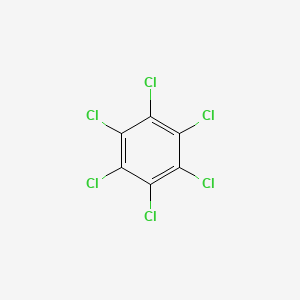
Hexachlorobenzene
Hexachlorobenzene was widely used as a pesticide to protect the seeds of onions and sorghum, wheat, and other grains against fungus until 1965. It was also used to make fireworks, ammunition, and synthetic rubber. Currently, there are no commercial uses of hexachlorobenzene in the United States. Hexachlorobenzene is a white crystalline solid that is not very soluble in water. It does not occur naturally in the environment. It is formed as a by-product while making other chemicals, in the waste streams of chloralkali and wood-preserving plants, and when burning municipal waste. — Agency for Toxic Substances and Disease Registry (ATSDR)
- IUPAC name
- 1,2,3,4,5,6-hexachlorobenzene
- Molecular formula
- C6Cl6
- Molecular weight
- 284.8 g/mol
- Exact mass
- 283.810166 Da
- XLogP3
- 5.7
- Topological polar surface area
- 0.0 Ų
- Hydrogen-bond donors
- 0
- Hydrogen-bond acceptors
- 0
- Covalent units
- 1
- Defined stereocentres
- 0
Also known as
16 more reported names
External database identifiers
- ChEBI:CHEBI:5692
- ChEMBL:CHEMBL228514
- EPA DTXSID:DTXSID2020682
- PubMed:40582692
- PubMed:38844257
- PubMed:38701644
- PubMed:37169060
- PubMed:36927187
- PubMed:36749608
- PubMed:35181438
- PubMed:34374107
- PubMed:34311058
- PubMed:33945905
- PubMed:33571556
- PubMed:32539770
Evidence from additional scientific databases
NIH PubChem PUG-View
Attributed physical-property, hazard, environmental and use annotations.
- Boiling Point: 612 °F at 760 mmHg (sublimes) (NTP, 1992) Source: CAMEO Chemicals
- Boiling Point: 325 °C Source: Hazardous Substances Data Bank (HSDB)
- Boiling Point: 323-326 °C Source: ILO-WHO International Chemical Safety Cards (ICSCs)
- Boiling Point: 612 °F Source: Occupational Safety and Health Administration (OSHA)
- Boiling Point: 325 °C @760 [mm Hg] Source: PAC Chemical Database, U.S. Department of Energy
- Color/Form: White needles Source: Hazardous Substances Data Bank (HSDB)
- Color/Form: Colorless and sublimable prismatic crystals Source: Hazardous Substances Data Bank (HSDB)
- Color/Form: Colorless crystals Source: Hazardous Substances Data Bank (HSDB)
- Density: 2.044 at 75.2 °F (USCG, 1999) - Denser than water; will sink Source: CAMEO Chemicals
- Density: 2.044 g/cu-cm at 23 °C Source: Hazardous Substances Data Bank (HSDB)
- Density: 2.0 g/cm³ Source: ILO-WHO International Chemical Safety Cards (ICSCs)
- Density: 2.044 at 75.2 °F Source: Occupational Safety and Health Administration (OSHA)
- Density: 2.044 @ 23°C Source: PAC Chemical Database, U.S. Department of Energy
- Flash Point: 468 °F (NTP, 1992) Source: CAMEO Chemicals
- Flash Point: 242 °C (closed cup) Source: Hazardous Substances Data Bank (HSDB)
- Flash Point: 242 °C c.c. Source: ILO-WHO International Chemical Safety Cards (ICSCs)
- Flash Point: 468 °F Source: Occupational Safety and Health Administration (OSHA)
- LogP: log Kow = 5.73 Source: Hazardous Substances Data Bank (HSDB)
- LogP: 5.73 Source: Human Metabolome Database (HMDB)
- LogP: 5.5/6.2 Source: ILO-WHO International Chemical Safety Cards (ICSCs)
- Melting Point: 441 to 444 °F (NTP, 1992) Source: CAMEO Chemicals
- Melting Point: 228.83 °C Source: Hazardous Substances Data Bank (HSDB)
- Melting Point: MP: 200 °C /Technical product/ Source: Hazardous Substances Data Bank (HSDB)
- Melting Point: 226 °C Source: Human Metabolome Database (HMDB)
- Melting Point: 231 °C Source: ILO-WHO International Chemical Safety Cards (ICSCs)
- Melting Point: 441-444 °F Source: Occupational Safety and Health Administration (OSHA)
- Melting Point: 228.83 °C Source: PAC Chemical Database, U.S. Department of Energy
- Physical Description: Hexachlorobenzene appears as a white crystalline substance. Insoluble in water and denser than water. Contact may irritate skin, eyes and mucous membranes. May be toxic by ingestion. Used to make other chemicals. Source: CAMEO Chemicals
- Physical Description: Liquid Source: EPA Chemical Data Reporting (CDR)
- Physical Description: Colorless to white solid; [ICSC] White powder; [Aldrich MSDS] Source: Haz-Map, Information on Hazardous Chemicals and Occupational Diseases
- Physical Description: Solid Source: Human Metabolome Database (HMDB)
- Physical Description: COLOURLESS-TO-WHITE NEEDLE-LIKE CRYSTALS. Source: ILO-WHO International Chemical Safety Cards (ICSCs)
- Physical Description: A white crystalline substance. Source: Occupational Safety and Health Administration (OSHA)
- Solubility: less than 1 mg/mL at 68 °F (NTP, 1992) Source: CAMEO Chemicals
- Solubility: In water, 4.7X10⁻³ mg/L at 25 °C Source: Hazardous Substances Data Bank (HSDB)
- Solubility: Sparingly soluble in cold alcohol; soluble in benzene, chloroform, and ether Source: Hazardous Substances Data Bank (HSDB)
- Solubility: Soluble in carbon disulfide; sparingly soluble in carbon tetrachloride Source: Hazardous Substances Data Bank (HSDB)
- Solubility: 6.2e-06 mg/mL at 25 °C Source: Human Metabolome Database (HMDB)
- Solubility: Solubility in water, g/l: Source: ILO-WHO International Chemical Safety Cards (ICSCs)
- Vapor Pressure: 1 mmHg at 237.9 °F ; 0.0000109 mmHg at 68 °F (NTP, 1992) Source: CAMEO Chemicals
- Vapor Pressure: 0.000018 [mmHg] Source: Haz-Map, Information on Hazardous Chemicals and Occupational Diseases
- Vapor Pressure: 1.72X10⁻⁵ mm Hg at 25 °C Source: Hazardous Substances Data Bank (HSDB)
- Vapor Pressure: Vapor pressure, Pa at 20 °C: 0.001 Source: ILO-WHO International Chemical Safety Cards (ICSCs)
- Vapor Pressure: 1 mmHg at 237.9 °F Source: Occupational Safety and Health Administration (OSHA)
- IARC Carcinogenic Agent: Hexachlorobenzene Source: International Agency for Research on Cancer (IARC)
- IARC Carcinogenic Classes: Group 2B: Possibly carcinogenic to humans Source: International Agency for Research on Cancer (IARC)
- IARC Monographs: Volume Sup 7: Overall Evaluations of Carcinogenicity: An Updating of IARC Monographs Volumes 1 to 42, 1987; 440 pages; ISBN 92-832-1411-0 (out of print); Volume 79: (2001) Some Thyrotropic Agents Source: International Agency for Research on Cancer (IARC)
- Publication Year: 2001 Source: International Agency for Research on Cancer (IARC)
- Evaluation Year: 2000 Source: International Agency for Research on Cancer (IARC)
- Carcinogen Classification: 2B, possibly carcinogenic to humans. (L135) Source: Toxin and Toxin Target Database (T3DB)
- Exposure Routes: The substance can be absorbed into the body by inhalation, through the skin and by ingestion. Source: ILO-WHO International Chemical Safety Cards (ICSCs)
- Exposure Routes: Oral (L225); inhalation (L225) ; dermal (L225) Source: Toxin and Toxin Target Database (T3DB)
- First Aid: EYES: First check the victim for contact lenses and remove if present. Flush victim's eyes with water or normal saline solution for 20 to 30 minutes while simultaneously calling a hospital or poison control center. Do not put any ointments, oils, or medication in the victim's eyes without specific instructions from a physician. IMMEDIATELY transport the victim after flushing eyes to a hospital even if no symptoms (such as redness or irritation) develop.; SKIN: IMMEDIATELY flood affected skin with water while removing and isolating all contaminated clothing. Gently wash all affected skin areas thoroughly with soap and water. If symptoms such as redness or irritation develop, IMMEDIATELY call a physician and be prepared to transport the victim to a hospital for treatment.; INHALATION: IMMEDIATELY leave the contaminated area; take deep breaths of fresh air. IMMEDIATELY call a physician and be prepared to transport the victim to a hospital even if no symptoms (such as wheezing, coughing, shortness of breath, or burning in the mouth, throat, or chest) develop. Provide proper respiratory protection to rescuers entering an unknown atmosphere. Whenever possible, Self-Contained Breathing Ap Source: CAMEO Chemicals
- ERG2024, Guide 152 (Hexachlorobenzene): General First Aid:; · Call 911 or emergency medical service.; · Ensure that medical personnel are aware of the material(s) involved, take precautions to protect themselves and avoid contamination.; · Move victim to fresh air if it can be done safely.; · Administer oxygen if breathing is difficult.; · If victim is not breathing:; -- DO NOT perform mouth-to-mouth resuscitation; the victim may have ingested or inhaled the substance.; -- If equipped and pulse detected, wash face and mouth, then give artificial respiration using a proper respiratory medical device (bag-valve mask, pocket mask equipped with a one-way valve or other device).; -- If no pulse detected or no respiratory medical device available, provide continuous compressions. Conduct a pulse check every two minutes or monitor for any signs of spontaneous respirations.; · Remove and isolate contaminated clothing and shoes.; · For minor skin contact, avoid spreading material on unaffected skin.; · In case of contact with substance, remove immediately by flushing skin or eyes with running water for at least 20 minutes.; · For severe burns, immediate medical attention is required.; · Effects of exposure (inhalation, ingestion, Source: Emergency Response Guidebook (ERG)
- Signal: Danger Source: Regulation (EC) No 1272/2008 of the European Parliament and of the Council
- GHS Hazard Statements: H350: May cause cancer [Danger Carcinogenicity]; H372 **: Causes damage to organs through prolonged or repeated exposure [Danger Specific target organ toxicity, repeated exposure]; H400: Very toxic to aquatic life [Warning Hazardous to the aquatic environment, acute hazard]; H410: Very toxic to aquatic life with long lasting effects [Warning Hazardous to the aquatic environment, long-term hazard] Source: Regulation (EC) No 1272/2008 of the European Parliament and of the Council
- Precautionary Statement Codes: P203, P260, P264, P270, P273, P280, P318, P319, P391, P405, and P501 (click each P-code to see the statement) Source: Regulation (EC) No 1272/2008 of the European Parliament and of the Council
- Signal: Danger Source: European Chemicals Agency (ECHA)
- GHS Hazard Statements: H350 (100%): May cause cancer [Danger Carcinogenicity]; H372 (100%): Causes damage to organs through prolonged or repeated exposure [Danger Specific target organ toxicity, repeated exposure]; H400 (98.3%): Very toxic to aquatic life [Warning Hazardous to the aquatic environment, acute hazard]; H410 (100%): Very toxic to aquatic life with long lasting effects [Warning Hazardous to the aquatic environment, long-term hazard] Source: European Chemicals Agency (ECHA)
- Precautionary Statement Codes: P203, P260, P264, P270, P273, P280, P318, P319, P391, P405, and P501 (click each P-code to see the statement) Source: European Chemicals Agency (ECHA)
- ECHA C&L Notifications Summary: Aggregated GHS information provided per 747 reports by companies from 17 notifications to the ECHA C&L Inventory. Each notification may be associated with multiple companies.; Information may vary between notifications depending on impurities, additives, and other factors. The percentage value in parenthesis indicates the notified classification ratio from companies that provide hazard codes. Only hazard codes with percentage values above 10% are shown. For more detailed information, please visit ECHA C&L website. Source: European Chemicals Agency (ECHA)
- Signal: Danger Source: NITE-CMC
- GHS Hazard Statements: H332: Harmful if inhaled [Warning Acute toxicity, inhalation]; H351: Suspected of causing cancer [Warning Carcinogenicity]; H360: May damage fertility or the unborn child [Danger Reproductive toxicity]; H362: May cause harm to breast-fed children [Reproductive toxicity, effects on or via lactation]; H372: Causes damage to organs through prolonged or repeated exposure [Danger Specific target organ toxicity, repeated exposure]; H373: May causes damage to organs through prolonged or repeated exposure [Warning Specific target organ toxicity, repeated exposure]; H400: Very toxic to aquatic life [Warning Hazardous to the aquatic environment, acute hazard]; H410: Very toxic to aquatic life with long lasting effects [Warning Hazardous to the aquatic environment, long-term hazard] Source: NITE-CMC
- Precautionary Statement Codes: P203, P260, P261, P263, P264, P270, P271, P273, P280, P304+P340, P317, P318, P319, P391, P405, and P501 (click each P-code to see the statement) Source: NITE-CMC
- GHS Hazard Statements: H303: May be harmful if swallowed [Warning Acute toxicity, oral]; H351: Suspected of causing cancer [Warning Carcinogenicity]; H360: May damage fertility or the unborn child [Danger Reproductive toxicity]; H372: Causes damage to organs through prolonged or repeated exposure [Danger Specific target organ toxicity, repeated exposure]; H373: May causes damage to organs through prolonged or repeated exposure [Warning Specific target organ toxicity, repeated exposure] Source: NITE-CMC
- Precautionary Statement Codes: P203, P260, P264, P270, P280, P301+P317, P318, P319, P405, and P501 (click each P-code to see the statement) Source: NITE-CMC
- Health Effects: Chronic exposure to hexachlorobenzene can damage the liver, thyroid, nervous system, bones, kidneys, blood, and immune and endocrine systems. It also causes a syndrome, called black sore, that is characterized by dermal blistering and epidermolysis, pigmentation and scarring, alopecia, photosensitivity, hepatomegaly, porphyria, suppurative arthritis, osteomyelitis, and osteoporosis of the bones of the hands. It may also cause a liver disease called porphyria cutanea tarda. This disease can cause red-colored urine, skin sores, change in skin color, arthritis, and problems of the liver, nervous system, and stomach. Hexachlorobenzene also affects development and results in lower survival rates of children of exposed mothers. It is also believed to be a human carcinogen. (T10, L225) Source: Toxin and Toxin Target Database (T3DB)
- Target Organs: Cancer, Developmental (effects during periods when organs are developing) , Hepatic (Liver), Neurological (Nervous System), Reproductive (Producing Children) Source: Agency for Toxic Substances and Disease Registry (ATSDR)
- Target Organs: Hepatic Source: EPA Integrated Risk Information System (IRIS)
- Toxicity Summary: Based on representative levels of hexachlorobenzene in air, water, and food, the total intake of hexachlorobenzene by adults in the general population ... is predominantly from the diet. ... Hexachlorobenzene is readily absorbed by the oral route in experimental animals and poorly via the skin. ... In animals and humans, hexachlorobenzene accumulates in lipid-rich tissues, such as adipose tissue, adrenal cortex, bone marrow, skin and some endocrine tissues, and can be transferred to offspring both across the placenta and via mothers' milk. Hexachlorobenzene undergoes limited metabolism, yielding pentachlorophenol, tetrachlorohydroquinone and pentachlorothiophenol as the major metabolites in urine.... The acute toxicity of hexachlorobenzene to experimental animals is low ... In animal studies, hexachlorobenzene is not a skin or eye irritant ... The available data on the systemic toxicity of hexachlorobenzene indicate that the pathway for the biosynthesis of heme is a major target of hexachlorobenzene toxicity. Elevated levels of porphyrin and/or porphyrin precursors have been found in the liver, other tissues and excreta of several species of laboratory mammals ... Porphyria has bee Source: Hazardous Substances Data Bank (HSDB)
- Toxicity Summary: Hexachlorobenzene causes porphyria by modifying sulfhydryl groups in the catalytic or substrate-binding sites of uroporphyrinogen decarboxylase. This inhibits uroporphyrinogen decarboxylase, resulting in a deficiency of the decarboxylation of uroporphyrinogen III and accumulation of uroporphyrins in the liver. In addition, metabolism of hexachlorobenzene by the cytochrome P-450 enzymes is believed to produce reactive electrophilic metabolites that covalently bind to cellular proteins and DNA, causing irreversible damage. Exposure to hexochlorobenzene also causes macrophages to be attracted to organs such as the spleen, lungs, and skin, where they become activated by the hexochlorobenzene. This leads to a cascade of reactions involving innate immune cells. The gene expression profiles provide evidence for the importance of macrophages and granulocytes and mediators released by these cells in the adverse inflammatory response against hexochlorobenzene. In this way, co-stimulatory or danger signals are generated that could polyclonally activate T cells. Hexachlorobenzene is a weak agonist for aryl hydrocarbon receptor and may exhibit some of its toxic effects by activating the gene-re Source: Toxin and Toxin Target Database (T3DB)
- Environmental Bioconcentration: BCF values of 2,700 to 4,800 were measured in carp exposed to 10 ug/L of hexachlorobenzene during an 8 week incubation period and BCF values of 1,600 to 3,900 were measured in carp exposed to 1 ug/L of hexachlorobenzene during an 8 week incubation period(1). Log BCF values in rainbow trout (Salmo gairdneri) were given as 3.7-4.3(2-4) and in fathead minnows (Pimephales promelas) and sunfish (Lepomis cyanellus) log BCF values of 4.21 and 4.34, respectively, were reported(3). After an 8-week exposure period of carp (Cyprinus carpio) to concentrations of 0.5 and 0.05 ug/L of hexachlorobenzene, the BCFs were 11,000-27,000 and 6,000-30,000, respectively(5). According to a classification scheme(6), these BCF values suggest that bioconcentration in aquatic organisms is very high, provided the compound is not metabolized by the organism(SRC). Source: Hazardous Substances Data Bank (HSDB)
- Environmental Bioconcentration: Larval stages of Chironmus decorus were used to define the bioaccumulation of sediment sorbed mono-, di-, tri-, and hexachlorobenzenes. Larvae were exposed to high and low organic content sediments equilibrated with individual radiolabeled chlorobenzenes prior to testing. The uptake of chlorobenzenes by midge larvae was rapid for all compounds, and apparent steady state conditions were reached within 48 hrs of exposure. Bioconcentration factors for the accumulation of chlorobenzenes from sediments and from interstitial and overlying waters were related to the octanol/water partition coefficients of the cmpd. Bioaccumulation was dependent on the concentration of the chemicals in interstitial water. Source: Hazardous Substances Data Bank (HSDB)
- Environmental Bioconcentration: A list is given of environmental chemicals detectable in adipose tissue and/or milk in non-occupationally exposed individuals that include ... . Besides their physiochemical properties ..., the list contains average BCFs, ADIs, ... production figures, fate in the environment, concentrations in human adipose tissue, and data from total diet studies from market basket investigations are given. Bioconcentration factors (wet wt basis) of these compounds are between 3 and 47 times higher in humans than in rats. Source: Hazardous Substances Data Bank (HSDB)
- Environmental Fate: TERRESTRIAL FATE: Based on a recommended classification scheme(1), measured log Koc values in the range of 3.6-5.5(2-4) indicate that hexachlorobenzene is expected to be immobile in soil(SRC). Volatilization of hexachlorobenzene from moist soil surfaces is expected to be an important fate process(SRC) given a Henry's Law constant of 5.8X10⁻⁴ atm-cu m/mole at 25 °C(5). However, adsorption to soil is expected to attenuate volatilization(SRC). Hexachlorobenzene is not expected to volatilize from dry soil surfaces(SRC) based upon a vapor pressure of 1.72X10⁻⁵ mm Hg at 25 °C(6). Hexachlorobenzene is persistent to either abiotic or biodegradation processes in soil(7). One study measured a half-life (first-order kinetics) of 3-6 years for hexachlorobenzene in soils(7,8). The half-life for residence of hexachlorobenzene in soil has been estimated to be 970-2100 days with the major loss process from soil at the surface being volatilization(9). Source: Hazardous Substances Data Bank (HSDB)
- Environmental Fate: AQUATIC FATE: Based on a classification scheme(1), measured log Koc values of 4.9-5.5) measured in sediment(2,3) indicate that hexachlorobenzene is expected to adsorb to suspended solids and sediment(SRC). Volatilization from water surfaces is expected(4) based upon a Henry's Law constant of 5.8X10⁻⁴ atm-cu m/mole(5), but adsorption is expected to attenuate this process(SRC). Using this Henry's Law constant and an estimation method(3), volatilization half-lives for a model river and model lake are 7.5 hours and 7.5 days, respectively, if adsorption is ignored(SRC). The volatilization half-life from a model pond (2 m deep) is approximately 5 years if adsorption is considered(6). According to a classification scheme(7), BCF values in the range of 1,600 to 30,000 in fish(8) suggest that bioconcentration in aquatic organisms is very high. Hexachlorobenzene is resistant to aerobic biodegradation(8). Anaerobic biodegradation in water-sediment varies widely with half-lives ranging from weeks to years(8) with an intermediate value of roughly 1.7 years(8). Hydrolysis is not an important fate process for hexachlorobenzene(8). Photolysis half-lives in shallow water exposed to sunlight may be Source: Hazardous Substances Data Bank (HSDB)
- Environmental Fate: ATMOSPHERIC FATE: According to a model of gas/particle partitioning of semivolatile organic compounds in the atmosphere(1), hexachlorobenzene, which has a vapor pressure of 1.71X10⁻⁵ mm Hg at 25 °C(2), is expected to exist in both the vapor and particulate phases in the ambient atmosphere. Monitoring studies have demonstrated that the vapor phase generally predominates(3). Vapor-phase hexachlorobenzene is degraded in the atmosphere by reaction with photochemically-produced hydroxyl radicals(SRC); the half-life for this reaction in air is estimated to be 1.6 years(SRC) from its rate constant of 2.7X10⁻¹⁴ cu cm/molec-sec(SRC). Results of vapor phase photolysis studies indicate direct photolysis is not expected to be an important fate process in the atmosphere(3). Particulate-phase hexachlorobenzene may be physically removed from the air by wet and dry deposition(SRC). Hexachlorobenzene has been detected in many precipitation monitoring studies (both rain water and snow)(4); therefore, removal from air occurs via wet deposition(SRC). Source: Hazardous Substances Data Bank (HSDB)
- Industry Uses: Intermediate Source: EPA Chemical Data Reporting (CDR)
- Uses: There are currently no commercial uses of hexachlorobenzene in the United States. Hexachlorobenzene is currently formed as a byproduct during the manufacture of other chemicals (mainly solvents) and pesticides. Source: EPA Hazardous Air Pollutants
- Sources/Uses: Was used as a pesticide until 1965; it may be produced as a waste product from chloralkali and wood-preserving plants or as an emission from municipal incinerators; it can bioaccumulate in lichens, fish, marine animals, birds, and caribou; [ATSDR ToxFAQs] Used as a seed fungicide to prevent common and dwarf bunt on wheat; [EXTOXNET] Hexachlorobenzene differs chemically and toxicologically from hexachlorocyclohexane, the gamma isomer of which (lindane) is still a widely-used insecticide. [EPA Pesticides] Used in organic synthesis; [Merck Index] Used to make rubber, electrodes, dyes, pentachlorophenol, and aromatic fluorocarbons; Also used as plasticizer for polyvinyl chloride, wood preservative, in military pyrotechnics, and to impregnate paper; [HSDB] Uses likely discontinued: as a wood preservative and in manufacture of munitions, aluminum (fluxing agent), graphite anodes, and rubber; Used as fungicidal seed treatment in some countries until 1985; Still produced in appreciable quantities as by-product in manufacture of chlorinated solvents and pesticides; [INCHEM HSG] Source: Haz-Map, Information on Hazardous Chemicals and Occupational Diseases
- Restricted Notes: Banned from use as a pesticide in the U.S. [EXTOXNET] Source: Haz-Map, Information on Hazardous Chemicals and Occupational Diseases
- Industrial Processes with risk of exposure: Aluminum Producing [Category: Industry]; Pulp and Paper Processing [Category: Industry]; Applying Wood Preservatives [Category: Other]; Farming (Pesticides) [Category: Industry] Source: Haz-Map, Information on Hazardous Chemicals and Occupational Diseases
- Uses: For hexachlorobenzene (USEPA/OPP Pesticide Code: 061001) there are 0 labels match. /SRP: Not registered for current use in the U.S., but approved pesticide uses may change periodically and so federal, state and local authorities must be consulted for currently approved uses./ Source: Hazardous Substances Data Bank (HSDB)
- Uses: In organic syntheses. Formerly as agricultural fungicide. Source: Hazardous Substances Data Bank (HSDB)
- Uses: As a raw material for synthetic rubber; plasticizer for polyvinyl chloride; as a rubber peptizing agent in the manufacture of nitroso and styrene-type rubbers Source: Hazardous Substances Data Bank (HSDB)
- Uses: Additive for pyrotechnic compositions for the military, porosity controller in manufacture of electrodes; intermediate in dye manufacture. Source: Hazardous Substances Data Bank (HSDB)
- Uses: For more Uses (Complete) data for HEXACHLOROBENZENE (10 total), please visit the HSDB record page. Source: Hazardous Substances Data Bank (HSDB)
- Uses: Hexachlorobenzene was previously used as a pesticide to protect the seeds of onions and sorghum, wheat, and other grains against fungus. It was also used to make fireworks, ammunition, and synthetic rubber. As it can persist in the environment for long periods of time, today exposure occurs mainly from contact with contaminated water, food, soil, or air. (L225) Source: Toxin and Toxin Target Database (T3DB)
Mapped by: Existing checksum-valid CAS to unique PubChem CID match. Retrieved: 2026-08-31. Open source record
Scientific classifications and hazard annotations provide context and do not replace the market-specific regulatory decision shown above.
Additional source coverage and match status
| Source | Result | Checked |
|---|---|---|
| NIH PubChem PUG-View | Exact match | 2026-08-31 |
A recorded no-match is useful evidence that the source was checked; it is not a claim that the substance does not exist elsewhere.
Retrieved from NIH PubChem on 2026-09-02 by checksum-valid CAS matching. Chemical properties do not replace the regulatory decision on this page.
Record details
Chemical name
Hexachlorobenzene
Regulatory information
SCCS opinions
- Opinion concerning Chemical Ingredients in Cosmetic Products classified as Carcinogenic, Mutagenic or Toxic to Reproduction according to the Chemicals Directive 67/548/EECC
- Opinion concerning Chemical Ingredients in Cosmetic Products classified as Carcinogenic, Mutagenic or Toxic to Reproduction according to the Chemicals Directive 67/548/EEC
CMR
| Category | Carcinogenic | Mutagenic | Reprotoxic |
|---|---|---|---|
| Cat. 1B | ✓ | — | — |
Key data
Related records for Hexachlorobenzene
Direct matches are limited for this record, so nearby entries from Annex II are shown as well.
Bromoethylene (Vinyl bromide)
alpha-Chlorotoluene (Benzyl chloride)
alpha,alpha,alpha-Trichlorotoluene
Methyloxirane (Propylene oxide)
(Epoxyethyl)benzene (Styrene oxide)
1-Chloro-2,3-epoxypropane (Epichlorohydrin)
R-1-Chloro-2,3-epoxypropane
What Annex II means for Hexachlorobenzene
Hexachlorobenzene is listed as a prohibited substance under Annex II of EU Cosmetics Regulation 1223/2009 and must not be intentionally added. Article 17 separately addresses unintended small quantities that are technically unavoidable under good manufacturing practice and compatible with the Article 3 safety requirement.
Formulators must screen their ingredients and raw materials to ensure none contain this substance. Suppliers should provide documentation confirming absence when requested.
The page also surfaces 12 related annex records with overlapping identifiers, annex logic or naming patterns.
Compliance checklist
- Verify this substance is absent from all raw materials and finished formulations.
- Request absence confirmation or CoA from raw material suppliers.
- Document the screening result in the Product Information File (PIF).
- This substance has CMR classification. Review the CMR table above and verify current Annex II/III status before use.
Frequently asked questions
Source note for Annex II record Hexachlorobenzene
This page summarizes one Annex II record for Hexachlorobenzene from public European Commission cosmetic materials and adds linked inventory or identifier matches when available.
Use this record page to review Annex II conditions for Hexachlorobenzene, but confirm any final regulatory decision against the current official annex wording and source files.
Tools & next steps
Check your formula
Paste a full INCI list to detect Hexachlorobenzene and other flagged EU annex records in one pass.
INCI CheckerCompare entries
Compare Hexachlorobenzene side by side with another annex record to review differences in restrictions, concentrations and annex placement.
CompareBrowse the annex
See all records in Annex II and compare regulatory conditions across substances in this annex.
Open Annex II