
o -Cresol
Canada Hotlist: o -Cresol
Health Canada lists this ingredient as restricted; the listed conditions and warnings apply.
Regulatory decision and full conditions
- Status
- Restricted
- Legal role
- Official guidance
- Regulatory summary
- Health Canada lists this ingredient as restricted; the listed conditions and warnings apply.
- Conditions and restrictions
a) Not permitted in cosmetics intended to be used on or around mucosal membranes such as eyes, mouth or nose | b) Other cosmetics · Maximum concentration: 0.1% · Warnings: "Do not use in the area of the eye, mouth or nose"
Substance identity
- Official source name
- o -Cresol
- CAS
- 95-48-7; 108-39-4
- EC
- Not supplied in this source row
- Identity mapping
- Exact CAS: 95-48-7
- Linked ingredient
- O-CRESOL
Linked CosIng identity data
Names and aliases
CosIng description: Phenol, 2-methyl-
Recorded cosmetic function: ANTIMICROBIAL, PERFUMING
Function pages:ANTIMICROBIAL, PERFUMING
View the complete ingredient profileCross-market snapshot for this identity
Exact linked records currently present in this site. An absent market means no imported exact match, not permission to use the substance.
Canada
Current record2 linked records · 2 with specific conditions
Open supporting record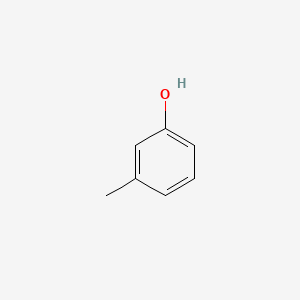
Verified chemistry for CAS 108-39-4
M-Cresol
M-cresol is a cresol with the methyl substituent at position 3. It is a minor urinary metabolite of toluene. It has a role as a human xenobiotic metabolite. — ChEBI
- IUPAC name
- 3-methylphenol
- Molecular formula
- C7H8O
- Molecular weight
- 108.14 g/mol
- Exact mass
- 108.057514874 Da
- Monoisotopic mass
- 108.057514874 Da
- XLogP3
- 2.0
- Topological polar surface area
- 20.2 Ų
- Molecular complexity
- 70.0
- Formal charge
- 0
- Hydrogen-bond donors
- 1
- Hydrogen-bond acceptors
- 1
- Rotatable bonds
- 0
- Heavy atoms
- 8
- Covalent units
- 1
Names and synonyms reported to PubChem
16 more reported names
External database identifiers
- ChEBI:CHEBI:17231
- ChEMBL:CHEMBL298312
- EPA DTXSID:DTXSID6024200
- PubMed:24387763
- PubMed:23030272
- PubMed:22937994
- PubMed:22858495
- PubMed:22707573
- PubMed:22619582
- PubMed:22615541
- PubMed:22591789
- PubMed:22574013
- PubMed:22567567
- PubMed:22520499
- PubMed:22463815
Advanced structure statistics
- Defined atom stereocentres
- 0
- Undefined atom stereocentres
- 0
- Defined bond stereocentres
- 0
- Undefined bond stereocentres
- 0
- 3D pharmacophore features
- 2
- 3D rings
- 1
- 3D hydrophobes
- 0
- 3D acceptor features
- 0
- 3D donor features
- 1
- 3D anionic centres
- 0
- 3D cationic centres
- 0
- 3D conformers
- 1
- Effective 3D rotors
- 0.0
Machine-readable structure identifiers
- SMILES
CC1=CC(=CC=C1)O- InChI
InChI=1S/C7H8O/c1-6-3-2-4-7(8)5-6/h2-5,8H,1H3- InChIKey
RLSSMJSEOOYNOY-UHFFFAOYSA-N
Evidence from additional scientific databases
NIH PubChem PUG-View
Attributed physical-property, hazard, environmental and use annotations.
- Autoignition Temperature: 1038 °F (USCG, 1999) Source: CAMEO Chemicals
- Autoignition Temperature: 1038 °F (558 °C) Source: Hazardous Substances Data Bank (HSDB)
- Autoignition Temperature: 575 °C Source: ILO-WHO International Chemical Safety Cards (ICSCs)
- Boiling Point: 397 °F at 760 mmHg (NTP, 1992) Source: CAMEO Chemicals
- Boiling Point: 202.2 °C Source: DrugBank
- Boiling Point: 202.2 °C Source: Hazardous Substances Data Bank (HSDB)
- Boiling Point: 202.00 to 203.00 °C. @ 760.00 mm Hg Source: Human Metabolome Database (HMDB)
- Boiling Point: 202 °C Source: ILO-WHO International Chemical Safety Cards (ICSCs)
- Boiling Point: 201 °C Source: Joint FAO/WHO Expert Committee on Food Additives (JECFA)
- Boiling Point: 397 °F Source: The National Institute for Occupational Safety and Health (NIOSH)
- Color/Form: Colorless, yellowish liquid Source: Hazardous Substances Data Bank (HSDB)
- Color/Form: Colorless to yellow liquid [Note: A solid below 54 degrees F]. Source: Hazardous Substances Data Bank (HSDB)
- Color/Form: Colorless, yellowish or pinkish liquid Source: Hazardous Substances Data Bank (HSDB)
- Density: 1.0336 at 68 °F (USCG, 1999) - Denser than water; will sink Source: CAMEO Chemicals
- Density: 1.034 at 20 °C/4 °C Source: Hazardous Substances Data Bank (HSDB)
- Density: Relative density (water = 1): 1.03 Source: ILO-WHO International Chemical Safety Cards (ICSCs)
- Density: 1.028-1.033 Source: Joint FAO/WHO Expert Committee on Food Additives (JECFA)
- Density: 1.03 Source: The National Institute for Occupational Safety and Health (NIOSH)
- pKa: 10.1 (at 25 °C) Source: DrugBank
- Dissociation Constants: pKa = 10.09 Source: Hazardous Substances Data Bank (HSDB)
- Flash Point: 187 °F (NTP, 1992) Source: CAMEO Chemicals
- Flash Point: 187 °F (86 °C) (Closed cup) Source: Hazardous Substances Data Bank (HSDB)
- Flash Point: 86 °C (187 °F) - closed cup Source: Hazardous Substances Data Bank (HSDB)
- Flash Point: 86 °C Source: ILO-WHO International Chemical Safety Cards (ICSCs)
- Flash Point: 187 °F Source: The National Institute for Occupational Safety and Health (NIOSH)
- LogP: 1.96 Source: DrugBank
- LogP: log Kow = 1.96 Source: Hazardous Substances Data Bank (HSDB)
- LogP: 1.96 Source: Human Metabolome Database (HMDB)
- LogP: 1.96 Source: ILO-WHO International Chemical Safety Cards (ICSCs)
- Melting Point: 52.7 °F (NTP, 1992) Source: CAMEO Chemicals
- Melting Point: 11.8 °C Source: DrugBank
- Melting Point: 12.2 °C Source: Hazardous Substances Data Bank (HSDB)
- Melting Point: 11.8 °C Source: Human Metabolome Database (HMDB)
- Melting Point: 11-12 °C Source: ILO-WHO International Chemical Safety Cards (ICSCs)
- Melting Point: 54 °F Source: The National Institute for Occupational Safety and Health (NIOSH)
- Odor: Phenolic odor Source: Hazardous Substances Data Bank (HSDB)
- Odor: Odor of coal tar Source: Hazardous Substances Data Bank (HSDB)
- Odor: Sweet, tarry odor Source: Hazardous Substances Data Bank (HSDB)
- Odor: Distinct phenolic odor, with an odor threshold of 5 ppm; sometimes referred to as an empyreumatic odor Source: Hazardous Substances Data Bank (HSDB)
- Physical Description: M-cresol is a colorless liquid with a sweet tarry odor. Sinks and mixes slowly with water. (USCG, 1999) Source: CAMEO Chemicals
- Physical Description: Liquid Source: EPA Chemical Data Reporting (CDR)
- Physical Description: Colorless or yellowish liquid with a phenolic odor; mp = 11-12 deg C; [Merck Index] Hygroscopic; [CAMEO] Source: Haz-Map, Information on Hazardous Chemicals and Occupational Diseases
- Physical Description: Liquid Source: Human Metabolome Database (HMDB)
- Physical Description: COLOURLESS-TO-YELLOW LIQUID WITH CHARACTERISTIC ODOUR. Source: ILO-WHO International Chemical Safety Cards (ICSCs)
- Physical Description: Colourless to yellow-brown liquid, dry, tarry, medicinal-leathery, phenolic odour Source: Joint FAO/WHO Expert Committee on Food Additives (JECFA)
- Physical Description: Colorless to yellowish liquid with a sweet, tarry odor. [Note: A solid below 54 °F.] Source: The National Institute for Occupational Safety and Health (NIOSH)
- Refractive Index: Index of refraction: 1.5398 at 20 °C/D Source: Hazardous Substances Data Bank (HSDB)
- Refractive Index: 1.537-1.543 Source: Joint FAO/WHO Expert Committee on Food Additives (JECFA)
- Solubility: 10 to 50 mg/mL at 68 °F (NTP, 1992) Source: CAMEO Chemicals
- Solubility: 22700 mg/L (at 25 °C) Source: DrugBank
- Solubility: In water, 2.22X10+4 mg/L at 25 °C Source: Hazardous Substances Data Bank (HSDB)
- Solubility: Soluble in solutions of fixed alkali hydroxides; miscible with alcohol, chloroform, ether Source: Hazardous Substances Data Bank (HSDB)
- Solubility: Miscible with acetone, benzene, carbon tetrachloride Source: Hazardous Substances Data Bank (HSDB)
- Solubility: Soluble in vegetable oils, glycerin and dilute alkai Source: Hazardous Substances Data Bank (HSDB)
- Solubility: 22.7 mg/mL at 25 °C Source: Human Metabolome Database (HMDB)
- Solubility: Solubility in water, g/100ml at 20 °C: 2.4 (moderate) Source: ILO-WHO International Chemical Safety Cards (ICSCs)
- Solubility: slightly soluble in water; soluble in oils Source: Joint FAO/WHO Expert Committee on Food Additives (JECFA)
- Solubility: miscible (in ethanol) Source: Joint FAO/WHO Expert Committee on Food Additives (JECFA)
- Solubility: 2% Source: The National Institute for Occupational Safety and Health (NIOSH)
- Vapor Pressure: 0.04 mmHg at 68 °F ; 1 mmHg at 126 °F (NTP, 1992) Source: CAMEO Chemicals
- Vapor Pressure: 0.11 [mmHg] Source: Haz-Map, Information on Hazardous Chemicals and Occupational Diseases
- Vapor Pressure: 0.11 mm Hg at 25 °C Source: Hazardous Substances Data Bank (HSDB)
- Vapor Pressure: Vapor pressure, Pa at 20 °C: 13 Source: ILO-WHO International Chemical Safety Cards (ICSCs)
- Vapor Pressure: (77 °F): 0.14 mmHg Source: The National Institute for Occupational Safety and Health (NIOSH)
- Viscosity: 12.9 cP at 25 °C; 4.417 cP at 50 °C; 2.093 cP at 75 °C; 1.207 cP at 100 °C Source: Hazardous Substances Data Bank (HSDB)
- Viscosity: 4.05 mm²/s at 50 °C Source: ILO-WHO International Chemical Safety Cards (ICSCs)
- Carcinogen Classification: No indication of carcinogenicity to humans (not listed by IARC). Source: Toxin and Toxin Target Database (T3DB)
- Exposure Routes: The substance can be absorbed into the body by inhalation of its vapour, through the skin and by ingestion. Serious local effects by all routes of exposure. Source: ILO-WHO International Chemical Safety Cards (ICSCs)
- Exposure Routes: inhalation, skin absorption, ingestion, skin and/or eye contact Source: The National Institute for Occupational Safety and Health (NIOSH)
- Exposure Routes: Oral (L528) ; inhalation (L528) ; dermal (L528) Source: Toxin and Toxin Target Database (T3DB)
- First Aid: EYES: First check the victim for contact lenses and remove if present. Flush victim's eyes with water or normal saline solution for 20 to 30 minutes while simultaneously calling a hospital or poison control center. Do not put any ointments, oils, or medication in the victim's eyes without specific instructions from a physician. IMMEDIATELY transport the victim after flushing eyes to a hospital even if no symptoms (such as redness or irritation) develop.; SKIN: IMMEDIATELY flood affected skin with water while removing and isolating all contaminated clothing. Gently wash all affected skin areas thoroughly with soap and water. IMMEDIATELY call a hospital or poison control center even if no symptoms (such as redness or irritation) develop. IMMEDIATELY transport the victim to a hospital for treatment after washing the affected areas.; INHALATION: IMMEDIATELY leave the contaminated area; take deep breaths of fresh air. If symptoms (such as wheezing, coughing, shortness of breath, or burning in the mouth, throat, or chest) develop, call a physician and be prepared to transport the victim to a hospital. Provide proper respiratory protection to rescuers entering an unknown atmosphere. Whene Source: CAMEO Chemicals
- First Aid: (General first aid procedures); Eye: Irrigate immediately - If this chemical contacts the eyes, immediately wash (irrigate) the eyes with large amounts of water, occasionally lifting the lower and upper lids. Get medical attention immediately.; Skin: Soap wash immediately - If this chemical contacts the skin, immediately wash the contaminated skin with soap and water. If this chemical penetrates the clothing, immediately remove the clothing, wash the skin with soap and water, and get medical attention promptly.; Breathing: Respiratory support; Swallow: Medical attention immediately - If this chemical has been swallowed, get medical attention immediately. Source: The National Institute for Occupational Safety and Health (NIOSH)
- Signal: Danger Source: Regulation (EC) No 1272/2008 of the European Parliament and of the Council
- GHS Hazard Statements: H301: Toxic if swallowed [Danger Acute toxicity, oral]; H311: Toxic in contact with skin [Danger Acute toxicity, dermal]; H314: Causes severe skin burns and eye damage [Danger Skin corrosion/irritation] Source: Regulation (EC) No 1272/2008 of the European Parliament and of the Council
- Precautionary Statement Codes: P260, P262, P264, P270, P280, P301+P316, P301+P330+P331, P302+P352, P302+P361+P354, P304+P340, P305+P354+P338, P316, P321, P330, P361+P364, P363, P405, and P501 (click each P-code to see the statement) Source: Regulation (EC) No 1272/2008 of the European Parliament and of the Council
- Signal: Danger Source: European Chemicals Agency (ECHA)
- GHS Hazard Statements: H301 (100%): Toxic if swallowed [Danger Acute toxicity, oral]; H311 (> 99.9%): Toxic in contact with skin [Danger Acute toxicity, dermal]; H314 (100%): Causes severe skin burns and eye damage [Danger Skin corrosion/irritation]; H412 (10.1%): Harmful to aquatic life with long lasting effects [Hazardous to the aquatic environment, long-term hazard] Source: European Chemicals Agency (ECHA)
- Precautionary Statement Codes: P260, P262, P264, P270, P273, P280, P301+P316, P301+P330+P331, P302+P352, P302+P361+P354, P304+P340, P305+P354+P338, P316, P321, P330, P361+P364, P363, P405, and P501 (click each P-code to see the statement) Source: European Chemicals Agency (ECHA)
- ECHA C&L Notifications Summary: Aggregated GHS information provided per 2818 reports by companies from 21 notifications to the ECHA C&L Inventory. Each notification may be associated with multiple companies.; Information may vary between notifications depending on impurities, additives, and other factors. The percentage value in parenthesis indicates the notified classification ratio from companies that provide hazard codes. Only hazard codes with percentage values above 10% are shown. For more detailed information, please visit ECHA C&L website. Source: European Chemicals Agency (ECHA)
- Signal: Danger Source: NITE-CMC
- GHS Hazard Statements: H227: Combustible liquid [Warning Flammable liquids]; H301: Toxic if swallowed [Danger Acute toxicity, oral]; H311: Toxic in contact with skin [Danger Acute toxicity, dermal]; H314: Causes severe skin burns and eye damage [Danger Skin corrosion/irritation]; H318: Causes serious eye damage [Danger Serious eye damage/eye irritation]; H351: Suspected of causing cancer [Warning Carcinogenicity]; H370: Causes damage to organs [Danger Specific target organ toxicity, single exposure]; H372: Causes damage to organs through prolonged or repeated exposure [Danger Specific target organ toxicity, repeated exposure]; H373: May causes damage to organs through prolonged or repeated exposure [Warning Specific target organ toxicity, repeated exposure]; H401: Toxic to aquatic life [Hazardous to the aquatic environment, acute hazard] Source: NITE-CMC
- Precautionary Statement Codes: P203, P210, P260, P262, P264, P264+P265, P270, P273, P280, P301+P316, P301+P330+P331, P302+P352, P302+P361+P354, P304+P340, P305+P354+P338, P308+P316, P316, P317, P318, P319, P321, P330, P361+P364, P363, P370+P378, P403, P405, and P501 (click each P-code to see the statement) Source: NITE-CMC
- GHS Hazard Statements: H227: Combustible liquid [Warning Flammable liquids]; H301: Toxic if swallowed [Danger Acute toxicity, oral]; H312: Harmful in contact with skin [Warning Acute toxicity, dermal]; H314: Causes severe skin burns and eye damage [Danger Skin corrosion/irritation]; H318: Causes serious eye damage [Danger Serious eye damage/eye irritation]; H335: May cause respiratory irritation [Warning Specific target organ toxicity, single exposure; Respiratory tract irritation]; H361: Suspected of damaging fertility or the unborn child [Warning Reproductive toxicity]; H370: Causes damage to organs [Danger Specific target organ toxicity, single exposure]; H373: May causes damage to organs through prolonged or repeated exposure [Warning Specific target organ toxicity, repeated exposure] Source: NITE-CMC
- Precautionary Statement Codes: P203, P210, P260, P261, P264, P264+P265, P270, P271, P280, P301+P316, P301+P330+P331, P302+P352, P302+P361+P354, P304+P340, P305+P354+P338, P308+P316, P316, P317, P318, P319, P321, P330, P362+P364, P363, P370+P378, P403, P403+P233, P405, and P501 (click each P-code to see the statement) Source: NITE-CMC
- Health Effects: Acute exposure to cholinesterase inhibitors can cause a cholinergic crisis characterized by severe nausea/vomiting, salivation, sweating, bradycardia, hypotension, collapse, and convulsions. Increasing muscle weakness is a possibility and may result in death if respiratory muscles are involved. Accumulation of ACh at motor nerves causes overstimulation of nicotinic expression at the neuromuscular junction. When this occurs symptoms such as muscle weakness, fatigue, muscle cramps, fasciculation, and paralysis can be seen. When there is an accumulation of ACh at autonomic ganglia this causes overstimulation of nicotinic expression in the sympathetic system. Symptoms associated with this are hypertension, and hypoglycemia. Overstimulation of nicotinic acetylcholine receptors in the central nervous system, due to accumulation of ACh, results in anxiety, headache, convulsions, ataxia, depression of respiration and circulation, tremor, general weakness, and potentially coma. When there is expression of muscarinic overstimulation due to excess acetylcholine at muscarinic acetylcholine receptors symptoms of visual disturbances, tightness in chest, wheezing due to bronchoconstriction, incre Source: Toxin and Toxin Target Database (T3DB)
- NFPA Health Rating: 3 - Materials that, under emergency conditions, can cause serious or permanent injury. Source: Hazardous Substances Data Bank (HSDB)
- NFPA Fire Rating: 2 - Materials that must be moderately heated or exposed to relatively high ambient temperatures before ignition can occur. Materials would not under normal conditions form hazardous atmospheres with air, but under high ambient temperatures or under moderate heating could release vapor in sufficient quantities to produce hazardous atmospheres with air. Source: Hazardous Substances Data Bank (HSDB)
- NFPA Instability Rating: 0 - Materials that in themselves are normally stable, even under fire conditions. Source: Hazardous Substances Data Bank (HSDB)
- Target Organs: Nervous Source: EPA Integrated Risk Information System (IRIS)
- Target Organs: Eyes, skin, respiratory system, central nervous system, liver, kidneys, pancreas, cardiovascular system Source: The National Institute for Occupational Safety and Health (NIOSH)
- Cosmetic Ingredient Review Conclusion: The CIR Expert panel concludes Sodium p-Chloro-m-Cresol, p-Chloro-m-Cresol, Chlorothymol, m-Cresol, o-Cresol, Isopropyl Cresols, Thymol, o-Cymen-5-ol, Cavacrol are safe at concentrations up to 0.5% in cosmetics; however, the available data are insufficient to support the safety of p-Cresol and Mixed Cresols for use in cosmetic products. Source: Cosmetic Ingredient Review (CIR)
- Cosmetic Ingredient Review Finding(s): Safe for use in cosmetics, with qualifications Source: Cosmetic Ingredient Review (CIR)
- Toxicity Summary: IDENTIFICATION AND USE: m-Cresol is colorless, yellowish liquid. It is used as a bactericide for control of crown gall and olive knot on certain fruit and nut trees and ornamentals and the genetic/physiological disorder burr knot on apples. Currently, one product is registered which contains both m-cresol and xylenol. Used as disinfectant/bacteriocide/germicide for animal pathogenic bacteria (G- and G+ vegetative) in households, sickrooms, hospitals, veterinary clinics, and veterinary hospitals; on surgical instruments, diagnostic instruments/equipment and on hospital critical rubber/plastic items. Used as an insecticide and miticide on dogs for treatment of lice and fleas. It is also used for making synthetic resins; in photographic developers, explosives. Additionally, m-cresol is chemical intermediate for thymol used in cough/cold medicinals, synthetic pyrethroid insecticides, 3-methyl-6-t-butylphenol, trinitro-m-cresol for explosives, and phenolic resins; disinfectant ingredient; ore flotation agent; solvent. m-Cresol, either pure or mixed with p-cresol, is important in the production of contact herbicides. m-Cresol is also a precursor to the pyrethroid insecticides. Furthermor Source: Hazardous Substances Data Bank (HSDB)
- Toxicity Summary: m-Cresol is a cholinesterase or acetylcholinesterase (AChE) inhibitor. A cholinesterase inhibitor (or 'anticholinesterase') suppresses the action of acetylcholinesterase. Because of its essential function, chemicals that interfere with the action of acetylcholinesterase are potent neurotoxins, causing excessive salivation and eye-watering in low doses, followed by muscle spasms and ultimately death. Nerve gases and many substances used in insecticides have been shown to act by binding a serine in the active site of acetylcholine esterase, inhibiting the enzyme completely. Acetylcholine esterase breaks down the neurotransmitter acetylcholine, which is released at nerve and muscle junctions, in order to allow the muscle or organ to relax. The result of acetylcholine esterase inhibition is that acetylcholine builds up and continues to act so that any nerve impulses are continually transmitted and muscle contractions do not stop. Among the most common acetylcholinesterase inhibitors are phosphorus-based compounds, which are designed to bind to the active site of the enzyme. The structural requirements are a phosphorus atom bearing two lipophilic groups, a leaving group (such as a halid Source: Toxin and Toxin Target Database (T3DB)
- Environmental Bioconcentration: Based on a 3-day exposure period of golden ide fish (Leuciscus idus melanotus) to 0.05 mg/L m-cresol, m-cresol had a BCF value of 20(1). A BCF of 10.7 has also been reported for zebrafish (Danio rerio)(2). According to a classification scheme(3), these BCF values suggest bioconcentration in aquatic organisms is low. Source: Hazardous Substances Data Bank (HSDB)
- Environmental Fate: TERRESTRIAL FATE: Based on a classification scheme(1), a m-cresol Koc value of 34.58 in a clay loam soil(2) and a cresol Koc range of 27-251 in five different soils (para-isomer)(3) indicate that m-cresol is expected to have very high to moderate mobility in soil(SRC). Volatilization of m-cresol from moist soil surfaces may occur slowly(SRC) given a Henry's Law constant of 8.6X10⁻⁷ atm-cu m/mole(4). m-Cresol may volatilize from dry soil surfaces(SRC) based upon a vapor pressure of 0.11 mm Hg at 25 °C(5). Based upon available test results, including OECD screening methods, m-cresol can be considered as being readily biodegradable under aerobic conditions(6). m-Cresol is expected to biodegrade readily in soils based on biodegradation half-lives of 0.6 and 11.3 days reported for 2 agricultural soils(7). Source: Hazardous Substances Data Bank (HSDB)
- Environmental Fate: AQUATIC FATE: Based on a classification scheme(1), a m-cresol Koc value of 34.58 in a clay loam soil(2) and a cresol Koc range of 27-251 in five different soils (para-isomer)(3) indicate that m-cresol is not expected to adsorb to suspended solids and sediment in water(SRC). Volatilization from water surfaces is expected to occur slowly(4) based upon a Henry's Law constant of 8.56X10⁻⁷ atm-cu m/mole(5). Using this Henry's Law constant and an estimation method(3), volatilization half-lives for a model river and model lake are 45 and 327 days, respectively(SRC). According to a classification scheme(6), BCF values of 20 and 10.7 reported for m-cresol in golden ide fish (Leuciscus idus melanotus)(7) and zebrafish (Danio rerio)(8), respectively, suggest that bioconcentration in aquatic organisms is low. Based upon available test results, including OECD screening methods, m-cresol can be considered as being readily biodegradable under aerobic conditions(7). Aerobic biodegradation is considered to be the major removal mechanism for m-cresol in the hydrosphere(7). m-Cresol is expected to biodegrade in water based on reported half-lives in the range of 2 to 29 days (aerobic water) and 15 to Source: Hazardous Substances Data Bank (HSDB)
- Environmental Fate: ATMOSPHERIC FATE: According to a model of gas/particle partitioning of semivolatile organic compounds in the atmosphere(1), m-cresol, which has a vapor pressure of 0.11 mm Hg at 25 °C(2), is expected to exist solely as a vapor in the ambient atmosphere. Vapor-phase m-cresol is degraded in the atmosphere by reaction with photochemically-produced hydroxyl radicals(SRC); the half-life for this reaction in air is estimated to be 6 hours(SRC) from its rate constant of 5.88X10⁻¹¹ cu cm/molecule-sec at 21 °C(3). Vapor-phase m-cresol is also degraded in the atmosphere by reaction with nitrate radicals(SRC); the half-life for this reaction in air is estimated to be 4 minutes(SRC) from its rate constant of 1.21X10⁻¹¹ cu cm/molecule-sec at 25 °C(3). The nitrate radical is the dominant atmospheric oxidant during the night-time in most atmospheric environments(4), therefore, night-time degradation appears to be a major atmospheric loss process for m-cresol(SRC). m-Cresol absorbs at wavelengths >290 nm(5) and, therefore, may be susceptible to direct photolysis by sunlight(SRC). m-Cresol has been detected in rain water(6,7) indicating it may be removed from the air by wet deposition(SRC). Source: Hazardous Substances Data Bank (HSDB)
- Consumer Uses: Binder; Solvent; Cleaning agent; Fragrance Source: EPA Chemical Data Reporting (CDR)
- Industry Uses: Catalyst; Corrosion inhibitor; Cleaning agent; Fragrance; Dye; Intermediate; Other; Solvent; Fuel; Surfactant (surface active agent); Processing aids not otherwise specified Source: EPA Chemical Data Reporting (CDR)
- Cosmetic Ingredient Review Link: CIR ingredient: m-Cresol Source: Cosmetic Ingredient Review (CIR)
- Sources/Uses: Used to make synthetic resins; Also used in disinfectants, photographic developers, explosives, fungicides, and as an industrial solvent; [Merck Index] Used in combination with 2,4-xylenol (CAS# 105-67-9) as a bactericide/bacteriostat for the control of crown gall, olive knot, and burr knot in fruit, nut, and ornamental trees and vines; [EPA REDs] Used as flavoring agent or adjuvant; [FDA] Used in ore flotation, fumigation compounds, degreasing compounds, paintbrush cleaners, lubricating oils, as a wood preservative, engine and metal cleaner, and in the textile industry; [NTP] Naturally occurring in many plants, petroleum, and, coal tar, as well as emissions from the combustion of wastes, coal, wood, vehicles, and cigarettes; Used primarily as an intermediate for synthetic vitamin E, pesticides, fragrances, antioxidants, disinfectants, and preservatives; Used as a pharmaceutical bactericide and preservative; Uses for all cresol isomers include as preservatives or stabilizers in cleaning/washing agents, surface treatment products, paints, adhesives, binding agents, corrosion inhibitors, and impregnation materials; [OECD SIDS: m-/p-Cresol Category - 2003] Source: Haz-Map, Information on Hazardous Chemicals and Occupational Diseases
- Industrial Processes with risk of exposure: Metal Degreasing [Category: Clean]; Textiles (Fiber & Fabric Manufacturing) [Category: Industry]; Painting (Solvents) [Category: Paint]; Working with Glues and Adhesives [Category: Other]; Applying Wood Preservatives [Category: Other]; Using Disinfectants or Biocides [Category: Clean]; Farming (Pesticides) [Category: Industry]; Photographic Processing [Category: Other]; Metal Extraction and Refining [Category: Industry] Source: Haz-Map, Information on Hazardous Chemicals and Occupational Diseases
- Uses: For m-cresol (USEPA/OPP Pesticide Code: 022102) ACTIVE products with label matches. /SRP: Registered for use in the U.S., but approved pesticide uses may change periodically and so federal, state and local authorities must be consulted for currently approved uses./ Source: Hazardous Substances Data Bank (HSDB)
- Uses: m-Cresol and xylenol were registered by the Agency for use in the United States in 1980 for use as a bactericide for control of crown gall and olive knot on certain fruit and nut trees and ornamentals and the genetic/physiological disorder burr knot on apples. Currently, one product is registered which contains both m-cresol and xylenol. Source: Hazardous Substances Data Bank (HSDB)
- Uses: For making synthetic resins; in disinfectants and fumigants; as industrial solvent; m-cresol in photographic developers, explosives. Source: Hazardous Substances Data Bank (HSDB)
- Uses: Chemical intermediate for thymol used in cough/cold medicinals, synthetic pyrethroid insecticides, 3-methyl-6-t-butylphenol, trinitro-m-cresol for explosives, & phenolic resins (possible use); disinfectant ingredient (possible use); ore flotation agent (possible use); solvent (eg, for wire enamel). Source: Hazardous Substances Data Bank (HSDB)
- Uses: For more Uses (Complete) data for m-CRESOL (11 total), please visit the HSDB record page. Source: Hazardous Substances Data Bank (HSDB)
- Uses: Cresols are used to as solvents, disinfectants and deodorizers, as well as to make other chemicals. They may be formed normally in the body from other compounds. Cresols are found in many foods and in wood and tobacco smoke, crude oil, coal tar, and in chemical mixtures used as wood preservatives. Small organisms in soil and water produce cresols when they break down materials in the environment. Breathing air containing cresols is the primary source of exposure. Exposure may also result from drinking contaminated water, eating contaminated food and coming into contact with liquids containing cresols. (L528) Source: Toxin and Toxin Target Database (T3DB)
Mapped by: Existing checksum-valid CAS to unique PubChem CID match. Retrieved: 2026-08-31. Open source record
Scientific classifications and hazard annotations provide context and do not replace the market-specific regulatory decision shown above.
Additional source coverage and match status
| Source | Result | Checked |
|---|---|---|
| NIH PubChem PUG-View | Exact match | 2026-08-31 |
A recorded no-match is useful evidence that the source was checked; it is not a claim that the substance does not exist elsewhere.
Retrieved from NIH PubChem on 2026-08-31 by checksum-valid CAS matching. Chemical properties do not replace the regulatory decision on this page.
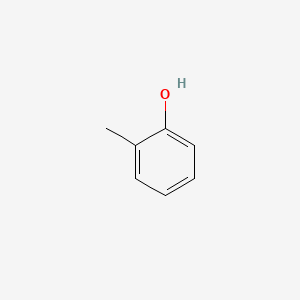
Verified chemistry for CAS 95-48-7
O-Cresol
O-cresol is a cresol that is phenol substituted by a methyl group at position 2. It is a minor urinary metabolite of toluene. It has a role as a human xenobiotic metabolite. — ChEBI
- IUPAC name
- 2-methylphenol
- Molecular formula
- C7H8O
- Molecular weight
- 108.14 g/mol
- Exact mass
- 108.057514874 Da
- Monoisotopic mass
- 108.057514874 Da
- XLogP3
- 2.0
- Topological polar surface area
- 20.2 Ų
- Molecular complexity
- 70.0
- Formal charge
- 0
- Hydrogen-bond donors
- 1
- Hydrogen-bond acceptors
- 1
- Rotatable bonds
- 0
- Heavy atoms
- 8
- Covalent units
- 1
Names and synonyms reported to PubChem
16 more reported names
External database identifiers
- ChEBI:CHEBI:28054
- ChEMBL:CHEMBL46931
- EPA DTXSID:DTXSID8021808
- PubMed:24387763
- PubMed:22937060
- PubMed:22898212
- PubMed:22856288
- PubMed:22795898
- PubMed:22793878
- PubMed:22693913
- PubMed:22606270
- PubMed:22534185
- PubMed:22519119
- PubMed:22454565
- PubMed:22439567
Advanced structure statistics
- Defined atom stereocentres
- 0
- Undefined atom stereocentres
- 0
- Defined bond stereocentres
- 0
- Undefined bond stereocentres
- 0
- 3D pharmacophore features
- 2
- 3D rings
- 1
- 3D hydrophobes
- 0
- 3D acceptor features
- 0
- 3D donor features
- 1
- 3D anionic centres
- 0
- 3D cationic centres
- 0
- 3D conformers
- 1
- Effective 3D rotors
- 0.0
Machine-readable structure identifiers
- SMILES
CC1=CC=CC=C1O- InChI
InChI=1S/C7H8O/c1-6-4-2-3-5-7(6)8/h2-5,8H,1H3- InChIKey
QWVGKYWNOKOFNN-UHFFFAOYSA-N
Retrieved from NIH PubChem on 2026-08-31 by checksum-valid CAS matching. Chemical properties do not replace the regulatory decision on this page.
Official source and provenance
- Registered source
- Health Canada Cosmetic Ingredient Hotlist
- Source reference
- Hotlist restricted entry 63
- Source record ID
restricted:63- Source version
- Health Canada Hotlist 2025-08-13
- Source language
- English
- Translation status
- Original is English
- Source updated
- 2025-08-13
- Snapshot checked
- 2026-08-30 04:07 UTC
- Validation method
- strict HTML tables t1=490 and t2=90
- SHA-256
8b52ff573d08373ee90121f6a701b3607e4a3d6fc748a7d56171eb53510af91a
Registered dataset notes
- Dataset coverage
- Administrative prohibitions, restrictions, conditions and warning requirements
- Authority note
- Official Health Canada compliance indicator; not a complete safety clearance
How this record fits the market dataset
Status distribution
Condition text is present on 172 of 580 current records. An empty condition field is interpreted according to the record type above; it is never converted into an unrestricted-use claim.
Canada market context
Complete Hotlist snapshot
Coverage version: Health Canada Cosmetic Ingredient Hotlist, 13 August 2025
All prohibited and restricted Hotlist entries, including conditions and warning requirements published in the official list.
Verification checklist
- Search English/French names and CAS identifiers.
- Apply every restriction, concentration and label warning.
- Check Food and Drugs Act/Cosmetic Regulations requirements.
- Recheck the current Hotlist before notification or sale.
Official market sources
- Health Canada Cosmetic Ingredient HotlistOfficial Health Canada compliance indicator; not a complete safety clearance
Verification workflow and record completeness
Before using this result in a compliance decision
- Confirm that “o -Cresol” and every CAS/EC identifier refer to the material in your supplier specification.
- Search English/French names and CAS identifiers.
- Apply every restriction, concentration and label warning.
- Check Food and Drugs Act/Cosmetic Regulations requirements.
- Recheck the current Hotlist before notification or sale.
- Document the source version and recheck the regulator before manufacture, notification or market placement.
Fields available in this record
- Official substance nameAvailable
- CASAvailable
- ECNot supplied
- Separate condition textAvailable
- Effective dateNot supplied
- Snapshot hash and methodAvailable
Questions this page answers
Stable citation
o -Cresol. Hotlist restricted entry 63. Canada. Source version Health Canada Hotlist 2025-08-13. CosIng Checker regulatory record: https://cosingchecker.com/regulations/ca/records/553/
Cite the regulator as the legal authority. This page is a structured evidence index and verification aid, not a substitute for the official text or professional legal assessment.
Interpretation and limits for Canada
This substance is not unrestricted: cosmetic use is subject to the conditions in the cited official record.
Check product type, body area, concentration, purity and warning requirements before deciding whether a formulation is compliant.
How to interpret the legal role
The authority uses this source as compliance guidance; the underlying legislation remains controlling.
Evidence on this page
- Recorded outcome: Restricted
- Legal role: Official guidance
- Source version: Health Canada Hotlist 2025-08-13
What it does not prove
The Hotlist is an administrative compliance tool, not an exhaustive safety approval list.
Further authoritative substance research
None of these sources overrides the market decision above.
Cosmetic Ingredient Review safety assessments
Expert Panel conclusions, assessed ingredient groups, use conditions, dates and report documents
Independent expert review considered by FDA; not a government approval or binding market rule
Research this identity at the sourceFDA Global Substance Registration System
UNII identifiers, preferred names, substance types, codes and public substance relationships
Identity registry only; UNII availability does not imply FDA review or approval
Research this identity at the sourceILO/WHO International Chemical Safety Cards
Hazards, symptoms, first aid, storage, incompatibilities and physical properties for covered chemicals
International occupational chemical-safety reference; not cosmetic-use approval
Research this identity at the sourceJapan NITE-CHRIP
Chemical identity, Japanese and foreign legal lists, GHS hazards and exposure-related information
Chemical-management evidence; cosmetic status remains governed by the applicable MHLW standard and market rules
Research this identity at the sourceNIOSH Pocket Guide to Chemical Hazards
REL, PEL, IDLH, properties, exposure routes, symptoms, target organs, first aid and measurement methods for covered workplace chemicals
US occupational-health guidance and limits; not a cosmetic ingredient decision
Research this identity at the sourceOECD eChemPortal
Gateway to authority-owned physical-property, fate, ecotoxicity, toxicity, exposure and GHS records
Discovery gateway; each linked authority remains responsible for its data
Research this identity at the sourceUS EPA CompTox CTX APIs
API key required for importDTXSID identity, experimental and predicted properties, toxicity, bioactivity, exposure and environmental data
Scientific and computational evidence; predictions must remain labelled and do not determine cosmetic legality
Research this identity at the source