
OZONE
OZONE is listed in the EU CosIng inventory, but no direct annex records are linked on this page yet.
Regulatory evidence by market
No rule for this ingredient has been imported for any of the 13 markets tracked here.
That describes this inventory, not the law. No imported rule is not evidence that an ingredient is permitted: a rule may exist under another name or identifier, or in a dataset not yet imported here.
Chemical identity and properties
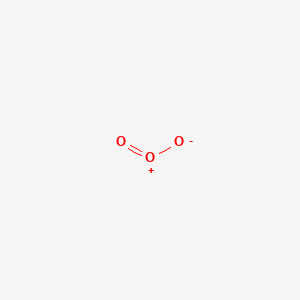
Ozone
Ozone is an elemental molecule with formula O3. An explosive, pale blue gas (b.p. 112C) that has a characteristic, pungent odour, it is continuously produced in the upper atmosphere by the action of solar ultraviolet radiation on atmospheric oxygen. It is an antimicrobial agent used in the production of bottled water, as well as in the treatment of meat, poultry and other foodstuffs. It has a role as a mutagen, a tracer, an antiseptic drug, a disinfectant, an electrophilic reagent, an oxidising agent and a member of greenhouse gas. It is a gas molecular entity, an elemental molecule, a member of reactive oxygen species and a triatomic oxygen. — ChEBI
- IUPAC name
- ozone
- Molecular formula
- O3
- Molecular weight
- 47.998 g/mol
- Exact mass
- 47.984743858 Da
- XLogP3
- -1.7
- Topological polar surface area
- 41.1 Ų
- Hydrogen-bond donors
- 0
- Hydrogen-bond acceptors
- 2
- Covalent units
- 1
- Defined stereocentres
- 0
Also known as
16 more reported names
External database identifiers
- ChEBI:CHEBI:25812
- ChEMBL:CHEMBL2447938
- EPA DTXSID:DTXSID0021098
- PubMed:41580963
- PubMed:41430723
- PubMed:41390972
- PubMed:41205789
- PubMed:40769484
- PubMed:40711967
- PubMed:40646180
- PubMed:39798125
- PubMed:39558115
- PubMed:39521264
- PubMed:39217202
- PubMed:39151609
Evidence from additional scientific databases
EMBL-EBI ChEBI
ozone
An elemental molecule with formula O3. An explosive, pale blue gas (b.p. −112°C) that has a characteristic, pungent odour, it is continuously produced in the upper atmosphere by the action of solar ultraviolet radiation on atmospheric oxygen. It is an antimicrobial agent used in the production of bottled water, as well as in the treatment of meat, poultry and other foodstuffs.
- Formula
- O3
- Average mass
- 47.997 g/mol
- Monoisotopic mass
- 47.98474 Da
- Formal charge
- 0
- elemental molecule — is a (CHEBI:25362)
- triatomic oxygen — is a (CHEBI:33265)
- reactive oxygen species — is a (CHEBI:26523)
- gas molecular entity — is a (CHEBI:138675)
- antiviral agent — has role (CHEBI:22587)
- disinfectant — has role (CHEBI:48219)
- antiseptic drug — has role (CHEBI:48218)
- hypoglycemic agent — has role (CHEBI:35526)
- cardiovascular drug — has role (CHEBI:35554)
- tracer — has role (CHEBI:35204)
- electrophilic reagent — has role (CHEBI:59739)
- mutagen — has role (CHEBI:25435)
- oxidising agent — has role (CHEBI:63248)
- greenhouse gas — has role (CHEBI:76413)
- antiviral agent — has role (CHEBI:22587)
- disinfectant — has role (CHEBI:48219)
- antiseptic drug — has role (CHEBI:48218)
- hypoglycemic agent — has role (CHEBI:35526)
- cardiovascular drug — has role (CHEBI:35554)
- tracer — has role (CHEBI:35204)
- electrophilic reagent — has role (CHEBI:59739)
- mutagen — has role (CHEBI:25435)
- oxidising agent — has role (CHEBI:63248)
- greenhouse gas — has role (CHEBI:76413)
- elemental molecule — is a (CHEBI:25362)
- triatomic oxygen — is a (CHEBI:33265)
- reactive oxygen species — is a (CHEBI:26523)
- gas molecular entity — is a (CHEBI:138675)
- 10205911 Source: PubMed
- 10226494 Source: PubMed
- 10552743 Source: PubMed
- 11029342 Source: PubMed
- 11203434 Source: PubMed
- 11568152 Source: PubMed
- 12509241 Source: PubMed
- 15598576 Source: PubMed
- 15963550 Source: PubMed
- 1717074 Source: PubMed
- 17674823 Source: PubMed
- 18250191 Source: PubMed
- 18699586 Source: PubMed
- 19519548 Source: PubMed
- 19580672 Source: PubMed
- 19723209 Source: PubMed
- 19827485 Source: PubMed
- 20477724 Source: PubMed
- 23488636 Source: PubMed
- 23501341 Source: PubMed
- 23517299 Source: PubMed
- 23556239 Source: PubMed
- 24001808 Source: PubMed
- 24176344 Source: PubMed
Additional curated names
Cross-references from this source
- CAS: 10028-15-6 — ChemIDplus
- CAS: 10028-15-6 — NIST Chemistry WebBook
- REGISTRY_NUMBER: 1101 — Gmelin
- REGISTRY_NUMBER: 4921393 — Reaxys
- MANUAL_X_REF: 931 — MolBase
- MANUAL_X_REF: HMDB0035409 — HMDB
- MANUAL_X_REF: Ozone — Wikipedia
Mapped by: Exact CAS cross-reference in the ChEBI compound record. Source updated: 2023-03-21. Retrieved: 2026-08-31. Open source record
NIH PubChem PUG-View
Attributed physical-property, hazard, environmental and use annotations.
- Boiling Point: -169.6 °F at 760 mmHg (EPA, 1998) Source: CAMEO Chemicals
- Boiling Point: -111.9 °C Source: Hazardous Substances Data Bank (HSDB)
- Boiling Point: -112 °C Source: ILO-WHO International Chemical Safety Cards (ICSCs)
- Boiling Point: -169 °F Source: Occupational Safety and Health Administration (OSHA)
- Boiling Point: -111.35 °C @760 [mm Hg] Source: PAC Chemical Database, U.S. Department of Energy
- Boiling Point: -169 °F Source: The National Institute for Occupational Safety and Health (NIOSH)
- Color/Form: COLORLESS GAS; DARK BLUE LIQ; BLUE-BLACK CRYSTALS Source: Hazardous Substances Data Bank (HSDB)
- Color/Form: BLUISH GAS Source: Hazardous Substances Data Bank (HSDB)
- Color/Form: Colorless to blue gas. Source: Hazardous Substances Data Bank (HSDB)
- Density: 1.614 at -319.7 °F (NTP, 1992) - Denser than water; will sink Source: CAMEO Chemicals
- Density: GAS: 2.144 G/L @ 0 °C; LIQ: 1.614 G/L @ -195.4 °C Source: Hazardous Substances Data Bank (HSDB)
- Density: 1.614 at -319.7 °F Source: Occupational Safety and Health Administration (OSHA)
- Density: 1.962 @25 °C Source: PAC Chemical Database, U.S. Department of Energy
- Density: 1.66(relative gas density) Source: The National Institute for Occupational Safety and Health (NIOSH)
- Melting Point: -314 °F (EPA, 1998) Source: CAMEO Chemicals
- Melting Point: -192.7 + or - 2 °C Source: Hazardous Substances Data Bank (HSDB)
- Melting Point: -193 °C Source: ILO-WHO International Chemical Safety Cards (ICSCs)
- Melting Point: -315 °F Source: Occupational Safety and Health Administration (OSHA)
- Melting Point: -193 °C Source: PAC Chemical Database, U.S. Department of Energy
- Melting Point: -315 °F Source: The National Institute for Occupational Safety and Health (NIOSH)
- Odor: CHARACTERISTIC ODOR IN CONCN LESS THAN 2 PPM Source: Hazardous Substances Data Bank (HSDB)
- Odor: Pungent odor Source: Hazardous Substances Data Bank (HSDB)
- Odor: Very pungent odor. Source: Hazardous Substances Data Bank (HSDB)
- Physical Description: Ozone appears as a colorless to bluish gas that condenses to a dark blue liquid, or blue-black crystals. Has a characteristic odor in concentrations less than 2 ppm. Used as a disinfectant for air and water; used for bleaching waxes, textiles and oils, ozonolysis of unsaturated fatty acids to pelargonic and other acids; manufacture of ink; catalyst; water treatment for taste and odor control; mold and bacteria inhibitor in cold storage; bleaching agent. (EPA, 1998) Source: CAMEO Chemicals
- Physical Description: Gas Vapor Source: EPA Chemical Data Reporting (CDR)
- Physical Description: Colorless to blue gas with a very pungent odor; [NIOSH] Source: Haz-Map, Information on Hazardous Chemicals and Occupational Diseases
- Physical Description: COLOURLESS OR BLUISH GAS WITH CHARACTERISTIC ODOUR. Source: ILO-WHO International Chemical Safety Cards (ICSCs)
- Physical Description: Colorless to blue gas with a very pungent odor. Source: Occupational Safety and Health Administration (OSHA)
- Physical Description: Colorless to blue gas with a very pungent odor. Source: The National Institute for Occupational Safety and Health (NIOSH)
- Refractive Index: INDEX OF REFRACTION: 1.2226 (LIQ) Source: Hazardous Substances Data Bank (HSDB)
- Solubility: 3e-05 g/100 g at 68 °F (NTP, 1992) Source: CAMEO Chemicals
- Solubility: 49 CC/100 CC WATER AT 0 °C; SOL IN ALKALINE SOLVENTS, OILS Source: Hazardous Substances Data Bank (HSDB)
- Solubility: Solubility in water: none Source: ILO-WHO International Chemical Safety Cards (ICSCs)
- Solubility: (32 °F): 0.001% Source: The National Institute for Occupational Safety and Health (NIOSH)
- Vapor Pressure: 41257 mmHg at 10.4 °F (EPA, 1998) Source: CAMEO Chemicals
- Vapor Pressure: >1 atm Source: Occupational Safety and Health Administration (OSHA)
- Vapor Pressure: 750 [mm Hg] @-111.5 °C Source: PAC Chemical Database, U.S. Department of Energy
- Vapor Pressure: >1 atm Source: The National Institute for Occupational Safety and Health (NIOSH)
- Substance: Ozone (Lifetime Study) Source: NTP Technical Reports
- NTP Technical Report: TR-440: Toxicology and Carcinogenesis Studies of Ozone (CASRN 10028-15-6) and Ozone/NNK (CASRNs 10028-15-6/64091-91-4) in F344/N Rats and B6C3F1 Mice (Inhalation Studies) (1994 ) Source: NTP Technical Reports
- Peer Review Date: 11/16/93 Source: NTP Technical Reports
- Conclusion for Male Rat: No Evidence Source: NTP Technical Reports
- Conclusion for Female Rat: No Evidence Source: NTP Technical Reports
- Conclusion for Male Mice: Equivocal Evidence Source: NTP Technical Reports
- Conclusion for Female Mice: Some Evidence Source: NTP Technical Reports
- Summary: Under the conditions of these 2-year and lifetime inhalation studies, there was no evidence of carcinogenic activity of ozone in male or female F344/N rats exposed to 0.12, 0.5, or 1.0 ppm. There was equivocal evidence of carcinogenic activity of ozone in male B6C3F1 mice based on increased incidences of alveolar/bronchiolar adenoma or carcinoma. There was some evidence of carcinogenic activity of ozone in female B6C3F1 mice based on increased incidences of alveolar/bronchiolar adenoma or carcinoma.; There was no evidence that exposure to 0.5 ppm ozone enhanced the incidence of NNK-induced pulmonary neoplasms in male rats.; Exposure of male and female rats to ozone for 2 years or 125 weeks was associated with goblet cell hyperplasia and squamous metaplasia in the nose, squamous metaplasia in the larynx, and metaplasia (extension of bronchial epithelium into the centriacinar alveolar ducts) and interstitial fibrosis in the lung. Exposure of male and female mice to ozone for 2 years or 130 weeks was associated with hyperplasia and squamous metaplasia in the nose and inflammation (histiocytic infiltration) and metaplasia (extension of bronchial epithelium into the centriacinar alveola Source: NTP Technical Reports
- Substance: Ozone (2-year study) Source: NTP Technical Reports
- Carcinogen Classification: No indication of carcinogenicity (not listed by IARC) (L135). Tests in mice found no carcinogenic effect (A15094). Source: Toxin and Toxin Target Database (T3DB)
- Exposure Routes: The substance can be absorbed into the body by inhalation. Source: ILO-WHO International Chemical Safety Cards (ICSCs)
- Exposure Routes: inhalation, skin and/or eye contact Source: The National Institute for Occupational Safety and Health (NIOSH)
- Exposure Routes: Inhalation Source: Toxin and Toxin Target Database (T3DB)
- First Aid: Warning: Effects may be delayed for 12 to 24 hours. Caution is advised.; Signs and Symptoms of Acute Ozone Exposure: Signs and symptoms of acute exposure to ozone may be severe and include irritation and burns of the skin, eyes, and mucous membranes. An increased respiratory rate, shallow breathing, cough, dyspnea (shortness of breath), bronchitis, pulmonary edema, and pulmonary hemorrhage may occur. Tachycardia (rapid heart rate) and hypotension (low blood pressure) may be observed. Neurologic effects include fatigue, dizziness, drowsiness, headache, exhiliration, and depression. Nausea, vomiting, and anorexia may occur. Eye exposure may result in conjuctivitis (red, inflamed eyes).; Emergency Life-Support Procedures: Acute exposure to ozone may require decontamination and life support for the victims. Emergency personnel should wear protective clothing appropriate to the type and degree of contamination. Air-purifying or supplied-air respiratory equipment should also be worn, as necessary. Rescue vehicles should carry supplies such as plastic sheeting and disposable plastic bags to assist in preventing spread of contamination.; Inhalation Exposure:; 1. Move victims to fresh air. Source: CAMEO Chemicals
- First Aid: (General first aid procedures); Eye: Medical attention - Self-explanatory; Breathing: Fresh air; 100% O2 Source: The National Institute for Occupational Safety and Health (NIOSH)
- Signal: Danger Source: European Chemicals Agency (ECHA)
- GHS Hazard Statements: H270 (99.6%): May cause or intensify fire; oxidizer [Danger Oxidizing gases]; H314 (43.9%): Causes severe skin burns and eye damage [Danger Skin corrosion/irritation]; H315 (37%): Causes skin irritation [Warning Skin corrosion/irritation]; H318 (43.9%): Causes serious eye damage [Danger Serious eye damage/eye irritation]; H319 (55.7%): Causes serious eye irritation [Warning Serious eye damage/eye irritation]; H330 (99.6%): Fatal if inhaled [Danger Acute toxicity, inhalation]; H335 (37%): May cause respiratory irritation [Warning Specific target organ toxicity, single exposure; Respiratory tract irritation]; H341 (21.4%): Suspected of causing genetic defects [Warning Germ cell mutagenicity]; H372 (43.9%): Causes damage to organs through prolonged or repeated exposure [Danger Specific target organ toxicity, repeated exposure]; H373 (21.4%): May causes damage to organs through prolonged or repeated exposure [Warning Specific target organ toxicity, repeated exposure]; H400 (80.9%): Very toxic to aquatic life [Warning Hazardous to the aquatic environment, acute hazard]; H410 (44.3%): Very toxic to aquatic life with long lasting effects [Warning Hazardous to the aquatic environment, long Source: European Chemicals Agency (ECHA)
- Precautionary Statement Codes: P203, P220, P244, P260, P261, P264, P264+P265, P270, P271, P273, P280, P284, P301+P330+P331, P302+P352, P302+P361+P354, P304+P340, P305+P351+P338, P305+P354+P338, P316, P317, P318, P319, P320, P321, P332+P317, P337+P317, P362+P364, P363, P370+P376, P391, P403, P403+P233, P405, and P501 (click each P-code to see the statement) Source: European Chemicals Agency (ECHA)
- ECHA C&L Notifications Summary: Aggregated GHS information provided per 262 reports by companies from 10 notifications to the ECHA C&L Inventory. Each notification may be associated with multiple companies.; Information may vary between notifications depending on impurities, additives, and other factors. The percentage value in parenthesis indicates the notified classification ratio from companies that provide hazard codes. Only hazard codes with percentage values above 10% are shown. For more detailed information, please visit ECHA C&L website. Source: European Chemicals Agency (ECHA)
- Signal: Danger Source: NITE-CMC
- GHS Hazard Statements: H270: May cause or intensify fire; oxidizer [Danger Oxidizing gases]; H330: Fatal if inhaled [Danger Acute toxicity, inhalation]; H335: May cause respiratory irritation [Warning Specific target organ toxicity, single exposure; Respiratory tract irritation]; H341: Suspected of causing genetic defects [Warning Germ cell mutagenicity]; H351: Suspected of causing cancer [Warning Carcinogenicity]; H361: Suspected of damaging fertility or the unborn child [Warning Reproductive toxicity]; H370: Causes damage to organs [Danger Specific target organ toxicity, single exposure]; H372: Causes damage to organs through prolonged or repeated exposure [Danger Specific target organ toxicity, repeated exposure] Source: NITE-CMC
- Precautionary Statement Codes: P203, P220, P244, P260, P261, P264, P270, P271, P280, P284, P304+P340, P308+P316, P316, P318, P319, P320, P321, P370+P376, P403, P403+P233, P405, and P501 (click each P-code to see the statement) Source: NITE-CMC
- GHS Hazard Statements: Not Classified Source: NITE-CMC
- GHS Hazard Statements: H270: May cause or intensify fire; oxidizer [Danger Oxidizing gases]; H319: Causes serious eye irritation [Warning Serious eye damage/eye irritation]; H330: Fatal if inhaled [Danger Acute toxicity, inhalation]; H341: Suspected of causing genetic defects [Warning Germ cell mutagenicity]; H361: Suspected of damaging fertility or the unborn child [Warning Reproductive toxicity]; H370: Causes damage to organs [Danger Specific target organ toxicity, single exposure]; H372: Causes damage to organs through prolonged or repeated exposure [Danger Specific target organ toxicity, repeated exposure] Source: NITE-CMC
- Precautionary Statement Codes: P203, P220, P244, P260, P264, P264+P265, P270, P271, P280, P284, P304+P340, P305+P351+P338, P308+P316, P316, P318, P319, P320, P321, P337+P317, P370+P376, P403, P403+P233, P405, and P501 (click each P-code to see the statement) Source: NITE-CMC
- Health Effects: At acute levels, ozone is an irritant and lachrymator. At chronically low doses (~40 nmol/mol) there is a great deal of evidence to show that ground level ozone can harm lung function and irritate the respiratory system. Long-term exposure to ozone and the pollutants that produce it is linked to premature death, asthma, bronchitis, heart attacks and other cardiopulmonary problems. Long-term exposure to ozone has been shown to increase risk of death from respiratory illness. An 18-year study on 450,000 people in the US revealed that those living in cities with high ozone levels such as Houston or Los Angeles had an over 30% increased risk of dying from lung disease. Both acute and chronic exposures to ozone can negatively impact the barrier function of the lung, and these exposures can initiate an inflammatory response from the immune system. This immune response involves the release of biologically active mediators that can have adverse effects on the lung tissue itself. Some effects may include the thickening of the air-blood barrier in the lungs, thus reducing the diffusion of oxygen into the blood. Animals exposed to ozone produce and release high amounts of a sugar known as hya Source: Toxin and Toxin Target Database (T3DB)
- Target Organs: Eyes, respiratory system Source: The National Institute for Occupational Safety and Health (NIOSH)
- Toxicity Summary: Ozone is a strong oxidant and reacts directly with organic double bonds. When ozone breaks down to dioxygen it gives rise to oxygen free radicals, which are highly reactive and capable of damaging many organic molecules. Moreover, it is believed that the powerful oxidizing properties of ozone may be a contributing factor of inflammation. When inhaled, ozone reacts with compounds lining the lungs to form specific, cholesterol-derived metabolites that are thought to facilitate the build-up and pathogenesis of atherosclerotic plaques. These metabolites have been confirmed as naturally occurring in human atherosclerotic arteries and are categorized into a class of secosterols termed atheronals, generated by ozonolysis of cholesterol's double bond to form a 5,6 secosterol. Ozone has also been shown to form the suspected carcinogen bromate when it is introduced to source water with high bromide concentrations. Studies have also demonstrated an increase in collagen, a structural protein involved in fibrosis, following prolonged ozone exposure. Acute and short-term exposure studies have demonstrated ozone’s effects on lung lipids which include an increase in arachidonic acid (a pro-inflamm Source: Toxin and Toxin Target Database (T3DB)
- Environmental Fate: A photochemical model was used to quantify the sensitivity of the tropospheric oxidants ozone (O3) and OH to changes in methane (CH4), carbon monoxide (CO), and NO emissions and to perturbations in climate and stratospheric chemistry. Coefficients of the form delta ln[O3]/delta ln[X] and delta ln[OH]/delta ln[X], where [X]= flux of CH4, CO, NO, stratospheric O3, and H2O have been calculated for a number of chemically coherent regions (e.g. nonpolluted continental, nonpolluted marine, urban) at low and middle latitudes. Sensitivities in O3 and OH vary with regional emissions patterns and are nonlinear within a given region as [X] changes. In most cases incr CH4 an CO emissions will suppress OH (neg coefficients) in incr O3 (pos coefficients) except in areas where NO and O3 influenced by pollution are sufficient to incr OH. Stratospheric O3 depletion will tend to decr O3 (except in high NOx areas) and incr OH through enhanced UV photolysis. Incr levels of water vapor (one possible outcome of a global warming) will also decr O3 and incr OH. In most regions, NO, CO and CH4 emission incr will suppress OH and incr O3, but these trends may be opposed by stratospheric O3 depletion and clim Source: Hazardous Substances Data Bank (HSDB)
- Environmental Fate: Ozone concn above 80 ppb are common in the East U.S. in spring and summer, but they are unusual in the West, and ozone shows considerably more day-to-day variability in the East. Variations in ozone levels are highly correlated over distances of several hundred kilometers in the East, indicating that high values are associated with episodes of large spatial scale, > 600,000 sq km. There were 10 and 7 such episodes in 1978 and 1979, respectively, between the mo of Apr and Sept; they persisted for 3-4 days, on avg, with a range of 2-8 days, and were most common in Jun. Daily max ozone values exceeded 90 ppb at over half the sites during these episodes and were often > 120 ppb at one or more sites. An analysis of the meteorology for each episode shows that they occurred preferentially in the presence of weak, slow-moving, and persistent high-pressure systems. Two episodes that occurred outside the summer half of the yr were associated with unseasonably warm weather; only 1 episode, in Mar 1978, appeared to reflect a major stratospheric intrusion. Concn of NOx at rural locations in the East are frequently high enough (> 1 ppb) to permit significant photochemical formation of ozone. It Source: Hazardous Substances Data Bank (HSDB)
- Environmental Fate: Measurements from the eastern north Pacific stratocumulus regime have been used to study components of the regional ozone budget. The surface destruction rate was determined by eddy correlation of ozone and vertical velocity measured during 8 flights of a low flying aircraft. Significant variability (2580 to 6460 s/m) was found in the measured surface resistance; it was partially correlated with friction velocity but appears to have other controlling influences as well. The mean resistance was 4190 + or - 840 s/m, which is higher (slower destruction) than most previous estimates for seawater. Flux and mean measurements throughout the marine boundary layer were used to estimate the net rate of in-situ photochemical production/destruction of ozone. Averaged over the flights, ozone concn was found to be near steady state, and a net photochemical destruction of 0.02 to 0.07 ng/cu m/sec was diagnosed. Ozone vertical distributions above the boundary layer showed a strongly layered structure with very sharp gradients. Source: Hazardous Substances Data Bank (HSDB)
- Environmental Fate: The results from a two dimensional model were analyzed to determine the principal modes of balance for ozone (O3) concn in different regions of the stratosphere. The analysis showed that except near the poles, O3 is in photochemical equilibrium above 35 km. In the lower stratosphere, equatorward of 50 degrees, concn of O3 is neither photochemically controlled nor transport controlled, but is set by a balance between transport and chemical processes. The low abundance of O3 in the tropics is a result of the balance between photochemical production and transport out of the region. The seasonal behavior at high latitudes, as evident from the springtime maxima, results from a balance between photochemical removal and transport into the region. Source: Hazardous Substances Data Bank (HSDB)
- Environmental Fate: REACTION BETWEEN ATOMIC OXYGEN & MOL OXYGEN RESULTS IN FORMATION OF OZONE, THE PRINCIPAL OXIDIZING AGENT OF PHOTOCHEMICAL SMOG. FURTHER REACTIONS INVOLVE OZONE & REACTIVE HYDROCARBONS (OLEFINS) TO PRODUCE MANY PRODUCTS, NATURE OF WHICH IS NOT YET FULLY KNOWN. Source: Hazardous Substances Data Bank (HSDB)
- Industry Uses: Oxidizing agent Source: EPA Chemical Data Reporting (CDR)
- Sources/Uses: Occupational exposure from welding fumes; Also used as a disinfectant in water treatment and as a bleaching agent in food, textile, and paper processing; [Levy, p. 409] . . . Gas metal arc and gas tungsten arc welding produce the highest ozone concentrations, especially when aluminum is used as a base metal. [Welding, Brazing and Thermal Cutting. NIOSH Criteria for a Recommended Standard. Publication No. 88-110:33,1988] TWA ozone concentrations exceeded the ACGIH TLV at a pulp and paper plant construction site. The source was the electrostatic precipitators on the operating boiler stacks located upwind from the construction site. [Appl Occup Environ Hyg. 1999 Apr;14(4):203-7] Source: Haz-Map, Information on Hazardous Chemicals and Occupational Diseases
- Industrial Processes with risk of exposure: Welding [Category: Weld]; Metal Thermal Spraying [Category: Plate]; Pulp and Paper Processing [Category: Industry]; Textiles (Fiber & Fabric Manufacturing) [Category: Industry]; Using Disinfectants or Biocides [Category: Clean]; Sewer and Wastewater Treatment [Category: Industry] Source: Haz-Map, Information on Hazardous Chemicals and Occupational Diseases
- Activities with risk of exposure: Ceramics making [Category: Hobbies] Source: Haz-Map, Information on Hazardous Chemicals and Occupational Diseases
- Uses: AS DISINFECTANT FOR AIR AND WATER BY VIRTUE OF ITS OXIDIZING POWER. FOR BLEACHING WAXES, TEXTILES, OILS. IN ORGANIC SYNTHESES. Source: Hazardous Substances Data Bank (HSDB)
- Uses: OZONOLYSIS OF UNSATURATED FATTY ACIDS TO PELARGONIC ACID, AZELAIC ACID & TO OTHER ACIDS; OXIDATION OF FURNACE CARBON BLACK FOR INK BLACK MFR; CATALYST IN PRODN OF PEROXYACETIC ACID; WATER TREATMENT FOR TASTE & ODOR CONTROL; MOLD & BACTERIA INHIBITOR IN COLD STORAGE. Source: Hazardous Substances Data Bank (HSDB)
- Uses: Used as an oxidizing agent in the organic chemical industry (eg, production of azelaic acid); as a disinfectant for food in cold storage rooms; ... for bleaching ... flour, paper pulp, starch, and sugar; for aging liquor and wood; for processing certain perfumes, vanillin, and camphor; in treating industrial wastes; in the rapid drying of varnishes and printing inks; and in the deodorizing of feathers. Source: Hazardous Substances Data Bank (HSDB)
- Uses: Deodorization of air and sewage gases, ... production of peroxides, bactericide.... Steroid hormones, removal of chlorine from nitric acid, oxidation of phenols and cyanides. Source: Hazardous Substances Data Bank (HSDB)
- Uses: Produced by white blood cells, generated by lightning, photocopiers and UV light. Used as an industrial chemical in the preparation of pharmaceuticals, synthetic lubricants. Used for bleaching and as a disinfectant. Source: Toxin and Toxin Target Database (T3DB)
Mapped by: Existing checksum-valid CAS to unique PubChem CID match. Retrieved: 2026-08-31. Open source record
Scientific classifications and hazard annotations provide context and do not replace the market-specific regulatory decision shown above.
Additional source coverage and match status
| Source | Result | Checked |
|---|---|---|
| EMBL-EBI ChEBI | Exact match | 2026-08-31 |
| NIH PubChem PUG-View | Exact match | 2026-08-31 |
A recorded no-match is useful evidence that the source was checked; it is not a claim that the substance does not exist elsewhere.
Retrieved from NIH PubChem on 2026-08-31 by checksum-valid CAS matching. Chemical properties do not replace the regulatory decision on this page.
Inventory details for OZONE
INCI name
OZONE
Record provenance
- Inventory reference
- 93980
- Imported identity
- OZONE
- Source update
- 20/06/2016
Annex records for OZONE
Key data
Official EU ingredient-name evidence
The ingredient name exactly matches the official 2025 EU glossary of common ingredient names.
Related inventory evidence
Ingredients with overlapping formulation functions
Additional official and scientific sources
11 external databases to check this identity in
Each link searches that source for this identity. What each source is, and its legal weight
How OZONE appears in the CosIng inventory
The CosIng inventory lists OZONE as a cosmetic ingredient and this page links it to 0 annex records. The inventory entry captures names and identifiers, while the annex records show where the substance is prohibited, restricted or positively listed in EU cosmetics law.
OZONE is also tagged with 1 cosmetic function in the official data. Function labels describe intended use, but they do not replace regulatory review of linked annex records before formulation or labelling work.
Frequently asked questions
Source note for OZONE
This page reproduces the CosIng inventory entry for OZONE from public European Commission cosmetic ingredient materials and shows linked identifiers even when no direct annex match is currently attached.
Use this inventory page to research OZONE and compare linked records, but verify restrictions and legal status against the current official source text and law before making regulatory decisions.
Tools & next steps
Check your formula
Scan a full INCI list to detect OZONE and any linked EU annex restrictions or allergen flags.
INCI CheckerSearch similar ingredients
Find other inventory ingredients and annex entries related to OZONE, its identifiers or nearby name variants.
Search