
DIETHYLAMINOETHYL METHACRYLATE
2-Propenoic acid, 2-methyl, 2-(diethylamino)ethyl ester
DIETHYLAMINOETHYL METHACRYLATE is listed in the EU CosIng inventory, but no direct annex records are linked on this page yet.
Regulatory evidence by market
No rule for this ingredient has been imported for any of the 13 markets tracked here.
That describes this inventory, not the law. No imported rule is not evidence that an ingredient is permitted: a rule may exist under another name or identifier, or in a dataset not yet imported here.
Chemical identity and properties
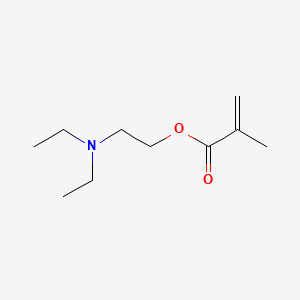
Diethylaminoethyl Methacrylate
Diethylaminoethylmethacrylate, [liquid] appears as a clear light colored liquid. Insoluble in water and slightly denser than water. May be toxic by ingestion. Contact may severely irritate skin. — CAMEO Chemicals
- IUPAC name
- 2-(diethylamino)ethyl 2-methylprop-2-enoate
- Molecular formula
- C10H19NO2
- Molecular weight
- 185.26 g/mol
- Exact mass
- 185.141578849 Da
- XLogP3
- 1.9
- Topological polar surface area
- 29.5 Ų
- Hydrogen-bond donors
- 0
- Hydrogen-bond acceptors
- 3
- Covalent units
- 1
- Defined stereocentres
- 0
Also known as
16 more reported names
External database identifiers
Evidence from additional scientific databases
NIH PubChem PUG-View
Attributed physical-property, hazard, environmental and use annotations.
- Boiling Point: BP: 80 °C at 10 mm Hg Source: Hazardous Substances Data Bank (HSDB)
- Color/Form: Clear, colorless liquid Source: Hazardous Substances Data Bank (HSDB)
- Density: 0.92 g/cu cm at 20 °C Source: Hazardous Substances Data Bank (HSDB)
- Melting Point: -65.5 °C (freezing point) Source: Hazardous Substances Data Bank (HSDB)
- Physical Description: Diethylaminoethylmethacrylate, [liquid] appears as a clear light colored liquid. Insoluble in water and slightly denser than water. May be toxic by ingestion. Contact may severely irritate skin. Source: CAMEO Chemicals
- Physical Description: Liquid; CBI Source: EPA Chemical Data Reporting (CDR)
- Physical Description: Clear light-colored liquid; [CAMEO] Light yellow liquid with a pungent odor; [MSDSonline] Source: Haz-Map, Information on Hazardous Chemicals and Occupational Diseases
- Refractive Index: Index of refraction: 1.4442 at 20 °C Source: Hazardous Substances Data Bank (HSDB)
- Vapor Pressure: 0.11 [mmHg] Source: Haz-Map, Information on Hazardous Chemicals and Occupational Diseases
- First Aid: Excerpt from ERG Guide 128 [Flammable Liquids (Water-Immiscible)]:; Refer to the "General First Aid" section. Specific First Aid: Wash skin with soap and water. In case of burns, immediately cool affected skin for as long as possible with cold water. Do not remove clothing if adhering to skin. (ERG, 2024) Source: CAMEO Chemicals
- Signal: Warning Source: Regulation (EC) No 1272/2008 of the European Parliament and of the Council
- GHS Hazard Statements: H315: Causes skin irritation [Warning Skin corrosion/irritation]; H317: May cause an allergic skin reaction [Warning Sensitization, Skin]; H319: Causes serious eye irritation [Warning Serious eye damage/eye irritation]; H332: Harmful if inhaled [Warning Acute toxicity, inhalation] Source: Regulation (EC) No 1272/2008 of the European Parliament and of the Council
- Precautionary Statement Codes: P261, P264, P264+P265, P271, P272, P280, P302+P352, P304+P340, P305+P351+P338, P317, P321, P332+P317, P333+P317, P337+P317, P362+P364, and P501 (click each P-code to see the statement) Source: Regulation (EC) No 1272/2008 of the European Parliament and of the Council
- Signal: Warning Source: European Chemicals Agency (ECHA)
- GHS Hazard Statements: H302 (20%): Harmful if swallowed [Warning Acute toxicity, oral]; H315 (99.8%): Causes skin irritation [Warning Skin corrosion/irritation]; H317 (100%): May cause an allergic skin reaction [Warning Sensitization, Skin]; H319 (99.8%): Causes serious eye irritation [Warning Serious eye damage/eye irritation]; H332 (100%): Harmful if inhaled [Warning Acute toxicity, inhalation] Source: European Chemicals Agency (ECHA)
- Precautionary Statement Codes: P261, P264, P264+P265, P270, P271, P272, P280, P301+P317, P302+P352, P304+P340, P305+P351+P338, P317, P321, P330, P332+P317, P333+P317, P337+P317, P362+P364, and P501 (click each P-code to see the statement) Source: European Chemicals Agency (ECHA)
- ECHA C&L Notifications Summary: Aggregated GHS information provided per 521 reports by companies from 4 notifications to the ECHA C&L Inventory. Each notification may be associated with multiple companies.; Information may vary between notifications depending on impurities, additives, and other factors. The percentage value in parenthesis indicates the notified classification ratio from companies that provide hazard codes. Only hazard codes with percentage values above 10% are shown. For more detailed information, please visit ECHA C&L website. Source: European Chemicals Agency (ECHA)
- Signal: Danger Source: NITE-CMC
- GHS Hazard Statements: H227: Combustible liquid [Warning Flammable liquids]; H302: Harmful if swallowed [Warning Acute toxicity, oral]; H314: Causes severe skin burns and eye damage [Danger Skin corrosion/irritation]; H317: May cause an allergic skin reaction [Warning Sensitization, Skin]; H318: Causes serious eye damage [Danger Serious eye damage/eye irritation]; H332: Harmful if inhaled [Warning Acute toxicity, inhalation]; H360: May damage fertility or the unborn child [Danger Reproductive toxicity]; H371: May cause damage to organs [Warning Specific target organ toxicity, single exposure] Source: NITE-CMC
- Precautionary Statement Codes: P203, P210, P260, P261, P264, P264+P265, P270, P271, P272, P280, P301+P317, P301+P330+P331, P302+P352, P302+P361+P354, P304+P340, P305+P354+P338, P308+P316, P316, P317, P318, P321, P330, P333+P317, P362+P364, P363, P370+P378, P403, P405, and P501 (click each P-code to see the statement) Source: NITE-CMC
- GHS Hazard Statements: H227: Combustible liquid [Warning Flammable liquids]; H303: May be harmful if swallowed [Warning Acute toxicity, oral]; H314: Causes severe skin burns and eye damage [Danger Skin corrosion/irritation]; H318: Causes serious eye damage [Danger Serious eye damage/eye irritation]; H333: May be harmful if inhaled [Warning Acute toxicity, inhalation]; H360: May damage fertility or the unborn child [Danger Reproductive toxicity] Source: NITE-CMC
- Precautionary Statement Codes: P203, P210, P260, P264, P264+P265, P280, P301+P317, P301+P330+P331, P302+P361+P354, P304+P317, P304+P340, P305+P354+P338, P316, P317, P318, P321, P363, P370+P378, P403, P405, and P501 (click each P-code to see the statement) Source: NITE-CMC
- Toxicity Summary: IDENTIFICATION AND USE: 2-(N,N-Diethylamino)ethyl methacrylate is a clear, colorless liquid. It is used as a pH-responsive component in the formation of nanocarriers. HUMAN EXPOSURE AND TOXICITY: No human studies available. ANIMAL STUDIES: 2-(N,N-diethylamino)ethyl methacrylate, in acute studies with rabbits, initially suppressed brain electrical activity and then induced clonic-tonic spasms. It was strongly irritating to skin of guinea pigs and conjunctiva of rabbits. Animal studies using rats revealed that some acrylates and methacrylates are embryotoxic. The doses of monomers used in the animal studies, however, were much higher than concentrations likely encountered by workers. This chemical did not induce gene mutations in S. typhimurium and E. coli strains. Toxicity was observed at 5000 ug/plate (TA100, TA1535, TA98, TA1537) without an S9 mix and at 2500 ug/plate (five strains) with an S9 mix. Toxicity was not observed at 5000 ug/plate in WP2 uvrA without an S9 mix. In a chromosome aberration test using Chinese hamster lung cells, structural chromosomal aberrations were induced at 0.30 and 0.60 mg/mL in the presence of an exogenous metabolic activation system. Source: Hazardous Substances Data Bank (HSDB)
- Environmental Bioconcentration: An estimated BCF of 9 was calculated in fish for 2-(N,N-diethylamino)ethyl methacrylate(SRC), using an estimated log Kow of 1.95(1) and a regression-derived equation(1). According to a classification scheme(2), this BCF suggests the potential for bioconcentration in aquatic organisms is low(SRC). Source: Hazardous Substances Data Bank (HSDB)
- Environmental Fate: TERRESTRIAL FATE: Based on a classification scheme(1), an estimated Koc value of 71(SRC), determined from a structure estimation method(2), indicates that 2-(N,N-diethylamino)ethyl methacrylate is expected to have high mobility in soil(SRC). The pKa of 2-(N,N-diethylamino)ethyl methacrylate is estimated to be 8.96(3), indicating that this compound will exist mostly in cation form in the environment and cations generally adsorb more strongly to soils containing organic carbon and clay than their neutral counterparts(4). Volatilization of 2-(N,N-diethylamino)ethyl methacrylate from moist soil surfaces is not expected to be an important fate process(SRC) given an estimated Henry's Law constant of 2.1X10⁻⁷ atm-cu m/mole(SRC), using a fragment constant estimation method(2). 2-(N,N-Diethylamino)ethyl methacrylate may volatilize from dry soil surfaces(SRC) based upon an estimated vapor pressure of 0.11 mm Hg(SRC), determined from a fragment constant method(2). Utilizing the Japanese MITI test, 70% of the Theoretical BOD was reached in 4 weeks(6) suggesting that biodegradation is an important environmental fate process in soil(SRC). Based on the Japanese MITI test(6) and analog to the simi Source: Hazardous Substances Data Bank (HSDB)
- Environmental Fate: AQUATIC FATE: Based on a classification scheme(1), an estimated Koc value of 71(SRC), determined from a structure estimation method(2), indicates that 2-(N,N-diethylamino)ethyl methacrylate is not expected to adsorb to suspended solids and sediment(SRC). Volatilization from water surfaces is not expected(3) based upon an estimated Henry's Law constant of 2.1X10⁻⁷ atm-cu m/mole(SRC), developed using a fragment constant estimation method(2). According to a classification scheme(4), an estimated BCF of 9(SRC), from an estimated log Kow of 1.95(2) and a regression-derived equation(2), suggests the potential for bioconcentration in aquatic organisms is low(SRC). Utilizing the Japanese MITI test, 70% of the Theoretical BOD was reached in 4 weeks(5) suggesting that biodegradation is an important environmental fate process in water(SRC). The analogous compound 2-(N,N-dimethylamino)ethyl methacrylate is hydrolyzed at pH 7 and at pH 9 with half-lives of 4.54 days and 3.31 hours, respectively (at 25 °C), whereas it is stable at pH 4(6); 2-(N,N-diethylamino)ethyl methacrylate is expected to have very similar hydrolysis rates(SRC). Source: Hazardous Substances Data Bank (HSDB)
- Environmental Fate: ATMOSPHERIC FATE: According to a model of gas/particle partitioning of semivolatile organic compounds in the atmosphere(1), 2-(N,N-diethylamino)ethyl methacrylate, which has an estimated vapor pressure of 0.11 mm Hg at 25 °C(SRC), determined from a fragment constant method(2), is expected to exist solely as a vapor in the ambient atmosphere. Vapor-phase 2-(N,N-diethylamino)ethyl methacrylate is degraded in the atmosphere by reaction with photochemically-produced hydroxyl radicals(SRC); the half-life for this reaction in air is estimated to be 3.4 hours(SRC), calculated from its rate constant of 1.1X10⁻¹⁰ cu cm/molecule-sec at 25 °C(SRC) that was derived using a structure estimation method(2). Vapor-phase 2-(N,N-diethylamino)ethyl methacrylate is also degraded in the atmosphere by reaction with ozone(SRC); the half-life for this reaction in air is estimated to be 24 hours(SRC), calculated from its rate constant of 1.1X10⁻¹⁷ cu cm/molecule-sec at 25 °C(SRC) that was derived using a structure estimation method(2). Based on analogy to a measured nitrate radical rate constant of 4.90X10⁻¹⁵ cu cm/molecule-sec at 25 °C for ethyl methacrylate(3), the atmospheric half-life of 2-(N,N-diethyl Source: Hazardous Substances Data Bank (HSDB)
- Industry Uses: Monomers; Intermediate Source: EPA Chemical Data Reporting (CDR)
- Sources/Uses: Used as monomer and comonomer for polymers (used in automotive paints and adhesives) and in dental materials and antithrombogenic prosthetics; [HSDB] Source: Haz-Map, Information on Hazardous Chemicals and Occupational Diseases
- Industrial Processes with risk of exposure: Painting (Pigments, Binders, and Biocides) [Category: Paint]; Working with Glues and Adhesives [Category: Other]; Plastic Composites Manufacturing [Category: Industry] Source: Haz-Map, Information on Hazardous Chemicals and Occupational Diseases
- Uses: Laboratory chemicals, Manufacture of substances. Source: Hazardous Substances Data Bank (HSDB)
- Uses: /SRP/: PROPOSED FOR OR USED IN MANUFACTURE OF GRAFT POLYMERS, HAIR SPRAYS, DENTAL MATERIALS, TREATMENT OF SYNTHETIC PELTS, PREPARATION OF COPOLYMERS FOR WASTE WATER PURIFICATION. Source: Hazardous Substances Data Bank (HSDB)
- Uses: MONOMER FOR ACRYLIC POLYMERS USED IN AUTOMOTIVE PAINTS. Source: Hazardous Substances Data Bank (HSDB)
- Uses: COMONOMER FOR POLYMERS USED IN ADHESIVES. Source: Hazardous Substances Data Bank (HSDB)
- Uses: /SRP/: IN DENTAL MATERIALS, ANTITHROMBOGENIC PROSTHETICS, EXPERIMENTAL USE IN SLOW-RELEASE CAPSULES, IN COSMETICS. Source: Hazardous Substances Data Bank (HSDB)
Mapped by: Existing checksum-valid CAS to unique PubChem CID match. Retrieved: 2026-08-31. Open source record
Scientific classifications and hazard annotations provide context and do not replace the market-specific regulatory decision shown above.
Additional source coverage and match status
| Source | Result | Checked |
|---|---|---|
| EMBL-EBI ChEBI | No exact record | 2026-08-31 |
| NIH PubChem PUG-View | Exact match | 2026-08-31 |
A recorded no-match is useful evidence that the source was checked; it is not a claim that the substance does not exist elsewhere.
Retrieved from NIH PubChem on 2026-08-31 by checksum-valid CAS matching. Chemical properties do not replace the regulatory decision on this page.
Inventory details for DIETHYLAMINOETHYL METHACRYLATE
INCI name
DIETHYLAMINOETHYL METHACRYLATE
Description
2-Propenoic acid, 2-methyl, 2-(diethylamino)ethyl ester
Record provenance
- Inventory reference
- 90937
- Imported identity
- DIETHYLAMINOETHYL METHACRYLATE
- Source update
- 19/06/2013
Annex records for DIETHYLAMINOETHYL METHACRYLATE
Key data
- NAIL CONDITIONING
- Improving and/or enhancing the cosmetic characteristics of the nail (moisturizing, increasing sheen, reducing brittleness and flaking, etc.).
Official EU ingredient-name evidence
The ingredient name exactly matches the official 2025 EU glossary of common ingredient names.
Related inventory evidence
Ingredients with overlapping formulation functions
Additional official and scientific sources
11 external databases to check this identity in
Each link searches that source for this identity. What each source is, and its legal weight
How DIETHYLAMINOETHYL METHACRYLATE appears in the CosIng inventory
The CosIng inventory lists DIETHYLAMINOETHYL METHACRYLATE as a cosmetic ingredient and this page links it to 0 annex records. The inventory entry captures names and identifiers, while the annex records show where the substance is prohibited, restricted or positively listed in EU cosmetics law.
DIETHYLAMINOETHYL METHACRYLATE is also tagged with 1 cosmetic function in the official data. Function labels describe intended use, but they do not replace regulatory review of linked annex records before formulation or labelling work.
Frequently asked questions
Source note for DIETHYLAMINOETHYL METHACRYLATE
This page reproduces the CosIng inventory entry for DIETHYLAMINOETHYL METHACRYLATE from public European Commission cosmetic ingredient materials and shows linked identifiers even when no direct annex match is currently attached.
Use this inventory page to research DIETHYLAMINOETHYL METHACRYLATE and compare linked records, but verify restrictions and legal status against the current official source text and law before making regulatory decisions.
Tools & next steps
Check your formula
Scan a full INCI list to detect DIETHYLAMINOETHYL METHACRYLATE and any linked EU annex restrictions or allergen flags.
INCI CheckerSearch similar ingredients
Find other inventory ingredients and annex entries related to DIETHYLAMINOETHYL METHACRYLATE, its identifiers or nearby name variants.
Search