
DECANAL
Decanal
DECANAL is listed in the EU CosIng inventory, but no direct annex records are linked on this page yet.
Regulatory evidence by market
No rule for this ingredient has been imported for any of the 13 markets tracked here.
That describes this inventory, not the law. No imported rule is not evidence that an ingredient is permitted: a rule may exist under another name or identifier, or in a dataset not yet imported here.
Chemical identity and properties
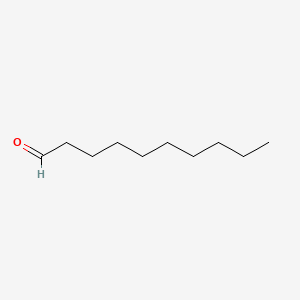
Decanal
Decanal is a saturated fatty aldehyde formally arising from reduction of the carboxy group of capric acid (decanoic acid). It has a role as an antifungal agent, a fragrance and a plant metabolite. It is a n-alkanal, a saturated fatty aldehyde and a medium-chain fatty aldehyde. — ChEBI
- IUPAC name
- decanal
- Molecular formula
- C10H20O
- Molecular weight
- 156.26 g/mol
- Exact mass
- 156.151415257 Da
- XLogP3
- 3.8
- Topological polar surface area
- 17.1 Ų
- Hydrogen-bond donors
- 0
- Hydrogen-bond acceptors
- 1
- Covalent units
- 1
- Defined stereocentres
- 0
Also known as
16 more reported names
External database identifiers
- ChEBI:CHEBI:31457
- ChEMBL:CHEMBL2228377
- EPA DTXSID:DTXSID4021553
- PubMed:23220587
- PubMed:22975051
- PubMed:22959517
- PubMed:22883207
- PubMed:22837701
- PubMed:22764831
- PubMed:22757696
- PubMed:22743183
- PubMed:22682363
- PubMed:22675344
- PubMed:22629139
- PubMed:22616015
Evidence from additional scientific databases
NIH PubChem PUG-View
Attributed physical-property, hazard, environmental and use annotations.
- Boiling Point: 404 to 410 °F at 760 mmHg (USCG, 1999) Source: CAMEO Chemicals
- Boiling Point: 212 °C Source: Hazardous Substances Data Bank (HSDB)
- Boiling Point: 209 °C Source: Joint FAO/WHO Expert Committee on Food Additives (JECFA)
- Boiling Point: 208.5 °C @760 [mm Hg] Source: PAC Chemical Database, U.S. Department of Energy
- Color/Form: Colorless to light-yellow liquid Source: Hazardous Substances Data Bank (HSDB)
- Density: 0.83 at 59 °F (USCG, 1999) - Less dense than water; will float Source: CAMEO Chemicals
- Density: 0.830 g/cu cm at 15 °C Source: Hazardous Substances Data Bank (HSDB)
- Density: 0.823-0.832 Source: Joint FAO/WHO Expert Committee on Food Additives (JECFA)
- Density: 0.830 @ 15°C Source: PAC Chemical Database, U.S. Department of Energy
- Flash Point: 185 °F (USCG, 1999) Source: CAMEO Chemicals
- Flash Point: 83 °C (181 °F) Closed cup Source: Hazardous Substances Data Bank (HSDB)
- Melting Point: 64 °F (USCG, 1999) Source: CAMEO Chemicals
- Melting Point: -3.9 °C Source: Hazardous Substances Data Bank (HSDB)
- Melting Point: Liquid Molar Volume = 0.190278 cu m/kmol; IG Heat of Formation = -3.2589X10+8 J/kmol; Heat Fusion at Melting Point = 3.45X10+7 J/kmol Source: Hazardous Substances Data Bank (HSDB)
- Melting Point: -5 °C Source: Human Metabolome Database (HMDB)
- Melting Point: -5 °C Source: PAC Chemical Database, U.S. Department of Energy
- Odor: Floral-fatty odor Source: Hazardous Substances Data Bank (HSDB)
- Odor: Citrus odor Source: Hazardous Substances Data Bank (HSDB)
- Odor: Similar to that of an orange peel Source: Hazardous Substances Data Bank (HSDB)
- Odor: Penetrating, sweet, waxy, floral, citrus, pronounced fatty odor that develops a floral character on dilution Source: Hazardous Substances Data Bank (HSDB)
- Physical Description: Decaldehyde is a colorless to light yellow liquid with a pleasant odor. Floats on water. Freezing point is 64 °F. (USCG, 1999) Source: CAMEO Chemicals
- Physical Description: Liquid; Dry Powder; Liquid; CBI Source: EPA Chemical Data Reporting (CDR)
- Physical Description: Colorless to light yellow liquid with an odor of citrus; [HSDB] Colorless liquid; [MSDSonline] Source: Haz-Map, Information on Hazardous Chemicals and Occupational Diseases
- Physical Description: Liquid Source: Human Metabolome Database (HMDB)
- Physical Description: colourless to light yellow liquid/fatty, floral-orange odour on dilution Source: Joint FAO/WHO Expert Committee on Food Additives (JECFA)
- Refractive Index: Index of refraction: 1.4287 at 20 °C/D Source: Hazardous Substances Data Bank (HSDB)
- Refractive Index: MAX ABSORPTION (C10-H22): 222 NM (LOG E= 1.9); 293 NM (LOG E= 1.4); INDEX OF REFRACTION: 1.4287 @ 20 °C/D Source: Hazardous Substances Data Bank (HSDB)
- Refractive Index: 1.426-1.430 Source: Joint FAO/WHO Expert Committee on Food Additives (JECFA)
- Solubility: In water 0.00156 mg/L at 25 °C Source: Hazardous Substances Data Bank (HSDB)
- Solubility: Soluble in ethanol, ether, acetone; slightly soluble in carbon tetrachloride Source: Hazardous Substances Data Bank (HSDB)
- Solubility: Soluble in 80% alcohol, fixed oils, volatile oils, mineral oil; insoluble in glycerol Source: Hazardous Substances Data Bank (HSDB)
- Solubility: miscible with alcohol, fixed oils, propylene glycol (may be turbid); insoluble in glycerol, water Source: Joint FAO/WHO Expert Committee on Food Additives (JECFA)
- Solubility: 1 ml in 1 ml of 80% alcohol (in ethanol) Source: Joint FAO/WHO Expert Committee on Food Additives (JECFA)
- Vapor Pressure: 0.1 [mmHg] Source: Haz-Map, Information on Hazardous Chemicals and Occupational Diseases
- Vapor Pressure: 0.103 mm Hg at 25 °C/ from experimentally derived coefficients Source: Hazardous Substances Data Bank (HSDB)
- Vapor Pressure: 0.103 [mm Hg] @25 °C Source: PAC Chemical Database, U.S. Department of Energy
- Viscosity: 1.5417 cP Source: Hazardous Substances Data Bank (HSDB)
- Carcinogen Classification: No indication of carcinogenicity to humans (not listed by IARC). Source: Toxin and Toxin Target Database (T3DB)
- Exposure Routes: Endogenous, Ingestion, Dermal (contact) Source: Toxin and Toxin Target Database (T3DB)
- First Aid: CONTACT WITH EYES AND SKIN: wash with water for 15 min. (USCG, 1999) Source: CAMEO Chemicals
- Note: This chemical does not meet GHS hazard criteria for 2.8% (66 of 2367) of reports. Source: European Chemicals Agency (ECHA)
- Signal: Warning Source: European Chemicals Agency (ECHA)
- GHS Hazard Statements: H315 (21.9%): Causes skin irritation [Warning Skin corrosion/irritation]; H319 (91.2%): Causes serious eye irritation [Warning Serious eye damage/eye irritation]; H412 (92.1%): Harmful to aquatic life with long lasting effects [Hazardous to the aquatic environment, long-term hazard] Source: European Chemicals Agency (ECHA)
- Precautionary Statement Codes: P264, P264+P265, P273, P280, P302+P352, P305+P351+P338, P321, P332+P317, P337+P317, P362+P364, and P501 (click each P-code to see the statement) Source: European Chemicals Agency (ECHA)
- ECHA C&L Notifications Summary: Aggregated GHS information provided per 2367 reports by companies from 25 notifications to the ECHA C&L Inventory. Each notification may be associated with multiple companies.; Reported as not meeting GHS hazard criteria per 66 of 2367 reports by companies.; There are 23 notifications provided by 2301 of 2367 reports by companies with hazard statement code(s).; Information may vary between notifications depending on impurities, additives, and other factors. The percentage value in parenthesis indicates the notified classification ratio from companies that provide hazard codes. Only hazard codes with percentage values above 10% are shown. For more detailed information, please visit ECHA C&L website. Source: European Chemicals Agency (ECHA)
- Signal: Warning Source: NITE-CMC
- GHS Hazard Statements: H227: Combustible liquid [Warning Flammable liquids] Source: NITE-CMC
- Precautionary Statement Codes: P210, P280, P370+P378, P403, and P501 (click each P-code to see the statement) Source: NITE-CMC
- Signal: Warning Source: Hazardous Substances Data Bank (HSDB)
- GHS Hazard Statements: H227: Combustible liquid [Warning Flammable liquids]; H315: Causes skin irritation [Warning Skin corrosion/irritation]; H319: Causes serious eye irritation [Warning Serious eye damage/eye irritation]; H335: May cause respiratory irritation [Warning Specific target organ toxicity, single exposure; Respiratory tract irritation] Source: Hazardous Substances Data Bank (HSDB)
- Precautionary Statement Codes: P210, P261, P264, P264+P265, P271, P280, P302+P352, P304+P340, P305+P351+P338, P319, P321, P332+P317, P337+P317, P362+P364, P370+P378, P403, P403+P233, P405, and P501 (click each P-code to see the statement) Source: Hazardous Substances Data Bank (HSDB)
- Health Effects: Chronic exposure to uremic toxins can lead to a number of conditions including renal damage, chronic kidney disease and cardiovascular disease. Source: Toxin and Toxin Target Database (T3DB)
- Toxicity Summary: IDENTIFICATION AND USE: Decaldehyde (Decanal) is a colorless to light-yellow liquid. The main use of decanal is for citrus tones and for the manufacture of synthetic citrus oils. In addition, the C10 aldehydes have value as intermediates in the synthesis of pharmaceuticals and in the polymer and pesticide fields. In the aircraft cabin, decanal was produced in the presence of ozone from surface reactions with occupants and their clothing, consistent with the inference that occupants were responsible for the removal of >55% of the ozone in the aircraft cabin. HUMAN EXPOSURE AND TOXICITY: Decanal was cytotoxic to Hela cells with IC50 less than 20 ug/mL. ANIMAL STUDIES: Decanal demonstrated antifungal and bactericidal properties. ECOTOXICITY STUDIES: Decanal did not significantly affect survival or hatching success of the brine shrimp Artemia salina. Source: Hazardous Substances Data Bank (HSDB)
- Toxicity Summary: Uremic toxins such as decanal are actively transported into the kidneys via organic ion transporters (especially OAT3). Increased levels of uremic toxins can stimulate the production of reactive oxygen species. This seems to be mediated by the direct binding or inhibition by uremic toxins of the enzyme NADPH oxidase (especially NOX4 which is abundant in the kidneys and heart) (A7868). Reactive oxygen species can induce several different DNA methyltransferases (DNMTs) which are involved in the silencing of a protein known as KLOTHO. KLOTHO has been identified as having important roles in anti-aging, mineral metabolism, and vitamin D metabolism. A number of studies have indicated that KLOTHO mRNA and protein levels are reduced during acute or chronic kidney diseases in response to high local levels of reactive oxygen species (A7869). Source: Toxin and Toxin Target Database (T3DB)
- Environmental Bioconcentration: An estimated BCF of 140 was calculated in fish for decaldehyde(SRC), using an estimated log Kow of 3.76(1) and a regression-derived equation(1). According to a classification scheme(2), this BCF suggests the potential for bioconcentration in aquatic organisms is high(SRC). Source: Hazardous Substances Data Bank (HSDB)
- Environmental Fate: TERRESTRIAL FATE: Based on a classification scheme(1), an estimated Koc value of 70(SRC), determined from a structure estimation method(2), indicates that decaldehyde is expected to have high mobility in soil(SRC). Volatilization of decaldehyde from moist soil surfaces is expected to be an important fate process(SRC) given a Henry's Law constant of 1.8X10⁻³ atm-cu m/mole(3). Decaldehyde is not expected to volatilize from dry soil surfaces(SRC) based upon a vapor pressure of 0.103 mm Hg at 25 °C(4). Utilizing the BOD5 screening test, decaldehyde reached 22% theoretical BOD in 5 days using a sewage inoculum(5), suggesting that biodegradation is an important environmental fate process in soil(SRC). Source: Hazardous Substances Data Bank (HSDB)
- Environmental Fate: AQUATIC FATE: Based on a classification scheme(1), an estimated Koc value of 70(SRC), determined from a structure estimation method(2), indicates that decaldehyde is not expected to adsorb to suspended solids and sediment(SRC). Volatilization from water surfaces is expected(3) based upon a Henry's Law constant of 1.8X10⁻³ atm-cu m/mole(4). Using this Henry's Law constant and an estimation method(3), volatilization half-lives for a model river and model lake are 2 hours and 5 days, respectively(SRC). According to a classification scheme(5), an estimated BCF of 140(SRC), from an estimated log Kow of 3.76(2) and a regression-derived equation(2), suggests the potential for bioconcentration in aquatic organisms is high(SRC). Utilizing the BOD5 screening test, decaldehyde reached 22% theoretical BOD in 5 days using a sewage inoculum(6), suggesting that biodegradation is an important environmental fate process in water(SRC). Source: Hazardous Substances Data Bank (HSDB)
- Environmental Fate: ATMOSPHERIC FATE: According to a model of gas/particle partitioning of semivolatile organic compounds in the atmosphere(1), decaldehyde, which has a vapor pressure of 0.103 mm Hg at 25 °C(2), is expected to exist solely as a vapor in the ambient atmosphere. Vapor-phase decaldehyde is degraded in the atmosphere by reaction with photochemically-produced hydroxyl radicals(SRC); the half-life for this reaction in air is estimated to be 1 day(SRC), calculated from its rate constant of 3.5X10⁻¹¹ cu cm/molecule-sec at 25 °C(SRC) that was derived using a structure estimation method(3). Decaldehyde does not contain chromophores that absorb at wavelengths >290 nm(4) and, therefore, is not expected to be susceptible to direct photolysis by sunlight(SRC). Source: Hazardous Substances Data Bank (HSDB)
- Consumer Uses: Fragrance Source: EPA Chemical Data Reporting (CDR)
- Industry Uses: Flavoring and nutrient; Fragrance Source: EPA Chemical Data Reporting (CDR)
- Sources/Uses: Used in flavors, fragrances, and to make synthetic citrus oils; [HSDB] Source: Haz-Map, Information on Hazardous Chemicals and Occupational Diseases
- Uses: The main use of decanal is for citrus tones and for the manufacture of synthetic citrus oils. In addition, the C10 aldehydes have value as intermediates in the synthesis of pharmaceuticals and in the polymer and pesticide fields. Source: Hazardous Substances Data Bank (HSDB)
- Uses: Decanal is used in low concentrations in blossom fragrances (especially to create citrus nuances) and in the production of artificial citrus oils. Source: Hazardous Substances Data Bank (HSDB)
- Uses: Decaldehyde is a synthetic flavoring substance and adjuvant permitted for direct addition to food for human consumption. Source: Hazardous Substances Data Bank (HSDB)
- Uses: Reported uses (ppm):; Table: Reported uses (ppm): (Flavor and Extract Manufacturers' Association, 1994) [Table#987] Source: Hazardous Substances Data Bank (HSDB)
- Uses: Naturally produced by the body (endogenous). Source: Toxin and Toxin Target Database (T3DB)
Mapped by: Existing checksum-valid CAS to unique PubChem CID match. Retrieved: 2026-08-31. Open source record
Scientific classifications and hazard annotations provide context and do not replace the market-specific regulatory decision shown above.
Additional source coverage and match status
| Source | Result | Checked |
|---|---|---|
| NIH PubChem PUG-View | Exact match | 2026-08-31 |
A recorded no-match is useful evidence that the source was checked; it is not a claim that the substance does not exist elsewhere.
Retrieved from NIH PubChem on 2026-08-31 by checksum-valid CAS matching. Chemical properties do not replace the regulatory decision on this page.
Inventory details for DECANAL
INCI name
DECANAL
Description
Decanal
Record provenance
- Inventory reference
- 75427
- Imported identity
- DECANAL
- Source update
- 15/10/2010
Annex records for DECANAL
Key data
Official EU ingredient-name evidence
The ingredient name exactly matches the official 2025 EU glossary of common ingredient names.
Related inventory evidence
Ingredients with overlapping formulation functions
Additional official and scientific sources
11 external databases to check this identity in
Each link searches that source for this identity. What each source is, and its legal weight
How DECANAL appears in the CosIng inventory
The CosIng inventory lists DECANAL as a cosmetic ingredient and this page links it to 0 annex records. The inventory entry captures names and identifiers, while the annex records show where the substance is prohibited, restricted or positively listed in EU cosmetics law.
DECANAL is also tagged with 1 cosmetic function in the official data. Function labels describe intended use, but they do not replace regulatory review of linked annex records before formulation or labelling work.
Frequently asked questions
Source note for DECANAL
This page reproduces the CosIng inventory entry for DECANAL from public European Commission cosmetic ingredient materials and shows linked identifiers even when no direct annex match is currently attached.
Use this inventory page to research DECANAL and compare linked records, but verify restrictions and legal status against the current official source text and law before making regulatory decisions.
Tools & next steps
Check your formula
Scan a full INCI list to detect DECANAL and any linked EU annex restrictions or allergen flags.
INCI CheckerSearch similar ingredients
Find other inventory ingredients and annex entries related to DECANAL, its identifiers or nearby name variants.
Search