
MANGANESE DIOXIDE
MANGANESE OXIDE
MANGANESE DIOXIDE is listed in the EU CosIng inventory, but no direct annex records are linked on this page yet.
Regulatory evidence by market
No rule for this ingredient has been imported for any of the 13 markets tracked here.
That describes this inventory, not the law. No imported rule is not evidence that an ingredient is permitted: a rule may exist under another name or identifier, or in a dataset not yet imported here.
Chemical identity and properties
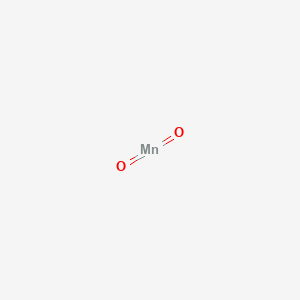
Manganese dioxide
Manganese dioxide is a manganese molecular entity with formula MnO2. It is a metal oxide and a manganese molecular entity. — ChEBI
- IUPAC name
- dioxomanganese
- Molecular formula
- MnO2
- Molecular weight
- 86.937 g/mol
- Exact mass
- 86.927872 Da
- Topological polar surface area
- 34.1 Ų
- Hydrogen-bond donors
- 0
- Hydrogen-bond acceptors
- 2
- Covalent units
- 1
- Defined stereocentres
- 0
Also known as
16 more reported names
External database identifiers
- ChEBI:CHEBI:136511
- EPA DTXSID:DTXSID501314019
- PubMed:23702825
- PubMed:15292275
Evidence from additional scientific databases
NIH PubChem PUG-View
Attributed physical-property, hazard, environmental and use annotations.
- Density: 5.0 g/cm³ Source: ILO-WHO International Chemical Safety Cards (ICSCs)
- Density: 5.08 @25 °C Source: PAC Chemical Database, U.S. Department of Energy
- Physical Description: Dry Powder; Large Crystals; CBI; Large Crystals; Other Solid; Wet Solid; Dry Powder Source: EPA Chemical Data Reporting (CDR)
- Physical Description: Natural form is steel-gray when in lumps and black when powdered; The artificial precipitate in a brownish-black solid; Both usually have some manganese oxide and water; [Merck Index] Brown odorless powder; [Alfa Aesar MSDS] Source: Haz-Map, Information on Hazardous Chemicals and Occupational Diseases
- Physical Description: BLACK-TO-BROWN POWDER. Source: ILO-WHO International Chemical Safety Cards (ICSCs)
- Solubility: Solubility in water: none Source: ILO-WHO International Chemical Safety Cards (ICSCs)
- Carcinogen Classification: No indication of carcinogenicity to humans (not listed by IARC). Source: Toxin and Toxin Target Database (T3DB)
- Exposure Routes: The substance can be absorbed into the body by inhalation of its aerosol and by ingestion. Source: ILO-WHO International Chemical Safety Cards (ICSCs)
- Exposure Routes: Oral (L228) ; inhalation (L228) Source: Toxin and Toxin Target Database (T3DB)
- Signal: Warning Source: Regulation (EC) No 1272/2008 of the European Parliament and of the Council
- GHS Hazard Statements: H302: Harmful if swallowed [Warning Acute toxicity, oral]; H332: Harmful if inhaled [Warning Acute toxicity, inhalation] Source: Regulation (EC) No 1272/2008 of the European Parliament and of the Council
- Precautionary Statement Codes: P261, P264, P270, P271, P301+P317, P304+P340, P317, P330, and P501 (click each P-code to see the statement) Source: Regulation (EC) No 1272/2008 of the European Parliament and of the Council
- Note: This chemical does not meet GHS hazard criteria for 0.8% (11 of 1416) of reports. Source: European Chemicals Agency (ECHA)
- Signal: Warning Source: European Chemicals Agency (ECHA)
- GHS Hazard Statements: H302+H332 (12.5%): Harmful if swallowed or if inhaled [Warning Acute toxicity, oral; acute toxicity, inhalation]; H302 (97.6%): Harmful if swallowed [Warning Acute toxicity, oral]; H332 (98.9%): Harmful if inhaled [Warning Acute toxicity, inhalation] Source: European Chemicals Agency (ECHA)
- Precautionary Statement Codes: P261, P264, P270, P271, P301+P317, P304+P340, P317, P330, and P501 (click each P-code to see the statement) Source: European Chemicals Agency (ECHA)
- ECHA C&L Notifications Summary: Aggregated GHS information provided per 1416 reports by companies from 37 notifications to the ECHA C&L Inventory. Each notification may be associated with multiple companies.; Reported as not meeting GHS hazard criteria per 11 of 1416 reports by companies.; There are 36 notifications provided by 1405 of 1416 reports by companies with hazard statement code(s).; Information may vary between notifications depending on impurities, additives, and other factors. The percentage value in parenthesis indicates the notified classification ratio from companies that provide hazard codes. Only hazard codes with percentage values above 10% are shown. For more detailed information, please visit ECHA C&L website. Source: European Chemicals Agency (ECHA)
- Note: This chemical does not meet GHS hazard criteria for 100% (5 of 5) of all reports. Source: European Chemicals Agency (ECHA)
- GHS Hazard Statements: Not Classified; Reported as not meeting GHS hazard criteria by 5 of 5 companies. For more detailed information, please visit ECHA C&L website. Source: European Chemicals Agency (ECHA)
- ECHA C&L Notifications Summary: Aggregated GHS information provided per 5 reports by companies from 1 notifications to the ECHA C&L Inventory.; Reported as not meeting GHS hazard criteria per 5 of 5 reports by companies.; There are 0 notifications provided by 0 of 5 reports by companies with hazard statement code(s).; Information may vary between notifications depending on impurities, additives, and other factors. The percentage value in parenthesis indicates the notified classification ratio from companies that provide hazard codes. Only hazard codes with percentage values above 10% are shown. For more detailed information, please visit ECHA C&L website. Source: European Chemicals Agency (ECHA)
- Signal: Danger Source: NITE-CMC
- Health Effects: Manganese mainly affects the nervous system and may cause behavioral changes and other nervous system effects, which include movements that may become slow and clumsy. This combination of symptoms when sufficiently severe is referred to as “manganism”. (L228) Source: Toxin and Toxin Target Database (T3DB)
- Toxicity Summary: Manganese is a cellular toxicant that can impair transport systems, enzyme activities, and receptor functions. It primarily targets the central nervous system, particularily the globus pallidus of the basal ganglia. It is believed that the manganese ion, Mn(II), enhances the autoxidation or turnover of various intracellular catecholamines, leading to increased production of free radicals, reactive oxygen species, and other cytotoxic metabolites, along with a depletion of cellular antioxidant defense mechanisms, leading to oxidative damage and selective destruction of dopaminergic neurons. In addition to dopamine, manganese is thought to perturbations other neurotransmitters, such as GABA and glutamate. In order to produce oxidative damage, manganese must first overwhelm the antioxidant enzyme manganese superoxide dismutase. The neurotoxicity of Mn(II) has also been linked to its ability to substitute for Ca(II) under physiological conditions. It can enter mitochondria via the calcium uniporter and inhibit mitochondrial oxidative phosphorylation. It may also inhibit the efflux of Ca(II), which can result in a loss of mitochondrial membrane integrity. Mn(II) has been shown to inhibit Source: Toxin and Toxin Target Database (T3DB)
- Consumer Uses: Pigment; Intermediate; Adsorbent; Soil amendments (fertilizers); Filler; Not Known or Reasonably Ascertainable; Catalyst; Other Source: EPA Chemical Data Reporting (CDR)
- Industry Uses: Pigment; Adhesion/cohesion promoter; Intermediate; Surface modifier; Oxidizing agent; Sealant (barrier); Not Known or Reasonably Ascertainable; Filler; Catalyst; Soil amendments (fertilizers); Processing aids not otherwise specified; Other Source: EPA Chemical Data Reporting (CDR)
- Sources/Uses: Naturally occurs as the mineral pyrolusite, which is the source of manganese and all its compounds; Used to make manganese steel, as an oxidizer, in dry cell alkaline batteries, for making amethyst glass, decolorizing glass, and painting on porcelain, faience, and majolica; The precipitate is used in electrotechnics, pigments, browning gun barrels, as drier for paints and varnishes, and for printing and dyeing textiles; [Merck Index] See Manganese. Source: Haz-Map, Information on Hazardous Chemicals and Occupational Diseases
- Industrial Processes with risk of exposure: Steel Producing [Category: Industry]; Battery Manufacturing [Category: Industry]; Painting (Pigments, Binders, and Biocides) [Category: Paint]; Mining [Category: Industry]; Textiles (Printing, Dyeing, or Finishing) [Category: Industry]; Glass Manufacturing [Category: Industry] Source: Haz-Map, Information on Hazardous Chemicals and Occupational Diseases
- Uses: Manganese dioxide is used primarily for dry-cell batteries, but is also used as an oxidant in organic synthesis. (L232) Source: Toxin and Toxin Target Database (T3DB)
Mapped by: Existing checksum-valid CAS to unique PubChem CID match. Retrieved: 2026-08-31. Open source record
Scientific classifications and hazard annotations provide context and do not replace the market-specific regulatory decision shown above.
Additional source coverage and match status
| Source | Result | Checked |
|---|---|---|
| NIH PubChem PUG-View | Exact match | 2026-08-31 |
A recorded no-match is useful evidence that the source was checked; it is not a claim that the substance does not exist elsewhere.
Retrieved from NIH PubChem on 2026-08-31 by checksum-valid CAS matching. Chemical properties do not replace the regulatory decision on this page.
Inventory details for MANGANESE DIOXIDE
INCI name
MANGANESE DIOXIDE
Description
MANGANESE OXIDE
Record provenance
- Inventory reference
- 57688
- Imported identity
- MANGANESE DIOXIDE
- Source update
- 15/10/2010
Annex records for MANGANESE DIOXIDE
Key data
- ANTIOXIDANT
- Inhibiting reactions promoted by oxygen, thus avoiding oxidation and rancidity.
Official EU ingredient-name evidence
The ingredient name exactly matches the official 2025 EU glossary of common ingredient names.
Related inventory evidence
Ingredients with overlapping formulation functions
Additional official and scientific sources
11 external databases to check this identity in
Each link searches that source for this identity. What each source is, and its legal weight
How MANGANESE DIOXIDE appears in the CosIng inventory
The CosIng inventory lists MANGANESE DIOXIDE as a cosmetic ingredient and this page links it to 0 annex records. The inventory entry captures names and identifiers, while the annex records show where the substance is prohibited, restricted or positively listed in EU cosmetics law.
MANGANESE DIOXIDE is also tagged with 1 cosmetic function in the official data. Function labels describe intended use, but they do not replace regulatory review of linked annex records before formulation or labelling work.
Frequently asked questions
Source note for MANGANESE DIOXIDE
This page reproduces the CosIng inventory entry for MANGANESE DIOXIDE from public European Commission cosmetic ingredient materials and shows linked identifiers even when no direct annex match is currently attached.
Use this inventory page to research MANGANESE DIOXIDE and compare linked records, but verify restrictions and legal status against the current official source text and law before making regulatory decisions.
Tools & next steps
Check your formula
Scan a full INCI list to detect MANGANESE DIOXIDE and any linked EU annex restrictions or allergen flags.
INCI CheckerSearch similar ingredients
Find other inventory ingredients and annex entries related to MANGANESE DIOXIDE, its identifiers or nearby name variants.
Search