
TARTARIC ACID
2,3-Dihydroxybutanedioic acid
TARTARIC ACID is listed in the EU CosIng inventory, but no direct annex records are linked on this page yet.
Regulatory evidence by market
No rule for this ingredient has been imported for any of the 13 markets tracked here.
That describes this inventory, not the law. No imported rule is not evidence that an ingredient is permitted: a rule may exist under another name or identifier, or in a dataset not yet imported here.
Chemical identity and properties
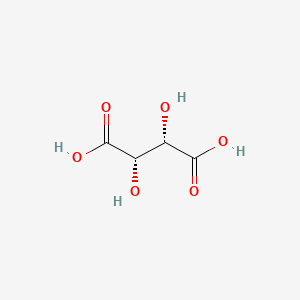
D-Tartaric acid
D-tartaric acid is the D-enantiomer of tartaric acid. It has a role as an Escherichia coli metabolite. It is a conjugate acid of a D-tartrate(1-). It is an enantiomer of a L-tartaric acid. — ChEBI
- IUPAC name
- (2S,3S)-2,3-dihydroxybutanedioic acid
- Molecular formula
- C4H6O6
- Molecular weight
- 150.09 g/mol
- Exact mass
- 150.01643791 Da
- XLogP3
- -1.9
- Topological polar surface area
- 115.0 Ų
- Hydrogen-bond donors
- 4
- Hydrogen-bond acceptors
- 6
- Covalent units
- 1
- Defined stereocentres
- 2
Also known as
16 more reported names
External database identifiers
- ChEBI:CHEBI:15672
- ChEMBL:CHEMBL1200861
- EPA DTXSID:DTXSID4043775
- EPA DTXSID:DTXSID5046986
- PubMed:22983504
- PubMed:22287180
- PubMed:22267127
- PubMed:22192415
- PubMed:21876672
- PubMed:21739986
- PubMed:21582633
- PubMed:21580069
- PubMed:21522796
- PubMed:21202277
- PubMed:21151879
- PubMed:20882599
Retrieved from NIH PubChem on 2026-08-31 by checksum-valid CAS matching. Chemical properties do not replace the regulatory decision on this page.
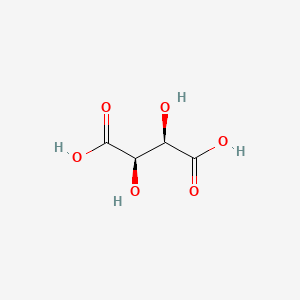
L-Tartaric acid
L-tartaric acid is the L-enantiomer of tartaric acid. It is a conjugate acid of a L-tartrate(1-). It is an enantiomer of a D-tartaric acid. — ChEBI
- IUPAC name
- (2R,3R)-2,3-dihydroxybutanedioic acid
- Molecular formula
- C4H6O6
- Molecular weight
- 150.09 g/mol
- Exact mass
- 150.01643791 Da
- XLogP3
- -1.9
- Topological polar surface area
- 115.0 Ų
- Hydrogen-bond donors
- 4
- Hydrogen-bond acceptors
- 6
- Covalent units
- 1
- Defined stereocentres
- 2
Also known as
16 more reported names
External database identifiers
- ChEBI:CHEBI:15671
- ChEMBL:CHEMBL1236315
- EPA DTXSID:DTXSID8023632
- PubMed:22974307
- PubMed:22843080
- PubMed:22531183
- PubMed:22446789
- PubMed:22298304
- PubMed:21881892
- PubMed:21763314
- PubMed:21754714
- PubMed:21588606
- PubMed:21581690
- PubMed:21581318
- PubMed:21201980
Retrieved from NIH PubChem on 2026-08-31 by checksum-valid CAS matching. Chemical properties do not replace the regulatory decision on this page.
Inventory details for TARTARIC ACID
INCI name
TARTARIC ACID
INN name
tartaric acid
Description
2,3-Dihydroxybutanedioic acid
Record provenance
- Inventory reference
- 38476
- Imported identity
- TARTARIC ACID
- Source update
- 15/10/2010
Annex records for TARTARIC ACID
Key data
Official EU ingredient-name evidence
The ingredient name exactly matches the official 2025 EU glossary of common ingredient names.
Related inventory evidence
Ingredients with overlapping formulation functions
Additional official and scientific sources
11 external databases to check this identity in
Each link searches that source for this identity. What each source is, and its legal weight
How TARTARIC ACID appears in the CosIng inventory
The CosIng inventory lists TARTARIC ACID as a cosmetic ingredient and this page links it to 0 annex records. The inventory entry captures names and identifiers, while the annex records show where the substance is prohibited, restricted or positively listed in EU cosmetics law.
TARTARIC ACID is also tagged with 2 cosmetic functions in the official data. Function labels describe intended use, but they do not replace regulatory review of linked annex records before formulation or labelling work.
Frequently asked questions
Source note for TARTARIC ACID
This page reproduces the CosIng inventory entry for TARTARIC ACID from public European Commission cosmetic ingredient materials and shows linked identifiers even when no direct annex match is currently attached.
Use this inventory page to research TARTARIC ACID and compare linked records, but verify restrictions and legal status against the current official source text and law before making regulatory decisions.
Tools & next steps
Check your formula
Scan a full INCI list to detect TARTARIC ACID and any linked EU annex restrictions or allergen flags.
INCI CheckerSearch similar ingredients
Find other inventory ingredients and annex entries related to TARTARIC ACID, its identifiers or nearby name variants.
Search