
AMMONIUM CHLORIDE
Ammonium chloride
AMMONIUM CHLORIDE is listed in the EU CosIng inventory, but no direct annex records are linked on this page yet.
Regulatory evidence by market
No rule for this ingredient has been imported for any of the 13 markets tracked here.
That describes this inventory, not the law. No imported rule is not evidence that an ingredient is permitted: a rule may exist under another name or identifier, or in a dataset not yet imported here.
Chemical identity and properties
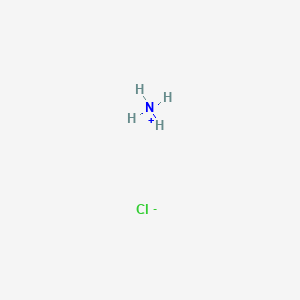
Ammonium Chloride
Ammonium chloride is an inorganic chloride having ammonium as the counterion. It has a role as a ferroptosis inhibitor. It is an inorganic chloride and an ammonium salt. — ChEBI
- IUPAC name
- azanium chloride
- Molecular formula
- ClH4N
- Molecular weight
- 53.49 g/mol
- Exact mass
- 53.0032268 Da
- Topological polar surface area
- 1.0 Ų
- Hydrogen-bond donors
- 1
- Hydrogen-bond acceptors
- 1
- Covalent units
- 2
- Defined stereocentres
- 0
Also known as
16 more reported names
External database identifiers
Evidence from additional scientific databases
NIH PubChem PUG-View
Attributed physical-property, hazard, environmental and use annotations.
- Boiling Point: Sublimes (NIOSH, 2024) Source: CAMEO Chemicals
- Boiling Point: Sublimes Source: DrugBank
- Boiling Point: 338 °C (sublimes) Source: Hazardous Substances Data Bank (HSDB)
- Boiling Point: 520 °C Source: ILO-WHO International Chemical Safety Cards (ICSCs)
- Boiling Point: sublimes Source: Occupational Safety and Health Administration (OSHA)
- Boiling Point: Sublimes Source: The National Institute for Occupational Safety and Health (NIOSH)
- Color/Form: Colorless crystals or crystalline masses, or white, granular powder Source: Hazardous Substances Data Bank (HSDB)
- Color/Form: Colorless cubic crystals Source: Hazardous Substances Data Bank (HSDB)
- Color/Form: A white, fine or coarse, crystalline powder Source: Hazardous Substances Data Bank (HSDB)
- Color/Form: Finely divided, ... white particulate dispersed in air. /Ammonium chloride fume/ Source: Hazardous Substances Data Bank (HSDB)
- Density: 1.53 at 68 °F (USCG, 1999) - Denser than water; will sink Source: CAMEO Chemicals
- Density: 1.519 g/cu cm Source: Hazardous Substances Data Bank (HSDB)
- Density: 1.5 g/cm³ Source: ILO-WHO International Chemical Safety Cards (ICSCs)
- Density: 1.53 Source: Occupational Safety and Health Administration (OSHA)
- Density: 1.53 @25 °C Source: PAC Chemical Database, U.S. Department of Energy
- Density: 1.53 Source: The National Institute for Occupational Safety and Health (NIOSH)
- Melting Point: 662 °F (Sublimes) (NIOSH, 2024) Source: CAMEO Chemicals
- Melting Point: 350 ° C (Sublimes) Source: DrugBank
- Melting Point: 520.1 (triple point; decomposes) Source: Hazardous Substances Data Bank (HSDB)
- Melting Point: 662 °F (sublimes) Source: Occupational Safety and Health Administration (OSHA)
- Melting Point: 338 °C Source: PAC Chemical Database, U.S. Department of Energy
- Melting Point: 662 °F (Sublimes) Source: The National Institute for Occupational Safety and Health (NIOSH)
- Odor: Odorless Source: Hazardous Substances Data Bank (HSDB)
- Physical Description: Ammonium chloride is a white crystalline solid. It is soluble in water(37%). The primary hazard is the threat posed to the environment. Immediate steps should be taken to limit its spread to the environment. It is used to make other ammonium compounds, as a soldering flux, as a fertilizer, and for many other uses. Source: CAMEO Chemicals
- Physical Description: Dry Powder; Liquid; Liquid; Other Solid; Dry Powder; CBI; Large Crystals Source: EPA Chemical Data Reporting (CDR)
- Physical Description: Finely divided, odorless, white particulate dispersed in air; [NIOSH] Source: Haz-Map, Information on Hazardous Chemicals and Occupational Diseases
- Physical Description: ODOURLESS COLOURLESS-TO-WHITE HYGROSCOPIC SOLID IN VARIOUS FORMS. Source: ILO-WHO International Chemical Safety Cards (ICSCs)
- Physical Description: Finely divided, odorless, white particulate dispersed in air. Source: Occupational Safety and Health Administration (OSHA)
- Physical Description: Finely divided, odorless, white particulate dispersed in air. Source: The National Institute for Occupational Safety and Health (NIOSH)
- Refractive Index: Index of refraction: 1.642 Source: Hazardous Substances Data Bank (HSDB)
- Solubility: 37 % (NIOSH, 2024) Source: CAMEO Chemicals
- Solubility: Strongly endothermic; sublimes without melting; somewhat hygroscopic; tendency to cake; hydrochloric acid and sodium chloride decrease solubility in water Source: Hazardous Substances Data Bank (HSDB)
- Solubility: In water, 39.5 g/100 g water at 25 °C Source: Hazardous Substances Data Bank (HSDB)
- Solubility: Almost insoluble in acetone, ether, ethyl acetate; soluble in alcohol Source: Hazardous Substances Data Bank (HSDB)
- Solubility: 28.3% (wt/wt) in water at 25 °C Source: Hazardous Substances Data Bank (HSDB)
- Solubility: Soluble in liquid ammonia Source: Hazardous Substances Data Bank (HSDB)
- Solubility: For more Solubility (Complete) data for AMMONIUM CHLORIDE (10 total), please visit the HSDB record page. Source: Hazardous Substances Data Bank (HSDB)
- Solubility: Solubility in water, g/100ml at 25 °C: 28.3 Source: ILO-WHO International Chemical Safety Cards (ICSCs)
- Solubility: 37% Source: The National Institute for Occupational Safety and Health (NIOSH)
- Vapor Pressure: 1 mmHg at 321 °F (NIOSH, 2024) Source: CAMEO Chemicals
- Vapor Pressure: 1 Pa at 91 °C (solid); 10 Pa at 121 °C (solid); 100 Pa at 159 °C (solid); 1kPa at 204.7 °C (solid); 10 kPa at 263.1 °C (solid); 100 kPa at 339.5 °C (solid) Source: Hazardous Substances Data Bank (HSDB)
- Vapor Pressure: Vapor pressure, kPa at 160 °C: 0.13 Source: ILO-WHO International Chemical Safety Cards (ICSCs)
- Vapor Pressure: 1 mmHg at 321 °F Source: Occupational Safety and Health Administration (OSHA)
- Vapor Pressure: (321 °F): 1 mmHg Source: The National Institute for Occupational Safety and Health (NIOSH)
- pH: pH of aqueous solution (25 °C): 1% 5.5; 3% 5.1; 10% 5.0 Source: Hazardous Substances Data Bank (HSDB)
- Exposure Routes: The substance can be absorbed into the body by inhalation of dust or fume and by ingestion. Source: ILO-WHO International Chemical Safety Cards (ICSCs)
- Exposure Routes: inhalation, skin and/or eye contact Source: The National Institute for Occupational Safety and Health (NIOSH)
- First Aid: Excerpt from NIOSH Pocket Guide for Ammonium chloride fume:; Eye: IRRIGATE IMMEDIATELY - If this chemical contacts the eyes, immediately wash (irrigate) the eyes with large amounts of water, occasionally lifting the lower and upper lids. Get medical attention immediately.; Skin: SOAP WASH IMMEDIATELY - If this chemical contacts the skin, immediately wash the contaminated skin with soap and water. If this chemical penetrates the clothing, immediately remove the clothing, wash the skin with soap and water, and get medical attention promptly.; Breathing: RESPIRATORY SUPPORT - If a person breathes large amounts of this chemical, move the exposed person to fresh air at once. If breathing has stopped, perform artificial respiration. Keep the affected person warm and at rest. Get medical attention as soon as possible. (NIOSH, 2024) Source: CAMEO Chemicals
- First Aid: (General first aid procedures); Eye: Irrigate immediately - If this chemical contacts the eyes, immediately wash (irrigate) the eyes with large amounts of water, occasionally lifting the lower and upper lids. Get medical attention immediately.; Skin: Soap wash immediately - If this chemical contacts the skin, immediately wash the contaminated skin with soap and water. If this chemical penetrates the clothing, immediately remove the clothing, wash the skin with soap and water, and get medical attention promptly.; Breathing: Respiratory support Source: The National Institute for Occupational Safety and Health (NIOSH)
- Signal: Warning Source: Regulation (EC) No 1272/2008 of the European Parliament and of the Council
- GHS Hazard Statements: H302: Harmful if swallowed [Warning Acute toxicity, oral]; H319: Causes serious eye irritation [Warning Serious eye damage/eye irritation] Source: Regulation (EC) No 1272/2008 of the European Parliament and of the Council
- Precautionary Statement Codes: P264, P264+P265, P270, P280, P301+P317, P305+P351+P338, P330, P337+P317, and P501 (click each P-code to see the statement) Source: Regulation (EC) No 1272/2008 of the European Parliament and of the Council
- Note: This chemical does not meet GHS hazard criteria for < 0.1% (2 of 3391) of reports. Source: European Chemicals Agency (ECHA)
- Signal: Warning Source: European Chemicals Agency (ECHA)
- GHS Hazard Statements: H302 (99.9%): Harmful if swallowed [Warning Acute toxicity, oral]; H319 (> 99.9%): Causes serious eye irritation [Warning Serious eye damage/eye irritation] Source: European Chemicals Agency (ECHA)
- Precautionary Statement Codes: P264, P264+P265, P270, P280, P301+P317, P305+P351+P338, P330, P337+P317, and P501 (click each P-code to see the statement) Source: European Chemicals Agency (ECHA)
- ECHA C&L Notifications Summary: Aggregated GHS information provided per 3391 reports by companies from 17 notifications to the ECHA C&L Inventory. Each notification may be associated with multiple companies.; Reported as not meeting GHS hazard criteria per 2 of 3391 reports by companies.; There are 16 notifications provided by 3389 of 3391 reports by companies with hazard statement code(s).; Information may vary between notifications depending on impurities, additives, and other factors. The percentage value in parenthesis indicates the notified classification ratio from companies that provide hazard codes. Only hazard codes with percentage values above 10% are shown. For more detailed information, please visit ECHA C&L website. Source: European Chemicals Agency (ECHA)
- GHS Hazard Statements: H402: Harmful to aquatic life [Hazardous to the aquatic environment, acute hazard] Source: NITE-CMC
- Precautionary Statement Codes: P273, and P501 (click each P-code to see the statement) Source: NITE-CMC
- GHS Hazard Statements: Not Classified Source: NITE-CMC
- Signal: Danger Source: NITE-CMC
- Target Organs: Eyes, skin, respiratory system Source: The National Institute for Occupational Safety and Health (NIOSH)
- Toxicity Summary: IDENTIFICATION AND USE: Ammonium chloride is a white, fine or coarse, crystalline powder. it is a good fertilizer for important crops in rainy climates, particularly for rice. It is not registered for current use in the U.S., but approved pesticide uses may change periodically and so federal, state and local authorities must be consulted for currently approved uses. Ammonium chloride is used also as a flux in zinc and tin plating; electroplating, electrolytic refining of zinc; etching solutions in manufacture of printed circuit boards; in dry and Leclanche batteries; manufacturing of explosives; flame suppressant; hardener for formaldehyde-based adhesives; mordant for dyes and printing. It is used as medication particularly in diuretics, expectorants. HUMAN EXPOSURE AND TOXICITY: Potential symptoms of overexposure to fumes are irritation of eyes, skin, and respiratory system; cough, dyspnea, pulmonary sensitization. Large doses of ammonium chloride may cause metabolic acidosis secondary to hyperchloremia, especially in patients with impaired renal function. Other adverse effects of excessive ammonium chloride dosage include rash, headache, hyperventilation, bradycardia, progressive Source: Hazardous Substances Data Bank (HSDB)
- Consumer Uses: Processing aids, specific to petroleum production; Flux agent; Sealant (barrier); Not Known or Reasonably Ascertainable; Soil amendments (fertilizers); pH regulating agent; Other Source: EPA Chemical Data Reporting (CDR)
- Industry Uses: Lubricating agent; Other; Processing aids not otherwise specified; Plating agent; Flux agent; Soil amendments (fertilizers); Ion exchange agent; Not Known or Reasonably Ascertainable; Intermediate; Anti-scaling agent; Processing aids, specific to petroleum production; Etching agent Source: EPA Chemical Data Reporting (CDR)
- Sources/Uses: Used as a mordant in dyeing, a soldering flux, a fertilizer, and a pickling agent; also used in the dry battery, electroplating, plastics, food processing, and pharmaceutical industries; a large amount of fume may be generated in galvanizing operations; [ACGIH] Source: Haz-Map, Information on Hazardous Chemicals and Occupational Diseases
- Industrial Processes with risk of exposure: Steel Producing [Category: Industry]; Electroplating [Category: Plate]; Soldering [Category: Heat or Machine] Source: Haz-Map, Information on Hazardous Chemicals and Occupational Diseases
- Activities with risk of exposure: Applying metallic patinas [Category: Hobbies] Source: Haz-Map, Information on Hazardous Chemicals and Occupational Diseases
- Uses: Mesh Heading: diuretics, expectorants Source: Hazardous Substances Data Bank (HSDB)
- Uses: For ammonium chloride (USEPA/OPP Pesticide Code: 129014) there are 0 labels match. /SRP: Not registered for current use in the U.S., but approved pesticide uses may change periodically and so federal, state and local authorities must be consulted for currently approved uses./ Source: Hazardous Substances Data Bank (HSDB)
- Uses: As a flux in zinc and tin plating; electroplating, electrolytic refining of zinc; etching solutions in manufacture of printed circuit boards; in dry and Leclanche batteries; as a nitrogen source for fertilization of rice and wheat, manufacturing of explosives; flame suppressant; hardener for formaldehyde-based adhesives; mordant for dyes and printing. Source: Hazardous Substances Data Bank (HSDB)
- Uses: Dry batteries, mordant (dyeing and printing), soldering flux, manufacturing of various ammonia compounds, fertilizer, pickeling agent in zinc coating and tinning, electroplating, washing powders, melt-retarding snow treatment, production of urea-formaldehyde resins and adhesives, bakery products. Source: Hazardous Substances Data Bank (HSDB)
- Uses: For more Uses (Complete) data for AMMONIUM CHLORIDE (23 total), please visit the HSDB record page. Source: Hazardous Substances Data Bank (HSDB)
Mapped by: Existing checksum-valid CAS to unique PubChem CID match. Retrieved: 2026-08-31. Open source record
Scientific classifications and hazard annotations provide context and do not replace the market-specific regulatory decision shown above.
Additional source coverage and match status
| Source | Result | Checked |
|---|---|---|
| NIH PubChem PUG-View | Exact match | 2026-08-31 |
A recorded no-match is useful evidence that the source was checked; it is not a claim that the substance does not exist elsewhere.
Retrieved from NIH PubChem on 2026-08-31 by checksum-valid CAS matching. Chemical properties do not replace the regulatory decision on this page.
Inventory details for AMMONIUM CHLORIDE
INCI name
AMMONIUM CHLORIDE
INN name
ammonium chloride
Ph. Eur. name
ammonii chloridum
Description
Ammonium chloride
Record provenance
- Inventory reference
- 31857
- Imported identity
- AMMONIUM CHLORIDE
- Source update
- 15/10/2010
Annex records for AMMONIUM CHLORIDE
Key data
- BUFFERING
- Stabilising the pH of an aqueous medium in a narrow range even if an acid or base is added. Altering and/or maintaining a cosmetic product's pH at the desired level.
- FRAGRANCE
- Imparting an odour or taste. Creating a perceivable pleasant smell and/or masking a bad smell.
- VISCOSITY CONTROLLING
- Increasing or decreasing the viscosity (thickness) of cosmetics.
Official EU ingredient-name evidence
The ingredient name exactly matches the official 2025 EU glossary of common ingredient names.
Related inventory evidence
Ingredients with overlapping formulation functions
Additional official and scientific sources
11 external databases to check this identity in
Each link searches that source for this identity. What each source is, and its legal weight
How AMMONIUM CHLORIDE appears in the CosIng inventory
The CosIng inventory lists AMMONIUM CHLORIDE as a cosmetic ingredient and this page links it to 0 annex records. The inventory entry captures names and identifiers, while the annex records show where the substance is prohibited, restricted or positively listed in EU cosmetics law.
AMMONIUM CHLORIDE is also tagged with 3 cosmetic functions in the official data. Function labels describe intended use, but they do not replace regulatory review of linked annex records before formulation or labelling work.
Frequently asked questions
Source note for AMMONIUM CHLORIDE
This page reproduces the CosIng inventory entry for AMMONIUM CHLORIDE from public European Commission cosmetic ingredient materials and shows linked identifiers even when no direct annex match is currently attached.
Use this inventory page to research AMMONIUM CHLORIDE and compare linked records, but verify restrictions and legal status against the current official source text and law before making regulatory decisions.
Tools & next steps
Check your formula
Scan a full INCI list to detect AMMONIUM CHLORIDE and any linked EU annex restrictions or allergen flags.
INCI CheckerSearch similar ingredients
Find other inventory ingredients and annex entries related to AMMONIUM CHLORIDE, its identifiers or nearby name variants.
Search