
Official EU label nameGlossary entry 8077
D-DIHYDROGERANIOL
This record confirms an official common ingredient name for EU cosmetic product labelling. It does not by itself confirm that the substance is permitted, unrestricted or safe.
Global evidence snapshot
The resolved identity has matching regulatory evidence in 1 of 13 indexed market datasets: 1 country records and 0 EU Annex records. Every result and evidence gap is listed below.
Markets checked
13
Markets with evidence
1
Evidence gaps
12
Resolved identifiers
5
Resolved substance identity
CAS:1117-61-9106-22-926489-01-07540-51-4
EC:214-250-5
Ingredient index records:
D-DIHYDROGERANIOL
Cosmetic functions: FRAGRANCE
(R)-3,7-Dimethyloct-6-en-1-ol
Inventory restriction note: II/429
2 matched or reported names
D-DIHYDROGERANIOLCitronellol/ (±) 3,7-Dimethyl-6-octen-1-ol;(3R)-3,7-dimethyloct-6-en-1-ol;(3S)-3,7-dimethyloct-6-en-1-ol;
Regulatory evidence in all 13 markets
Open each matched record for its scope, concentration, conditions, warnings and official source version.
Swipe or scroll horizontally to see dataset coverage and next actions.
| Market | Result | Records | Dataset | Meaning / next action |
|---|---|---|---|---|
| European Union EU | No local match | 0 | Complete annex dataset Regulation (EC) 1223/2009 consolidated to 1 May 2026 | No annex match only means that these five annexes did not return a match; CosIng identity data and other EU obligations still need review. |
| Great Britain GB | No local match | 0 | Complete consolidated annex dataset GB retained Regulation 1223/2009 schedules, effective 15 August 2026 | No annex match is not approval and does not cover Northern Ireland, which follows the applicable EU framework. |
| Canada CA | No local match | 0 | Complete Hotlist snapshot Health Canada Cosmetic Ingredient Hotlist, 13 August 2025 | The Hotlist is an administrative compliance tool, not an exhaustive safety approval list. |
| New Zealand NZ | No local match | 0 | Complete schedules dataset Cosmetic Products Group Standard schedules effective 1 January 2026 | The searchable spreadsheet is an aid; the legal Group Standard and incorporated notices remain authoritative. |
| ASEAN ASEAN | No local match | 0 | Complete regional annex dataset ASEAN Cosmetic Directive annexes 2026-1, 22 June 2026 | Regional annex coverage does not replace member-state implementation dates, notifications or national deviations. |
| China CN | No local match | 0 | Complete prohibited catalogues plus official-source workflow NMPA 2021 banned catalogues plus dynamic IECIC List I/List II system current since 2025 | IECIC listing is not blanket approval; absence may require the new cosmetic ingredient route, and restrictions are checked separately. |
| Japan JP | No local match | 0 | Complete Standards appendices dataset MHLW Standards for Cosmetics official English source and Japanese amendments checked for the imported snapshot | The Japanese text and subsequent notices are canonical; no local match is not a product-compliance conclusion. |
| South Korea KR | No local match | 0 | Complete current appendix dataset MFDS Notice 2026-19, effective 18 March 2026 | Korean source wording is canonical and other positive lists/notices may still apply to the formulation. |
| United States US | No local match | 0 | Complete enumerated federal ingredient rules eCFR Title 21 issue date 27 August 2026 | FDA has no general approved-cosmetic-ingredient catalogue; absence from these sections is not approval or proof of safety. |
| Australia AU | No local match | 0 | Complete cosmetic-relevant Poisons Standard subset plus official workflow Therapeutic Goods (Poisons Standard—June 2026) Instrument 2026 | An AICIS Inventory match is not cosmetic approval; no Inventory match can indicate a new, exempted, reported or confidential introduction. |
| Brazil BR | No local match | 0 | Complete prohibited dataset plus current restricted-list workflow ANVISA RDC 1.029/2026 and RDC 1.030/2026, published 15 June 2026 | RDC 1.030/2026 amends rather than replaces the prohibited baseline, and the second restricted-list revision was still under consultation in July 2026. |
| India IN | No local match | 0 | Complete current Part 2 dataset plus official workflow for Parts 1, 3 and 4 Cosmetics Rules 2020 plus current BIS IS 4707 parts (1:2020, 2:2025, 3:2025, 4:2022) | The standards are separate controlled publications; absence from a locally indexed excerpt is not permission. |
| Saudi Arabia SA | Restricted | 1Open record 1 | Complete official list index SFDA live prohibited/restricted lists, snapshot 30 August 2026 | Review every linked record and exact conditions. |
No market rows match this filter.
Matching market records and conditions
Chemical identity and properties
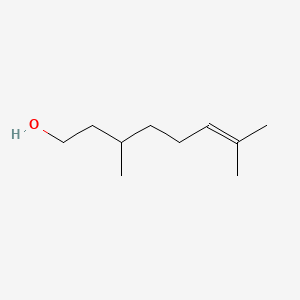
CAS 106-22-9CAS 26489-01-0PubChem CID 8842
Citronellol
(±)-β-citronellol has been reported in Ambrosiozyma monospora, Artemisia princeps, and other organisms with data available. — LOTUS - the natural products occurrence database
- IUPAC name
- 3,7-dimethyloct-6-en-1-ol
- Molecular formula
- C10H20O
- Molecular weight
- 156.26 g/mol
- Exact mass
- 156.151415257 Da
- XLogP3
- 3.2
- Topological polar surface area
- 20.2 Ų
- Hydrogen-bond donors
- 1
- Hydrogen-bond acceptors
- 1
- Covalent units
- 1
- Defined stereocentres
- 0
Also known as
Cephrol3,7-DIMETHYL-6-OCTEN-1-OL6-Octen-1-ol, 3,7-dimethyl-ElenolRodinol2,3-Dihydrogeraniol2,6-Dimethyl-2-octen-8-olCitronellol, dl-
16 more reported names
Dihydrogeraniol565OK72VNFCHEBI:50462RefChem:29968Citronellol (ex. Java citronella oil)203-375-0247-737-6beta-CitronellolDL-Citronellol(+/-)-beta-Citronellol.beta.-CitronellolC10H20OCitronellol (Standard)beta-Citronellol, 95%NSC 8779NSC-8779
External database identifiers
- ChEBI:CHEBI:50462
- ChEMBL:CHEMBL395827
- EPA DTXSID:DTXSID3026726
- PubMed:32513280
- PubMed:31926054
- PubMed:29445768
- PubMed:27607409
- PubMed:26944432
- PubMed:26795242
- PubMed:26456648
- PubMed:26141506
- PubMed:25414073
- PubMed:23449869
- PubMed:22945026
- PubMed:21819085
Evidence from additional scientific databases
EMBL-EBI ChEBI
Exact identifier matchCHEBI:50462
citronellol
A monoterpenoid that is oct-6-ene substituted by a hydroxy group at position 1 and methyl groups at positions 3 and 7.
- Formula
- C10H20O
- Average mass
- 156.269 g/mol
- Monoisotopic mass
- 156.15142 Da
- Formal charge
- 0
- monoterpenoid — is a (CHEBI:25409)
- plant metabolite — has role (CHEBI:76924)
- plant metabolite — has role (CHEBI:76924)
- monoterpenoid — is a (CHEBI:25409)
- 20964319 Source: PubMed
Additional curated names
3,7-dimethyloct-6-en-1-ol2,3-Dihydrogeraniol2,6-Dimethyl-2-octen-8-ol3,7-Dimethyl-6-octen-1-olCephrolElenolbeta-Citronellol
Cross-references from this source
- CAS: 106-22-9 — ChemIDplus
- CAS: 106-22-9 — NIST Chemistry WebBook
- REGISTRY_NUMBER: 1362474 — Reaxys
- MANUAL_X_REF: Citronellol — Wikipedia
Mapped by: Exact CAS cross-reference in the ChEBI compound record. Source updated: 2015-08-17. Retrieved: 2026-08-31. Open source record
NIH PubChem PUG-View
Exact identifier match8842
Attributed physical-property, hazard, environmental and use annotations.
- Boiling Point: 224 °C Source: Hazardous Substances Data Bank (HSDB)
- Boiling Point: BP: 108-109 °C at 10 mm Hg; specific gravity: 1.4576 at 18/4 °C /(-)-Form/ Source: Hazardous Substances Data Bank (HSDB)
- Boiling Point: 225 °C Source: Joint FAO/WHO Expert Committee on Food Additives (JECFA)
- Color/Form: Colorless oily liquid Source: Hazardous Substances Data Bank (HSDB)
- Density: 0.8550 g/cu cm at 20 °C Source: Hazardous Substances Data Bank (HSDB)
- Density: 0.850-0.860 Source: Joint FAO/WHO Expert Committee on Food Additives (JECFA)
- LogP: log Kow = 3.91 Source: Hazardous Substances Data Bank (HSDB)
- Melting Point: <-20 °C Source: Hazardous Substances Data Bank (HSDB)
- Odor: Fresh rosy odor Source: Hazardous Substances Data Bank (HSDB)
- Odor: Rose odor Source: Hazardous Substances Data Bank (HSDB)
- Physical Description: CBI; Liquid; Dry Powder; Liquid Source: EPA Chemical Data Reporting (CDR)
- Physical Description: Colorless to pale yellow liquid with a sweet floral odor; [EPA BRADs] Colorless liquid with a rose-like odor; [Acros Organics MSDS] Source: Haz-Map, Information on Hazardous Chemicals and Occupational Diseases
- Physical Description: colourless oily liquid; rose-like aroma Source: Joint FAO/WHO Expert Committee on Food Additives (JECFA)
- Refractive Index: Index of refraction: 1.4559 at 20 °C Source: Hazardous Substances Data Bank (HSDB)
- Refractive Index: 1.454-1.462 Source: Joint FAO/WHO Expert Committee on Food Additives (JECFA)
- Solubility: In water, 200 mg/L at 25 °C Source: Hazardous Substances Data Bank (HSDB)
- Solubility: In water, 307 mg/L at 25 °C; 300 mg/L at 20 °C Source: Hazardous Substances Data Bank (HSDB)
- Solubility: Soluble in fixed oils, propylene glycol; insoluble in glycerin Source: Hazardous Substances Data Bank (HSDB)
- Solubility: Miscible in ethanol and ether /(+)-citronellol/; very soluble in ethanol and ether /(-)-citronellol/ Source: Hazardous Substances Data Bank (HSDB)
- Solubility: Insoluble in glycerol; slightly soluble in water; soluble in most fixed oils, propylene glycol Source: Joint FAO/WHO Expert Committee on Food Additives (JECFA)
- Solubility: soluble (in ethanol) Source: Joint FAO/WHO Expert Committee on Food Additives (JECFA)
- Vapor Pressure: 0.04 [mmHg] Source: Haz-Map, Information on Hazardous Chemicals and Occupational Diseases
- Vapor Pressure: 0.02 mm Hg at 25 °C Source: Hazardous Substances Data Bank (HSDB)
- Viscosity: 11.1 mPa s (dynamic) at 20 °C; 5.33 mPa s (dynamic) at 40 °C Source: Hazardous Substances Data Bank (HSDB)
- Signal: Warning Source: European Chemicals Agency (ECHA)
- GHS Hazard Statements: H315 (95.7%): Causes skin irritation [Warning Skin corrosion/irritation]; H317 (99.6%): May cause an allergic skin reaction [Warning Sensitization, Skin]; H319 (65.1%): Causes serious eye irritation [Warning Serious eye damage/eye irritation]; H411 (15.8%): Toxic to aquatic life with long lasting effects [Hazardous to the aquatic environment, long-term hazard] Source: European Chemicals Agency (ECHA)
- Precautionary Statement Codes: P261, P264, P264+P265, P272, P273, P280, P302+P352, P305+P351+P338, P321, P332+P317, P333+P317, P337+P317, P362+P364, P391, and P501 (click each P-code to see the statement) Source: European Chemicals Agency (ECHA)
- ECHA C&L Notifications Summary: Aggregated GHS information provided per 1657 reports by companies from 29 notifications to the ECHA C&L Inventory. Each notification may be associated with multiple companies.; Information may vary between notifications depending on impurities, additives, and other factors. The percentage value in parenthesis indicates the notified classification ratio from companies that provide hazard codes. Only hazard codes with percentage values above 10% are shown. For more detailed information, please visit ECHA C&L website. Source: European Chemicals Agency (ECHA)
- GHS Hazard Statements: H315 (100%): Causes skin irritation [Warning Skin corrosion/irritation]; H317 (100%): May cause an allergic skin reaction [Warning Sensitization, Skin]; H319 (17.5%): Causes serious eye irritation [Warning Serious eye damage/eye irritation] Source: European Chemicals Agency (ECHA)
- Precautionary Statement Codes: P261, P264, P264+P265, P272, P280, P302+P352, P305+P351+P338, P321, P332+P317, P333+P317, P337+P317, P362+P364, and P501 (click each P-code to see the statement) Source: European Chemicals Agency (ECHA)
- ECHA C&L Notifications Summary: Aggregated GHS information provided per 103 reports by companies from 4 notifications to the ECHA C&L Inventory. Each notification may be associated with multiple companies.; Information may vary between notifications depending on impurities, additives, and other factors. The percentage value in parenthesis indicates the notified classification ratio from companies that provide hazard codes. Only hazard codes with percentage values above 10% are shown. For more detailed information, please visit ECHA C&L website. Source: European Chemicals Agency (ECHA)
- Signal: Warning Source: Hazardous Substances Data Bank (HSDB)
- GHS Hazard Statements: H315: Causes skin irritation [Warning Skin corrosion/irritation]; H317: May cause an allergic skin reaction [Warning Sensitization, Skin]; H319: Causes serious eye irritation [Warning Serious eye damage/eye irritation]; H401: Toxic to aquatic life [Hazardous to the aquatic environment, acute hazard] Source: Hazardous Substances Data Bank (HSDB)
- Precautionary Statement Codes: P261, P264, P264+P265, P272, P273, P280, P302+P352, P305+P351+P338, P321, P332+P317, P333+P317, P337+P317, P362+P364, and P501 (click each P-code to see the statement) Source: Hazardous Substances Data Bank (HSDB)
- Toxicity Summary: IDENTIFICATION AND USE: Citronellol has been found in nature, and it has been reported in about 70 essential oils. It is registered for pesticide use in the USA but approved pesticide uses may change periodically and so federal, state and local authorities must be consulted for currently approved uses. It is also used in perfumery. HUMAN EXPOSURE AND TOXICITY: Adult male volunteers with no known allergic reactions were patch-tested on their back for 48 hr with 32% citronellol. After 48 hr, patches were removed and the skin was cleaned of any residual test material. Moderate irritation was observed. A patch test using a 1% concentration of citronellol in acetone gave a positive reaction in subjects allergic to citronella oil. ANIMAL STUDIES: Citronellol applied full strength to intact or abraded rabbit skin for 24 hr under occlusion was moderately irritating. Severe irritation was observed in rabbits and guinea pigs exposed to 100% compound (unoccluded) for 24, 48 or 72 hr. Citronellol was not mutagenic when tested in Salmonella typhimurium strains TA98 and TA100 in the presence and absence of metabolic activation. ECOTOXICITY STUDIES: Golden Orfe (Leuciscus idus) were exposed to th Source: Hazardous Substances Data Bank (HSDB)
- Environmental Bioconcentration: An estimated BCF of 177 was calculated in fish for citronellol(SRC), using a log Kow of 3.91(1) and a regression-derived equation(2). According to a classification scheme(3), this BCF suggests the potential for bioconcentration in aquatic organisms is high(SRC), provided the compound is not metabolized by the organism(SRC). Source: Hazardous Substances Data Bank (HSDB)
- Environmental Fate: TERRESTRIAL FATE: Based on a classification scheme(1), an estimated Koc value of 94(SRC), determined from a structure estimation method(2), indicates that citronellol is expected to have high mobility in soil(SRC). Volatilization of citronellol from moist soil surfaces is expected to be an important fate process(SRC) given an estimated Henry's Law constant of 2.1X10⁻⁵ atm-cu m/mole(SRC), derived from its vapor pressure, 0.02 mm Hg(3), and water solubility, 200 mg/L(4). Even though the vapor pressure is low environmentally at standard temperature and pressure, there is a detectable odor; therefore, citronellol may volatilize from dry soil(SRC). An 80-90% of Theoretical BOD using activated sludge in the OECD 301F test(5) suggests that biodegradation is an important environmental fate process in soil(SRC). Citronellol was also classified as readily biodegradable by the results of the OECD 301C test (modified MITI) with 65% degradation in 4 weeks(6) and by a DOC Method F test (100% biodegradation in 15 days)(6). Citronellol absorbs at wavelengths >290 nm(7) and, therefore, may be susceptible to direct photolysis on soil surfaces exposed to sunlight(SRC). Source: Hazardous Substances Data Bank (HSDB)
- Environmental Fate: AQUATIC FATE: Based on a classification scheme(1), an estimated Koc value of 94(SRC), determined from a structure estimation method(2), indicates that citronellol is not expected to adsorb to suspended solids and sediment(SRC). Volatilization from water surfaces is expected(3) based upon an estimated Henry's Law constant of 2.1X10⁻⁵ atm-cu m/mole(SRC), derived from its vapor pressure, 0.02 mm Hg(4), and water solubility, 200 mg/L(5). Using this Henry's Law constant and an estimation method(3), volatilization half-lives for a model river and model lake are 2.4 and 21 days, respectively(SRC). According to a classification scheme(6), an estimated BCF of 177(SRC), from its log Kow of 3.91(7) and a regression-derived equation(2), suggests the potential for bioconcentration in aquatic organisms is high(SRC). An 80-90% of Theoretical BOD using activated sludge in the OECD 301F test(8) suggests that biodegradation is an important environmental fate process in water(SRC). Citronellol was also classified as readily biodegradable by the results of the OECD 301C test (modified MITI) with 65% degradation in 4 weeks(9) and by a DOC Method F test (100% biodegradation in 15 days)(9). Citronellol i Source: Hazardous Substances Data Bank (HSDB)
- Environmental Fate: ATMOSPHERIC FATE: According to a model of gas/particle partitioning of semivolatile organic compounds in the atmosphere(1), citronellol, which has a vapor pressure of 0.02 mm Hg at 25 °C(2), is expected to exist solely as a vapor in the ambient atmosphere. Vapor-phase citronellol is degraded in the atmosphere by reaction with photochemically-produced hydroxyl radicals(SRC); the half-life for this reaction in air is estimated to be 2.3 hours(SRC), calculated from its rate constant of 1.70X10⁻¹⁰ cu cm/molecule-sec at 24 deg(3). Citronellol is also degraded in the atmosphere by reaction with ozone and nitrate radicals. The half-life for the reaction with ozone is estimated to be 1.1 hours(SRC), calculated from its rate constant of 2.4X10⁻¹⁶ cu cm/molecule-sec at 24 °C(3). The half-life for the reaction with nitrate radicals is estimated to be 4 minutes(SRC), calculated from its rate constant of 1.21X10⁻¹¹ cu cm/molecule-sec at 24 °C(4). The nitrate radical (NO3) is the dominant atmospheric oxidant during the night-time in most atmospheric environments(5), therefore, night-time degradation appears to be a major fate process for citronellol(SRC). Citronellol absorbs at wavelengths >290 Source: Hazardous Substances Data Bank (HSDB)
- Consumer Uses: Fragrance; Odor agents Source: EPA Chemical Data Reporting (CDR)
- Industry Uses: Other; Intermediate; Odor agents; Fragrance Source: EPA Chemical Data Reporting (CDR)
- Sources/Uses: l-Form: in rose and geranium oils; d-Form: in Ceylon and Java citronella oils; Used in perfumery; [Merck Index] Permitted for use as an inert ingredient in non-food pesticide products; [EPA] Present in over 30 essential oils, fruits, edible plants, wine, beer, and black tea; Active ingredient in pesticide used to control mites on agricultural crops, ornamentals, and landscapes; Also extensively used as fragrance (detergents, soaps, lotions, perfumes, etc.), as a flavoring agent, and component of citronella oil (used in candles, sprays, oils, and insect repellents); [EPA BRADs] Source: Haz-Map, Information on Hazardous Chemicals and Occupational Diseases
- Industrial Processes with risk of exposure: Farming (Pesticides) [Category: Industry] Source: Haz-Map, Information on Hazardous Chemicals and Occupational Diseases
- Uses: For citronellol (USEPA/OPP Pesticide Code: 167004) ACTIVE products with label matches. /SRP: Registered for use in the USA but approved pesticide uses may change periodically and so federal, state and local authorities must be consulted for currently approved uses./ Source: Hazardous Substances Data Bank (HSDB)
- Uses: Reported uses (ppm):; Table: Reported uses (ppm): (Flavor and Extract Manufacturers' Association, 1994) [Table#6302] Source: Hazardous Substances Data Bank (HSDB)
- Uses: In perfumery Source: Hazardous Substances Data Bank (HSDB)
- Uses: Citronellol is one of the components responsible for the insect repellent properties of citronella oil ... Citronellol finds extensive use in floral fragrances and in flavors for citrus and other fruit notes. Its stability makes it particularly useful in fragrances for soaps, detergents, and other household products. Citronellol is also important as an intermediate in the synthesis of a number of other aroma chemicals ... Citronellol is the key feedstock for the synthesis of rose oxide. Source: Hazardous Substances Data Bank (HSDB)
- Uses: Citronellol is one of the most widely used fragrance materials, particularly for rose notes and for floral compositions in general. As flavor material, citronellol is added for bouquetting purposes to citrus compositions. It is the starting material for numerous citronellyl esters and for hydroxydihydrocitronellol, an intermediate in the production of hydroxydihydrocitronellal. Source: Hazardous Substances Data Bank (HSDB)
Mapped by: Existing checksum-valid CAS to unique PubChem CID match. Retrieved: 2026-08-31. Open source record
Scientific classifications and hazard annotations provide context and do not replace the market-specific regulatory decision shown above.
Additional source coverage and match status
| Source | Result | Checked |
|---|---|---|
| EMBL-EBI ChEBI | Exact match | 2026-08-31 |
| NIH PubChem PUG-View | Exact match | 2026-08-31 |
A recorded no-match is useful evidence that the source was checked; it is not a claim that the substance does not exist elsewhere.
Retrieved from NIH PubChem on 2026-09-02 by checksum-valid CAS matching. Chemical properties do not replace the regulatory decision on this page.
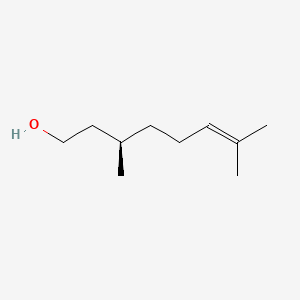
CAS 1117-61-9PubChem CID 101977
beta-CITRONELLOL, (R)-
(R)-(+)-citronellol is a citronellol that is oct-6-ene substituted by a hydroxy group at position 1 and methyl groups at positions 3 and 7 (the 3R-enantiomer). It is an enantiomer of a (S)-(-)-citronellol. — ChEBI
- IUPAC name
- (3R)-3,7-dimethyloct-6-en-1-ol
- Molecular formula
- C10H20O
- Molecular weight
- 156.26 g/mol
- Exact mass
- 156.151415257 Da
- XLogP3
- 3.2
- Topological polar surface area
- 20.2 Ų
- Hydrogen-bond donors
- 1
- Hydrogen-bond acceptors
- 1
- Covalent units
- 1
- Defined stereocentres
- 1
Also known as
D-Citronellol(R)-3,7-Dimethyl-6-octen-1-ol(R)-beta-Citronellol6-Octen-1-ol, 3,7-dimethyl-, (R)-UNII-P01OUT964KP01OUT964KCITRONELLOL, D-EINECS 214-250-5
16 more reported names
AI3-00204Purifying relief soothing gel essence6-Octen-1-ol, 3,7-dimethyl-, (theta)-RefChem:54520Hydrating Treatment TonerHydrating extra concentrate serum214-250-5(R)-Citronellol(R)-3,7-Dimethyloct-6-en-1-ol(R)-(+)-beta-Citronellol(+)-citronellol6-Octen-1-ol, 3,7-dimethyl-, (3R)-(R)-(+)-Citronellol(+)-beta-Citronellol(R)-(+)-ss-Citronellol(R)-(+)-beta -Citronellol
External database identifiers
- ChEBI:CHEBI:10360
- ChEMBL:CHEMBL1907993
- EPA DTXSID:DTXSID00880647
- PubMed:23074914
- PubMed:23030436
- PubMed:22945026
- PubMed:22816268
- PubMed:22805839
- PubMed:22675581
- PubMed:22606039
- PubMed:22553389
- PubMed:22510493
- PubMed:22493851
- PubMed:22408409
- PubMed:22393330
Evidence from additional scientific databases
NIH PubChem PUG-View
Exact identifier match101977
Attributed physical-property, hazard, environmental and use annotations.
- Boiling Point: 221.00 to 224.00 °C. @ 760.00 mm Hg Source: Human Metabolome Database (HMDB)
- Physical Description: Liquid Source: EPA Chemical Data Reporting (CDR)
- Physical Description: Colorless viscous liquid; [Sigma-Aldrich MSDS] Source: Haz-Map, Information on Hazardous Chemicals and Occupational Diseases
- Vapor Pressure: 0.02 [mmHg] Source: Haz-Map, Information on Hazardous Chemicals and Occupational Diseases
- Signal: Warning Source: European Chemicals Agency (ECHA)
- GHS Hazard Statements: H315 (100%): Causes skin irritation [Warning Skin corrosion/irritation]; H317 (86%): May cause an allergic skin reaction [Warning Sensitization, Skin]; H319 (36.2%): Causes serious eye irritation [Warning Serious eye damage/eye irritation]; H335 (14%): May cause respiratory irritation [Warning Specific target organ toxicity, single exposure; Respiratory tract irritation] Source: European Chemicals Agency (ECHA)
- Precautionary Statement Codes: P261, P264, P264+P265, P271, P272, P280, P302+P352, P304+P340, P305+P351+P338, P319, P321, P332+P317, P333+P317, P337+P317, P362+P364, P403+P233, P405, and P501 (click each P-code to see the statement) Source: European Chemicals Agency (ECHA)
- ECHA C&L Notifications Summary: Aggregated GHS information provided per 279 reports by companies from 6 notifications to the ECHA C&L Inventory. Each notification may be associated with multiple companies.; Information may vary between notifications depending on impurities, additives, and other factors. The percentage value in parenthesis indicates the notified classification ratio from companies that provide hazard codes. Only hazard codes with percentage values above 10% are shown. For more detailed information, please visit ECHA C&L website. Source: European Chemicals Agency (ECHA)
- Consumer Uses: Odor agents Source: EPA Chemical Data Reporting (CDR)
- Industry Uses: Odor agents Source: EPA Chemical Data Reporting (CDR)
Mapped by: Existing checksum-valid CAS to unique PubChem CID match. Retrieved: 2026-08-31. Open source record
Scientific classifications and hazard annotations provide context and do not replace the market-specific regulatory decision shown above.
Additional source coverage and match status
| Source | Result | Checked |
|---|---|---|
| NIH PubChem PUG-View | Exact match | 2026-08-31 |
A recorded no-match is useful evidence that the source was checked; it is not a claim that the substance does not exist elsewhere.
Retrieved from NIH PubChem on 2026-09-02 by checksum-valid CAS matching. Chemical properties do not replace the regulatory decision on this page.
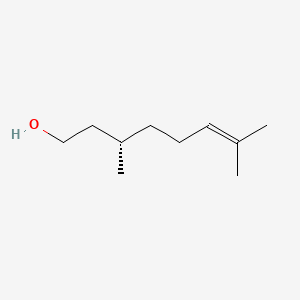
CAS 7540-51-4PubChem CID 7793
Beta-citronellol, (S)-
(S)-(-)-citronellol is a citronellol that is oct-6-ene substituted by a hydroxy group at position 1 and methyl groups at positions 3 and 7 (the 3S-enantiomer). It is an enantiomer of a (R)-(+)-citronellol. — ChEBI
- IUPAC name
- (3S)-3,7-dimethyloct-6-en-1-ol
- Molecular formula
- C10H20O
- Molecular weight
- 156.26 g/mol
- Exact mass
- 156.151415257 Da
- XLogP3
- 3.2
- Topological polar surface area
- 20.2 Ų
- Hydrogen-bond donors
- 1
- Hydrogen-bond acceptors
- 1
- Covalent units
- 1
- Defined stereocentres
- 1
Also known as
l-Citronellol(S)-3,7-dimethyloct-6-en-1-ol(-)-Citronellol(S)-citronellol(S)-(-)-beta-Citronellol(-)-3,7-Dimethyloct-6-en-1-ol6-Octen-1-ol, 3,7-dimethyl-, (3S)-CITRONELLOL, L-
16 more reported names
6-Octen-1-ol, 3,7-dimethyl-, (S)-3S,7-dimethyloct-6-en-1-ol8RSY5Y5658(-)-(s)-citronellolEINECS 231-415-7(S)-(-)-.BETA.-CITRONELLOL6-Octen-1-ol, 3,7-dimethyl-, (-)-AI3-09552.BETA.-CITRONELLOL, (S)-RefChem:567275(S)-(-)-citronellol(-)-beta-Citronellolbeta-Rhodinol(3S)-citronellol(S)-(-)-3,7-Dimethyl-6-octen-1-ol(-)-fA-Citronellol
External database identifiers
Retrieved from NIH PubChem on 2026-09-02 by checksum-valid CAS matching. Chemical properties do not replace the regulatory decision on this page.
Additional authoritative substance research
Each link searches that source for this identity. A link is a research route, not a claim that the source holds an exact record. What each source is, and its legal weight
Take this record further
Official source and scope
Imported from Commission Implementing Decision (EU) 2025/1175 (dataset version EU 2025/1175). The glossary supplies common ingredient names for the ingredient list required by Article 19(1)(g); it is not an approval or safety list.
Open official Decision