Official EU label nameGlossary entry 3160

BEHENTRIMONIUM CHLORIDE

This record confirms an official common ingredient name for EU cosmetic product labelling. It does not by itself confirm that the substance is permitted, unrestricted or safe.

Global evidence snapshot

The resolved identity has matching regulatory evidence in 6 of 13 indexed market datasets: 10 country records and 0 EU Annex records. Every result and evidence gap is listed below.

6 markets with evidence
Markets checked
13
Markets with evidence
6
Evidence gaps
7
Resolved identifiers
9

A missing local match is not permission, approval or proof of safety. It means no strong identity match was resolved in that indexed dataset.

Resolved substance identity

CAS:17301-53-057-09-0112-02-71119-94-4112-00-51120-02-1112-03-81119-97-7
EC:241-327-0
Ingredient index records:
BEHENTRIMONIUM CHLORIDE
Cosmetic functions: ANTISTATIC, HAIR CONDITIONING, PRESERVATIVE

Docosyltrimethylammonium chloride

Inventory restriction note: V/44

11 matched or reported names
BEHENTRIMONIUM CHLORIDEBehentrimonium chloride,Behentrimonium chlorideAlkyl (C12-22) trimethyl ammonium, bromide and chloride e.g. behentrimonium chlorideC22-alkyltrimethyl-ammonium chloride (behentrimonium chloride)Alkyl (C ) trimethyl ammonium bromide and 12-22 chloride) (+) Behentrimonium chloride (11) (CAS No. 17301- 53-0), cetrimonium bromide (CAS No. 57-09-0), cetrimonium chloride (12) (CAS No. 112-02- 7), laurtrimonium bromide, (CAS No. 1119- 94-4), laurtrimonium chloride (CAS No. 112- 00-5), steartrimonium bromide (CAS No. 1120-02-1), steartrimonium chloride (12) (CAS No. 112-03-8)C22-alkyltrimethylammonium chloride Behentrimonium chloride CAS No 17301-53-0알킬(C12-C22)트리메칠암모늄 브로마이드 및 클로라이드(브롬화세트리모늄포함)베헨트리모늄 클로라이드C - 22 alkyltrimethylammonium chloride Behentrimonium Chloride (21) (CAS No.: 17301-53-0)C22-alkyltrimethylammonium chloride

Regulatory evidence in all 13 markets

Open each matched record for its scope, concentration, conditions, warnings and official source version.

Swipe or scroll horizontally to see dataset coverage and next actions.

MarketResultRecordsDatasetMeaning / next action
European Union
EU
No local match0
Complete annex dataset
Regulation (EC) 1223/2009 consolidated to 1 May 2026
No annex match only means that these five annexes did not return a match; CosIng identity data and other EU obligations still need review.
Great Britain
GB
Restricted2Open record 1Open record 2
Complete consolidated annex dataset
GB retained Regulation 1223/2009 schedules, effective 15 August 2026
Review every linked record and exact conditions.
Canada
CA
No local match0
Complete Hotlist snapshot
Health Canada Cosmetic Ingredient Hotlist, 13 August 2025
The Hotlist is an administrative compliance tool, not an exhaustive safety approval list.
New Zealand
NZ
Restricted2Open record 1Open record 2
Complete schedules dataset
Cosmetic Products Group Standard schedules effective 1 January 2026
Review every linked record and exact conditions.
ASEAN
ASEAN
Restricted2Open record 1Open record 2
Complete regional annex dataset
ASEAN Cosmetic Directive annexes 2026-1, 22 June 2026
Review every linked record and exact conditions.
China
CN
No local match0
Complete prohibited catalogues plus official-source workflow
NMPA 2021 banned catalogues plus dynamic IECIC List I/List II system current since 2025
IECIC listing is not blanket approval; absence may require the new cosmetic ingredient route, and restrictions are checked separately.
Japan
JP
No local match0
Complete Standards appendices dataset
MHLW Standards for Cosmetics official English source and Japanese amendments checked for the imported snapshot
The Japanese text and subsequent notices are canonical; no local match is not a product-compliance conclusion.
South Korea
KR
Restricted2Open record 1Open record 2
Complete current appendix dataset
MFDS Notice 2026-19, effective 18 March 2026
Review every linked record and exact conditions.
United States
US
No local match0
Complete enumerated federal ingredient rules
eCFR Title 21 issue date 27 August 2026
FDA has no general approved-cosmetic-ingredient catalogue; absence from these sections is not approval or proof of safety.
Australia
AU
No local match0
Complete cosmetic-relevant Poisons Standard subset plus official workflow
Therapeutic Goods (Poisons Standard—June 2026) Instrument 2026
An AICIS Inventory match is not cosmetic approval; no Inventory match can indicate a new, exempted, reported or confidential introduction.
Brazil
BR
No local match0
Complete prohibited dataset plus current restricted-list workflow
ANVISA RDC 1.029/2026 and RDC 1.030/2026, published 15 June 2026
RDC 1.030/2026 amends rather than replaces the prohibited baseline, and the second restricted-list revision was still under consultation in July 2026.
India
IN
Restricted1Open record 1
Complete current Part 2 dataset plus official workflow for Parts 1, 3 and 4
Cosmetics Rules 2020 plus current BIS IS 4707 parts (1:2020, 2:2025, 3:2025, 4:2022)
Review every linked record and exact conditions.
Saudi Arabia
SA
Restricted1Open record 1
Complete official list index
SFDA live prohibited/restricted lists, snapshot 30 August 2026
Review every linked record and exact conditions.
No market rows match this filter.

Matching market records and conditions

Chemical identity and properties

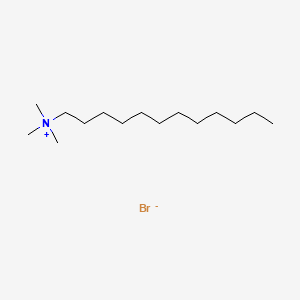
PubChem 2D chemical structure for CAS 1119-94-4
CAS 1119-94-4PubChem CID 14249

Dodecyltrimethylammonium bromide

Dodecyltrimethylammonium bromide is a bromide salt and a quaternary ammonium salt. It has a role as a surfactant. It contains a dodecyltrimethylammonium ion. ChEBI

IUPAC name
dodecyl(trimethyl)azanium bromide
Molecular formula
C15H34BrN
Molecular weight
308.34 g/mol
Exact mass
307.18746 Da
Topological polar surface area
0.0 Ų
Hydrogen-bond donors
0
Hydrogen-bond acceptors
1
Covalent units
2
Defined stereocentres
0

Also known as

DctabDTABLaurtrimonium bromideLauryltrimethylammonium bromideLTABMorpan DDTAB (surfactant)1-Dodecanaminium, N,N,N-trimethyl-, bromide
16 more reported names
Trimethyllaurylammonium bromideTrimethyldodecylammonium bromideFSM 23N-Lauryl-N,N,N-trimethylammonium bromideN,N,N-Trimethyldodecan-1-ammonium bromideN,N,N-Trimethyl-1-dodecanaminiuim bromideLauryltrimethylaminium bromide6IC8NZ97S2CHEBI:282662ammonium, dodecyltrimethyl-,bromideRefChem:920574214-290-3N,N,N-trimethyldodecan-1-aminium bromideDODECYL TRIMETHYL AMMONIUM BROMIDEdodecyl(trimethyl)azanium;bromideDodecyltrimethylammonium (bromide)
External database identifiers

Evidence from additional scientific databases

NIH PubChem PUG-View
Exact identifier match14249

Attributed physical-property, hazard, environmental and use annotations.

  • Note: This chemical does not meet GHS hazard criteria for 2.2% (2 of 89) of reports. Source: European Chemicals Agency (ECHA)
  • Signal: Danger Source: European Chemicals Agency (ECHA)
  • GHS Hazard Statements: H301 (20.2%): Toxic if swallowed [Danger Acute toxicity, oral]; H302 (53.9%): Harmful if swallowed [Warning Acute toxicity, oral]; H315 (96.6%): Causes skin irritation [Warning Skin corrosion/irritation]; H317 (23.6%): May cause an allergic skin reaction [Warning Sensitization, Skin]; H319 (96.6%): Causes serious eye irritation [Warning Serious eye damage/eye irritation]; H335 (62.9%): May cause respiratory irritation [Warning Specific target organ toxicity, single exposure; Respiratory tract irritation]; H400 (69.7%): Very toxic to aquatic life [Warning Hazardous to the aquatic environment, acute hazard]; H410 (66.3%): Very toxic to aquatic life with long lasting effects [Warning Hazardous to the aquatic environment, long-term hazard] Source: European Chemicals Agency (ECHA)
  • Precautionary Statement Codes: P261, P264, P264+P265, P270, P271, P272, P273, P280, P301+P316, P301+P317, P302+P352, P304+P340, P305+P351+P338, P319, P321, P330, P332+P317, P333+P317, P337+P317, P362+P364, P391, P403+P233, P405, and P501 (click each P-code to see the statement) Source: European Chemicals Agency (ECHA)
  • ECHA C&L Notifications Summary: Aggregated GHS information provided per 89 reports by companies from 18 notifications to the ECHA C&L Inventory. Each notification may be associated with multiple companies.; Reported as not meeting GHS hazard criteria per 2 of 89 reports by companies.; There are 17 notifications provided by 87 of 89 reports by companies with hazard statement code(s).; Information may vary between notifications depending on impurities, additives, and other factors. The percentage value in parenthesis indicates the notified classification ratio from companies that provide hazard codes. Only hazard codes with percentage values above 10% are shown. For more detailed information, please visit ECHA C&L website. Source: European Chemicals Agency (ECHA)
  • Signal: Danger Source: NITE-CMC
  • GHS Hazard Statements: H301: Toxic if swallowed [Danger Acute toxicity, oral]; H315: Causes skin irritation [Warning Skin corrosion/irritation]; H400: Very toxic to aquatic life [Warning Hazardous to the aquatic environment, acute hazard]; H410: Very toxic to aquatic life with long lasting effects [Warning Hazardous to the aquatic environment, long-term hazard] Source: NITE-CMC
  • Precautionary Statement Codes: P264, P270, P273, P280, P301+P316, P302+P352, P321, P330, P332+P317, P362+P364, P391, P405, and P501 (click each P-code to see the statement) Source: NITE-CMC
  • Signal: Danger Source: Hazardous Chemical Information System (HCIS), Safe Work Australia
  • GHS Hazard Statements: H302: Harmful if swallowed [Warning Acute toxicity, oral]; H312: Harmful in contact with skin [Warning Acute toxicity, dermal]; H314: Causes severe skin burns and eye damage [Danger Skin corrosion/irritation] Source: Hazardous Chemical Information System (HCIS), Safe Work Australia
  • Precautionary Statement Codes: P260, P264, P270, P280, P301+P317, P301+P330+P331, P302+P352, P302+P361+P354, P304+P340, P305+P354+P338, P316, P317, P321, P330, P362+P364, P363, P405, and P501 (click each P-code to see the statement) Source: Hazardous Chemical Information System (HCIS), Safe Work Australia
  • Cosmetic Ingredient Review Conclusion: The CIR Expert Panel concluded the following ingredients are safe in the present practices of use and concentration described in the safety assessment when formulated to be non-irritating...Laurtrimonium Bromide... Source: Cosmetic Ingredient Review (CIR)
  • Cosmetic Ingredient Review Finding(s): Safe for use in cosmetics, with qualifications Source: Cosmetic Ingredient Review (CIR)

Mapped by: Existing checksum-valid CAS to unique PubChem CID match. Retrieved: 2026-08-31. Open source record

Scientific classifications and hazard annotations provide context and do not replace the market-specific regulatory decision shown above.

Additional source coverage and match status
SourceResultChecked
NIH PubChem PUG-ViewExact match2026-08-31

A recorded no-match is useful evidence that the source was checked; it is not a claim that the substance does not exist elsewhere.

Retrieved from NIH PubChem on 2026-08-31 by checksum-valid CAS matching. Chemical properties do not replace the regulatory decision on this page.

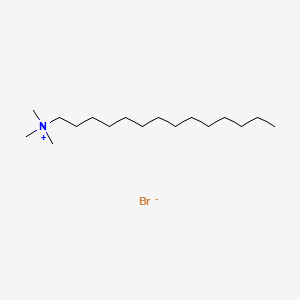
PubChem 2D chemical structure for CAS 1119-97-7
CAS 1119-97-7PubChem CID 14250

Tetradecyltrimethylammonium bromide

IUPAC name
trimethyl(tetradecyl)azanium bromide
Molecular formula
C17H38BrN
Molecular weight
336.4 g/mol
Exact mass
335.21876 Da
Topological polar surface area
0.0 Ų
Hydrogen-bond donors
0
Hydrogen-bond acceptors
1
Covalent units
2
Defined stereocentres
0

Also known as

Tetradonium bromideTetradecyl Trimethyl Ammonium BromideMytabMorpan TQuaternium 13Tetradonio bromuroTetradonii bromidumTrimethyltetradecylammonium bromide
16 more reported names
Bromuro de tetradonioBromure de tetradoniumTrimethylmyristylammonium bromideAmmonium, trimethyltetradecyl-, bromideSumquat 6110Myristyl trimethyl ammonium bromide8483H94W1ERHODAQUAT M-214C/99C14QACTTAB cpdtAtradonium (cation)RefChem:896962myristyl trimethylammonium bromidetetradecyl-trimethylammonium bromidetrimethyl tetradecyl ammonium bromide214-291-9
External database identifiers

Evidence from additional scientific databases

NIH PubChem PUG-View
Exact identifier match14250

Attributed physical-property, hazard, environmental and use annotations.

  • Note: This chemical does not meet GHS hazard criteria for 0.4% (3 of 698) of reports. Source: European Chemicals Agency (ECHA)
  • Signal: Danger Source: European Chemicals Agency (ECHA)
  • GHS Hazard Statements: H302 (25.4%): Harmful if swallowed [Warning Acute toxicity, oral]; H314 (10.7%): Causes severe skin burns and eye damage [Danger Skin corrosion/irritation]; H315 (21.9%): Causes skin irritation [Warning Skin corrosion/irritation]; H318 (89.7%): Causes serious eye damage [Danger Serious eye damage/eye irritation]; H335 (21.8%): May cause respiratory irritation [Warning Specific target organ toxicity, single exposure; Respiratory tract irritation]; H373 (18.2%): May causes damage to organs through prolonged or repeated exposure [Warning Specific target organ toxicity, repeated exposure]; H400 (22.8%): Very toxic to aquatic life [Warning Hazardous to the aquatic environment, acute hazard]; H410 (12.2%): Very toxic to aquatic life with long lasting effects [Warning Hazardous to the aquatic environment, long-term hazard] Source: European Chemicals Agency (ECHA)
  • Precautionary Statement Codes: P260, P261, P264, P264+P265, P270, P271, P273, P280, P301+P317, P301+P330+P331, P302+P352, P302+P361+P354, P304+P340, P305+P354+P338, P316, P317, P319, P321, P330, P332+P317, P362+P364, P363, P391, P403+P233, P405, and P501 (click each P-code to see the statement) Source: European Chemicals Agency (ECHA)
  • ECHA C&L Notifications Summary: Aggregated GHS information provided per 698 reports by companies from 21 notifications to the ECHA C&L Inventory. Each notification may be associated with multiple companies.; Reported as not meeting GHS hazard criteria per 3 of 698 reports by companies.; There are 20 notifications provided by 695 of 698 reports by companies with hazard statement code(s).; Information may vary between notifications depending on impurities, additives, and other factors. The percentage value in parenthesis indicates the notified classification ratio from companies that provide hazard codes. Only hazard codes with percentage values above 10% are shown. For more detailed information, please visit ECHA C&L website. Source: European Chemicals Agency (ECHA)
  • Cosmetic Ingredient Review Conclusion: The CIR Expert Panel concluded the following ingredients are safe in the present practices of use and concentration described in the safety assessment when formulated to be non-irritating...Myrtrimonium Bromide... Source: Cosmetic Ingredient Review (CIR)
  • Cosmetic Ingredient Review Finding(s): Safe for use in cosmetics, with qualifications Source: Cosmetic Ingredient Review (CIR)

Mapped by: Existing checksum-valid CAS to unique PubChem CID match. Retrieved: 2026-08-31. Open source record

Scientific classifications and hazard annotations provide context and do not replace the market-specific regulatory decision shown above.

Additional source coverage and match status
SourceResultChecked
NIH PubChem PUG-ViewExact match2026-08-31

A recorded no-match is useful evidence that the source was checked; it is not a claim that the substance does not exist elsewhere.

Retrieved from NIH PubChem on 2026-08-31 by checksum-valid CAS matching. Chemical properties do not replace the regulatory decision on this page.
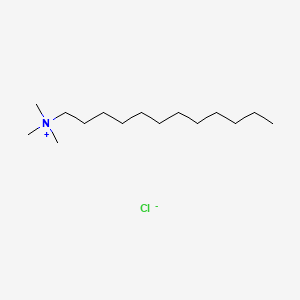
PubChem 2D chemical structure for CAS 112-00-5
CAS 112-00-5PubChem CID 8152

Dodecyltrimethylammonium chloride

IUPAC name
dodecyl(trimethyl)azanium chloride
Molecular formula
C15H34ClN
Molecular weight
263.89 g/mol
Exact mass
263.2379778 Da
Topological polar surface area
0.0 Ų
Hydrogen-bond donors
0
Hydrogen-bond acceptors
1
Covalent units
2
Defined stereocentres
0

Also known as

DODECYL TRIMETHYL AMMONIUM CHLORIDEDTACAlicopLauryltrimethylammonium chlorideLaurtrimonium chlorideCation BBAliquat 4Dehyquart LT
16 more reported names
Cation FBNissan Cation BBn-Dodecyltrimethylammonium chlorideArquad 12Arquad 12DTrimethyllaurylammonium chlorideCatiogen LNissan Cation FBQuartamin 24PQuartamin 24WArquad 12/50Redicote E 5Rewoquat B 18Radiaquat 6465Trimethyldodecylammonium chlorideCatinal LTC 35A
External database identifiers

Evidence from additional scientific databases

NIH PubChem PUG-View
Exact identifier match8152

Attributed physical-property, hazard, environmental and use annotations.

  • Note: This chemical does not meet GHS hazard criteria for 2.5% (12 of 476) of reports. Source: European Chemicals Agency (ECHA)
  • Signal: Danger Source: European Chemicals Agency (ECHA)
  • GHS Hazard Statements: H302 (87.2%): Harmful if swallowed [Warning Acute toxicity, oral]; H314 (31.1%): Causes severe skin burns and eye damage [Danger Skin corrosion/irritation]; H315 (64.1%): Causes skin irritation [Warning Skin corrosion/irritation]; H318 (28.8%): Causes serious eye damage [Danger Serious eye damage/eye irritation]; H319 (54%): Causes serious eye irritation [Warning Serious eye damage/eye irritation]; H335 (30%): May cause respiratory irritation [Warning Specific target organ toxicity, single exposure; Respiratory tract irritation]; H400 (80.3%): Very toxic to aquatic life [Warning Hazardous to the aquatic environment, acute hazard]; H410 (27.9%): Very toxic to aquatic life with long lasting effects [Warning Hazardous to the aquatic environment, long-term hazard]; H411 (10.1%): Toxic to aquatic life with long lasting effects [Hazardous to the aquatic environment, long-term hazard] Source: European Chemicals Agency (ECHA)
  • Precautionary Statement Codes: P260, P261, P264, P264+P265, P270, P271, P273, P280, P301+P317, P301+P330+P331, P302+P352, P302+P361+P354, P304+P340, P305+P351+P338, P305+P354+P338, P316, P317, P319, P321, P330, P332+P317, P337+P317, P362+P364, P363, P391, P403+P233, P405, and P501 (click each P-code to see the statement) Source: European Chemicals Agency (ECHA)
  • ECHA C&L Notifications Summary: Aggregated GHS information provided per 476 reports by companies from 28 notifications to the ECHA C&L Inventory. Each notification may be associated with multiple companies.; Reported as not meeting GHS hazard criteria per 12 of 476 reports by companies.; There are 27 notifications provided by 464 of 476 reports by companies with hazard statement code(s).; Information may vary between notifications depending on impurities, additives, and other factors. The percentage value in parenthesis indicates the notified classification ratio from companies that provide hazard codes. Only hazard codes with percentage values above 10% are shown. For more detailed information, please visit ECHA C&L website. Source: European Chemicals Agency (ECHA)
  • Signal: Warning Source: NITE-CMC
  • GHS Hazard Statements: H302: Harmful if swallowed [Warning Acute toxicity, oral]; H315: Causes skin irritation [Warning Skin corrosion/irritation]; H319: Causes serious eye irritation [Warning Serious eye damage/eye irritation] Source: NITE-CMC
  • Precautionary Statement Codes: P264, P264+P265, P270, P280, P301+P317, P302+P352, P305+P351+P338, P321, P330, P332+P317, P337+P317, P362+P364, and P501 (click each P-code to see the statement) Source: NITE-CMC
  • GHS Hazard Statements: Not Classified Source: NITE-CMC
  • Signal: Danger Source: Hazardous Chemical Information System (HCIS), Safe Work Australia
  • GHS Hazard Statements: H302: Harmful if swallowed [Warning Acute toxicity, oral]; H312: Harmful in contact with skin [Warning Acute toxicity, dermal]; H314: Causes severe skin burns and eye damage [Danger Skin corrosion/irritation] Source: Hazardous Chemical Information System (HCIS), Safe Work Australia
  • Precautionary Statement Codes: P260, P264, P270, P280, P301+P317, P301+P330+P331, P302+P352, P302+P361+P354, P304+P340, P305+P354+P338, P316, P317, P321, P330, P362+P364, P363, P405, and P501 (click each P-code to see the statement) Source: Hazardous Chemical Information System (HCIS), Safe Work Australia
  • Cosmetic Ingredient Review Conclusion: The CIR Expert Panel concluded the following ingredients are safe in the present practices of use and concentration described in the safety assessment when formulated to be non-irritating...Laurtrimonium Chloride... Source: Cosmetic Ingredient Review (CIR)
  • Cosmetic Ingredient Review Finding(s): Safe for use in cosmetics, with qualifications Source: Cosmetic Ingredient Review (CIR)

Mapped by: Existing checksum-valid CAS to unique PubChem CID match. Retrieved: 2026-08-31. Open source record

Scientific classifications and hazard annotations provide context and do not replace the market-specific regulatory decision shown above.

Additional source coverage and match status
SourceResultChecked
NIH PubChem PUG-ViewExact match2026-08-31

A recorded no-match is useful evidence that the source was checked; it is not a claim that the substance does not exist elsewhere.

Retrieved from NIH PubChem on 2026-08-31 by checksum-valid CAS matching. Chemical properties do not replace the regulatory decision on this page.
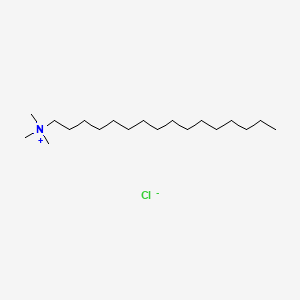
PubChem 2D chemical structure for CAS 112-02-7
CAS 112-02-7PubChem CID 8154

Hexadecyltrimethylammonium chloride

Cetyltrimethylammonium chloride is the organic chloride salt of cetyltrimethylammonium. It has a role as a surfactant. It is a quaternary ammonium salt and an organic chloride salt. It contains a cetyltrimethylammonium ion. ChEBI

IUPAC name
hexadecyl(trimethyl)azanium chloride
Molecular formula
C19H42ClN
Molecular weight
320.0 g/mol
Exact mass
319.3005780 Da
Topological polar surface area
0.0 Ų
Hydrogen-bond donors
0
Hydrogen-bond acceptors
1
Covalent units
2
Defined stereocentres
0

Also known as

Cetrimonium chlorideN-Hexadecyltrimethylammonium chlorideDehyquart AGenamin CTACAliquat 6Cetyl trimethyl ammonium chlorideCETACHTAC
16 more reported names
Adogen 444Surfroyal CTACMorpan CHAQuartamin 60WTrimethylcetylammonium chlorideArquad 16-29Arquad 16-50Ammonyx Cetac 30TRIMETHYLHEXADECYLAMMONIUM CHLORIDEIntexsan CTC 29Intexsan CTC 50Arquad 16Barquat CT 29Intexan CTC 29Palmityltrimethylammonium chlorideVariquat E 228
External database identifiers

Evidence from additional scientific databases

NIH PubChem PUG-View
Exact identifier match8154

Attributed physical-property, hazard, environmental and use annotations.

  • Boiling Point: 180 °F at 760 mmHg (isopropyl alcohol) (USCG, 1999) Source: CAMEO Chemicals
  • Density: 0.9 at 77 °F (approx.) (USCG, 1999) - Less dense than water; will float Source: CAMEO Chemicals
  • First Aid: INGESTION: do NOT induce vomiting; drink large quanities of fluid and call a physician immediately.; EYES: flush with water for at least 15 min. and call a physician.; SKIN: flush with water. (USCG, 1999) Source: CAMEO Chemicals
  • Note: This chemical does not meet GHS hazard criteria for 0.5% (5 of 1105) of reports. Source: European Chemicals Agency (ECHA)
  • Signal: Danger Source: European Chemicals Agency (ECHA)
  • GHS Hazard Statements: H302 (49%): Harmful if swallowed [Warning Acute toxicity, oral]; H311 (28.6%): Toxic in contact with skin [Danger Acute toxicity, dermal]; H314 (41.5%): Causes severe skin burns and eye damage [Danger Skin corrosion/irritation]; H315 (52.3%): Causes skin irritation [Warning Skin corrosion/irritation]; H318 (85.7%): Causes serious eye damage [Danger Serious eye damage/eye irritation]; H335 (44.3%): May cause respiratory irritation [Warning Specific target organ toxicity, single exposure; Respiratory tract irritation]; H400 (99.4%): Very toxic to aquatic life [Warning Hazardous to the aquatic environment, acute hazard]; H410 (40.9%): Very toxic to aquatic life with long lasting effects [Warning Hazardous to the aquatic environment, long-term hazard] Source: European Chemicals Agency (ECHA)
  • Precautionary Statement Codes: P260, P261, P262, P264, P264+P265, P270, P271, P273, P280, P301+P317, P301+P330+P331, P302+P352, P302+P361+P354, P304+P340, P305+P354+P338, P316, P317, P319, P321, P330, P332+P317, P361+P364, P362+P364, P363, P391, P403+P233, P405, and P501 (click each P-code to see the statement) Source: European Chemicals Agency (ECHA)
  • ECHA C&L Notifications Summary: Aggregated GHS information provided per 1105 reports by companies from 42 notifications to the ECHA C&L Inventory. Each notification may be associated with multiple companies.; Reported as not meeting GHS hazard criteria per 5 of 1105 reports by companies.; There are 41 notifications provided by 1100 of 1105 reports by companies with hazard statement code(s).; Information may vary between notifications depending on impurities, additives, and other factors. The percentage value in parenthesis indicates the notified classification ratio from companies that provide hazard codes. Only hazard codes with percentage values above 10% are shown. For more detailed information, please visit ECHA C&L website. Source: European Chemicals Agency (ECHA)
  • Signal: Danger Source: NITE-CMC
  • GHS Hazard Statements: H302: Harmful if swallowed [Warning Acute toxicity, oral]; H315: Causes skin irritation [Warning Skin corrosion/irritation]; H318: Causes serious eye damage [Danger Serious eye damage/eye irritation]; H335: May cause respiratory irritation [Warning Specific target organ toxicity, single exposure; Respiratory tract irritation]; H400: Very toxic to aquatic life [Warning Hazardous to the aquatic environment, acute hazard]; H410: Very toxic to aquatic life with long lasting effects [Warning Hazardous to the aquatic environment, long-term hazard] Source: NITE-CMC
  • Precautionary Statement Codes: P261, P264, P264+P265, P270, P271, P273, P280, P301+P317, P302+P352, P304+P340, P305+P354+P338, P317, P319, P321, P330, P332+P317, P362+P364, P391, P403+P233, P405, and P501 (click each P-code to see the statement) Source: NITE-CMC
  • Signal: Warning Source: NITE-CMC
  • GHS Hazard Statements: H302: Harmful if swallowed [Warning Acute toxicity, oral]; H315: Causes skin irritation [Warning Skin corrosion/irritation]; H319: Causes serious eye irritation [Warning Serious eye damage/eye irritation]; H335: May cause respiratory irritation [Warning Specific target organ toxicity, single exposure; Respiratory tract irritation] Source: NITE-CMC
  • Precautionary Statement Codes: P261, P264, P264+P265, P270, P271, P280, P301+P317, P302+P352, P304+P340, P305+P351+P338, P319, P321, P330, P332+P317, P337+P317, P362+P364, P403+P233, P405, and P501 (click each P-code to see the statement) Source: NITE-CMC
  • Signal: Danger Source: Hazardous Chemical Information System (HCIS), Safe Work Australia
  • Cosmetic Ingredient Review Conclusion: The CIR Expert Panel concluded the following ingredients are safe in the present practices of use and concentration described in the safety assessment when formulated to be non-irritating...Cetrimonium Chloride... Source: Cosmetic Ingredient Review (CIR)
  • Cosmetic Ingredient Review Finding(s): Safe for use in cosmetics, with qualifications Source: Cosmetic Ingredient Review (CIR)
  • Environmental Bioconcentration: An estimated BCF of 71 was calculated for trimethylhexadecylammonium chloride(SRC), using an estimated log Kow of 3.23(1) and a regression-derived equation(2). According to a classification scheme(3), this BCF suggests the potential for bioconcentration in aquatic organisms is moderate. Source: Hazardous Substances Data Bank (HSDB)
  • Environmental Fate: TERRESTRIAL FATE: Based on a classification scheme(1), an estimated Koc value of 2.2X10+5(SRC), determined from a structure estimation method(2), indicates that trimethylhexadecylammonium chloride is expected to be immobile in soil(SRC). Volatilization of trimethylhexadecylammonium chloride from moist soil surfaces is not expected to be an important fate process(SRC) given an estimated Henry's Law constant of 2.9X10⁻¹⁰ atm-cu m/mole(SRC), using a fragment constant estimation method(3). Trimethylhexadecylammonium chloride is not expected to volatilize from dry soil surfaces(SRC) based upon an estimated vapor pressure of 2.8X10⁻¹⁰ mm Hg(SRC), determined from a fragment constant method(4). Source: Hazardous Substances Data Bank (HSDB)
  • Environmental Fate: AQUATIC FATE: Based on a classification scheme(1), an estimated Koc value of 2.2X10+5(SRC), determined from an estimation method(2), indicates that trimethylhexadecylammonium chloride is expected to adsorb to suspended solids and sediment in water(SRC). Volatilization from water surfaces is not expected(3) based upon an estimated Henry's Law constant of 2.9X10⁻¹⁰ atm-cu m/mole(SRC), developed using a fragment constant estimation method(4). According to a classification scheme(5), an estimated BCF of 71(SRC), from its log Kow of 3.23(6) and a regression-derived equation(7), suggests the potential for bioconcentration in aquatic organisms is moderate. The MITI, closed bottle, and Sturm tests revealed no degradation after 10 days, microbial growth after 17 days, and 84% degradation after 13 days, respectively(8). 10-20 ppm trimethylhexadecylammonium chloride was degraded with a half-life of 3.1 days in freshwater collected from the Ohio river 1 mile below discharge from a municipal treatment plant at 20 °C and pH 6.9(9). Source: Hazardous Substances Data Bank (HSDB)
  • Environmental Fate: ATMOSPHERIC FATE: According to a model of gas/particle partitioning of semivolatile organic compounds in the atmosphere(1), trimethylhexadecylammonium chloride, which has an estimated vapor pressure of 2.8X10⁻¹⁰ mm Hg at 25 °C(SRC), using a fragment constant estimation method(2), is expected to exist solely in the particulate phase in the ambient atmosphere. Particulate-phase trimethylhexadecylammonium chloride may be removed from the air by wet and dry deposition(SRC). Source: Hazardous Substances Data Bank (HSDB)
  • Consumer Uses: Cleaning agent; Corrosion inhibitor; Softener and conditioner; Surface modifier; Surfactant (surface active agent) Source: EPA Chemical Data Reporting (CDR)
  • Industry Uses: Corrosion inhibitor; Processing aids, specific to petroleum production; Softener and conditioner; Surface modifier; CBI; Processing aids not otherwise specified; Surfactant (surface active agent) Source: EPA Chemical Data Reporting (CDR)

Mapped by: Existing checksum-valid CAS to unique PubChem CID match. Retrieved: 2026-08-31. Open source record

Scientific classifications and hazard annotations provide context and do not replace the market-specific regulatory decision shown above.

Additional source coverage and match status
SourceResultChecked
NIH PubChem PUG-ViewExact match2026-08-31

A recorded no-match is useful evidence that the source was checked; it is not a claim that the substance does not exist elsewhere.

Retrieved from NIH PubChem on 2026-08-31 by checksum-valid CAS matching. Chemical properties do not replace the regulatory decision on this page.
PubChem 2D chemical structure for CAS 112-03-8
CAS 112-03-8PubChem CID 8155

Stearyltrimethylammonium chloride

Stearyltrimethylammonium chloride is an organic molecular entity. ChEBI

IUPAC name
trimethyl(octadecyl)azanium chloride
Molecular formula
C21H46ClN
Molecular weight
348.0 g/mol
Exact mass
347.3318782 Da
Topological polar surface area
0.0 Ų
Hydrogen-bond donors
0
Hydrogen-bond acceptors
1
Covalent units
2
Defined stereocentres
0

Also known as

Trimethylstearylammonium chlorideStacCation ABAliquat 7Nissan cation ABQuaternium-10Arquad 18Stearyl trimethyl ammonium chloride
16 more reported names
Arquad 18-50Monostearyl trimethyl ammonium chlorideN,N,N-Trimethyl-1-octadecanaminium chlorideRefChem:871332N,N,N-trimethyloctadecan-1-aminium chlorideTrimethyloctadecylammonium chlorideOCTADECYLTRIMETHYLAMMONIUM CHLORIDE1-Octadecanaminium, N,N,N-trimethyl-, chlorideSteartrimonium chlorideStearyl trimethyl ammoium chlorideOctadecy trimethyl ammonium chloridetrimethyl octadecyl ammonium chlorideOctadecyl trimethyl ammonium chloridetrimethyloctadecylamine, chloridetrimethyl(octadecyl)azanium;chlorideEINECS 203-929-1
External database identifiers

Evidence from additional scientific databases

NIH PubChem PUG-View
Exact identifier match8155

Attributed physical-property, hazard, environmental and use annotations.

  • Carcinogen Classification: Not listed by IARC. Certain nitrosamines are classified by IARC as either probably or possibly carcinogenic to humans (Groups 2A and 2B, respectively). (L135) Source: Toxin and Toxin Target Database (T3DB)
  • Note: This chemical does not meet GHS hazard criteria for 3.7% (10 of 268) of reports. Source: European Chemicals Agency (ECHA)
  • Signal: Danger Source: European Chemicals Agency (ECHA)
  • GHS Hazard Statements: H302 (88.1%): Harmful if swallowed [Warning Acute toxicity, oral]; H311 (54.5%): Toxic in contact with skin [Danger Acute toxicity, dermal]; H312 (19.8%): Harmful in contact with skin [Warning Acute toxicity, dermal]; H314 (79.1%): Causes severe skin burns and eye damage [Danger Skin corrosion/irritation]; H318 (29.5%): Causes serious eye damage [Danger Serious eye damage/eye irritation]; H400 (71.6%): Very toxic to aquatic life [Warning Hazardous to the aquatic environment, acute hazard]; H410 (78.7%): Very toxic to aquatic life with long lasting effects [Warning Hazardous to the aquatic environment, long-term hazard] Source: European Chemicals Agency (ECHA)
  • Precautionary Statement Codes: P260, P262, P264, P264+P265, P270, P273, P280, P301+P317, P301+P330+P331, P302+P352, P302+P361+P354, P304+P340, P305+P354+P338, P316, P317, P321, P330, P361+P364, P362+P364, P363, P391, P405, and P501 (click each P-code to see the statement) Source: European Chemicals Agency (ECHA)
  • ECHA C&L Notifications Summary: Aggregated GHS information provided per 268 reports by companies from 19 notifications to the ECHA C&L Inventory. Each notification may be associated with multiple companies.; Reported as not meeting GHS hazard criteria per 10 of 268 reports by companies.; There are 18 notifications provided by 258 of 268 reports by companies with hazard statement code(s).; Information may vary between notifications depending on impurities, additives, and other factors. The percentage value in parenthesis indicates the notified classification ratio from companies that provide hazard codes. Only hazard codes with percentage values above 10% are shown. For more detailed information, please visit ECHA C&L website. Source: European Chemicals Agency (ECHA)
  • Signal: Warning Source: NITE-CMC
  • GHS Hazard Statements: H302: Harmful if swallowed [Warning Acute toxicity, oral]; H312: Harmful in contact with skin [Warning Acute toxicity, dermal] Source: NITE-CMC
  • Precautionary Statement Codes: P264, P270, P280, P301+P317, P302+P352, P317, P321, P330, P362+P364, and P501 (click each P-code to see the statement) Source: NITE-CMC
  • Signal: Danger Source: Hazardous Chemical Information System (HCIS), Safe Work Australia
  • GHS Hazard Statements: H302: Harmful if swallowed [Warning Acute toxicity, oral]; H312: Harmful in contact with skin [Warning Acute toxicity, dermal]; H314: Causes severe skin burns and eye damage [Danger Skin corrosion/irritation] Source: Hazardous Chemical Information System (HCIS), Safe Work Australia
  • Precautionary Statement Codes: P260, P264, P270, P280, P301+P317, P301+P330+P331, P302+P352, P302+P361+P354, P304+P340, P305+P354+P338, P316, P317, P321, P330, P362+P364, P363, P405, and P501 (click each P-code to see the statement) Source: Hazardous Chemical Information System (HCIS), Safe Work Australia
  • Cosmetic Ingredient Review Conclusion: The CIR Expert Panel concluded the following ingredients are safe in the present practices of use and concentration described in the safety assessment when formulated to be non-irritating...Steartrimonium Chloride... Source: Cosmetic Ingredient Review (CIR)
  • Cosmetic Ingredient Review Finding(s): Safe for use in cosmetics, with qualifications Source: Cosmetic Ingredient Review (CIR)
  • Toxicity Summary: While quaternium-10 itself is not toxic, it is a nitrosating agent. Nitrosating agents may decompose and/or react to cause nitrosamine contamination. Nitrosamines are produced from secondary amines and amides in the presence of nitrite ions and are believed to be carcinogenic. Once in the body, nitrosamines are activated by cytochrome P-450 enzymes. They are then believed to induce their carcinogenic effects by forming DNA adducts at the N- and O-atoms. (L1889, L1890, A2878, A2879, A2880) Source: Toxin and Toxin Target Database (T3DB)

Mapped by: Existing checksum-valid CAS to unique PubChem CID match. Retrieved: 2026-08-31. Open source record

Scientific classifications and hazard annotations provide context and do not replace the market-specific regulatory decision shown above.

Additional source coverage and match status
SourceResultChecked
NIH PubChem PUG-ViewExact match2026-08-31

A recorded no-match is useful evidence that the source was checked; it is not a claim that the substance does not exist elsewhere.

Retrieved from NIH PubChem on 2026-08-31 by checksum-valid CAS matching. Chemical properties do not replace the regulatory decision on this page.
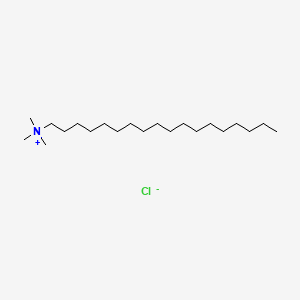
PubChem 2D chemical structure for CAS 1120-02-1
CAS 1120-02-1PubChem CID 70708

Octadecyltrimethylammonium bromide

IUPAC name
trimethyl(octadecyl)azanium bromide
Molecular formula
C21H46BrN
Molecular weight
392.5 g/mol
Exact mass
391.28136 Da
Topological polar surface area
0.0 Ų
Hydrogen-bond donors
0
Hydrogen-bond acceptors
1
Covalent units
2
Defined stereocentres
0

Also known as

Steartrimonium BromideBPW1DD4IZ8CATINAL STBODTEA Br cpdRefChem:889163214-294-5Trimethyloctadecylammonium bromideOctMAB
16 more reported names
N,N,N-Trimethyloctadecan-1-aminium bromideStearyltrimethylammonium BromideOctadecy trimethyl ammonium bromideTrimethylstearylammonium Bromide1-Octadecanaminium, N,N,N-trimethyl-, bromideOTABTrimethyl-1-octylammonium bromidetrimethyl(octadecyl)azanium;bromideStearyltrimethylammonium bromide (STAB)Trimethyloctadecylammonium (bromide)1-Octadecanaminium, N,N,N-trimethyl-, bromide (1:1)UNII-BPW1DD4IZ8C21H46BrNStearyl Trimethyl Ammoium bromideEINECS 214-294-5Ammonium, trimethyloctadecyl-, bromide
External database identifiers

Evidence from additional scientific databases

NIH PubChem PUG-View
Exact identifier match70708

Attributed physical-property, hazard, environmental and use annotations.

  • Signal: Danger Source: European Chemicals Agency (ECHA)
  • GHS Hazard Statements: H302 (13%): Harmful if swallowed [Warning Acute toxicity, oral]; H315 (100%): Causes skin irritation [Warning Skin corrosion/irritation]; H317 (10.9%): May cause an allergic skin reaction [Warning Sensitization, Skin]; H318 (10.9%): Causes serious eye damage [Danger Serious eye damage/eye irritation]; H319 (89.1%): Causes serious eye irritation [Warning Serious eye damage/eye irritation]; H335 (87%): May cause respiratory irritation [Warning Specific target organ toxicity, single exposure; Respiratory tract irritation] Source: European Chemicals Agency (ECHA)
  • Precautionary Statement Codes: P261, P264, P264+P265, P270, P271, P272, P280, P301+P317, P302+P352, P304+P340, P305+P351+P338, P305+P354+P338, P317, P319, P321, P330, P332+P317, P333+P317, P337+P317, P362+P364, P403+P233, P405, and P501 (click each P-code to see the statement) Source: European Chemicals Agency (ECHA)
  • ECHA C&L Notifications Summary: Aggregated GHS information provided per 46 reports by companies from 7 notifications to the ECHA C&L Inventory. Each notification may be associated with multiple companies.; Information may vary between notifications depending on impurities, additives, and other factors. The percentage value in parenthesis indicates the notified classification ratio from companies that provide hazard codes. Only hazard codes with percentage values above 10% are shown. For more detailed information, please visit ECHA C&L website. Source: European Chemicals Agency (ECHA)
  • Cosmetic Ingredient Review Conclusion: The CIR Expert Panel concluded the following ingredients are safe in the present practices of use and concentration described in the safety assessment when formulated to be non-irritating...Steartrimonium Bromide... Source: Cosmetic Ingredient Review (CIR)
  • Cosmetic Ingredient Review Finding(s): Safe for use in cosmetics, with qualifications Source: Cosmetic Ingredient Review (CIR)

Mapped by: Existing checksum-valid CAS to unique PubChem CID match. Retrieved: 2026-08-31. Open source record

Scientific classifications and hazard annotations provide context and do not replace the market-specific regulatory decision shown above.

Additional source coverage and match status
SourceResultChecked
NIH PubChem PUG-ViewExact match2026-08-31

A recorded no-match is useful evidence that the source was checked; it is not a claim that the substance does not exist elsewhere.

Retrieved from NIH PubChem on 2026-08-31 by checksum-valid CAS matching. Chemical properties do not replace the regulatory decision on this page.
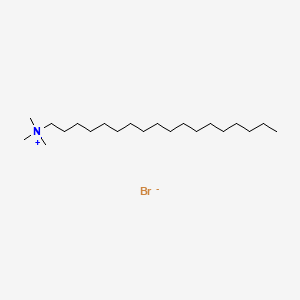
PubChem 2D chemical structure for CAS 17301-53-0
CAS 17301-53-0PubChem CID 3014969

Behentrimonium Chloride

IUPAC name
docosyl(trimethyl)azanium chloride
Molecular formula
C25H54ClN
Molecular weight
404.2 g/mol
Exact mass
403.3944784 Da
Topological polar surface area
0.0 Ų
Hydrogen-bond donors
0
Hydrogen-bond acceptors
1
Covalent units
2
Defined stereocentres
0

Also known as

Docosyltrimethylammonium chlorideX7GNG3S47T1-Docosanaminium, N,N,N-trimethyl-, chlorideEINECS 241-327-0BEHENTRIMONIUMGENAMIN BTLFN,N,N-Trimethyl-1-docosanaminium chloride1-Docosanaminium, N,N,N-trimethyl-, chloride (1:1)
16 more reported names
behenyltrimethylammonium chlorideVARISOFT BT 85 PELLETSINCROQUAT BEHENYL TMC-85RefChem:561201BEHENTRIMONIUM CHLORIDE [INCI]241-327-0926-569-3N,N,N-Trimethyldocosan-1-aminium chloridedocosyl(trimethyl)azanium;chlorideUNII-X7GNG3S47TBehentrimonium Chloride (>80%)docosyl(trimethyl)azanium,chlorideBehenyltrimonium chloridebehenyltrimethylammoniumchloridedocosyltrimethylazanium chlorideTrimethylbehenylammonium chloride
External database identifiers

Retrieved from NIH PubChem on 2026-08-31 by checksum-valid CAS matching. Chemical properties do not replace the regulatory decision on this page.
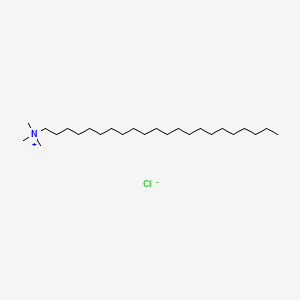
PubChem 2D chemical structure for CAS 57-09-0
CAS 57-09-0PubChem CID 5974

Hexadecyltrimethylammonium Bromide

IUPAC name
hexadecyl(trimethyl)azanium bromide
Molecular formula
C19H42BrN
Molecular weight
364.4 g/mol
Exact mass
363.25006 Da
Topological polar surface area
0.0 Ų
Hydrogen-bond donors
0
Hydrogen-bond acceptors
1
Covalent units
2
Defined stereocentres
0

Also known as

Cetrimonium bromideCetyltrimethylammonium bromideBromatCETABCentimideCtmabAcetoquat CTABCee dee
16 more reported names
Cetyl trimethyl ammonium bromideTrimethylcetylammonium bromideBromuro de cetrimonioN-Cetyltrimethylammonium bromideBromure de cetrimoniumCetrimonii bromidumTrimethylhexadecylammonium bromideCetrimonio bromuroN-HEXADECYLTRIMETHYLAMMONIUM BROMIDEPalmityltrimethyl ammonium bromideN,N,N-Trimethyl-1-hexadecanaminium bromideN,N,N-Trimethylcetylammonium bromideSumquat 6030N-Hexadecyl-N,N,N-trimethylammonium bromideL64N7M9BWRNSC-32927
External database identifiers

Retrieved from NIH PubChem on 2026-08-31 by checksum-valid CAS matching. Chemical properties do not replace the regulatory decision on this page.
Additional authoritative substance research

These source-specific lookups can add hazard, toxicology, identity and assessment context. A link is a research route, not a claim that the source contains an exact record.

Cosmetic Ingredient Review safety assessments

Expert Panel conclusions, assessed ingredient groups, use conditions, dates and report documents

Independent expert review considered by FDA; not a government approval or binding market rule

Research this identity

FDA Global Substance Registration System

UNII identifiers, preferred names, substance types, codes and public substance relationships

Identity registry only; UNII availability does not imply FDA review or approval

Research this identity

ILO/WHO International Chemical Safety Cards

Hazards, symptoms, first aid, storage, incompatibilities and physical properties for covered chemicals

International occupational chemical-safety reference; not cosmetic-use approval

Research this identity

Japan NITE-CHRIP

Chemical identity, Japanese and foreign legal lists, GHS hazards and exposure-related information

Chemical-management evidence; cosmetic status remains governed by the applicable MHLW standard and market rules

Research this identity

NIOSH Pocket Guide to Chemical Hazards

REL, PEL, IDLH, properties, exposure routes, symptoms, target organs, first aid and measurement methods for covered workplace chemicals

US occupational-health guidance and limits; not a cosmetic ingredient decision

Research this identity

OECD eChemPortal

Gateway to authority-owned physical-property, fate, ecotoxicity, toxicity, exposure and GHS records

Discovery gateway; each linked authority remains responsible for its data

Research this identity

US EPA CompTox CTX APIs

DTXSID identity, experimental and predicted properties, toxicity, bioactivity, exposure and environmental data

Scientific and computational evidence; predictions must remain labelled and do not determine cosmetic legality

Research this identity

Continue the compliance check

1. Confirm identity

Match the supplier specification, CAS/EC identifiers and composition to this official label name. Similar wording is not proof of chemical equivalence.

2. Review restrictions

Check every exact Annex record shown above, plus CMR, nanomaterial, SCCS and later-amendment requirements that may apply.

3. Verify the formula

Evaluate concentration, product type, purity, warnings, claims and each target market before making a compliance decision.

Screen in a formulaOpen standalone comparison

Official source and scope

Imported from Commission Implementing Decision (EU) 2025/1175 (dataset version EU 2025/1175). The glossary supplies common ingredient names for the ingredient list required by Article 19(1)(g); it is not an approval or safety list.

Open official Decision