CAS 598-62-9PubChem CID 11726
Manganese carbonate
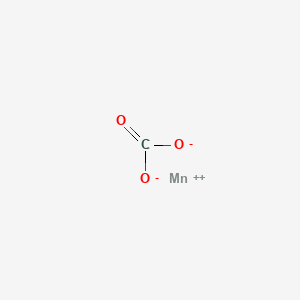
Manganese carbonate is a chemical compound of manganese that occurs naturally as the mineral rhodochrosite. It is widely used as an additive to plant fertilizers to cure manganese deficient crops, in health foods, in ceramics as a glaze colorant and flux, and in concrete stains. Manganese is a naturally occurring metal with the symbol Mn and the atomic number 25. It does not occur naturally in its pure form, but is found in many types of rocks in combination with other substances such as oxygen, sulfur, or chlorine. Manganese occurs naturally in most foods and small amounts are needed to stay healthy, as manganese ions act as cofactors for a number of enzymes. (L228, L229, L233)
— Toxin and Toxin Target Database (T3DB)
- IUPAC name
- manganese(2+) carbonate
- Molecular formula
- CMnO3
- Molecular weight
- 114.947 g/mol
- Exact mass
- 114.922787 Da
- Topological polar surface area
- 63.2 Ų
- Hydrogen-bond donors
- 0
- Hydrogen-bond acceptors
- 3
- Covalent units
- 2
- Defined stereocentres
- 0
Also known as
Manganese(II) carbonateManganous carbonateNatural rhodochrositeManganese carbonate (1:1)Manganese carbonate (MnCO3)Manganese(2+) carbonate (1:1)9ZV57512ZMCarbonic acid, manganese(2+) salt (1:1)
16 more reported names
MANGANUM CARBONICUMNSC-83512carbonic acid manganeseRefChem:55543209-942-9Carbonic acid, manganese saltCCRIS 3660HSDB 790manganese(2+);carbonateEINECS 209-942-9NSC 83512UNII-9ZV57512ZMEC 209-942-9ManganesecarbonateManganese (II) carbonatemanganous;carbonate
External database identifiers
Retrieved from NIH PubChem on 2026-08-31 by checksum-valid CAS matching. Chemical properties do not replace the regulatory decision on this page.