
Official EU label nameGlossary entry 23753
PYROCATECHOL
This record confirms an official common ingredient name for EU cosmetic product labelling. It does not by itself confirm that the substance is permitted, unrestricted or safe.
Global evidence snapshot
The resolved identity has matching regulatory evidence in 9 of 13 indexed market datasets: 9 country records and 0 EU Annex records. Every result and evidence gap is listed below.
Markets checked
13
Markets with evidence
9
Evidence gaps
4
Resolved identifiers
2
Resolved substance identity
CAS:120-80-9
EC:204-427-5
Ingredient index records:
9 matched or reported names
PYROCATECHOLPyrocatechol (Catechol)PyrocatecholPyrocatechol (catechol)Catechol邻苯二酚(儿茶酚) — Pyrocatechol (Catechol) (CAS No. 120-80-9)카테콜(피로카테콜)Pirocatecol (Catecol)Pyrocatechol (Catechol) (CAS No. 120-80-9)
Regulatory evidence in all 13 markets
Open each matched record for its scope, concentration, conditions, warnings and official source version.
Swipe or scroll horizontally to see dataset coverage and next actions.
| Market | Result | Records | Dataset | Meaning / next action |
|---|---|---|---|---|
| European Union EU | No local match | 0 | Complete annex dataset Regulation (EC) 1223/2009 consolidated to 1 May 2026 | No annex match only means that these five annexes did not return a match; CosIng identity data and other EU obligations still need review. |
| Great Britain GB | Prohibited | 1Open record 1 | Complete consolidated annex dataset GB retained Regulation 1223/2009 schedules, effective 15 August 2026 | Review every linked record and exact conditions. |
| Canada CA | Prohibited | 1Open record 1 | Complete Hotlist snapshot Health Canada Cosmetic Ingredient Hotlist, 13 August 2025 | Review every linked record and exact conditions. |
| New Zealand NZ | Prohibited | 1Open record 1 | Complete schedules dataset Cosmetic Products Group Standard schedules effective 1 January 2026 | Review every linked record and exact conditions. |
| ASEAN ASEAN | Prohibited | 1Open record 1 | Complete regional annex dataset ASEAN Cosmetic Directive annexes 2026-1, 22 June 2026 | Review every linked record and exact conditions. |
| China CN | Prohibited | 1Open record 1 | Complete prohibited catalogues plus official-source workflow NMPA 2021 banned catalogues plus dynamic IECIC List I/List II system current since 2025 | Review every linked record and exact conditions. |
| Japan JP | No local match | 0 | Complete Standards appendices dataset MHLW Standards for Cosmetics official English source and Japanese amendments checked for the imported snapshot | The Japanese text and subsequent notices are canonical; no local match is not a product-compliance conclusion. |
| South Korea KR | Prohibited | 1Open record 1 | Complete current appendix dataset MFDS Notice 2026-19, effective 18 March 2026 | Review every linked record and exact conditions. |
| United States US | No local match | 0 | Complete enumerated federal ingredient rules eCFR Title 21 issue date 27 August 2026 | FDA has no general approved-cosmetic-ingredient catalogue; absence from these sections is not approval or proof of safety. |
| Australia AU | No local match | 0 | Complete cosmetic-relevant Poisons Standard subset plus official workflow Therapeutic Goods (Poisons Standard—June 2026) Instrument 2026 | An AICIS Inventory match is not cosmetic approval; no Inventory match can indicate a new, exempted, reported or confidential introduction. |
| Brazil BR | Prohibited | 1Open record 1 | Complete prohibited dataset plus current restricted-list workflow ANVISA RDC 1.029/2026 and RDC 1.030/2026, published 15 June 2026 | Review every linked record and exact conditions. |
| India IN | Prohibited | 1Open record 1 | Complete current Part 2 dataset plus official workflow for Parts 1, 3 and 4 Cosmetics Rules 2020 plus current BIS IS 4707 parts (1:2020, 2:2025, 3:2025, 4:2022) | Review every linked record and exact conditions. |
| Saudi Arabia SA | Prohibited | 1Open record 1 | Complete official list index SFDA live prohibited/restricted lists, snapshot 30 August 2026 | Review every linked record and exact conditions. |
No market rows match this filter.
Matching market records and conditions
Canada
Health Canada Cosmetic Ingredient Hotlist, 13 August 2025New Zealand
Cosmetic Products Group Standard schedules effective 1 January 2026ASEAN
ASEAN Cosmetic Directive annexes 2026-1, 22 June 2026China
NMPA 2021 banned catalogues plus dynamic IECIC List I/List II system current since 2025South Korea
MFDS Notice 2026-19, effective 18 March 2026Brazil
ANVISA RDC 1.029/2026 and RDC 1.030/2026, published 15 June 2026India
Cosmetics Rules 2020 plus current BIS IS 4707 parts (1:2020, 2:2025, 3:2025, 4:2022)Saudi Arabia
SFDA live prohibited/restricted lists, snapshot 30 August 2026Chemical identity and properties
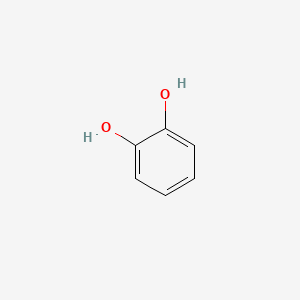
CAS 120-80-9PubChem CID 289
Catechol
Catechol is a benzenediol comprising of a benzene core carrying two hydroxy substituents ortho to each other. It has a role as a genotoxin, an allelochemical and a plant metabolite. It is a conjugate acid of a catecholate(1-). — ChEBI
- IUPAC name
- benzene-1,2-diol
- Molecular formula
- C6H6O2
- Molecular weight
- 110.11 g/mol
- Exact mass
- 110.036779430 Da
- XLogP3
- 0.9
- Topological polar surface area
- 40.5 Ų
- Hydrogen-bond donors
- 2
- Hydrogen-bond acceptors
- 2
- Covalent units
- 1
- Defined stereocentres
- 0
Also known as
pyrocatechol1,2-dihydroxybenzene1,2-benzenediolpyrocatechin2-hydroxyphenolo-Dihydroxybenzeneo-Hydroxyphenolo-Benzenediol
16 more reported names
o-Dioxybenzeneo-HydroquinonePhthalhydroquinonePyrocatechineo-PhenylenediolOxyphenic acidFouramine PCHPelagol Grey CDurafur developer CCatechin (phenol)Fourrine 68Benzene, o-dihydroxy-Catechol (phenol)o-DiphenolC.I. Oxidation Base 26ortho-Hydroxyphenol
External database identifiers
- ChEBI:CHEBI:18135
- ChEMBL:CHEMBL280998
- EPA DTXSID:DTXSID3020257
- PubMed:23122078
- PubMed:23107737
- PubMed:23101658
- PubMed:23084066
- PubMed:23081836
- PubMed:23079526
- PubMed:23071683
- PubMed:23071628
- PubMed:23054709
- PubMed:23035942
- PubMed:23022512
- PubMed:23022412
Evidence from additional scientific databases
NIH PubChem PUG-View
Exact identifier match289
Attributed physical-property, hazard, environmental and use annotations.
- Autoignition Temperature: 510 °C Source: Hazardous Substances Data Bank (HSDB)
- Autoignition Temperature: 510 °C Source: ILO-WHO International Chemical Safety Cards (ICSCs)
- Boiling Point: 473 °F at 760 mmHg (sublimes) (NTP, 1992) Source: CAMEO Chemicals
- Boiling Point: 245 °C Source: DrugBank
- Boiling Point: 245.5 °C at 760 mm Hg; sublimes Source: Hazardous Substances Data Bank (HSDB)
- Boiling Point: BP: 221.5 °C at 400 mm Hg; 197.7 °C at 200 mm Hg; 176 °C at 100 mm Hg; 161.7 °C at 60 mm Hg; 134 °C at 20 mm Hg; 118.3 °C at 10 mm Hg; 104 °C at 5 mm Hg ... Volatile with steam Source: Hazardous Substances Data Bank (HSDB)
- Boiling Point: 245.5 °C Source: ILO-WHO International Chemical Safety Cards (ICSCs)
- Boiling Point: 474 °F Source: Occupational Safety and Health Administration (OSHA)
- Boiling Point: 245 °C @760 [mm Hg] Source: PAC Chemical Database, U.S. Department of Energy
- Boiling Point: 474 °F Source: The National Institute for Occupational Safety and Health (NIOSH)
- Color/Form: Monoclinic tablets, prisms from toluene ... its aqueous solutions soon turn brown Source: Hazardous Substances Data Bank (HSDB)
- Color/Form: Colorless crystals, discolors to brown on exposure to air and light, especially when moist Source: Hazardous Substances Data Bank (HSDB)
- Density: 1.344 at 68 °F (USCG, 1999) - Denser than water; will sink Source: CAMEO Chemicals
- Density: 1.344 Source: Hazardous Substances Data Bank (HSDB)
- Density: Density: 1.371 Source: Hazardous Substances Data Bank (HSDB)
- Density: Relative density (water = 1): 1.3 Source: ILO-WHO International Chemical Safety Cards (ICSCs)
- Density: 1.34 Source: Occupational Safety and Health Administration (OSHA)
- Density: 1.344 @ 20°C Source: PAC Chemical Database, U.S. Department of Energy
- Density: 1.34 Source: The National Institute for Occupational Safety and Health (NIOSH)
- pKa: 9.45 (at 25 °C) Source: DrugBank
- Dissociation Constants: pKa1 = 9.45; pKa2 = 12.8 Source: Hazardous Substances Data Bank (HSDB)
- Flash Point: 261 °F (NTP, 1992) Source: CAMEO Chemicals
- Flash Point: 127 °C Source: Haz-Map, Information on Hazardous Chemicals and Occupational Diseases
- Flash Point: 260 °F (127 °C) (Closed cup) Source: Hazardous Substances Data Bank (HSDB)
- Flash Point: 127.2 °C (open cup) Source: Hazardous Substances Data Bank (HSDB)
- Flash Point: 127 °C (261 °F) (Closed cup) Source: Hazardous Substances Data Bank (HSDB)
- Flash Point: 127 °C c.c. Source: ILO-WHO International Chemical Safety Cards (ICSCs)
- Flash Point: 261 °F Source: Occupational Safety and Health Administration (OSHA)
- Flash Point: 261 °F Source: The National Institute for Occupational Safety and Health (NIOSH)
- LogP: 0.88 Source: DrugBank
- LogP: log Kow = 0.88 Source: Hazardous Substances Data Bank (HSDB)
- LogP: 0.88 Source: Human Metabolome Database (HMDB)
- LogP: 0.88 Source: ILO-WHO International Chemical Safety Cards (ICSCs)
- Melting Point: 221 °F (NTP, 1992) Source: CAMEO Chemicals
- Melting Point: 105 °C Source: DrugBank
- Melting Point: 105 °C Source: Hazardous Substances Data Bank (HSDB)
- Melting Point: 105 °C Source: Human Metabolome Database (HMDB)
- Melting Point: 105 °C Source: ILO-WHO International Chemical Safety Cards (ICSCs)
- Melting Point: 221 °F Source: Occupational Safety and Health Administration (OSHA)
- Melting Point: 104.6 °C Source: PAC Chemical Database, U.S. Department of Energy
- Melting Point: 221 °F Source: The National Institute for Occupational Safety and Health (NIOSH)
- Odor: Faint characteristic odor Source: Hazardous Substances Data Bank (HSDB)
- Odor: Phenolic odor Source: Hazardous Substances Data Bank (HSDB)
- Physical Description: Solid; white; odorless. Sinks and mixes with water. (USCG, 1999) Source: CAMEO Chemicals
- Physical Description: Large Crystals; Other Solid Source: EPA Chemical Data Reporting (CDR)
- Physical Description: Colorless, crystalline solid with a faint odor; Note: Discolors to brown in air & light; [NIOSH] Source: Haz-Map, Information on Hazardous Chemicals and Occupational Diseases
- Physical Description: Solid Source: Human Metabolome Database (HMDB)
- Physical Description: COLOURLESS CRYSTALS WITH CHARACTERISTIC ODOUR. TURNS BROWN ON EXPOSURE TO AIR AND LIGHT. Source: ILO-WHO International Chemical Safety Cards (ICSCs)
- Physical Description: Colorless, crystalline solid with a faint odor. Source: Occupational Safety and Health Administration (OSHA)
- Physical Description: Colorless, crystalline solid with a faint odor. [Note: Discolors to brown in air & light.] Source: The National Institute for Occupational Safety and Health (NIOSH)
- Refractive Index: Index of refraction: 1.604 at 25 °C Source: Hazardous Substances Data Bank (HSDB)
- Solubility: greater than or equal to 100 mg/mL at 70.7 °F (NTP, 1992) Source: CAMEO Chemicals
- Solubility: 461000 mg/L (at 25 °C) Source: DrugBank
- Solubility: In water, 4.61X10+5 mg/L at 25 °C Source: Hazardous Substances Data Bank (HSDB)
- Solubility: Soluble in chloroform, ether; very soluble in pyridine, aqueous alkalis Source: Hazardous Substances Data Bank (HSDB)
- Solubility: Very soluble in alcohol, ethyl ether, acetate Source: Hazardous Substances Data Bank (HSDB)
- Solubility: 461.0 mg/mL Source: Human Metabolome Database (HMDB)
- Solubility: Solubility in water, g/100ml at 20 °C: 43 Source: ILO-WHO International Chemical Safety Cards (ICSCs)
- Solubility: 44% Source: The National Institute for Occupational Safety and Health (NIOSH)
- Vapor Pressure: 5 mmHg at 219 °F ; 10 mmHg at 244.9 °F (NTP, 1992) Source: CAMEO Chemicals
- Vapor Pressure: 0.03 [mmHg] Source: Haz-Map, Information on Hazardous Chemicals and Occupational Diseases
- Vapor Pressure: VP: 10 mm Hg at 118.3 °C Source: Hazardous Substances Data Bank (HSDB)
- Vapor Pressure: 3X10⁻² mm Hg at 20 °C (extrapolated) Source: Hazardous Substances Data Bank (HSDB)
- Vapor Pressure: Vapor pressure, Pa at 20 °C: 3 (negligible) Source: ILO-WHO International Chemical Safety Cards (ICSCs)
- Vapor Pressure: 10 mmHg at 245 °F Source: Occupational Safety and Health Administration (OSHA)
- Vapor Pressure: (244 °F): 10 mmHg Source: The National Institute for Occupational Safety and Health (NIOSH)
- IARC Carcinogenic Agent: Catechol Source: International Agency for Research on Cancer (IARC)
- IARC Carcinogenic Classes: Group 2B: Possibly carcinogenic to humans Source: International Agency for Research on Cancer (IARC)
- IARC Monographs: Volume 15: (1977) Some Fumigants, the Herbicides 2,4-D and 2,4,5-T, Chlorinated Dibenzodioxins and Miscellaneous Industrial Chemicals; Volume Sup 7: Overall Evaluations of Carcinogenicity: An Updating of IARC Monographs Volumes 1 to 42, 1987; 440 pages; ISBN 92-832-1411-0 (out of print); Volume 71: (1999) Re-evaluation of Some Organic Chemicals, Hydrazine and Hydrogen Peroxide (Part 1, Part 2, Part 3) Source: International Agency for Research on Cancer (IARC)
- Publication Year: 1999 Source: International Agency for Research on Cancer (IARC)
- Evaluation Year: 1998 Source: International Agency for Research on Cancer (IARC)
- Carcinogen Classification: 2B, possibly carcinogenic to humans. (L135) Source: Toxin and Toxin Target Database (T3DB)
- Exposure Routes: The substance can be absorbed into the body by inhalation of its aerosol, through the skin and by ingestion. Source: ILO-WHO International Chemical Safety Cards (ICSCs)
- Exposure Routes: inhalation, skin absorption, ingestion, skin and/or eye contact Source: The National Institute for Occupational Safety and Health (NIOSH)
- First Aid: EYES: First check the victim for contact lenses and remove if present. Flush victim's eyes with water or normal saline solution for 20 to 30 minutes while simultaneously calling a hospital or poison control center. Do not put any ointments, oils, or medication in the victim's eyes without specific instructions from a physician. IMMEDIATELY transport the victim after flushing eyes to a hospital even if no symptoms (such as redness or irritation) develop.; SKIN: IMMEDIATELY flood affected skin with water while removing and isolating all contaminated clothing. Gently wash all affected skin areas thoroughly with soap and water. IMMEDIATELY call a hospital or poison control center even if no symptoms (such as redness or irritation) develop. IMMEDIATELY transport the victim to a hospital for treatment after washing the affected areas.; INHALATION: IMMEDIATELY leave the contaminated area; take deep breaths of fresh air. If symptoms (such as wheezing, coughing, shortness of breath, or burning in the mouth, throat, or chest) develop, call a physician and be prepared to transport the victim to a hospital. Provide proper respiratory protection to rescuers entering an unknown atmosphere. Whene Source: CAMEO Chemicals
- First Aid: (General first aid procedures); Eye: Irrigate immediately - If this chemical contacts the eyes, immediately wash (irrigate) the eyes with large amounts of water, occasionally lifting the lower and upper lids. Get medical attention immediately.; Skin: Water wash immediately - If this chemical contacts the skin, immediately wash the contaminated skin with water. If this chemical penetrates the clothing, immediately remove the clothing and wash the skin with water. If symptoms occur after washing, get medical attention immediately.; Breathing: Respiratory support; Swallow: Medical attention immediately - If this chemical has been swallowed, get medical attention immediately. Source: The National Institute for Occupational Safety and Health (NIOSH)
- Signal: Danger Source: Regulation (EC) No 1272/2008 of the European Parliament and of the Council
- GHS Hazard Statements: H301: Toxic if swallowed [Danger Acute toxicity, oral]; H311: Toxic in contact with skin [Danger Acute toxicity, dermal]; H315: Causes skin irritation [Warning Skin corrosion/irritation]; H319: Causes serious eye irritation [Warning Serious eye damage/eye irritation]; H341: Suspected of causing genetic defects [Warning Germ cell mutagenicity]; H350: May cause cancer [Danger Carcinogenicity] Source: Regulation (EC) No 1272/2008 of the European Parliament and of the Council
- Precautionary Statement Codes: P203, P262, P264, P264+P265, P270, P280, P301+P316, P302+P352, P305+P351+P338, P316, P318, P321, P330, P332+P317, P337+P317, P361+P364, P362+P364, P405, and P501 (click each P-code to see the statement) Source: Regulation (EC) No 1272/2008 of the European Parliament and of the Council
- Signal: Danger Source: European Chemicals Agency (ECHA)
- GHS Hazard Statements: H301 (16.4%): Toxic if swallowed [Danger Acute toxicity, oral]; H302 (83.6%): Harmful if swallowed [Warning Acute toxicity, oral]; H311 (16.4%): Toxic in contact with skin [Danger Acute toxicity, dermal]; H312 (83.6%): Harmful in contact with skin [Warning Acute toxicity, dermal]; H315 (> 99.9%): Causes skin irritation [Warning Skin corrosion/irritation]; H317 (12.6%): May cause an allergic skin reaction [Warning Sensitization, Skin]; H319 (94.6%): Causes serious eye irritation [Warning Serious eye damage/eye irritation]; H341 (16.4%): Suspected of causing genetic defects [Warning Germ cell mutagenicity]; H350 (11.4%): May cause cancer [Danger Carcinogenicity] Source: European Chemicals Agency (ECHA)
- Precautionary Statement Codes: P203, P261, P262, P264, P264+P265, P270, P272, P280, P301+P316, P301+P317, P302+P352, P305+P351+P338, P316, P317, P318, P321, P330, P332+P317, P333+P317, P337+P317, P361+P364, P362+P364, P405, and P501 (click each P-code to see the statement) Source: European Chemicals Agency (ECHA)
- ECHA C&L Notifications Summary: Aggregated GHS information provided per 2962 reports by companies from 34 notifications to the ECHA C&L Inventory. Each notification may be associated with multiple companies.; Information may vary between notifications depending on impurities, additives, and other factors. The percentage value in parenthesis indicates the notified classification ratio from companies that provide hazard codes. Only hazard codes with percentage values above 10% are shown. For more detailed information, please visit ECHA C&L website. Source: European Chemicals Agency (ECHA)
- Signal: Warning Source: European Chemicals Agency (ECHA)
- GHS Hazard Statements: H317 (100%): May cause an allergic skin reaction [Warning Sensitization, Skin]; H412 (100%): Harmful to aquatic life with long lasting effects [Hazardous to the aquatic environment, long-term hazard] Source: European Chemicals Agency (ECHA)
- Precautionary Statement Codes: P261, P272, P273, P280, P302+P352, P321, P333+P317, P362+P364, and P501 (click each P-code to see the statement) Source: European Chemicals Agency (ECHA)
- ECHA C&L Notifications Summary: The GHS information provided by 1 company from 1 notification to the ECHA C&L Inventory. Source: European Chemicals Agency (ECHA)
- GHS Hazard Statements: H315 (100%): Causes skin irritation [Warning Skin corrosion/irritation]; H319 (100%): Causes serious eye irritation [Warning Serious eye damage/eye irritation]; H412 (100%): Harmful to aquatic life with long lasting effects [Hazardous to the aquatic environment, long-term hazard] Source: European Chemicals Agency (ECHA)
- NFPA Health Rating: 3 - Materials that, under emergency conditions, can cause serious or permanent injury. Source: Hazardous Substances Data Bank (HSDB)
- NFPA Fire Rating: 1 - Materials that must be preheated before ignition can occur. Materials require considerable preheating, under all ambient temperature conditions, before ignition and combustion can occur. Source: Hazardous Substances Data Bank (HSDB)
- NFPA Instability Rating: 0 - Materials that in themselves are normally stable, even under fire conditions. Source: Hazardous Substances Data Bank (HSDB)
- Target Organs: Eyes, skin, respiratory system, central nervous system, kidneys Source: The National Institute for Occupational Safety and Health (NIOSH)
- Cosmetic Ingredient Review Conclusion: The CIR Expert Panel concludes that Pyrocatechol is unsafe for use in leave-on products, and that the available data are insufficient to support the safety of Pyrocatechol as used in hair dyes. Source: Cosmetic Ingredient Review (CIR)
- Cosmetic Ingredient Review Finding(s): The ingredient is unsafe for use in cosmetics; Ingredients for which the data are insufficient and their use in cosmetics is not supported Source: Cosmetic Ingredient Review (CIR)
- Toxicity Summary: IDENTIFICATION AND USE: Catechol is a tablet or colorless crystal, prism or aqueous solution, which discolors to brown on exposure to air and light. It has a faint characteristic odor. It is used as antioxidant in the rubber, chemical, photographic, dye, fat, and oil industries. It was formerly used as an antiseptic. Catechol was found unsafe for use in cosmetics. HUMAN EXPOSURE AND TOXICITY: Catechol contact with the skin has been known to cause an eczematous dermatitis. It is highly irritating upon direct contact; severe eye and deep skin burns result. Well absorbed by skin. Systemic toxicity similar to that of phenol however, catechol may be more likely to cause convulsions and hypertension. At high doses, renal and liver injury may occur. Absorption through the skin, in a few instances, has resulted in symptoms of illness resembling closely those induced by phenol, except for certain central effects (convulsions) that were more marked. Death apparently is initiated by respiratory failure. Catechol was found to be a more harmful toxin than phenol in human blood cells in vitro, since it provokes statistically significant changes in the function of erythrocytes even at low doses. Source: Hazardous Substances Data Bank (HSDB)
- Environmental Bioconcentration: An estimated BCF of 3 was calculated for catechol(SRC), using a log Kow of 0.88(1) and a regression-derived equation(2). According to a classification scheme(3), this BCF suggests the potential for bioconcentration in aquatic organisms is low(SRC). Source: Hazardous Substances Data Bank (HSDB)
- Environmental Fate: TERRESTRIAL FATE: Based on a classification scheme(1), a Koc value of 118(2), indicates that catechol is expected to have high mobility in soil(SRC). Volatilization of catechol from moist soil surfaces is not expected to be an important fate process(SRC) given an estimated Henry's Law constant of 1.2X10⁻⁹ atm-cu m/mole(SRC), based upon its vapor pressure, 3.66X10⁻³ mm Hg(3), and water solubility, 4.61X10+5 mg/L(4). Catechol is not expected to volatilize from dry soil surfaces(SRC) based upon its vapor pressure(3). The percent biodegradation after 6 months in various loam soils ranged from 24 to 50%(5), indicating that biodegradation is a moderate environmental fate process in soil(SRC). Source: Hazardous Substances Data Bank (HSDB)
- Environmental Fate: AQUATIC FATE: Based on a classification scheme(1), a Koc value of 118(2), indicates that catechol is not expected to adsorb to suspended solids and sediment(SRC). Volatilization from water surfaces is not expected(3) based upon an estimated Henry's Law constant of 1.20X10⁻⁹ atm-cu m/mole(SRC), derived from its vapor pressure, 3.66X10⁻³ mm Hg(4), and water solubility, 4.61X10+5 mg/L(5). According to a classification scheme(6), an estimated BCF of 3(SRC), from its log Kow of 0.88(7) and a regression-derived equation(8), suggests the potential for bioconcentration in aquatic organisms is low(SRC). Utilizing the Japanese MITI test, 83% of the Theoretical BOD was reached in 2 weeks(9) indicating that biodegradation is an important environmental fate process in water(SRC). Source: Hazardous Substances Data Bank (HSDB)
- Environmental Fate: ATMOSPHERIC FATE: According to a model of gas/particle partitioning of semivolatile organic compounds in the atmosphere(1), catechol, which has a vapor pressure of 3.66X10⁻³ mm Hg at 25 °C(2), is expected to exist solely as a vapor in the ambient atmosphere. Vapor-phase catechol is degraded in the atmosphere by reaction with photochemically-produced hydroxyl radicals(SRC); the half-life for this reaction in air is estimated to be 2.8 hrs(SRC), calculated from its rate constant of 1.04X10⁻¹⁰ cu cm/molecule-sec at 25 °C(3). Catechol in its nonionized form will not be subject to direct photolysis since this form does not absorb light above 300 nm in methanol solution(4). Reaction of catechol with nitrate radicals during nighttime may be an important removal process based on a rate constant of 3.8X10⁻¹² cu cm/molecule sec for the reaction of phenol with nitrate radicals(2) which corresponds to a half-life of 15 minutes at an atmospheric concentration of 2X10+8 nitrate radicals per cu cm(SRC). The ionized form of catechol may photolyze based on an absorption maximum at 313 nm in basic aqueous solution(6) and at 289 nm in basic methanol solution(4). Therefore, catechol may be susceptible Source: Hazardous Substances Data Bank (HSDB)
- Consumer Uses: Intermediate Source: EPA Chemical Data Reporting (CDR)
- Industry Uses: Intermediate Source: EPA Chemical Data Reporting (CDR)
- Cosmetic Ingredient Review Link: CIR ingredient: Pyrocatechol Source: Cosmetic Ingredient Review (CIR)
- Uses: Catechol is used as a photographic developer, a developer for fur dyes, as an intermediate for antioxidants in rubber and lubricating oils, in polymerization inhibitors, and in pharmaceuticals. Source: EPA Hazardous Air Pollutants
- Sources/Uses: Used in the photography, rubber, dye, and oil industries as an antioxidant; also used to produce cosmetics and pharmaceuticals; [ACGIH] Source: Haz-Map, Information on Hazardous Chemicals and Occupational Diseases
- Industrial Processes with risk of exposure: Photographic Processing [Category: Other] Source: Haz-Map, Information on Hazardous Chemicals and Occupational Diseases
- Activities with risk of exposure: Smoking cigarettes [Category: Food & Drugs] Source: Haz-Map, Information on Hazardous Chemicals and Occupational Diseases
- Uses: Antiseptic /former US/, photography, dyestuffs, electroplating, specialty inks, antioxidants and light stabilizers, organic synthesis. Source: Hazardous Substances Data Bank (HSDB)
- Uses: Antioxidant in the rubber, chemical, photographic, dye, fat, and oil industries. It is also employed in cosmetics as couplers in oxidative hair dyes, but is no longer used as an antiseptic. Source: Hazardous Substances Data Bank (HSDB)
- Uses: Synthesis of food, pharmaceutical and agricultural products Source: Hazardous Substances Data Bank (HSDB)
- Uses: The Cosmetic Ingredient Review Panel concludes that pyrocatechol is unsafe for use in leave-on products and that the available data are insufficient to support the safety of pyrocatechol as used in hair dyes. This conclusion supersedes the earlier conclusion issued by the Expert Panel in 1985. Source: Hazardous Substances Data Bank (HSDB)
- Uses: For more Uses (Complete) data for CATECHOL (7 total), please visit the HSDB record page. Source: Hazardous Substances Data Bank (HSDB)
- Uses: This is a man-made compound that is used as a pesticide. Source: Toxin and Toxin Target Database (T3DB)
Mapped by: Existing checksum-valid CAS to unique PubChem CID match. Retrieved: 2026-08-31. Open source record
Scientific classifications and hazard annotations provide context and do not replace the market-specific regulatory decision shown above.
Additional source coverage and match status
| Source | Result | Checked |
|---|---|---|
| NIH PubChem PUG-View | Exact match | 2026-08-31 |
A recorded no-match is useful evidence that the source was checked; it is not a claim that the substance does not exist elsewhere.
Retrieved from NIH PubChem on 2026-08-31 by checksum-valid CAS matching. Chemical properties do not replace the regulatory decision on this page.
Additional authoritative substance research
Each link searches that source for this identity. A link is a research route, not a claim that the source holds an exact record. What each source is, and its legal weight
Take this record further
Official source and scope
Imported from Commission Implementing Decision (EU) 2025/1175 (dataset version EU 2025/1175). The glossary supplies common ingredient names for the ingredient list required by Article 19(1)(g); it is not an approval or safety list.
Open official Decision