
Official EU label nameGlossary entry 20703
PHENOL
This record confirms an official common ingredient name for EU cosmetic product labelling. It does not by itself confirm that the substance is permitted, unrestricted or safe.
Global evidence snapshot
The resolved identity has matching regulatory evidence in 11 of 13 indexed market datasets: 10 country records and 1 EU Annex records. Every result and evidence gap is listed below.
Markets checked
13
Markets with evidence
11
Evidence gaps
2
Resolved identifiers
2
Resolved substance identity
CAS:108-95-2
EC:203-632-7
Ingredient index records:
PHENOL
Cosmetic functions: ANTIMICROBIAL, DENATURANT, DEODORANT, FRAGRANCE, ORAL CARE, PRESERVATIVE
Inventory restriction note: II/1175
6 matched or reported names
PHENOLPhenol苯酚 — Phenol (CAS No. 108-95-2)페놀FenolPhenol (CAS No. 108-95-2)
Regulatory evidence in all 13 markets
Open each matched record for its scope, concentration, conditions, warnings and official source version.
Swipe or scroll horizontally to see dataset coverage and next actions.
| Market | Result | Records | Dataset | Meaning / next action |
|---|---|---|---|---|
| European Union EU | Prohibited | 1Open record 1 | Complete annex dataset Regulation (EC) 1223/2009 consolidated to 1 May 2026 | Review every linked record and exact conditions. |
| Great Britain GB | Prohibited | 1Open record 1 | Complete consolidated annex dataset GB retained Regulation 1223/2009 schedules, effective 15 August 2026 | Review every linked record and exact conditions. |
| Canada CA | Prohibited | 1Open record 1 | Complete Hotlist snapshot Health Canada Cosmetic Ingredient Hotlist, 13 August 2025 | Review every linked record and exact conditions. |
| New Zealand NZ | Prohibited | 1Open record 1 | Complete schedules dataset Cosmetic Products Group Standard schedules effective 1 January 2026 | Review every linked record and exact conditions. |
| ASEAN ASEAN | Prohibited | 1Open record 1 | Complete regional annex dataset ASEAN Cosmetic Directive annexes 2026-1, 22 June 2026 | Review every linked record and exact conditions. |
| China CN | Prohibited | 1Open record 1 | Complete prohibited catalogues plus official-source workflow NMPA 2021 banned catalogues plus dynamic IECIC List I/List II system current since 2025 | Review every linked record and exact conditions. |
| Japan JP | Restricted | 1Open record 1 | Complete Standards appendices dataset MHLW Standards for Cosmetics official English source and Japanese amendments checked for the imported snapshot | Review every linked record and exact conditions. |
| South Korea KR | Prohibited | 1Open record 1 | Complete current appendix dataset MFDS Notice 2026-19, effective 18 March 2026 | Review every linked record and exact conditions. |
| United States US | No local match | 0 | Complete enumerated federal ingredient rules eCFR Title 21 issue date 27 August 2026 | FDA has no general approved-cosmetic-ingredient catalogue; absence from these sections is not approval or proof of safety. |
| Australia AU | No local match | 0 | Complete cosmetic-relevant Poisons Standard subset plus official workflow Therapeutic Goods (Poisons Standard—June 2026) Instrument 2026 | An AICIS Inventory match is not cosmetic approval; no Inventory match can indicate a new, exempted, reported or confidential introduction. |
| Brazil BR | Prohibited | 1Open record 1 | Complete prohibited dataset plus current restricted-list workflow ANVISA RDC 1.029/2026 and RDC 1.030/2026, published 15 June 2026 | Review every linked record and exact conditions. |
| India IN | Prohibited | 1Open record 1 | Complete current Part 2 dataset plus official workflow for Parts 1, 3 and 4 Cosmetics Rules 2020 plus current BIS IS 4707 parts (1:2020, 2:2025, 3:2025, 4:2022) | Review every linked record and exact conditions. |
| Saudi Arabia SA | Prohibited | 1Open record 1 | Complete official list index SFDA live prohibited/restricted lists, snapshot 30 August 2026 | Review every linked record and exact conditions. |
No market rows match this filter.
Matching market records and conditions
Great Britain
GB retained Regulation 1223/2009 schedules, effective 15 August 2026Canada
Health Canada Cosmetic Ingredient Hotlist, 13 August 2025New Zealand
Cosmetic Products Group Standard schedules effective 1 January 2026ASEAN
ASEAN Cosmetic Directive annexes 2026-1, 22 June 2026China
NMPA 2021 banned catalogues plus dynamic IECIC List I/List II system current since 2025Japan
MHLW Standards for Cosmetics official English source and Japanese amendments checked for the imported snapshotSouth Korea
MFDS Notice 2026-19, effective 18 March 2026Brazil
ANVISA RDC 1.029/2026 and RDC 1.030/2026, published 15 June 2026India
Cosmetics Rules 2020 plus current BIS IS 4707 parts (1:2020, 2:2025, 3:2025, 4:2022)Saudi Arabia
SFDA live prohibited/restricted lists, snapshot 30 August 2026Exact Annex II–VI evidence
Annex IIentry 1175
Open full regulatory recordPhenol
Chemical identity and properties
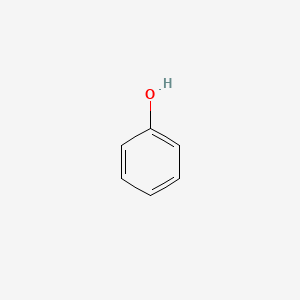
CAS 108-95-2PubChem CID 996
Phenol
Phenol is an organic hydroxy compound that consists of benzene bearing a single hydroxy substituent. The parent of the class of phenols. It has a role as an antiseptic drug, a disinfectant, a mouse metabolite and a human xenobiotic metabolite. It is a conjugate acid of a phenolate. — ChEBI
- IUPAC name
- phenol
- Molecular formula
- C6H6O
- Molecular weight
- 94.11 g/mol
- Exact mass
- 94.041864811 Da
- XLogP3
- 1.5
- Topological polar surface area
- 20.2 Ų
- Hydrogen-bond donors
- 1
- Hydrogen-bond acceptors
- 1
- Covalent units
- 1
- Defined stereocentres
- 0
Also known as
carbolic acidHydroxybenzenePhenic acidOxybenzeneBenzenolPhenylic acidPhenylic alcoholMonophenol
16 more reported names
Phenyl hydratePhenyl hydroxidePhOHMonohydroxybenzenePaoscleIzalPhenyl alcoholPhenolePhenol alcoholAcide carboliquePhenol, liquefiedFenoloCarbolsaureFenolLiquid phenolLiquefied phenol
External database identifiers
- ChEBI:CHEBI:15882
- ChEBI:CHEBI:33853
- ChEMBL:CHEMBL14060
- EPA DTXSID:DTXSID5021124
- PubMed:29968805
- PubMed:24387763
- PubMed:23714150
- PubMed:23125812
- PubMed:23125788
- PubMed:23125729
- PubMed:23125664
- PubMed:23124346
- PubMed:23122152
- PubMed:23121948
- PubMed:23121756
- PubMed:23117431
Evidence from additional scientific databases
NIH PubChem PUG-View
Exact identifier match996
Attributed physical-property, hazard, environmental and use annotations.
- Autoignition Temperature: 1319 °F (USCG, 1999) Source: CAMEO Chemicals
- Autoignition Temperature: 1319 °F (715 °C) Source: Hazardous Substances Data Bank (HSDB)
- Autoignition Temperature: 715 °C Source: ILO-WHO International Chemical Safety Cards (ICSCs)
- Boiling Point: 360 °F at 760 mmHg (NTP, 1992) Source: CAMEO Chemicals
- Boiling Point: 359 °F at 760 mmHg (NIOSH, 2024) Source: CAMEO Chemicals
- Boiling Point: 359.1 °F at 760 mmHg (EPA, 1998) Source: CAMEO Chemicals
- Boiling Point: 181.8 °C Source: DrugBank
- Boiling Point: 181.75 °C @ 101.3 kPa Source: Hazardous Substances Data Bank (HSDB)
- Boiling Point: 182 °C Source: ILO-WHO International Chemical Safety Cards (ICSCs)
- Boiling Point: 182 °C Source: Joint FAO/WHO Expert Committee on Food Additives (JECFA)
- Boiling Point: 359 °F Source: Occupational Safety and Health Administration (OSHA)
- Boiling Point: 181.87 °C @760 [mm Hg] Source: PAC Chemical Database, U.S. Department of Energy
- Boiling Point: 359 °F Source: The National Institute for Occupational Safety and Health (NIOSH)
- Color/Form: Colorless acicular crystals or white, crystalline mass Source: Hazardous Substances Data Bank (HSDB)
- Color/Form: White crystalline mass of hygroscopic, translucent needle-shaped crystals; pink or red when impurities are present; darkens on exposure to light Source: Hazardous Substances Data Bank (HSDB)
- Color/Form: White, crystalline mass that turns pink or red if not perfectly pure or if under influence of light. Source: Hazardous Substances Data Bank (HSDB)
- Color/Form: Colorless to light pink, interlaced, or separate, needleshaped crystals, or a ... light pink, crystalline mass Source: Hazardous Substances Data Bank (HSDB)
- Color/Form: Colorless to light pink crystalline solid. [Note: Phenol liquefies by mixing with about 8% water.] Source: Hazardous Substances Data Bank (HSDB)
- Density: 1.04 at 105.8 °F (USCG, 1999) - Denser than water; will sink Source: CAMEO Chemicals
- Density: 1.06 (NIOSH, 2024) - Denser than water; will sink Source: CAMEO Chemicals
- Density: 1.0722 at 68 °F (EPA, 1998) - Denser than water; will sink Source: CAMEO Chemicals
- Density: 1.071 g/cu cm Source: Hazardous Substances Data Bank (HSDB)
- Density: Concn in "saturated" air: 0.046% by volume (0.77 g/cu m) (25 °C); Density of "saturated" air: 1.00104 (air=1); Conversion: 3.84 mg/cu m = 1 ppm; 1 mg/l = 0.26 mg/cu m Source: Hazardous Substances Data Bank (HSDB)
- Density: 1.06 g/cm³ Source: ILO-WHO International Chemical Safety Cards (ICSCs)
- Density: Relative density of the vapour/air-mixture at 20 °C (air = 1): 1.0 Source: ILO-WHO International Chemical Safety Cards (ICSCs)
- Density: 1.06 Source: Occupational Safety and Health Administration (OSHA)
- Density: 1.0545 @ 45°C Source: PAC Chemical Database, U.S. Department of Energy
- Density: 1.06 Source: The National Institute for Occupational Safety and Health (NIOSH)
- pKa: 9.99 (at 25 °C) Source: DrugBank
- Dissociation Constants: pKa = 9.99 @ 25 °C Source: Hazardous Substances Data Bank (HSDB)
- Flash Point: 175 °F (NTP, 1992) Source: CAMEO Chemicals
- Flash Point: 175 °F (NIOSH, 2024) Source: CAMEO Chemicals
- Flash Point: 174.2 °F (EPA, 1998) Source: CAMEO Chemicals
- Flash Point: 175 °F Source: Haz-Map, Information on Hazardous Chemicals and Occupational Diseases
- Flash Point: 175 °F; 79 °C, (Closed cup) Source: Hazardous Substances Data Bank (HSDB)
- Flash Point: 85 °C, (Open cup) Source: Hazardous Substances Data Bank (HSDB)
- Flash Point: 79 °C c.c. Source: ILO-WHO International Chemical Safety Cards (ICSCs)
- Flash Point: 175 °F Source: Occupational Safety and Health Administration (OSHA)
- Flash Point: 175 °F Source: The National Institute for Occupational Safety and Health (NIOSH)
- LogP: 1.46 Source: DrugBank
- LogP: Log Kow = 1.46 Source: Hazardous Substances Data Bank (HSDB)
- LogP: 1.46 Source: Human Metabolome Database (HMDB)
- LogP: 1.46 Source: ILO-WHO International Chemical Safety Cards (ICSCs)
- Melting Point: 109 °F (NTP, 1992) Source: CAMEO Chemicals
- Melting Point: 109 °F (NIOSH, 2024) Source: CAMEO Chemicals
- Melting Point: 109 °F (EPA, 1998) Source: CAMEO Chemicals
- Melting Point: 40.9 °C Source: DrugBank
- Melting Point: 40.91 °C Source: Hazardous Substances Data Bank (HSDB)
- Melting Point: 40.9 °C Source: Human Metabolome Database (HMDB)
- Melting Point: 41 °C Source: ILO-WHO International Chemical Safety Cards (ICSCs)
- Melting Point: 109 °F Source: Occupational Safety and Health Administration (OSHA)
- Melting Point: 40.89 °C Source: PAC Chemical Database, U.S. Department of Energy
- Melting Point: 109 °F Source: The National Institute for Occupational Safety and Health (NIOSH)
- Odor: Distinct aromatic, somewhat sickening sweet and acrid odor, discernable at 0.5 to 5 ppm Source: Hazardous Substances Data Bank (HSDB)
- Odor: Sweet, tarry odor Source: Hazardous Substances Data Bank (HSDB)
- Odor: Somewhat sickeningly sweet and acrid Source: Hazardous Substances Data Bank (HSDB)
- Physical Description: Phenol solution, [aqueous] is a white crystalline mass dissolved in an aqueous solution. Solution may be colorless to slightly pink in color with a distinctive phenol odor; sharp burning taste. Aqueous solution will be acidic and act as such. Toxic by ingestion, inhalation and skin absorption; strong irritant to tissues. Source: CAMEO Chemicals
- Physical Description: Phenol, liquid appears as a colorless liquid when pure, otherwise pink or red. Combustible. Flash point 175 °F. Must be heated before ignition may occur easily. Vapors are heavier than air. Corrosive to skin but because of anesthetic qualities will numb rather than burn. Upon contact skin may turn white. May be lethal by skin absorption. Does not react with water. Stable in normal transportation. Reactive with various chemicals and may be corrosive to lead, aluminum and its alloys, certain plastics, and rubber. Freezing point about 105 °F. Density 8.9 lb / gal. Used to make plastics, adhesives and other chemicals. Source: CAMEO Chemicals
- Physical Description: Phenol, molten is the white crystalline solid shipped at an elevated temperature to form a semi-solid. It is very hot and may cause burns from contact and also may cause the ignition of combustible materials. It is toxic by ingestion, and inhalation of its fumes, and skin absorption. It may also be very irritating to skin and eyes. It is used to make other chemicals. Source: CAMEO Chemicals
- Physical Description: Phenol, solid appears as a solid melting at 110 °F. Colorless if pure, otherwise pink or red. Flash point 175 °F. Density 9.9 lb / gal. Vapors are heavier than air Corrosive to the skin (turning skin white) but because of its anesthetic quality numbs rather than burn. Lethal amounts can be absorbed through the skin. Used to make plastics and adhesives. Source: CAMEO Chemicals
- Physical Description: Dry Powder; Liquid; Large Crystals; Gas Vapor; Liquid; CBI Source: EPA Chemical Data Reporting (CDR)
- Physical Description: Colorless to light-pink, crystalline solid with a sweet, acrid odor. [Note: Phenol liquefies by mixing with about 8% water.] [NIOSH] Pure form is liquefied by water absorbed from the air; [CPS&Q: RARs - Final Report] Source: Haz-Map, Information on Hazardous Chemicals and Occupational Diseases
- Physical Description: Solid Source: Human Metabolome Database (HMDB)
- Physical Description: COLOURLESS-TO-YELLOW OR LIGHT PINK CRYSTALS WITH CHARACTERISTIC ODOUR. Source: ILO-WHO International Chemical Safety Cards (ICSCs)
- Physical Description: White crystalline mass, sharp, medicinal, sweet, tarry odour Source: Joint FAO/WHO Expert Committee on Food Additives (JECFA)
- Physical Description: Colorless to light-pink, crystalline solid with a sweet, acrid odor. Source: Occupational Safety and Health Administration (OSHA)
- Physical Description: Colorless to light-pink, crystalline solid with a sweet, acrid odor. [Note: Phenol liquefies by mixing with about 8% water.] Source: The National Institute for Occupational Safety and Health (NIOSH)
- Refractive Index: Index of refraction: 1.5408 @ 41 °C Source: Hazardous Substances Data Bank (HSDB)
- Solubility: 50 to 100 mg/mL at 66 °F (NTP, 1992) Source: CAMEO Chemicals
- Solubility: 9 % at 77 °F (NIOSH, 2024) Source: CAMEO Chemicals
- Solubility: 82800 mg/L (at 25 °C) Source: DrugBank
- Solubility: 1 g/15 ml water Source: Hazardous Substances Data Bank (HSDB)
- Solubility: 1 g/12 ml benzene Source: Hazardous Substances Data Bank (HSDB)
- Solubility: Very soluble in alcohol, chloroform, ether, glycerol, carbon disulfide, petrolatum, volatile and fixed oils, and aqueous alkali hydroxides Source: Hazardous Substances Data Bank (HSDB)
- Solubility: Miscible with acetone Source: Hazardous Substances Data Bank (HSDB)
- Solubility: For more Solubility (Complete) data for PHENOL (7 total), please visit the HSDB record page. Source: Hazardous Substances Data Bank (HSDB)
- Solubility: 82.8 mg/mL at 25 °C Source: Human Metabolome Database (HMDB)
- Solubility: Solubility in water, g/l at 20 °C: 84 (moderate) Source: ILO-WHO International Chemical Safety Cards (ICSCs)
- Solubility: soluble in water Source: Joint FAO/WHO Expert Committee on Food Additives (JECFA)
- Solubility: very soluble (in ethanol) Source: Joint FAO/WHO Expert Committee on Food Additives (JECFA)
- Vapor Pressure: 0.2 mmHg at 68 °F ; 0.35 mmHg at 77 °F (NTP, 1992) Source: CAMEO Chemicals
- Vapor Pressure: 0.4 mmHg (NIOSH, 2024) Source: CAMEO Chemicals
- Vapor Pressure: 0.3513 mmHg at 77 °F (EPA, 1998) Source: CAMEO Chemicals
- Vapor Pressure: 0.35 [mmHg] Source: Haz-Map, Information on Hazardous Chemicals and Occupational Diseases
- Vapor Pressure: 0.35 mm Hg @ 25 °C Source: Hazardous Substances Data Bank (HSDB)
- Vapor Pressure: Vapor pressure, Pa at 20 °C: 47 Source: ILO-WHO International Chemical Safety Cards (ICSCs)
- Vapor Pressure: 0.4 mmHg Source: Occupational Safety and Health Administration (OSHA)
- Vapor Pressure: 0.75 [mm Hg] @34.1 °C Source: PAC Chemical Database, U.S. Department of Energy
- Vapor Pressure: 0.4 mmHg Source: The National Institute for Occupational Safety and Health (NIOSH)
- Viscosity: 3.437 mPa s @ 50 °C; 1.784 mPa s @ 75 °C; 1.099 mPa s @ 100 °C Source: Hazardous Substances Data Bank (HSDB)
- pH: about 6.0 (aq soln) Source: Hazardous Substances Data Bank (HSDB)
- IARC Carcinogenic Agent: Phenol Source: International Agency for Research on Cancer (IARC)
- IARC Carcinogenic Classes: Group 3: Not classifiable as to its carcinogenicity to humans Source: International Agency for Research on Cancer (IARC)
- IARC Monographs: Volume 47: (1989) Some Organic Solvents, Resin Monomers and Related Compounds, Pigments and Occupational Exposures in Paint Manufacture and Painting; Volume 71: (1999) Re-evaluation of Some Organic Chemicals, Hydrazine and Hydrogen Peroxide (Part 1, Part 2, Part 3) Source: International Agency for Research on Cancer (IARC)
- Publication Year: 1999 Source: International Agency for Research on Cancer (IARC)
- Evaluation Year: 1998 Source: International Agency for Research on Cancer (IARC)
- Substance: Phenol Source: NTP Technical Reports
- NTP Technical Report: TR-203: Bioassay of Phenol for Possible Carcinogenicity (CASRN 108-95-2) (1980 ) Source: NTP Technical Reports
- Peer Review Date: 02/15/80 Source: NTP Technical Reports
- Conclusion for Male Rat: No Evidence Source: NTP Technical Reports
- Conclusion for Female Rat: No Evidence Source: NTP Technical Reports
- Conclusion for Male Mice: No Evidence Source: NTP Technical Reports
- Conclusion for Female Mice: No Evidence Source: NTP Technical Reports
- Exposure Routes: Serious local effects by all routes of exposure. Source: ILO-WHO International Chemical Safety Cards (ICSCs)
- Exposure Routes: inhalation, skin absorption, ingestion, skin and/or eye contact Source: The National Institute for Occupational Safety and Health (NIOSH)
- Exposure Routes: Inhalation (L159) ; oral (L159) ; dermal (L159) ; eye contact (L159) Source: Toxin and Toxin Target Database (T3DB)
- First Aid: Excerpt from ERG Guide 153 [Substances - Toxic and/or Corrosive (Combustible)]:; Refer to the "General First Aid" section. Specific First Aid: For corrosives, in case of contact, immediately flush skin or eyes with running water for at least 30 minutes. Additional flushing may be required. Removal of solidified molten material from skin requires medical assistance. (ERG, 2024) Source: CAMEO Chemicals
- First Aid: EYES: First check the victim for contact lenses and remove if present. Flush victim's eyes with water or normal saline solution for 20 to 30 minutes while simultaneously calling a hospital or poison control center. Do not put any ointments, oils, or medication in the victim's eyes without specific instructions from a physician. IMMEDIATELY transport the victim after flushing eyes to a hospital even if no symptoms (such as redness or irritation) develop.; SKIN: IMMEDIATELY flood affected skin with water while removing and isolating all contaminated clothing. Gently wash all affected skin areas thoroughly with soap and water. IMMEDIATELY call a hospital or poison control center even if no symptoms (such as redness or irritation) develop. IMMEDIATELY transport the victim to a hospital for treatment after washing the affected areas.; INHALATION: IMMEDIATELY leave the contaminated area; take deep breaths of fresh air. If symptoms (such as wheezing, coughing, shortness of breath, or burning in the mouth, throat, or chest) develop, call a physician and be prepared to transport the victim to a hospital. Provide proper respiratory protection to rescuers entering an unknown atmosphere. Whene Source: CAMEO Chemicals
- First Aid: Excerpt from NIOSH Pocket Guide for Phenol:; Eye: IRRIGATE IMMEDIATELY - If this chemical contacts the eyes, immediately wash (irrigate) the eyes with large amounts of water, occasionally lifting the lower and upper lids. Get medical attention immediately.; Skin: SOAP WASH IMMEDIATELY - If this chemical contacts the skin, immediately wash the contaminated skin with soap and water. If this chemical penetrates the clothing, immediately remove the clothing, wash the skin with soap and water, and get medical attention promptly.; Breathing: RESPIRATORY SUPPORT - If a person breathes large amounts of this chemical, move the exposed person to fresh air at once. If breathing has stopped, perform artificial respiration. Keep the affected person warm and at rest. Get medical attention as soon as possible.; Swallow: MEDICAL ATTENTION IMMEDIATELY - If this chemical has been swallowed, get medical attention immediately. (NIOSH, 2024) Source: CAMEO Chemicals
- First Aid: Signs and Symptoms of Acute Phenol Exposure: Signs and symptoms of acute exposure to phenol may be severe, and range from tachycardia (rapid heart rate) and tachypnea (rapid respiratory rate) to hypotension (low blood pressure), weak pulse, cardiac failure, pulmonary edema, and respiratory arrest. Cardiac arrhythmias may be noted. Weakness, headache, dizziness, tinnitus (ringing in the ears), delirium, and shock are common. Seizures may often be followed by coma. Pallor, profuse sweating, dilated pupils, and a profound drop in body temperature may occur. Gastrointestinal effects may include nausea, abdominal pain, bloody vomitus, and bloody diarrhea. Renal insufficiency may lead to hematuria (bloody urine). Liver damage may also occur. Phenol is corrosive to the skin and mucous membranes. Contact may result in severe and painful burns, which promptly become anesthetized (numb) to touch and pain. Ulceration may follow.; Emergency Life-Support Procedures: Acute exposure to phenol may require decontamination and life support for the victims. Emergency personnel should wear protective clothing appropriate to the type and degree of contamination. Air-purifying or supplied-air respirator Source: CAMEO Chemicals
- ERG2024, Guide 153 (Phenol, solid): General First Aid:; · Call 911 or emergency medical service.; · Ensure that medical personnel are aware of the material(s) involved, take precautions to protect themselves and avoid contamination.; · Move victim to fresh air if it can be done safely.; · Administer oxygen if breathing is difficult.; · If victim is not breathing:; -- DO NOT perform mouth-to-mouth resuscitation; the victim may have ingested or inhaled the substance.; -- If equipped and pulse detected, wash face and mouth, then give artificial respiration using a proper respiratory medical device (bag-valve mask, pocket mask equipped with a one-way valve or other device).; -- If no pulse detected or no respiratory medical device available, provide continuous compressions. Conduct a pulse check every two minutes or monitor for any signs of spontaneous respirations.; · Remove and isolate contaminated clothing and shoes.; · For minor skin contact, avoid spreading material on unaffected skin.; · In case of contact with substance, remove immediately by flushing skin or eyes with running water for at least 20 minutes.; · For severe burns, immediate medical attention is required.; · Effects of exposure (inhalation, ingestion, Source: Emergency Response Guidebook (ERG)
- ERG2024, Guide 153 (Phenol, molten): General First Aid:; · Call 911 or emergency medical service.; · Ensure that medical personnel are aware of the material(s) involved, take precautions to protect themselves and avoid contamination.; · Move victim to fresh air if it can be done safely.; · Administer oxygen if breathing is difficult.; · If victim is not breathing:; -- DO NOT perform mouth-to-mouth resuscitation; the victim may have ingested or inhaled the substance.; -- If equipped and pulse detected, wash face and mouth, then give artificial respiration using a proper respiratory medical device (bag-valve mask, pocket mask equipped with a one-way valve or other device).; -- If no pulse detected or no respiratory medical device available, provide continuous compressions. Conduct a pulse check every two minutes or monitor for any signs of spontaneous respirations.; · Remove and isolate contaminated clothing and shoes.; · For minor skin contact, avoid spreading material on unaffected skin.; · In case of contact with substance, remove immediately by flushing skin or eyes with running water for at least 20 minutes.; · For severe burns, immediate medical attention is required.; · Effects of exposure (inhalation, ingestion, Source: Emergency Response Guidebook (ERG)
- First Aid: (General first aid procedures); Eye: Irrigate immediately - If this chemical contacts the eyes, immediately wash (irrigate) the eyes with large amounts of water, occasionally lifting the lower and upper lids. Get medical attention immediately.; Skin: Soap wash immediately - If this chemical contacts the skin, immediately wash the contaminated skin with soap and water. If this chemical penetrates the clothing, immediately remove the clothing, wash the skin with soap and water, and get medical attention promptly.; Breathing: Respiratory support; Swallow: Medical attention immediately - If this chemical has been swallowed, get medical attention immediately. Source: The National Institute for Occupational Safety and Health (NIOSH)
- Signal: Danger Source: Regulation (EC) No 1272/2008 of the European Parliament and of the Council
- GHS Hazard Statements: H301: Toxic if swallowed [Danger Acute toxicity, oral]; H311: Toxic in contact with skin [Danger Acute toxicity, dermal]; H314: Causes severe skin burns and eye damage [Danger Skin corrosion/irritation]; H331: Toxic if inhaled [Danger Acute toxicity, inhalation]; H341: Suspected of causing genetic defects [Warning Germ cell mutagenicity]; H373 **: May causes damage to organs through prolonged or repeated exposure [Warning Specific target organ toxicity, repeated exposure] Source: Regulation (EC) No 1272/2008 of the European Parliament and of the Council
- Precautionary Statement Codes: P203, P260, P261, P262, P264, P270, P271, P280, P301+P316, P301+P330+P331, P302+P352, P302+P361+P354, P304+P340, P305+P354+P338, P316, P318, P319, P321, P330, P361+P364, P363, P403+P233, P405, and P501 (click each P-code to see the statement) Source: Regulation (EC) No 1272/2008 of the European Parliament and of the Council
- Note: This chemical does not meet GHS hazard criteria for < 0.1% (1 of 4205) of reports. Source: European Chemicals Agency (ECHA)
- Signal: Danger Source: European Chemicals Agency (ECHA)
- GHS Hazard Statements: H301 (99.9%): Toxic if swallowed [Danger Acute toxicity, oral]; H311 (> 99.9%): Toxic in contact with skin [Danger Acute toxicity, dermal]; H314 (> 99.9%): Causes severe skin burns and eye damage [Danger Skin corrosion/irritation]; H318 (17.7%): Causes serious eye damage [Danger Serious eye damage/eye irritation]; H331 (99.7%): Toxic if inhaled [Danger Acute toxicity, inhalation]; H341 (99.3%): Suspected of causing genetic defects [Warning Germ cell mutagenicity]; H373 (99.7%): May causes damage to organs through prolonged or repeated exposure [Warning Specific target organ toxicity, repeated exposure]; H411 (13.6%): Toxic to aquatic life with long lasting effects [Hazardous to the aquatic environment, long-term hazard] Source: European Chemicals Agency (ECHA)
- Precautionary Statement Codes: P203, P260, P261, P262, P264, P264+P265, P270, P271, P273, P280, P301+P316, P301+P330+P331, P302+P352, P302+P361+P354, P304+P340, P305+P354+P338, P316, P317, P318, P319, P321, P330, P361+P364, P363, P391, P403+P233, P405, and P501 (click each P-code to see the statement) Source: European Chemicals Agency (ECHA)
- ECHA C&L Notifications Summary: Aggregated GHS information provided per 4205 reports by companies from 95 notifications to the ECHA C&L Inventory. Each notification may be associated with multiple companies.; Reported as not meeting GHS hazard criteria per 1 of 4205 reports by companies.; There are 94 notifications provided by 4204 of 4205 reports by companies with hazard statement code(s).; Information may vary between notifications depending on impurities, additives, and other factors. The percentage value in parenthesis indicates the notified classification ratio from companies that provide hazard codes. Only hazard codes with percentage values above 10% are shown. For more detailed information, please visit ECHA C&L website. Source: European Chemicals Agency (ECHA)
- Signal: Danger Source: NITE-CMC
- GHS Hazard Statements: H302: Harmful if swallowed [Warning Acute toxicity, oral]; H311: Toxic in contact with skin [Danger Acute toxicity, dermal]; H314: Causes severe skin burns and eye damage [Danger Skin corrosion/irritation]; H318: Causes serious eye damage [Danger Serious eye damage/eye irritation]; H341: Suspected of causing genetic defects [Warning Germ cell mutagenicity]; H360: May damage fertility or the unborn child [Danger Reproductive toxicity]; H370: Causes damage to organs [Danger Specific target organ toxicity, single exposure]; H372: Causes damage to organs through prolonged or repeated exposure [Danger Specific target organ toxicity, repeated exposure]; H401: Toxic to aquatic life [Hazardous to the aquatic environment, acute hazard]; H411: Toxic to aquatic life with long lasting effects [Hazardous to the aquatic environment, long-term hazard] Source: NITE-CMC
- Precautionary Statement Codes: P203, P260, P262, P264, P264+P265, P270, P273, P280, P301+P317, P301+P330+P331, P302+P352, P302+P361+P354, P304+P340, P305+P354+P338, P308+P316, P316, P317, P318, P319, P321, P330, P361+P364, P363, P391, P405, and P501 (click each P-code to see the statement) Source: NITE-CMC
- GHS Hazard Statements: H401: Toxic to aquatic life [Hazardous to the aquatic environment, acute hazard]; H412: Harmful to aquatic life with long lasting effects [Hazardous to the aquatic environment, long-term hazard] Source: NITE-CMC
- Health Effects: Long-term exposure to phenol at work has been associated with cardiovascular disease, irritation of the respiratory tract and muscle twitching depedning of the route of exposure. Ingestion of liquid products containing concentrated phenol can cause serious gastrointestinal damage and even death. Application of concentrated phenol to the skin can cause severe skin damage. Longer-term exposure to high levels of phenol caused damaged to the heart, kidneys, liver, and lungs. Liver effects, as judged by increased serum activities of alanine aminotransferase (ALT) and aspartate amino transferase (AST), were also reported in a case of prolonged inhalation exposure to phenol. (L624) Source: Toxin and Toxin Target Database (T3DB)
- NFPA Health Rating: 4 - Materials that, under emergency conditions, can be lethal. Source: Hazardous Substances Data Bank (HSDB)
- NFPA Fire Rating: 2 - Materials that must be moderately heated or exposed to relatively high ambient temperatures before ignition can occur. Materials would not under normal conditions form hazardous atmospheres with air, but under high ambient temperatures or under moderate heating could release vapor in sufficient quantities to produce hazardous atmospheres with air. Source: Hazardous Substances Data Bank (HSDB)
- NFPA Instability Rating: 0 - Materials that in themselves are normally stable, even under fire conditions. Source: Hazardous Substances Data Bank (HSDB)
- Target Organs: Body Weight, Dermal (Skin), Hepatic (Liver), Renal (Urinary System or Kidneys), Respiratory (From the Nose to the Lungs) Source: Agency for Toxic Substances and Disease Registry (ATSDR)
- Target Organs: Eyes, skin, respiratory system, liver, kidneys Source: The National Institute for Occupational Safety and Health (NIOSH)
- Toxicity Summary: HUMAN TOXICITY: Phenol is toxic with a probable oral lethal dose to humans of 50-500 mg/kg. Some individuals may be hypersensitive with lethality or serious effects at very low exposures. Rapid absorption and severe systemic toxicity can occur after any route of exposure including skin. Death and severe toxicity are usually due to effects on the CNS, heart, blood vessels, lung, and kidneys. However, toxic manifestations may vary somewhat with the route. Observed effects from acute exposure may include: shock, delirium, coma, pulmonary distress, phenolic breath, scanty/dark urine, and death. Protracted or chronic exposure usually results in major damage to the liver, kidneys and eyes. Pigmentary changes of the skin have been noted. Consumption of water contaminated with phenol resulted in diarrhea, mouth sores, burning of the mouth, and dark urine. Phenol is highly caustic to tissues. Skin exposure results in pain, then numbness, blanching, severe burns, and eschar formation. Ingestion leads to burning of throat and severe gastrointestinal inflammation. Inhalation can result in pulmonary irritation and edema. ANIMAL TOXICITY: Toxicity in animals is similar to that of humans, althoug Source: Hazardous Substances Data Bank (HSDB)
- Toxicity Summary: Phenol is irritating and corrosive at high concentrations. Phenol impairs the stratum corneum and produces coagulation necrosis by denaturing and precipitating proteins. It is suggested that dermal application of phenol increases the formation of free radicals in the skin, and that the redox cycling of these radicals reduces antioxidant capacity, leading to significant oxidative damage of protein, DNA, and lipids. Phenol also act as a cyclooxygenase inhibitor. (A227, L624) Source: Toxin and Toxin Target Database (T3DB)
- Environmental Bioconcentration: The BCFs reported in fish include: Goldorfe, 20 (1); goldfish, (Carassius auratus), 1.9(2); fish (unspecified), 17(3); fish (unspecified), 1.7(4); and 39, rainbow trout (Salmo gairdneri) (5). Phenol was rapidly eliminated from goldfish(6) and therefore would be unlikely to bioaccumulate(SRC). When U-14C-phenol was interperitonially administered to goldfish, the concn decreased to one tenth the initial concn in 2 hr(6). A BCF of 15,800 was reported in fathead minnows using 14C labeled phenol(7). Minor amounts of 14C in tissues were present as parent compound after 28 days of exposure to radiolabeled phenol(7). Parent compound comprised 1.5% of total 14C as phenol after 28 days of depuration(7). According to a classification scheme(8), reported BCF values and the rapid elimination of phenol suggests that bioaccumulation of phenol is unlikely(SRC). According to a classification scheme, BCF values <30 are low and from 100 or greater are high(8). Source: Hazardous Substances Data Bank (HSDB)
- Environmental Fate: TERRESTRIAL FATE: The Koc for phenol in a Batcombe silt loam soil (pH 6.7, organic carbon 2.51%) is 30.2(1). The Koc for phenol is 16.1 for a Brookstone clay loam (pH 5.7, organic matter 5.1%) and varied with pH and iron content of the soil(2). The Freundlich K (1/N) for phenol in Captina (pH 5.7, 1.1 % organic matter) and Palouse silt loam (pH 5.7, 3.6% organic matter) soils are 0.58 (1.15) and 0.81 (1.00)(3); the Koc values for these soils are 91 and 38.8(SRC). Based on a classification scheme(4), Koc values in these ranges, indicate that phenol is expected to have high mobility in soil(SRC). Volatilization of phenol from moist soil surfaces is not expected to be an important fate process(SRC), given a Henry's law constant of 3.33X10⁻⁷ atm cu m/mol at 25 °C(5). Phenol is not expected to volatilize from dry soil surfaces(SRC), based upon a measured vapor pressure of 0.35 mm Hg at 25 °C(6). Phenol degradation in soil is completed in 2-5 days, even in subsurface soils(7). Source: Hazardous Substances Data Bank (HSDB)
- Environmental Fate: AQUATIC FATE: Based on a classification scheme(1), Koc values of 2900 and 3100 for phenol in <2 um and >2 um sediment, respectively (2), indicates that phenol is expected to adsorb to suspended solids and sediment(SRC). Volatilization from water surfaces would not be expected to be a major fate process(3) based upon a Henry's Law constant of 3.33X10⁻⁷ atm cu m/mol at 25 °C(4). The pKa of phenol is 9.99(5), indicating that phenol will primarily exist in its un-ionized form in the environment. The BCFs reported in fish include: Goldorfe, 20(6); goldfish (Carassius auratus), 1.9(7); fish (unspecified), 17(8); fish (unspecified), 1.7(9); and 39, rainbow trout (Salmo gairdneri)(10). According to a classification scheme(11), reported BCF values and the rapid elimination of phenol suggests that bioaccumulation of phenol is unlikely(SRC). According to a classification scheme(11), BCF values <30 are low and from 100 or greater are high. No oxidants were formed when an aqueous phenol solution was irradiated with sunlight for 5 hours(12). Phenol is completely mineralized in <1 day in water from 3 lakes; rates increase with increasing concns of phenol and the organic content of the water (e.g. Source: Hazardous Substances Data Bank (HSDB)
- Environmental Fate: ATMOSPHERIC FATE: According to a model of gas/particle partitioning of semivolatile organic compounds in the atmosphere(1), phenol, which has a measured vapor pressure of 0.35 mm Hg at 25 °C(2), is expected to exist solely as a vapor in the ambient atmosphere. The measured rate constant for the vapor-phase reaction of phenol with photochemically produced hydroxyl radicals is 2.63X10⁻¹¹ cu cm/molecule s at 25 °C(3). This corresponds to an atmospheric half-life of 14.6 hours at an atmospheric concentration of 5X10+5 hydroxyl radicals per cu cm(SRC). The rate constant for the vapor-phase reaction of phenol with nitrate radicals is 3.92X10⁻¹² cu cm/molecule-sec at 23 °C(4,5). This corresponds to a half-life of 12 minutes at a nitrate radical concn of 2.4X10+8 per cu cm (over continental areas)(SRC). The reaction with nitrate radicals is only important during the nighttime(SRC). Phenol does not absorb UV radiation >290(6), and would not be expected to undergo direct photolysis by sunlight(SRC). Source: Hazardous Substances Data Bank (HSDB)
- Consumer Uses: Other; Binder; Not Known or Reasonably Ascertainable; Solvent; Abrasives; Intermediate Source: EPA Chemical Data Reporting (CDR)
- Industry Uses: Stabilizing agent; Other; Ion exchange agent; Polymerization promoter; Solvent; Cleaning agent; Abrasives; Laboratory chemicals; Fuel; Fuel agents; Intermediate; Monomers Source: EPA Chemical Data Reporting (CDR)
- Uses: The primary use of phenol is in the production of phenolic resins, which are used in the plywood, construction, automotive, and appliance industries. Other uses of phenol include as a slimicide, as a disinfectant, and in medicinal products such as ear and nose drops, throat lozenges, and mouthwashes. Source: EPA Hazardous Air Pollutants
- Sources/Uses: Used in organic synthesis and as a disinfectant; [ACGIH] Used mainly as an intermediate for chemicals and resins; Also used in cosmetics, medical preparations, non-agricultural biocides, adhesives, binders, impregnating agents, paints, lacquers, varnishes, solvents, flooring, hardeners, and insulating materials; [CPS&Q: RARs - Final Report] Used as a flavoring agent; [FDA] Other uses include reagent in chemical analysis, in germicidal paints and slimicides, as a preservative for pharmaceutical injections, and in human and veterinary medicine; [HSDB] Source: Haz-Map, Information on Hazardous Chemicals and Occupational Diseases
- Industrial Processes with risk of exposure: Molding and Core Making [Category: Foundry]; Painting (Pigments, Binders, and Biocides) [Category: Paint]; Working with Glues and Adhesives [Category: Other]; Using Disinfectants or Biocides [Category: Clean]; Burning Synthetic Polymers [Category: Burn] Source: Haz-Map, Information on Hazardous Chemicals and Occupational Diseases
- Activities with risk of exposure: Sculpturing plastics [Category: Hobbies]; Lithography printing [Category: Hobbies]; Smoking cigarettes [Category: Food & Drugs] Source: Haz-Map, Information on Hazardous Chemicals and Occupational Diseases
- Uses: For phenol (USEPA/OPP Pesticide Code: 064001) ACTIVE products with label matches. /SRP: Registered for use in the U.S. but approved pesticide uses may change periodically and so federal, state and local authorities must be consulted for currently approved uses./ Source: Hazardous Substances Data Bank (HSDB)
- Uses: As a general disinfectant, either in soln or mixed with slaked lime, etc., for toilets, stables, cesspools, floors, drains, etc.; for the manuf of colorless or light-colored artificial resins, many medical and industrial organic compds and dyes; as a reagent in chemical analysis. Source: Hazardous Substances Data Bank (HSDB)
- Uses: Phenol is bacteriostatic in concentrations of approx 0.2%, bactericidal above 1%, and fungicidal above 1.3%. Source: Hazardous Substances Data Bank (HSDB)
- Uses: Chemical intermediate for phenolic resins and bisphenol A. Source: Hazardous Substances Data Bank (HSDB)
- Uses: For more Uses (Complete) data for PHENOL (14 total), please visit the HSDB record page. Source: Hazardous Substances Data Bank (HSDB)
- Uses: Phenol is used to make plastics. Phenol is also used as a disinfectant in household cleaning products and in consumer products such as mouthwashes, gargles, throat sprays. Exposure may result from breathing air containing phenol and drinking contaminated water or eating food contaminated with phenol. Exposure also occurs through dermal contact with contaminated air or by skin contact with products containing phenol. Dermal contact can occur through the use of general disinfectants and ointments containing phenol. Ingestion can occur through the use of products such as throat lozenges or sore throat sprays that contain phenol. (L624) Source: Toxin and Toxin Target Database (T3DB)
Mapped by: Existing checksum-valid CAS to unique PubChem CID match. Retrieved: 2026-08-31. Open source record
Scientific classifications and hazard annotations provide context and do not replace the market-specific regulatory decision shown above.
Additional source coverage and match status
| Source | Result | Checked |
|---|---|---|
| NIH PubChem PUG-View | Exact match | 2026-08-31 |
A recorded no-match is useful evidence that the source was checked; it is not a claim that the substance does not exist elsewhere.
Retrieved from NIH PubChem on 2026-08-31 by checksum-valid CAS matching. Chemical properties do not replace the regulatory decision on this page.
Additional authoritative substance research
Each link searches that source for this identity. A link is a research route, not a claim that the source holds an exact record. What each source is, and its legal weight
Take this record further
Official source and scope
Imported from Commission Implementing Decision (EU) 2025/1175 (dataset version EU 2025/1175). The glossary supplies common ingredient names for the ingredient list required by Article 19(1)(g); it is not an approval or safety list.
Open official Decision