Official EU label nameGlossary entry 12338

HYDRATED SILICA

This record confirms an official common ingredient name for EU cosmetic product labelling. It does not by itself confirm that the substance is permitted, unrestricted or safe.

Global evidence snapshot

The resolved identity has matching regulatory evidence in 0 of 13 indexed market datasets: 0 country records and 0 EU Annex records. Every result and evidence gap is listed below.

0 markets with evidence
Markets checked
13
Markets with evidence
0
Evidence gaps
13
Resolved identifiers
7

Resolved substance identity

CAS:10279-57-91343-98-27631-86-9112926-00-863231-67-4
EC:215-683-2231-545-4
Ingredient index records:
HYDRATED SILICA
Cosmetic functions: ABRASIVE, ABSORBENT, ANTICAKING, BULKING, OPACIFYING, VISCOSITY CONTROLLING

Silicic acid; synthetic amorphous silicon dioxide

1 matched or reported name
HYDRATED SILICA

Regulatory evidence across markets

None of the 13 markets tracked here holds an imported rule under the name HYDRATED SILICA.

That is a statement about this inventory, not about the law: no imported rule is not evidence that a substance is permitted. A rule may exist under a different name, under a CAS or EC number this glossary entry does not carry, or in a dataset not yet imported.

Chemical identity and properties

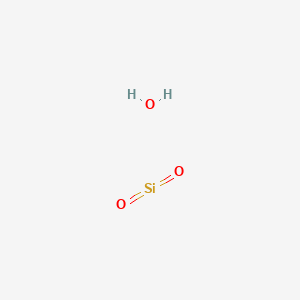
PubChem 2D chemical structure for CAS 10279-57-9
CAS 10279-57-9PubChem CID 190201

Hydrated Silica

The Panel concluded that synthetically-manufactured amorphous ... Hydrated Silica are safe in the present practices of use and concentration described in the safety assessment when formulated to be non-irritating. — Cosmetic Ingredient Review (CIR)

IUPAC name
dioxosilane;hydrate
Molecular formula
H2O3Si
Molecular weight
78.099 g/mol
Exact mass
77.97732046 Da
Topological polar surface area
35.1 Ų
Hydrogen-bond donors
1
Hydrogen-bond acceptors
3
Covalent units
2
Defined stereocentres
0

Also known as

Silica hydrateHydrosilicic acidSilica, hydratedSilicon dioxide hydrateY6O7T4G8P9SILICIC ACID (MART.)SILICIC ACID [MART.]Zarazyl
15 more reported names
Zarasyl CompanionRefChem:55334CHEBI:64393Silica, amorphous, precipitated and gelSilicic acid hydrateDioxosilane HydrateOpal-CTHydrated amorphous silicaOpal (SiO2.xH2O)SILICIC ACID [MI]Silicondioxidehydrate(1:x)Silanedione--water (1/1)Silicon dioxide hydrate(1:x)SILICIC ACID [WHO-DD]LRCFXGAMWKDGLA-UHFFFAOYSA-N
External database identifiers

Evidence from additional scientific databases

NIH PubChem PUG-View
Exact identifier match190201

Attributed physical-property, hazard, environmental and use annotations.

  • Note: This chemical does not meet GHS hazard criteria for 100% (4 of 4) of all reports. Source: European Chemicals Agency (ECHA)
  • GHS Hazard Statements: Not Classified; Reported as not meeting GHS hazard criteria by 4 of 4 companies. For more detailed information, please visit ECHA C&L website. Source: European Chemicals Agency (ECHA)
  • ECHA C&L Notifications Summary: Aggregated GHS information provided per 4 reports by companies from 1 notifications to the ECHA C&L Inventory.; Reported as not meeting GHS hazard criteria per 4 of 4 reports by companies.; There are 0 notifications provided by 0 of 4 reports by companies with hazard statement code(s).; Information may vary between notifications depending on impurities, additives, and other factors. The percentage value in parenthesis indicates the notified classification ratio from companies that provide hazard codes. Only hazard codes with percentage values above 10% are shown. For more detailed information, please visit ECHA C&L website. Source: European Chemicals Agency (ECHA)
  • Cosmetic Ingredient Review Conclusion: The Panel concluded that synthetically-manufactured amorphous ... Hydrated Silica are safe in the present practices of use and concentration described in the safety assessment when formulated to be non-irritating. Source: Cosmetic Ingredient Review (CIR)
  • Cosmetic Ingredient Review Finding(s): Safe for use in cosmetics, with qualifications Source: Cosmetic Ingredient Review (CIR)

Mapped by: Existing checksum-valid CAS to unique PubChem CID match. Retrieved: 2026-08-31. Open source record

Scientific classifications and hazard annotations provide context and do not replace the market-specific regulatory decision shown above.

Additional source coverage and match status
SourceResultChecked
EMBL-EBI ChEBINo exact record2026-08-31
NIH PubChem PUG-ViewExact match2026-08-31

A recorded no-match is useful evidence that the source was checked; it is not a claim that the substance does not exist elsewhere.

Retrieved from NIH PubChem on 2026-08-31 by checksum-valid CAS matching. Chemical properties do not replace the regulatory decision on this page.
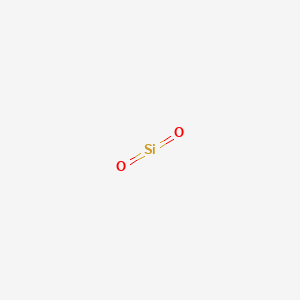
PubChem 2D chemical structure for CAS 112926-00-8
CAS 112926-00-8CAS 7631-86-9PubChem CID 24261

Silica

Silicon dioxide is a silicon oxide made up of linear triatomic molecules in which a silicon atom is covalently bonded to two oxygens. — ChEBI

IUPAC name
dioxosilane
Molecular formula
O2Si
Molecular weight
60.084 g/mol
Exact mass
59.966755773 Da
Topological polar surface area
34.1 Ų
Hydrogen-bond donors
0
Hydrogen-bond acceptors
2
Covalent units
1
Defined stereocentres
0

Also known as

SILICON DIOXIDE7631-86-9Silicic anhydrideDiatomaceous silicaWessalonZorbax silSilica, amorphousSilica, colloidal
16 more reported names
SillikolloidActicelCarplexExtrusilPorasilSantocelSilikilSiloxidSipernatNeosilNeosylZipaxcolloidal silicaWhite carbonSilicone dioxideVulkasil S
External database identifiers

Evidence from additional scientific databases

NIH PubChem PUG-View
Exact identifier match24261

Attributed physical-property, hazard, environmental and use annotations.

  • First Aid: Excerpt from NIOSH Pocket Guide for Silica, amorphous:; Eye: IRRIGATE IMMEDIATELY - If this chemical contacts the eyes, immediately wash (irrigate) the eyes with large amounts of water, occasionally lifting the lower and upper lids. Get medical attention immediately.; Breathing: FRESH AIR - If a person breathes large amounts of this chemical, move the exposed person to fresh air at once. Other measures are usually unnecessary. (NIOSH, 2024) Source: CAMEO Chemicals
  • First Aid: (General first aid procedures); Eye: Irrigate immediately - If this chemical contacts the eyes, immediately wash (irrigate) the eyes with large amounts of water, occasionally lifting the lower and upper lids. Get medical attention immediately.; Breathing: Fresh air Source: The National Institute for Occupational Safety and Health (NIOSH)
  • GHS Hazard Statements: Not Classified; Reported as not meeting GHS hazard criteria by 7724 of 9127 companies Source: European Chemicals Agency (ECHA)
  • ECHA C&L Notifications Summary: Aggregated GHS information provided per 9127 reports by companies from 60 notifications to the ECHA C&L Inventory.; Reported as not meeting GHS hazard criteria per 7724 of 9127 reports by companies.; There are 55 notifications provided by 1403 of 9127 reports by companies with hazard statement code(s).; Information may vary between notifications depending on impurities, additives, and other factors. The percentage value in parenthesis indicates the notified classification ratio from companies that provide hazard codes. Only hazard codes with percentage values above 10% are shown. For more detailed information, please visit ECHA C&L website. Source: European Chemicals Agency (ECHA)
  • Note: This chemical does not meet GHS hazard criteria for 35% (889 of 2540) of reports. Source: European Chemicals Agency (ECHA)
  • Signal: Warning Source: European Chemicals Agency (ECHA)
  • GHS Hazard Statements: H315 (56.3%): Causes skin irritation [Warning Skin corrosion/irritation]; H319 (56.3%): Causes serious eye irritation [Warning Serious eye damage/eye irritation]; H335 (56.3%): May cause respiratory irritation [Warning Specific target organ toxicity, single exposure; Respiratory tract irritation] Source: European Chemicals Agency (ECHA)
  • Precautionary Statement Codes: P261, P264, P264+P265, P271, P280, P302+P352, P304+P340, P305+P351+P338, P319, P321, P332+P317, P337+P317, P362+P364, P403+P233, P405, and P501 (click each P-code to see the statement) Source: European Chemicals Agency (ECHA)
  • ECHA C&L Notifications Summary: Aggregated GHS information provided per 2540 reports by companies from 18 notifications to the ECHA C&L Inventory. Each notification may be associated with multiple companies.; Reported as not meeting GHS hazard criteria per 889 of 2540 reports by companies.; There are 17 notifications provided by 1651 of 2540 reports by companies with hazard statement code(s).; Information may vary between notifications depending on impurities, additives, and other factors. The percentage value in parenthesis indicates the notified classification ratio from companies that provide hazard codes. Only hazard codes with percentage values above 10% are shown. For more detailed information, please visit ECHA C&L website. Source: European Chemicals Agency (ECHA)
  • Note: This chemical does not meet GHS hazard criteria for 96% (1614 of 1682) of all reports. Source: European Chemicals Agency (ECHA)
  • GHS Hazard Statements: Not Classified; Reported as not meeting GHS hazard criteria by 1614 of 1682 companies (only 4% companies provided GHS information). For more detailed information, please visit ECHA C&L website. Source: European Chemicals Agency (ECHA)
  • ECHA C&L Notifications Summary: Aggregated GHS information provided per 1682 reports by companies from 17 notifications to the ECHA C&L Inventory.; Reported as not meeting GHS hazard criteria per 1614 of 1682 reports by companies.; There are 14 notifications provided by 68 of 1682 reports by companies with hazard statement code(s).; Information may vary between notifications depending on impurities, additives, and other factors. The percentage value in parenthesis indicates the notified classification ratio from companies that provide hazard codes. Only hazard codes with percentage values above 10% are shown. For more detailed information, please visit ECHA C&L website. Source: European Chemicals Agency (ECHA)
  • Note: This chemical does not meet GHS hazard criteria for 9.7% (125 of 1288) of reports. Source: European Chemicals Agency (ECHA)
  • Signal: Danger Source: European Chemicals Agency (ECHA)
  • Cosmetic Ingredient Review Conclusion: The Panel concluded that synthetically-manufactured amorphous Silica ... safe in the present practices of use and concentration described in the safety assessment when formulated to be non-irritating. Source: Cosmetic Ingredient Review (CIR)
  • Cosmetic Ingredient Review Finding(s): Safe for use in cosmetics, with qualifications Source: Cosmetic Ingredient Review (CIR)
  • Toxicity Summary: IDENTIFICATION: Quartz is a frequently occurring solid component of most natural mineral dusts. HUMAN EXPOSURE: Human exposures to quartz occur most often during occupational activities that involve the movement of earth, disturbance of silica containing products (masonry, concrete), or use or manufacture of silica containing products. Environmental exposure to ambient quartz dust can occur during natural, industrial and agricultural activities. Respirable quartz dust particles can be inhaled and deposited in the lung. There are many epidemiological studies of occupational cohorts exposed to respirable quartz dust. Silicosis, lung cancer and pulmonary tuberculosis are associated with occupational exposure to quartz dust. Statistically significant increases in deaths or cases of bronchitis, emphysema, chronic obstructive pulmonary disease, autoimmune related diseases (scleroderma, rheumatoid arthritis, systemic lupus erythematosus) and renal diseases have been reported. Silicosis is the critical effect for hazard identification and risk assessment. There are sufficient epidemiological data to allow the risk of silicosis to be quantitatively estimated, but not to permit accurate esti Source: Hazardous Substances Data Bank (HSDB)
  • Consumer Uses: Filler; Not Known or Reasonably Ascertainable; Sealant (barrier); Other Source: EPA Chemical Data Reporting (CDR)
  • Consumer Uses: Other; Abrasives; Filler; Not Known or Reasonably Ascertainable; Surface modifier Source: EPA Chemical Data Reporting (CDR)
  • Consumer Uses: CBI; Binder; Other; Lubricating agent; Anti-caking agent; Polymerization promoter; Dispersing agent; Anti-adhesive/cohesive; Insulators; Abrasives; Processing aids not otherwise specified; Surfactant (surface active agent); Flow promoter; Sealant (barrier); Soil amendments (fertilizers); Viscosity modifiers; Not Known or Reasonably Ascertainable; Thickening agent; Filler; Catalyst; Absorbent; Plasticizer; Dehydrating agent (desiccant); Adsorbent; Defoamer; Surface modifier; Pigment; Hardener; Solids separation (precipitating) agent, not otherwise specified; Intermediate; Processing aids, specific to petroleum production Source: EPA Chemical Data Reporting (CDR)
  • Consumer Uses: Abrasives; Binder; Insulators; Hardener; Not Known or Reasonably Ascertainable; Thickening agent; Sealant (barrier) Source: EPA Chemical Data Reporting (CDR)
  • Industry Uses: Other; Insulators; Abrasives; Heat transferring agent; pH regulating agent; Sealant (barrier); Crystal growth modifiers (nucleating agents); Not Known or Reasonably Ascertainable; Filler Source: EPA Chemical Data Reporting (CDR)
  • Industry Uses: Filler; Stabilizing agent; Flow promoter; Hardener; Adsorbent; Surface modifier; Other; Abrasives Source: EPA Chemical Data Reporting (CDR)
  • Industry Uses: Surfactant (surface active agent); Processing aids not otherwise specified; Bleaching agent; Opacifer; Plating agent; Abrasives; Anti-adhesive/cohesive; Insulators; Intermediates; Polymerization promoter; Dispersing agent; Anti-caking agent; Lubricating agent; CBI; Wetting agent (non-aqueous); Other; Binder; Processing aids, specific to petroleum production; Intermediate; Hardener; Chelating agent; Solids separation (precipitating) agent, not otherwise specified; Anti-static agent; Pigment; Adhesion/cohesion promoter; Etching agent; Adsorbent; Defoamer; Surface modifier; Oxidizing agent; Dehydrating agent (desiccant); Anti-slip agent; Plasticizer; Dusting agent; Hydraulic fluids; Absorbent; Not Known or Reasonably Ascertainable; Corrosion inhibitor; Crystal growth modifiers (nucleating agents); Thickening agent; Filler; Ion exchange agent; Catalyst; Soil amendments (fertilizers); Viscosity modifiers; Flow promoter; Stabilizing agent; Film former Source: EPA Chemical Data Reporting (CDR)
  • Industry Uses: Insulators; Other; Binder; Abrasives; Opacifer; Sealant (barrier); Thickening agent; Not Known or Reasonably Ascertainable; Filler Source: EPA Chemical Data Reporting (CDR)
  • Cosmetic Ingredient Review Link: CIR ingredient: Silica Source: Cosmetic Ingredient Review (CIR)
  • Sources/Uses: Used as a filler in rubber products, paints, animal feeds, pesticides, insulation materials, and cosmetics; [Rom, p. 527] Silica nanoparticle applications include leukemia cell biomarkers, cancer therapy, drug delivery, mechanical polishing, and additives to drugs, cosmetics, printing inks, varnishes, and food; [PMID 21191487] Polycrystalline silicon and silicon dioxide materials are etched in semiconductor manufacturing. [CSH, p. 45] Source: Haz-Map, Information on Hazardous Chemicals and Occupational Diseases
  • Industrial Processes with risk of exposure: Semiconductor Manufacturing [Category: Industry]; Mining [Category: Industry]; Cement Producing [Category: Industry]; Farming (Feed Additives) [Category: Industry] Source: Haz-Map, Information on Hazardous Chemicals and Occupational Diseases
  • Uses: For silicon dioxide (USEPA/OPP Pesticide Code: 072605 ACTIVE products with label matches. /SRP: Registered for use in the U.S. but approved pesticide uses may change periodically and so federal, state and local authorities must be consulted for currently approved uses./ Source: Hazardous Substances Data Bank (HSDB)
  • Uses: Amorphous silica (such as fumed silica) is incorporated in a variety of food products as anti-caking agents at levels up to 2% by weight. Amorphous silica is also used as an anti-caking agent and as an excipient in pharmaceuticals for various drug and vitamin preparations. Source: Hazardous Substances Data Bank (HSDB)
  • Uses: According to the different physicochemical properties, the major classes of synthetic amorphous silica are used in a variety of products, e.g. as fillers in the rubber industry, in tire compounds, as free-flow and anti-caking agents in powder materials, and as liquid carriers, particularly in the manufacture of animal feed and agrochemicals; other uses are found in toothpaste additives, paints, silicon rubber, insulation material, liquid systems in coatings, adhesives, printing inks, plastisol car undercoats, and cosmetics. Source: Hazardous Substances Data Bank (HSDB)
  • Uses: Bioactive glasses are silica-based, surface-active bone substitutes that have shown good biocompatibility both in bone and in soft tissue and are used in oral and maxillofacial bone augmentation. Source: Hazardous Substances Data Bank (HSDB)
  • Uses: For more Uses (Complete) data for AMORPHOUS SILICA (18 total), please visit the HSDB record page. Source: Hazardous Substances Data Bank (HSDB)
  • Uses: Silica sand has been used for many different purposes for many years; its most ancient and principal use throughout history has been in the manufacture of glass. Sands are used in ceramics, foundry, abrasive, hydraulic fracturing applications and many other uses. Source: Hazardous Substances Data Bank (HSDB)
  • Uses: Refractory silica bricks, in which silica is converted by heat into cristobalite and tridymite are used in sprung arches of open-hearth furnaces, covers of electric furnaces, roofs of glass-tank furnaces, blast pre-heaters and coke and gas ovens. Source: Hazardous Substances Data Bank (HSDB)
  • Uses: ...Several uses require the material /sand and gravel/ to be ground. In some uses (e.g. sandblasting, abrasives), grinding also occurs during the use. Source: Hazardous Substances Data Bank (HSDB)
  • Uses: Industrial sand sold or used by United States producers in 1994, by major end use -- Glass-making: containers, flat (plate and window), specialty, and fibreglass (un-ground or ground); Foundry: moulding and core, moulding and core facing (ground), and refractory; Metallurgical applications: silicon carbide and flux for metal smelting; Abrasives: blasting, scouring cleansers (ground), sawing and sanding, and chemicals (ground and un-ground); Fillers: rubber, paints, putty, and whole grain fillers/building products; Ceramics: pottery, brick, tile; Filtration: water (municipal, county, local), swimming pools, and others; Petroleum industry: hydraulic fracturing, well packing, and cementing; Recreational: golf courses, baseball, volleyball, play sands, beaches, traction (engine), roofing granules and fillers, and other purposes (ground silica or whole grain). /From table/ Source: Hazardous Substances Data Bank (HSDB)

Mapped by: Existing checksum-valid CAS to unique PubChem CID match. Retrieved: 2026-08-31. Open source record

Scientific classifications and hazard annotations provide context and do not replace the market-specific regulatory decision shown above.

Additional source coverage and match status
SourceResultChecked
NIH PubChem PUG-ViewExact match2026-08-31

A recorded no-match is useful evidence that the source was checked; it is not a claim that the substance does not exist elsewhere.

Retrieved from NIH PubChem on 2026-08-31 by checksum-valid CAS matching. Chemical properties do not replace the regulatory decision on this page.

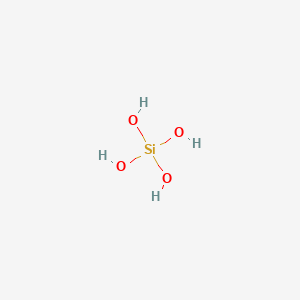
PubChem 2D chemical structure for CAS 1343-98-2
CAS 1343-98-2PubChem CID 14942

Orthosilicic acid

Silicic acid is a silicon oxoacid. It is a conjugate acid of a trihydrogensilicate(1-). — ChEBI

IUPAC name
silicic acid
Molecular formula
H4O4Si
Molecular weight
96.11 g/mol
Exact mass
95.98788514 Da
Topological polar surface area
80.9 Ų
Hydrogen-bond donors
4
Hydrogen-bond acceptors
4
Covalent units
1
Defined stereocentres
0

Also known as

Monosilicic acidSilicon tetrahydroxideSilicasolTetrahydroxysiliconSilicic acid (Si(OH)4)Silicic acid (ortho)silanetetrolKieselsaeure
16 more reported names
OrthokieselsaeureEINECS 233-477-0UNII-623B93YABHtetrahydroxidosilicon623B93YABHH4SiO4Silicon hydroxide (Si(OH)4)CHEBI:26675ORTHOSILICIC ACID (H4SIO4)(Si(OH)4)[Si(OH)4]Hydrate, SilicaHydrated Silica GelGel, Hydrated SilicaSilica Gel, HydratedRefChem:55787
External database identifiers

Retrieved from NIH PubChem on 2026-08-31 by checksum-valid CAS matching. Chemical properties do not replace the regulatory decision on this page.

Take this record further

Screen in a formulaOpen standalone comparison

Official source and scope

Imported from Commission Implementing Decision (EU) 2025/1175 (dataset version EU 2025/1175). The glossary supplies common ingredient names for the ingredient list required by Article 19(1)(g); it is not an approval or safety list.

Open official Decision