
CAS 99-76-3PubChem CID 7456
Methylparaben
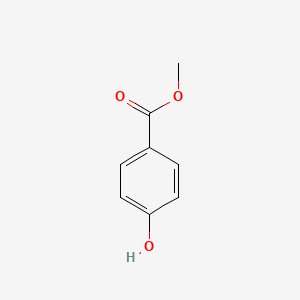
Methylparaben is a 4-hydroxybenzoate ester resulting from the formal condensation of the carboxy group of 4-hydroxybenzoic acid with methanol. It is the most frequently used antimicrobial preservative in cosmetics. It occurs naturally in several fruits, particularly in blueberries. It has a role as an antifungal agent, a neuroprotective agent, an antimicrobial food preservative and a plant metabolite. — ChEBI
- IUPAC name
- methyl 4-hydroxybenzoate
- Molecular formula
- C8H8O3
- Molecular weight
- 152.15 g/mol
- Exact mass
- 152.047344113 Da
- XLogP3
- 2.0
- Topological polar surface area
- 46.5 Ų
- Hydrogen-bond donors
- 1
- Hydrogen-bond acceptors
- 3
- Covalent units
- 1
- Defined stereocentres
- 0
Also known as
Methyl parabenMethyl p-hydroxybenzoateNipaginTegosept MMoldexMaseptolMethyl parahydroxybenzoatep-Hydroxybenzoic acid methyl ester
16 more reported names
Preserval MPreservalMetabenMethabenMetoxydeParidolSolbrolSeptosMethyl parasept4-Hydroxybenzoic acid methyl esterMethyl butexMethyl chemoseptp-Methoxycarbonylphenolp-CarbomethoxyphenolNipagin MBenzoic acid, 4-hydroxy-, methyl ester
External database identifiers
- ChEBI:CHEBI:31835
- ChEMBL:CHEMBL325372
- EPA DTXSID:DTXSID4022529
- PubMed:24130033
- PubMed:23032206
- PubMed:23028405
- PubMed:23009993
- PubMed:22967656
- PubMed:22967651
- PubMed:22928552
- PubMed:22917524
- PubMed:22897632
- PubMed:22887738
- PubMed:22814205
- PubMed:22790701
Retrieved from NIH PubChem on 2026-08-31 by checksum-valid CAS matching. Chemical properties do not replace the regulatory decision on this page.